A distributor salesperson can recommend the right beauty device and still leave the organization with a weak sales record. The buyer may receive a model name and price, while the product specialist, quotation reviewer, or future account manager cannot see why that category was chosen, which requirements it satisfies, which alternatives were excluded, or which assumptions remain unresolved.
A recommendation rationale record closes that gap. It connects verified buyer needs to a device category, model, configuration, and next action. It also makes recommendations reviewable across salespeople, regions, and product lines without turning every buyer conversation into a generic specification comparison. This guide explains how distributor sales teams can build, review, update, and use these records for salons, clinics, med spas, body studios, multi-location buyers, and resellers.
Sintesi
- Create a rationale record whenever a salesperson recommends, changes, or withdraws a device category, model, configuration, or bundle.
- State the recommendation in one precise sentence before adding supporting detail.
- Map each important buyer requirement to a relevant device capability, evidence source, and business reason.
- Separate confirmed facts, salesperson evaluations, buyer preferences, assumptions, and Unknown fields.
- Record which alternatives were considered and why they were not recommended.
- Explain the selected configuration, including handles, tips, cartridges, needle heads, applicators, consumables, voltage, format, and quantity.
- Use stage statuses such as Preliminary, Shortlisted, Demonstration-Validated, Quote-Ready, Withdrawn, and Superseded.
- Require independent review for advanced categories, exceptions, unsupported combinations, and quote-ready configurations.
- Link the rationale to the buyer requirement matrix, comparison sheet, demonstration record, and quotation revision.
- Reissue or supersede the record when the buyer need, site, operator, market, model, configuration, quantity, or timing changes materially.
1. What Is a Recommendation Rationale Record?
A beauty device recommendation rationale record is an internal distributor document that explains why a particular category, model, configuration, or package is suitable for a defined buyer opportunity.
Dovrebbe rispondere:
- Who is the buyer, and what business problem is being addressed?
- Which requirements and constraints are verified?
- Which device category fits the intended service?
- Which models and configurations were considered?
- Why is the recommended option the best fit among those candidates?
- What tradeoffs, limitations, Unknowns, or conditions remain?
- Which evidence supports the recommendation?
- Who prepared and reviewed the rationale?
- Which sales action is appropriate next?
- What change would invalidate or reopen the recommendation?
The record supports internal consistency and buyer-facing clarity. It does not replace the buyer’s purchasing decision or the distributor’s quotation approval.
2. Distinguish Four Related Records
These records belong to the same sales process but answer different questions.
| Documentazione | Domanda principale |
|---|---|
| Buyer requirement matrix | What does the buyer need, prefer, and need to avoid? |
| Category comparison sheet | How do genuinely comparable models or configurations differ? |
| Recommendation rationale | Why does the sales team recommend this specific option for this buyer? |
| Buyer decision record | What did the authorized purchasing team decide and approve? |
| Quotation approval | May this exact commercial offer be released? |
Link them by stable IDs and versions. Do not copy uncontrolled fragments from one record into another.
3. Decide When a Rationale Record Is Required
Create or revise the record when the sales team:
- recommends the first device category;
- narrows a shortlist to one model;
- selects a desktop or vertical format;
- proposes handles, tips, cartridges, needle heads, or applicators;
- builds a multi-device package;
- changes a recommendation after a demonstration;
- adapts a package for a site or market;
- replaces an unavailable or unsuitable option;
- advances an opportunity to quotation;
- accepts a material exception;
- withdraws an earlier recommendation.
An early record can be short and provisional. The information standard should rise as the opportunity moves toward demonstration, configuration, and quotation.
4. Give the Record a Controlled Identity
Every recommendation should have:
- recommendation ID;
- buyer and project ID;
- buyer type and destination market;
- sales owner;
- product or technical reviewer;
- category and candidate models;
- recommendation stage;
- record version;
- creation and review dates;
- evidence cutoff date;
- related requirement, comparison, demonstration, and quote IDs;
- superseded and superseding record references.
Use clear statuses:
| Stato | Senso |
|---|---|
| Preliminary | Category or model direction is based on early discovery |
| Shortlisted | Core requirements are verified and candidates are narrowed |
| Demonstration-Validated | Defined evaluation questions were reviewed through a demonstration |
| Configuration-Ready | Required model and option details are sufficiently defined |
| Quote-Ready | Buyer, configuration, quantity, destination, and purchasing path are usable |
| Condizionale | Recommendation depends on named unresolved actions |
| Withdrawn | Sales team no longer supports the recommendation |
| Superseded | A later rationale replaces this version |
Do not describe a preliminary direction as a final recommendation in buyer-facing materials.
5. Write the Recommendation in One Sentence
The lead statement should identify the buyer, selected option, intended purpose, and current stage.
Weak:
Recommend A0648.
Meglio:
Recommend the A0648 as the shortlisted core facial platform for the buyer’s planned cleansing and hydration menu, subject to confirmation of the intended tool set, opening supplies, and room workflow.
This sentence gives reviewers the conclusion without hiding the remaining conditions.
6. Start with the Buyer’s Business Problem
Before listing product features, summarize:
- current business type and service menu;
- target clients or buyer segment;
- current equipment and limitations;
- desired service or catalog expansion;
- operating problem to solve;
- location and room context;
- intended operator;
- implementation timing;
- purchasing scope and quantity;
- success criteria stated by the buyer.
Translate vague requests into a decision question. “Need an advanced machine” may become “choose an advanced skin category for a clinic with a defined operator and consultation pathway.” The translated question should be confirmed with the buyer before a high-confidence recommendation is recorded.
7. Separate Requirements, Constraints, and Preferences
The rationale should not treat all buyer statements equally.
| Input type | Senso | Effect on recommendation |
|---|---|---|
| Mandatory requirement | Must be satisfied | Candidate fails if unmet |
| Constraint | Limits the available choice | Eliminates or conditions options |
| High-priority need | Material to business fit | Strongly influences selection |
| Preference | Desirable but negotiable | Helps distinguish suitable candidates |
| Future requirement | Relevant to later growth | May influence upgrade path |
| Sconosciuto | Evidence missing | Reduces confidence or blocks advancement |
| Out of scope | Explicitly excluded | Prevents unnecessary package expansion |
Reference the source requirement ID. If the salesperson changes a requirement during interpretation, record that translation and obtain buyer confirmation.
8. Select the Category Before the Model
The first rationale decision should explain why the buyer needs a facial, hair-removal, HIFU, RF-microneedling, body-care, or another relevant category.
Category rationale should cover:
- intended service goal;
- professional setting;
- target buyer or client profile;
- relationship to the current menu or catalog;
- operator and room implications;
- supplies and workflow;
- alternative categories considered;
- reason the selected category fits better.
Do not use a model’s large feature list to avoid the category decision. A model comparison becomes meaningful only after the product family matches the service problem.
9. Build a Requirement-to-Recommendation Map
For every material requirement, show the reasoning chain.
| Buyer requirement | Requirement status | Relevant device capability | Prova | Recommendation effect |
|---|---|---|---|---|
| Core cleansing and hydration menu | Verified high priority | Multifunction facial-care workflow | Current product page and buyer menu brief | Supports facial-platform shortlist |
| Limited floor space | Verified constraint | Desktop format or compact footprint | Site record | Eliminates unsuitable formats |
| No consumable owner | Verified gap | Category requires supply workflow | Operations interview | Recommendation remains conditional |
| Future body services | Future | Separate body-care category | Growth plan | Do not overload current facial purchase |
The capability should be specific enough to review. “Advanced technology” is not a useful mapping field.
10. Separate Evidence from Sales Evaluation
Use distinct labels:
- Buyer fact: information supplied and confirmed by the buyer;
- Product fact: information from a current controlled product source;
- Site fact: information verified for the room, utility, or location;
- Sales evaluation: reasoned judgment about business fit;
- Technical evaluation: review of configuration, compatibility, or operating implications;
- Assumption: temporary planning statement awaiting evidence;
- Unknown: required information that is unavailable.
A sales evaluation can be valid without being a product fact. For example, “A0648 is a stronger menu fit than a specialist advanced device for this buyer” is an evaluation based on the buyer’s service plan. Record the supporting requirements instead of presenting the statement as a universal fact.
11. Record the Candidate Set Fairly
List only realistic candidates within the selected category. For each candidate, record:
- model and configuration compared;
- mandatory requirements met or failed;
- meaningful differences;
- site and operator implications;
- supplies and support implications;
- buyer preferences supported;
- Unknown information;
- removal or retention decision;
- evidence version.
Do not compare an incomplete base configuration with a fully equipped package as though they were equivalent. Normalize included, optional, and excluded items first.
12. Explain Why Alternatives Were Not Recommended
Use controlled reason codes plus a short explanation.
Possible reason codes include:
- wrong device category;
- mandatory requirement not met;
- room or utility conflict;
- operator model not ready;
- configuration does not match intended service;
- duplicates installed equipment;
- unsuitable market or electrical profile;
- support or supply path unresolved;
- outside current purchase phase;
- higher complexity without buyer value;
- evidence insufficient;
- buyer rejected after informed comparison.
Avoid vague notes such as “not good” or “too expensive.” State the relevant requirement and verified comparison basis.
13. Explain the Configuration Rationale
The model name is not the complete recommendation. Record:
- physical format;
- handles or handpieces;
- wavelengths or spot sizes where applicable;
- tips, cartridges, needle heads, or applicators;
- included versus optional functions;
- apertura dei materiali di consumo;
- quantity;
- voltage and destination profile;
- language or document needs;
- permitted substitutions;
- excluded items;
- configuration source and date.
For every selected option, answer “Which buyer requirement makes this necessary?” For every excluded option, answer “Why is it unnecessary, unsuitable, or deferred?”
14. Record Tradeoffs Openly
Most recommendations involve tradeoffs. Examples include:
- focused device versus multifunction platform;
- desktop footprint versus broader format;
- common group configuration versus site variant;
- lower opening complexity versus wider future scope;
- central stock versus local stock;
- one advanced category now versus phased expansion;
- broader handle package versus simpler operator training.
State what the recommendation prioritizes and what it gives up. A rationale becomes more credible when it explains the boundary of the recommendation.
15. Assign an Evidence Confidence Grade
Add a confidence grade that is separate from opportunity value.
| Grade | Evidence condition |
|---|---|
| UN | Core buyer, site, product, configuration, and decision evidence is current and verified |
| B | Recommendation is well supported; limited noncritical details remain open |
| C | Several material fields rely on one contact, assumptions, or incomplete site evidence |
| D | Direction is exploratory and unsuitable for a final quotation |
Confidence should not rise because the buyer is enthusiastic or urgent. It rises when material information is verified.
16. Use Stage-Specific Evidence Standards
| Recommendation stage | Minimum rationale evidence |
|---|---|
| Preliminary category direction | Buyer type, business problem, intended service, broad constraints |
| Shortlist | Verified requirements, category choice, comparable candidates, elimination reasons |
| Demonstration | Evaluation questions, suitable attendees, assessed configuration, follow-up action |
| Configurazione | Model, components, market, operator, room, supplies, and Unknowns |
| Quote-ready | Identified buyer, final configuration, quantity, destination, decision contact, purchasing path |
This prevents a conclusion reached during early discovery from being reused unchanged at quotation stage.
17. Record Demonstration Evidence Correctly
A demonstration should test the rationale, not merely create buyer excitement.
Documentazione:
- questions the demonstration must answer;
- model and exact configuration shown;
- attendees and their roles;
- relevant workflows or functions observed;
- buyer feedback tied to requirements;
- unanswered technical or operating questions;
- differences between the demonstrated and proposed configurations;
- resulting changes to the shortlist or package;
- next action and owner.
Do not mark the rationale Demonstration-Validated if the demonstrated configuration differs materially from the recommended package without a documented bridge.
18. Build Recommendation Records for Salon Buyers
For salons, the rationale should connect the recommendation to:
- current facial, hair-removal, body, or advanced menu;
- client demand and service tier;
- installed equipment and overlap;
- operator availability;
- treatment-room and storage limits;
- cleaning and daily workflow;
- appointment duration and booking logic;
- opening supplies;
- launch sequence;
- preference for focused or multifunction equipment.
A small salon can justify a strong recommendation when the menu gap and operating plan are clear. Business size alone should not determine recommendation confidence.
19. Build Recommendation Records for Clinics and Med Spas
Aggiungere:
- professional setting and intended operator;
- consultation and client-selection process;
- maintenance versus advanced-service pathway;
- records, consent, aftercare, and follow-up workflow;
- room and utility evidence;
- consumable or cartridge traceability;
- training and authorization sequence;
- local review requirements;
- technical and professional reviewers;
- escalation and support route.
The recommendation should identify which evidence supports business fit and which evidence supports operating readiness. A strong business case does not replace advanced-category controls.
20. Build Recommendation Records for Multi-Location Buyers
Create a group rationale and site overlays.
The group rationale covers:
- common service or portfolio objective;
- standard category and model direction;
- baseline configuration;
- allowed variants;
- purchasing and rollout strategy;
- central training and support model.
Each site overlay covers:
- local service need;
- installed equipment;
- Prontezza dell'operatore e della sala;
- market or electrical profile;
- quantity and rollout wave;
- variant or exception;
- unresolved gaps.
Do not describe a network recommendation as universal when several locations remain unassessed.
21. Build Recommendation Records for Reseller Buyers
When one distributor recommends SHEFMON devices to another reseller, record:
- target countries or regions;
- intended salon, clinic, med spa, or body-studio customers;
- current catalog and product-line gaps;
- stock versus supply-to-order strategy;
- demonstration portfolio;
- product-data and quotation capability;
- sales, operator, and technical training plan;
- consumable and replacement-component model;
- regional electrical, language, and document profile;
- first-order scope and launch sequence.
A broad catalog request should become a structured category recommendation rather than an unfiltered list. The SHEFMON beauty device collection can support category discovery, while the rationale should explain which limited set matches the reseller’s market plan.
22. Document A0648 Recommendation Rationale
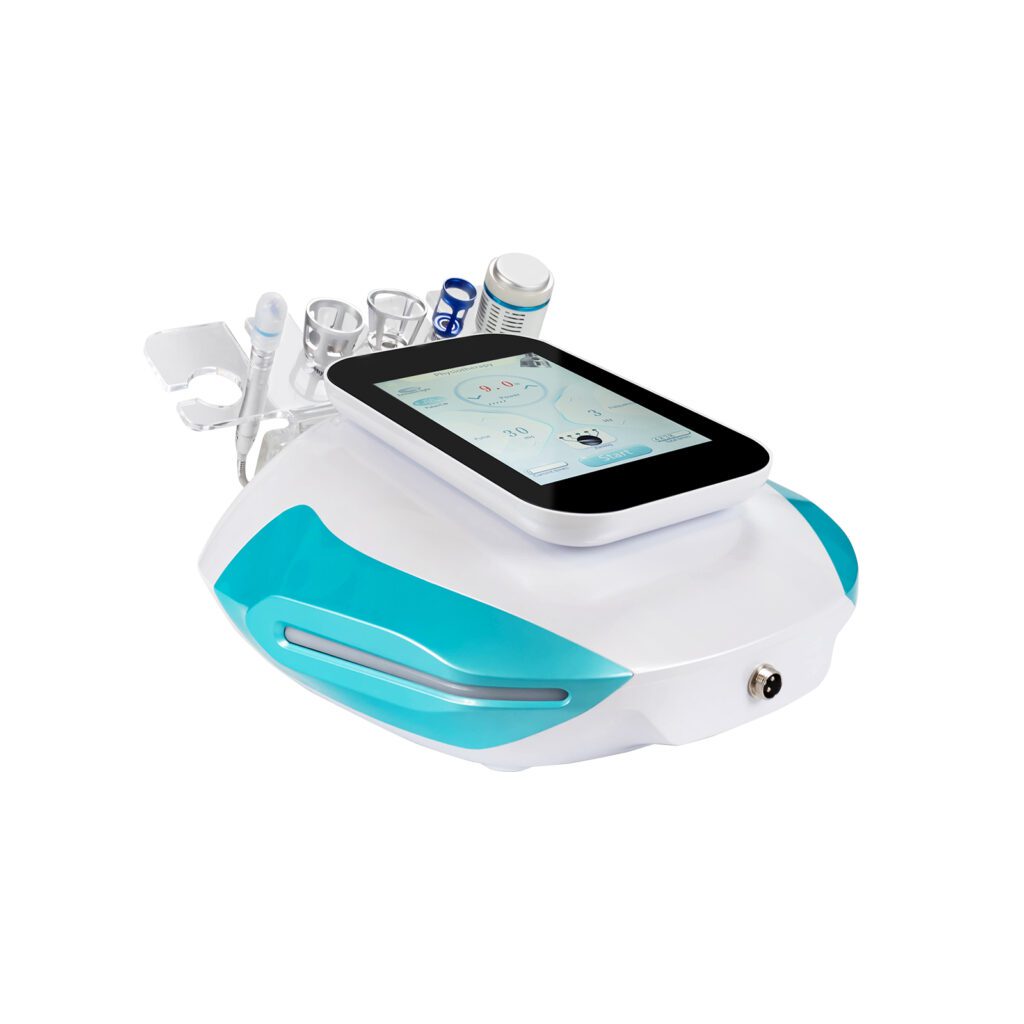
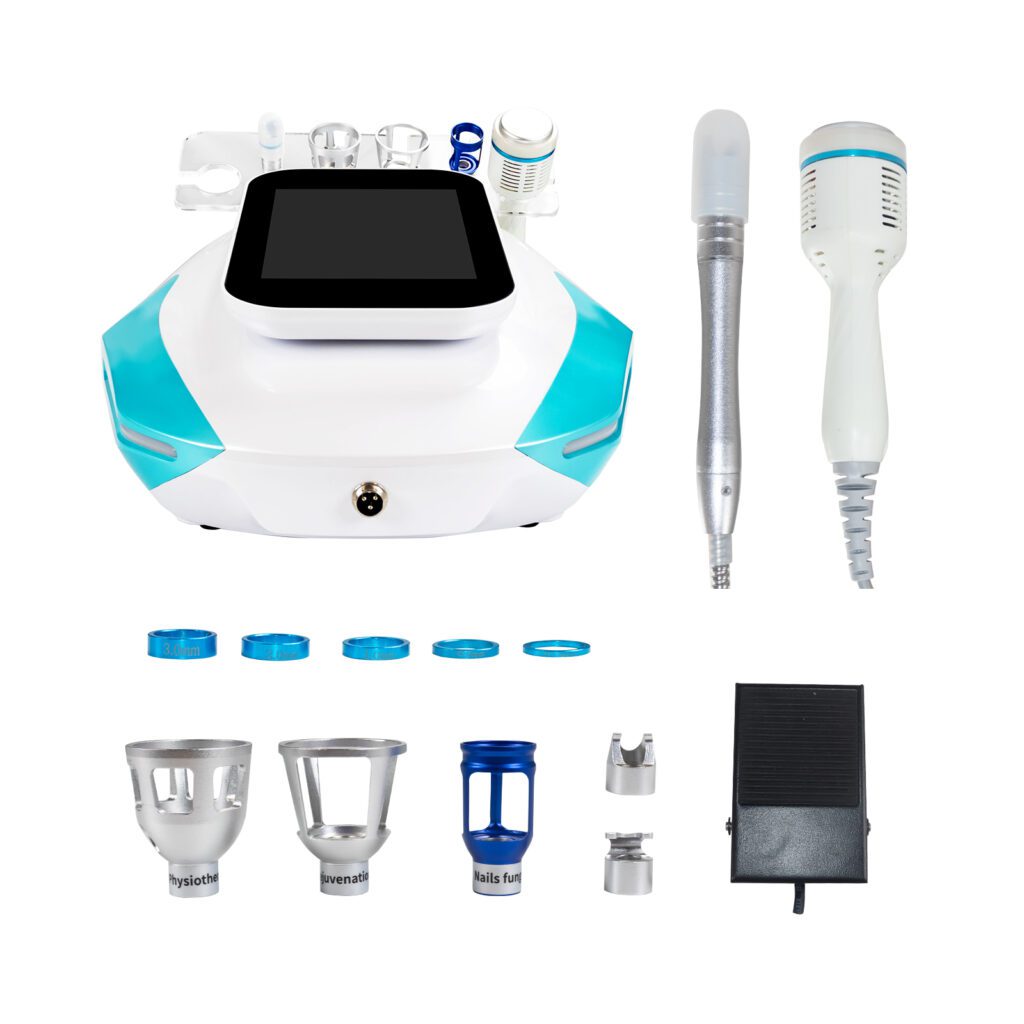
IL SHEFMON A0648 9-in-1 hydro and diamond microdermabrasion system is relevant when the buyer needs a multifunction facial category centered on cleansing, exfoliation, extraction, and hydration functions described on the product page.
A strong rationale should identify:
- the buyer’s core facial-menu gap;
- intended A0648 functions;
- relationship to existing facial services;
- room and tool workflow;
- operator and cleaning responsibilities;
- solution, tip, and opening-supply plan;
- reason a multifunction platform fits better than a narrower or advanced category;
- remaining configuration conditions.
Do not recommend the device only because it combines several functions. Show how the selected functions support the buyer’s planned services.
23. Document A0423 and A0426 Recommendation Rationale
IL SHEFMON A0423 E SHEFMON A0426 pages provide information on items such as wavelengths, handle power, spot sizes, cooling, voltage, and physical format.
The rationale should explain:
- why a professional hair-removal category fits the buyer;
- intended operator and setting;
- room, electrical, privacy, consultation, and record conditions;
- which model format matches the site;
- required wavelength, handle-power, and spot-size options;
- expected appointment and capacity pattern;
- training, cleaning, and support plan;
- why the other candidate model or configuration was not selected;
- which local requirements remain subject to buyer review.
More options do not automatically create a stronger recommendation. Each selected option should trace to a verified use case.
24. Document A0204 Recommendation Rationale
IL SHEFMON A0204 multifunction HIFU system belongs in an advanced-service pathway.
Record the intended service role, professional setting, operator, consultation and record workflow, room, selected handles and cartridges, supply plan, training sequence, aftercare, and local review. If the buyer has only requested a general anti-aging device, keep the recommendation preliminary until the advanced pathway and configuration are defined.
25. Document A0152 Recommendation Rationale
The official page for the SHEFMON A0152 desktop RF-microneedling system describes multiple needle-head formats, computerized depth settings, handle options, and face/body target areas.
The rationale should connect the buyer’s advanced skin-service objective to the intended operator, professional setting, selected handle and needle-head package, hygienic workflow, consumable traceability, consultation, records, aftercare, reorder plan, training, and local review. A final recommendation should identify why the selected configuration is required and why unused options are excluded.
26. Document B0155 Recommendation Rationale
IL SHEFMON B0155 desktop body-care system page presents body and smaller-area handle combinations involving vacuum, rollers, RF, light, and cavitation.
Documentazione:
- defined body-care or smaller-area service gap;
- target zones and package tiers;
- overlap with installed equipment;
- selected handle set;
- room, movement, and storage plan;
- operator, cleaning, and booking workflow;
- opening supplies and support ownership;
- reason a focused or broader configuration is appropriate.
For a salon moving from facial to body services, the rationale should show that the new department and operating workflow are ready rather than assuming facial-service experience transfers automatically.
27. Explain Multi-Device Bundle Rationale
A bundle record should explain the role of every device.
| Bundle role | Question to answer |
|---|---|
| Core category | Which recurring or foundational service does it support? |
| Growth category | Which distinct demand or menu gap does it add? |
| Advanced category | Which qualified setting, operator, and pathway support it? |
| Specialist category | Why should it remain limited to certain sites or buyers? |
Check for duplicate functions, competing appointment positions, shared room conflicts, training load, supply complexity, and launch sequence. A three-device bundle should not exist only because the buyer asked for three prices.
Do not describe a bundle as an unverified same-session treatment protocol. The rationale concerns portfolio and service-menu roles.
28. Require Review at Defined Risk Points
Independent review is appropriate when:
- an advanced category is recommended;
- professional or local operating requirements are material;
- the salesperson proposes an unlisted combination;
- compatibility is unclear;
- the recommended configuration differs from the demonstrated one;
- a multi-location exception is requested;
- the package includes several categories;
- product information is incomplete;
- the recommendation is moving to a final quotation;
- an earlier rationale is being reused for another buyer.
Record reviewer role, decision, date, conditions, and evidence used. “Reviewed” without scope is not enough.
29. Transfer the Rationale into the Quotation Brief
The quotation brief should inherit controlled outputs:
- buyer and project identity;
- recommended category and model;
- configuration baseline;
- quantity and destination;
- included items and selected options;
- apertura dei materiali di consumo;
- exclusions and assumptions;
- buyer-facing explanation;
- unresolved conditions that block release;
- rationale ID and version.
The sales team should not rebuild the configuration from memory when creating the quotation.
30. Write the Buyer-Facing Explanation
Convert the internal rationale into concise buyer language:
- Restate the buyer’s goal.
- Name the recommended category and model.
- Explain the two or three strongest fit reasons.
- State the selected configuration.
- Identify meaningful tradeoffs or exclusions.
- List the next validation or purchasing step.
Avoid exposing internal scores, sensitive notes, or comments about individual stakeholders. The buyer-facing explanation should remain accurate to the controlled record.
31. Reopen or Supersede the Recommendation
Reevaluate the rationale when:
- the buyer changes its service goal;
- a hard constraint changes;
- a new site or market enters scope;
- the operator or room changes;
- the category, model, or format changes;
- a handle, cartridge, tip, needle head, or applicator changes;
- quantity or rollout timing changes materially;
- a demonstration produces new evidence;
- product information or availability changes;
- the quotation no longer matches the rationale;
- a material Unknown is resolved.
Preserve the earlier version and explain why the recommendation changed. This protects the handoff between sales, product, quotation, purchasing, training, and support teams.
32. Build a Searchable Rationale Register
Allow authorized teams to filter by:
- buyer type and market;
- service category;
- recommended and rejected models;
- configuration and format;
- status and confidence grade;
- salesperson and reviewer;
- unresolved conditions;
- reason codes;
- quotation link;
- decision outcome;
- superseded relationship.
The register can reveal recurring buyer needs and recommendation gaps. It should not be used to copy an old conclusion into a new opportunity without fresh validation.
33. Measure Recommendation Quality
Tra le misure utili si annoverano:
- rationale records completed before quotation;
- percentage with verified mandatory requirements;
- recommendations with current product sources;
- configuration changes after quotation;
- quotation revisions caused by missing rationale fields;
- model substitutions after buyer review;
- demonstrations linked to defined questions;
- conditional recommendations closed on time;
- overrides by reviewer and reason;
- buyer decisions that differ from the recommendation;
- repeated recommendation errors by category.
Do not reward only high conversion. A high-quality rationale may correctly redirect, defer, or decline an unsuitable request.
34. Recommendation Rationale Record Checklist
Before marking the record Quote-Ready, confirm that:
- the buyer, project, market, and sales owner are identified;
- the recommendation stage and version are current;
- the business problem is stated clearly;
- mandatory requirements and constraints are verified;
- the category decision is explained before the model choice;
- each important requirement maps to a relevant capability;
- product, buyer, site, sales, and technical evidence are distinguished;
- realistic alternatives were compared;
- rejected options have controlled reasons;
- tradeoffs and limitations are visible;
- the exact configuration is recorded;
- included, optional, and excluded items are separated;
- Unknowns, assumptions, and conditions have owners;
- the confidence grade is supported;
- demonstrations refer to the assessed configuration;
- the correct reviewer has approved the required scope;
- the quotation brief references this record version;
- reopening triggers are defined.
Domande frequenti
1. Why should distributor sales teams record recommendation rationale?
The record allows sales, product, technical, quotation, and management teams to understand why an option fits the buyer and whether the evidence supports advancing it.
2. Is the rationale record the same as a product comparison sheet?
No. The comparison sheet shows normalized differences among candidates. The rationale applies buyer requirements and explains why one option is recommended, conditional, deferred, or rejected.
3. Can a salesperson recommend a device before every field is known?
Yes, if the status is Preliminary or Conditional, Unknown fields are visible, and the recommendation is not presented as quote-ready. Evidence expectations should increase at each stage.
4. Should price be part of the rationale?
Commercial context can influence fit, but it should not replace category, operating, and configuration reasoning. Use the controlled quotation for actual pricing and reference its revision.
5. How should two suitable models be handled?
Record both in the candidate set, identify the requirements that distinguish them, and define the evidence or buyer decision needed to complete the selection. Do not force a single model prematurely.
6. What if the buyer requests a model that does not fit its needs?
Record the requested model, explain the mismatch against verified requirements, recommend a more suitable category or configuration, and preserve the buyer’s final informed decision.
7. Who should review an advanced beauty device recommendation?
Use the distributor’s defined product, technical, professional, and commercial roles according to the category and market. The reviewer should approve a stated scope rather than providing a generic sign-off.
8. How should a recommendation change after a demonstration?
Create a new version or superseding record, link the demonstration evidence, identify what changed, and repeat any affected configuration, operating, or quotation review.
9. Can one rationale record cover a multi-device package?
Yes, if it explains the distinct role of every device, checks overlap and operating load, and identifies the launch sequence. Separate linked records may be clearer for advanced or independently approved categories.
10. Should the full internal rationale be sent to the buyer?
Usually the sales team should create a concise buyer-facing explanation based on the record. Internal evaluations, scores, reviewer comments, and sensitive notes should remain within the authorized system.
Conclusione
Recommendation rationale records turn salesperson judgment into a reviewable sales asset. They connect the buyer’s business problem, verified requirements, category choice, candidate comparison, configuration, evidence, tradeoffs, and next action without reducing the recommendation to a model name or feature list.
For distributor teams, this creates clearer handoffs between discovery, demonstration, product review, quotation, and buyer decision. Explore relevant facial, hair-removal, advanced skin, and body-care categories in the SHEFMON beauty device collection. Once the team has documented the buyer profile, service goal, constraints, candidate set, configuration needs, market, evidence, and open questions, contattare SHEFMON to review suitable device options.