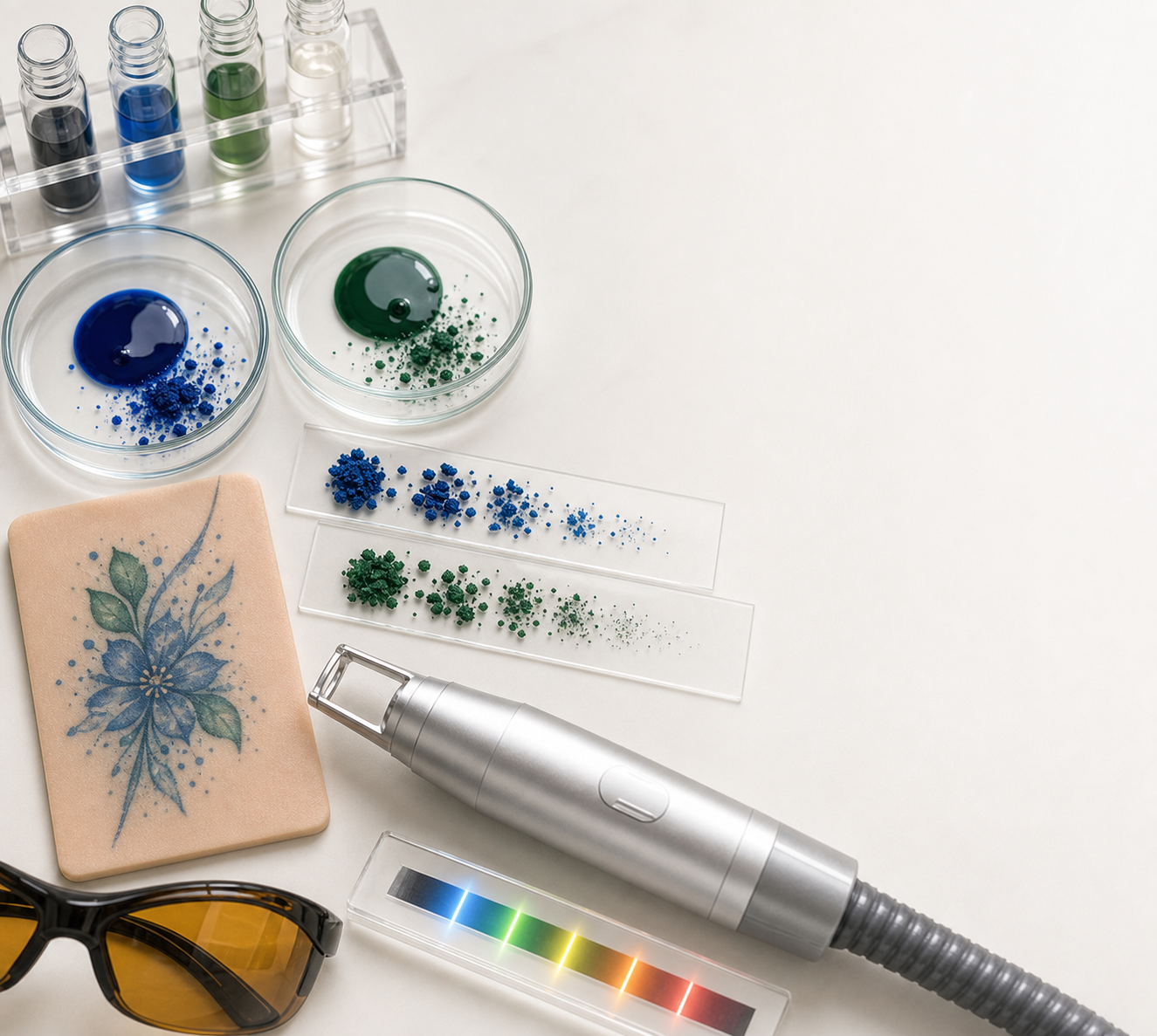
Gli inchiostri per tatuaggi blu e verdi possono essere più difficili da rimuovere perché non tutti assorbono le stesse lunghezze d'onda del laser.
Questa è la risposta semplice.
La risposta completa è più pratica:
I pigmenti blu e verdi spesso richiedono una corrispondenza di lunghezza d'onda più precisa, un'attenta valutazione del tipo di pelle, una durata dell'impulso adeguata, un intervallo sufficiente tra le sedute e aspettative realistiche da parte del cliente.
La rimozione dei tatuaggi con il laser non cancella l'inchiostro come una gomma da cancellare. Il laser emette brevi impulsi di energia sul pigmento del tatuaggio. Il pigmento assorbe l'energia, si frammenta in particelle più piccole e viene gradualmente eliminato dalla risposta immunitaria del corpo.
Se l'inchiostro non assorbe bene la lunghezza d'onda selezionata, il pigmento potrebbe sbiadire lentamente o reagire in modo non uniforme.
Ecco perché i tatuaggi blu e verdi possono risultare frustranti sia per i clienti che per le cliniche. Possono sbiadire dopo diverse sedute e poi smettere di migliorare. Potrebbero richiedere una diversa lunghezza d'onda, una piattaforma a picosecondi, un laser specifico o un piano di trattamento più conservativo.
Una sfumatura importante:
L'inchiostro blu scuro spesso dà buoni risultati, soprattutto quando si comporta come un pigmento nero o scuro. Il blu brillante, il verde acqua, il turchese e il verde sono solitamente più difficili da riprodurre.
Per saloni di bellezza, centri estetici, studi di rimozione tatuaggi e distributori, questo argomento è importante perché i clienti spesso chiedono:
- Perché il mio tatuaggio nero sta sbiadendo più velocemente della parte verde?
- Perché il contorno blu rimane visibile anche dopo diverse sessioni?
- Il laser a picosecondi rimuove meglio l'inchiostro verde?
- Ho bisogno di un'altra macchina?
- La clinica sta commettendo qualche errore?
Questo articolo spiega le vere ragioni e come comunicarle in modo responsabile.
Innanzitutto, non tutti gli inchiostri blu sono uguali.
Quando si parla di "inchiostro blu per tatuaggi", ci si può riferire a colori diversi:
- blu navy
- blu scuro
- blu reale
- azzurro cielo
- verde acqua
- turchese
- blu-verde
- sfumature viola-blu
Questi colori non si comportano allo stesso modo se sottoposti a trattamento laser.
L'inchiostro blu scuro può assorbire energia in modo simile all'inchiostro nero e può rispondere relativamente bene alle lunghezze d'onda comunemente utilizzate per la rimozione dei tatuaggi. La FDA osserva che il blu scuro e il nero sono generalmente tra i colori più facili da rimuovere.
Tuttavia, le miscele di blu brillante, verde acqua, turchese e blu-verde possono essere più difficili da ottenere. Potrebbero non assorbire l'energia Nd:YAG a 1064 nm con la stessa intensità dell'inchiostro nero e potrebbero richiedere lunghezze d'onda aggiuntive come l'alessandrite a 755 nm, il rubino a 694 nm o le più recenti lunghezze d'onda a picosecondi, a seconda del dispositivo e delle indicazioni locali.
Quindi una formulazione migliore è:
Il blu scuro potrebbe essere più facile da realizzare; le tonalità di blu brillante e blu-verde potrebbero essere più difficili.
Questo aiuta a evitare un errore comune nelle vendite: dire ai clienti che tutti i tatuaggi blu sono facili o che tutti i tatuaggi blu sono impossibili.
Perché l'inchiostro verde è spesso più difficile
L'inchiostro verde è spesso difficile da usare perché assorbe bene solo determinate parti dello spettro luminoso.
L'inchiostro nero assorbe un'ampia gamma di lunghezze d'onda, motivo per cui è solitamente più facile da trattare. L'inchiostro verde è più selettivo. Se la lunghezza d'onda del laser non corrisponde bene all'assorbimento del pigmento, l'energia del trattamento potrebbe attraversare il tessuto o interagire con il pigmento della pelle più che con il pigmento del tatuaggio.
La Società Americana di Medicina e Chirurgia Laser spiega che alcuni colori di tatuaggi sono più difficili da trattare perché i pigmenti colorati assorbono selettivamente la luce laser e possono essere trattati solo con laser specifici in base al colore del pigmento.
Questa è esattamente la sfida con l'inchiostro verde:
- Potrebbe essere necessaria una lunghezza d'onda non disponibile sulle piattaforme di base da 1064/532 nm.
- potrebbe richiedere più sessioni
- potrebbe rispondere meglio a lunghezze d'onda specifiche
- può essere influenzato dalla profondità del tatuaggio e dalla miscela di pigmenti
- Potrebbe essere necessario un trattamento più conservativo sui tipi di pelle più scura
Per i clienti, questo significa che l'inchiostro verde potrebbe sbiadire più lentamente dell'inchiostro nero.
Per le cliniche, questo significa che l'inchiostro verde dovrebbe indurre a una consultazione più accurata prima di iniziare il trattamento.
Il problema della lunghezza d'onda
La lunghezza d'onda è la ragione tecnica principale per cui gli inchiostri blu e verdi sono più difficili da lavorare.
I diversi pigmenti per tatuaggi assorbono diverse lunghezze d'onda della luce. La FDA afferma che il tipo di laser utilizzato dipende dal colore del tatuaggio, poiché colori diversi assorbono lunghezze d'onda diverse e i tatuaggi multicolore potrebbero richiedere l'utilizzo di più laser.
Il posizionamento tipico della lunghezza d'onda per la rimozione dei tatuaggi è il seguente:
| lunghezza d'onda | Discussione sull'uso comune | rilevanza del blu e del verde |
|---|---|---|
| 1064 nm Nd:YAG | Pigmento nero, blu scuro e molto più scuro | Potrebbe funzionare bene con il blu scuro, ma potrebbe risultare limitato con il verde brillante o il turchese. |
| 532 nm Nd:YAG/KTP | Rosso, arancione e alcuni colori caldi superficiali | Solitamente non è la scelta principale per il blu o il verde |
| Alessandrite a 755 nm | Spesso discusso per i pigmenti verdi, blu e resistenti. | Opzione importante per alcuni inchiostri blu/verdi |
| Rubino a 694 nm | Storicamente utilizzato per i pigmenti blu e verdi | Può essere utile, ma potrebbe comportare un maggior rischio di iperpigmentazione nelle pelli più scure. |
| Opzioni pico di classe 730/785 nm | Sistemi speciali a picosecondi per colori selezionati | Può essere utile con i pigmenti blu, verdi o viola a seconda del dispositivo |
Questa tabella non costituisce una prescrizione medica, bensì una guida comparativa.
La scelta corretta dipende ancora da:
- tipo di pelle del cliente
- colore del tatuaggio
- densità dell'inchiostro
- profondità del tatuaggio
- Tatuaggio professionale contro tatuaggio amatoriale
- storia di trattamenti precedenti
- indicazione del dispositivo
- formazione degli operatori
- norme locali
Il punto chiave è semplice:
Se una clinica non dispone di una lunghezza d'onda che corrisponda al pigmento verde o blu brillante, il tatuaggio potrebbe non sbiadire in modo efficace.
Perché 1064 nm non sono sempre sufficienti
Molti apparecchi per la rimozione dei tatuaggi utilizzano lunghezze d'onda di 1064 nm e 532 nm.
Questa configurazione è utile perché:
- 1064 nm è comunemente usato per i pigmenti per tatuaggi neri e scuri
- La lunghezza d'onda di 1064 nm penetra più in profondità ed è spesso più conservativa per i tipi di pelle più scura.
- 532 nm è comunemente usato per i pigmenti rossi, arancioni e alcuni pigmenti caldi superficiali.
Il posizionamento del prodotto A0507 di SHEFMON evidenzia anche le lunghezze d'onda di 1064 nm e 532 nm per i servizi di tatuaggio e pigmentazione.
Ma i pigmenti blu-verdi e verdi potrebbero richiedere un'ulteriore corrispondenza di lunghezza d'onda.
Ciò non significa che un apparecchio a 1064/532 nm sia inutile. Significa che le cliniche dovrebbero comprenderne i punti di forza e i limiti.
Una clinica specializzata nella rimozione di tatuaggi neri, blu scuro e nello sbiadimento del pigmento delle sopracciglia potrebbe iniziare con una piattaforma Q-switched a 1064/532 nm o a picosecondi. Una clinica che si concentra principalmente sulla rimozione di tatuaggi a colori, soprattutto verdi e turchesi, potrebbe invece dover valutare l'utilizzo di lunghezze d'onda più ampie o instaurare rapporti di collaborazione con altri professionisti.
Un posizionamento responsabile si presenta così:
“"La configurazione 1064/532 nm è ideale per molti tipi di tatuaggi e pigmenti, ma gli inchiostri blu-verdi e verdi resistenti potrebbero richiedere lunghezze d'onda aggiuntive o più sedute."”
I laser a picosecondi possono essere d'aiuto, ma non sono magici.
I laser a picosecondi utilizzano impulsi ultracorti misurati in picosecondi. Possono creare un effetto fotoacustico più intenso rispetto ai sistemi Q-switched a nanosecondi, che in alcuni casi possono frammentare il pigmento in particelle più piccole con una minore diffusione termica.
La letteratura clinica include segnalazioni di trattamenti efficaci per i pigmenti blu e verdi con la tecnologia laser ad alessandrite a picosecondi da 755 nm. Una revisione sistematica rileva inoltre che i laser a picosecondi potrebbero essere più efficaci dei laser a nanosecondi, principalmente per l'inchiostro nero e blu, sebbene le prove a supporto presentino dei limiti.
Ciò significa che la tecnologia a picosecondi può rappresentare un vero vantaggio.
Ma ciò non significa:
- rimozione di una sessione
- nessun dolore
- nessuna assistenza post-vendita
- nessun rischio di cicatrici
- tutto l'inchiostro verde scompare rapidamente
- tutto l'inchiostro blu reagisce allo stesso modo
- qualsiasi macchina pico tratta ogni colore di tatuaggio
La lunghezza d'onda è ancora importante.
Un laser a picosecondi con sole lunghezze d'onda di 1064 nm e 532 nm potrebbe non comportarsi allo stesso modo di un sistema a picosecondi che includa anche 755 nm, 730 nm, 785 nm o un'altra lunghezza d'onda focalizzata sul colore.
Per i distributori, questo è importante:
Non presentate "pico" come una parola magica. Vendete la durata dell'impulso, la configurazione della lunghezza d'onda, la formazione e l'assistenza post-vendita.
Il problema della miscela di pigmenti
Gli inchiostri per tatuaggi non sono sempre di colori puri.
Un tatuaggio verde può essere realizzato con una miscela di pigmenti gialli, blu e di altri colori. Un tatuaggio color verde acqua può includere blu, verde, bianco e altri componenti. Un tatuaggio azzurro pastello può contenere pigmento bianco, che può comportarsi in modo imprevedibile.
Questo è importante perché ogni componente del pigmento può assorbire una diversa lunghezza d'onda.
La FDA fa notare che i tatuaggi color carne, l'inchiostro bianco e il trucco permanente sono particolarmente insidiosi perché i pigmenti possono ossidarsi e diventare neri se trattati con il laser.
Quindi, quando un cliente dice:
“Perché la parte verde non sbiadisce?”
La risposta potrebbe essere:
- il pigmento verde non assorbe bene la lunghezza d'onda selezionata
- L'inchiostro è una miscela di più pigmenti
- può essere presente pigmento bianco
- il tatuaggio è denso o stratificato
- il pigmento è intenso
- Il trattamento deve rimanere conservativo per proteggere la pelle.
Ecco perché la consultazione, i test epicutanei laddove appropriati e la documentazione fotografica sono importanti.
Il tipo di pelle rende il blu e il verde più complicati
La rimozione dei tatuaggi con il laser non riguarda solo il colore dell'inchiostro.
Riguarda anche la pelle circostante.
La pelle più scura contiene più melanina. Se una determinata lunghezza d'onda viene fortemente assorbita dalla melanina, può aumentare il rischio di ustioni, iperpigmentazione post-infiammatoria o ipopigmentazione.
Ciò riduce la finestra temporale disponibile per il trattamento.
Ad esempio, alcune lunghezze d'onda che possono aiutare a colpire il pigmento verde o blu potrebbero richiedere maggiore cautela sui tipi di pelle più scura. Il medico potrebbe dover utilizzare impostazioni conservative, intervalli di trattamento più lunghi o un piano diverso.
I clienti dovrebbero chiedere:
- Questa clinica ha già trattato il mio tipo di pelle?
- Quale lunghezza d'onda verrà utilizzata e perché?
- È consigliabile eseguire un patch test?
- Quali rischi di pigmentazione devo conoscere?
- Quanto tempo devo aspettare tra una sessione e l'altra?
- Quali cure post-operatorie sono necessarie?
L'AAD avverte che gli effetti collaterali come ustioni, ferite, cicatrici e alterazioni della consistenza della pelle possono essere più probabili quando la rimozione dei tatuaggi viene eseguita da personale non qualificato dal punto di vista medico.
Per le cliniche professionali, ciò significa che la scelta delle apparecchiature e la formazione degli operatori devono essere discusse congiuntamente.
Perché alcuni tatuaggi blu e verdi sbiadiscono in modo non uniforme
Le sezioni blu e verdi del tatuaggio potrebbero sbiadire in modo non uniforme perché i tatuaggi vengono realizzati a strati.
Diversi fattori possono influenzare la risposta:
| Fattore | Perché è importante |
|---|---|
| Profondità dell'inchiostro | Una pigmentazione più intensa potrebbe richiedere più sedute e un'attenta selezione dell'energia. |
| Densità dell'inchiostro | Il colore molto denso impiega più tempo a frammentarsi e a schiarirsi |
| età dei tatuaggi | I tatuaggi più vecchi possono sbiadire più facilmente rispetto a quelli più recenti con inchiostro denso, ma non sempre |
| storia di insabbiamento | I tatuaggi a strati contengono più pigmento e colori misti |
| Posizione | Le aree con circolazione più lenta potrebbero dissanguarsi più lentamente |
| Tipo di pelle | Le impostazioni di sicurezza potrebbero dover essere più conservative. |
| Trattamenti precedenti | Cicatrici o alterazioni della pigmentazione possono complicare le sedute future. |
| lunghezza d'onda del laser | Una scarsa corrispondenza della lunghezza d'onda può rallentare lo svanimento |
Ecco perché un contorno nero può sbiadire rapidamente mentre il riempimento verde rimane visibile.
Ciò non significa necessariamente che la macchina sia difettosa.
Potrebbe significare che il tatuaggio necessita di una lunghezza d'onda diversa, di più sedute, di un intervallo maggiore tra i trattamenti o di aspettative riviste.
Cosa dovrebbero chiedere i clienti prima di rimuovere l'inchiostro blu o verde
I clienti dovrebbero porre domande più specifiche se il loro tatuaggio include il blu, il verde acqua, il turchese o il verde.
Tra le domande utili figurano:
- 1. Quali colori vedi nel mio tatuaggio?
- 2. Il mio inchiostro blu è blu scuro o di una tonalità blu-verde più chiara?
- 3. Quale lunghezza d'onda utilizzerai sulle aree blu o verdi?
- 4. La vostra macchina dispone di una lunghezza d'onda adatta per il pigmento verde resistente?
- 5. Il mio tipo di pelle è adatto a quella lunghezza d'onda?
- 6. Le impostazioni di trattamento saranno diverse per ogni colore?
- 7. Dovremmo prima eseguire un patch test?
- 8. Quante sedute potrebbero essere necessarie?
- 9. È più realistico sfumare il tatuaggio per coprirlo piuttosto che rimuoverlo completamente?
- 10. Quali rischi devo aspettarmi?
- 11. Quali cure post-operatorie devo seguire?
- 12. Se l'inchiostro verde smette di sbiadire, qual è il prossimo passo?
Queste domande aiutano i clienti a confrontare le cliniche in modo più intelligente.
Aiutano inoltre le cliniche a evitare di vendere servizi non necessari.
Come le cliniche dovrebbero spiegare l'inchiostro blu e verde
Una clinica non dovrebbe dire:
- L'inchiostro verde non si può rimuovere.
- L'inchiostro blu è sempre facile
- pico rimuove tutti i colori
- una sola lunghezza d'onda gestisce ogni tatuaggio
- garantiamo la rimozione completa
- nessun rischio di cicatrici
- adatto a tutti i tipi di pelle
Una formulazione migliore è:
“I pigmenti blu e verdi possono essere più sensibili alla lunghezza d'onda rispetto all'inchiostro nero. Il blu scuro potrebbe rispondere bene, mentre il blu brillante, il turchese e il verde potrebbero richiedere lunghezze d'onda più specifiche, più sedute o un percorso di cura personalizzato. Valuteremo il tuo tipo di pelle, il colore del tatuaggio e la tua storia clinica prima di scegliere le impostazioni.”
Questa formulazione è più professionale perché spiega il problema senza spaventare il cliente.
Come i distributori dovrebbero vendere le macchine laser per la rimozione dei tatuaggi blu e verdi
I distributori dovrebbero utilizzare inchiostro blu e verde come strumento informativo.
Invece di dire:
“Questo laser rimuove tutti i colori dei tatuaggi.”
Dire:
“"Questa configurazione laser supporta solidi servizi di rimozione tatuaggi. Per il mercato dei tatuaggi a colori, in particolare quelli con pigmenti verdi, turchesi e blu brillante, gli acquirenti dovrebbero confrontare le opzioni di lunghezza d'onda, la durata dell'impulso, la formazione necessaria e la domanda locale di trattamenti."”
Questo contribuisce a dare maggiore credibilità ai distributori.
Protegge inoltre l'acquirente da aspettative irrealistiche.
Un confronto pratico tra distributori può essere strutturato in questo modo:
| Tipo di acquirente | Posizionamento suggerito della macchina | Nota di vendita |
|---|---|---|
| Studio di tatuaggi in fase di avvio specializzato nella sfumatura dei tatuaggi. | Piattaforma Q-switched o a picosecondi da 1064/532 nm. | Un buon menu di base per il nero, i pigmenti scuri e alcuni colori caldi selezionati. |
| Clinica per la correzione della pigmentazione e delle sopracciglia | Laser professionale 1064/532 nm | Sottolineare lo screening conservativo e il rischio di iperpigmentazione. |
| Studio di rimozione tatuaggi a colori | Piattaforma pico multi-lunghezza d'onda o specializzata | Il verde, il turchese e il blu brillante potrebbero necessitare di un supporto per lunghezze d'onda più ampie |
| Distributore che costruisce un marchio locale | Linea laser OEM/ODM con pacchetto di formazione incluso. | Vendita di macchinari, materiale didattico, occhiali, moduli di consenso, assistenza post-vendita e supporto tecnico. |
È in questo ambito che SHEFMON può posizionarsi, andando oltre il semplice prodotto.
SHEFMON può supportare i distributori con macchine per la rimozione di tatuaggi e pigmentazione, posizionamento laser YAG super picosecondi Q-switched A0507 da 1064 nm / 532 nm, opzioni OEM/ODM, materiale formativo, assistenza in garanzia, pezzi di ricambio e logistica globale.
Aspettative di trattamento per l'inchiostro blu e verde
I clienti devono comprendere che l'inchiostro blu e verde potrebbe richiedere:
- più sessioni dell'inchiostro nero
- impostazioni diverse per colori diversi
- intervalli più lunghi tra le sessioni
- energia più conservativa sulla pelle più scura
- un patch test
- combinazione di lunghezze d'onda
- sbiadimento piuttosto che completa scomparsa
- pianificazione dell'insabbiamento
- invio a una clinica con una lunghezza d'onda diversa
La FDA spiega che la rimozione dei tatuaggi con il laser di solito richiede più sedute e che la rimozione completa potrebbe non essere sempre possibile.
Questa è l'aspettativa più importante:
Uno sbiadimento lento non significa necessariamente un fallimento. Potrebbe semplicemente significare che il pigmento è difficile da applicare, che la corrispondenza della lunghezza d'onda è limitata o che la pelle richiede un trattamento più conservativo.
Risposta definitiva
Gli inchiostri per tatuaggi blu e verdi sono più difficili da rimuovere perché dipendono maggiormente dalla lunghezza d'onda rispetto all'inchiostro nero.
L'inchiostro nero assorbe molte lunghezze d'onda, quindi in genere la sua risposta è più prevedibile. I pigmenti verdi, turchesi, turchese e alcuni blu brillanti assorbono determinate lunghezze d'onda in modo più ristretto, quindi potrebbero richiedere opzioni pico di classe 755 nm, 694 nm, 730/785 nm o un'altra lunghezza d'onda adatta a seconda del dispositivo e del tipo di pelle.
Il blu scuro rappresenta un'importante eccezione. Il blu scuro può dare buoni risultati, soprattutto quando si comporta come un pigmento nero. Il blu brillante, il blu-verde e il verde sono solitamente più difficili da riprodurre.
I laser a picosecondi possono essere d'aiuto, ma non fanno miracoli. Il confronto corretto non si riduce a una semplice distinzione tra "picosecondi e non picosecondi". Cliniche e distributori dovrebbero valutare la configurazione della lunghezza d'onda, la durata dell'impulso, la sicurezza per i diversi tipi di pelle e di pigmento, la formazione degli operatori, gli intervalli tra i trattamenti, le cure post-trattamento e l'assistenza post-vendita.
Per i distributori SHEFMON, il messaggio migliore è:
La rimozione dei tatuaggi blu e verdi dovrebbe essere offerta come un sistema di servizi professionali, non come la semplice promessa di una macchina. Il laser giusto, la formazione, la selezione dei clienti, l'assistenza post-trattamento e il supporto del fornitore sono tutti elementi fondamentali.
Domande frequenti
L'inchiostro verde per tatuaggi è il più difficile da rimuovere?
Il verde è spesso uno dei colori più difficili da ottenere perché richiede specifiche lunghezze d'onda del laser. Tuttavia, la difficoltà dipende anche dalla miscela di pigmenti, dalla profondità del tatuaggio, dal tipo di pelle e dalla configurazione dell'apparecchiatura.
L'inchiostro blu dei tatuaggi è difficile da rimuovere?
Dipende dalla tonalità. Il blu scuro può reagire bene, mentre le tonalità di blu brillante, verde acqua e blu-verde possono essere più difficili.
Perché l'inchiostro nero dei tatuaggi è più facile da rimuovere?
L'inchiostro nero assorbe un'ampia gamma di lunghezze d'onda laser, quindi di solito si frammenta in modo più prevedibile rispetto ai colori selettivi come il verde.
Quale lunghezza d'onda viene utilizzata per l'inchiostro verde per tatuaggi?
Spesso si parla di inchiostro verde in relazione a lunghezze d'onda come l'alessandrite a 755 nm, il rubino a 694 nm o le più recenti opzioni a pico-lunghezza d'onda, a seconda del dispositivo e dell'indicazione.
È possibile rimuovere l'inchiostro verde con una luce a 1064 nm?
La lunghezza d'onda di 1064 nm è comunemente utilizzata per i pigmenti neri e scuri. Potrebbe non essere la più adatta per molti pigmenti verdi o turchesi, quindi le cliniche dovrebbero valutare attentamente il tatuaggio.
I laser a picosecondi possono rimuovere i tatuaggi blu e verdi?
I laser a picosecondi possono essere utili per i pigmenti resistenti, soprattutto se la lunghezza d'onda è adeguata. Tuttavia, non garantiscono la rimozione completa e richiedono comunque più sedute.
Perché la parte verde rimane visibile anche dopo che l'inchiostro nero sbiadisce?
Il pigmento verde potrebbe non assorbire la lunghezza d'onda selezionata altrettanto bene quanto l'inchiostro nero, oppure potrebbe essere più scuro, più denso o miscelato con altri pigmenti.
La rimozione di tatuaggi blu o verdi può lasciare cicatrici?
Sì, la formazione di cicatrici è possibile con qualsiasi rimozione di tatuaggi tramite laser se le impostazioni, il tipo di pelle, la cura post-trattamento o la tecnica non sono gestiti correttamente.
I clienti dovrebbero scegliere una clinica basandosi esclusivamente sulla presenza di un laser a picosecondi?
No. Dovrebbero chiedere informazioni sulle opzioni di lunghezza d'onda, sul tipo di pelle, sull'esperienza pregressa, sulla formazione, sulla pianificazione del trattamento e sulla cura post-trattamento.
In che modo SHEFMON può supportare le cliniche che si occupano di tatuaggi a colori?
SHEFMON offre supporto nella selezione di laser per tatuaggi e pigmentazione, posizionamento A0507, personalizzazione OEM/ODM, materiali di formazione, assistenza in garanzia, ricambi e logistica per distributori e acquirenti professionali.