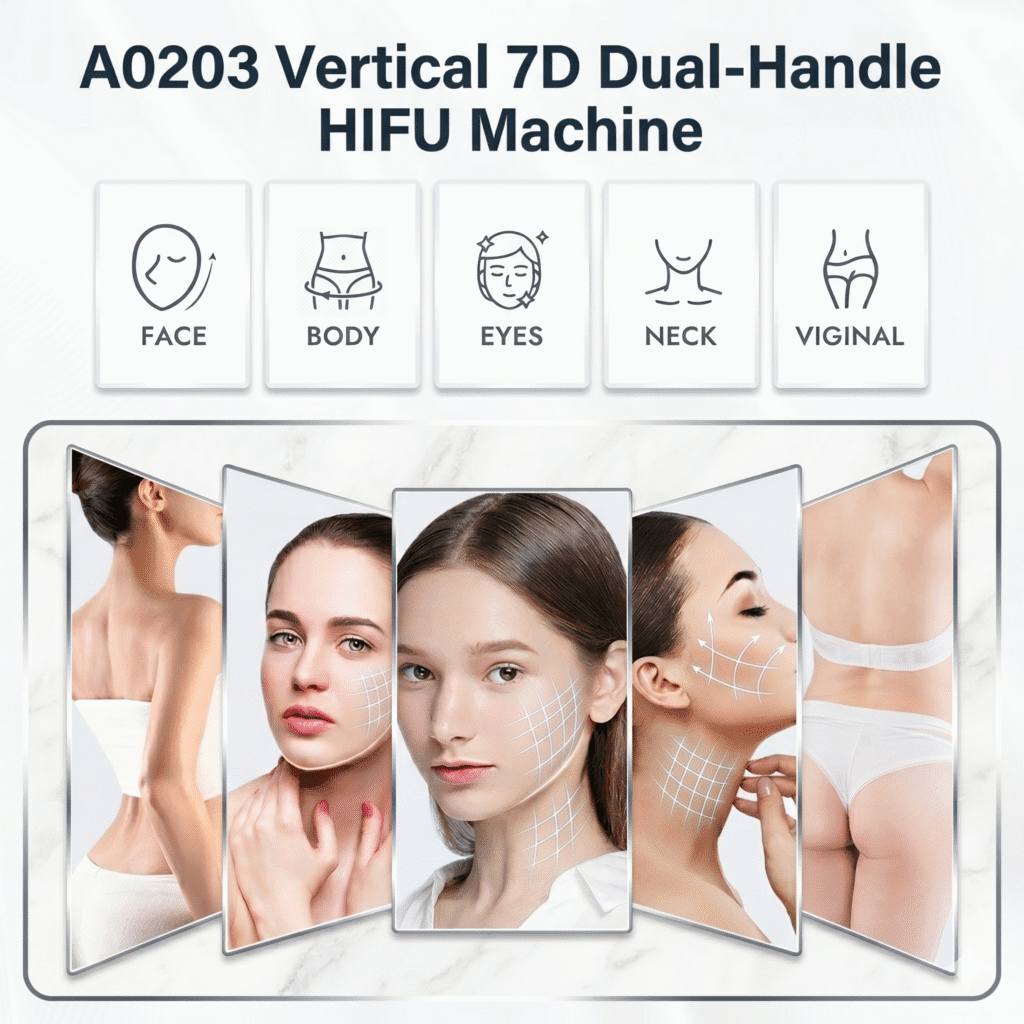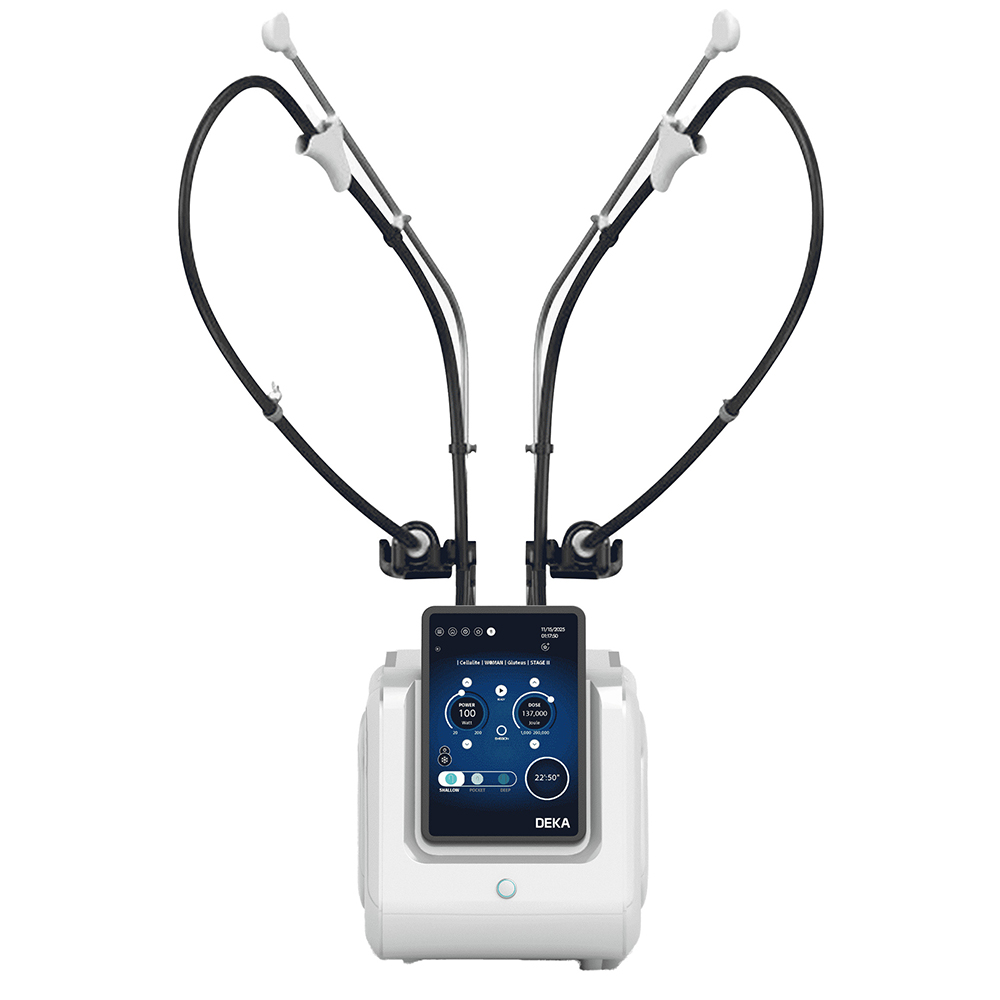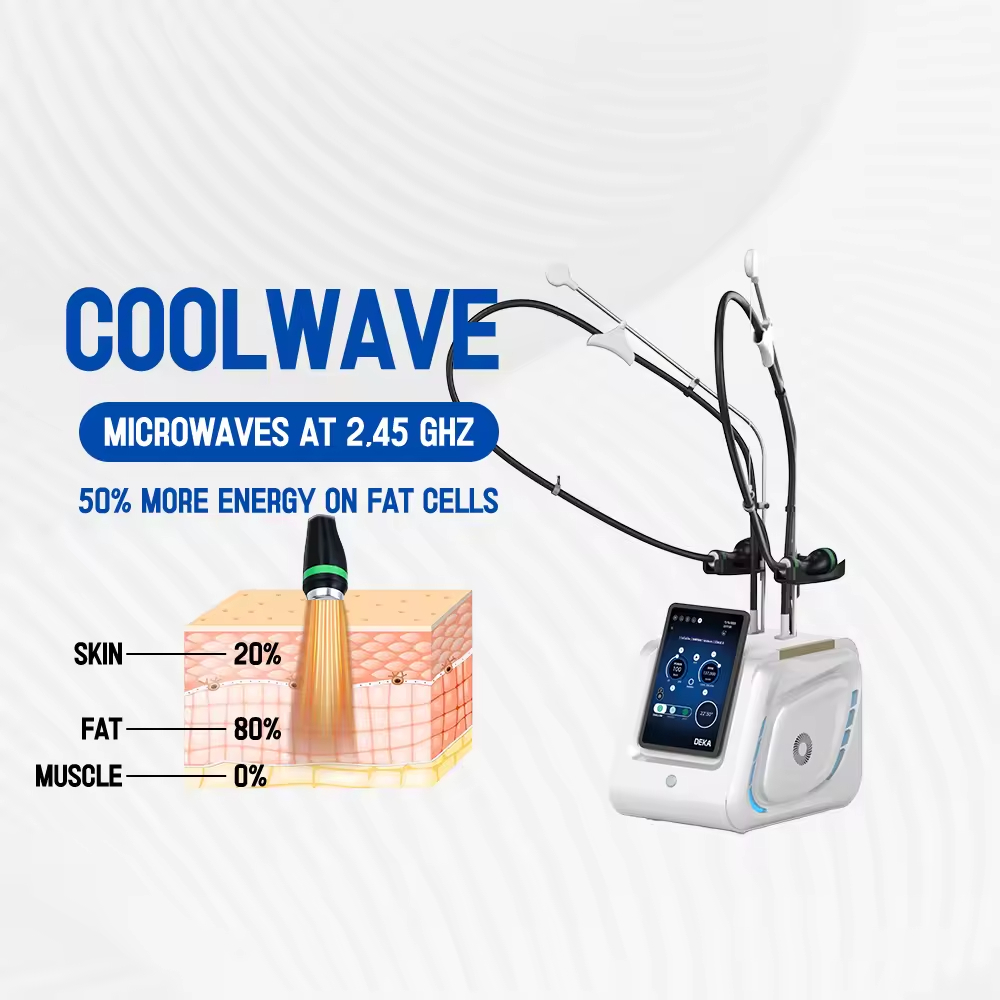










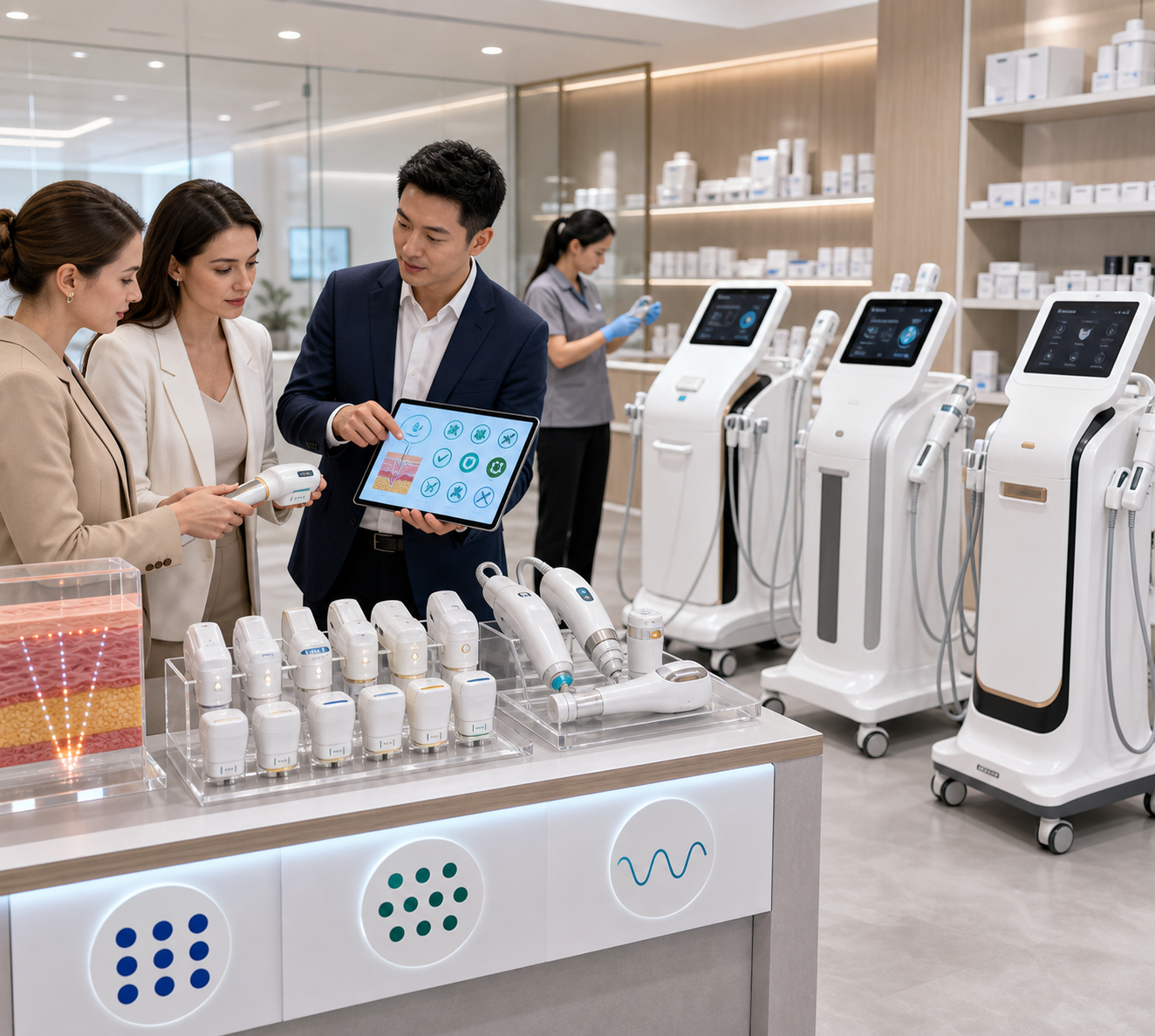
Choosing a HIFU machine supplier is an important decision for beauty salons, spas, skin management centers, distributors, and OEM buyers. HIFU equipment can support high-value projects such as facial firming, skin tightening, contour management, wrinkle appearance care, and body contouring where permitted. But it is also an energy-based technology that requires serious attention to device quality, operator training, customer suitability, regulatory documentation, and after-sales support.
The market is full of labels such as 3D HIFU, 4D HIFU, 7D HIFU, 9D HIFU, Vmax HIFU, linear HIFU, MMFU, MFU, macro focused ultrasound, micro focused ultrasound, and cartridge-free HIFU. These names can be useful for marketing, but they are not always standardized technical categories. One supplier’s “7D” machine may not be equivalent to another supplier’s “7D” machine. A Vmax model from one factory may have different cartridges, shot cost, power control, treatment depth, and user interface from another Vmax-style device.
For buyers, the professional approach is simple: do not buy a name. Buy a verified system from a supplier that can prove what the machine does, how it is tested, how it is used safely, how consumables are supplied, and how the project can be sold responsibly.
This guide explains how beauty salons and distributors should evaluate HIFU machine suppliers and compare 7D, 9D, and Vmax models before ordering.
What Is HIFU In Beauty Equipment?
HIFU means high intensity focused ultrasound. In aesthetic settings, HIFU equipment is designed to deliver focused ultrasound energy to specific tissue depths. The energy can create localized heating or mechanical effects depending on device design, settings, and intended use. In beauty and medical aesthetic marketing, HIFU is often positioned for non-invasive lifting, tightening, firming, contouring, wrinkle appearance management, and body shaping services.
Regulatory authorities treat focused ultrasound seriously. FDA’s classification for focused ultrasound stimulator systems for aesthetic use describes a device using focused ultrasound to produce localized mechanical motion within tissues and cells for localized heating for tissue coagulation or mechanical cellular membrane disruption for non-invasive aesthetic use. FDA classifies this product code OHV device as Class II with special controls and 510(k) review. This shows why HIFU should not be treated as a casual beauty gadget.
For salons, the practical lesson is that HIFU supplier selection must cover more than price, model name, and cartridge count. It must include documentation, acoustic performance, electrical safety, software control, labeling, contraindications, training, and risk communication.
7D, 9D And Vmax Are Market Names, Not Enough By Themselves
Many salons ask whether they should buy 7D HIFU, 9D HIFU, or Vmax HIFU. The better question is: what does the exact model actually deliver?
The terms 7D, 9D, and Vmax are commonly used in the beauty equipment market, but they are not universal regulatory or engineering standards. They may refer to:
- Number of lines per shot
- Cartridge speed
- Treatment depth range
- Face and body cartridge combination
- Linear treatment pattern
- Dot or line treatment mode
- Cartridge-free handle design
- Larger display and newer software
- Supplier generation naming
- Marketing position in the factory catalog
Because the names are not standardized, a buyer should compare actual technical and business factors:
- Treatment depth options
- Cartridge type and cost
- Shots per cartridge
- Line length and dot spacing
- Acoustic power testing
- Output consistency
- Cooling and handpiece comfort
- Safety alarms
- Operator training
- Supported treatment areas
- Warranty and spare parts
- Documentation for the exact model
- Market authorization in the target country where applicable
In short: 7D, 9D, and Vmax labels are starting points for discussion, not final proof of quality.
How 7D HIFU Models Are Usually Positioned
In the market, 7D HIFU machines are often promoted as faster, more comfortable, and more refined than earlier HIFU generations. Suppliers may describe them as having multi-line output, precise dot spacing, facial cartridges, body cartridges, or micro-focused treatment options.
Potential advantages may include:
- Faster operation than older single-line systems
- Multiple treatment depths for face and body
- More modern user interface
- Better treatment area coverage
- Easier project packaging for salons
- Stronger marketing appeal to customers
But the buyer must verify whether these advantages are real. Ask the supplier:
- What does “7D” mean in your machine?
- How many lines are delivered per shot?
- What are the exact cartridge depths?
- What is the shot count per cartridge?
- What is the line length?
- What is the dot spacing?
- What is the energy range?
- How is energy output tested?
- Does the machine support both face and body cartridges?
- Is the model covered by the documents you provide?
If the supplier cannot define “7D” technically, the label is only marketing.
How 9D HIFU Models Are Usually Positioned
9D HIFU machines are often positioned as a newer or higher-end generation. Suppliers may promote larger screens, faster treatment speed, more lines, multiple cartridges, better comfort, larger treatment area, or stronger body mode.
Potential advantages may include:
- Higher treatment efficiency
- More cartridge options
- Face and body project flexibility
- Better salon marketing story
- More premium customer perception
- More adjustable treatment parameters
But “9D” does not automatically mean safer or better. A poorly made 9D machine can be worse than a well-made 7D machine. Buyers should ask:
- What exact improvement does 9D have over your 7D model?
- Is the difference in acoustic output, cartridge design, software, speed, or appearance?
- Are the same cartridges used?
- Is the energy output more stable?
- Are treatment protocols different?
- Does the machine have stronger safety control?
- Is the after-sales cost higher?
- Are replacement cartridges more expensive?
For salons, 9D is worth considering only if the extra cost brings real operational value, not just a more impressive name.
How Vmax HIFU Models Are Usually Positioned
Vmax HIFU machines are often marketed as flexible, fast, and convenient for salon use. In many catalogs, Vmax-style machines are promoted for face lifting, wrinkle appearance management, body contouring, and multi-depth treatment. Some suppliers position Vmax as cartridge-based, while others describe it as cartridge-free or low-consumable depending on the model.
Because Vmax is used widely as a market term, buyers must ask for specific details:
- Does this Vmax machine use cartridges, probes, or another handpiece structure?
- What depths are included?
- Are depths changed by cartridge, probe, software, or handle?
- What is the shot cost?
- What is the treatment speed?
- What areas are recommended?
- What documents apply to this exact model?
- What warranty applies to the handpiece?
- What happens if a probe or cartridge fails?
Vmax may be attractive for salons that want a compact, easier-to-promote HIFU project. But it should still be judged by performance, safety, and service support, not by name alone.
Match The HIFU Model To Your Salon Positioning
The right HIFU machine depends on the salon’s customer base and project strategy.
Small Beauty Salons
Small salons usually need a practical model with clear operation, manageable cartridge cost, simple project packaging, and supplier training. A compact 7D or Vmax-style machine may be easier to launch if the salon has limited room space and a smaller customer base.
Skin Management Centers
Skin management centers often need more professional positioning, better case records, facial protocol support, and multiple treatment depths. They may benefit from a 7D or 9D model with strong facial cartridges and structured anti-aging packages.
High-End Beauty Salons
High-end salons need premium design, strong documentation, advanced training, clear consultation process, privacy, high-quality case materials, and strong after-sales service. A higher-end 9D or advanced Vmax-style model may fit if the supplier can prove real performance and support.
Body Management Centers
Body centers need body cartridge performance, treatment area efficiency, durable handpieces, realistic body contouring claims, and comfortable appointment flow. They should not buy a face-focused machine only because it has an attractive price.
Distributors And Agents
Distributors need model differentiation, wholesale price structure, spare cartridges, training materials, marketing support, territory policy, and stable quality across batches. A distributor should compare 7D, 9D, and Vmax not only by machine cost, but by sell-through difficulty and after-sales burden.
Verify Supplier Identity
Before comparing models, verify the supplier.
Ask for:
- Legal company name
- Business license
- Factory address
- Office address
- Years in operation
- Main product categories
- Production capacity
- Export markets
- Quality management certificate
- Engineering team details
- After-sales team structure
- Customer references where available
- Factory inspection photos or videos
Clarify whether the seller is:
- Legal manufacturer
- Brand owner
- Trading company
- Contract manufacturer
- Distributor of another factory
- OEM or ODM provider
Trading companies can be useful, but buyers should know who is responsible for quality, documents, cartridge supply, spare parts, and warranty.
Check Regulatory Documentation
HIFU machine documentation depends on the target market. Do not assume that one certificate allows sale in every country.
United States
For the United States, focused ultrasound stimulator systems for aesthetic use can fall under FDA product code OHV, 21 CFR 878.4590, Class II special controls, and 510(k) premarket notification requirements depending on intended use and device design. FDA guidance describes risks such as thermal injury, mechanical injury, ocular injury, electrical shock, inflammation or foreign body response, and use error.
Buyers should ask for official 510(k) records where applicable, device listing and registration information where applicable, intended-use statement, labeling, user manual, warning and contraindication information, and test evidence for the exact model.
European Union
In the EU, aesthetic devices without an intended medical purpose may still fall under MDR Annex XVI and related common specifications when they have similar risk profiles to medical devices. Buyers should request CE marking details, declaration of conformity, notified body information where applicable, technical documentation support, risk management, clinical evaluation, and labeling.
China
In China, aesthetic ultrasound products may be evaluated based on working principle, technical parameters, and intended use. Some medical beauty ultrasound products may be managed as medical devices depending on claims and risk. Buyers should verify NMPA requirements, registration status, production license, and local rules before importing, selling, or operating the machine.
Other Markets
The UK, Australia, Canada, Singapore, Middle East, Southeast Asia, and Latin American markets may have their own requirements. A professional supplier should tell buyers what documents are available and what the buyer must verify locally.
If a supplier says “CE and FDA can sell everywhere”, be cautious.
Do Not Misuse FDA Language
Many beauty equipment sellers use phrases such as “FDA approved”, “FDA certified”, or “FDA registered” loosely. These phrases can be misleading.
FDA establishment registration or device listing is not the same as FDA clearance or approval. For many aesthetic devices, the more relevant question may be whether the exact model has a 510(k) clearance for the intended use. Buyers should ask for the exact number, official database link, device name, product code, regulation number, and indications for use.
Good questions:
- Is this exact model FDA cleared, listed, registered, or only made by a registered establishment?
- What is the product code?
- What is the 510(k) number where applicable?
- What intended use is cleared or listed?
- Does the clearance cover face, neck, body, or all claimed areas?
- Does it cover this model name and manufacturer?
- Does it cover private label versions?
If the supplier cannot answer, do not rely on the claim.
Verify Exact Model Coverage
Documents must match the exact model you buy.
Request:
- Full certificate copies
- Full test reports where available
- Certificate holder name
- Manufacturer name
- Product model
- Product photos in the report
- Label and nameplate
- User manual
- Software version where relevant
- Cartridge list
- Treatment depth list
- Accessories included
- Intended use
- Indications for use where applicable
- Declaration of conformity where applicable
- Official database records where applicable
If you are buying OEM or private label, ask whether the same documents cover the customized model name, logo, label, packaging, manual, software, and claims. Do not assume that a certificate for one version covers every version.
Evaluate Acoustic Output And Energy Stability
HIFU performance depends on acoustic output and focal energy control. A professional supplier should be able to explain and test this.
Ask:
- What is the frequency of each cartridge?
- What is the focal depth?
- What is the acoustic power or energy output?
- What is the output range?
- How is output measured?
- What test equipment is used?
- What is the acceptable tolerance?
- Is output stable across cartridges?
- Is output stable during long operation?
- What is the focal zone size?
- What is the dot spacing?
- What is the line spacing?
- What is the line length?
- How is non-target tissue protected?
FDA guidance for focused ultrasound aesthetic systems discusses bench testing, acoustic power measurement, acoustic beam profile characterization, target location, thermal effects, non-target tissue safety, software validation, and labeling. While buyers may not perform full regulatory testing themselves, they should choose suppliers that understand these issues.
Compare Cartridge Depths
Cartridge depth is one of the most important HIFU purchasing factors. Common market depths may include 1.5 mm, 3.0 mm, 4.5 mm, 6.0 mm, 8.0 mm, 10 mm, 13 mm, 16 mm, and body-focused depths depending on the machine.
Common positioning:
- 1.5 mm: superficial facial care and fine area use where appropriate
- 3.0 mm: dermal layer targeting in facial projects
- 4.5 mm: deeper facial support, often marketed around SMAS-level care
- 6.0 mm and deeper: body or thicker tissue areas depending on device design
- 13 mm or 16 mm: body contouring positioning in some systems
These descriptions are market positioning, not a universal guarantee. The supplier should provide treatment area guidance, contraindications, energy settings, and training for each depth. A salon should never let staff freely choose depths without training.
Calculate Cartridge And Shot Cost
HIFU profitability depends heavily on cartridge cost. A cheap machine can become expensive if cartridges are short-lived or overpriced.
Ask:
- How many shots per cartridge?
- Is shot count real or only software-counted?
- Can shot count be reset?
- What is the replacement cost?
- Are cartridges always in stock?
- What is the lead time?
- Are cartridges compatible across 7D, 9D, and Vmax models?
- What happens if a cartridge fails early?
- Is cartridge warranty separate?
- Are face and body cartridges priced differently?
Calculate cost per customer:
- Cartridge cost per shot
- Number of lines or shots per treatment area
- Staff time
- Room time
- Gel or consumable cost
- Machine depreciation
- Marketing cost
- Follow-up time
If the supplier cannot explain shot cost, the salon cannot price the project accurately.
Compare Treatment Speed And Line Technology
Many 7D and 9D machines are promoted as faster than traditional HIFU because they can deliver multiple lines or dots more efficiently. Treatment speed matters because it affects appointment flow and customer comfort.
Ask:
- How many lines are delivered per trigger?
- What is the line length?
- What is the shot interval?
- Can line length be adjusted?
- Can dot spacing be adjusted?
- Does higher speed reduce energy consistency?
- Does the handpiece heat during long sessions?
- Can speed be used safely at practical energy levels?
- How long does a full face session take?
- How long does a body area session take?
Do not choose speed over control. A faster system is valuable only if it remains stable, accurate, and comfortable.
Evaluate Handpiece Design
The handpiece is where staff feel the machine quality every day.
Check:
- Weight
- Grip comfort
- Cable flexibility
- Cartridge lock stability
- Cartridge recognition
- Skin contact surface
- Heat management
- Trigger design
- Indicator lights
- Treatment angle
- Easy cleaning
- Replacement cost
- Warranty coverage
- Spare handpiece availability
A machine with a beautiful console but poor handpiece design can frustrate therapists and reduce treatment quality.
Evaluate Safety Features
HIFU involves focused energy. Safety features are essential.
Check:
- Emergency stop
- Standby mode
- Output confirmation
- Cartridge recognition
- Shot counter
- Energy lock
- User permission settings
- Error alarms
- Overtemperature protection
- Cooling time control
- Contact warning
- Software self-check
- Treatment timer
- Maintenance reminders
- Warning labels
- User manual safety instructions
FDA guidance lists several risks for focused ultrasound aesthetic systems, including thermal injury, mechanical injury, ocular injury, electrical shock, and use error. Supplier evaluation should include how the machine design and training reduce those risks.
Customer Suitability And Contraindications
A professional HIFU supplier should provide customer screening guidance. Salons should not sell HIFU to every customer.
Screening should consider:
- Open wounds or lesions
- Severe or cystic acne in the treatment area
- Active implantable devices such as pacemakers or defibrillators
- Metallic implants in the treatment area
- Pregnancy where relevant
- Recent surgery or filler in the area where relevant
- Skin infection or inflammation
- Severe skin sensitivity
- Nerve-related concerns
- Customer expectations
- Medical history questions where legally and professionally appropriate
FDA guidance for focused ultrasound aesthetic systems specifically recommends contraindication labeling for open wounds or lesions, severe or cystic acne, active implantables, and metallic implants in relevant areas. Salons should use this kind of information to build a responsible consultation process.
Discuss Possible Side Effects
Customers should understand that non-invasive does not mean risk-free.
Possible reactions may include:
- Temporary redness
- Swelling
- Tenderness
- Tingling
- Bruising
- Pain during or after treatment
- Burns
- Numbness or altered sensation
- Unsatisfactory result
Singapore’s National Environment Agency notes that possible adverse health effects of HIFU can range from mild pain, erythema, and edema to pain during or after treatment, bruising, tingling, skin burns, and other effects. This does not mean every customer will experience these issues, but it shows why risk communication and training matter.
Salons should explain expected feelings, warning signs, aftercare, and when to contact the store or a qualified professional.
Review Treatment Protocols
A HIFU supplier should provide more than a user manual. Beauty salons need practical protocols.
Ask for:
- Customer consultation form
- Contraindication checklist
- Face mapping guide
- Body area guide
- Cartridge depth guide
- Energy starting suggestions
- Treatment line spacing guide
- Sensitive area restrictions
- Eye area safety warning
- Aftercare card
- Consent form template
- Treatment record form
- Staff training checklist
- Incident response process
Protocols should be adapted to the salon’s qualification and local law. Still, a supplier without protocol support is not a strong partner.
Training Is Not Optional
HIFU machines require training because wrong depth, wrong energy, wrong area, or poor skin contact can create discomfort, poor results, or injury risk.
Training should include:
- HIFU technology basics
- Difference between 7D, 9D, Vmax, and other models
- Cartridge depth selection
- Treatment area mapping
- Contraindication screening
- Customer consultation
- Energy adjustment
- Skin contact technique
- Eye area precautions
- Pain and comfort monitoring
- Emergency response
- Cleaning and maintenance
- Cartridge replacement
- Treatment records
- Aftercare
- Case photo standards
- Sales scripts and claim boundaries
For distributors, supplier training should include train-the-trainer support so the distributor can teach local salons safely and consistently.
Compare User Interface And Software
The interface should reduce mistakes, not create confusion.
Check:
- Language options
- Treatment area presets
- Manual mode
- Energy adjustment range
- Shot count display
- Cartridge recognition
- Depth display
- User permission settings
- Parameter lock
- Treatment timer
- Error code explanations
- Maintenance alerts
- Software update policy
- Interface localization for export markets
For OEM buyers, confirm whether software customization affects compliance or documentation. A different interface, mode, or treatment claim may change regulatory responsibilities.
Inspect Build Quality
HIFU machines are used in front of paying customers, so build quality affects both service life and customer confidence.
Inspect:
- Console shell material
- Screen quality
- Handpiece holder
- Cable connection
- Cartridge lock
- Wheels and brakes
- Ventilation
- Internal wiring organization
- Power socket
- Emergency button
- Labels
- Packaging
- Accessory storage
- Treatment table compatibility
If ordering multiple units, request factory inspection videos, internal photos, or third-party inspection. A professional supplier should be willing to show basic quality control.
Ask About Factory Quality Control
Quality control is critical because HIFU performance depends on precise energy delivery.
Ask about:
- Incoming material inspection
- Transducer inspection
- Cartridge testing
- Handpiece testing
- Acoustic output testing
- Electrical safety testing
- EMC testing
- Software test
- Aging or burn-in test
- Shot count verification
- Final function test
- Label inspection
- Packing inspection
- Serial number traceability
- Inspection report for each machine
For distributors, batch consistency matters more than one good sample. Ask how the supplier handles batch problems and early cartridge failure.
Check Warranty Carefully
Warranty should be specific.
Confirm:
- Full machine warranty period
- Handpiece warranty period
- Cartridge warranty or failure policy
- Screen warranty
- Main board warranty
- Power supply warranty
- Software support
- Shipping cost responsibility
- Remote diagnosis process
- Replacement part policy
- Repair turnaround time
- What voids warranty
- Response time
- Spare handpiece options
Do not accept “one year warranty” without component details. HIFU handpieces and cartridges can be expensive after-sales risk points.
Confirm Spare Parts And Consumables
Long-term service depends on parts availability.
Ask for:
- Cartridges at each depth
- Handpiece
- Cartridge holder
- Main board
- Power supply
- Screen
- Cable
- Cooling or fan components if used
- Foot switch if used
- Emergency stop switch
- Treatment gel recommendations
- Protective accessories
- Labels and manuals
Ask for current prices and lead times. A salon that cannot replace cartridges quickly may lose bookings. A distributor that cannot supply cartridges will lose customer trust.
Evaluate Project Packaging Support
The supplier should help salons turn the machine into a project, not just sell the device.
Useful support includes:
- Project name suggestions
- Treatment menu structure
- Face lifting package examples
- Neck and jawline package examples
- Body contouring package examples
- Consultation script
- Customer FAQ
- Before and after photo standards
- Consent and aftercare templates
- Short video scripts
- WeChat or social media captions
- Price strategy examples
- Member upgrade plan
- Staff sales training
Marketing support should use realistic wording. Avoid suppliers that only provide aggressive slogans and dramatic before and after photos.
Avoid Exaggerated Claims
HIFU marketing must be careful. Claims about lifting, tightening, wrinkle reduction, fat reduction, collagen, safety, comfort, and duration should be truthful, supported, and allowed in the target market.
Avoid:
- Surgical facelift without surgery
- Permanent lifting
- No risk
- Completely painless for everyone
- One treatment changes everything
- Works for every skin condition
- Medical-grade result without medical qualification
- Guaranteed fat loss
- Treats disease or repairs skin disease
Better wording:
- Non-invasive aesthetic ultrasound project where permitted
- Firming and contour management
- Skin tightening support where supported and allowed
- Appearance improvement for selected customers
- Individual experience varies
- Suitability should be assessed before treatment
- Effects may require a treatment plan and maintenance
Responsible claims protect both the salon and supplier.
Design HIFU Pricing Around Consumables
HIFU pricing should include shot cost, staff time, project positioning, and customer value.
Calculate:
- Machine cost
- Cartridge cost per shot
- Average shots per project
- Staff time
- Room time
- Consultation time
- Aftercare and follow-up
- Marketing cost
- Maintenance reserve
- Warranty exclusions
- Expected downtime
Project pricing can include:
- Single facial area
- Full face
- Jawline and neck
- Eye area where permitted and trained
- Body area
- Trial consultation plus partial area
- Member upgrade package
- Annual maintenance plan
Do not set a trial price so low that it cannot cover cartridge consumption and staff time. HIFU is usually a premium project and should be positioned carefully.
Compare 7D, 9D And Vmax For Business Fit
Use this practical comparison.
7D HIFU May Fit When:
- The salon wants a practical upgrade from older HIFU models
- Staff need manageable training
- The project focuses on face and neck care
- The salon wants a balance of price and function
- Cartridge cost is reasonable
- Supplier support is strong
9D HIFU May Fit When:
- The salon has higher customer demand
- The business wants premium positioning
- Treatment speed and multi-depth flexibility matter
- Staff are trained well
- The supplier proves real performance improvement
- Cartridge supply is stable
Vmax HIFU May Fit When:
- The salon wants a compact or flexible model
- Customers respond well to Vmax branding
- The machine has clear cartridge or probe cost
- The supplier provides strong training
- The project is easy to explain and package
- Spare handpiece and accessories are available
There is no universal winner. The best model is the one that matches your salon’s customers, staff, budget, compliance needs, and after-sales capacity.
Use A Supplier Scorecard
A scorecard helps compare suppliers objectively.
Suggested categories:
- Supplier credibility: 10 points
- Regulatory documentation: 15 points
- Acoustic output transparency: 15 points
- Cartridge quality and cost: 15 points
- Safety features: 10 points
- Training and protocols: 10 points
- Warranty and spare parts: 10 points
- Project packaging support: 5 points
- OEM and localization support: 5 points
- Communication and delivery: 5 points
Do not let price dominate the decision. HIFU mistakes can be expensive in customer trust, complaints, and service downtime.
Key Questions To Ask A HIFU Supplier
Before ordering, ask:
- Are you the legal manufacturer or a trading company?
- What exact model will be shipped?
- What does 7D, 9D, or Vmax mean in this model?
- What treatment depths are included?
- What is the shot count per cartridge?
- What is the cartridge replacement price?
- What is the energy range?
- How is acoustic output tested?
- Can you provide test reports or QC records?
- What documents cover this exact model?
- Can I verify official database records where applicable?
- What contraindication checklist do you provide?
- What training is included?
- What body areas are supported?
- What areas should staff avoid?
- What warranty applies to the handpiece and cartridges?
- What spare parts are in stock?
- What marketing claims should we avoid?
- Do you support OEM, private label, or distributor authorization?
- What happens if the machine arrives damaged?
- How fast do you respond to after-sales issues?
The supplier should answer clearly and in writing.
Red Flags
Be cautious if a supplier:
- Cannot define what 7D, 9D, or Vmax means technically
- Claims all HIFU machines are the same
- Uses “FDA approved” without exact proof
- Sends certificate screenshots only
- Cannot match documents to the exact model
- Cannot explain cartridge depth and shot cost
- Cannot provide training materials
- Says HIFU is suitable for everyone
- Promises permanent results
- Says treatment is risk-free or painless for everyone
- Has no contraindication form
- Has no spare cartridge supply
- Has no handpiece warranty detail
- Cannot show QC testing
- Avoids written warranty terms
- Competes only on low price
Several red flags together should stop the purchase.
Launch The HIFU Project Carefully
After receiving the machine, the salon should not immediately sell large packages. Launch carefully.
Suggested launch process:
- Inspect packaging and accessories
- Record serial number
- Check machine body and handpiece
- Confirm cartridges and depths
- Verify power and plug
- Test startup and software
- Test each cartridge
- Complete staff training
- Prepare consultation and contraindication forms
- Prepare consent and aftercare cards
- Create treatment maps
- Set pricing and package rules
- Train staff on scripts and claim limits
- Run internal practice where appropriate
- Open limited trial appointments
- Record customer feedback
- Review project performance after 30 days
This process helps salons avoid early mistakes and build customer trust.
How Distributors Should Choose HIFU Models
Distributors should think beyond one machine. The best HIFU model for distribution is not always the highest specification model. It is the model that can be demonstrated, trained, repaired, and sold repeatedly.
Distributors should prioritize:
- Stable factory supply
- Clear wholesale pricing
- Reliable cartridge stock
- Model differentiation
- Territory protection where possible
- OEM or private label options
- Training system
- Marketing materials
- Warranty detail
- Spare parts
- Fast technical response
- Compliance documentation
If a HIFU model generates too many after-sales problems, the distributor’s margin will disappear.
How OEM Buyers Should Evaluate HIFU Machines
Private label buyers should confirm:
- MOQ
- Logo placement
- Shell color options
- Interface language customization
- Manual customization
- Packaging customization
- Label and nameplate customization
- Model name changes
- Cartridge branding
- Software mode customization
- Certificate coverage
- Sample approval process
- Production lead time
- Warranty responsibility
- Spare parts branding
Any change to model name, intended use, label, manual, treatment mode, software, or marketing claim may affect compliance. A professional supplier should explain this clearly.
FAQ
Is 9D HIFU always better than 7D HIFU?
No. 9D is often marketed as newer or more advanced, but the name alone does not prove better performance. Compare acoustic output, cartridge quality, safety features, training, documentation, warranty, and shot cost.
Is Vmax HIFU the same as 7D or 9D HIFU?
Not necessarily. Vmax is commonly used as a market model name, but actual technology and structure vary by supplier. Ask whether the machine uses cartridges, probes, or another handpiece design, and verify treatment depths and cost.
What cartridge depths should a salon buy?
Common facial depths include 1.5 mm, 3.0 mm, and 4.5 mm. Body depths may be deeper depending on the model. The right set depends on project menu, staff training, treatment areas, and local rules.
Is HIFU suitable for every customer?
No. Customers should be screened for contraindications, skin condition, implants, open wounds, severe acne, metallic implants, active implantable devices, pregnancy where relevant, and other suitability concerns.
What documents should a HIFU supplier provide?
Ask for full certificates, test reports where available, user manual, label, model-specific documentation, cartridge list, intended-use statement, warranty terms, QC record, official database links where applicable, and training materials.
Can beauty salons advertise HIFU as a facelift?
This depends on market rules and claim support. Many salons should avoid surgical comparison and guaranteed lifting claims. Safer wording focuses on non-invasive aesthetic ultrasound, firming, contour management, and individual suitability where permitted.
How important is cartridge cost?
Very important. HIFU profitability depends on shot cost. A cheaper machine can become expensive if cartridges are costly, short-lived, or difficult to replace.
What after-sales support matters most?
Cartridge supply, handpiece warranty, software support, remote troubleshooting, spare parts, training updates, treatment protocols, and fast response time are the most important support items.
Conclusion
Choosing a HIFU machine supplier requires more than comparing 7D, 9D, and Vmax names. These labels can help describe market positioning, but they do not replace verification. A professional buyer should evaluate supplier identity, regulatory documentation, exact model coverage, acoustic output, cartridge depths, shot cost, handpiece design, safety features, contraindication guidance, training, warranty, spare parts, OEM support, and project packaging.
For beauty salons, the best HIFU machine is the one that staff can operate safely, customers can understand clearly, and the supplier can support long-term. For distributors, the best model is the one that can be sold repeatedly without creating excessive after-sales pressure. When the supplier is professional, HIFU can become a premium salon project. When the supplier is weak, even a machine with an impressive model name can quickly become a source of complaints, downtime, and lost trust.