









Pour les distributeurs, la meilleure machine d'épilation n'est pas toujours le modèle le plus cher, le plus puissant ou le plus moderne.
La question la plus pertinente est :
Quel type d'appareil correspond réellement au modèle commercial de l'acheteur ?
Un petit salon de beauté, un centre de soins de la peau professionnel et une chaîne de magasins peuvent tous avoir besoin d'un appareil d'épilation, mais leurs arguments de vente diffèrent. Leurs salles de soins, le niveau de formation de leur personnel, leur carte des prestations, leur clientèle, leur budget d'investissement et leurs attentes en matière de service après-vente sont différents.
Si un distributeur recommande une machine inadaptée, le problème peut ne pas se manifester immédiatement. Il peut apparaître plus tard, lorsque le salon ne peut pas former rapidement le personnel, que la pièce est trop petite, que la pièce à main ne supporte pas une utilisation intensive, que le prix de la prestation est difficile à justifier ou que la chaîne de magasins ne parvient pas à standardiser le protocole dans tous ses établissements.
Cet article explique comment les distributeurs peuvent choisir et positionner les appareils d'épilation pour les salons de beauté, les centres de soins de la peau et les chaînes de magasins.
Catégorie de produits SHEFMON recommandée :
Équipement laser et IPL SHEFMON
Exemples de références pour les produits d'épilation SHEFMON :
- Appareil d'épilation laser à diode A0423 755/1064/810/940 nm
- Appareil d'épilation laser à diode A0426 755/1064/810/940 nm
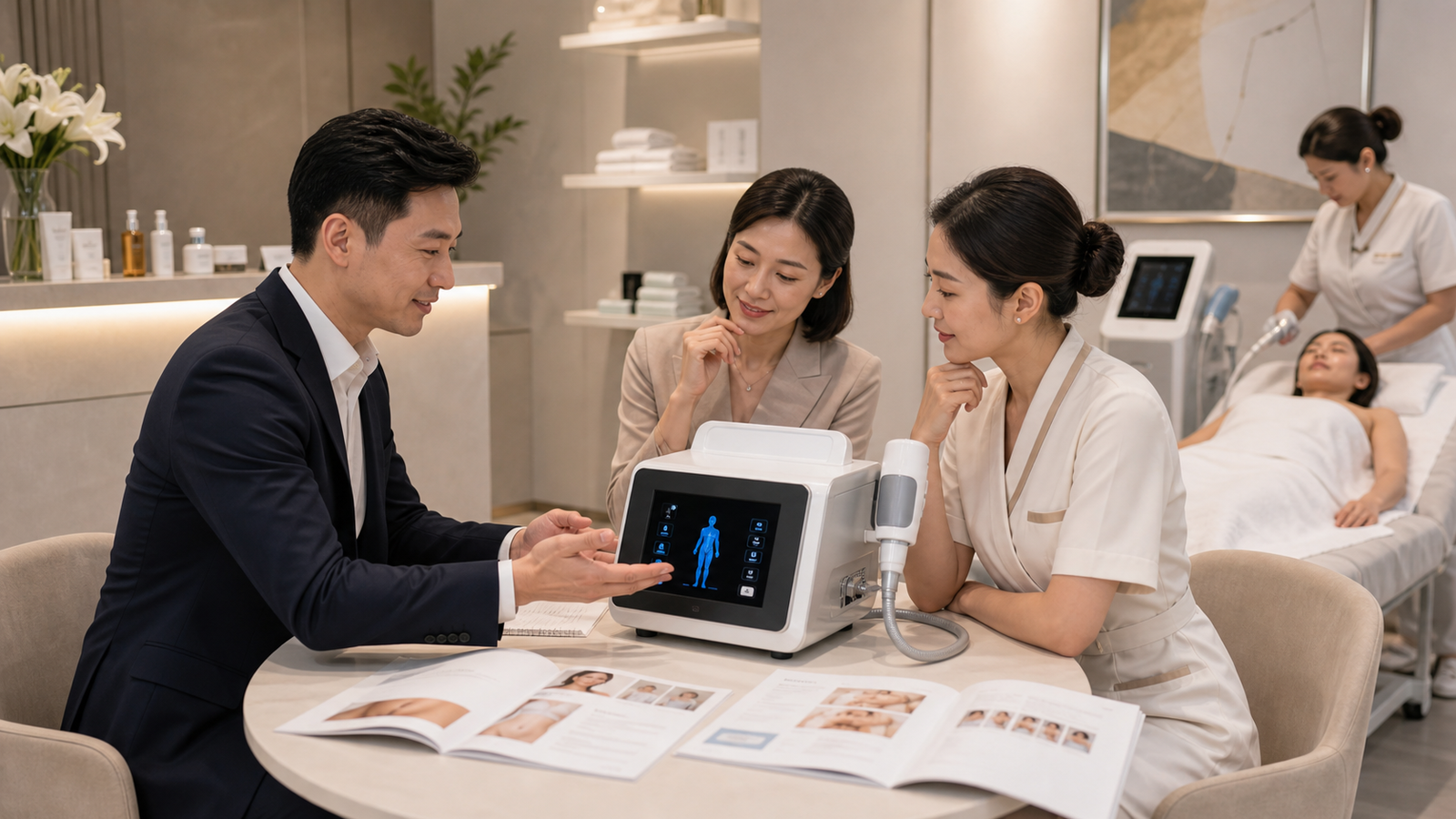
Partez du type d'acheteur, et non du prix de la machine.
De nombreux propriétaires de salons commencent par une question simple :
“ Combien coûte la machine ? ”
Mais les distributeurs devraient orienter la conversation vers une question plus utile :
“ Quel type d'entreprise d'épilation souhaitez-vous créer ? ”
L'acheteur pourrait souhaiter :
- un service d'épilation de base pour un salon de beauté existant
- une salle d'épilation professionnelle au sein d'un centre de soins de la peau
- un modèle de service à volume élevé pour une chaîne de magasins
- un appareil compact pour les espaces restreints
- un système plus robuste pour les grandes zones corporelles et une utilisation quotidienne répétée
- une gamme de produits pouvant être combinée avec des soins pour la peau, des soins pour le corps ou des formules d'abonnement
La même technologie laser à diode peut être positionnée différemment selon le canal.
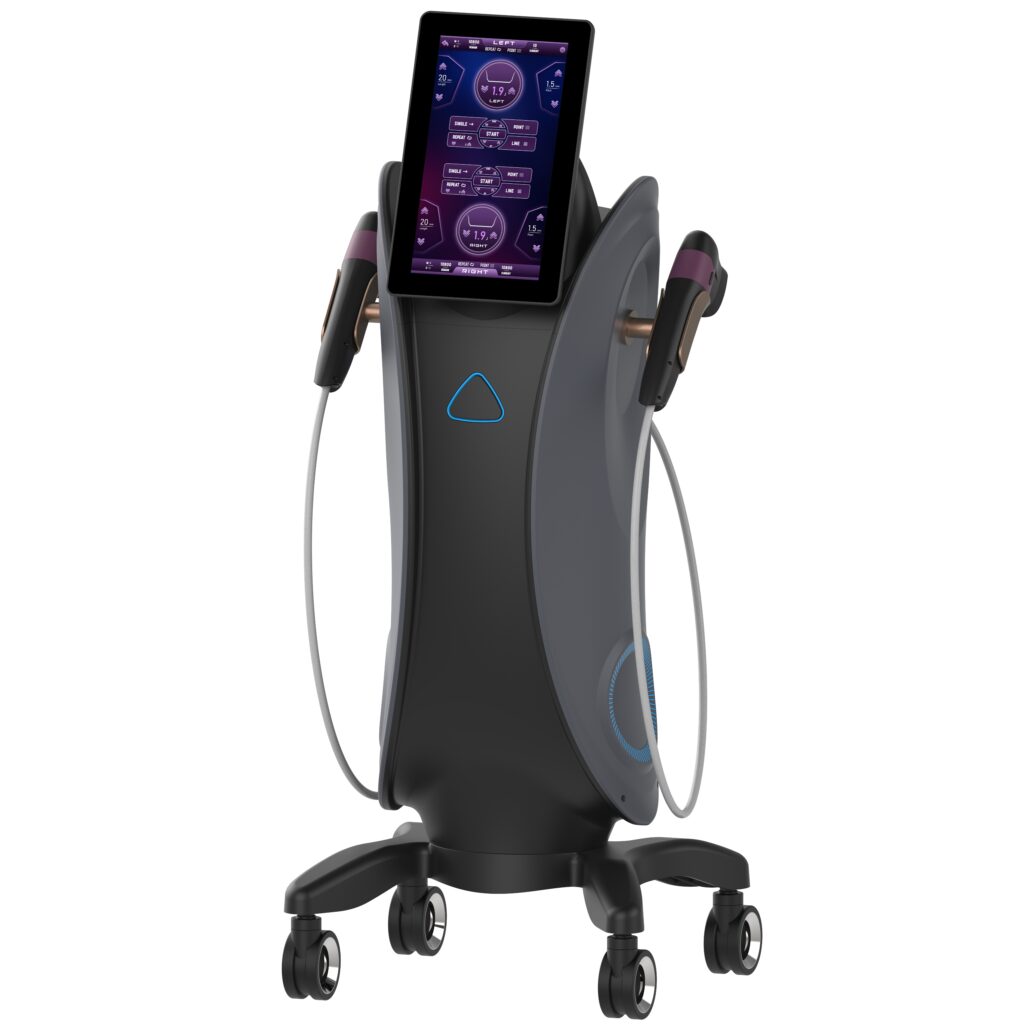
Un laser diode de bureau compact ou de petit format sera peut-être plus facile à adopter pour un salon débutant. Un laser diode professionnel sur pied sera plus adapté à un salon avec un volume de rendez-vous plus important. Une chaîne de salons accordera peut-être moins d'importance à l'apparence d'une machine et davantage à l'homogénéité de la formation, aux pièces détachées, à la disponibilité des embouts et à la reproductibilité du fonctionnement dans tous ses points de vente.
Le rôle du distributeur ne se limite donc pas à vendre une machine. Il s'agit également d'adapter le type d'appareil aux besoins de l'entreprise.
Salons de beauté : Choisissez un appareil facile à vendre, à utiliser et à prendre en main.
Les salons de beauté sont souvent la première cible des distributeurs car ils ont déjà des clients qui se renseignent sur l'épilation, les soins du corps et l'entretien de la beauté.
Pour ce type de chaîne, le meilleur appareil n'est généralement pas le plus compliqué.
Les salons de beauté s'intéressent généralement à :
- formation du personnel simplifiée
- expérience de traitement confortable
- conception claire des forfaits de services
- coût d'entrée raisonnable
- refroidissement stable
- apparence professionnelle visible
- tarification forfaitaire par zone corporelle
- temps d'arrêt réduit
- entretien simple
- performances suffisantes pour une utilisation quotidienne en salon
La propriétaire du salon souhaite savoir si l'appareil peut permettre de mettre en place rapidement des services payants.
Pour un petit salon, un laser diode compact peut être plus facile à intégrer car il s'adapte à un espace réduit et ne représente pas un investissement médical important. Pour un salon plus fréquenté, un laser diode professionnel sur pied peut être plus facilement proposé comme service d'épilation supplémentaire.
Le distributeur doit éviter de ne vendre que des données techniques. La plupart des acheteurs de salons de beauté s'intéressent davantage à la conception des services.
- paquet sous les aisselles
- ensemble bas de jambe
- forfait jambes complètes
- forfait maillot de bain
- kit de barbe pour hommes
- forfait corps complet
- forfait promotionnel saisonnier
- forfait de session de maintenance
L'appareil doit prendre en charge ces packages sans en compliquer l'utilisation.
Lors de la présentation des options de lasers diodes SHEFMON, le distributeur peut expliquer la différence entre une implantation compacte et une implantation professionnelle à plus grande échelle. Les fiches produits A0423 et A0426 mentionnent toutes deux le positionnement du laser diode multi-longueurs d'onde, les informations sur le système de refroidissement, un écran tactile de 12,1 pouces, une fréquence de répétition de 1 à 10 Hz et plusieurs options de taille de spot. Ces arguments peuvent étayer un argumentaire de vente en salon axé sur la couverture, le confort, la formation et la flexibilité d'utilisation.
Pour les salons de beauté, la recommandation pratique est la suivante :
Choisissez un appareil d'épilation que le personnel peut apprendre à maîtriser rapidement, que les clients peuvent comprendre facilement et que le propriétaire peut transformer en forfaits de services sans compliquer excessivement les opérations quotidiennes.
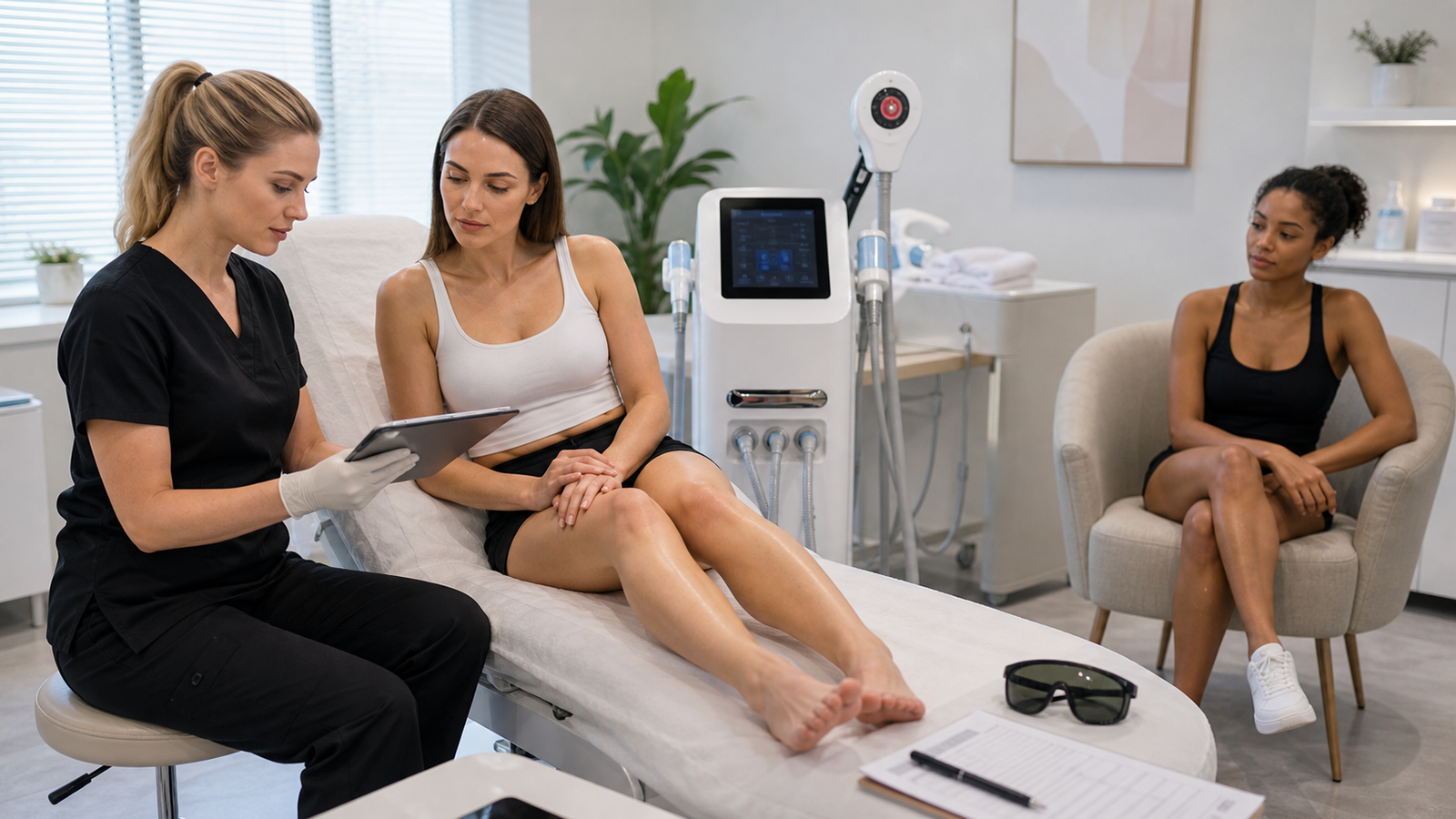
Centres de soins de la peau : Choisissez une plateforme d’épilation plus professionnelle
Les centres de soins de la peau ont généralement une approche client différente de celle des petits salons de beauté.
Ils proposent peut-être déjà des soins du visage, du rajeunissement cutané, des traitements contre l'acné, des traitements contre la pigmentation, des soins raffermissants, des soins du corps ou d'autres services professionnels. Leurs clients peuvent s'attendre à des explications plus techniques et à un processus de consultation plus structuré.
Pour ce canal de distribution, le distributeur doit positionner le matériel d'épilation comme faisant partie d'une carte de services professionnels pour le soin de la peau et du corps.
Les centres de soins de la peau s'intéressent généralement à :
- Couverture de longueur d'onde pour différentes situations de peau et de cheveux
- performance de refroidissement et confort du client
- contrôle des paramètres
- formation des opérateurs
- consultation et dépistage des contre-indications
- image de salle de soins professionnelle
- compatibilité du menu de service
- tenue de dossiers et documentation des clients
- crédibilité de marque renforcée
- expansion future vers d'autres dispositifs esthétiques
Pour ce type d'acheteur, une plateforme laser à diodes professionnelle est souvent plus facile à vendre qu'un appareil d'entrée de gamme très basique.
Les systèmes laser à diodes multi-longueurs d'onde peuvent être expliqués de manière concrète. Un distributeur n'a pas besoin de faire de promesses excessives. Le message commercial peut être :
“ Différentes longueurs d’onde sont utilisées pour répondre à différents besoins de traitement, tels que l’absorption de la mélanine, la profondeur de pénétration et la gestion du type de peau. Le réglage final dépend toujours de la formation de l’opérateur, de l’évaluation du client, des réglementations locales et du protocole spécifique. ”
Ce message est plus professionnel que d'affirmer qu'une seule machine peut parfaitement convenir à tout le monde.
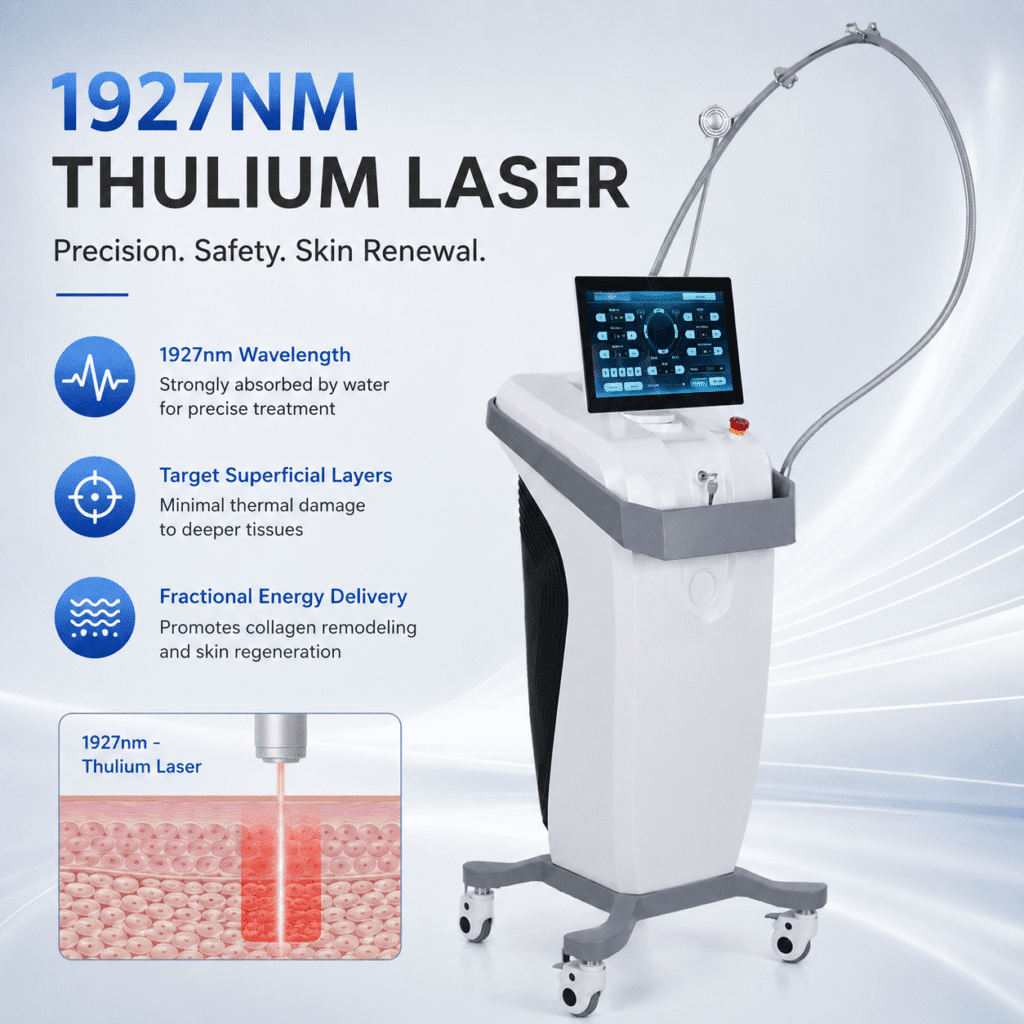
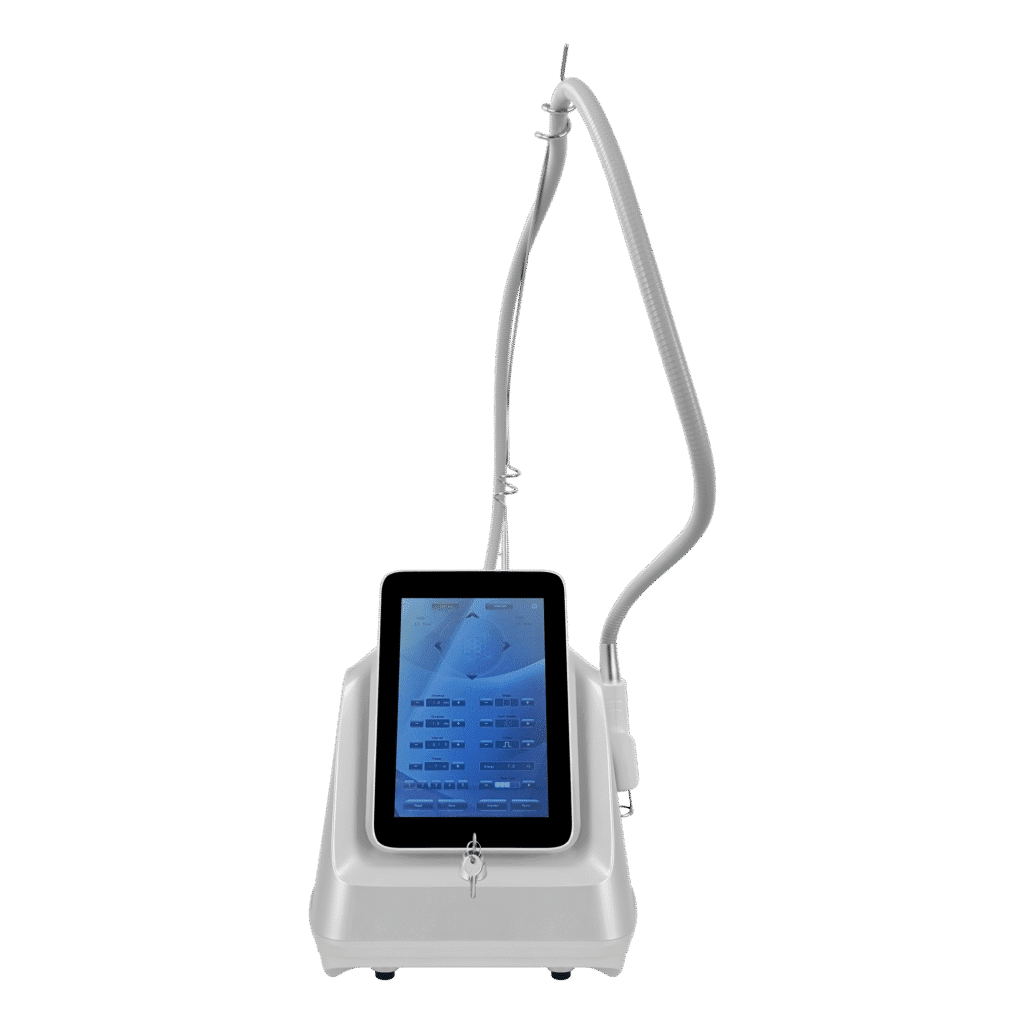
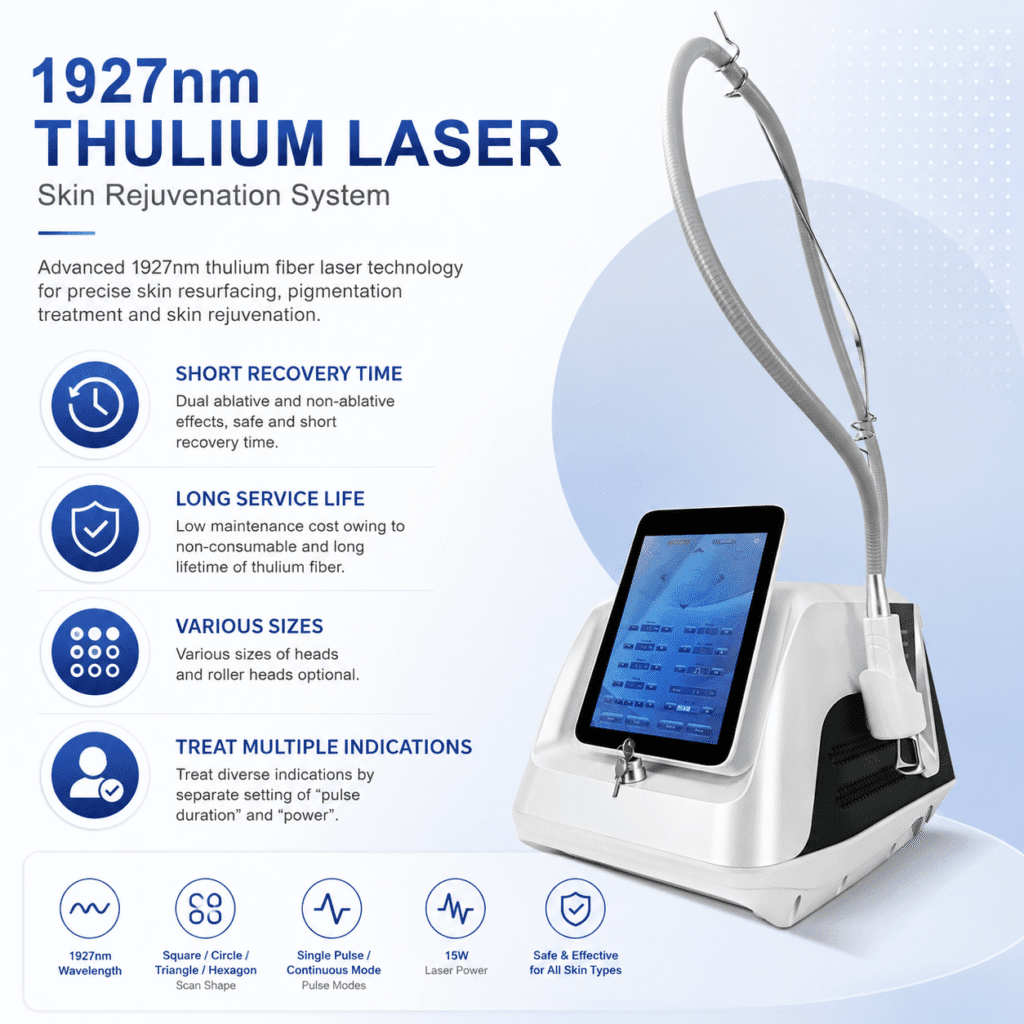
Les centres de soins de la peau pourraient également être intéressés par d'autres produits de la catégorie Laser/IPL de SHEFMON, tels que les lasers Q-switched/picoseconde, les lasers CO2 ou les lasers à fibre de thulium. Cependant, les distributeurs doivent veiller à bien expliquer la logique du produit :
Le laser diode est la principale méthode d'épilation. D'autres appareils laser peuvent être utilisés pour des soins de la peau, mais ils ne doivent pas être vendus comme appareils d'épilation principaux, sauf s'ils sont conçus à cet effet.
Cette distinction préserve la crédibilité du distributeur.
Pour les centres de soins de la peau, la recommandation pratique est la suivante :
Choisissez un système laser à diodes professionnel capable de prendre en charge la consultation structurée, la gestion du confort, le contrôle par l'opérateur et une image de service haut de gamme.
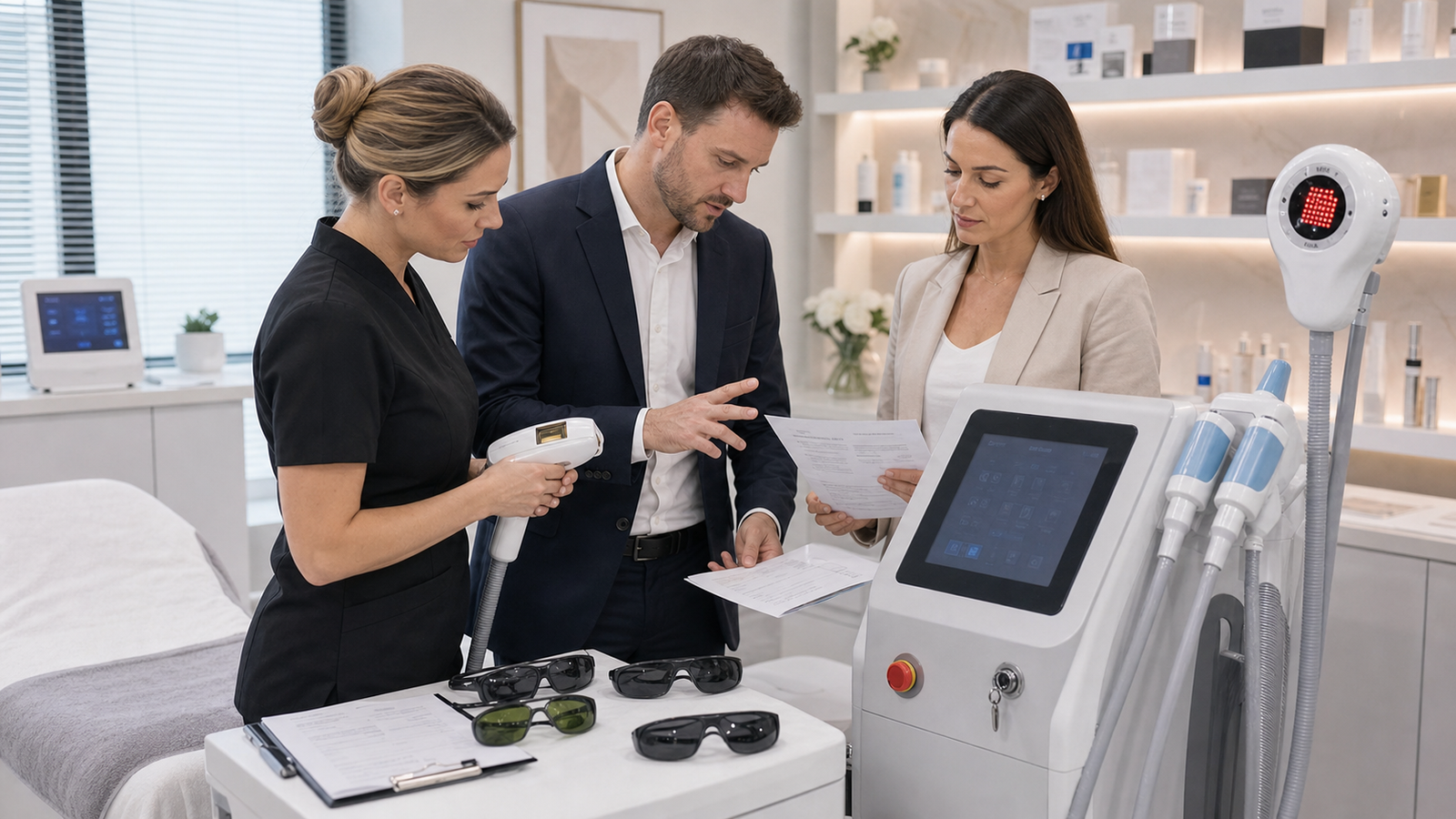
Chaînes de magasins : privilégiez la standardisation à l’apparence
Les chaînes de magasins ont un problème différent.
Un magasin peut survivre avec un seul opérateur qualifié maîtrisant parfaitement une machine. Une chaîne de magasins a besoin de nombreux opérateurs dans de nombreuses succursales pour assurer le même service avec le même niveau de formation.
Pour les chaînes de magasins, le choix des appareils devrait privilégier la standardisation.
L'acheteur s'intéresse généralement à :
- approvisionnement en modèles cohérents
- capacité de production stable
- disponibilité des pièces détachées
- disponibilité des pièces à main
- matériel de formation
- processus de fonctionnement répétable
- orientation claire des paramètres
- interface multilingue si nécessaire
- politique de garantie et de service
- achats centralisés
- assistance technique
- approvisionnement à long terme en accessoires
Si la chaîne achète plusieurs types de machines différents, chaque succursale peut nécessiter une formation différente, des pièces détachées différentes et des procédures de dépannage différentes. Cela peut engendrer des coûts d'exploitation cachés.
Pour une chaîne de magasins, le distributeur devrait demander :
- Chaque succursale utilisera-t-elle le même menu de services ?
- Le même modèle d'appareil sera-t-il déployé sur plusieurs sites ?
- Combien de traitements par jour chaque agence effectuera-t-elle ?
- Le fournisseur dispose-t-il de suffisamment de pièces à main et de consommables de rechange ?
- Le distributeur est-il capable de former rapidement les nouveaux opérateurs ?
- La machine peut-elle prendre en charge la langue et l'interface utilisateur souhaitées par la chaîne ?
- Comment la maintenance sera-t-elle gérée si une succursale signale un problème avec un appareil ?
Une chaîne de magasins peut opter pour un laser à diode vertical à plus grand volume pour ses succursales phares et un modèle compact pour les succursales plus petites, mais le distributeur doit tout de même établir une gamme de produits standardisée.
Par exemple:
- magasins phares : plateforme laser à diodes professionnelle plus performante
- branches plus petites : modèle de laser à diode compact avec une logique d’apprentissage similaire
- centre de formation : une unité de démonstration pour la certification du personnel
- Entrepôt : pièces à main de rechange, filtres, câbles et pièces de rechange essentielles
- Équipe marketing : formulation approuvée des documents d’information client et guide des forfaits de traitement
Pour les chaînes de magasins, la recommandation pratique est la suivante :
Choisissez un plan d'équipement qui puisse être reproduit dans toutes les succursales, et non pas une machine qui soit simplement attrayante dans un seul magasin d'exposition.

Comment faire correspondre le type d'appareil au canal client
Les distributeurs peuvent utiliser un cadre de mise en relation simple lorsqu'ils s'adressent aux acheteurs locaux.
| Type d'acheteur | Préoccupation principale | Meilleure orientation de l'appareil | Positionnement des ventes |
|---|---|---|---|
| Petit salon de beauté | Coût d'entrée, taille de la salle, formation du personnel | Laser à diode compact ou facile à utiliser | Ajouter un nouveau service d'épilation payant |
| Salon de beauté établi | Plus de clients, des zones corporelles plus étendues, des forfaits améliorés | Laser à diode professionnel sur pied | Élaborez un menu d'épilation à rotation rapide |
| Centre de soins de la peau | Image professionnelle, paramètres, consultation | Laser à diode professionnel multi-longueurs d'onde | Intégrez la réduction pilosité structurée à votre routine de soins du visage et du corps. |
| Chaîne de magasins | Normalisation, pièces de rechange, formation | Plan de modélisation reproductible, support des pièces et procédures opérationnelles standard (SOP) | Déployez un service évolutif sur plusieurs branches |
| Salle d'exposition du distributeur | Formation aux démonstrations et aux revendeurs | Un modèle compact et un modèle professionnel | Afficher les options de chaînes d'entrée de gamme et premium |
Ce cadre permet au distributeur d'éviter une erreur courante :
Vendre la même machine avec le même discours à chaque client.
Quelles sont les caractéristiques du produit les plus importantes ?
Les acheteurs peuvent accorder de l'importance à différentes caractéristiques, mais plusieurs facteurs sont importants sur tous les canaux de distribution.
1. Options de longueur d'onde
Les systèmes professionnels d'épilation laser à diode utilisent généralement des longueurs d'onde telles que 755 nm, 808/810 nm, 940 nm et 1064 nm.
Le distributeur doit expliquer soigneusement les avantages liés à la longueur d'onde et éviter les affirmations catégoriques.
Une explication pratique est la suivante :
- La longueur d'onde de 755 nm est souvent utilisée en raison de considérations d'absorption de la mélanine plus fortes.
- La longueur d'onde de 808/810 nm est largement utilisée pour le positionnement général de l'épilation.
- La longueur d'onde de 940 nm peut permettre un positionnement supplémentaire au niveau des vaisseaux sanguins ou des follicules, selon la conception du dispositif.
- La longueur d'onde de 1064 nm est souvent évoquée pour sa capacité à pénétrer plus profondément et pour les peaux plus foncées.
Le choix exact du traitement doit dépendre du type de peau, de la couleur et de l'épaisseur des poils, des contre-indications, de la formation de l'opérateur et des réglementations locales.
2. Système de refroidissement
Le refroidissement ne se limite pas au confort. Il influe sur la tolérance du client, la régularité du traitement et la confiance du salon lors du traitement de zones étendues.
Un acheteur devrait se demander :
- Quelles méthodes de refroidissement sont utilisées ?
- Existe-t-il un refroidissement par contact saphir ?
- Quelle est la plage de température de la sonde publiée ?
- Le refroidissement peut-il rester stable lors de longues sessions ?
- Quel entretien nécessite le système d'eau ou de refroidissement ?
- Que se passe-t-il si le système de refroidissement signale une erreur ?
Par exemple, les fiches techniques des produits SHEFMON A0423 et A0426 indiquent une plage de température de sonde de -15 °C à 5 °C et un système de refroidissement combinant réfrigération par semi-conducteurs, eau et module thermoélectrique. Les distributeurs peuvent s'en servir comme point de départ pour informer les acheteurs, tout en confirmant la configuration exacte avant de finaliser le devis.
3. Taille de la tache et vitesse de traitement
La taille de la zone à traiter influe sur la couverture. Les zones plus étendues, comme les jambes, le dos ou les bras, nécessitent une couverture efficace ; les zones plus petites, comme la lèvre supérieure ou le maillot, requièrent une application plus précise.
Un appareil doté de plusieurs options de taille de spot peut aider un salon à élaborer des forfaits de services plus flexibles.
4. Puissance de la pièce à main et volume de service
La puissance doit être abordée conjointement avec le refroidissement, le contrôle des impulsions, la stabilité énergétique et la durée de vie de la pièce à main.
Des chiffres élevés ne garantissent pas à eux seuls une meilleure valeur commerciale.
Le distributeur doit se renseigner pour savoir si la machine peut supporter le volume de traitement journalier prévu sans surchauffe, sans erreurs fréquentes ni coûts de réparation élevés.
5. Formation et assistance après-vente
L'épilation est un service régulier. Un salon peut traiter le même client à plusieurs reprises.
Si la formation du personnel est insuffisante, le salon risque de recevoir des plaintes concernant la douleur, les rougeurs, les résultats incohérents ou les attentes irréalistes.
Les distributeurs doivent fournir :
- formation opérationnelle
- liste de contrôle de sécurité
- formulaire de consultation client
- Recommandations concernant l'intervalle de traitement
- liste des contre-indications
- liste de contrôle d'entretien
- instructions d'entretien de la pièce à main
- politique relative aux pièces de rechange
- formulation marketing réaliste
Ce type d'assistance compte souvent plus qu'une petite différence de prix entre les modèles.
Questions que les acheteurs devraient poser aux distributeurs avant de recommander un modèle
Avant de proposer un devis, le distributeur doit demander à l'acheteur :
- Quel type d'entreprise exploitez-vous : salon de beauté, centre de soins de la peau, clinique, chaîne de magasins ou centre de formation ?
- Combien de clients prévoyez-vous par jour pour l'épilation ?
- Quelles parties du corps allez-vous mettre en valeur en premier ?
- Disposez-vous d'une salle de soins dédiée ?
- Combien d'opérateurs utiliseront la machine ?
- Vos clients demandent-ils principalement l'épilation féminine, les soins pour hommes ou les deux ?
- Quels sont les profils locaux de type de peau et de type de cheveux ?
- Avez-vous besoin d'un modèle compact ou d'un modèle professionnel sur pied ?
- Souhaitez-vous une seule machine pour un seul magasin ou plusieurs machines pour les succursales ?
- Quelle importance accordez-vous aux pièces de rechange, au prix de la pièce à main et à la réactivité de la garantie ?
Ces questions donnent au distributeur un air plus professionnel.
Elles contribuent également à empêcher l'acheteur de choisir un appareil uniquement en fonction de son prix.
Erreurs courantes de correspondance
Erreur n° 1 : Vendre un mannequin professionnel de grande taille à un très petit salon débutant
Un petit salon peut ne pas avoir le volume de traitements, l'espace nécessaire ou le personnel suffisamment confiant pour utiliser efficacement un appareil plus grand.
Si la machine paraît trop chère ou trop technique, le salon pourrait retarder le lancement du service.
Erreur n° 2 : Vendre un petit modèle d’entrée de gamme à une chaîne de magasins très fréquentée
Une chaîne de magasins a besoin de durabilité, de standardisation et d'un approvisionnement en pièces détachées.
Si le modèle est trop basique pour le volume de traitement, le distributeur risque de subir des pressions répétées en matière de service après-vente.
Erreur n° 3 : Vendre des lasers cutanés comme des appareils d’épilation
Les catégories laser/IPL peuvent inclure de nombreux types d'appareils, mais tous les lasers ne sont pas destinés à l'épilation.
Les produits laser CO2, laser picoseconde et laser thulium peuvent être utiles pour les services de gestion de la peau, de cicatrices, de pigmentation ou de resurfaçage, mais le distributeur ne doit pas les confondre avec les appareils d'épilation laser à diode.
Erreur n° 4 : Utiliser “ l’épilation définitive ” comme principal argument de vente
On pourrait opter pour une formulation plus prudente : réduction capillaire à long terme ou gestion capillaire à long terme.
De nombreux marchés sont sensibles aux allégations. Les distributeurs devraient former les salons à expliquer que les résultats dépendent de la couleur des cheveux, du type de peau, des hormones, de l'intervalle entre les traitements, du nombre de séances et de l'entretien.
Erreur n° 5 : Ignorer la réglementation locale
Les équipements laser et à base de lumière peuvent être réglementés différemment selon les pays.
Le distributeur doit confirmer les exigences d'importation, l'étiquetage du produit, les exigences de formation des opérateurs et les règles publicitaires locales avant de faire des affirmations fortes en matière de performance ou de sécurité.
Un argumentaire pratique pour les distributeurs
Un distributeur peut présenter la gamme de produits de cette manière :
“Pour un petit institut de beauté, nous recommandons un laser diode compact et facile à prendre en main, permettant de proposer des épilations payantes sans encombrer l'espace ni le budget. Pour un institut ou un centre de soins de la peau établi, nous conseillons une plateforme laser diode professionnelle multi-longueurs d'onde, offrant un positionnement optimisé, un système de refroidissement performant et une grande flexibilité de paramétrage. Enfin, pour les chaînes d'instituts, nous les accompagnons dans la mise en place d'un modèle standardisé incluant formation, assistance pour les pièces à main, pièces détachées et forfaits de services reproductibles.”
Ce pitch est meilleur que :
“ Cette machine est la meilleure et la moins chère. ”
Le distributeur ne vend pas seulement du matériel. Le distributeur vend une solution de distribution.
Recommandation finale
Pour les salons de beauté, les centres de soins de la peau et les chaînes de magasins, le meilleur appareil d'épilation est celui qui correspond à la réalité opérationnelle de l'acheteur.
Les petits salons ont besoin d'un appareil facile à mettre en marche.
Les centres de soins de la peau ont besoin d'un dispositif qui soutienne la consultation professionnelle et renforce leur positionnement de service.
Les chaînes de magasins ont besoin d'un plan d'équipement standardisé pour l'ensemble de leurs succursales.
Les options d'épilation laser diode de SHEFMON, y compris les références A0423 et A0426, peuvent être positionnées de différentes manières en fonction du type d'acheteur, de la taille de la pièce, du volume de service attendu et de la stratégie du distributeur local.
Les distributeurs les plus performants ne vendent pas la même machine à tout le monde.
Ils aident les acheteurs à choisir la machine adaptée à leur modèle d'entreprise.
FAQ
1. Quel type d'appareil d'épilation un petit salon de beauté devrait-il choisir ?
Un petit salon de beauté devrait généralement privilégier la simplicité d'utilisation, l'encombrement réduit, un refroidissement stable et des offres de services claires. Un modèle laser diode compact ou facile à installer peut s'avérer plus pratique qu'un système professionnel imposant si le salon débute dans le domaine de l'épilation.
2. Quel type d'appareil d'épilation est le mieux adapté à un centre de soins de la peau ?
Un centre de soins de la peau devrait généralement privilégier une plateforme laser diode plus professionnelle, dotée d'un positionnement multi-longueurs d'onde, d'un système de refroidissement performant, d'un contrôle précis des paramètres et d'un processus de consultation optimisé. Ceci contribue à une image de service plus professionnelle et à une meilleure intégration avec les prestations de soins du visage et du corps.
3. Quels sont les critères à prendre en compte par les chaînes de magasins avant d'acheter du matériel d'épilation ?
Les chaînes de magasins devraient privilégier la standardisation des modèles, l'approvisionnement en pièces détachées, la disponibilité des pièces à main, les procédures de formation standardisées, la prise en charge des garanties et un fonctionnement reproductible dans tous leurs points de vente. Une machine performante pour un magasin peut s'avérer insuffisante pour une chaîne si elle ne peut être standardisée.
4. Les distributeurs doivent-ils vendre le même modèle à tous les clients ?
Non. Chaque acheteur a son propre modèle commercial. Un distributeur doit adapter le type d'appareil au canal de distribution du client, au volume quotidien prévu, aux compétences du personnel, à la taille des salles et à la carte des services.
5. Les modèles A0423 et A0426 sont-ils tous deux des appareils d'épilation ?
Oui. SHEFMON répertorie les modèles A0423 et A0426 comme des appareils d'épilation laser diode 755/1064/810/940 nm. Le distributeur doit confirmer la configuration, les détails de l'emballage et les options les plus récentes avant de fournir un devis définitif.
6. Un centre de soins de la peau peut-il également acheter d'autres appareils de la catégorie Laser/IPL ?
Oui, mais l'objectif doit être clairement défini. Le laser diode est la principale méthode d'épilation. D'autres appareils laser peuvent être utilisés pour le rajeunissement cutané, le traitement des taches pigmentaires, le détatouage, le soin des cicatrices ou le resurfaçage de la peau, selon leur conception et la réglementation locale.
7. Une puissance plus élevée est-elle toujours préférable ?
Pas nécessairement. La puissance doit être évaluée conjointement avec le refroidissement, le contrôle des impulsions, la stabilité énergétique, la durée de vie de la pièce à main, le volume d'interventions et la formation des opérateurs. Une machine puissante dotée d'un refroidissement insuffisant ou d'un service après-vente peu performant peut engendrer des problèmes.
8. Quelle est la formulation la plus sûre pour le marketing d'un salon de coiffure ?
Utilisez des expressions comme « réduction de la pilosité à long terme » ou « gestion de la pilosité à long terme ». Évitez de promettre une épilation définitive à tous vos clients, car les résultats varient selon le type de peau, la couleur des poils, les hormones, l’intervalle entre les traitements et le nombre de séances.
9. Quelles questions un distributeur doit-il poser avant de recommander un modèle ?
Renseignez-vous sur le type d'acheteur, le volume quotidien de clients, les zones de traitement, la taille des salles, les compétences des opérateurs, le type de peau et de cheveux local, les prix des services, le nombre de succursales, les attentes en matière de pièces de rechange et les besoins en matière de service après-vente.
10. Pourquoi le service après-vente est-il si important pour les appareils d'épilation ?
L'épilation est une prestation récurrente. En cas de panne d'une pièce à main, de défaillance du système de refroidissement ou de retard de livraison des pièces détachées, le salon risque de perdre des rendez-vous et la confiance de sa clientèle. Les distributeurs doivent considérer la formation, la maintenance et le support des pièces détachées comme faisant partie intégrante de la valeur ajoutée du produit.
Références
- Catégorie Laser et IPL SHEFMON : https://shefmon.com/beauty-machines/laser-ipl/
- Page produit de l'épilation laser diode SHEFMON A0423 : https://shefmon.com/product/a0423-laser/
- Page produit de l'épilateur laser diode SHEFMON A0426 : https://shefmon.com/product/a0426-755-1064-810-940nm-diode-laser-hair-removal-beauty-machine/
- Aperçu de la sécurité des produits laser selon la FDA : https://www.fda.gov/radiation-emitting-products/home-business-and-entertainment-products/laser-products-and-instruments
- Directives de Santé Canada sur la sécurité de l'épilation au laser : https://www.canada.ca/fr/santé-canada/services/santé-environnement-au-travail/rapports-publications/radiation/directives-de-sécurité-épilation-au-laser-propriétaires-exploitants-installations-santé-canada-2011.html