









Qu'est-ce que la chaise Emsella ?
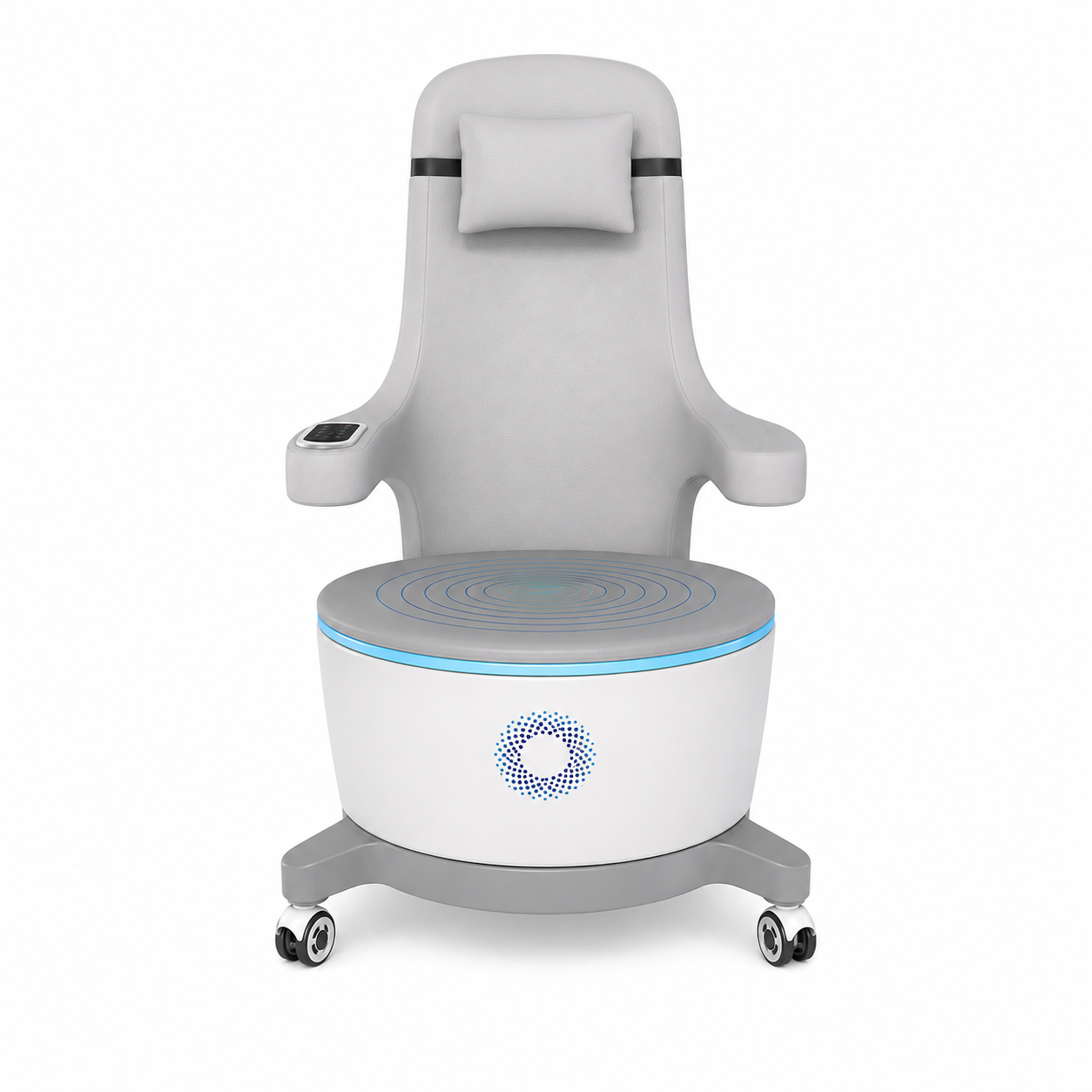
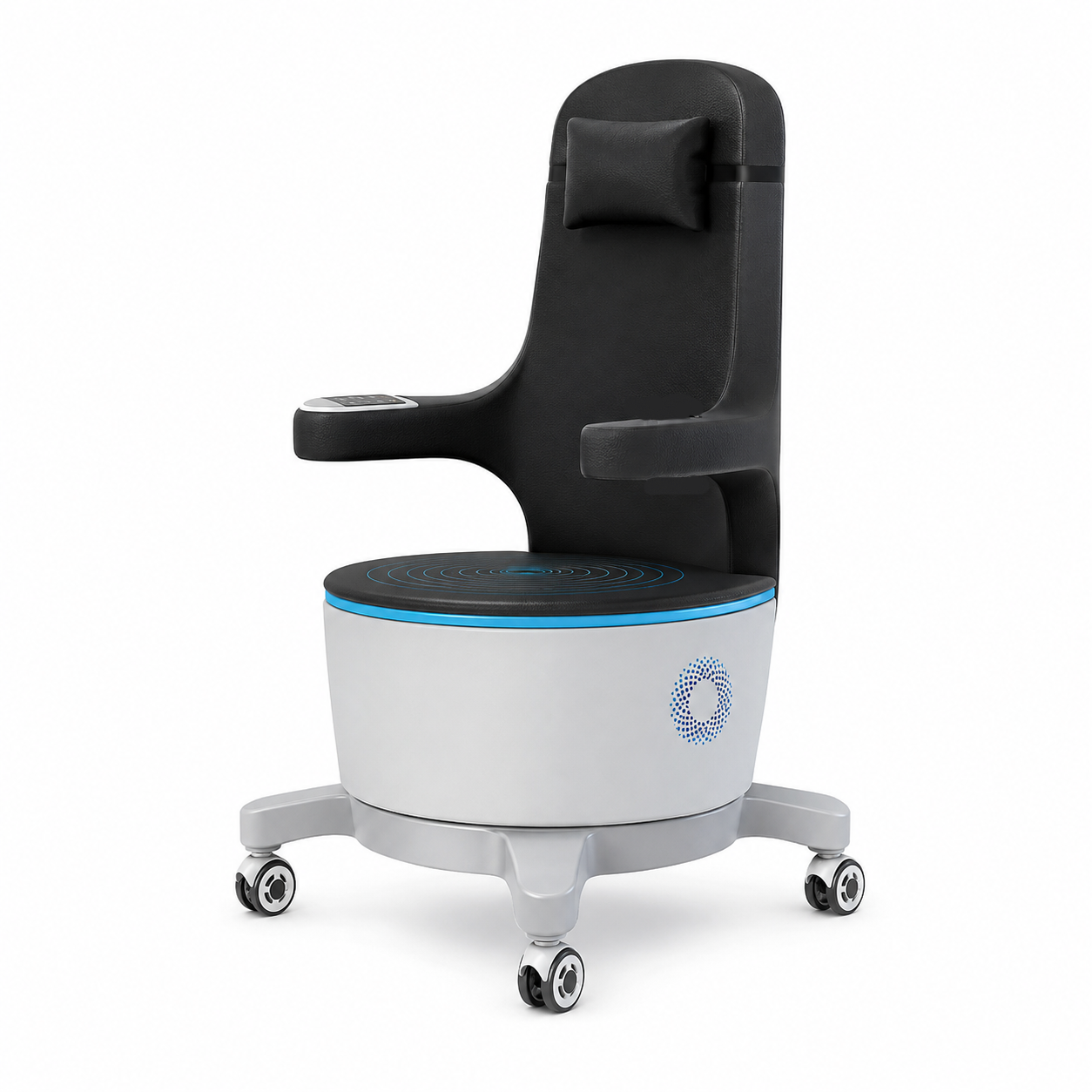
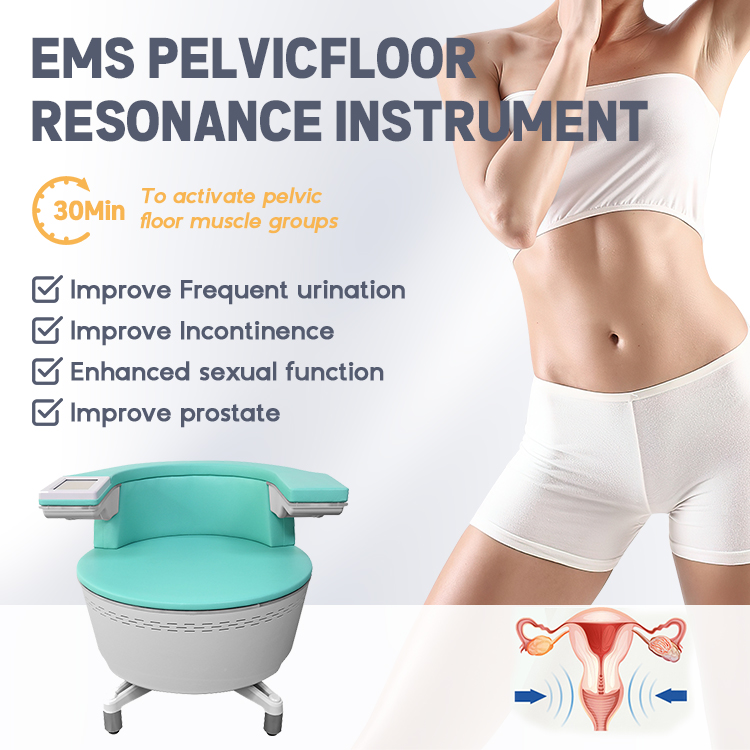
Le Chaise Emsella Il s'agit d'un appareil de rééducation périnéale non invasif conçu pour renforcer les muscles du plancher pelvien affaiblis grâce à l'énergie électromagnétique. Contrairement aux exercices traditionnels, il ne nécessite aucune insertion ni contraction musculaire manuelle. Il suffit de s'asseoir, habillée, sur la chaise, tandis que l'appareil stimule automatiquement les muscles du plancher pelvien. Cette simplicité explique en partie le succès fulgurant de ce traitement auprès des femmes en post-partum, des personnes âgées et des centres de bien-être du monde entier.
La technologie à l'origine de ce fauteuil utilise des impulsions électromagnétiques focalisées pour créer ce que les experts appellent contractions supramaximales. Ces contractions sont bien plus puissantes que celles que la plupart des gens peuvent produire volontairement avec les exercices de Kegel classiques. Imaginez passer d'une marche lente sur un tapis roulant à un entraînement avec un coach sportif professionnel qui sollicite chaque fibre musculaire au maximum. Cette stimulation intense permet de retrouver un tonus musculaire plus rapidement qu'avec des exercices ordinaires.
Ce traitement cible principalement les muscles du plancher pelvien, responsables du contrôle de la vessie, de la tonicité vaginale, du soutien abdominal et du bien-être sexuel. La grossesse, l'accouchement, le vieillissement, les changements hormonaux, l'obésité et même la toux chronique peuvent affaiblir ces muscles au fil du temps. Une fois affaiblis, de nombreuses personnes souffrent d'incontinence urinaire, d'une diminution de la sensibilité, d'inconfort pelvien ou d'une sensation d'instabilité abdominale.
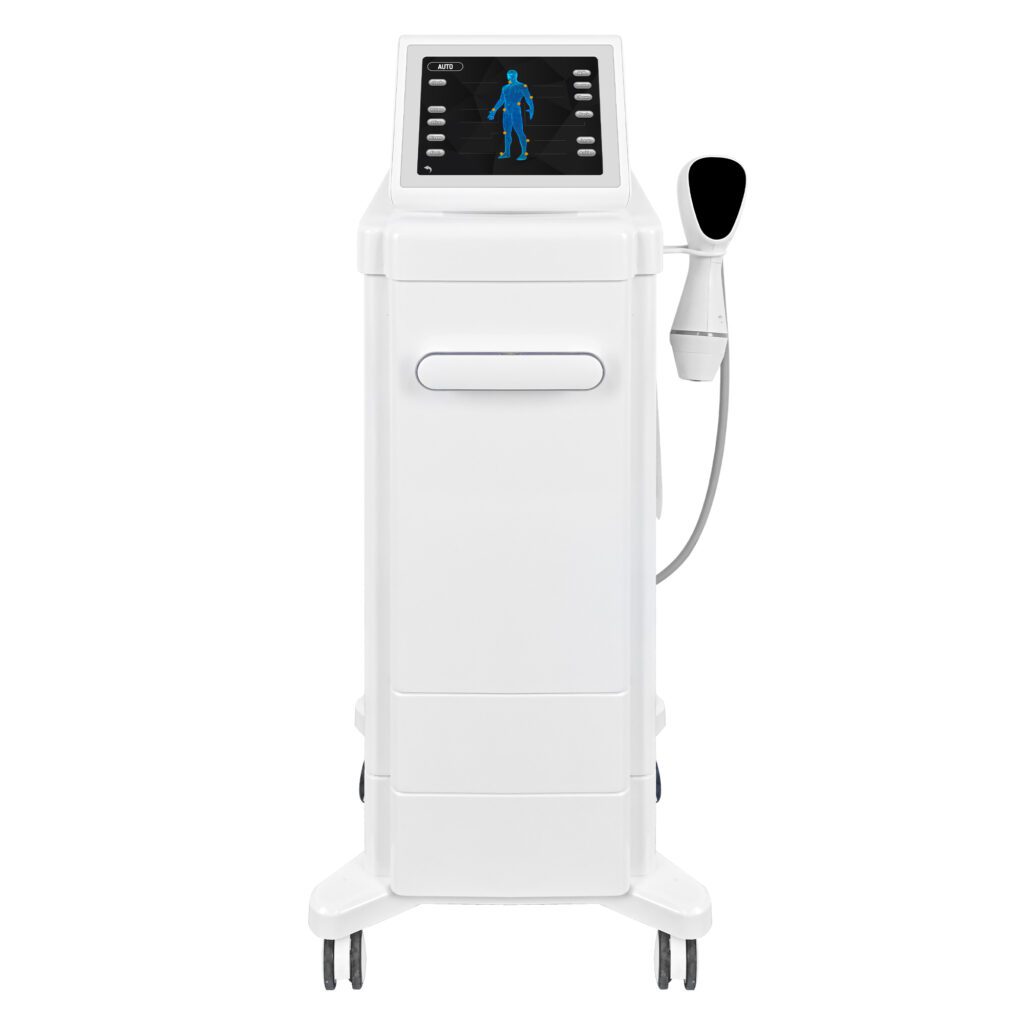
L'un des principaux avantages du fauteuil Emsella est sa praticité. Les séances durent généralement une trentaine de minutes, ne nécessitent aucun temps de convalescence et permettent aux patients de reprendre immédiatement leurs activités professionnelles ou autres. C'est un avantage considérable par rapport à la chirurgie ou aux interventions invasives. Selon SHEFMON, leur fauteuil de rééducation périnéale E0435 EMS est spécialement conçu pour la récupération post-partum et le traitement de l'incontinence urinaire d'effort, tout en restant totalement non invasif.
Comment fonctionne la technologie électromagnétique du plancher pelvien ?
Le principe scientifique du fauteuil Emsella peut sembler futuriste, mais il repose en réalité sur des principes de stimulation neuromusculaire éprouvés, utilisés en physiothérapie depuis des années. L'énergie électromagnétique pénètre profondément dans les tissus pelviens et stimule les motoneurones responsables des contractions musculaires. Le corps réagit naturellement en contractant et en relâchant de façon répétée les muscles du plancher pelvien.
La formule ci-dessus permet de visualiser la vitesse d'accumulation des contractions lors de séances répétées. Si une séance équivaut à environ 12 000 contractions, six séances pourraient théoriquement représenter plus de 72 000 contractions. Un tel volume d'activation musculaire est quasiment impossible à atteindre par la seule pratique manuelle.
Cette technologie est importante car de nombreuses personnes souffrant de dysfonctionnement du plancher pelvien ont du mal à réaliser correctement les exercices de Kegel. Les études et les discussions cliniques montrent souvent que les patients activent les mauvais muscles ou ne parviennent pas à maintenir une pratique régulière. Le fauteuil résout entièrement ce problème en forçant automatiquement l'engagement musculaire profond.
La stimulation améliore également la circulation sanguine et la proprioception. Certains utilisateurs décrivent une sensation de “ meilleure connexion ” avec leurs muscles profonds après les traitements. Sur Reddit, les utilisateurs qui partagent leurs expériences avec Emsella mentionnent souvent des contractions plus fortes et une meilleure conscience pelvienne après seulement quelques séances.
En quoi est-ce différent des exercices de Kegel traditionnels ?
Les exercices de Kegel sont utiles en théorie, mais soyons honnêtes : la plupart des gens oublient de les faire ou ne sont pas sûrs de bien les exécuter. C'est comme avoir un abonnement à une salle de sport sans jamais y aller régulièrement. Le renforcement du plancher pelvien exige répétition, précision et régularité, ce qui peut s'avérer difficile au quotidien.
Le fauteuil Emsella change radicalement la donne. Au lieu de s'appuyer sur des contractions volontaires, il produit automatiquement des milliers de contractions en une seule séance. SHEFMON indique qu'une séance équivaut à environ 12 000 exercices de Kegel.
Voici une comparaison rapide :
| Fonctionnalité | Chaise Emsella | Kegels traditionnels |
|---|---|---|
| contractions musculaires par séance | 12,000+ | Généralement moins de 100 |
| Effort requis | Minimal | Une grande cohérence est nécessaire |
| Durée du traitement | Environ 30 minutes | Pratique quotidienne pendant des mois |
| Surveillance | guidé par la clinique | Souvent autodirigé |
| Rapidité des résultats | Souvent en quelques semaines | Souvent des mois |
Cela ne signifie pas que les exercices de Kegel sont inutiles. De nombreux spécialistes recommandent d'associer la rééducation périnéale à de bonnes habitudes de vie et à des exercices occasionnels. Toutefois, pour les personnes souhaitant une amélioration plus rapide ou souffrant d'une faiblesse musculaire importante, la stimulation électromagnétique peut produire des résultats plus visibles et plus rapides.
À quelle vitesse peut-on constater les résultats du fauteuil Emsella ?
C'est la question à laquelle tout le monde souhaite vraiment obtenir une réponse. La plupart des patients commencent à remarquer des changements quelque part entre… première session et troisième session, tandis que des améliorations plus importantes et plus stables apparaissent généralement après avoir suivi l'ensemble du traitement recommandé.
Certaines personnes ressentent des signes précoces dès la première séance, comme une diminution de l'urgence mictionnelle, une réduction des fuites urinaires lors de la toux ou une intensification des sensations pelviennes. D'autres nécessitent davantage de séances, car la faiblesse musculaire est présente depuis des années. Le corps a besoin de temps pour rétablir la coordination neuromusculaire et renforcer les tissus.
Un utilisateur de Reddit a indiqué que les fuites urinaires et l'urgence mictionnelle s'étaient améliorées après la première séance et que cette amélioration s'était poursuivie jusqu'à la quatrième séance. Une autre personne a mentionné des résultats qui se sont maintenus pendant des mois avant que des séances d'entretien ne soient nécessaires.
La rapidité des résultats dépend généralement de :
- Gravité de la faiblesse du plancher pelvien
- Âge
- État hormonal
- État de récupération post-partum
- Poids et activité physique
- Cohérence des séances
- réactivité musculaire
Considérez le plancher pelvien comme n'importe quel autre groupe musculaire. Une personne n'ayant pas fait d'exercice depuis des années aura peut-être besoin de plus d'entraînement qu'une personne déjà physiquement active. La chaise Emsella accélère le processus, mais les muscles ont tout de même besoin de temps pour s'adapter.
Que se passe-t-il après la première séance ?
La première séance surprend souvent car les sensations sont inhabituelles, mais non douloureuses. Beaucoup décrivent des contractions rythmiques, des picotements ou des vibrations profondes dans la région pelvienne. Certaines personnes rient pendant le traitement, tant la sensation est nouvelle.
Physiquement, la première séance sert principalement à “ réveiller ” les fibres musculaires inactives. C'est un peu comme reprendre l'entraînement après une longue pause. Vous ne constaterez peut-être pas de changements extérieurs spectaculaires immédiatement, mais vos muscles commencent à réagir.
Certains patients remarquent :
- Diminution de l'urgence urinaire
- Meilleure conscience musculaire
- Sensations pelviennes plus fortes
- Amélioration de la confiance
- Engagement léger du noyau
Un utilisateur de Reddit a témoigné d'une amélioration immédiate des symptômes d'urgence urinaire après le début du traitement. Un autre a noté une augmentation des sensations sexuelles après plusieurs séances.
Il est toutefois important de gérer les attentes. Une seule séance ne suffit généralement pas pour une transformation durable. Le renforcement musculaire est un processus cumulatif.
Résultats après 2 à 3 séances
C’est à ce stade que de nombreux patients commencent à ressentir des améliorations significatives. Dès la deuxième ou la troisième séance, les muscles du plancher pelvien deviennent plus réactifs et coordonnés. Les fuites urinaires peuvent diminuer, et les patients font souvent état d’un meilleur contrôle de leur vessie lors d’activités comme la toux, les éternuements, l’exercice physique ou le rire.
Pour les femmes en période post-partum, cette étape peut être particulièrement éprouvante émotionnellement. Nombre d'entre elles souffrent en silence de faiblesse pelvienne après l'accouchement, pensant qu'il leur suffit de “ faire avec ”. Les améliorations constatées après quelques séances peuvent redonner confiance et réduire l'anxiété au quotidien.
Les cliniques recommandent généralement d'espacer les séances d'environ deux fois par semaine pour un renforcement musculaire optimal. La régularité est essentielle car les muscles ont besoin d'une stimulation répétée pour se renforcer efficacement. Selon les recommandations de SHEFMON, 3 à 4 séances par semaine pendant plusieurs semaines sont conseillées, en fonction des objectifs du traitement.
Certaines personnes remarquent également des avantages secondaires tels que :
- Sensation d'intimité accrue
- Meilleure posture
- Stabilité du noyau améliorée
- Renforcement vaginal
- Réduction de la lourdeur pelvienne
Ces effets se produisent car le plancher pelvien constitue le système de soutien fondamental du corps.
Résultats complets après la fin du traitement
La plupart des fournisseurs recommandent environ 6 séances Sur plusieurs semaines, de nombreux patients constatent leurs meilleurs résultats à la fin du cycle de traitement. C'est généralement à ce moment-là que la force musculaire, le contrôle de la vessie et la coordination pelvienne s'améliorent le plus sensiblement.
D'après les rapports et les discussions en clinique, les résultats définitifs peuvent continuer à se développer pendant plusieurs semaines après la dernière séance, car les muscles continuent de s'adapter au fil du temps.
Voici une chronologie générale :
| Chronologie | Expérience typique |
|---|---|
| Séance 1 | L'activation musculaire commence |
| Séances 2 et 3 | Améliorations précoces du contrôle de la vessie |
| Séances 4 à 6 | Amélioration du tonus musculaire et réduction des fuites |
| Quelques semaines après l'achèvement | Résultats stabilisés à long terme |
Chaque expérience est unique. Certains utilisateurs de Reddit ont fait état d'un succès spectaculaire, tandis que d'autres ont constaté une amélioration modérée ou limitée.
Cette variabilité est courante dans tous les traitements de rééducation musculaire. L'essentiel est de bien choisir les patients et de maintenir des attentes réalistes.
Facteurs influençant la vitesse de fonctionnement du fauteuil Emsella
Plusieurs facteurs influencent la rapidité et l'efficacité du traitement. Les comprendre permet aux patients d'éviter des attentes irréalistes et d'optimiser les résultats.
Âge et force musculaire
Les personnes plus jeunes ou celles souffrant d'une légère faiblesse pelvienne peuvent réagir plus rapidement car leurs muscles conservent une meilleure élasticité et une meilleure réactivité nerveuse. Les personnes plus âgées peuvent également en tirer un grand bénéfice, mais leurs tissus peuvent nécessiter un temps de préparation plus long.
Phase de récupération post-partum
Les femmes proches de l'accouchement constatent souvent une amélioration rapide car les tissus pelviens sont déjà en phase de cicatrisation. Certains experts recommandent d'attendre la stabilisation de la cicatrisation post-partum avant d'entreprendre un traitement.
Mode de vie et activité physique
L'exercice physique, l'hydratation, le poids corporel et le tabagisme influencent la récupération musculaire. Les personnes actives peuvent constater des améliorations plus rapides car leur système circulatoire et musculaire est déjà entraîné.
Gravité du dysfonctionnement du plancher pelvien
L'incontinence urinaire d'effort légère répond plus rapidement que les lésions musculaires graves ou les problèmes liés à un prolapsus. Les affections chroniques peuvent nécessiter des séances d'entretien ou des thérapies combinées.
Quelles sont les sensations lors d'une séance Emsella ?
L'une des plus grandes craintes est de savoir si le traitement est douloureux. Heureusement, la plupart des utilisateurs le décrivent comme étrange plutôt que douloureux.
Pendant le traitement, les patients restent habillés et confortablement installés sur la chaise tandis que des impulsions électromagnétiques stimulent les muscles du plancher pelvien. Les sensations ressenties s'apparentent à de rapides contractions musculaires internes ou à des vibrations. Certains comparent cela à des exercices de Kegel intenses et automatiques.
Un utilisateur de Reddit a décrit la sensation comme “ pas douloureuse mais assurément amusante ”. Un autre a mentionné qu'ajuster sa posture assise améliorait la sensation et l'efficacité.
La plupart des séances durent environ 30 minutes, ce qui permet d'intégrer facilement le traitement à un emploi du temps chargé. De nombreuses jeunes mamans apprécient l'absence de temps d'arrêt ou de convalescence après la séance.
Combien de séances Emsella sont recommandées ?
Le protocole standard comprend généralement environ 6 séances sur 3 semaines, Les prestataires peuvent adapter les programmes en fonction de l'état du patient. Certaines personnes poursuivent avec des séances d'entretien tous les quelques mois pour maintenir les résultats.
| Plan de traitement | Recommandation typique |
|---|---|
| Cours initial | 6 séances |
| Durée de la session | 30 minutes |
| Fréquence hebdomadaire | 2 à 3 fois par semaine |
| Entretien | Tous les quelques mois si nécessaire |
L'entretien est important car les muscles du plancher pelvien peuvent s'affaiblir à nouveau avec le temps, notamment après l'âge, des changements hormonaux ou des grossesses supplémentaires. Une utilisatrice de Reddit a constaté d'excellents résultats initiaux, mais a vu ses symptômes réapparaître six mois plus tard sans suivi.
Les avantages du fauteuil Emsella vont au-delà du contrôle de la vessie.
Bien que le traitement de l'incontinence urinaire soit le bienfait le plus mis en avant, de nombreux utilisateurs constatent des améliorations plus générales de leur bien-être.
Amélioration du bien-être sexuel
Le renforcement des muscles du plancher pelvien augmente souvent la sensibilité et la satisfaction lors des rapports intimes. Certaines utilisatrices rapportent des orgasmes plus intenses et une meilleure tonicité vaginale après le traitement.
Meilleure stabilité du tronc
Le plancher pelvien est directement relié aux muscles profonds. Renforcer cette zone peut améliorer la posture, la contraction abdominale et le soutien de la colonne vertébrale.
Reconquête de confiance après l'accouchement
La récupération post-partum a un impact sur le bien-être physique et émotionnel. Retrouver le contrôle de sa vessie et la force de son plancher pelvien peut considérablement améliorer la confiance en soi et le confort.
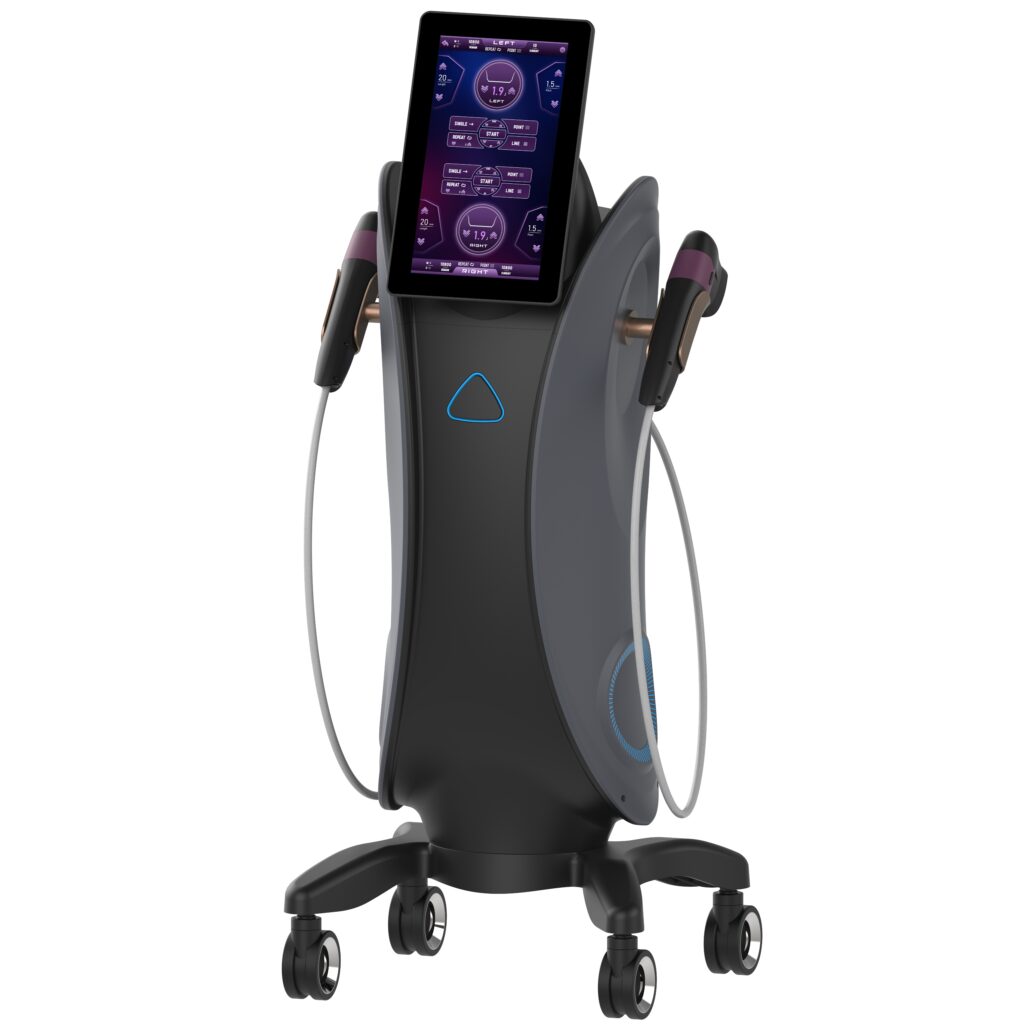
Fauteuil de rééducation périnéale SHEFMON E0435 EMS
Pour les cliniques et les distributeurs à la recherche d'un appareil professionnel de rééducation du plancher pelvien, le fauteuil de rééducation du plancher pelvien SHEFMON E0435 EMS est devenu une alternative populaire aux systèmes de marque coûteux.
Cet appareil utilise la technologie des impulsions électromagnétiques focalisées pour stimuler les muscles profonds du plancher pelvien de manière non invasive. Selon SHEFMON, ce fauteuil cible l'incontinence urinaire d'effort, la récupération post-partum, le renforcement du plancher pelvien et l'amélioration du bien-être intime.
Caractéristiques principales
- Traitement non invasif
- séances entièrement habillées
- Intensité réglable
- Conçu pour les femmes et les hommes
- Environ 12 000 contractions par séance
- Adapté à la rééducation post-partum
Pourquoi les cliniques choisissent SHEFMON
L'un des avantages des dispositifs SHEFMON pour les cliniques réside dans leur prix abordable, comparé aux systèmes Emsella haut de gamme qui peuvent coûter plus de 150 000 £. SHEFMON affirme que ses systèmes sont disponibles à un prix nettement inférieur tout en offrant une technologie de stimulation du plancher pelvien similaire.
Vous pouvez consulter la page produit officielle ici :
Fauteuil de rééducation périnéale SHEFMON E0435 EMS
Les résultats d'Emsella sont-ils permanents ?
La réponse honnête est : pas toujours. Les résultats peuvent durer des mois, voire des années, selon le mode de vie, l’âge, un accouchement et les habitudes d’entretien musculaire. Tout comme pour la musculation, la force musculaire diminue si l’entraînement est complètement arrêté.
Certains utilisateurs maintiennent les améliorations grâce à des séances d'entretien occasionnelles. D'autres associent le traitement à la rééducation périnéale, à l'exercice physique et à de saines habitudes de vie pour préserver les bienfaits à long terme.
Il convient également de formuler une mise en garde importante. Les traitements de type Emsella ne sont pas adaptés à tous. Certains spécialistes du plancher pelvien avertissent que les personnes atteintes de planchers pelviens hypertoniques—c’est-à-dire des muscles pelviens excessivement tendus—cela pourrait ne pas être bénéfique et pourrait même aggraver les symptômes.
C'est pourquoi une évaluation professionnelle est importante avant de commencer un traitement.
Conclusion
Le fauteuil Emsella peut agir étonnamment vite chez de nombreuses personnes, certaines constatant des changements dès la première séance. Les améliorations les plus significatives et durables apparaissent généralement après un cycle complet d'environ six séances réparties sur plusieurs semaines. Le traitement agit en générant des milliers de contractions supramaximales du plancher pelvien, renforçant ainsi les muscles bien plus intensément que les exercices de Kegel classiques.
Les résultats varient selon l'âge, la condition musculaire, le stade de récupération post-partum et l'état de santé pelvien général. Certaines personnes constatent une nette amélioration du contrôle de leur vessie et un meilleur soutien pelvien, tandis que d'autres nécessitent des traitements d'entretien ou des thérapies combinées. L'avantage est que l'intervention est non invasive, indolore pour la plupart des patientes et ne requiert aucune convalescence.
Pour les cliniques ou les distributeurs à la recherche d'équipements professionnels de rééducation du plancher pelvien, le fauteuil de rééducation périnéale E0435 EMS de SHEFMON offre une solution moderne conçue pour la récupération post-partum, le soutien en cas d'incontinence urinaire et l'amélioration du bien-être pelvien.
FAQ
1. En combien de temps peut-on ressentir les résultats du fauteuil Emsella ?
De nombreux utilisateurs constatent des améliorations dès la première ou la deuxième séance, mais les résultats complets apparaissent généralement après environ six traitements.
2. Le fauteuil Emsella est-il douloureux ?
La plupart des personnes décrivent le traitement comme inhabituel mais non douloureux. La sensation est comparable à de fortes contractions ou vibrations des muscles du plancher pelvien.
3. Combien de temps durent les résultats d'Emsella ?
Les résultats peuvent durer plusieurs mois, voire plus, selon le mode de vie et l'état musculaire. Certaines personnes tirent profit de séances d'entretien tous les quelques mois.
4. Les femmes en post-partum peuvent-elles utiliser le fauteuil Emsella ?
Oui, la récupération post-partum est l'une des principales utilisations des fauteuils de rééducation périnéale à électrostimulation. De nombreuses femmes les utilisent pour améliorer le contrôle de leur vessie et renforcer leurs muscles affaiblis après l'accouchement.
5. Le fauteuil SHEFMON E0435 EMS est-il adapté aux cliniques ?
Oui. Le SHEFMON E0435 est conçu pour la rééducation périnéale professionnelle, les services de récupération post-partum et les cliniques de bien-être.