










Beauty-device distributors rarely sell a model name alone. They sell a specific combination of console, handpieces, treatment heads, electrical version, language, accessories, consumables, documents, packaging, and commercial terms. If a catalog describes only the product family while a quotation lists an incomplete or different combination, the buyer cannot tell exactly what will be supplied.
Configuration control gives every saleable combination a clear identity. It helps distributors publish accurate catalogs, compare related SHEFMON models, prepare quotations that match buyer needs, and pass an approved order to purchasing and delivery without reinterpreting the offer. This guide explains how to create that control for facial, hair-removal, body-care, HIFU, and RF-microneedling devices.
Résumé exécutif
- Keep the model, saleable configuration, et quotation line as three connected but separate records.
- Give each approved configuration its own code, revision, effective date, and status.
- Divide components into standard, optional, consumable, replacement, incompatible, and confirmation-required classes.
- Record variable specifications in structured fields rather than hiding them in product descriptions.
- Use configuration matrices for models with wavelength, power, spot-size, cartridge, needle, handle, voltage, or language choices.
- Publish distributor catalogs from approved product records; never use a quotation as the source for permanent product facts.
- Make every quotation identify the configuration code, included items, exclusions, validity period, market version, and approval status.
- Separate technical configuration from price, stock, lead time, freight, and other temporary commercial data.
- Link bundles to their component configurations instead of creating vague package names.
- Ask SHEFMON to confirm any choice that is not explicit on the current product page or approved configuration sheet before the distributor promises it to a buyer.
1. What Configuration Control Means for Beauty Devices
Configuration control is the process used to define, approve, identify, publish, revise, and retire each device combination that a distributor can offer. The goal is simple: every team should understand the same configuration code in the same way.
A controlled configuration answers five questions:
- Which base model is being offered?
- Which selectable technical options apply?
- What is physically included?
- Which market and document version applies?
- Which revision did the buyer approve?
This is narrower than general product-data management. A product master may say that a device belongs to the hair-removal category. Configuration control specifies whether the quoted unit uses the approved wavelength option, handle-power option, spot-size option, electrical version, and accessory set.
2. Why a Model Number Is Not a Complete Offer
A model number is an essential anchor, but it may not describe the whole deliverable. Professional beauty devices can contain choices at several levels:
- platform or chassis;
- installed treatment technologies;
- handle quantity and handle type;
- wavelength, output, cooling, or spot-size option;
- cartridge or treatment-head selection;
- tension et prise ;
- interface or manual language;
- standard accessories;
- opening consumables;
- spare or replacement components;
- packaging and documentation.
Two catalog entries can therefore share a base model and still represent different saleable configurations. Conversely, two similar-looking models should not be merged merely because their headline functions overlap.
The distributor needs a rule: a material change to what the buyer receives must either create a new configuration code or a formally revised configuration record.
3. Separate the Model, Configuration, and Quotation
These three records serve different purposes.
| Enregistrer | Objectif principal | Stable content | Variable content |
|---|---|---|---|
| Model record | Identifies the product family | Official model number, primary category, core technology, source URL | Lifecycle status and approved description |
| Configuration record | Defines one saleable combination | Configuration code, option values, included components, compatibility rules | Revision and availability status |
| Quotation record | Presents a commercial offer | Referenced model and configuration revision | Quantity, price, currency, validity, stock or lead time, freight and buyer-specific terms |
The catalog should display information from the model and approved configuration records. The quotation should reference those records and add temporary commercial terms. A salesperson should not create a new technical configuration inside a free-text quotation.
4. Give Every Saleable Configuration a Stable Code
A practical configuration code should be readable enough for teams to use but should not try to encode every specification. For example:
A0423-C01-EU-EN-R03
This could represent:
A0423: base model;C01: approved technical and accessory combination;EU: controlled market or electrical profile;FR: documentation or interface language profile;R03: revision 03.
The code format is an internal operating choice. Its meaning must be documented, and a code must never be reassigned to a different combination. Long specifications still belong in structured fields. If every technical value is embedded in the identifier, the code becomes difficult to maintain and prone to transcription errors.
5. Build a Controlled Configuration Record
Each configuration record should contain enough information for catalog production, quotation preparation, order review, and delivery checking.
Identity fields
- official SHEFMON model number;
- distributor configuration code;
- revision number;
- product category and subcategory;
- short approved configuration name;
- official product-page source;
- record owner and approver;
- effective date and next review date;
- lifecycle status.
Technical option fields
- installed functions;
- selectable power or output option;
- wavelength or energy-delivery option where relevant;
- spot size, treatment head, cartridge, or needle choice;
- number and type of handles;
- cooling or vacuum arrangement where relevant;
- screen or control-interface version if it affects the offer;
- voltage, frequency, plug, and market profile;
- software or interface language when confirmed.
Supply fields
- console or main unit;
- standard handles and components;
- standard accessories;
- starter consumables;
- optional items;
- compatible replacement items;
- packaging units;
- manuals, training files, and commercial documents;
- excluded items that buyers commonly assume are included.
Use dropdowns, controlled units, and approved component IDs for fields that recur. Reserve free text for explanations, not for the facts that determine what can be ordered.
6. Classify Every Component Before It Reaches the Catalog
The word “available” is too vague for configuration control. Assign each component one of the following statuses:
| Component status | Meaning in the catalog | Meaning in the quotation |
|---|---|---|
| Standard | Included in the named configuration | Must appear in the included-items list or referenced configuration schedule |
| Facultatif | Can be selected under an approved rule | Must be separately selected, identified, and priced where applicable |
| Consumable | Used up or replaced through normal service delivery | Opening quantity and reorder unit must be stated |
| Replacement | Service or maintenance item for a compatible version | Must cite the compatible device or component version |
| Incompatible | Must not be combined with that configuration | Block the selection rather than relying on a note |
| Confirmation required | Possible status has not been approved for routine sale | Do not publish or promise until SHEFMON confirms it |
| Retired | Previously valid but unavailable for new offers | Preserve for historical orders; remove from active selection |
This classification prevents a catalog image from being interpreted as a packing list. It also stops optional handles from quietly becoming assumed standard equipment.
7. Use Device Families to Define the Right Control Fields
Different beauty-device categories need different configuration schemas. A universal record with hundreds of unused fields becomes hard to review, while a short generic record misses the values that matter.
| Device family | Configuration fields that usually need priority | Exemples SHEFMON |
|---|---|---|
| Hydro and multifunction facial care | Installed functions, handpieces, solution containers, tips, vacuum-related accessories, opening consumables | Machine de microdermabrasion hydro A0648 9 en 1 |
| Diode-laser hair removal | Wavelength option, handle power, spot size, cooling arrangement, handle quantity, electrical profile | Laser à diode A0423 et Laser à diode A0426 |
| HIFU multifonction | Installed modules, handle set, cartridge depths, standard versus optional cartridges, supported service scope | A0204 5-in-1 focused HIFU |
| Micro-aiguilletage RF | Handle configuration, needle-head types, opening quantities, treatment-depth data, voltage version, replacement compatibility | A0152 desktop RF microneedling |
| Soins corporels multifonctionnels | Body and facial handle set, vacuum/RF/roller functions, handle dimensions, accessory set | B0155 desktop body-care system |
The fields should help a buyer distinguish meaningful choices. Avoid adding technical values merely because they are available somewhere in a brochure.
8. Control A0423 and A0426 as Separate Laser Models
The current SHEFMON pages for A0423 and A0426 list selectable values that can affect a quotation, including handle power, wavelength arrangement, and spot size. Those choices should be structured options, not copied as a slash-separated phrase into every catalog.
For each laser model, create approved option values such as:
- wavelength profile;
- handle-power selection;
- spot-size selection;
- number of included handles;
- cooling configuration;
- electrical profile;
- included eyewear, accessories, and documentation;
- approved replacement-handle mapping.
Keep A0423 and A0426 as different model records even when some listed specifications overlap. A distributor comparison table may present them side by side, but a quotation must identify the selected model and its exact configuration code.
Before release, the quotation reviewer should be able to answer: Is the selected spot size valid for this handle version? Does the handle-power selection match the approved configuration? Is the market electrical profile confirmed? Are all included and optional items clearly separated?
9. Control A0648 by Installed Functions and Supplied Tools
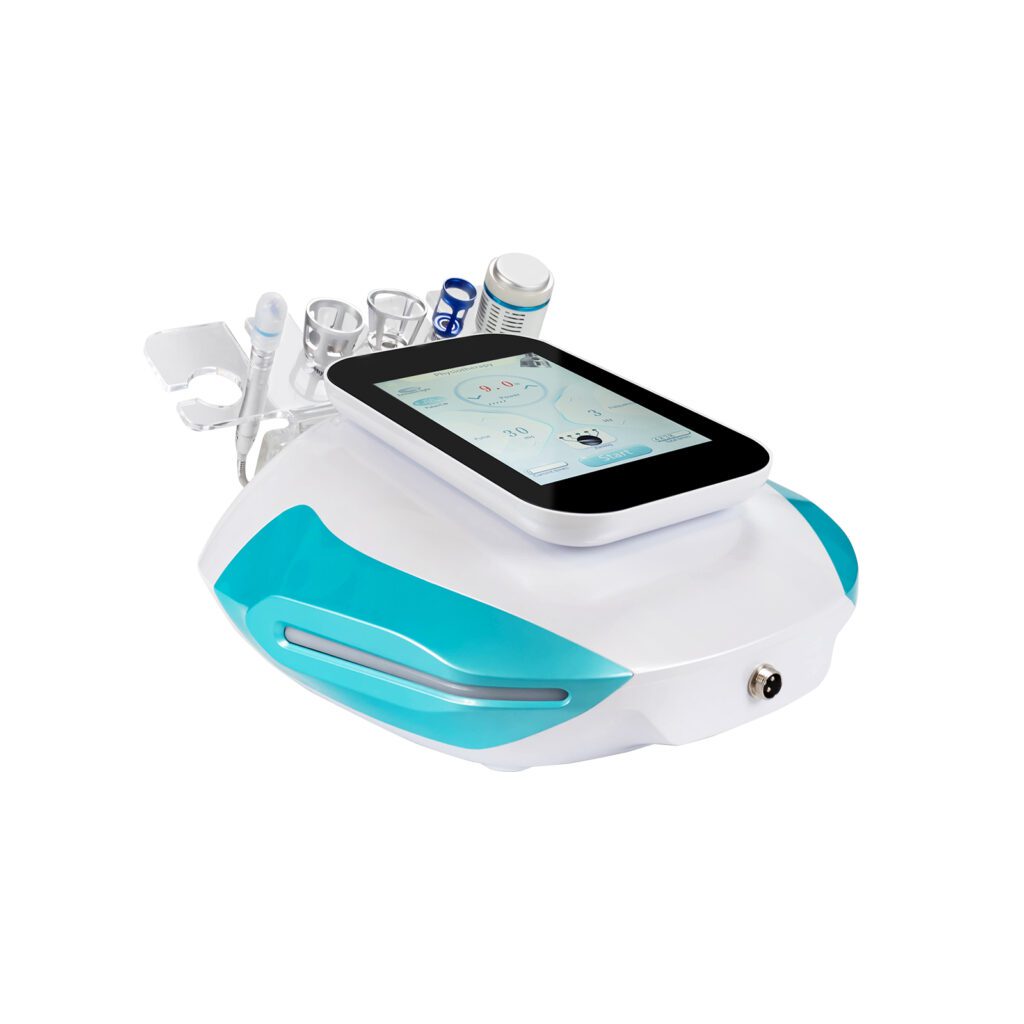
Le Page produit A0648 presents the platform as a 9-in-1 hydro and facial-care system. For distributor data, “9-in-1” should not be the end of the description. The configuration schedule should name the installed functions and identify the supplied handpieces, tips, containers, tubing, cables, and starter items.
A facial-salon catalog can explain the business role: one platform supports a broader cleansing and facial-care menu. The controlled quotation needs a more exact supply record. It should state which tools are standard, whether any alternatives were selected, which disposable items are included at opening quantity, and what the buyer will need to reorder.
This approach also improves comparisons. Buyers can evaluate the actual tool set rather than comparing two multifunction devices only by their headline function count.
10. Control A0204 with a Cartridge and Module Matrix
Le Page produit A0204 describes a multifunction system and distinguishes standard and optional handle or cartridge choices. That makes a configuration matrix essential.
Create rows for each approved handle or module and columns for:
- component ID;
- treatment role;
- supported depth or size;
- standard, optional, or unavailable status;
- compatible base configuration;
- included quantity;
- replacement order unit;
- professional-use or market note;
- verification source and date.
Do not publish one large list that allows buyers to assume every depth and module is included. The active quotation should show the chosen set. If a distributor offers a core and an advanced A0204 package, those packages need separate configuration codes and separate included-items schedules.
11. Control A0152 Through Handles, Needles, and Consumables
Le courant A0152 RF-microneedling page lists different handle arrangements and multiple needle-head types. These choices affect catalog accuracy, initial supply, and future replenishment.
The configuration record should distinguish:
- installed handle arrangement;
- compatible needle-head types;
- quantity included with the first unit;
- consumable reorder codes and pack sizes;
- version compatibility;
- voltage profile;
- confirmed accessories;
- any conditions governing professional operation.
Catalog copy may summarize the platform. The quotation should identify the handle version and opening needle inventory. A later consumables quotation should reference the buyer’s installed configuration so the distributor does not supply an incompatible item.
12. Control B0155 by Handle Set and Service Role
Le B0155 product page describes a multifunction body-care system with different body and smaller-area handles. A distributor should define which handle set belongs to each active package.
One approved package may target a body studio that wants a focused service scope. Another may include a broader handle set for an aesthetic center offering both body and smaller-area services. These are commercial packages built from controlled components; they should not be presented as interchangeable names for the same unidentified unit.
In the catalog, compare packages by service role and included handle set. In the quotation, list the configuration code and each supplied handle or reference a locked configuration schedule attached to the offer.
13. Design the Distributor Catalog Around Approved Choices
A catalog should help buyers choose without exposing an uncontrolled option list. Use three layers:
Product-family page
Explain the buyer type, primary application category, and differences between related models. Link to the relevant section of the SHEFMON beauty-machine catalog or the individual product page.
Comparaison de modèles
Show only fields that influence selection: business role, core technology, form factor, approved option ranges, service-menu fit, and professional-setting considerations.
Configuration card
Give each routinely sold combination a configuration code, short name, included-item summary, available market profiles, and revision date. Mark selectable additions clearly.
Do not allow layout or photography to imply inclusion. Use captions such as “shown with optional component” when an image contains an item outside the base package.
14. Make Quotations Configuration-Safe
Every beauty-device quotation should carry enough information to survive handoffs between the buyer, salesperson, sales manager, purchasing team, and delivery team.
Inclure:
- official model number;
- distributor configuration code and revision;
- buyer-facing configuration name;
- selected technical options;
- included equipment and quantities;
- optional items selected by the buyer;
- consumables and opening quantities;
- electrical and language profile;
- explicitly excluded items where confusion is likely;
- quantity, price, currency, and tax basis;
- stock or lead-time statement with an as-of date;
- quotation validity;
- freight and delivery terms;
- warranty or support references based on approved documents;
- required approval or exception number.
If the included-items schedule is long, attach a controlled appendix and identify its revision in the quotation. A general sentence such as “standard accessories included” is not sufficient when multiple configurations exist.
15. Separate Technical Truth from Commercial Conditions
Technical and commercial data change at different speeds. Keep them in linked records.
The configuration record owns:
- model identity;
- selected options;
- included components;
- compatibility;
- market profile;
- approved documents;
- revision history.
The quotation owns:
- price and discount;
- currency;
- quotation validity;
- available quantity;
- lead time;
- freight;
- payment and delivery terms;
- buyer-specific services.
A temporary stock shortage should not create a new configuration. A changed handle or cartridge set should not be hidden as a pricing update.
16. Control Market and Electrical Variants
Market versions need explicit fields even when the device name remains the same. At minimum, confirm:
- voltage and frequency;
- plug type;
- interface language;
- manual and labeling language;
- packaging marks or documents required for the destination;
- approved claims and service descriptions;
- whether the buyer’s setting and operators meet local requirements.
Do not infer a market version from the buyer’s shipping address. The quotation should state the selected profile, and order review should confirm it before release. Distributors are responsible for checking the rules that apply in their market and for the intended professional setting.
17. Build Compatibility Rules That Prevent Invalid Quotes
A component table becomes more useful when it can block errors. Each option should link to:
- compatible model numbers;
- compatible configuration revisions;
- required companion components;
- mutually exclusive options;
- minimum or maximum quantities;
- replacement or consumable status;
- effective and retirement dates.
For example, a needle head should not be selected only because its name resembles another item. A laser handle should not be quoted solely because the connector appears similar. Compatibility must come from the approved record or direct confirmation.
If the quoting system cannot enforce rules automatically, use a review checklist and locked selection tables until it can.
18. Manage Bundles as References, Not Duplicates
Distributors often create starter, growth, or professional packages for salons and clinics. A bundle record should reference the active configurations of its components.
For example, a facial growth package might contain:
- one controlled A0648 configuration;
- one selected facial firming platform;
- the approved starter consumables for each device;
- training or onboarding items;
- a bundle price and validity period.
The bundle should not copy all specifications into a separate uncontrolled paragraph. If one component changes revision, the system should flag the bundle for review. Package design remains a business offer and should not be interpreted as instructions to use multiple devices together in one appointment.
19. Create a Clear Revision and Approval Workflow
Use a simple sequence:
- Change requested: A supplier update, new buyer need, correction, or new option starts the record.
- Evidence collected: The owner attaches the current SHEFMON page, specification sheet, confirmation, or component list.
- Impact reviewed: Catalogs, price lists, open quotations, bundles, inventory, demonstrations, and training files are checked.
- Configuration drafted: The proposed values, inclusions, exclusions, and compatibility rules are entered.
- Technical review completed: A qualified reviewer checks the device and component facts.
- Commercial review completed: Sales operations checks naming, market availability, and quotation behavior.
- Revision approved: The effective date and approved channels are set.
- Channels updated: Catalog and quotation templates are republished from the approved data.
- Old revision restricted: Existing orders retain traceability, while new offers use the active revision.
Emergency corrections still need a record. Speed should change the review timeline, not eliminate traceability.
20. Handle Open Quotations When a Configuration Changes
An approved change does not automatically rewrite an offer already sent to a buyer. Decide how each open quotation is treated.
- If the change corrects a harmless description without altering supply, issue a documented correction where needed.
- If included equipment or compatibility changes, suspend the quotation and issue a revised version.
- If an option is retired, identify affected buyers and propose the approved replacement.
- If only price or stock changes, follow the quotation-validity rules without revising technical identity.
- If the buyer already approved an older valid revision, preserve that revision in the order record and confirm whether it can still be supplied.
Never silently substitute a component. The revised offer should make the difference visible.
21. Define Ownership by Field
Configuration control works when responsibilities are explicit.
| Rôle | Primary responsibility |
|---|---|
| Product owner | Model identity, category, buyer role, and approved configuration structure |
| Technical reviewer | Specifications, component mapping, compatibility, and version evidence |
| Sales operations | Catalog fields, quotation templates, status rules, and user access |
| Commercial manager | Price policy, discount approval, currency, and validity |
| Inventory or purchasing team | Availability, orderability, component codes, and current supply status |
| Compliance owner or local adviser | Market-specific claims, documents, and professional-setting restrictions |
| Salesperson | Selects only approved configurations and records buyer requirements accurately |
SHEFMON is the source to confirm its product and supply information. The distributor still owns the accuracy of its local catalog, quotation, market presentation, and approval workflow.
22. Audit Catalogs and Quotations Together
Monthly or quarterly review should sample both published and transactional records. Check whether:
- every active catalog configuration has an approved record;
- every quotation cites a valid configuration revision;
- selected options pass compatibility rules;
- standard and optional components are separated;
- electrical and language profiles are stated;
- images and captions match the package;
- opening consumables are quantified;
- prices and stock statements carry dates;
- retired codes are blocked from new offers;
- bundle components still point to active revisions;
- sales teams are using the current templates.
Track correction rates, approval exceptions, configuration-related order holds, quotation reissues, and component mismatches. These measures show where the control system needs improvement.
23. A Practical 30-Day Implementation Plan
Week 1: Identify high-risk models
Start with models that have several selectable handles, wavelengths, spot sizes, cartridges, needles, or electrical variants. Collect current product pages, specification sheets, component lists, catalog entries, and quotation examples.
Week 2: Build configuration records
Define the code structure, status values, component classes, category-specific fields, and approval roles. Create records for the most frequently quoted combinations first.
Week 3: Connect the catalog and quotation
Replace vague package descriptions with configuration cards. Add configuration code and revision fields to quotation templates. Create compatibility and included-items schedules.
Week 4: Review, publish, and restrict
Approve the active records, update live catalog content, lock old templates, mark unverified choices as confirmation required, and train sales staff on the selection workflow.
The first release does not need to cover every historical product. It must reliably control the active configurations that buyers can currently select.
24. Pre-Release Checklist for Every Quote
Before a quotation leaves the distributor, confirm:
- The model number matches the buyer’s requested device category.
- The configuration code is active.
- The quotation uses the current approved revision.
- All selected options are compatible.
- Standard and optional items are clearly separated.
- Consumable quantities and reorder references are clear.
- Voltage, frequency, plug, and language requirements are recorded.
- Images or attachments correspond to the quoted configuration.
- Price, currency, stock or lead time, and validity are dated.
- Any exception has written approval.
- The order handoff can identify exactly what must be supplied.
Questions fréquemment posées
1. What is beauty-device configuration control?
It is the system used to identify and manage each approved combination of a base device, technical options, included components, market version, documentation, and revision. It ensures catalogs, quotations, orders, and deliveries refer to the same offer.
2. Is a model number enough for a distributor quotation?
Not when the model has selectable wavelengths, handle power, spot size, cartridges, needles, handles, voltage, language, or accessory sets. The quotation should reference a controlled configuration that resolves those choices.
3. When should a new configuration code be created?
Create one when the buyer receives a materially different technical or supply combination that will be offered repeatedly. Minor editorial corrections can use a controlled revision, provided they do not alter the delivered package.
4. Should optional components appear in the main catalog?
They can appear when they are approved and relevant to selection, but they must be labeled as optional. The configuration card and quotation must distinguish them from standard components.
5. How should A0423 and A0426 be compared?
Keep them as separate model records. Compare their approved configurations using consistent fields such as wavelength profile, handle power, spot-size choice, cooling, form factor, electrical profile, and supplied accessories. Do not combine them into a single generic laser entry.
6. How should A0204 cartridges be shown in a quotation?
Use a configuration or component schedule that names the selected handles and cartridges, their included quantities, and whether each is standard or optional. Avoid implying that every cartridge shown on a product page is included.
7. How should distributors manage A0152 needle orders?
Link each needle-head or consumable code to the installed A0152 configuration and revision. Record the opening quantity in the equipment quote and use the same compatibility record for replenishment orders.
8. Can price be stored in the configuration record?
The configuration can link to a price list, but product identity and technical content should remain separate from changing price, currency, discount, freight, stock, and quotation-validity data.
9. What happens to old configurations?
Retain them for traceability and existing orders, mark their lifecycle status, and block them from new quotations when retired. Never reuse an old code for a different combination.
10. What should be confirmed with SHEFMON before quoting?
Confirm any technical option, included component, compatibility rule, market version, document, current availability, or replacement choice that is not already covered by the distributor’s approved and current source record. Use the SHEFMON contact page for configuration-specific questions.
Conclusion
Distributor configuration control turns broad product information into offers that buyers, sales teams, and delivery teams can all interpret consistently. The key is to connect one official model to clearly coded saleable configurations, then make catalogs and quotations reference those approved records.
Begin with the devices that carry the most options and the highest risk of quotation ambiguity. Define included components, control compatibility, separate technical facts from temporary commercial terms, and preserve every approved revision. To review current device categories or confirm the exact combination for a buyer, explore SHEFMON professional beauty machines et contacter SHEFMON with the intended device category, market, service scope, and required configuration.