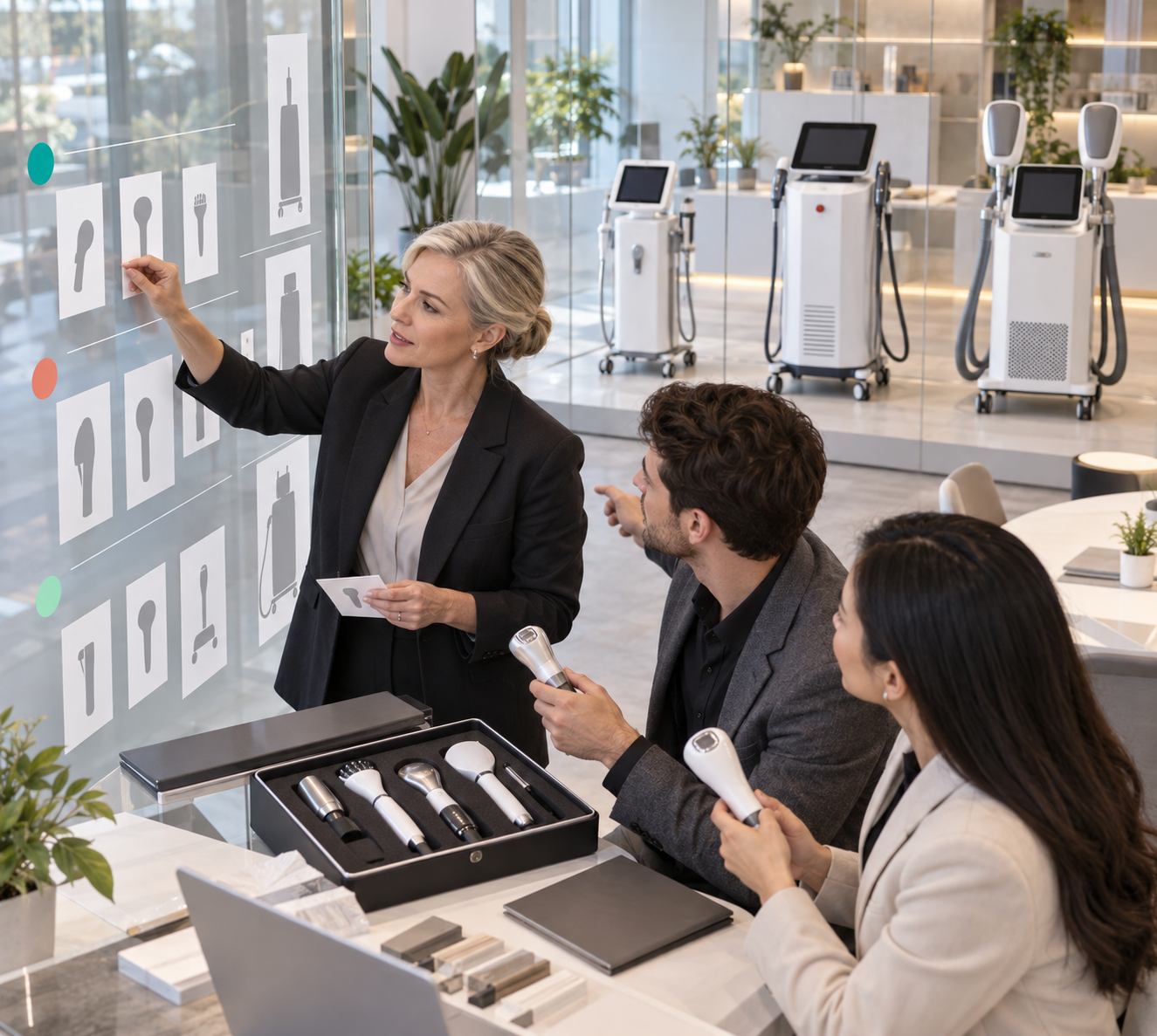
Building a beauty device product line is not the same as collecting as many machines as possible. A useful product line helps each customer identify the right starting point, understand the next upgrade and see how the equipment supports a real service menu.
A new facial salon may need a versatile Hydra machine. A growing med spa may want an anti-aging platform. A laser studio needs a focused hair removal system, while a skin clinic may require RF microneedling or a specialized laser. A distributor must connect these different buyers without creating a catalog full of overlapping models.
This guide explains how to segment customers, select device categories, create entry-to-premium tiers and build practical SHEFMON equipment packages for salons, med spas, skin clinics, laser studios and body contouring centers.
Résumé exécutif
A strong beauty device product line begins with customer groups and service menus. It should normally include:
- A foundation line for broad salon demand, such as Machines de beauté Hydra and facial care equipment.
- A growth line for higher-value anti-aging services, such as HIFU, RF and facial EMS.
- A specialist line for épilation, micro-aiguilles MNRF and focused laser applications.
- A body line using distinct categories such as Cryolipolyse, EMSlim, Endos Velapro et Cavitation RF.
Within each category, use a limited good-better-best structure. Each model must serve a distinct customer level, configuration need or price position. Start with demonstration units and proven configurations, then expand according to qualified inquiries, quotation conversion, installed-base usage, consumable demand and after-sales capacity.
Relevant SHEFMON starting models include the Machine de microdermabrasion à l'eau diamantée 9 en 1 A0648, A0203 Appareil HIFU avancé à quatre poignées 25D avec EMS RF, A0426 multi-wavelength diode laser hair removal machine, A0152 Bureau MNRF Profondeur 8, Machine de cryolipolyse S9 360 et A0241 EMSlim RF EMS Machine.
1. Define the Customers Before Choosing Devices
A product line should reflect the businesses you actually serve. Begin by grouping customers according to operating model, service maturity and technical readiness.
New beauty salons
New salons usually need equipment that is easy to demonstrate, train and integrate into frequent services. They often have limited rooms, small teams and a need to generate cash flow from accessible facial or body-care menus.
Their priorities include:
- Multi-purpose equipment.
- Simple operator workflow.
- Broad customer appeal.
- Manageable consumables.
- Compact size.
- Clear service packaging.
- Responsive basic support.
Growing salons and med spas
Growing businesses already have recurring clients and want to increase ticket value or add a new department. They may be ready for HIFU, RF, facial EMS, hair removal or a focused body system.
Their priorities include:
- Premium service differentiation.
- Better throughput.
- Advanced training.
- Package and membership design.
- Reliable parts and consumables.
- A clear upgrade path.
Skin clinics and laser studios
Professional clinics require focused technologies, stronger documentation and a more technical sales process. Equipment suitability depends on intended use, local requirements, operator qualification, hygiene, client screening and aftercare.
Their priorities include:
- Application-specific equipment.
- Precise controls and configuration transparency.
- Single-use component management where applicable.
- Safety and compliance documentation.
- Advanced operator training.
- Technical maintenance support.
centres de remodelage corporel
Body businesses need devices chosen by service concept. Cryolipolysis, EMS, roller massage and RF cavitation are not interchangeable. The customer may need one anchor platform and one complementary maintenance device rather than several machines with overlapping claims.
Their priorities include:
- Clear body-service positioning.
- Course-based revenue.
- Applicator and room capacity.
- Screening and consultation.
- Bilan des progrès.
- Mechanical and handpiece support.
Chains and multi-location buyers
Chains value consistency, training repeatability, centralized consumable ordering and predictable maintenance. A standardized model may be more useful than a feature-rich device that varies by location.
2. Translate Customer Types into Service Lines
After defining customers, organize the product line by the services they sell. This structure is easier for buyers and sales teams to understand than a catalog arranged only by technology.
| Service line | Core customer groups | Relevant device categories | Commercial role |
|---|---|---|---|
| Facial foundation | New salons, spas and skin-management studios | Hydra and facial care | Broad entry line |
| Anti-âge | Growing salons, med spas and clinics | HIFU, radiofréquence et électrostimulation faciale | Premium growth line |
| Épilation | Laser studios, med spas and qualified salons | Diode laser and IPL | Repeat-course specialist line |
| Peau avancée | Skin clinics and advanced med spas | MNRF and focused lasers | Clinic differentiation line |
| Body reduction and sculpting | Body centers and med spas | Cryolipolyse et EMSlim | Premium body line |
| Body maintenance | Salons, spas and body centers | Endos, RF cavitation and related systems | Repeat-service body line |
| Specialty wellness | Focused clinics and wellness centers | Pelvic floor EMS and specialist systems | Niche expansion line |
Each service line should answer four questions:
- Which customer is it for?
- Which client need does it address?
- How is the service packaged?
- What support must the distributor provide?
If a category does not have clear answers, it is not ready to enter the portfolio.
3. Build a Foundation Facial Line
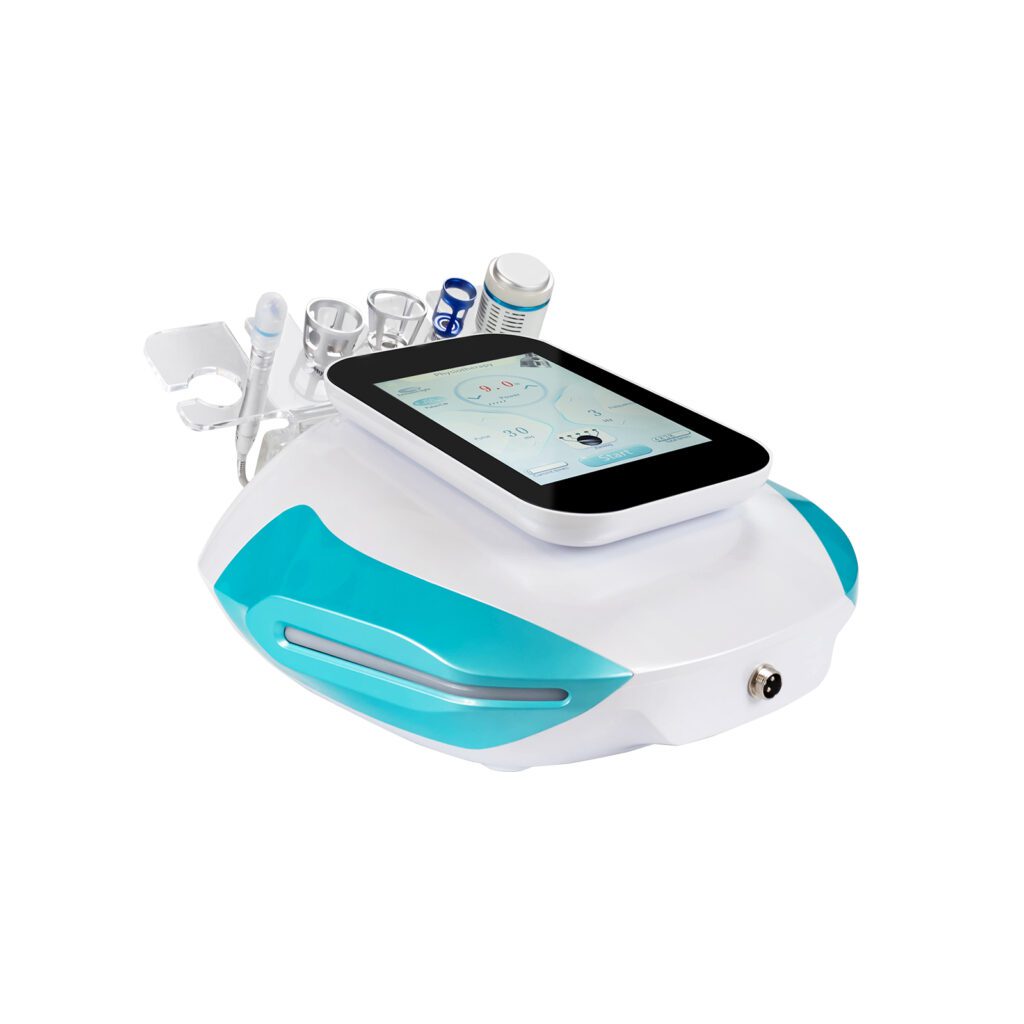
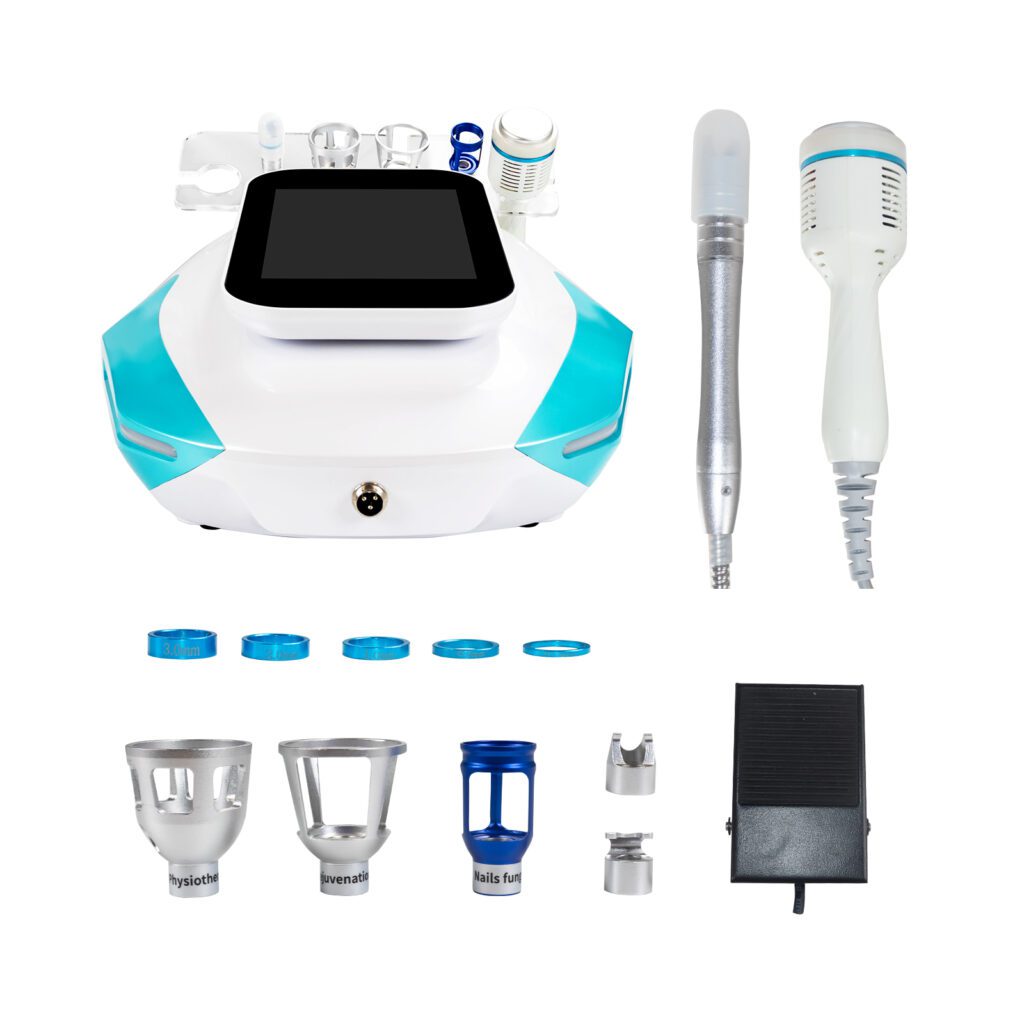
Facial equipment is a practical foundation because almost every beauty business can understand and use a facial service category. Machines Hydra can support cleansing, exfoliation, extraction and hydration-focused menus.
Le A0648 Hydro Microdermabrasion Machine is a vertical nine-function system that can be positioned for salons building several facial service levels from one base unit.
Product-line role
- Entry point for new salon buyers.
- Demonstration model for distributor showrooms.
- Cross-sell opportunity for solutions, tips and accessories.
- Maintenance service option for med spas and clinics.
- Starting point before anti-aging upgrades.
Customer menu examples
- Express cleansing facial.
- Deep-cleansing and extraction service.
- Soin hydratant du visage.
- Premium multi-step facial.
- Monthly skin-management membership.
What to standardize
Choose one main configuration for stock. Document the included handles, bottles, tubing, tips, solution requirements, cleaning process, voltage, plug and interface language. A standard setup reduces quotation errors and simplifies training.
When to add a second facial model
Add another model only when it solves a clear need, such as desktop portability, a lower entry price, different included functions or a more premium format. Avoid carrying several machines that customers cannot distinguish.
4. Add a Facial Rejuvenation Upgrade Line
The next product layer should help salon customers move beyond basic cleansing. The Catégorie Soins de la peau et rajeunissement du visage can support premium add-ons and structured facial programs.
SHEFMON examples include the A0145 Coolplasma Cold Fusion Plasma Facial Device, A0271-F MAGFACE et Appareil de modelage du visage Emface EMS A0272-F.
Product-line role
- Second purchase for established facial salons.
- Premium add-on category.
- Bridge between Hydra equipment and advanced HIFU or clinic systems.
- Differentiation for skin-management studios.
Good-better-best structure
- Good: a focused facial upgrade device with straightforward operation.
- Better: facial EMS or RF platform with a structured program concept.
- Best: an integrated premium system for customers with stronger consultation and training.
The tiers should represent meaningful workflow or capability differences. Do not create artificial tiers by changing only appearance or accessory count.
5. Create an Anti-Aging Technology Line
Anti-aging equipment gives distributors a premium growth category. HIFU, RF and facial EMS serve different roles and should be compared clearly.
SHEFMON HIFU options include:
- A0203 25D Four-Handle HIFU with RF EMS.
- A0204 Machine HIFU focalisée 9D 7D 5 en 1.
- A0205 Machine HIFU focalisée 9D 7D 5 en 1.
- A0270 Vmax HIFU avec radiofréquence.
Le Machine de levage verticale monopolaire RF BCHYQ045 448k TECAR provides a separate RF direction.
Segment by buyer readiness
| Buyer level | Product direction | Main qualification question |
|---|---|---|
| Growing salon | Focused, manageable anti-aging system | Can the team sell and operate a premium service consistently? |
| Established med spa | Multi-function HIFU, RF or facial EMS | Does each function have a defined menu role? |
| Advanced clinic | Higher-control platform with broader configuration | Are operators, screening and local requirements in place? |
| Chain customer | Standardized model with repeatable training | Can the same workflow be deployed across locations? |
Build the comparison around workflow
Compare handle configuration, standard and optional cartridge depths, operating modes, cartridge life, room footprint, interface language and training. Terms such as 7D, 9D, Vmax and 25D should not be treated as automatic quality rankings.
Control support complexity
HIFU cartridges, RF accessories and facial EMS applicators create different parts and training needs. Choose a manageable number of platforms so technicians and sales teams can become competent.
6. Build a Hair Removal Product Line
appareils d'épilation can become a specialist anchor because the service is easy for consumers to understand and commonly sold as a course.
The current SHEFMON category includes the Épilateur laser à diode A0426 et Épilateur laser à diode A0423.
Product-line role
- Core platform for laser studios.
- Repeat-course service for med spas.
- Premium department for qualified salon and clinic buyers.
- Demonstration-led product with strong technical sales value.
Suggested tiers
- Good: practical standard configuration for lower-volume studios.
- Better: enhanced handpiece or throughput configuration for established buyers.
- Best: premium configuration for high-volume businesses with strong cooling and service expectations.
Use the exact current specifications to define tiers. Do not create claims from model names alone.
What customers must receive
- Model and configuration sheet.
- Handpiece and wavelength details.
- Cooling and operating guidance.
- Eye-protection requirements.
- Consultation and screening framework.
- Maintenance and fault-reporting procedure.
- Local compliance reminder.
Laser equipment should remain separate from beginner facial devices in the sales process. Qualification and training requirements are different.
7. Add an Advanced Skin Clinic Line
Advanced clinics need focused equipment rather than general salon machines. This product line can include micro-aiguilles MNRF et sélectionné Laser IPL systems.
SHEFMON MNRF examples include the A0152 Bureau MNRF Profondeur 8 et A0157 MNRF Profondeur 8.
Focused laser examples include:
- A0507 1064nm 532nm Q-Switched Picosecond YAG Laser.
- A0529 10600nm CO2 Fractional Laser Equipment.
- Laser CO2 fractionné à fibre ultra-rapide A0509 2910 nm.
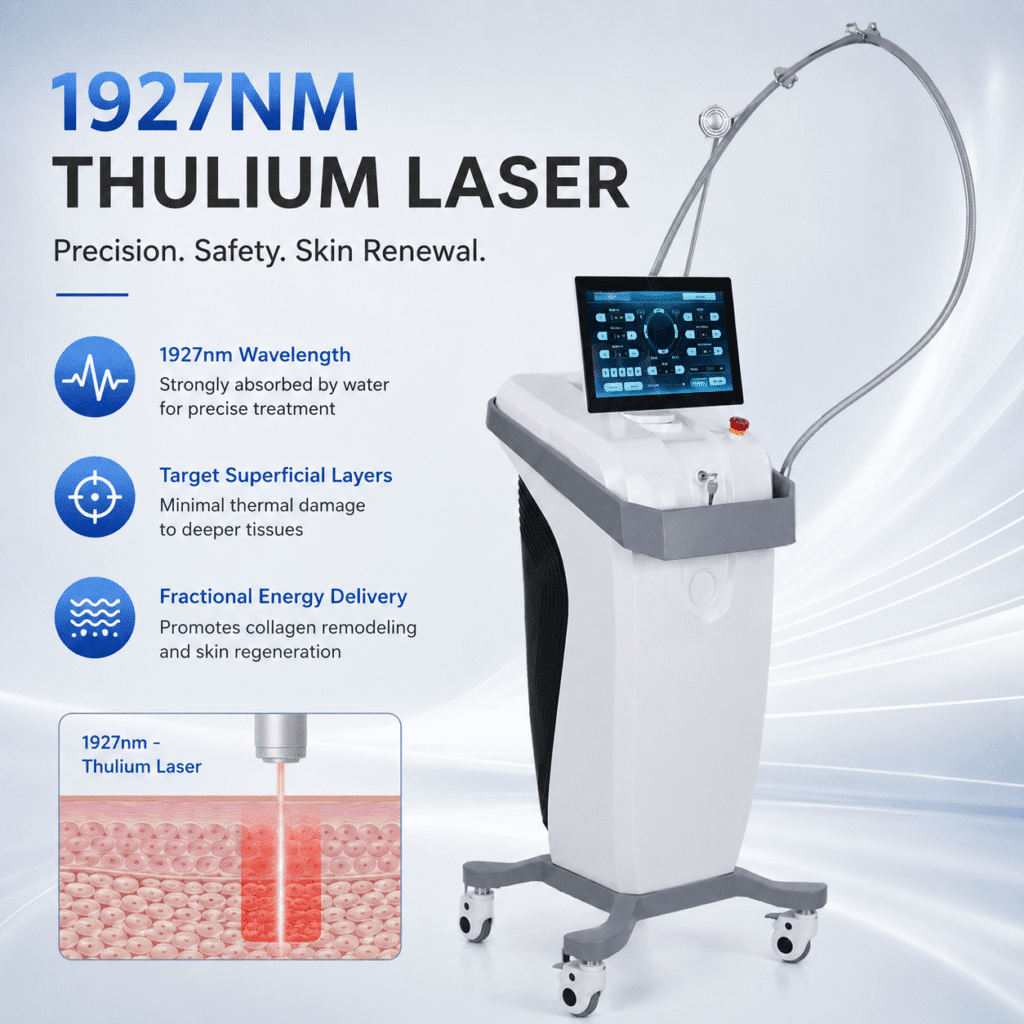
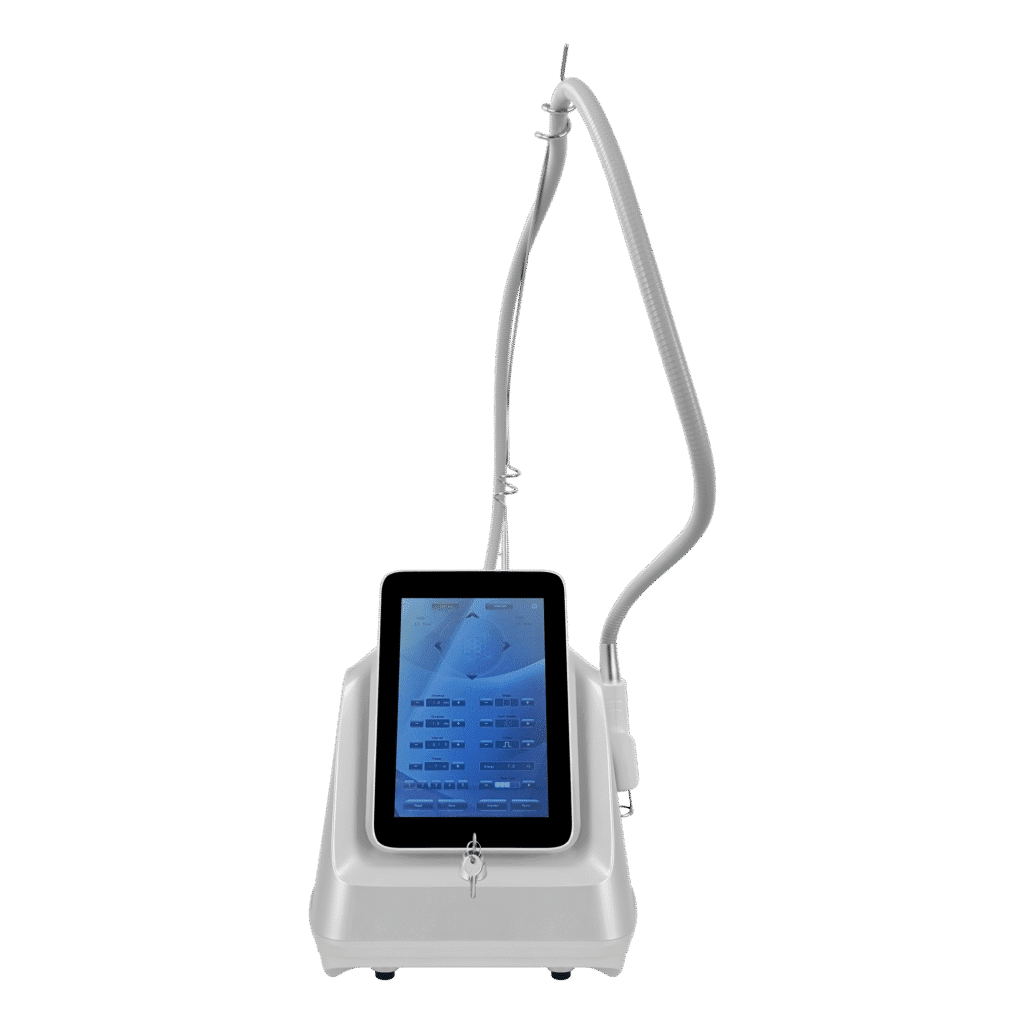
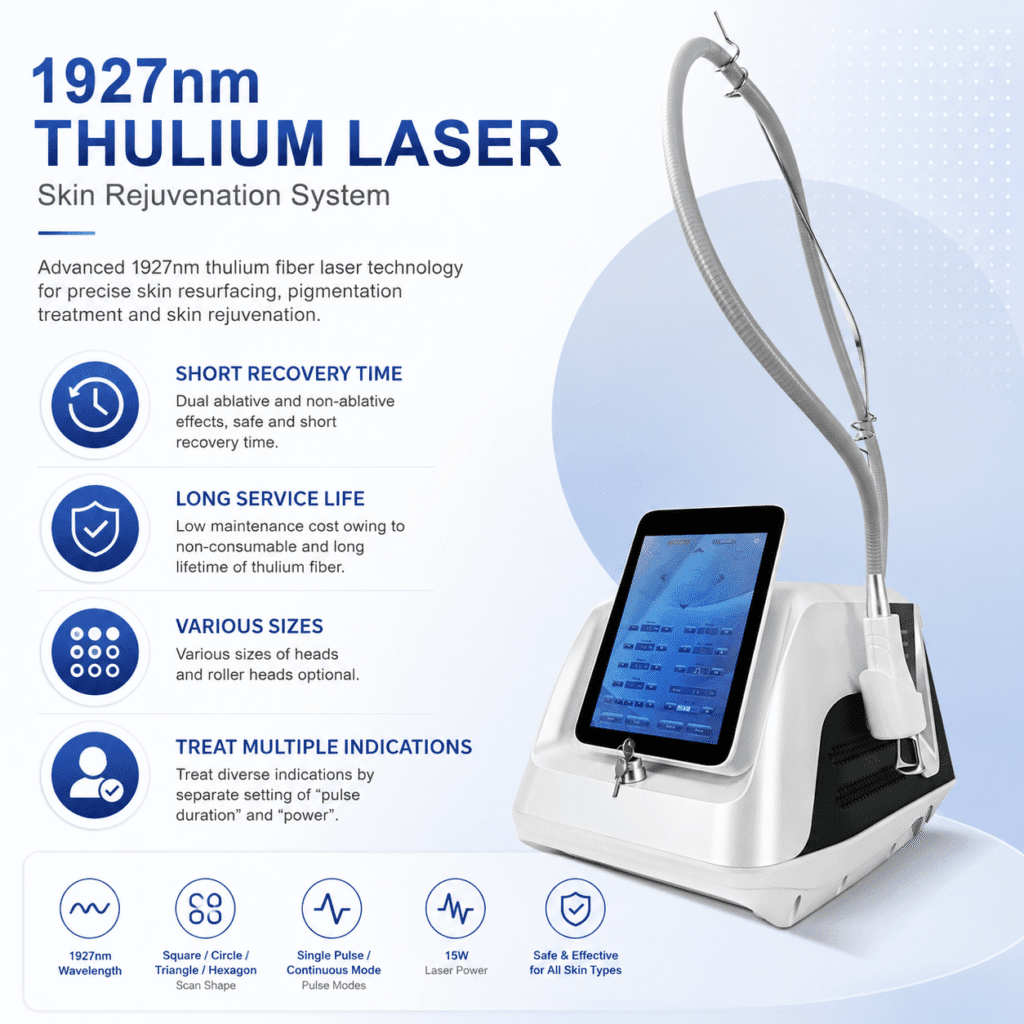
- Machine laser à fibre de thulium A0531 1927 nm 1550 nm.
Organize by application, not by the word laser
Create separate sales paths for hair removal, tattoo and pigmentation-focused systems, resurfacing platforms and other focused applications. Each path needs its own customer profile, training requirements, room considerations, accessories and after-sales plan.
Stock carefully
Advanced clinic systems are often better supplied against confirmed orders. Keep selected demo equipment and a clear configuration library, but avoid tying excessive capital to specialized machines before validating demand.
Protect the brand
Do not sell advanced equipment to buyers who lack suitable operators, hygiene processes, screening, records or aftercare. Poor customer fit can create more long-term cost than a lost sale.
8. Build a Body Contouring Line by Service Concept
A body product line should not group every machine under a single slimming label. Divide it according to the main service concept.
Cryolipolyse
Machines de cryolipolyse support localized fat-reduction-style programs. SHEFMON options include the Machine de cryolipolyse S9 360, S25 Cryolipolysis and Endos Velapro et Machine de remodelage corporel S26-CryoEMS.
Sculpture corporelle EMS
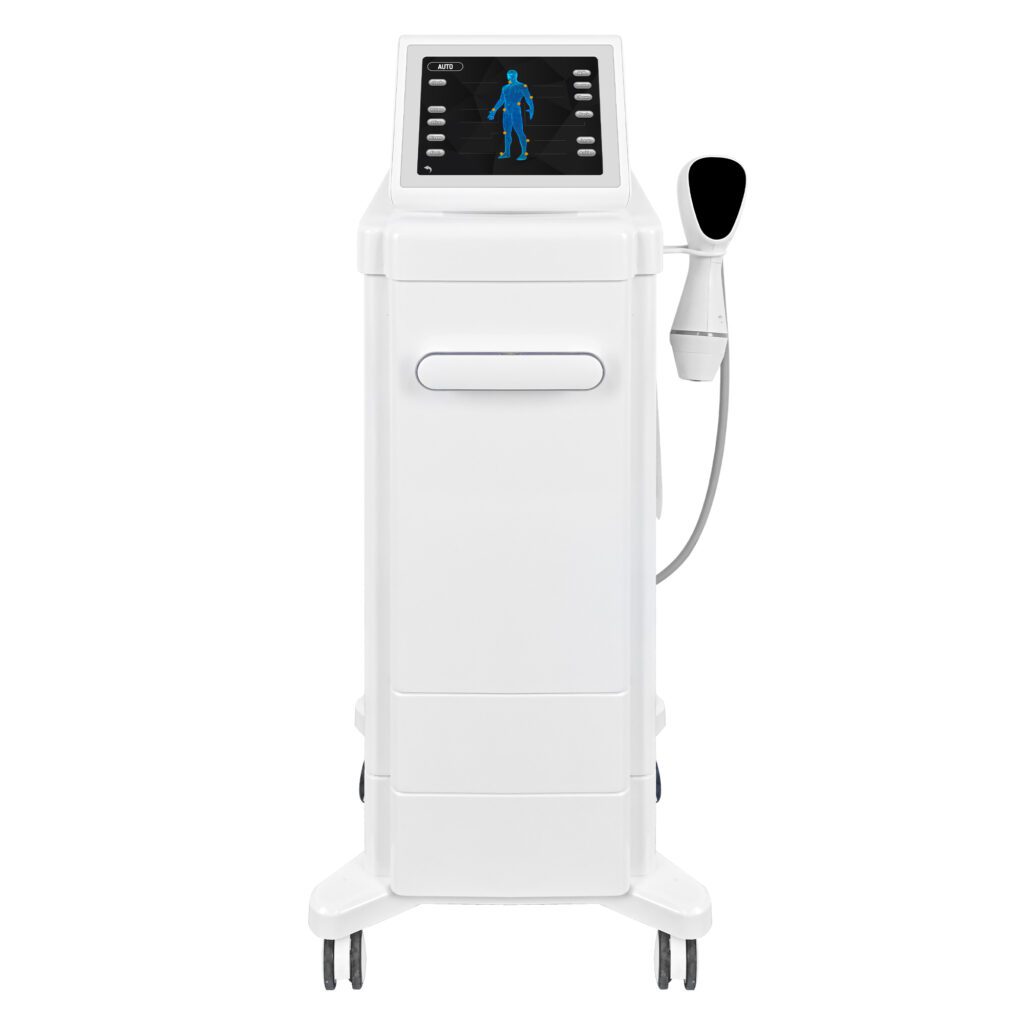
EMSlim systems support muscle-stimulation-style body programs. Options include the A0240 EMSlim Machine, A0241 EMSlim RF EMS Machine et A0272 EMSlim Machine.
Lissage et entretien du corps
Endos Velapro and inner-ball roller devices support body smoothing and maintenance menus. SHEFMON options include the B0154 Endos Velapro, B0155 Endos de bureau Velapro et B0158 Endos Velapro.
RF cavitation and multi-function body care
Le RF Cavitation category can provide an accessible body-care tier. The A0928-Lipolaser 3-in-1 RF EMS Machine combines several body technologies in one platform.
Product-line logic
Use one anchor and one maintenance category:
- Cryolipolysis plus Endos for focus-area and maintenance positioning.
- EMSlim plus RF or roller maintenance for a muscle-stimulation-led menu.
- RF cavitation as an accessible starting category for salons.
These are business-menu structures, not unverified same-day treatment protocols. Qualified operators must determine treatment suitability and timing.
9. Decide Which Categories Belong in the First Launch
Most distributors should not launch every category at once. A focused opening line is easier to train, market and support.
Option A: Salon-first product line
- A0648 Hydra as the foundation.
- One facial rejuvenation or facial EMS device.
- One accessible body-care platform.
This line serves new and growing salons and creates a natural upgrade path.
Option B: Med spa product line
- Hydra facial equipment.
- One HIFU or RF system.
- A0426 diode laser hair removal.
- One body anchor such as EMSlim.
This line covers maintenance, premium anti-aging, repeat-course hair removal and body services.
Option C: Skin clinic product line
- A0152 or A0157 MNRF.
- One focused laser platform.
- A0426 diode laser where relevant.
- Hydra equipment for maintenance services.
This line requires stronger technical support, customer qualification and local compliance review.
Option D: Body-business product line
- S9 cryolipolysis or A0241 EMSlim as the anchor.
- B0154 Endos or another maintenance device.
- One RF cavitation option for an accessible tier.
Choose the launch according to the customers already in the sales pipeline, not the categories that appear most impressive in a catalog.
10. Use a Good-Better-Best SKU Structure
A good-better-best structure helps customers compare without being overwhelmed.
| Tier | Client | Product characteristics | Sales message |
|---|---|---|---|
| Bien | New or price-conscious business | Clear core function, simpler configuration and manageable training | Start with the service you can sell now |
| Better | Growing business | Improved workflow, added capacity or carefully selected functions | Expand menu and increase utilization |
| Best | Established or specialist buyer | Premium configuration, greater control or higher service capacity | Standardize a professional department |
Each tier must have a documented reason to exist. Useful differences include:
- Desktop versus vertical format.
- Number of applicators or channels.
- Standard versus expanded handpiece configuration.
- Throughput and workflow.
- Intégration multifonctionnelle.
- Interface and localization options.
- Customer support package.
Avoid creating too many price steps. When sales teams cannot explain the difference in one minute, the portfolio probably contains too much overlap.
11. Score Every Candidate Model
Use a weighted scorecard before adding a model.
| Criterion | What to evaluate |
|---|---|
| Customer fit | Number and quality of target buyer groups |
| Service-menu fit | Whether the machine supports a clearly sellable service |
| Demand evidence | Qualified inquiries, demonstrations and local menu activity |
| Différenciation | Meaningful advantage over current models |
| Training burden | Time and expertise required for operator readiness |
| Support burden | Fault complexity, handpiece risk and repair workflow |
| Consumable model | Availability, compatibility and repeat-order potential |
| Compliance fit | Intended use and path in the target market |
| Inventory risk | Capital, size, lead time and configuration variation |
| Expansion value | Ability to create cross-sell or upgrade opportunities |
Set a minimum score for launch. A model with attractive specifications but weak customer fit or excessive support burden should remain order-based rather than becoming stocked inventory.
12. Design the Product Line Around Customer Journeys
A good catalog shows where customers begin and what they can add later.
Facial salon journey
- Start with Hydra cleansing and hydration.
- Add a facial rejuvenation or EMS upgrade.
- Introduce a selected anti-aging platform after demand is proven.
- Add a body-care category if room and client demand support it.
Med spa journey
- Establish a maintenance facial line.
- Add HIFU, RF or facial EMS for premium programs.
- Add diode laser for repeat-course services.
- Add a body anchor or clinic specialist platform.
Skin clinic journey
- Select one focused advanced technology.
- Standardize consultation, consumables and aftercare.
- Add a complementary laser or maintenance category.
- Expand only after operator and room capacity are proven.
Body center journey
- Choose the main body proposition: cooling, EMS or another modality.
- Add a maintenance device with a separate role.
- Introduce a second anchor only when demand and staff capacity justify it.
This journey structure turns a first sale into a relevant future relationship without forcing customers to overbuy.
13. Plan Demonstration Units and Inventory
Every model should have an inventory role.
Demonstration unit
Use for customer trials, staff training, sales videos and events. Select models that clearly communicate a category and can remain operational under frequent demonstrations.
Fast-moving stock
Hold only proven configurations with repeat quotation demand. Standardize voltage, plug, interface language and included accessories.
Order-based model
Use for advanced lasers, premium HIFU systems, specialized body equipment and highly configurable machines. Confirm the customer, configuration and documents before ordering.
Spare-parts stock
Build parts inventory from the installed base. Track handpieces, cables, filters, tubing, applicators and other service items by model.
Consumable stock
Forecast cartridges, tips, solutions, protective items and accessories according to realistic customer usage. Avoid selling a consumable-based device without a continuity plan.
14. Build Training into the Product Line
Training should be designed by category and customer level.
Foundation training
For Hydra and facial care, cover setup, function selection, cleaning, routine maintenance and menu-building.
Growth training
For HIFU, RF and facial EMS, include customer consultation, configuration, consumable control, operating workflow and responsible marketing language.
Specialist training
For diode laser, MNRF and advanced laser platforms, include operator qualification requirements, screening, protective equipment, hygiene, documentation, aftercare and device-specific risk controls.
formation technique
Sales and service teams should know how to collect error information, run basic checks, identify replaceable components and escalate faults. Operator training and technician training are different and should be documented separately.
A product line that cannot be trained consistently is difficult to scale.
15. Create a Repeat-Supply Strategy
Recurring supplies can improve customer retention, but only when availability and pricing are transparent.
Common repeat items include:
- Cartouches HIFU.
- MNRF tips.
- Hydra tips, tubing and solutions.
- Cryolipolysis membranes or session supplies.
- Gels and contact media.
- Garments and accessories for body devices.
- Filters, cables and wear parts.
- Replacement handpieces and applicators.
For each model, create a supply sheet showing item name, compatibility, expected use, minimum order quantity, lead time and storage requirements. Never assume that similar-looking consumables are interchangeable.
16. Build Sales Tools for Each Product Line
Sales teams need more than a technical specification sheet.
Create the following materials for every core category:
- One-page customer profile.
- Category comparison chart.
- Model configuration sheet.
- Service-menu examples.
- Room and installation checklist.
- Training outline.
- Consumable and parts list.
- Warranty summary.
- Frequently asked questions.
- Responsible claims guide.
- Demonstration checklist.
The sales message should change by customer. A new salon needs simplicity and menu ideas. A clinic needs controls, documentation and operator fit. A chain needs standardization and rollout support.
17. Set Pricing Without Damaging the Product Line
Pricing should preserve clear tier differences and enough margin to support customers.
Inclure:
- Purchase and freight cost.
- Import and local delivery costs.
- Demonstration and training expense.
- Réserve de garantie.
- Technical support time.
- Payment and financing costs.
- Soutien marketing.
- Distributor and reseller margin.
- Consumable and spare-parts strategy.
Do not let two near-identical models occupy different prices without a clear explanation. Do not price the entry model so low that training and warranty support become impossible. A product line must remain commercially supportable after the sale.
18. Measure Product-Line Performance
Track performance by category and model rather than total sales alone.
Les indicateurs utiles comprennent :
- Qualified leads.
- Demonstrations completed.
- Quote-to-order conversion.
- Average decision time.
- Gross margin after support cost.
- Training hours per installation.
- Warranty cases per installed unit.
- Parts and consumable repeat orders.
- Customer utilization feedback.
- Upgrade and cross-sell rate.
- Inventory age.
- Lost-sale reasons.
A model with fewer sales but low support cost and strong repeat supplies may be more valuable than a high-volume model with frequent failures or price pressure.
19. Expand the Line in Stages
Stage 1: Launch the core
Choose one facial foundation category and one additional category supported by existing customer demand. Prepare demonstrations, training and parts before launch.
Stage 2: Add growth products
Introduce anti-aging or body options after the sales team can confidently explain the foundation line and support customers after installation.
Stage 3: Add specialist equipment
Launch diode laser, MNRF or focused laser lines with dedicated qualification and technical processes.
Stage 4: Add specialty or regional products
Add Coolwaves, pelvic floor EMS or other niche devices only when the distributor has identified qualified customer segments.
Stage 5: Standardize and simplify
Remove models that overlap, have weak demand or consume disproportionate support. Product-line management includes subtraction as well as expansion.
20. Common Product-Line Mistakes
Building around supplier availability
A product should enter the line because customers need it, not simply because it is available at a low price.
Carrying too many similar machines
Overlap confuses buyers, weakens sales training and increases parts inventory.
Mixing salon and clinic equipment
Advanced devices need separate qualification, training and compliance review.
Ignoring the upgrade path
A first device should lead naturally to a relevant future category rather than an unrelated catalog.
Forgetting after-sales cost
Warranty, training, parts and technical time must be built into model selection and pricing.
Selling functions without menus
If customers cannot name and price the services, function count will not create utilization.
Expanding before measuring
Use inquiry, conversion, installation and support data before adding inventory.
21. Product-Line Launch Checklist
- Define the target customer groups.
- Choose service lines for each group.
- Select one core model per category.
- Add good-better-best tiers only where justified.
- Verify current specifications and configurations.
- Confirm local market and operator requirements.
- Prepare demo units and sales materials.
- Document training and warranty processes.
- Stock essential consumables and parts.
- Define price and channel rules.
- Track model-level performance.
- Review the portfolio every quarter.
FAQ
1. How many beauty devices should a new distributor launch with?
Start with the smallest coherent line that serves known customers. Three to six carefully selected models across facial, growth and body or specialist categories can be easier to sell and support than a large catalog. The exact number depends on market reach and technical capacity.
2. Which device should be the foundation of a salon product line?
A Hydra or multi-function facial system is often a practical foundation because it supports frequent services and broad customer demand. The A0648 Hydro Machine is one SHEFMON option to evaluate.
3. Should every category have three price tiers?
No. Use good-better-best only when each tier has a meaningful difference in configuration, throughput, format or customer fit. One strong model may be enough for a narrow category.
4. When should HIFU enter the product line?
Add HIFU when the distributor has established salon or med spa customers, can provide advanced training and can manage cartridges, support and responsible qualification. It should not be treated as a beginner product merely because demand is visible.
5. Should diode laser and other laser systems be one product line?
They can share a broader laser department, but each application needs a separate buyer profile and sales process. Hair removal, tattoo-focused systems and fractional resurfacing platforms are not interchangeable.
6. How should body devices be organized?
Organize them by service concept: cryolipolysis for cooling-based localized fat-reduction-style programs, EMS for muscle-stimulation-style services, Endos for body maintenance and RF cavitation for accessible contour-support menus.
7. Which models should be stocked and which should be order-based?
Stock proven, standardized configurations with regular demand. Keep advanced, expensive or highly configurable models order-based until the customer and exact configuration are confirmed.
8. How can a distributor reduce product overlap?
Create a comparison table for customer, price, configuration, workflow and service role. If two models have the same answers, keep the stronger one unless there is a clear regional or channel reason for both.
9. What after-sales resources are needed before launch?
Prepare operator training, technical escalation, warranty rules, parts lists, consumable supply, fault-reporting forms and repair logistics. Customers should know who is responsible at each step.
10. When should a distributor remove a model from the line?
Consider removal when demand remains weak, inventory ages, support costs are excessive, parts are difficult to obtain or another model serves the same customer more effectively. Protect existing customers with parts and service continuity.
Conclusion
To build a beauty device product line for your customers, begin with customer segments and service menus. Create a facial foundation, add carefully selected growth and specialist categories, organize body equipment by service concept and use a limited tier structure within each category.
The strongest product line is easy for customers to navigate, easy for sales teams to explain and realistic for technicians to support. It gives new salons a clear starting point while providing established med spas, clinics and body centers with relevant upgrade paths.
Explore the SHEFMON Beauty Machines range and shortlist categories according to your market, customer mix and after-sales capacity. SHEFMON can help distributors compare relevant models and develop focused equipment packages for salon, clinic, laser and body-contouring customers.