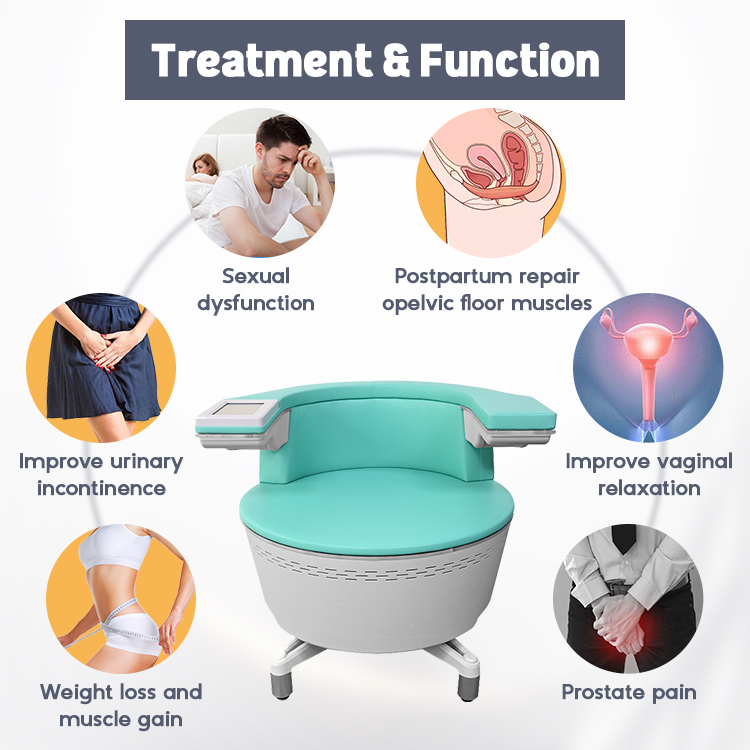











Si vous avez déjà souffert de douleurs chroniques au dos, de raideurs aux épaules, de blessures sportives ou de douleurs articulaires, vous avez probablement vu des publicités pour stimulateurs musculaires, Dispositifs EMS, ou Machines de thérapie PEMF Promettant un soulagement rapide, certains ne jurent que par eux, d'autres les qualifient de gadgets hors de prix. Alors, qu'en est-il vraiment ? Les stimulateurs musculaires sont-ils réellement efficaces contre la douleur, ou s'agit-il simplement d'un argument marketing habile ?
En résumé, oui : certaines technologies de stimulation musculaire peuvent réellement contribuer à réduire la douleur, à améliorer la circulation et à faciliter la rééducation lorsqu’elles sont utilisées correctement. L’essentiel est de comprendre la différence entre les simples appareils grand public et les systèmes professionnels comme… SHEFMON A0271E PMST NEO Traitement électromagnétique de soulagement de la douleur. Les études scientifiques, les cliniques de réadaptation, les physiothérapeutes et les centres de récupération sportive utilisent de plus en plus les thérapies par stimulation électromagnétique et électrique dans le cadre des stratégies modernes de gestion de la douleur.
Cependant, tous les appareils ne fonctionnent pas de la même manière. Certains se concentrent sur le blocage temporaire des signaux de douleur. D'autres stimulent la réparation des tissus profonds et l'activation musculaire. Certains sont conçus pour le bien-être à domicile, tandis que les systèmes professionnels peuvent délivrer une stimulation électromagnétique thérapeutique de haute intensité en profondeur dans les muscles et les articulations. Comprendre ces différences est essentiel si vous souhaitez obtenir de véritables résultats et éviter toute déception.
Que sont les stimulateurs musculaires ?
Lorsque les gens entendent le terme stimulateur musculaire, Ils s'imaginent souvent ces gadgets télévisés présentés tard le soir, censés leur permettre d'obtenir des abdos en béton sans bouger de leur canapé. Cette image a nui à la réputation des technologies légitimes de stimulation musculaire pendant des années. En réalité, les stimulateurs musculaires professionnels sont largement utilisés dans les cliniques de physiothérapie, les centres de rééducation sportive et les centres de traitement de la douleur du monde entier.
Les stimulateurs musculaires sont des appareils qui utilisent des impulsions électriques ou des champs électromagnétiques pour activer les muscles, les nerfs et les tissus. Ces impulsions imitent les signaux naturels envoyés par le système nerveux. Selon la technologie utilisée, l'objectif peut être de réduire la douleur, d'améliorer la circulation sanguine, de stimuler les contractions musculaires, d'accélérer la réparation tissulaire ou de faciliter la rééducation après une blessure.
Les trois catégories les plus courantes sont EMS, DIZAINES, et PEMF/PMST Ces appareils existent en plusieurs techniques. L'EMS (stimulation musculaire électrique) vise principalement à provoquer la contraction musculaire. La TENS (neurostimulation électrique transcutanée) cible les nerfs pour bloquer les signaux de douleur. Les thérapies PEMF (champs électromagnétiques pulsés) et PMST (stimulation musculaire pulsée) utilisent des champs électromagnétiques pulsés pour stimuler la guérison en profondeur dans les tissus. Chaque technologie présente des applications, des avantages et des limites différents.
Ce qui rend les appareils modernes intéressants, c'est leur sophistication. Les anciens systèmes de stimulation agissaient souvent en surface seulement. Les nouveaux systèmes professionnels peuvent pénétrer plus profondément dans les articulations, les muscles, les ligaments et les tissus conjonctifs, sans intervention invasive. C'est l'une des raisons pour lesquelles les physiothérapeutes et les médecins du sport ont de plus en plus recours aux systèmes de stimulation électromagnétique dans les programmes de rééducation.
EMS vs TENS vs PEMF
Il est crucial de comprendre la différence entre ces technologies, car on les confond souvent. Cette confusion engendre des attentes irréalistes.
| Technologie | Objectif principal | Comment ça marche | Idéal pour |
|---|---|---|---|
| EMS | Activation musculaire | Les impulsions électriques déclenchent les contractions | Réadaptation, renforcement |
| DIZAINES | Blocage de la douleur | Stimule les nerfs pour interrompre les signaux de douleur | soulagement temporaire de la douleur |
| PEMF / PMST | Récupération et cicatrisation des tissus | Les champs électromagnétiques pulsés stimulent les cellules | Douleur chronique, inflammation, réadaptation |
Les appareils TENS sont très répandus pour la gestion de la douleur à court terme. De nombreuses personnes souffrant de maux de dos ou d'arthrite les utilisent car ils sont abordables et portables. D'après les discussions en ligne entre kinésithérapeutes et patients, les appareils TENS peuvent contribuer à réduire l'inconfort en neutralisant les signaux douloureux par des sensations de stimulation alternatives.
Les appareils d'électrostimulation musculaire (EMS) vont plus loin en activant directement les muscles. Cela peut contribuer à maintenir la fonction musculaire après une intervention chirurgicale ou une blessure, lorsque les mouvements normaux sont difficiles. Les systèmes PEMF et PMST sont généralement considérés comme plus avancés car ils visent à stimuler les processus de guérison au niveau cellulaire plutôt que de simplement masquer temporairement la douleur.
La science derrière la stimulation musculaire
Le corps humain est par nature électrique. Chaque contraction musculaire, chaque signal nerveux et chaque battement cardiaque dépendent de l'activité électrique. Les stimulateurs musculaires interagissent essentiellement avec ce système de communication naturel. Cela peut paraître futuriste, mais les principes scientifiques sous-jacents existent depuis des décennies.
Les appareils d'électrostimulation fonctionnent en envoyant des impulsions contrôlées aux muscles ou aux nerfs. Ces signaux stimulent la contraction et la relaxation musculaire, ce qui peut améliorer la circulation sanguine et activer les muscles sous-utilisés. Une meilleure circulation sanguine est essentielle car le sang transporte l'oxygène et les nutriments nécessaires à la réparation des tissus. Lorsque les tissus lésés bénéficient d'une meilleure circulation, la guérison est favorisée.
Les systèmes électromagnétiques comme la PEMF et la PMST fonctionnent différemment. Au lieu de provoquer directement des chocs électriques dans les muscles, ils génèrent des champs magnétiques pulsés qui pénètrent profondément dans les tissus. Ces champs interagissent avec les processus cellulaires et peuvent stimuler la guérison, réduire l'inflammation et améliorer l'activité métabolique des cellules endommagées. Selon… Centre national pour la santé complémentaire et intégrative (NCCIH), Les recherches actuelles suggèrent que la thérapie électromagnétique peut contribuer à réduire la douleur et à améliorer la fonction dans plusieurs affections musculo-squelettiques.
Un détail intéressant concerne l'absorption d'oxygène. Certains systèmes PMST affirment qu'ils augmentent la consommation d'oxygène et stimulent le métabolisme cellulaire pendant le traitement. Les appareils professionnels comme le SHEFMON A0271E PMST NEO sont conçus spécifiquement selon ces principes, combinant une stimulation magnétique pulsée de haute intensité à une pénétration tissulaire profonde.
Comment les signaux électriques affectent les muscles
Imaginez vos muscles comme des employés attendant les instructions de leur direction. Normalement, le cerveau envoie des commandes par les nerfs, indiquant aux muscles quand se contracter. La stimulation électrique musculaire envoie en quelque sorte des instructions directes au muscle. Cela provoque des contractions même lorsque les mouvements volontaires sont limités.
C'est particulièrement utile pendant la rééducation. Après une opération ou une blessure, les muscles peuvent s'affaiblir rapidement par manque d'activité. Les appareils d'électrostimulation musculaire (EMS) aident à maintenir l'activité musculaire pendant la convalescence. Les athlètes utilisent également l'EMS lors de leurs séances de récupération, car les contractions rythmiques peuvent favoriser l'élimination des déchets métaboliques et réduire les courbatures.
Les effets ne sont toutefois pas miraculeux. L'électrostimulation musculaire (EMS) ne remplace ni l'exercice physique, ni la musculation, ni la physiothérapie. Même les utilisateurs de Reddit qui en discutent s'accordent généralement à dire qu'elle est plus efficace en complément qu'en solution miracle.
Comment fonctionne l'électrothérapie ?
L'électrothérapie se concentre moins sur la contraction musculaire et davantage sur la régénération cellulaire. Les champs électromagnétiques pulsés traversent les tissus sans nécessiter d'électrodes de surface. Ceci permet de traiter des structures profondes comme les articulations de la hanche, les muscles de la colonne vertébrale ou les tissus conjonctifs.
Des études ont montré des résultats prometteurs concernant les douleurs lombaires chroniques, l'arthrose et les affections musculo-squelettiques. Une revue systématique publiée par PubMed La thérapie PEMF s'est avérée bénéfique pour réduire la douleur et améliorer la fonction physique chez les patients souffrant de lombalgie non spécifique.
C’est pourquoi les cliniques professionnelles investissent de plus en plus dans la technologie PMST au lieu de se fier uniquement aux appareils d’électrothérapie traditionnels.
Les stimulateurs musculaires réduisent-ils réellement la douleur ?
C'est la question qui préoccupe la plupart des gens. Et honnêtement, la réponse est plus nuancée qu'un simple oui ou non.
Les stimulateurs musculaires peuvent effectivement soulager la douleur chez de nombreuses personnes, mais leur efficacité dépend de l'affection traitée, de la technologie utilisée, de la régularité du traitement et de la qualité de l'appareil. De solides preuves soutiennent certaines formes de thérapie électromagnétique, notamment pour les douleurs musculo-squelettiques et la rééducation. Cependant, des allégations marketing exagérées ont engendré des attentes irréalistes.
Les preuves les plus solides existent actuellement pour thérapies électromagnétiques Plutôt que de simples aimants statiques. Selon le NCCIH, des recherches suggèrent que la thérapie par champs électromagnétiques pulsés pourrait réduire la douleur et améliorer la fonction dans des affections telles que l'arthrose, les lombalgies, la fibromyalgie et les lésions des tissus mous.
La réduction de la douleur s'effectue généralement par plusieurs mécanismes :
- Amélioration de la circulation
- Réduction de l'inflammation
- relaxation musculaire
- Modulation du signal nerveux
- Réparation tissulaire améliorée
- mobilité accrue
On constate souvent que le soulagement de la douleur améliore aussi la confiance en ses mouvements. Une fois les mouvements facilités, la rééducation devient plus efficace, créant ainsi un cercle vertueux.
Que disent les recherches cliniques ?
Les études scientifiques sur la thérapie PEMF et PMST sont de plus en plus nombreuses. Une revue de 2020 portant sur plus de 1 100 participants a fait état d’améliorations de la douleur et de la fonction physique dans de nombreuses affections musculo-squelettiques.
Une autre étude systématique portant sur les lombalgies chroniques a conclu que la thérapie PEMF pouvait apporter un soulagement supplémentaire de la douleur lorsqu'elle était combinée aux approches de réadaptation standard.
Ce dernier point est important. Les stimulateurs musculaires sont généralement plus efficaces lorsqu'ils sont intégrés à une stratégie de rééducation globale plutôt que utilisés seuls comme solution miracle. Combiner la thérapie avec des exercices, de la physiothérapie, des étirements, des exercices de mobilité et un suivi de la rééducation permet généralement d'obtenir de meilleurs résultats.
Conditions qui réagissent le mieux
Certaines affections douloureuses semblent mieux répondre aux thérapies de stimulation que d'autres.
Les traitements courants comprennent :
- Arthrite et douleurs articulaires
- Blessures sportives
- Spasmes musculaires
- tendinite
- Rééducation post-opératoire
- Douleurs dorsales chroniques
- Douleur à l'épaule
- dysfonctionnement neuromusculaire
Les systèmes PMST professionnels sont particulièrement populaires en médecine sportive car les athlètes ont besoin d'outils de récupération rapides et non invasifs qui évitent les temps d'arrêt.
Pourquoi les athlètes et les cliniques utilisent des stimulateurs musculaires
Les athlètes professionnels utilisent rarement des technologies sans bénéfice. Le temps de récupération influe directement sur leurs performances, leurs contrats et leur carrière. C'est pourquoi la technologie de stimulation musculaire est devenue de plus en plus courante dans les centres de rééducation sportive et les environnements d'entraînement de haut niveau.
Les athlètes souffrent fréquemment de blessures dues aux mouvements répétitifs, d'inflammation, de tensions musculaires et de fatigue. Les méthodes de récupération traditionnelles comme les massages, les bains de glace, les étirements et la physiothérapie restent importantes, mais la thérapie électromagnétique offre un soutien supplémentaire. La stimulation des tissus profonds peut contribuer à accélérer la circulation et la réparation tissulaire sans solliciter davantage les muscles déjà endommagés.
Les cliniques apprécient également ces systèmes car ils sont non invasifs. Les patients privilégient généralement les traitements qui évitent les injections, la chirurgie ou les médicaments lourds. Les dispositifs de soulagement de la douleur permettent de favoriser la guérison tout en minimisant le temps de convalescence.
Sur Reddit, certains utilisateurs décrivent l'électrostimulation musculaire (EMS) comme particulièrement efficace pour activer les muscles et réduire les tensions ou la spasticité. D'autres affirment que la neurostimulation électrique transcutanée (TENS) aide à gérer la douleur lors des activités quotidiennes.
La constance de ces expériences est importante. Bien que les réactions varient d'une personne à l'autre, de nombreux utilisateurs font état d'un soulagement significatif de leurs symptômes.
Bienfaits de la récupération sportive
La récupération sportive moderne met l'accent sur la circulation sanguine et la santé des tissus. La thérapie PMST peut contribuer à améliorer le flux sanguin et l'oxygénation des muscles, favorisant ainsi la récupération après un effort intense. Les athlètes professionnels apprécient tout ce qui permet de raccourcir et de récupérer en toute sécurité.
Le SHEFMON A0271E PMST NEO est spécifiquement destiné aux cliniques sportives et aux centres de réadaptation. Cet appareil utilise une stimulation électromagnétique pulsée de haute intensité pour le traitement des tissus profonds et le soutien à la récupération.
Réadaptation après une blessure
La rééducation est souvent frustrante car la douleur limite les mouvements, et cette limitation ralentit la guérison. La stimulation musculaire peut rompre ce cercle vicieux en aidant les patients à mieux tolérer les mouvements.
Après une intervention chirurgicale, les muscles s'affaiblissent souvent rapidement. L'électrostimulation musculaire (EMS) peut favoriser leur activation pendant la convalescence. Les systèmes de stimulation musculaire post-opératoire (PMST) peuvent également contribuer à réduire l'enflure et l'inconfort tout en favorisant la régénération tissulaire.
Comprendre la thérapie PMST et PEMF
PEMF signifie thérapie par champs électromagnétiques pulsés. La PMST, ou thérapie par stimulation magnétique pulsée, est considérée comme une variante plus avancée et de plus haute intensité, conçue pour une pénétration thérapeutique plus profonde.
Contrairement aux appareils domestiques classiques, les systèmes PMST professionnels utilisent des champs magnétiques puissants capables d'atteindre les tissus sous-cutanés sans contact électrique direct. Ceci est particulièrement utile pour traiter les articulations, les muscles profonds et les tissus conjonctifs.
Le principe de la PMST repose sur la stimulation cellulaire. Les tissus lésés présentent souvent une activité cellulaire réduite et une circulation sanguine altérée. Les champs électromagnétiques pulsés peuvent contribuer à réactiver ces processus et favoriser la guérison.
Qu'est-ce qui différencie le PMST ?
La PMST diffère de l'EMS standard car elle ne repose pas sur des électrodes provoquant directement des contractions musculaires. Au lieu de cela, des champs magnétiques pénètrent profondément dans les tissus, minimisant ainsi l'inconfort.
Cela permet de traiter :
- Douleur à la hanche
- muscles profonds de la colonne vertébrale
- Blessures à l'épaule
- Problèmes de genou
- Blessures sportives
- inflammation chronique
Les systèmes professionnels offrent également des niveaux de fréquence et d'intensité réglables pour des protocoles de traitement personnalisés.
Explication de la stimulation des tissus profonds
Imaginez essayer d'arroser un arbre en n'humidifiant que la surface. Les racines restent sèches. Les appareils de stimulation basiques fonctionnent souvent de manière similaire, agissant principalement sur les tissus superficiels. Les systèmes PMST visent à atteindre les structures plus profondes où se manifestent fréquemment douleurs chroniques et inflammations.
Cette pénétration plus profonde est l'une des raisons pour lesquelles les cliniques de physiothérapie adoptent de plus en plus les systèmes PMST pour leurs programmes de réadaptation.
SHEFMON A0271E PMST NEO Aperçu
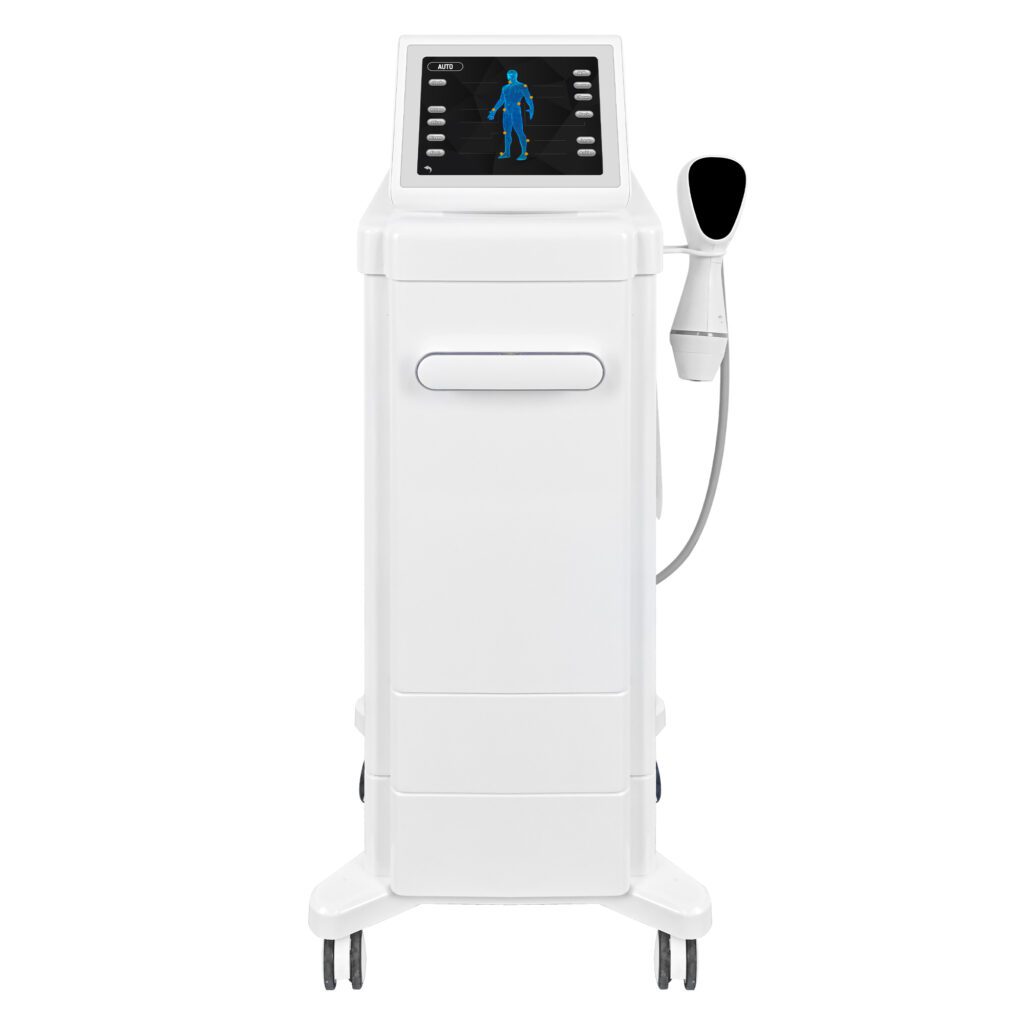
Le SHEFMON A0271E PMST NEO Appareil de traitement électromagnétique contre la douleur Conçue spécifiquement pour la rééducation professionnelle, la physiothérapie et la récupération sportive, cette machine combine une stimulation magnétique pulsée de haute intensité à des paramètres de traitement personnalisables visant à réduire la douleur et à favoriser la régénération tissulaire.
Spécifications techniques
| Fonctionnalité | Spécification |
|---|---|
| Nom du produit | Appareil de physiothérapie magnétique |
| Pouvoir | 1500 W |
| Gamme de fréquences | 100 kHz à 300 kHz |
| Intensité du champ à la bobine | 4 Tesla |
| Intensité du champ à 4 cm | 0,4 Tesla |
| Circuit de refroidissement | Refroidissement par air |
| Fonctionnalités optionnelles | Double poignée + intégration laser |
Ces spécifications placent clairement l'appareil dans la catégorie des produits professionnels plutôt que dans celle des gadgets de bien-être grand public.
Principales caractéristiques et avantages
L'une de ses caractéristiques les plus remarquables est le Intensité du champ magnétique de 4 Tesla, Ce dispositif permet une pénétration tissulaire plus profonde que de nombreux appareils moins puissants. La configuration à double poignée (en option) permet de traiter simultanément plusieurs zones, optimisant ainsi l'efficacité du cabinet médical.
La machine est commercialisée pour :
- Gestion de la douleur chronique
- Rééducation sportive
- Douleurs articulaires
- Récupération musculaire
- régénération tissulaire
- Amélioration de la mobilité
Pour les cliniques offrant des services de réadaptation, des dispositifs comme celui-ci peuvent élargir considérablement les options de traitement.
Bienfaits de la thérapie électromagnétique contre la douleur
Les gens recherchent de plus en plus d'alternatives aux médicaments contre la douleur et aux interventions invasives. L'électrothérapie s'inscrit dans cette tendance car elle est non invasive, sans médicament et généralement bien tolérée.
L'un des principaux avantages réside dans sa polyvalence. Les systèmes PMST permettent de traiter différents types de douleurs musculo-squelettiques grâce à une plateforme unique. Les cliniques peuvent ainsi prendre en charge des athlètes, des patients souffrant d'arthrite, des personnes en rééducation post-opératoire et des personnes atteintes de douleurs chroniques sans avoir besoin de systèmes entièrement distincts.
Gestion non invasive de la douleur
Personne n'apprécie une intervention chirurgicale ni la prise prolongée de médicaments. L'électrothérapie offre une alternative moins risquée pour de nombreux patients. Les séances sont généralement confortables et la convalescence est très courte.
Selon les informations sur le produit SHEFMON, la thérapie PMST vise à réduire l'enflure, à augmenter la mobilité et à favoriser la réparation des tissus sans intervention chirurgicale.
Amélioration de la circulation et de la récupération
La circulation sanguine joue un rôle primordial dans la guérison. Une meilleure circulation sanguine favorise l'apport d'oxygène et de nutriments aux tissus lésés. La thérapie électromagnétique peut contribuer à stimuler la circulation et le drainage lymphatique, ce qui peut réduire l'inflammation et la raideur.
C’est pourquoi de nombreux utilisateurs rapportent se sentir plus souples, plus mobiles et moins douloureux après les traitements.
Existe-t-il des risques ou des effets secondaires ?
Aucun traitement médical n'est totalement sans risque, et les thérapies de stimulation musculaire ne font pas exception. La plupart des personnes en bonne santé tolèrent bien les thérapies EMS et PMST, mais il convient de prendre certaines précautions.
Les personnes porteuses d'un stimulateur cardiaque, d'un dispositif médical implanté, les femmes enceintes ou celles souffrant de certaines affections neurologiques doivent consulter un professionnel de santé avant d'utiliser un système de thérapie électromagnétique. Les cliniques spécialisées procèdent à un examen rigoureux des patients afin de déceler toute contre-indication.
Les effets secondaires sont généralement légers lorsque les traitements sont administrés correctement. Certaines personnes peuvent ressentir des douleurs temporaires, de la fatigue ou une sensibilité cutanée après les séances.
Considérations de sécurité
Les systèmes professionnels comportent des réglages ajustables, car une intensité excessive est inutile et inconfortable. Les opérateurs formés savent adapter les protocoles de traitement à l'état de chaque patient.
Voilà une autre raison pour laquelle les appareils professionnels sont plus performants que les gadgets grand public. Un étalonnage correct est essentiel.
Qui devrait éviter l'électromagnétisme
L'électrothérapie peut ne pas convenir à :
- Utilisateurs de stimulateurs cardiaques
- femmes enceintes
- Patients porteurs de certains dispositifs électroniques implantés
- Personnes atteintes d'épilepsie non contrôlée
- Certaines affections médicales aiguës
Une consultation professionnelle est toujours recommandée avant de commencer un traitement.
Stimulateurs musculaires versus traitements traditionnels de la douleur
Les traitements traditionnels de la douleur conservent toute leur importance. La physiothérapie, l'exercice physique, les médicaments, les massages, les soins chiropratiques et les programmes de réadaptation restent des solutions efficaces. Les stimulateurs musculaires ne doivent pas être considérés comme des remèdes miracles.
L'intérêt de la thérapie par stimulation réside dans sa capacité à s'intégrer facilement à d'autres approches. Elle peut faciliter la rééducation de la mobilité, réduire l'inconfort pendant la réadaptation et améliorer la qualité du rétablissement sans dépendre entièrement des médicaments.
Considérez la stimulation musculaire comme un outil supplémentaire dans la panoplie du rétablissement. Parfois, une approche combinée s'avère bien plus efficace qu'une thérapie unique.
Conclusion
Les stimulateurs musculaires sont-ils vraiment efficaces contre la douleur ?
Oui, à condition d'utiliser la technologie appropriée au bon moment. Les preuves scientifiques soutiennent de plus en plus l'utilisation de EMS, DIZAINES, et surtout Thérapies PEMF/PMST pour réduire la douleur, favoriser la rééducation, améliorer la circulation et soutenir la récupération. Des systèmes de qualité professionnelle comme le SHEFMON A0271E PMST NEO démontrer à quel point cette technologie a évolué au-delà des simples gadgets grand public.
Cependant, les stimulateurs musculaires ne sont pas des solutions miracles. Leur efficacité est optimale lorsqu'ils s'inscrivent dans une stratégie globale de réadaptation et de récupération. La régularité, un accompagnement professionnel et des attentes réalistes sont essentiels. Pour de nombreuses personnes souffrant de douleurs chroniques, de blessures sportives ou de problèmes de mobilité, ces thérapies peuvent apporter un soulagement significatif et une meilleure qualité de vie.
FAQ
1. Les stimulateurs musculaires sont-ils scientifiquement prouvés ?
Oui. La recherche soutient certains types de thérapies par stimulation électrique et électromagnétique, notamment les systèmes PEMF et PMST, pour la douleur musculo-squelettique et la rééducation.
2. Quelle est la différence entre l'EMS et le TENS ?
L'EMS stimule directement les muscles pour créer des contractions, tandis que la TENS cible principalement les nerfs pour interrompre temporairement les signaux de douleur.
3. La thérapie PEMF peut-elle aider à soulager la douleur chronique ?
Des recherches suggèrent que la thérapie PEMF pourrait contribuer à réduire la douleur chronique, l'inflammation et les limitations de mobilité dans des affections telles que l'arthrite et les douleurs lombaires.
4. Le SHEFMON A0271E PMST NEO est-il adapté aux cliniques ?
Oui. Ce système est spécifiquement conçu pour les environnements professionnels de physiothérapie, de réadaptation et de récupération sportive.
5. Les stimulateurs musculaires sont-ils sûrs ?
La plupart sont considérés comme sûrs lorsqu'ils sont utilisés correctement, mais les personnes porteuses d'un stimulateur cardiaque, d'un dispositif implanté ou souffrant de certaines affections médicales devraient d'abord consulter un professionnel de la santé.