









Comparta soluciones optimizadas, conocimiento profesional sobre válvulas y novedades de la industria.
Introduce los términos o palabras clave que necesitas consultar y los artículos relevantes aparecerán en los resultados de búsqueda. Si no encuentras la respuesta que buscas, no dudes en contactarnos y estaremos encantados de ayudarte. También puedes enviar un correo electrónico directamente a beauty@shefmon.com.
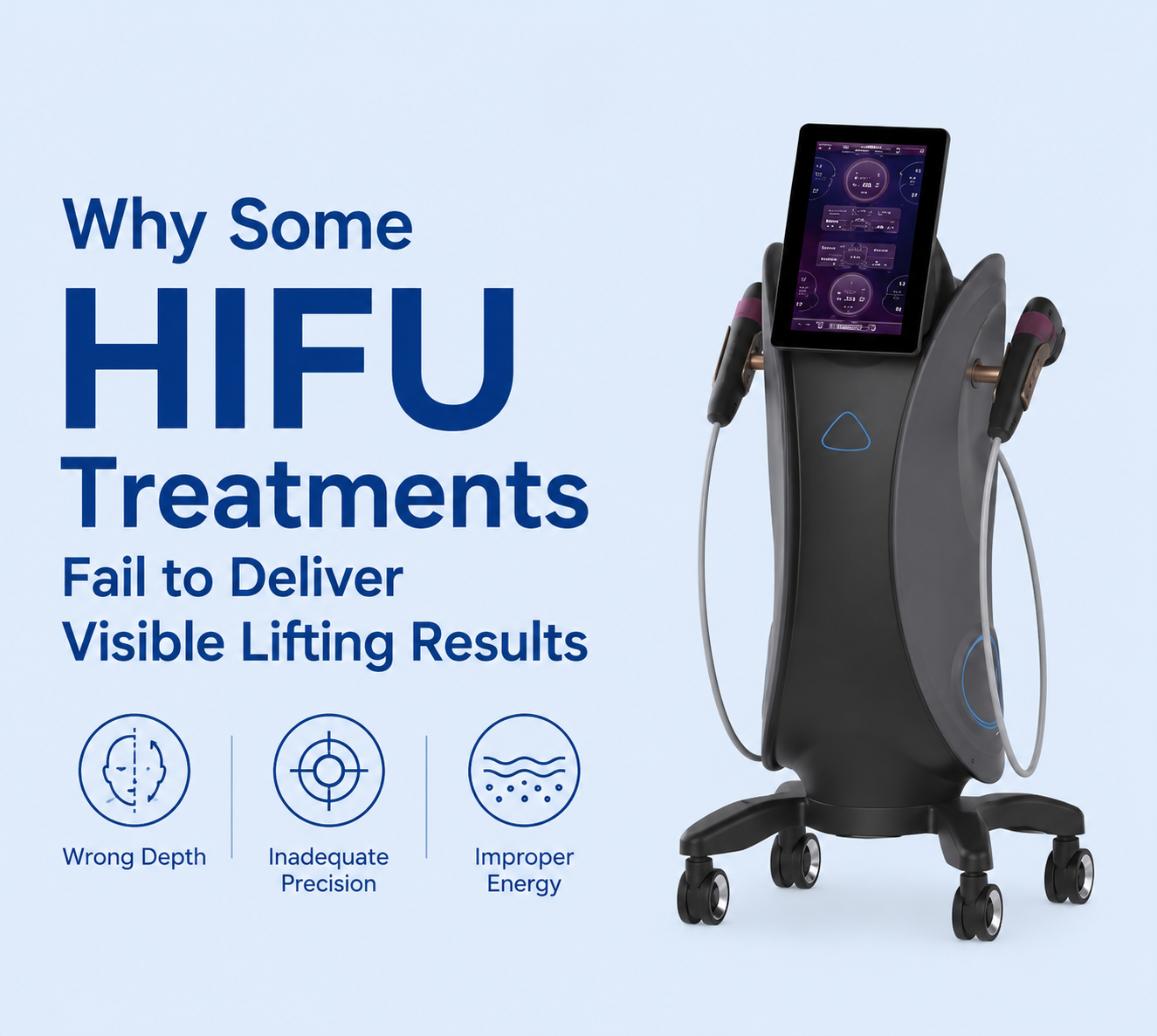
¿Por qué algunos tratamientos HIFU no ofrecen resultados de lifting visibles?
- Shefmon
Muchas personas eligen los tratamientos HIFU esperando un estiramiento y reafirmación espectaculares después de una sola sesión, pero algunos clientes se sienten decepcionados cuando los resultados parecen mínimos o inconsistentes. En realidad, la efectividad de un procedimiento HIFU depende de mucho más que simplemente aplicar energía de ultrasonido a la piel. La selección de la profundidad del tratamiento, la precisión de la energía, el diseño de la sonda, el estado de la piel y los protocolos de tratamiento desempeñan un papel fundamental a la hora de determinar si un cliente logra mejoras visibles en el contorno y la reafirmación. Tecnologías MMFU de nueva generación Al adentrarse en el mercado de la estética, comprender cómo funcionan los sistemas HIFU modernos puede ayudar a explicar por qué algunos tratamientos producen mejores resultados que otros.
1. ¿Por qué los tratamientos de estiramiento de la piel suelen producir resultados desiguales?
Una de las ideas erróneas más comunes sobre los procedimientos de lifting no invasivos es que todos los tratamientos HIFU funcionan de la misma manera. En la práctica, la efectividad del tratamiento varía significativamente según la precisión con la que la energía llega a la capa de tejido deseada.
El envejecimiento de la piel afecta a múltiples niveles estructurales al mismo tiempo, entre ellos:
- Textura de la superficie de la piel
- Densidad de colágeno dérmico
- Estructura de soporte SMAS
- compartimentos de grasa subcutánea
Si la energía del tratamiento solo alcanza las capas superficiales, la piel puede sentirse temporalmente más firme sin producir un efecto lifting significativo. Por otro lado, un exceso de energía en la zona incorrecta puede aumentar las molestias sin mejorar los resultados.
Por ello, los sistemas de tratamiento multiprofundidad han adquirido una importancia cada vez mayor en las clínicas estéticas modernas.
2. La importancia de tratar diferentes profundidades de tejido
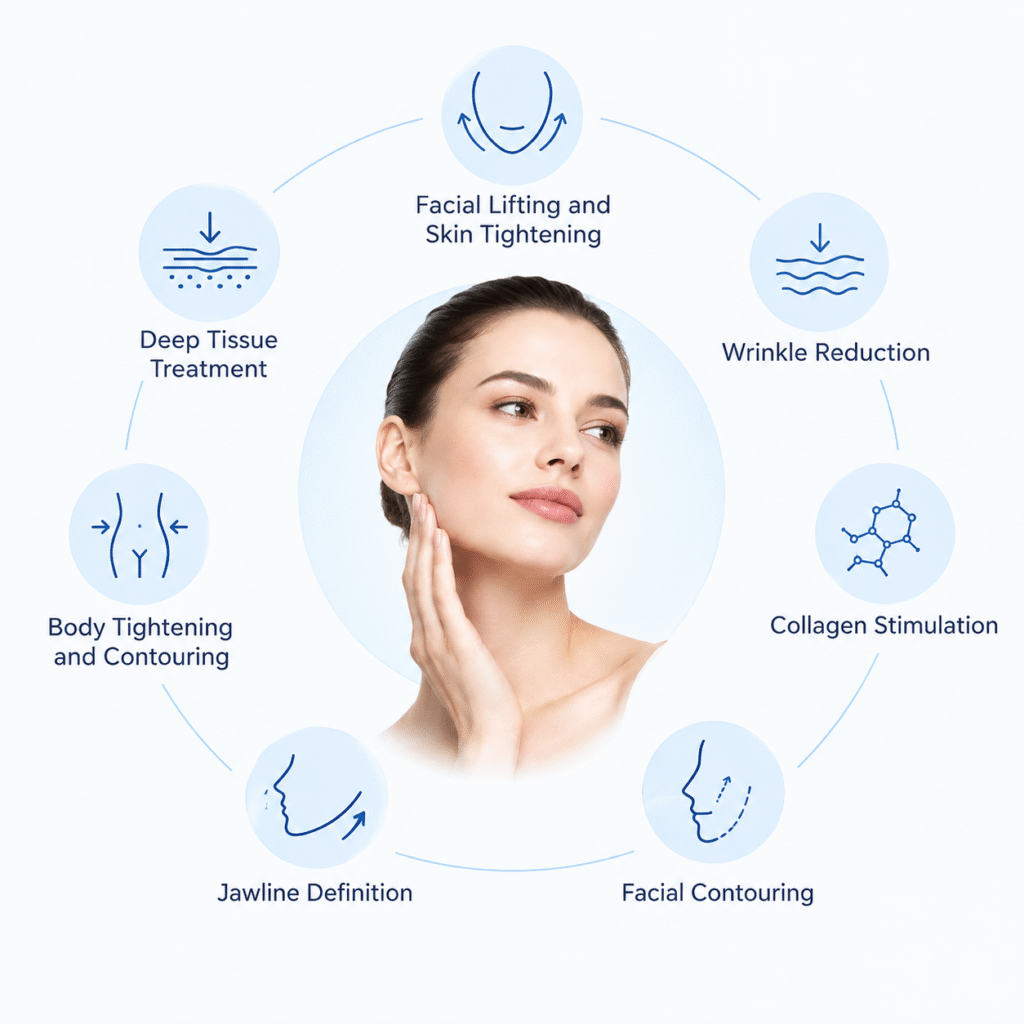
El envejecimiento facial no se limita a la superficie de la piel. La flacidez y la pérdida de contorno suelen estar relacionadas con cambios estructurales más profundos debajo de la dermis.
La tecnología MMFU moderna utiliza diferentes profundidades de sonda para alcanzar capas anatómicas específicas con mayor precisión.
2.1 Capas superficiales y arrugas finas
Las profundidades de tratamiento menos profundas se utilizan comúnmente para mejorar:
- líneas finas
- Textura de la piel
- Ligeras arrugas
- Firmeza de la superficie
Estas zonas suelen responder a la estimulación del colágeno en las capas dérmicas superiores.
2.2 Compatibilidad con la capa SMAS
La capa SMAS es uno de los sistemas de soporte estructural clave debajo de la piel. A medida que esta capa se debilita con la edad, los contornos faciales pueden parecer más pesados o menos definidos.
Los tratamientos de ultrasonido focalizado dirigidos a capas más profundas se utilizan a menudo para:
- Definición de la línea de la mandíbula
- Levantamiento de mejillas
- Estiramiento del cuello
- Mejora del contorno de la parte inferior del rostro
Debido a que la remodelación del colágeno se desarrolla gradualmente, los efectos de estiramiento suelen seguir mejorando a lo largo de varios meses.
2.3 Compartimentos de grasa profunda
Ciertas profundidades de tratamiento HIFU también se utilizan para el contorno corporal localizado y la reducción de grasa.
Estos tratamientos pueden dirigirse a zonas como:
- Grosero
- Cintura
- Abdomen
- Brazos superiores
- Muslos
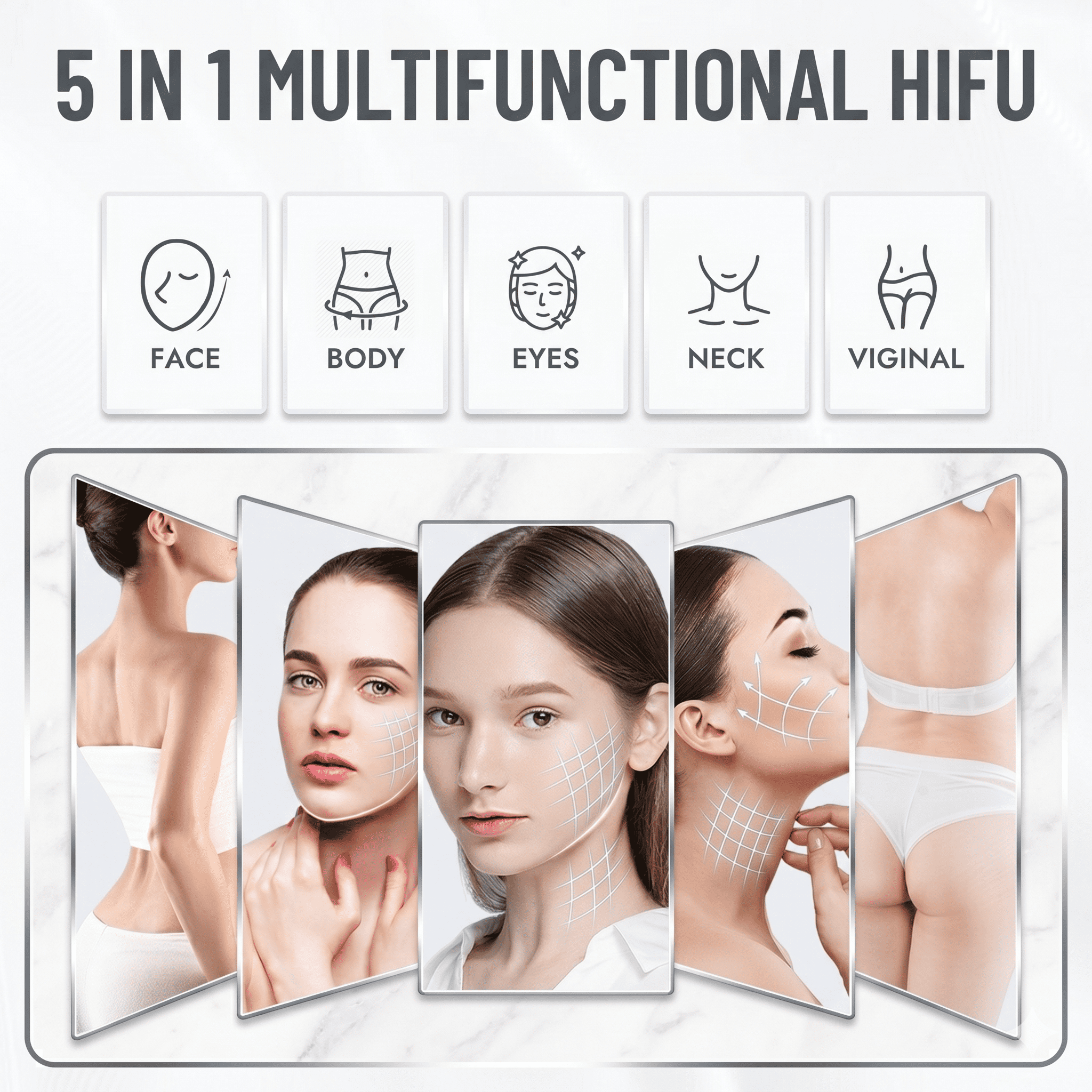
Esta mayor capacidad de focalización es una de las razones por las que los sistemas HIFU de nueva generación se utilizan cada vez más tanto para el rejuvenecimiento facial como para el modelado corporal.
3. Por qué el diseño de la sonda es más importante de lo que mucha gente cree
Otra razón importante por la que algunos tratamientos HIFU producen resultados inconsistentes es la calidad de la sonda y la precisión del tratamiento.
Las distintas zonas del rostro requieren diferentes métodos de aplicación de energía. Las zonas delicadas, como los ojos y la mandíbula, no pueden tratarse de la misma manera que los tejidos corporales más gruesos.
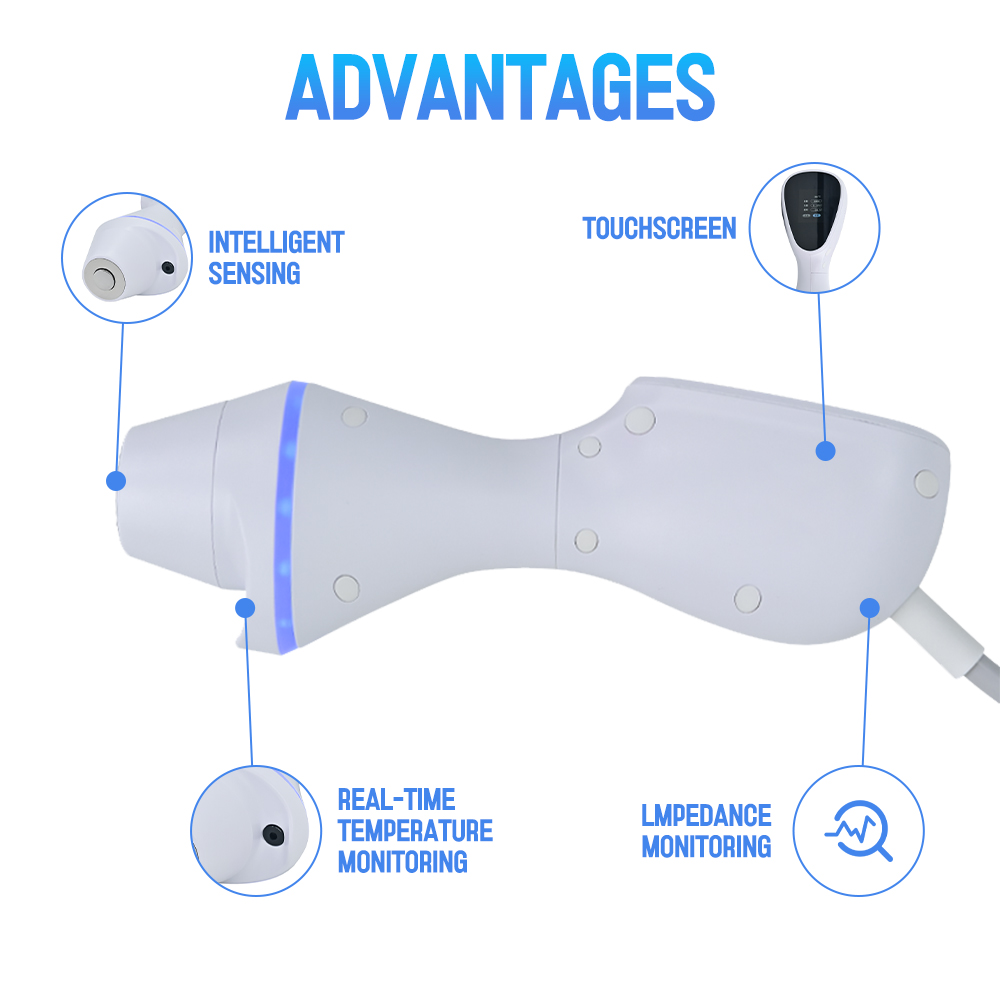
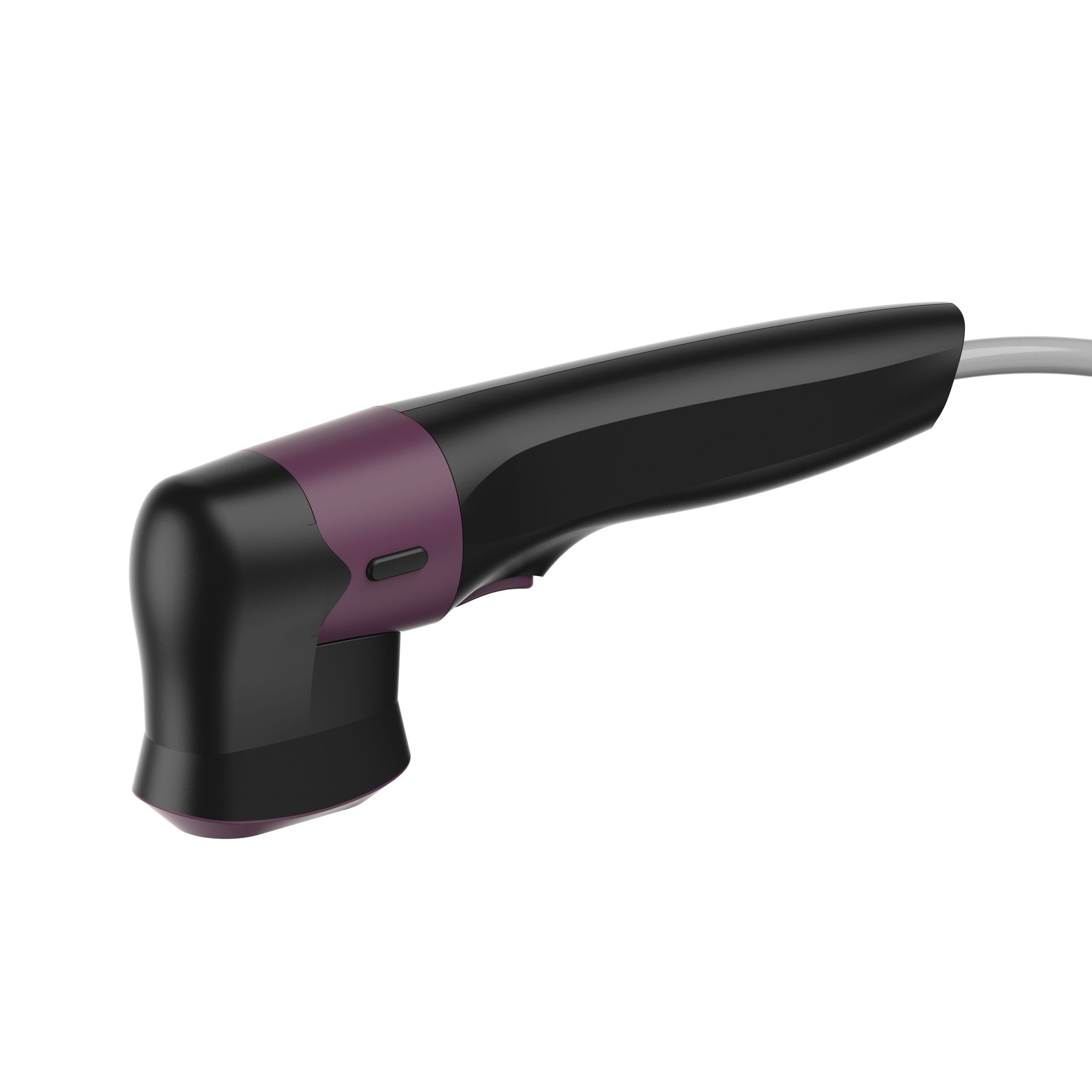
Los sistemas modernos utilizan ahora sondas especializadas diseñadas para áreas de tratamiento específicas, incluidas sondas ultrafinas para la región periorbitaria.
Estos diseños de sondas avanzadas pueden ayudar a mejorar:
- Precisión energética
- Comodidad durante el tratamiento
- Seguridad en zonas delicadas
- Consistencia de los puntos de coagulación térmica
La zona de los ojos es especialmente sensible debido a que la piel es más fina y flexible. Las sondas diseñadas adecuadamente permiten a los profesionales trabajar con mayor precisión alrededor de las patas de gallo, las zonas de levantamiento de cejas y el contorno de los ojos.
4. ¿Por qué los sistemas HIFU de doble mango mejoran la eficacia del tratamiento?
Las plataformas HIFU anteriores a menudo requerían que los profesionales interrumpieran los tratamientos repetidamente para cambiar las sondas según la profundidad. Este proceso podía aumentar el tiempo del procedimiento e interrumpir el flujo de trabajo.
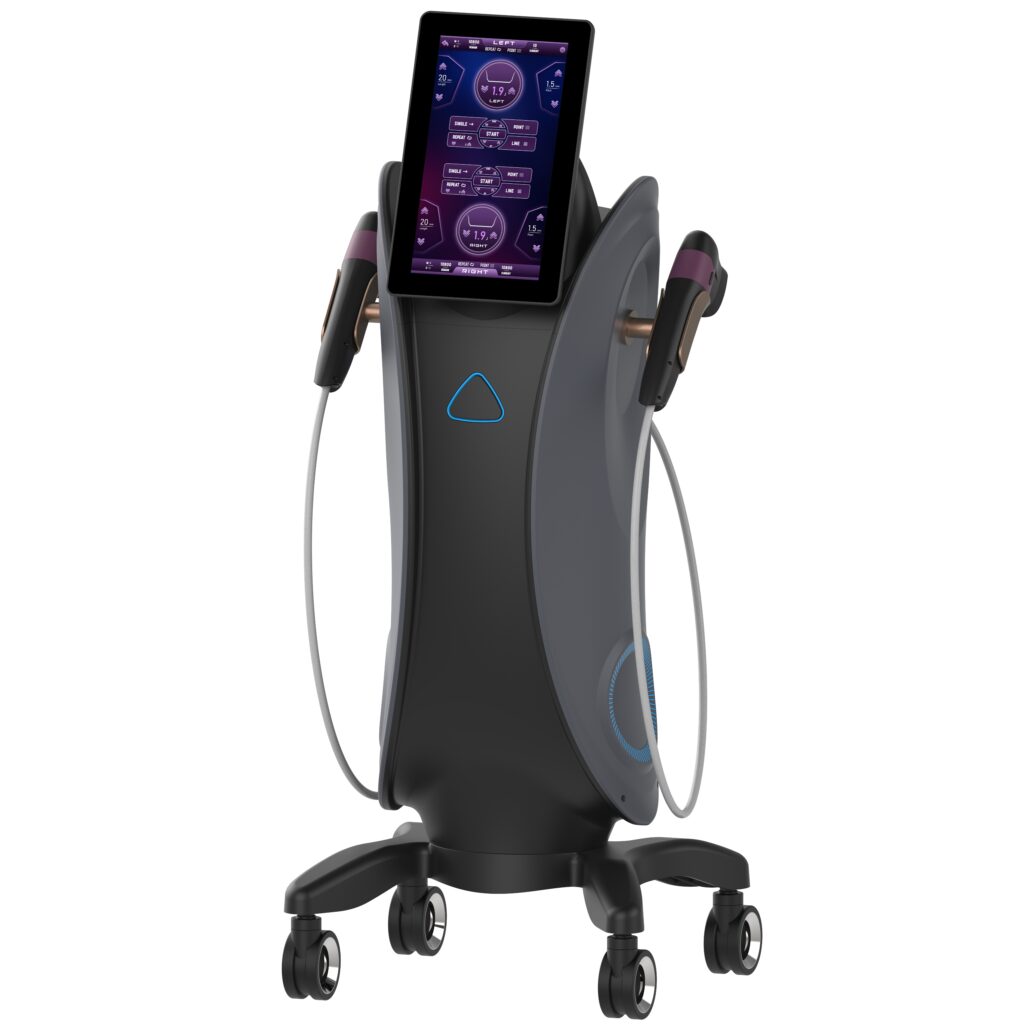
Los sistemas de doble mango se desarrollaron para mejorar la eficacia del tratamiento, permitiendo que dos sondas permanezcan conectadas simultáneamente.
Este diseño ayuda a los profesionales:
- Cambiar entre profundidades de tratamiento más rápidamente
- Tratar varias áreas de forma continua
- Reducir las interrupciones del tratamiento
- Mejorar la eficiencia del flujo de trabajo
- Personaliza los protocolos más fácilmente
Para las clínicas que realizan procedimientos de contorno facial y corporal, los tiempos de tratamiento más cortos pueden mejorar tanto la productividad del profesional como la comodidad del cliente.
5. ¿Por qué los resultados continúan desarrollándose meses después del tratamiento?
A diferencia de los rellenos o los procedimientos quirúrgicos, el HIFU no produce efectos voluminizadores inmediatos. En cambio, la energía ultrasónica focalizada crea puntos de coagulación térmica debajo de la piel que estimulan la remodelación del colágeno con el tiempo.
Este proceso regenerativo gradual explica por qué los clientes suelen notar mejoras progresivas en lugar de cambios drásticos e instantáneos.
La regeneración de colágeno puede continuar durante:
- 8 a 12 semanas
- De 3 a 6 meses
- A veces más tiempo dependiendo del estado de la piel
La naturaleza gradual de los resultados es una de las razones por las que muchas personas prefieren los tratamientos de rejuvenecimiento facial mediante ultrasonido. Las mejoras faciales suelen verse más naturales porque la piel se tensa progresivamente en lugar de cambiar repentinamente.
6. Por qué la personalización del tratamiento es esencial para obtener mejores resultados
No hay dos clientes con el mismo grosor de piel, estructura facial o patrones de envejecimiento. Un protocolo de tratamiento que funciona bien para una persona puede no producir los mismos resultados en otra.
Entre los factores que influyen en la planificación del tratamiento HIFU se incluyen:
- Gravedad de la flacidez de la piel
- Distribución de la grasa facial
- Grosor del tejido
- Pérdida de colágeno relacionada con la edad
- Sensibilidad en la zona de tratamiento
- objetivos del tratamiento corporal
Los modernos sistemas MMFU de profundidad múltiple permiten a los profesionales personalizar la profundidad del tratamiento, los ajustes de energía y las secuencias de tratamiento según las necesidades individuales.
Este nivel de personalización se ha vuelto cada vez más importante, ya que los clientes buscan tratamientos estéticos más naturales y personalizados.
Conclusión
La efectividad de tratamientos HIFU Depende en gran medida de la precisión del tratamiento, la profundidad de la zona tratada, el diseño de la sonda y la personalización del tratamiento. A medida que la tecnología estética continúa evolucionando, los sistemas MMFU de nueva generación ayudan a las clínicas a ofrecer tratamientos de lifting facial y contorno corporal más completos al abordar simultáneamente múltiples capas estructurales. Comprender por qué algunos procedimientos HIFU tienen éxito mientras que otros producen resultados limitados puede ayudar a los pacientes a tomar decisiones más informadas sobre los tratamientos no invasivos de estiramiento y contorno de la piel.
Preguntas frecuentes
¿Por qué algunos tratamientos HIFU producen resultados poco satisfactorios?
Los resultados inconsistentes suelen estar relacionados con una profundidad de tratamiento incorrecta, un suministro de energía insuficiente, una precisión deficiente de la sonda o una personalización limitada del tratamiento.
¿El HIFU solo tensa la piel?
No. Ciertas profundidades de tratamiento también pueden dirigirse a compartimentos de grasa localizados para el contorno corporal y la reducción de la papada.
¿Por qué son importantes las diferentes profundidades de sondeo?
Las diferentes capas de la piel y los tejidos requieren diferentes profundidades de tratamiento para abordar eficazmente las arrugas, la flacidez, la pérdida de colágeno y la acumulación de grasa.
¿Cuánto tiempo tardan en aparecer los resultados del tratamiento HIFU?
Es posible que se observe cierta firmeza al principio, pero la regeneración del colágeno generalmente continúa durante varios meses después del tratamiento.
¿Se pueden utilizar los tratamientos HIFU alrededor de los ojos?
Sí. Las sondas especializadas se utilizan habitualmente para zonas delicadas como el levantamiento de cejas, las patas de gallo y el estiramiento de la zona debajo de los ojos.