
A finished beauty device can pass its final power-on check while its quality history remains incomplete. The incoming pump lot may not be linked to an inspection result. A cable-routing check may have been performed but never recorded. Software may have been reloaded after a failed test without preserving the earlier version. A repaired unit may show a final pass while the defect, replaced component, and retest scope are missing.
Quality records prevent this loss of evidence. They show which materials entered production, which controlled steps were completed, what was measured, what failed, what changed, who made each decision, and why the finished unit was authorized—or not authorized—for release.
This guide explains how beauty device factories can build a connected quality-record system from supplier receipt through final product release. It focuses on record purpose, content, relationships, review, correction, retention, and release readiness. It does not assume that one document format, one inspection frequency, or one software platform fits every device, factory, or destination market.
Resumen ejecutivo
A reliable beauty device quality-record system should:
- Separate controlled documents from completed records. A procedure tells people what to do; a record shows what actually happened to a particular material, lot, unit, test, or decision.
- Follow the product flow. Supplier, incoming, storage, kitting, assembly, software, inspection, test, nonconformance, packaging, and release records should form a continuous evidence chain.
- Use stable identities. Part numbers, supplier lots, work orders, unit serials, software builds, test equipment, nonconformity numbers, cartons, and release records should connect without ambiguous free text.
- Record results at the point of work. Late reconstruction from memory weakens evidence and can hide mixed lots, skipped steps, or unauthorized changes.
- Preserve failures and corrections. A later passing result should not overwrite the original failure, diagnosis, rework, replacement, deviation, or retest.
- Match record depth to risk. Critical components, hidden processes, software, calibration, functional output, and safety-related controls generally need stronger evidence than low-risk cosmetic or administrative steps.
- Control measurement context. A result needs the applicable method, acceptance criteria, equipment, conditions, configuration, operator, time, and disposition.
- Build a unit-level release packet. The final reviewer should be able to see whether all required records are present, accepted, current, and applicable to the exact saleable configuration.
- Protect data integrity. Corrections, approvals, electronic access, system interfaces, backups, and retention should preserve who did what and when.
- Audit record effectiveness. Review not only whether fields are filled, but whether records can reconstruct product history and support containment, investigation, release, and buyer questions.
The purpose is not paperwork for its own sake. Quality records make product decisions repeatable, reviewable, and connected to objective evidence.
1. What Is a Beauty Device Quality Record?
A quality record is retained evidence of an activity, result, condition, decision, approval, or product state. It can apply to:
- a supplier or material lot;
- an incoming component;
- a work order or production batch;
- a subassembly;
- one finished-device serial number;
- a software or parameter load;
- an inspection or test;
- a nonconformity and its disposition;
- a packaging operation; or
- a final product-release decision.
Records can be paper, electronic, machine-generated, image-based, or hybrid. Their value depends on controlled identity, completeness, authenticity, legibility, applicability, and retrievability—not on format alone.
2. Separate Documents, Records, Data, and Evidence
| Artículo | Objetivo | Ejemplo |
|---|---|---|
| Controlled document | Defines an approved requirement or method | drawing, specification, work instruction, inspection method or packaging instruction |
| Blank form/template | Structures future data capture | incoming-inspection form or final-test template |
| Completed record | Shows what happened to a defined object | inspection result for supplier lot X or final test for serial Y |
| Raw data | Preserves direct observations or instrument output | measurements, logs, images, waveforms or error files |
| Summary/report | Interprets or aggregates evidence | pilot summary, trend report or release overview |
| Decision record | Authorizes a product state or exception | use-as-is approval, rework release or final-product approval |
A blank checklist is not evidence that work occurred. A summary saying “all passed” is weaker when the underlying unit results cannot be retrieved.
3. Design the Quality-Record Chain around Product Flow
A connected record architecture can follow this sequence:
- supplier and purchase requirement;
- goods receipt and material identity;
- supplier documentation and incoming evaluation;
- accepted, rejected, or quarantined material status;
- warehouse storage and lot movement;
- work order, kitting, and material issue;
- assembly and in-process inspection;
- software, parameters, calibration, and configuration;
- functional, performance, aging, and final inspection;
- nonconformity, rework, deviation, and retest;
- accessory, document, and packaging reconciliation; and
- final quality review and product release.
Each stage should consume approved inputs and produce records that authorize or block the next stage.
4. Define the Record Object and Granularity
Before creating a form, identify what the record represents:
- supplier shipment;
- material receipt;
- supplier lot;
- factory inspection lot;
- individual component;
- work order;
- production batch;
- subassembly;
- finished unit;
- test run;
- package; or
- decisión de liberación.
Granularity determines what conclusions are possible. One result for a supplier lot cannot automatically serve as an individual-unit test. One work-order record may be enough for a shared process parameter, while each finished unit may still require its own serial-specific functional result.
5. Use a Standard Record Header
| Campo de récords | Objetivo |
|---|---|
| Record type and number | distinguishes the evidence object and prevents duplicate identity |
| Product/material identity | links part, model, configuration, lot, batch or serial |
| Applicable document revision | shows which requirement or method governed the activity |
| Date and time | places the event in sequence and supports status review |
| Person/system source | identifies who or what created the result |
| Equipment/fixture | links measurement or process tools where relevant |
| Result and raw-data reference | records what was observed or measured |
| Acceptance criteria | shows the rule used to judge the result |
| Status/disposition | records pass, fail, hold, rework, reject, deviation or release |
| Review/approval | identifies authorized confirmation and completion |
Not every field belongs on every record, but the system should not depend on an unlabeled number or signature whose meaning is unknown.
6. Capture Supplier and Purchasing Quality Inputs
Quality records begin before materials reach the factory. Relevant supplier and purchasing records may include:
- approved supplier and site status;
- part number, revision, specification, and drawing;
- defined critical characteristics;
- purchase order and change status;
- requested supplier documents or test data;
- supplier lot or serial identity;
- approved substitutions or deviations;
- previous performance or open corrective actions; and
- special storage, handling, shelf-life, or transport conditions.
Purchasing records should reference current technical requirements rather than relying on an informal product name.
7. Create a Complete Goods-Receipt Record
At receipt, record:
- supplier and purchase order;
- factory part number and revision;
- supplier part number where useful;
- supplier lot, batch, or serial;
- received quantity;
- date, warehouse, and receiving person;
- package and transport condition;
- expiration or date code where applicable;
- required documentation received;
- initial status; and
- assigned factory receipt or inspection lot.
The receipt record proves what arrived. It does not by itself prove that the material is acceptable for production.
8. Build Risk-Based Incoming Inspection Records
Incoming records should match the component and control strategy. They may cover:
- identity and revision;
- dimensions and tolerances;
- material or finish;
- connector, cable, tubing, seal, or fit characteristics;
- electrical or functional properties;
- software or programmable component identity;
- appearance and workmanship;
- packaging and contamination condition;
- supplier documentation review;
- sample size or unit coverage;
- inspection method and equipment;
- actual measurements or observations;
- accepted, rejected, or quarantined quantity; and
- nonconformity link.
Do not record only “incoming passed” when the decision depends on several characteristics or a sampling plan.
9. Distinguish Supplier Evidence from Factory Acceptance
Supplier certificates, test summaries, or inspection reports can support acceptance when their applicability and reliability are established. The factory record should still show:
- exact supplier and manufacturing site;
- part and revision;
- lot or serial coverage;
- requirement and test method;
- actual result or declared status;
- document authenticity and review;
- relationship to factory receiving identity;
- required verification or reduced inspection; and
- final material status.
Supplier evidence does not become a factory acceptance record merely because it was attached to an email.
10. Record Quarantine, Rejection, and Material Disposition
When incoming material does not meet requirements, preserve:
- detected condition and evidence;
- affected part, lot, quantity, and location;
- immediate segregation or electronic hold;
- supplier notification;
- evaluation and scope;
- return, sorting, rework, use-as-is, scrap, or other authorized disposition;
- concession or deviation reference;
- inspection after sorting or rework;
- inventory reconciliation; and
- impact on material already issued or products already built.
A rejected lot should not reappear as available inventory because its physical label changed while the electronic status did not.
11. Preserve Material Status through Warehouse Movement
Warehouse quality records can include:
- accepted, quarantined, rejected, expired, or restricted status;
- storage location and environmental condition where relevant;
- lot segregation and permitted mixing;
- repacking and relabeling;
- partial quantity movement;
- first-in/first-out or expiry logic where applicable;
- line-side issue and return;
- damage or contamination events;
- cycle-count differences; and
- obsolete or changed material containment.
The goal is to ensure that only correctly identified and authorized material reaches production.
12. Connect Work Orders and Kitting Records
The production record should begin with a defined work order or equivalent identity connecting:
- modelo y configuración;
- BOM and drawing revisions;
- planned quantity;
- production line and date;
- material lots or serialized subassemblies;
- regional voltage, language, handles, accessories, and branding;
- software and parameter package;
- required inspections and tests;
- labels, documents, and packaging profile; and
- special approved instructions or deviations.
Kitting records should show which material was issued, returned, substituted, scrapped, or left unused. Quantity balance can expose unrecorded component changes.
13. Record First-Article or First-Unit Evidence
When the first item of a run, change, or setup is evaluated, record:
- trigger for the review;
- product and process configuration;
- material and supplier lots;
- station, tools, fixtures, and software;
- dimensions, assembly, workmanship, and function checked;
- actual results;
- deviations and corrections;
- approval to continue; and
- scope of units built before approval.
First-unit acceptance should not be an unsigned sample placed beside the line with no identity or revision.
14. Capture In-Process Assembly Records at the Right Time
Some conditions become hidden after enclosure. Record them before access is lost, including as relevant:
- cable and harness routing;
- Acoplamiento y bloqueo del conector;
- fastener, torque, adhesive, clamp, and seal completion;
- tube, vacuum, flow, and cooling-path routing;
- grounding or protective connection;
- board, module, fan, pump, motor, or power-supply identity;
- insulation, spacing, supports, and strain relief;
- internal cleanliness and foreign-object checks;
- subassembly test; and
- enclosure-close authorization.
The record should identify actual execution, not only reproduce every instruction step as a checkbox.
15. Record Process Parameters Where Output Cannot Be Fully Inspected Later
For process-dependent characteristics, the record may need:
- approved equipment and program;
- material batch;
- setup or parameter range;
- autorización del operador;
- start, stop, alarm, and interruption;
- environmental conditions where relevant;
- verification or monitor result;
- maintenance or calibration status;
- unit or lot coverage; and
- response to out-of-limit conditions.
The specific need depends on the product and process. Final inspection cannot always reconstruct sealing, bonding, software loading, internal routing, or other hidden work.
16. Connect Software and Configuration Records
Beauty device records should identify the actual digital state applied to each unit or defined production group:
- firmware and application build;
- parameter, calibration, and limit file;
- language and unit profile;
- enabled handles, modes, and options;
- compatible hardware revision;
- loading station and tool;
- date, time, and operator/system;
- checksum or package identity where used;
- load verification and result;
- deviation, update, rollback, or reload; and
- tests required after the load.
“Latest software installed” is not a permanent record because the latest version changes over time.
17. Build Configuration-Specific Inspection and Test Records
| Test-record element | Review question |
|---|---|
| Product identity | Which unit, subassembly, handle, lot or configuration was tested? |
| Method and revision | Was the approved procedure used? |
| Equipment and fixture | Were suitable, in-status resources used? |
| Inputs and conditions | Were voltage, load, fluid, handle, environment and setup defined? |
| Measurements/observations | What actually happened, beyond a pass status? |
| Limits and decision | Which criteria applied, and was each requirement met? |
| Failure and intervention | Did anything fail, pause, reset, adjust or require rework? |
| Reviewer and status | Who accepted the evidence and authorized the next step? |
Test records should make it possible to distinguish product failure, setup error, test-equipment problem, operator mistake, and method ambiguity.
18. Retain Functional, Performance, and Aging Evidence Separately
These records answer different questions:
- Functional test: did required functions operate at the time of test?
- Performance test: did measured output or behavior meet defined limits under stated conditions?
- Aging or extended-operation record: did the unit complete a defined duration, cycle, or duty profile without unacceptable event or drift?
- Final inspection: did identity, configuration, appearance, completeness, labels, and other release characteristics meet criteria?
A single “final test passed” field should not silently represent all four evidence types unless the method and raw records genuinely support them.
19. Link Test Equipment and Calibration Status
Every result that depends on measurement equipment should be connected to:
- instrument or fixture identity;
- calibration or verification status;
- applicable range and accuracy;
- software or program revision;
- setup and reference standard where relevant;
- maintenance or repair event;
- last acceptable verification; and
- affected test results if the equipment is later found unsuitable.
This connection allows the factory to assess product impact instead of treating equipment history as a separate administrative file.
20. Preserve Failures, Retests, and Interrupted Runs
When a test fails or stops unexpectedly:
- retain the original data and status;
- identify the product and configuration;
- record the failure time, condition, and exposure completed;
- prevent unauthorized progression;
- open the appropriate investigation or nonconformity;
- record any adjustment, repair, replacement, or software change;
- define the retest and regression scope;
- retain every subsequent result; and
- document the final disposition.
A passing retest should close a defined question, not erase the earlier event.
21. Build a Complete Nonconformance Record
| Nonconformance field | Required evidence |
|---|---|
| Problem statement | observable condition, requirement, actual result and detection point |
| Product/material identity | part, lot, work order, serial, software and configuration |
| Scope and location | quantities, units, inventory, WIP and shipments potentially affected |
| Contención | physical/electronic holds, segregation and communication |
| Evaluation | cause status, risk, recurrence and related records |
| Disposition | return, sort, rework, repair, use-as-is, reject or scrap with authority |
| Execution | instruction, person, date, removed/installed parts and actual work |
| Verificación | inspection, retest, regression and effectiveness evidence |
| Cierre | reviewer, residual actions and final status |
Avoid using “operator error” as a final cause without reviewing training, instruction clarity, fixtures, workload, part design, and mistake-proofing.
22. Separate Rework, Repair, and Deviation Records
- Rework returns the product to approved requirements using an authorized method.
- Reparar makes a nonconforming product usable through an authorized action that may differ from the original process.
- Use-as-is or concession accepts a known departure within a stated scope and authority.
- Deviation permits a temporary departure from a normal requirement or process under controlled conditions.
Each record should state applicability, instruction, qualifications, changed components, product impact, required retest, approval, and linkage to affected units. Do not hide repair under a generic rework checkbox.
23. Record Component Removal and Replacement
When production or test identifies a component problem, connect:
- finished-unit serial;
- removed component part, lot, or serial;
- observed condition;
- removal time and reason;
- disposition and location of removed material;
- installed replacement identity;
- installer and instruction;
- configuration or software impact; and
- post-replacement inspection and retest.
This preserves the original build history and the final released state.
24. Record Cosmetic and Workmanship Decisions Objectively
Appearance records should identify:
- product zone and surface;
- defect type and size or severity where applicable;
- viewing distance, lighting, angle, and cleaning condition;
- approved visual standard or controlled reference;
- photograph when useful;
- decision and reviewer; and
- rework and reinspection result.
“Looks acceptable” is difficult to audit and may vary by inspector or customer expectation.
25. Reconcile Handles, Accessories, Consumables, and Documents
Before packaging, the record should confirm:
- main unit and serial;
- asas estándar y opcionales;
- cables, tubing, pedals, holders, bottles, tools, and adapters;
- tips, filters, cartridges, needles, caps, or other consumables;
- quantities and compatible identities;
- regional power cord and plug;
- labels and rating information;
- manual, quick guide, warranty, training, or service documents;
- language and revision; and
- order-specific branding or package content.
Completeness should be tied to the exact order code and released configuration, not a generic packing list.
26. Build Packaging and Pack-Out Records
Packaging records can show:
- package BOM and revision;
- main-unit and accessory arrangement;
- protective caps, bags, locks, films, restraints, and separators;
- fluid-path draining, purging, capping, or sealing where required;
- Enrutamiento de cables y mangueras;
- carton, crate, and multi-carton identity;
- closure, tape, strap, seal, and pallet method;
- gross mass or dimensional check where used;
- serial relationship between product and package;
- packer and verifier;
- visible package condition; and
- storage or shipment status.
Packaging validation evidence supports the method; the pack-out record shows that a particular unit followed it.
27. Create a Finished-Unit Quality Record or Release Packet
The final packet may be called a device history record, production record, unit record, batch record, traveler, build dossier, or another organization-specific name. Regardless of terminology, it should make required evidence reviewable for the exact release object.
It can include or reference:
- unit serial and approved configuration;
- work order and build date;
- critical component and material genealogy;
- assembly and hidden-process records;
- software and calibration state;
- in-process and final inspection;
- functional, performance, aging, and other required tests;
- nonconformity, deviation, rework, repair, and retest;
- label, document, accessory, and package reconciliation;
- required reviewer approvals; and
- final release status and date.
The packet should reference controlled records rather than duplicate data inconsistently across multiple forms.
28. Use a Record-Completeness Matrix before Release
| Record group | Applicability question | Completion evidence |
|---|---|---|
| Incoming/material | Which lots and critical components apply to this unit? | accepted status and genealogy link |
| Assembly/process | Which operations and hidden characteristics require proof? | completed records and accepted results |
| Software/configuration | Which digital and regional package is authorized? | load, verification and compatibility record |
| Inspection/test | Which functional, performance, aging and final checks apply? | results, limits, equipment and status |
| Excepciones | Did any failure, rework, repair or deviation occur? | linked event, authorization and retest evidence |
| Package/documents | Does the delivered configuration match the order? | reconciliation and pack-out record |
| Release | Are all required records complete and accepted? | authorized final decision |
Use applicability rules. A blank record is not necessarily missing when the process genuinely does not apply, but “not applicable” should have a defined basis.
29. Conduct the Final Quality-Record Review
The authorized reviewer should confirm:
- correct unit and configuration;
- required records are present;
- records use applicable approved revisions;
- results meet criteria;
- failures and deviations are fully linked;
- rework and replacement evidence is complete;
- required retests passed;
- software and hardware state match;
- material and component status is acceptable;
- package, labels, manuals, and accessories agree;
- corrections are controlled;
- approvals are authorized; and
- no active hold or unresolved release-blocking issue remains.
Final review should not become a signature exercise performed after the product has already shipped.
30. Use Clear Final Product Statuses
Possible statuses include:
- awaiting record completion;
- awaiting test or retest;
- on hold;
- under investigation;
- conditionally accepted under authorized deviation;
- released for packaging;
- packaged but not released for shipment;
- released for shipment;
- rejected; and
- scrapped.
The status model should distinguish physical completion from quality authorization.
31. Control Record Corrections and Late Entries
A correction should preserve:
- original entry;
- corrected value;
- razón;
- person making the correction;
- date and time;
- review or approval where required; and
- impact on product status or prior decisions.
For paper records, avoid erasing the original entry. For electronic records, use an audit trail. Late entries should be identified as late and based on verifiable evidence, not reconstructed silently.
32. Protect Electronic Quality-Record Integrity
Electronic systems should address:
- acceso basado en roles;
- user identity and authorization;
- timestamps and source systems;
- required fields and sequence logic;
- audit trails;
- electronic approvals where used;
- interface monitoring between purchasing, ERP, MES, test, warehouse, and service systems;
- failed transfers and reconciliation;
- version control for forms and methods;
- backup, recovery, and archival readability;
- cybersecurity and availability; and
- retention, privacy, and controlled external access.
Automation reduces transcription only when the source, mapping, and exception handling are controlled.
33. Apply Quality Records to Different Beauty Device Architectures
Public SHEFMON pages show why record content changes with product architecture. These examples illustrate record categories only; they do not claim access to confidential SHEFMON production records, supplier data, test methods, results, release packets, or internal approvals.
A0648: multi-function facial and fluid-path system
The public SHEFMON A0648 hydro microdermabrasion system is presented as a vertical 9-in-1 device with vacuum and cleansing, exfoliation, extraction, and hydration positioning. Relevant records may include pump and vacuum-related material status, bottle and tubing configuration, internal fluid-path assembly checks, leak and functional results, handle and tip reconciliation, cleaning or shipment preparation, and package completeness.
A0426: configurable diode laser system
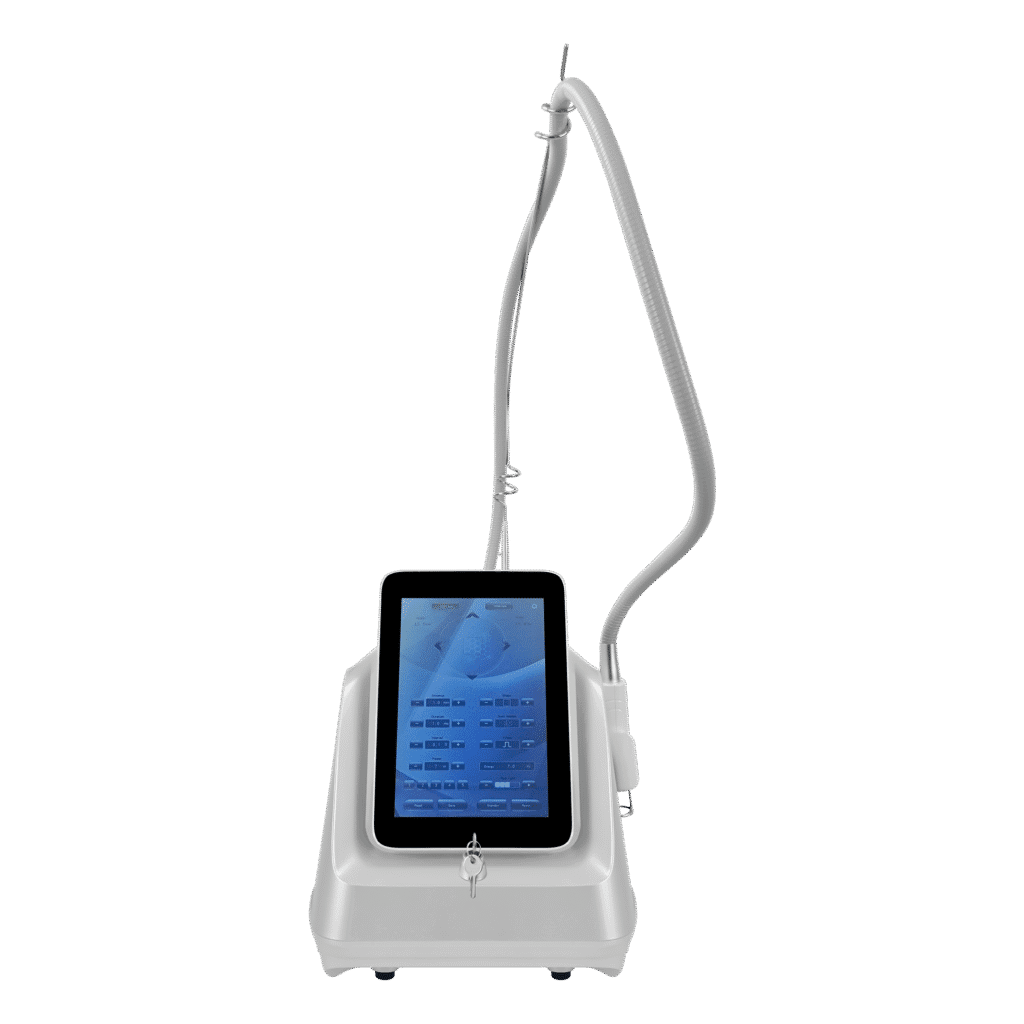
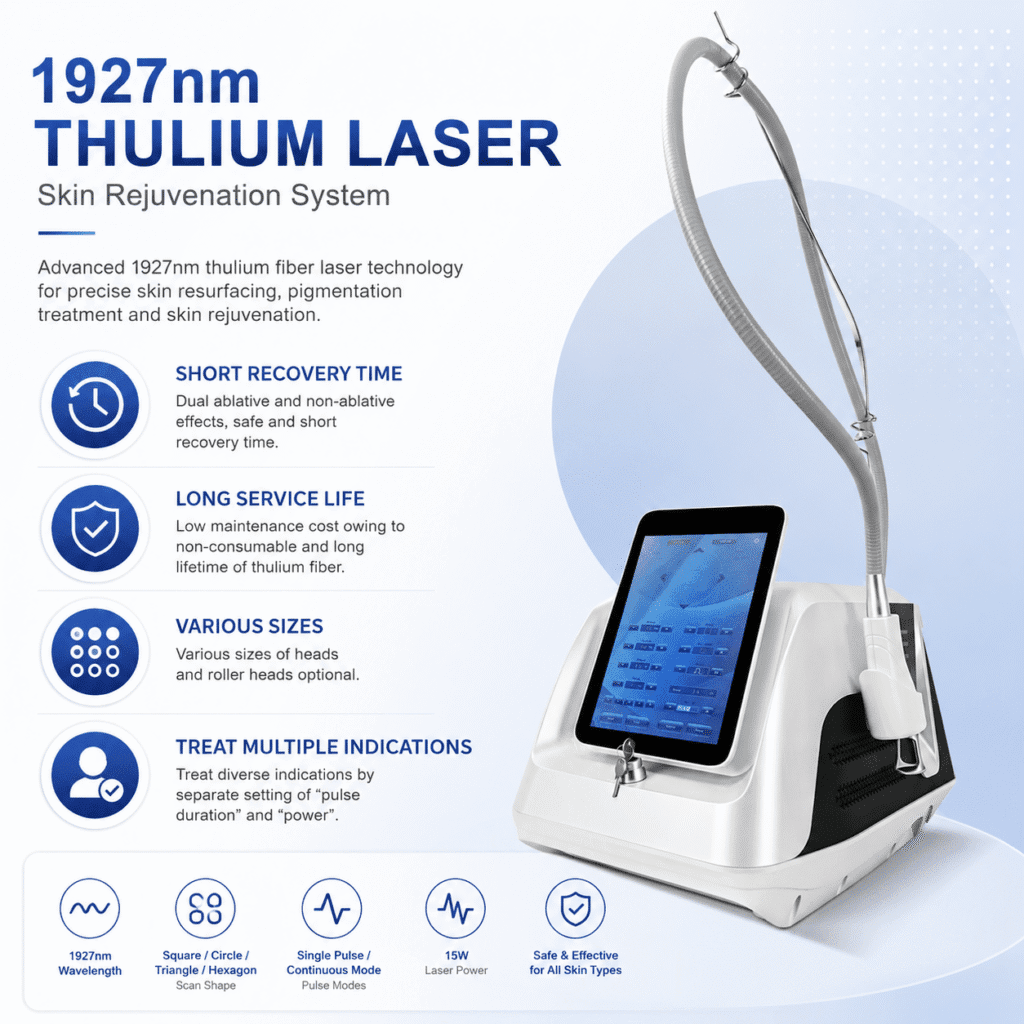
The public SHEFMON A0426 diode laser system lists wavelength, spot-size, cooling, touchscreen, voltage, and language choices. The unit packet should identify the exact handpiece and optical configuration, cooling and flow components, software and parameters, regional electrical profile, applicable output and temperature-related results, aging evidence, labels, documents, and service configuration.
B0155: multi-handle body platform
The public SHEFMON B0155 Endoscopia de escritorio Velapro is presented as a desktop 5-in-1 system that can combine different handles, including vacuum-roller, rotating, RF-related, and cavitation functions. Relevant records should distinguish the actual handle set, console and software compatibility, connector and vacuum-path assembly, handle-specific function checks, accessory packing, and any replacement or retest before release.
34. Control OEM/ODM Quality-Record Differences
Customized products may alter:
- model and order identity;
- housing, layout, wiring, airflow, and connectors;
- handles, functions, and accessories;
- software, parámetros, interfaz y lenguaje;
- supplier parts and materials;
- labels, manuals, branding, and packaging;
- inspection and test requirements; and
- service and spare-part configuration.
The public SHEFMON OEM/ODM capabilities discuss these kinds of customization and small-batch trial production. An OEM/ODM quality plan should specify which standard records are inherited, which fields change, what new evidence is required, who reviews buyer-specific outputs, and how the released packet identifies the final customized configuration.
35. Audit Quality Records for Effectiveness
An audit should test whether records can:
- prove material acceptance;
- reconstruct one unit’s build and configuration;
- show applicable software and test evidence;
- reveal every failure, rework, and retest;
- identify current product status;
- connect the package to the finished unit;
- support a supplier-lot or test-equipment impact assessment;
- distinguish missing records from not-applicable records;
- retrieve archived evidence; and
- show who authorized final release.
Check actual physical and electronic relationships rather than reviewing only a perfect sample packet chosen in advance.
36. Quality-Record Checklist from Incoming to Release
Before relying on the record system, confirm that:
- Controlled documents and completed records are clearly separated.
- Every record type has a defined object and granularity.
- Standard headers identify product, revision, source, time and status.
- Supplier and purchase records reference current technical requirements.
- Goods receipt preserves supplier lot and factory receipt identity.
- Incoming inspection records actual characteristics and results.
- Supplier evidence is reviewed for exact part and lot applicability.
- Accepted, rejected and quarantined material statuses are controlled.
- Material disposition and quantity reconciliation are recorded.
- Warehouse movement preserves lot identity and status.
- Work orders define the exact model and configuration.
- Kitting records connect issued material to the production order.
- First-unit evidence records the trigger, scope and approval to continue.
- Hidden assembly characteristics are recorded before enclosure.
- Critical process parameters and interruptions remain visible.
- Software, parameters, language and calibration are version-specific.
- Test records identify product, method, equipment, conditions and limits.
- Raw measurements or observations remain retrievable where required.
- Functional, performance, aging and final inspection records are distinguishable.
- Measurement-equipment status links to product results.
- Failures and interrupted tests are never overwritten.
- Nonconformities define condition, scope, containment and disposition.
- Rework, repair, concession and deviation remain separate decisions.
- Removed and replacement components are traceable.
- Retest and regression scope follows the product change.
- Cosmetic decisions use controlled conditions and references.
- Handles, accessories, consumables and documents are reconciled.
- Pack-out records link the finished unit to its package.
- A unit-level release packet references all applicable evidence.
- Record-completeness rules distinguish required and not applicable.
- Final review occurs before the authorized release status.
- Product status blocks unauthorized movement or shipment.
- Corrections and late entries preserve original data and reason.
- Electronic access, audit trails, interfaces and backups are controlled.
- Retention and archive retrieval rules are defined.
- OEM/ODM differences map to the correct record set.
- Audits test real evidence reconstruction and affected-population support.
Preguntas frecuentes
1. What is the difference between a quality procedure and a quality record?
A procedure defines the approved way to perform work. A quality record shows what actually occurred for a specific material, lot, unit, test, process, or decision. Both are necessary, but they serve different purposes.
2. Does every beauty device need an individual unit record?
The required granularity depends on product, process, risk, market, and quality-system needs. Professional devices commonly benefit from serial-specific configuration, test, exception, package, and release evidence even when some material or process records are shared at lot or work-order level.
3. Is a supplier certificate enough to accept incoming components?
Not automatically. The factory should confirm supplier, site, part, revision, lot coverage, method, result, authenticity, and relationship to the received material. The approved control plan determines whether additional identity, inspection, or testing is required.
4. Should every assembly step have a checkbox?
No. Records should focus on identity, critical characteristics, hidden work, process parameters, verifications, exceptions, and decisions that need objective evidence. Copying every instruction sentence into a form can create signatures without useful information.
5. Can a failed test be removed after successful rework and retest?
No. Preserve the failure, investigation, work performed, changed parts or software, retest scope, later result, and final disposition. This history supports release review and recurring-problem analysis.
6. What belongs in a finished-product release packet?
It should include or reference the exact unit and configuration, material genealogy as required, assembly and process records, software, inspections, tests, exceptions, rework, retests, labels, documents, accessories, packaging, and final authorized release.
7. Is a final-test pass enough to release a beauty device?
No. Final testing may confirm selected functions, but release also depends on accepted materials, completed assembly controls, correct software, resolved failures, documentation, accessories, packaging, traceability, and authorized record review.
8. How should corrections be made to quality records?
Preserve the original entry, add the corrected value, explain the reason, identify the person and time, and obtain required review. Electronic systems should retain an audit trail; paper corrections should remain legible.
9. How long should quality records be retained?
Retention should be defined using product life, service and warranty needs, supplier history, investigation needs, market and quality requirements identified by qualified specialists, and long-term archive readability. One universal period does not fit every product or market.
10. What quality-record information should an OEM/ODM buyer request from SHEFMON?
Discuss the controlled configuration, incoming and production controls, unit-level test and release evidence, software identity, exception and retest handling, packaging records, traceability, document access, retention, and change-notification rules for the exact customized model.
Conclusión
Beauty device quality records should form a continuous evidence chain from material receipt to final product release. Each record must show what object it covers, which approved requirement applied, what actually happened, what result was obtained, which exception occurred, and who authorized the next state.
The strongest system does not rely on a final PASS stamp to conceal incomplete history. It preserves supplier and incoming evidence, material status, assembly and software records, test conditions and raw results, nonconformities, rework, retests, package reconciliation, and final review as connected layers. That makes release decisions defensible and enables later investigations without reconstructing the product from memory.
SHEFMON’s public Descripción general del control de calidad describes raw-material testing, assembly, circuit-board aging and power testing, functional aging, inspection, and ERP management. These public statements can start a quality discussion, but buyers should request information applicable to the exact ordered model and configuration rather than assume the format or content of confidential unit records.
To discuss a quality-record package for a facial, laser, body, or customized system, explore the Catálogo de dispositivos de belleza de SHEFMON y Contacta con SHEFMON. Share the model, handles, software, regional configuration, customization, evidence needs, packaging, service plan, and buyer review expectations so the record scope can be defined before production.