







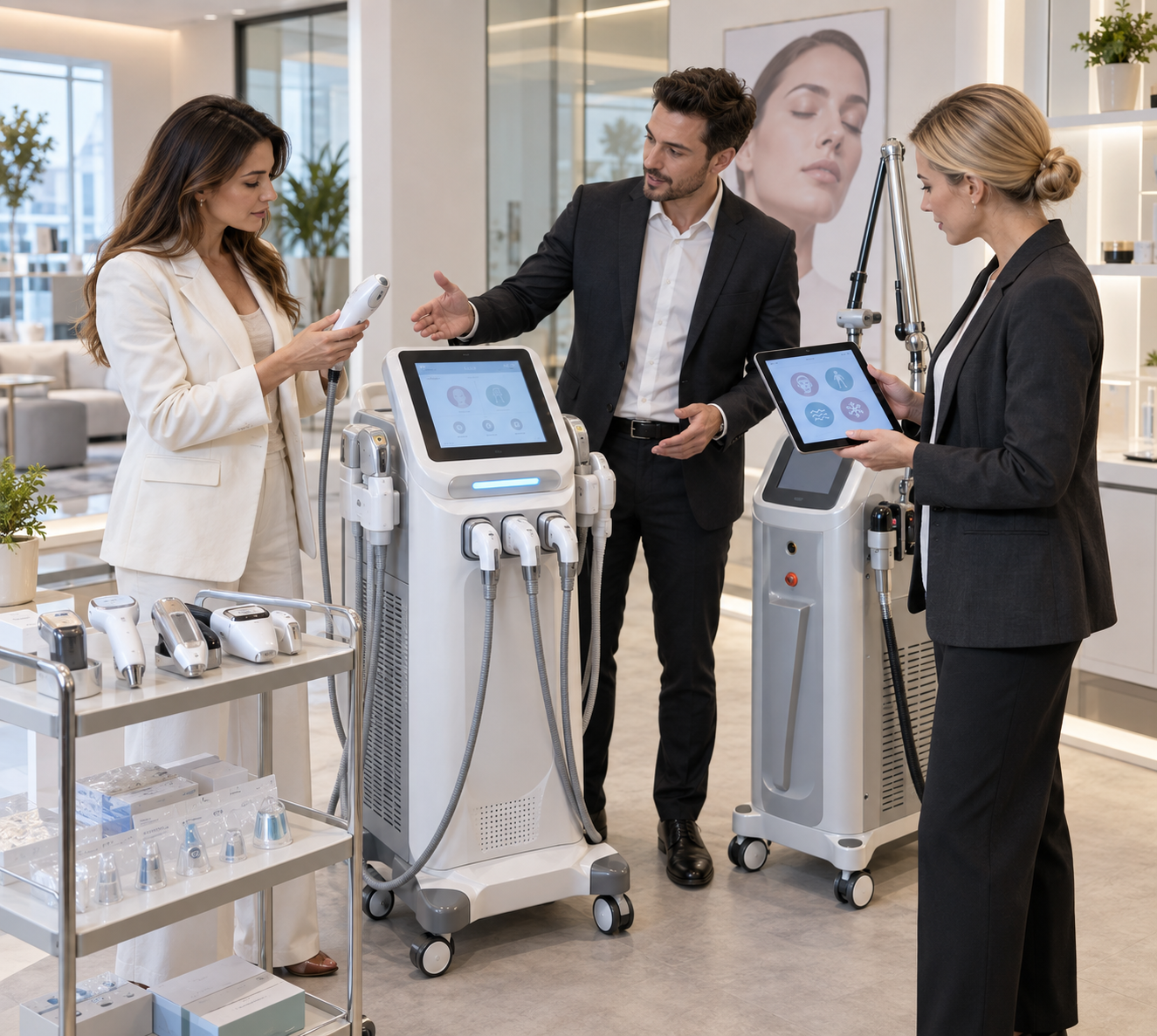
Selecting professional beauty devices for salon and clinic customers requires more than matching a popular technology to a buyer’s budget. A useful recommendation must fit the customer’s business model, permitted service scope, operator skills, treatment rooms, target clients and plan for repeat revenue.
A facial salon may need a versatile device that supports frequent cleansing and hydration services. A skin clinic may prioritize a focused platform for advanced texture, hair removal or rejuvenation programs. A distributor serving both customer types therefore needs a selection method that starts with the customer, not with the longest specification sheet.
This guide explains how beauty equipment businesses can classify customers, compare device categories, recommend relevant SHEFMON models and build practical service-menu packages for salons and clinics.
Resumen ejecutivo
The best device for a salon or clinic is the one that fits a defined service menu and an operationally ready team. Start by identifying the customer’s main revenue goal: frequent facial maintenance, premium anti-aging, hair removal, advanced skin programs or body contouring. Then check operator qualification, local requirements, room setup, consumables, training, service capacity and after-sales needs.
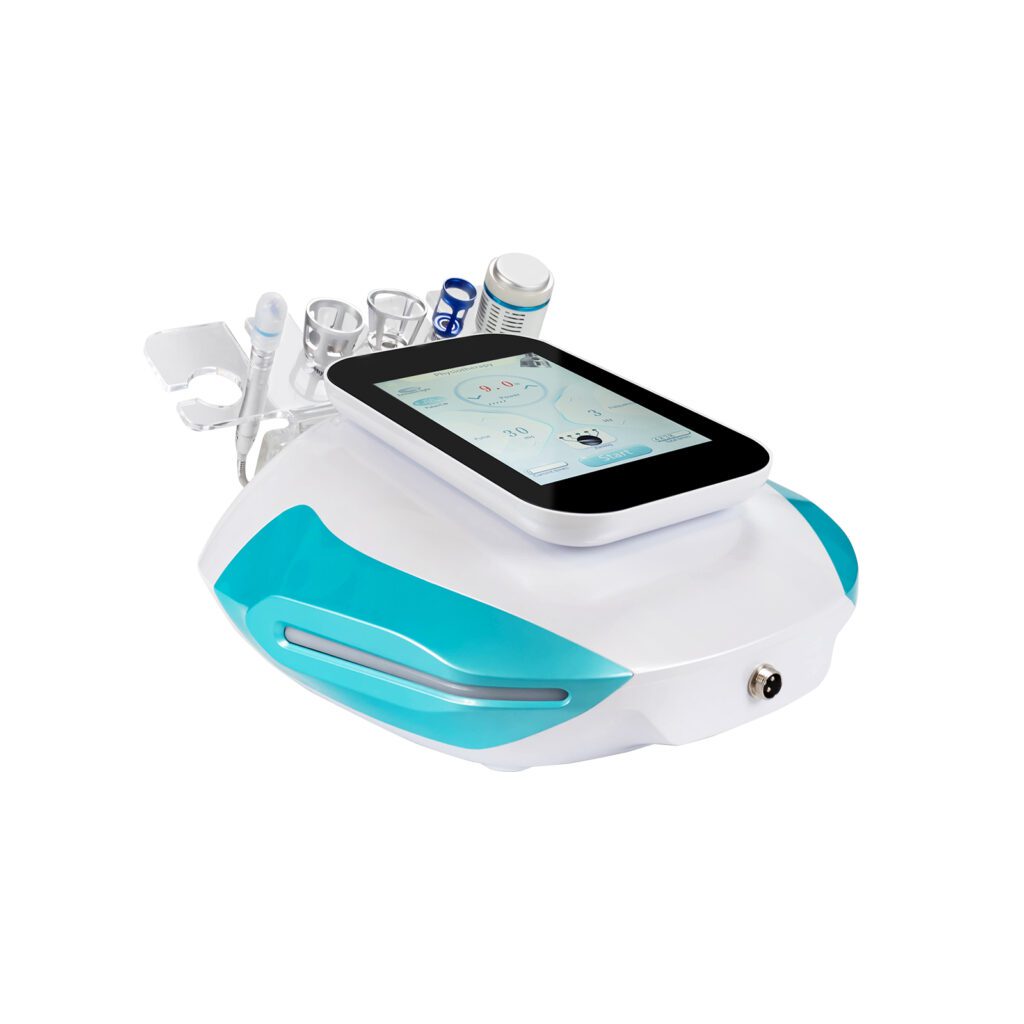
For many facial salons, Máquinas de belleza Hydra offer a practical starting category because they can support cleansing, exfoliation and hydration-focused menus. The Máquina de microdermoabrasión con diamante A0648 9 en 1 is a relevant example for businesses building a broad facial service foundation.
For established salons and med spas developing premium anti-aging menus, compare Dispositivos HIFU, RF and facial EMS systems. The A0203 25D Máquina HIFU avanzada de cuatro mangos con RF EMS is positioned as a multi-technology platform and should be considered only after confirming training, service scope and client demand.
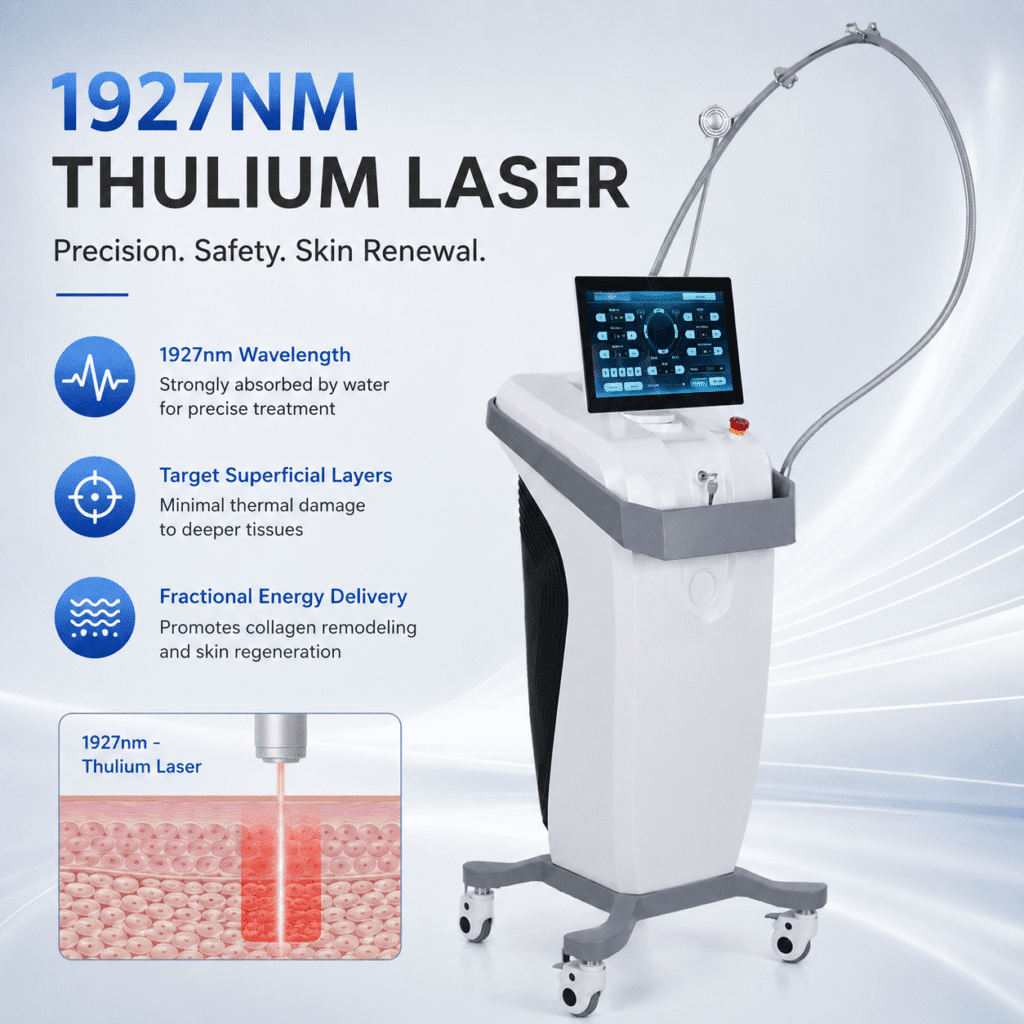
For clinics with appropriately qualified operators and stronger clinical workflows, Microagujas MNRF, laser and IPL systems y dispositivos de depilación may fit focused treatment programs. Examples include the A0152 Microneedling RF de escritorio con profundidad 8 y A0426 multi-wavelength diode laser hair removal machine.
For body-focused customers, select equipment according to the service concept rather than grouping every body device together. Criolipólisis, EMSlim y Endos Velapro support different menu positions and operating workflows.
1. Start With the Customer, Not the Machine
Two customers can ask for the same technology and still need different equipment. One may have a small salon with two treatment rooms and newly trained staff. Another may operate a clinic with consultation procedures, advanced practitioners and a client base already purchasing premium programs.
Before recommending any device, build a short customer profile:
- Business type: facial salon, full-service salon, med spa, skin clinic, laser studio or body contouring center.
- Current menu: services already selling consistently.
- Target clients: age range, common concerns, spending pattern and preferred visit frequency.
- Business objective: attract new clients, improve retention, raise average ticket or open a new department.
- Operator readiness: experience, licenses or qualifications where required, and available training time.
- Facility readiness: room size, power, ventilation, water or drainage needs, privacy and storage.
- Investment capacity: equipment budget plus consumables, marketing, training and maintenance reserve.
- Sales capacity: ability to conduct consultations, explain realistic expectations and sell packages.
This profile helps prevent a common mistake: recommending a technically impressive device that the customer cannot operate, market or keep busy.
2. Understand the Difference Between Salon and Clinic Demand
Salons usually benefit from accessible services with broad demand and repeat-visit potential. Clinics are more likely to need focused technologies, stronger screening and documentation, and operators who can manage advanced procedures and aftercare.
| Selection factor | Salon customer | Clinic customer |
|---|---|---|
| Main business need | Frequent services, easy menu integration and repeat visits | Focused treatment programs and differentiated capability |
| Typical starting point | Hydra, facial care, entry anti-aging or body maintenance | MNRF, laser, advanced HIFU or specialized treatment platform |
| Operator requirement | Simple workflow and efficient staff training | Higher qualification, detailed protocols and stronger assessment skills |
| Client consultation | Clear service benefits and package explanation | Screening, suitability assessment, consent and aftercare planning |
| Revenue model | Memberships, monthly facials, add-ons and service bundles | Treatment courses, premium programs and condition-focused plans |
| Equipment priority | Versatility, usability and service frequency | Precision, indication fit, safety workflow and documentation |
| Buying risk | Paying for unused functions | Underestimating compliance, training or treatment complexity |
The difference is not simply that clinics buy expensive machines while salons buy inexpensive ones. A well-run salon may invest in premium technology, and a clinic may need a compact maintenance device. The correct boundary is operational suitability.
3. Choose the Service Category Before the Model
Customers often begin with a model name or a technology they have seen online. A distributor should first translate that request into a service category.
Limpieza e hidratación facial
This category fits new salons, facial studios, spas and clinics that need a high-frequency maintenance service. A hydra platform can support several menu levels without forcing the business to launch a complex treatment department.
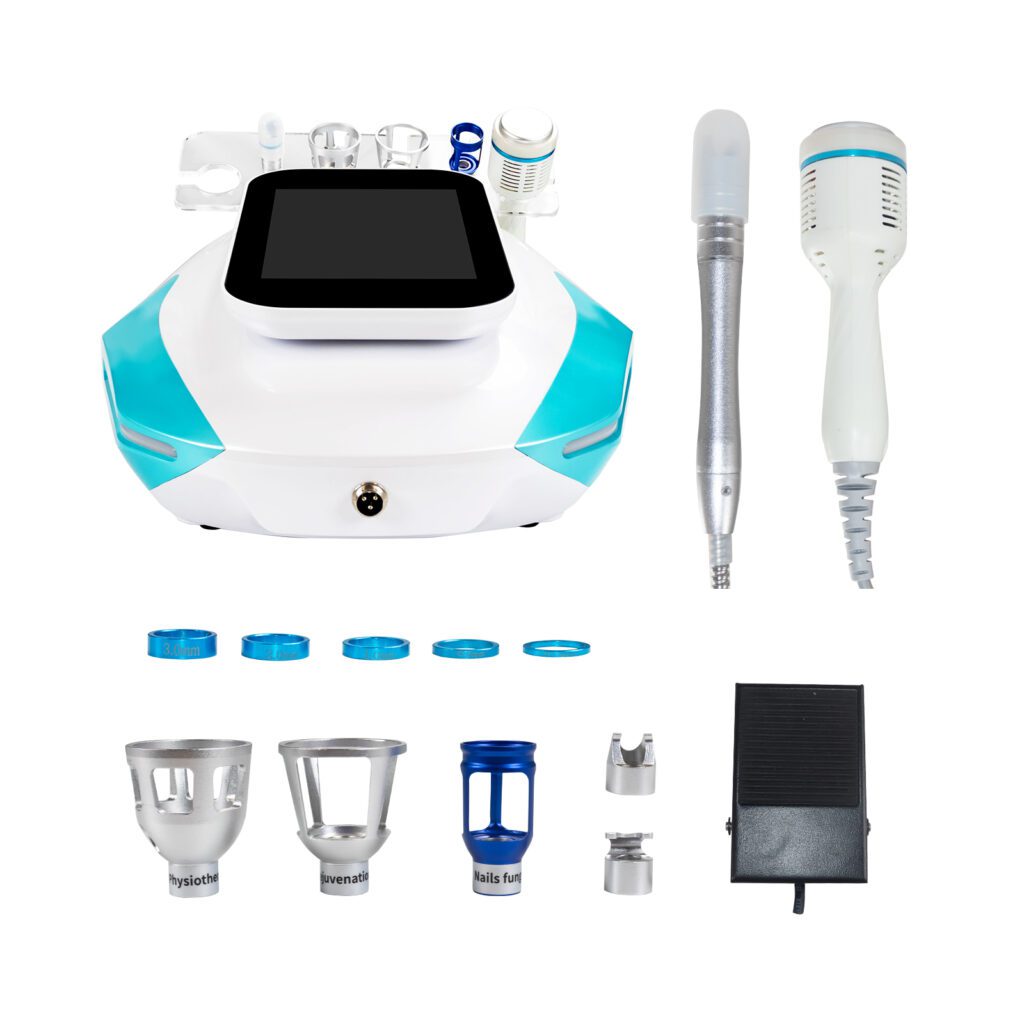
El A0648 Hydro Microdermabrasion Machine is listed by SHEFMON as a nine-function vertical system. A prospective buyer should still confirm the included handles, solution requirements, consumable availability, cleaning procedure and training contents for the exact order configuration.
Possible menu positions include:
- Express cleansing facial.
- Tratamiento facial hidratante y luminoso.
- Congested-skin maintenance service.
- Premium facial with selected add-ons.
- Monthly skin-management membership.
For many salon customers, this is a more practical first purchase than an advanced energy-based platform because the service is easier to explain and can be incorporated into an existing facial menu.
Anti-aging and facial contouring
Anti-aging devices may fit established salons, med spas and skin clinics with clients seeking higher-value firming or lifting-style services. The buyer should distinguish among focused ultrasound, RF and facial EMS instead of treating them as interchangeable.
De SHEFMON HIFU category includes several configurations. The A0203 25D Four-Handle HIFU with RF EMS combines focused ultrasound with additional functions and multiple probe options. It is more suitable for a customer prepared to build structured consultations and premium programs than for a buyer who only wants an occasional facial add-on.
Before recommending an anti-aging device, ask:
- Does the customer already sell premium facial programs?
- Who will perform the service?
- Which face or body applications are intended and locally permitted?
- How will clients be screened?
- Are cartridges, probes or other recurring items included in the cost model?
- Can the team explain realistic timelines and individual variation?
A salon that lacks this preparation may be better served by a simpler facial care or facial EMS option before moving to advanced HIFU.
Depilación
Hair removal has a clear consumer proposition and can support area-based packages, but it also requires serious attention to operator training, client screening, eye protection, cooling, maintenance and local rules.
El Máquina de depilación láser de diodo A0426 is presented by SHEFMON with 755, 810, 940 and 1064 nm wavelength options. Buyers should verify the ordered handpiece configuration, output specification, cooling design, spot options, electrical requirements and documentation rather than relying only on the number of wavelengths.
This category may suit:
- A laser studio where hair removal is the main service.
- A med spa adding a recurring treatment course.
- A clinic with trained staff and suitable rooms.
- An established salon only where local scope and operator requirements are satisfied.
Hair removal equipment should not be recommended merely because demand appears broad. The customer’s consultation process and operating discipline matter as much as the platform.
Advanced skin programs
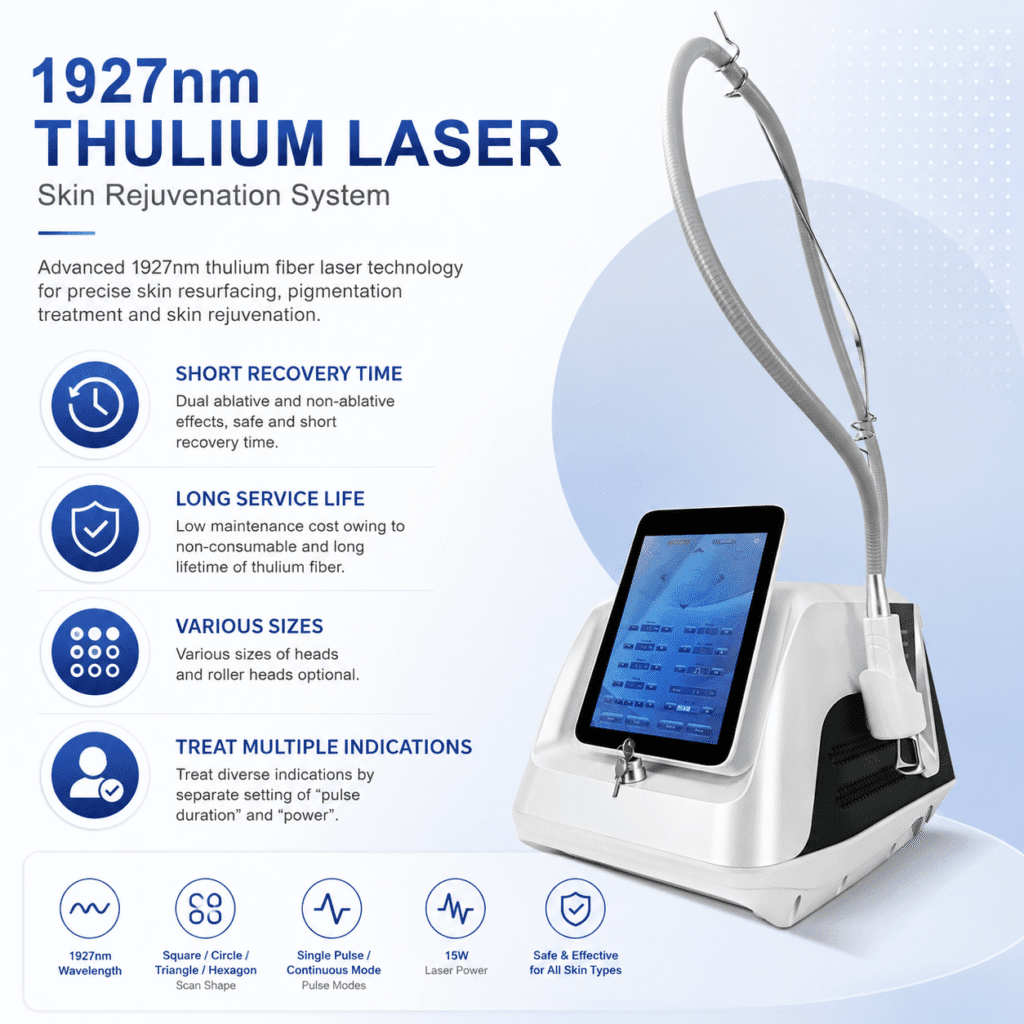
RF microneedling and fractional or pigment-focused laser equipment generally belong in the advanced segment. These devices can help qualified clinics create differentiated skin programs, but they require stronger hygiene, consumable control, treatment records, aftercare and risk management.
El A0152 Escritorio MNRF Profundidad 8 is a compact RF microneedling model for buyers comparing clinic-oriented systems. Before purchase, confirm needle or tip options, single-use components, depth and energy controls, cleaning boundaries, training and service support.
For laser-based advanced services, customers can review the broader Categoría de láser IPL. Model selection should follow the intended application and the customer’s legal and clinical readiness. A clinic seeking an acne-scar-focused program, for example, should not select a machine simply because it has the most functions; it needs a platform whose intended use, operating workflow and support fit that program.
Body contouring and maintenance
Body equipment should be divided by service goal:
- Cryolipolysis for localized fat-reduction-style programs.
- EMS systems for muscle-stimulation-style body sculpting.
- Endos-style roller systems for body smoothing and maintenance.
- RF or cavitation systems for warming, firming-style and contour-support services.
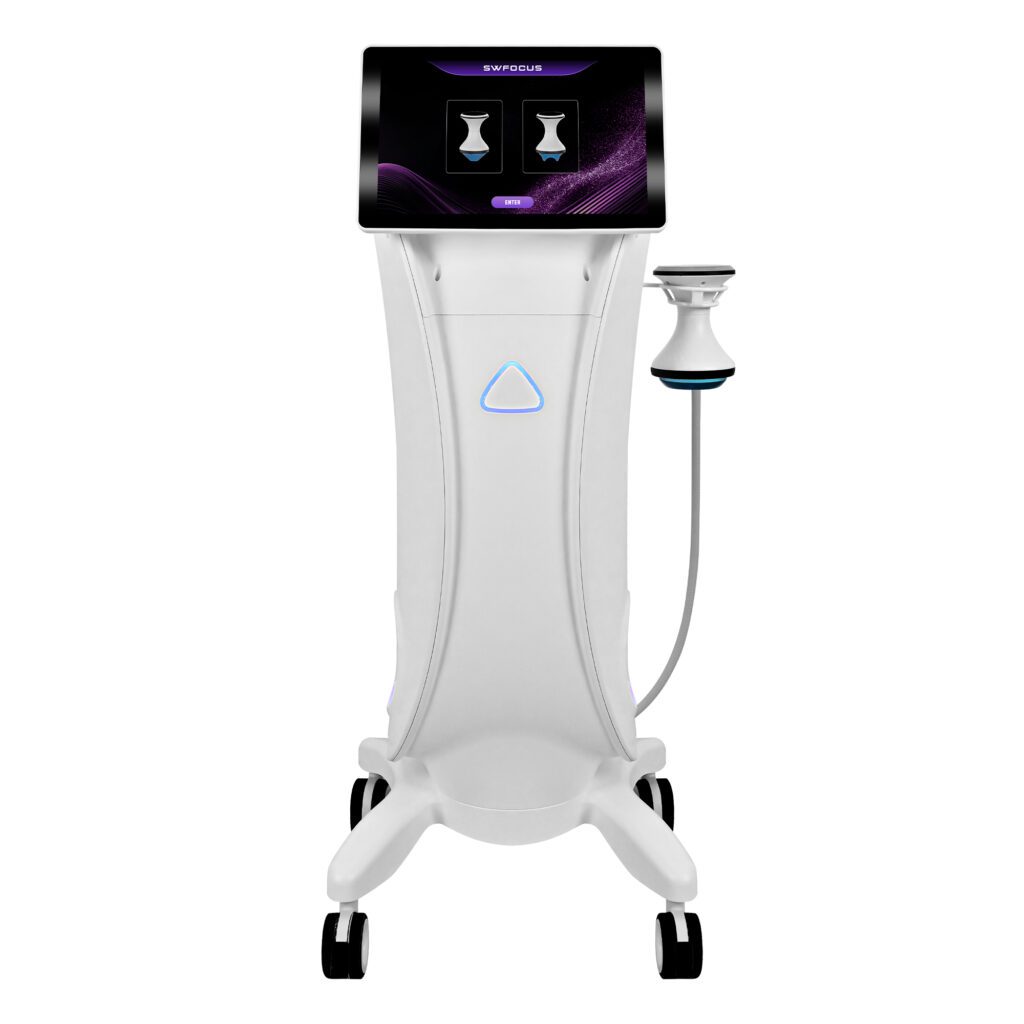
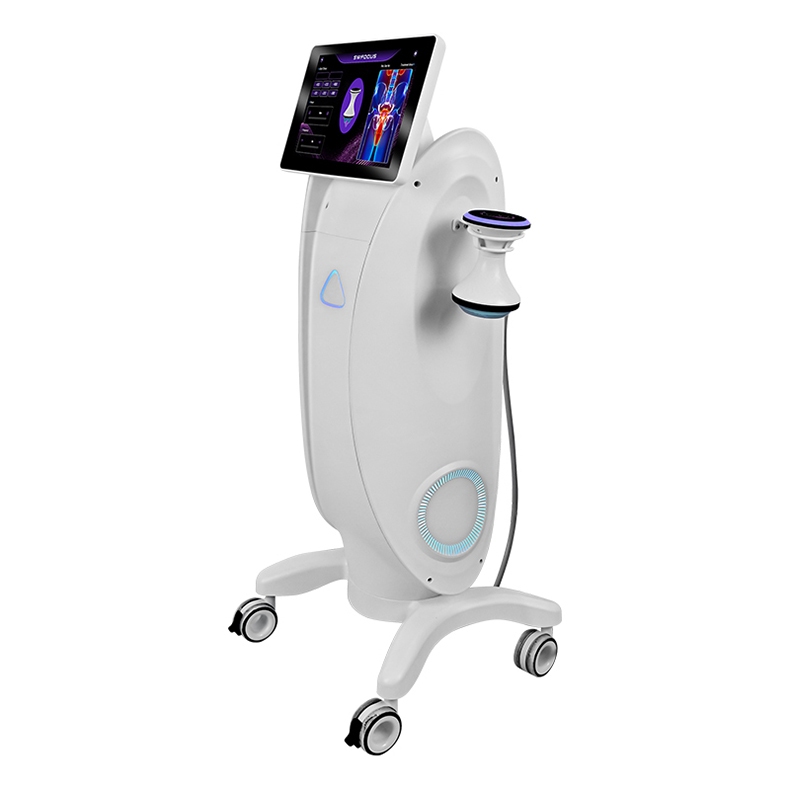
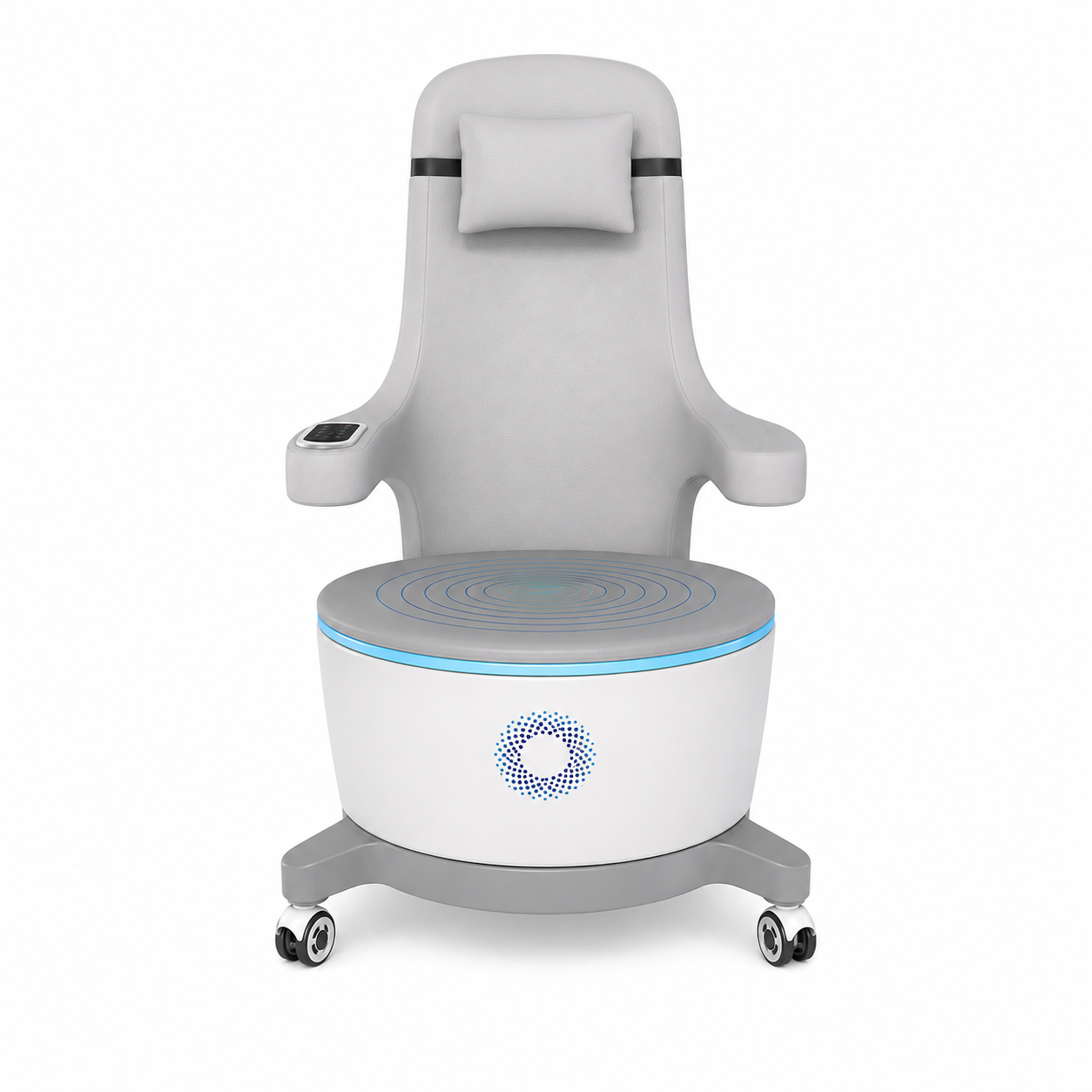
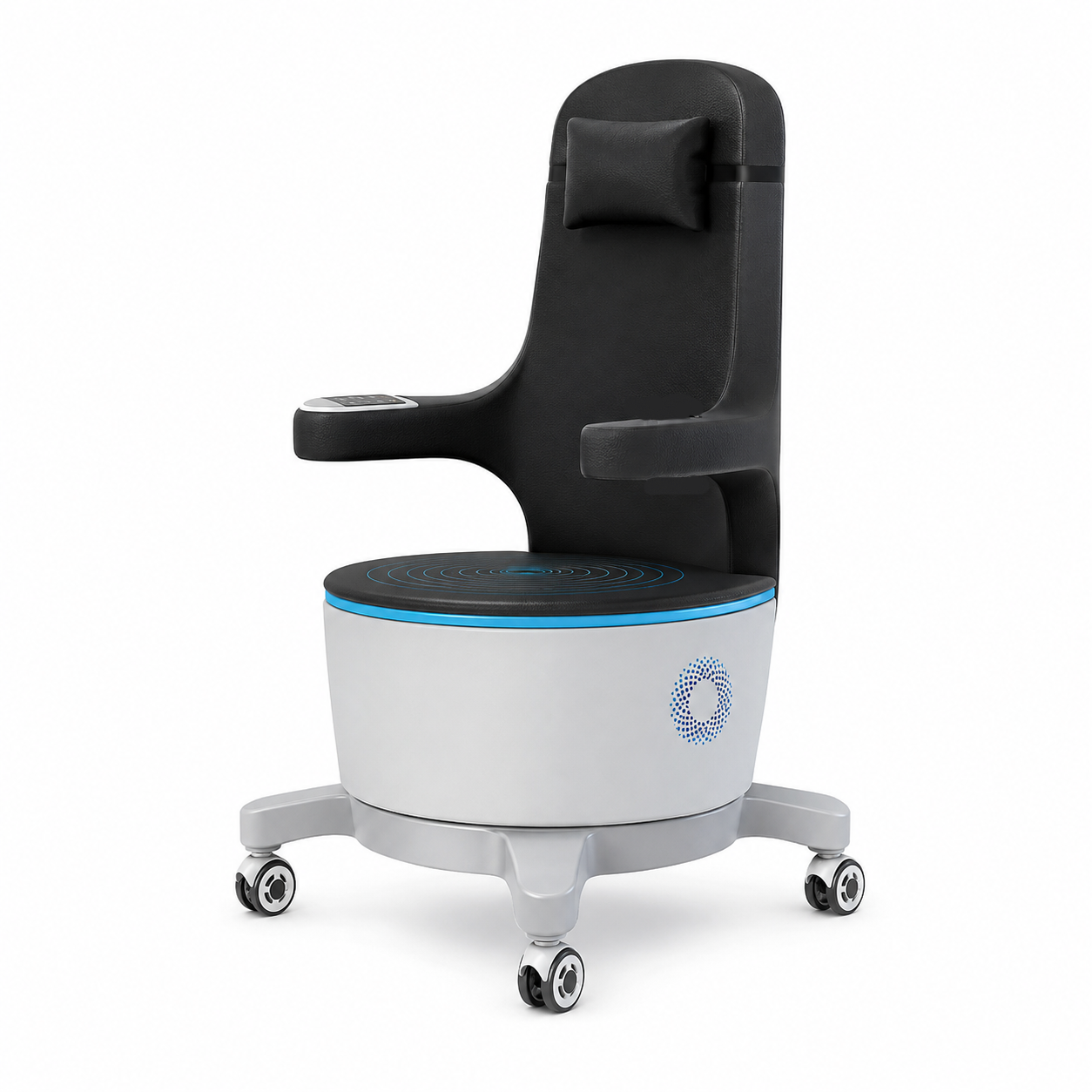
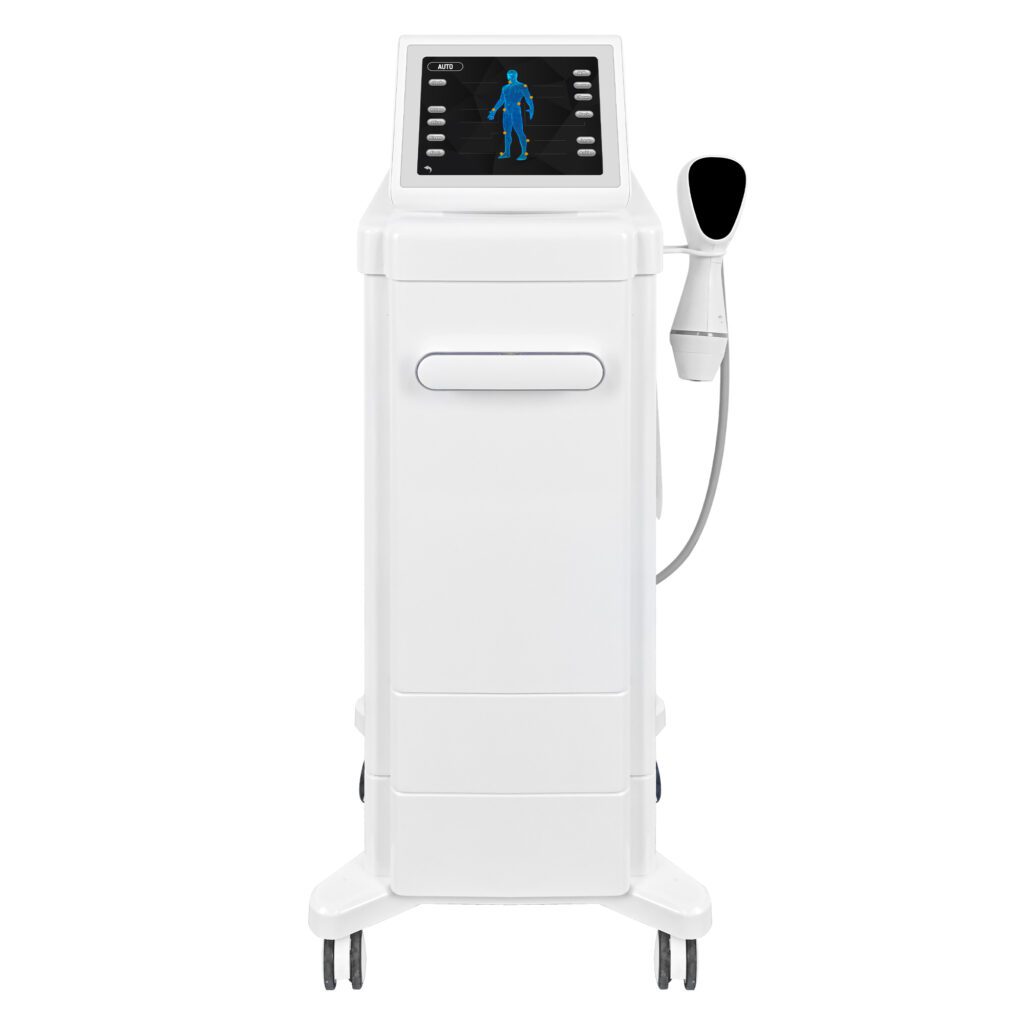
El Máquina de criolipólisis S9 360 may fit a body contouring customer building focused-area packages. The A0241 EMSlim RF EMS Machine may fit a business developing muscle-stimulation-style programs. The B0154 Endos Velapro may fit body maintenance and smoothing-style menus.
These devices are not direct substitutes. Compare them by client goal, session format, room occupancy, operator involvement, contraindication screening, expected package structure and maintenance burden.
4. Match Device Complexity to Customer Readiness
A useful portfolio has clear levels. This makes it easier to recommend a device without pushing every buyer toward the premium end of the catalog.
| Customer level | Suitable device direction | Relevant SHEFMON examples | Main buying check |
|---|---|---|---|
| Nuevo salón de belleza facial | Multi-step cleansing and hydration | A0648 Hidro | Staff usability and frequent service demand |
| Salón en crecimiento | Facial care plus premium anti-aging add-on | HIFU or facial rejuvenation category | Consultation process and package sales |
| Hair removal specialist | Diode laser platform | Láser de diodo A0426 | Training, cooling, room and local requirements |
| Clínica dermatológica | RF microneedling or focused laser platform | A0152 MNRF y Láser IPL | Qualified operator, hygiene and aftercare |
| Body studio | One defined body modality | Criolipólisis S9, A0241 EMSlim o B0154 Endos | Clear client goal and package model |
| Multi-service clinic | Complementary facial, laser and body categories | Selected devices from Máquinas de belleza | Department ownership and utilization plan |
Do not confuse a multifunction machine with an automatically better choice. Integrated platforms can save space and broaden a menu, but only if the customer will use the functions, train staff on each handpiece and maintain all related accessories. A focused single-function device can be easier to position, standardize and service.
5. Use a Practical Device Selection Scorecard
A scorecard makes recommendations more consistent across different customers. Rate each candidate from 1 to 5 and weight the factors according to the customer’s business.
| Selection criterion | What to evaluate | Por qué es importante |
|---|---|---|
| Service-menu fit | Whether the machine supports a clearly named, sellable service | Prevents equipment from becoming idle |
| Demanda del cliente | Existing inquiries, consultations, competitor activity and client feedback | Tests whether the menu has a real audience |
| Operator fit | Required skill, training time and staff confidence | Affects consistency and scheduling |
| Scope and compliance | Local rules, intended use and customer qualification | Determines whether the service can be offered responsibly |
| Treatment-room fit | Footprint, power, ventilation, water, privacy and mobility | Avoids installation problems |
| Throughput | Session length, setup, cleaning and reset time | Determines realistic daily capacity |
| Consumibles | Cost, supply continuity, shelf life and per-session use | Protects service margin and availability |
| Reliability and support | Warranty, remote diagnosis, parts and repair process | Reduces downtime risk |
| Marketing fit | Ease of explaining the service without exaggerated claims | Supports ethical conversion |
| Expansion fit | Whether the device complements the customer’s next planned service | Keeps the equipment plan coherent |
A device with the highest technical score may not have the highest business score. For a small salon, simple operation and menu fit may deserve more weight than maximum output or a long feature list. For an advanced clinic, control range, documentation, workflow and support may carry more weight.
6. Verify Specifications That Affect Daily Operation
Marketing terms can make two machines look similar. Operational specifications reveal whether they truly fit the customer.
For every device
Check the exact model and configuration on the quotation. Confirm input voltage and plug, device dimensions, net and shipping weight, included handpieces, accessories, language options, user materials, warranty terms, spare parts and installation requirements.
For consumable-based platforms
Confirm which components are disposable, their expected usage, order quantity, lead time and compatibility. Ask whether alternative tips or cartridges require separate purchase and how the machine records or limits usage.
For energy-based platforms
Review the adjustable ranges, handpiece configuration, cooling or temperature-control features, safety controls and training requirements. Specifications should be evaluated against the intended service, not used as isolated sales claims.
For multifunction systems
Request a complete function list for the quoted configuration. Determine which functions share the same base unit, which have independent controls, which accessories are optional and whether each function has its own training and maintenance procedure.
The distributor should provide a written configuration sheet so the customer knows exactly what is being ordered.
7. Build Device Packages Around Business Types
Customers understand equipment more easily when it is presented as a business package rather than a machine list.
Starter facial salon package
Dispositivo principal: A0648 Hidromicrodermoabrasión.
Menu structure:
- Express cleanse.
- Signature hydration facial.
- Monthly skin-management plan.
- Premium facial using selected included functions.
This package prioritizes frequent services and staff confidence. The salon can add a focused anti-aging device after it has measured bookings, retention and upgrade demand.
Growth salon or med spa package
Core direction: hydra facial plus a selected anti-aging platform from Cuidado de la piel y rejuvenecimiento facial o HIFU.
Menu structure:
- Entry facial for lead generation.
- Premium rejuvenation-style service.
- Consultation-led anti-aging program.
- Maintenance facial between premium appointments where appropriate.
This is a service ladder, not an instruction to perform different energy-based procedures in the same session. Treatment timing and suitability must follow qualified protocols.
Hair removal business package
Dispositivo principal: Láser de diodo A0426.
Menu structure:
- Small-area introductory service.
- Area-based treatment course.
- Multi-area package.
- Maintenance appointments based on individual needs.
The customer also needs consultation forms, protective equipment, staff training and a plan for realistic service claims.
Advanced skin clinic package
Core direction: A0152 MNRF or one focused laser category selected for the clinic’s target program.
Menu structure:
- Professional consultation and skin assessment.
- Concern-focused treatment course.
- Defined aftercare and follow-up.
- Separate maintenance services where suitable.
The clinic should choose one advanced platform it can operate well before buying several technologies with overlapping positioning.
paquete de contorno corporal
Core direction: choose one principal modality, such as Criolipólisis, EMSlim o Endos Velapro.
Menu structure:
- consulta corporal.
- Focus-area or goal-based program.
- Course package based on the selected modality.
- Progress review and maintenance options.
Only add a second body device when it fills a different, clearly defined service role.
8. Recommend a Staged Purchase Instead of an Oversized Order
Staged purchasing reduces risk and gives the customer time to prove demand.
Stage 1: Establish a core service
Choose one device that fits the current customer base and staff. Define the service name, price logic, consultation, operating procedure, cleaning process and marketing message before launch.
Stage 2: Measure performance
Track consultations, conversion rate, booked sessions, package completion, consumable cost, room utilization, staff confidence and client feedback. Avoid judging success only by launch-week sales.
Stage 3: Add a complementary category
Expand only when the second device creates a clear new service or upgrades an existing client journey. A facial salon might add an anti-aging platform; a body studio might add a maintenance modality; a clinic might add a complementary laser category after its first platform is consistently utilized.
Stage 4: Standardize across teams or locations
Multi-location buyers should document training, service naming, consumable ordering, maintenance and incident handling before rolling out additional units.
This approach helps distributors become long-term equipment partners rather than one-time sellers.
9. Evaluate the Full Cost, Not Just the Purchase Price
The purchase price is only one part of equipment economics. Customers should estimate:
- Freight, import, installation and local delivery.
- Training and staff time.
- Consumables and replacement accessories.
- Preventive maintenance and repair reserve.
- Marketing and introductory offers.
- Room use and appointment time.
- Payment processing, tax and other local operating costs.
A simple planning formula is:
Required paid sessions to recover the initial investment = total launch investment divided by contribution per paid session.
Contribution per session means the selling price minus the variable costs directly connected to that session. It is not the same as revenue. The calculation should also include conservative utilization assumptions and should never be presented as a guaranteed payback period.
For a clinic device, downtime risk may be more important than a small price difference. For a salon device, unused functions may represent a larger hidden cost than consumables. The buying discussion should reflect the customer’s actual operation.
10. Check Training, Warranty and After-Sales Support
Professional devices need a support plan that the customer can understand before purchase. Ask the supplier to define:
- What product and operator training is included.
- Whether training is remote, onsite or both.
- Which language is used for the interface and materials.
- What the warranty covers and excludes.
- Who diagnoses faults and what evidence is required.
- Whether common spare parts are stocked.
- Typical parts dispatch and repair workflow.
- Responsibility for international freight during repair.
- Availability of ongoing technical guidance.
- Supply plan for consumables, tips, cartridges and handpieces.
The strongest recommendation is not merely a suitable machine. It is a suitable machine with a workable support path.
11. Avoid These Selection Mistakes
Choosing by function count
More functions can add flexibility, but they also add training, accessories and maintenance. Recommend functions the customer can name, price and sell.
Copying a competitor’s equipment list
A competitor may have a different client base, staffing model or legal scope. Use competitor research to understand demand, not to replace customer analysis.
Treating salons and clinics as the same buyer
Advanced equipment without the right operator, screening and aftercare creates operational and reputational risk.
Promising results or payback
Service outcomes vary, and business performance depends on demand, pricing, utilization and execution. Use documented specifications and responsible claims.
Ignoring consumables and downtime
A low purchase price can become expensive when parts are difficult to obtain or the support process is unclear.
Buying several devices before proving one menu
Too many new services divide training and marketing attention. Launch one clear offer, measure it and then expand.
12. A Customer Consultation Workflow for Distributors
Use the following workflow for each salon or clinic lead:
- Identify the business type and current services.
- Ask which client problem or revenue goal the new device must address.
- Confirm operator, facility and local service readiness.
- Select the most relevant device category.
- Compare two or three configurations, not the entire catalog.
- Show a practical service-menu concept and operating cost checklist.
- Demonstrate the device and document the quoted configuration.
- Agree on training, delivery, warranty and support responsibilities.
- Help the customer plan a measured launch.
- Review utilization and expansion needs after implementation.
This process makes the sales conversation more credible. It also helps the distributor learn which products genuinely fit its market.
Preguntas frecuentes
1. What is the best first beauty device for a new salon?
For many facial salons, a hydra or multi-step facial care system is a practical first category because it can support frequent cleansing and hydration services. The final choice should reflect the salon’s clients, staff skills, room and menu. The A0648 Hydro Microdermabrasion Machine is one SHEFMON model to compare.
2. Should a salon choose a multifunction or single-function machine?
Choose multifunction equipment when several included functions will be used in a coherent service menu and the team can maintain them. Choose a focused device when the salon wants simpler positioning, standardized operation or a specialized signature service.
3. Which beauty devices are more suitable for clinics?
Clinics with qualified operators and appropriate procedures may consider RF microneedling, laser, diode hair removal and advanced focused-ultrasound systems. Suitability depends on intended use, local requirements, training, screening, hygiene and aftercare, not merely on the clinic label.
4. How can a distributor determine whether a customer is ready for HIFU?
Check whether the customer has trained operators, a premium anti-aging audience, consultation and screening procedures, realistic marketing language, a cartridge cost model and appropriate local scope. If these are missing, recommend a simpler starting category or a preparation plan.
5. Is diode laser hair removal suitable for an ordinary beauty salon?
That depends on local rules, operator qualifications and facility requirements. A salon should not add laser hair removal solely because the service is popular. It needs appropriate training, protective equipment, client screening, maintenance and a compliant operating environment.
6. What should buyers compare between two similar beauty devices?
Compare exact configuration, intended application, control ranges, handpieces, consumables, cooling or safety features, electrical and room requirements, interface language, training, warranty, parts supply and service response. Do not compare only headline power or function count.
7. How many devices should a new customer buy?
Usually, the smallest coherent package is the better starting point. One core device with a defined menu and launch plan is often more manageable than several unrelated machines. Add equipment after the customer has measured demand and utilization.
8. How should body contouring devices be selected?
Start with the customer’s intended service concept. Cryolipolysis, EMSlim, Endos-style rollers and RF or cavitation systems play different roles. Compare client goals, session flow, operator involvement, room capacity, screening, package structure and support.
9. What after-sales questions should a salon or clinic ask?
Ask who provides training, how faults are diagnosed, what the warranty covers, which parts are stocked, how quickly replacement parts can be sent, who pays freight, whether remote guidance is available and how long consumables will remain available.
10. Can a supplier guarantee a device’s payback period?
No responsible supplier should guarantee payback. Recovery time depends on total launch cost, contribution per session, conversion, utilization, pricing, local demand and downtime. A supplier can help build scenarios, but the customer should use conservative assumptions.
Conclusión
To select beauty devices for salon and clinic customers, begin with business fit. Define the service goal, distinguish salon workflow from clinic workflow, confirm operator and facility readiness, calculate the full operating cost and choose a device category that supports a clear menu.
De SHEFMON professional beauty machine range covers facial care, HIFU, MNRF, laser and IPL, hair removal, cryolipolysis, EMSlim, Endos Velapro and other categories. Rather than presenting every machine to every buyer, shortlist the models that fit the customer’s current stage and next realistic step.
For a tailored recommendation, share the customer’s business type, target services, country, operator background, room setup and budget range with SHEFMON. The result should be a practical device and service-menu plan, not simply a longer equipment list.