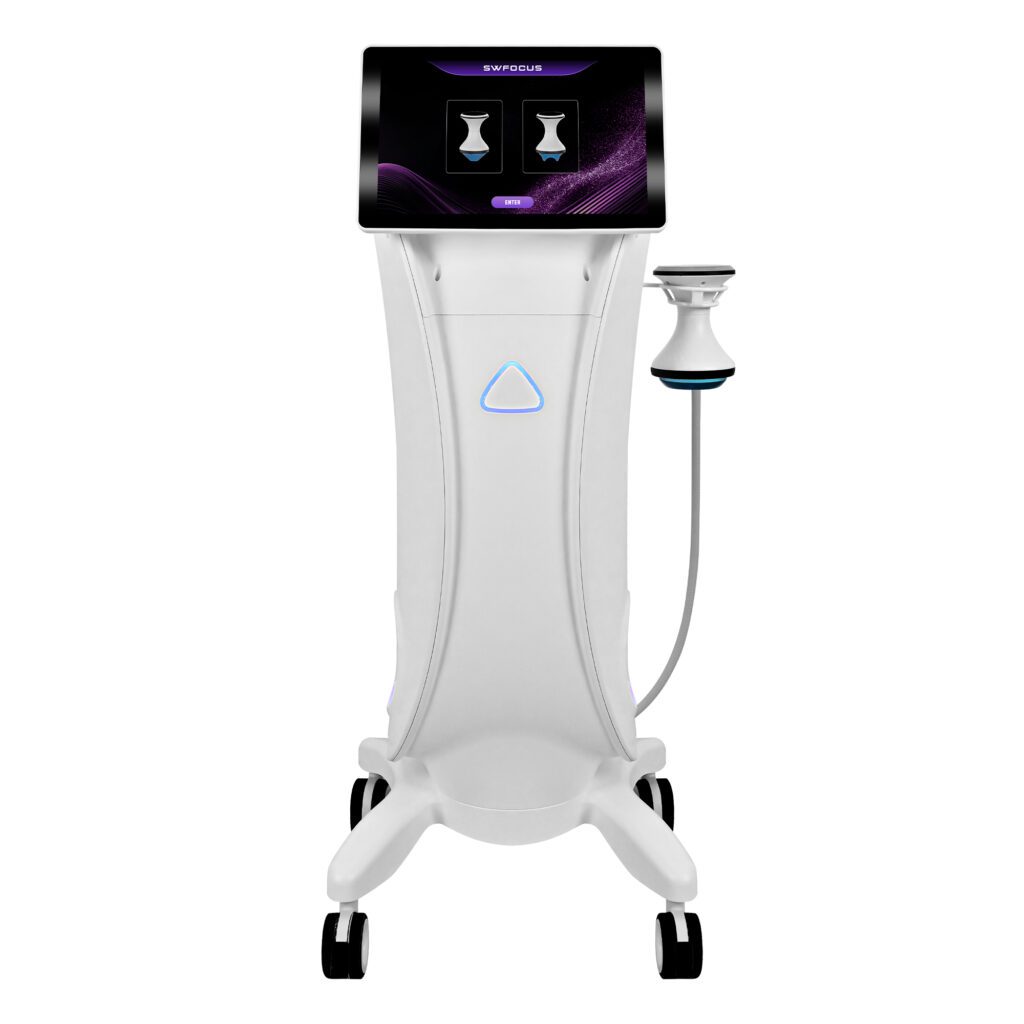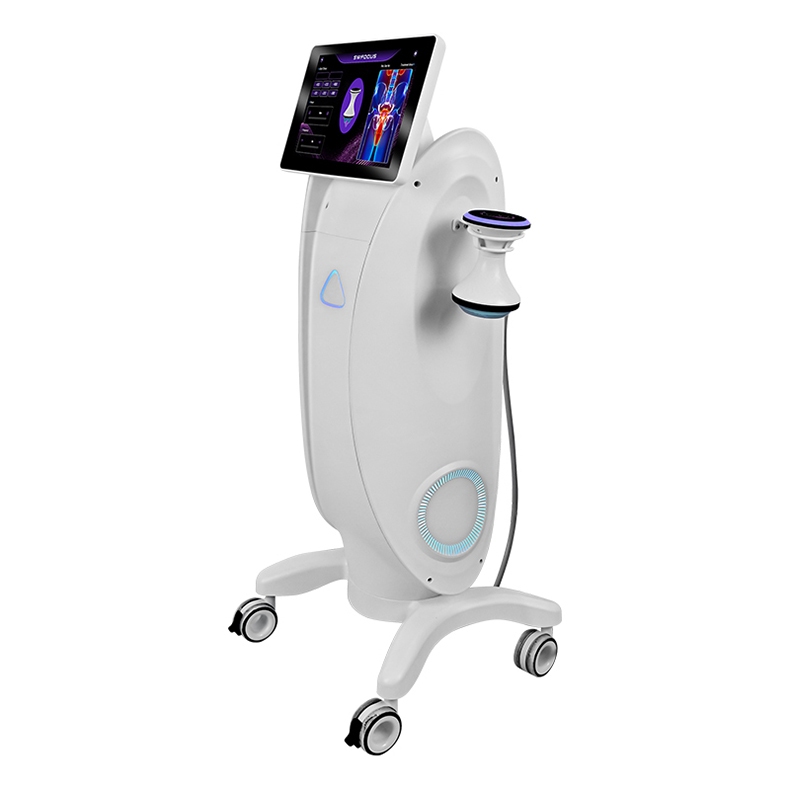










terapia de ondas de choque La terapia de ondas de choque se ha convertido en una importante tecnología no invasiva tanto en fisioterapia como en medicina estética. Se utiliza ampliamente para el alivio del dolor, la reducción de la celulitis, la regeneración tisular y la recuperación muscular. Sin embargo, no todos los sistemas de ondas de choque son iguales. Los dos tipos más comunes son la terapia de ondas de choque radiales (RSWT) y la terapia de ondas de choque focalizadas (FSWT). Aunque a menudo se agrupan en la misma categoría, difieren significativamente en la administración de energía, la profundidad de penetración y las aplicaciones clínicas. Comprender estas diferencias es fundamental para clínicas, terapeutas y compradores de equipos que desean elegir el sistema adecuado para objetivos de tratamiento específicos.
1. Principios básicos de la tecnología
1.1 Terapia de ondas de choque radiales (RSWT)
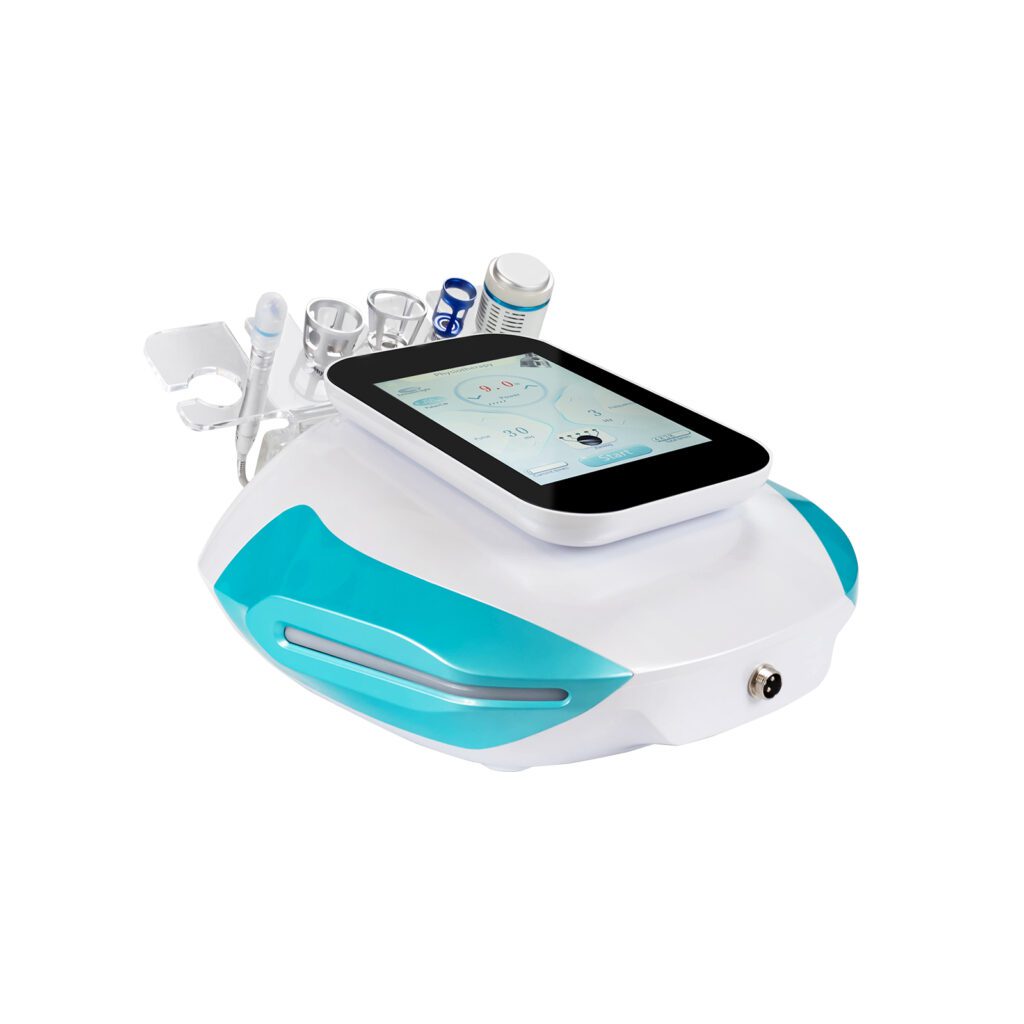
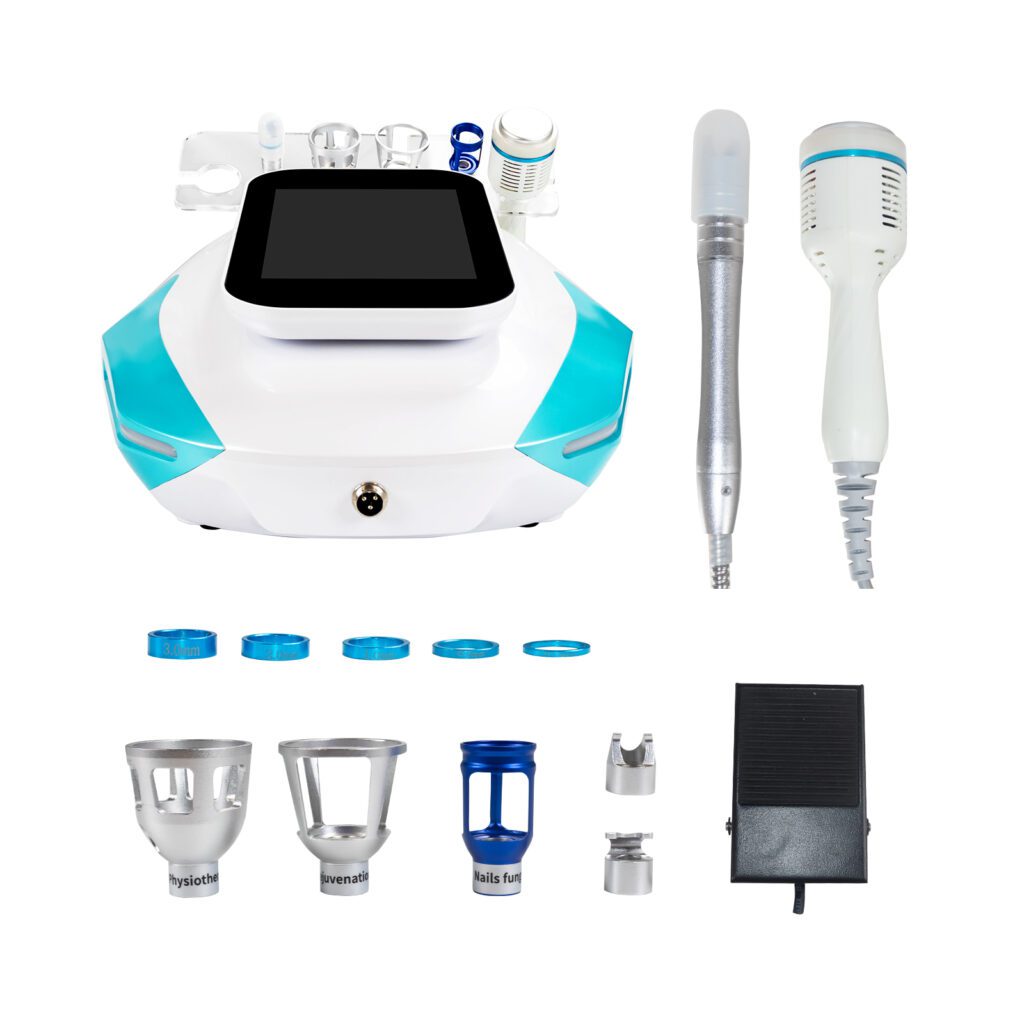
Los dispositivos de ondas de choque radiales generan ondas de presión mecánicas mediante un sistema balístico neumático. El aire comprimido acelera un proyectil dentro de la pieza de mano, que luego impacta contra un transmisor. Este impacto produce una onda de presión que se propaga hacia afuera en un patrón radial.
En términos sencillos, las ondas de choque radiales se comportan como una fuerza que expande la superficie. La energía es máxima en el punto de contacto y disminuye gradualmente a medida que penetra más profundamente en el tejido.
Los sistemas radiales se utilizan habitualmente para la relajación muscular, el tratamiento de la fascia superficial, la reducción de la celulitis y la mejora de la circulación sanguínea.
1.2 Terapia de ondas de choque focalizadas (FSWT)
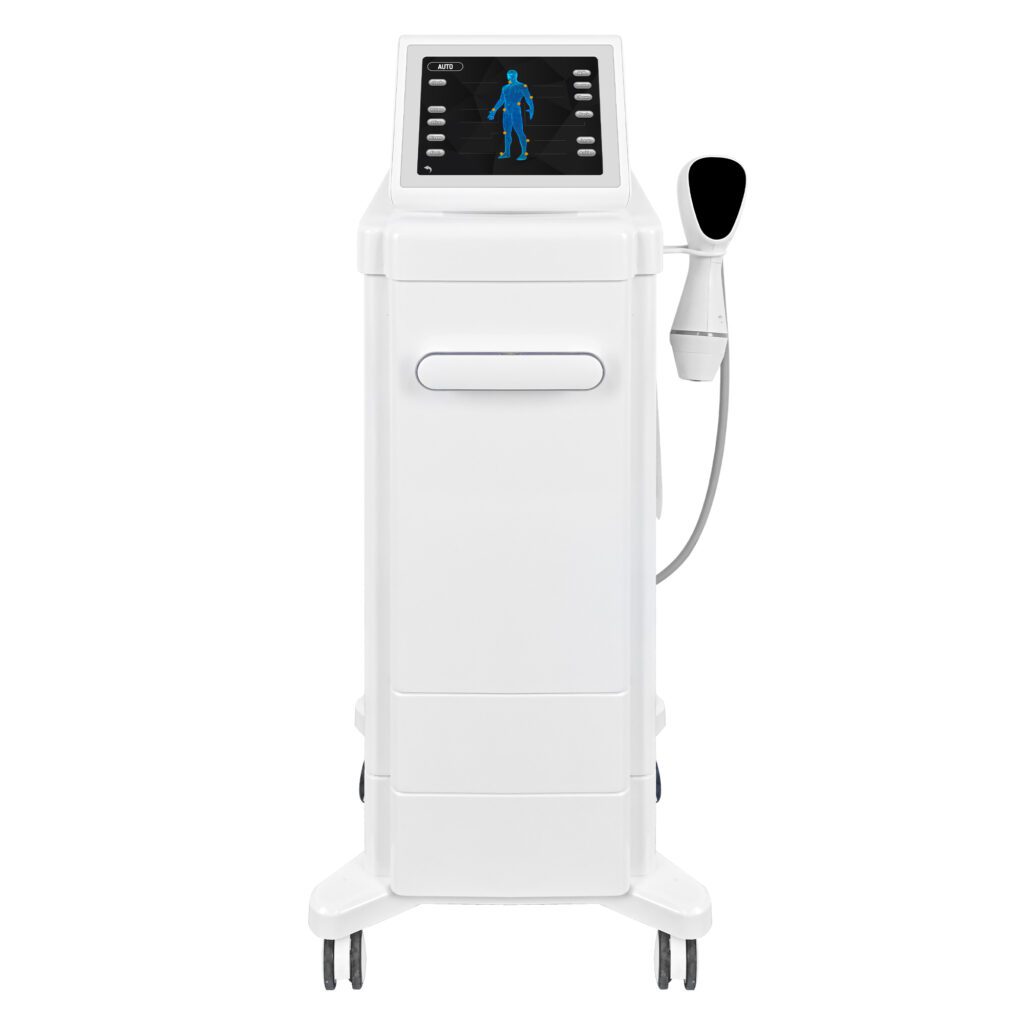
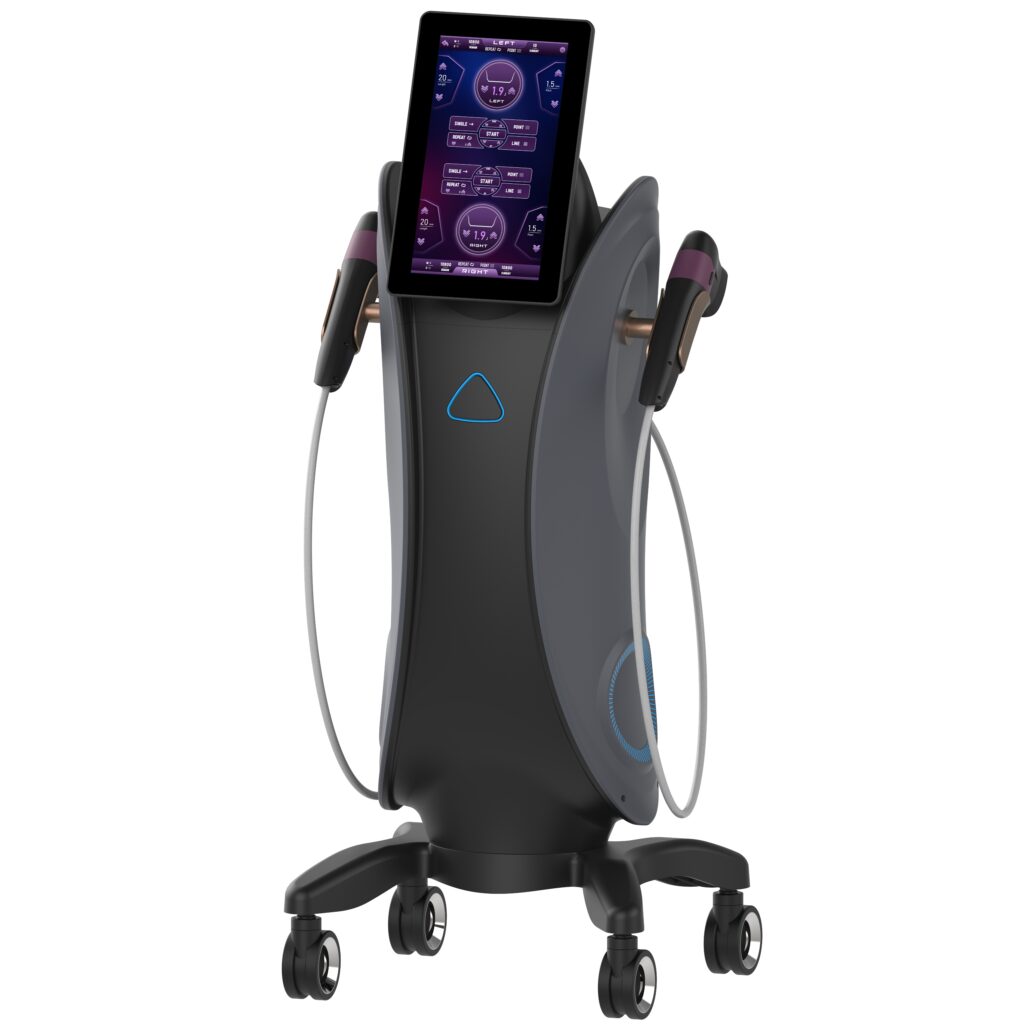
Los dispositivos de ondas de choque focalizadas utilizan tecnología electromagnética, electrohidráulica o piezoeléctrica para concentrar la energía en un punto focal específico dentro del tejido. En lugar de dispersarse hacia afuera, la energía se dirige con precisión.
Esto permite que la terapia de ondas de choque focalizadas (FSWT) administre energía de alta intensidad a una profundidad controlada debajo de la piel sin afectar significativamente los tejidos circundantes.
Las ondas de choque focalizadas se utilizan habitualmente para lesiones profundas de tendones, tratamiento de tejido calcificado, dolor musculoesquelético crónico y terapia regenerativa dirigida.
2. Diferencias en la distribución de energía
2.1 Patrón de energía radial
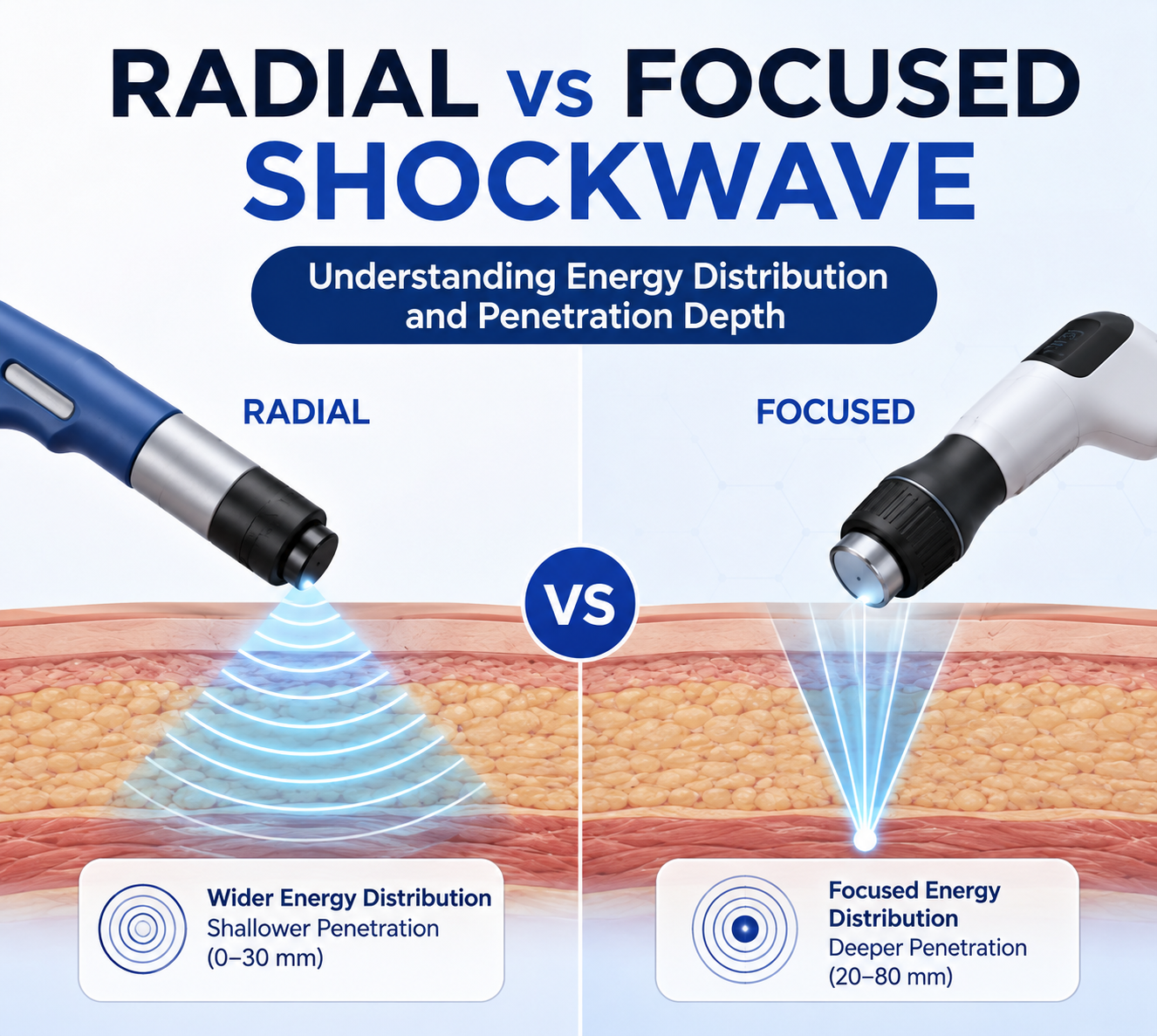
Las ondas de choque radiales distribuyen la energía en un patrón cónico que se expande hacia afuera desde la punta del aplicador. La densidad de energía es máxima en la superficie y disminuye con la profundidad.
Esto hace que la terapia de ondas de choque radiales sea más adecuada para áreas de tratamiento extensas, capas superficiales de tejido (0-30 mm) y afecciones difusas como la celulitis o la tensión muscular.
Sin embargo, debido a que la energía no está concentrada, es menos eficaz para los tejidos patológicos profundos.
2.2 Patrón de energía focalizada
Las ondas de choque focalizadas concentran la energía en un punto específico debajo de la superficie de la piel. El pico de energía se produce a una profundidad seleccionada, que a menudo se puede ajustar según el dispositivo.
Esto permite que la terapia de ondas de choque extracorpóreas (FSWT) se dirija a tejidos profundos (hasta 60-80 mm o más, según el tipo de dispositivo), estructuras anatómicas precisas y lesiones localizadas como microdesgarros de tendones o calcificaciones.
A diferencia de los sistemas radiales, las ondas de choque focalizadas minimizan la pérdida de energía en la superficie y maximizan el impacto a la profundidad objetivo.
3. Comparación de la profundidad de penetración
3.1 Características de la profundidad de la onda de choque radial
Las ondas de choque radiales suelen penetrar la fascia superficial a una profundidad de 5 a 15 mm y las capas musculares hasta unos 30 a 40 mm, dependiendo de la configuración de la presión.
Sin embargo, la intensidad de la energía disminuye significativamente con la profundidad, lo que significa que las estructuras más profundas reciben una estimulación más débil.
Por eso, los sistemas radiales suelen describirse como una tecnología que va desde la superficie hasta el tejido medio.
3.2 Características de profundidad de la onda de choque focalizada
Las ondas de choque focalizadas pueden penetrar aproximadamente entre 20 mm y 80 mm o más, dependiendo del diseño de la zona focal, manteniendo una intensidad de energía constante en el punto objetivo.
Esto convierte a la terapia de ondas de choque focalizadas (FSWT) en una tecnología de precisión para objetivos profundos, especialmente eficaz para afecciones que requieren la administración de energía dentro de las articulaciones, los tendones o las capas musculares profundas.

4. Aplicaciones clínicas y resultados del tratamiento
4.1 Aplicaciones de ondas de choque radiales
Los sistemas radiales se utilizan ampliamente en entornos estéticos y de rehabilitación debido a su amplia cobertura y a la comodidad que ofrecen durante el tratamiento.
Entre sus aplicaciones más comunes se incluyen la reducción de la celulitis y la mejora de la textura de la piel, la relajación muscular y el alivio de los espasmos, la mejora de la circulación linfática y la recuperación posterior al ejercicio en la terapia deportiva.
En las clínicas de estética, las ondas de choque radiales se combinan a menudo con sistemas de radiofrecuencia o cavitación como parte de los protocolos de remodelación corporal, donde la remodelación de la superficie y la mejora de la circulación son objetivos primordiales.
4.2 Aplicaciones de ondas de choque focalizadas
Las ondas de choque focalizadas están más orientadas al ámbito médico y se utilizan normalmente en entornos de rehabilitación clínica.
Se suelen aplicar en tendinopatías crónicas como la tendinitis de Aquiles, la fascitis plantar, las afecciones calcificadas del hombro y los síndromes de dolor musculoesquelético profundo.
La terapia de ondas de choque extracorpóreas (FSWT) es la opción preferida cuando se requiere precisión, control de profundidad y regeneración estructural del tejido, en lugar de una mejora general de la superficie.
5. Seguridad y experiencia del paciente
5.1 Perfil de seguridad de la onda de choque radial
La terapia de ondas de choque radiales se considera generalmente segura y no invasiva. Debido a que la energía se distribuye sobre una superficie mayor, el riesgo de sobrecarga tisular localizada es relativamente bajo.
Algunos pacientes pueden experimentar enrojecimiento leve, dolor temporal o sensibilidad en las zonas tratadas, pero estos efectos suelen ser de corta duración.
En general, la terapia de ondas de choque radiales (RSWT) se tolera bien y es adecuada para los mercados de bienestar, estética y recuperación deportiva.
5.2 Perfil de seguridad de la onda de choque focalizada
La terapia de ondas de choque focalizadas proporciona una mayor densidad de energía a profundidades específicas, por lo que el tratamiento debe controlarse cuidadosamente.
Los pacientes pueden sentir una molestia más aguda y localizada durante el tratamiento, y puede aparecer cierta sensibilidad en los tejidos tratados después del mismo.
La selección adecuada de parámetros y la formación del operador son esenciales para garantizar la seguridad y evitar la sobreestimulación de estructuras profundas.
6. Comparación de parámetros y rendimiento
Los sistemas radiales se miden normalmente en unidades de presión como bares, con rangos de funcionamiento comunes que van desde baja hasta alta intensidad, según el diseño del dispositivo. La transmisión de energía es indirecta y está influenciada por la presión del aire y la fuerza de impacto del proyectil.
En cambio, los sistemas focalizados se miden en densidad de flujo de energía (mJ/mm²), lo que permite un control más preciso de la energía suministrada a profundidades específicas.
Ambos sistemas operan dentro de rangos de frecuencia similares, generalmente entre 1 y 20 Hz, pero su impacto clínico difiere debido a la forma en que se distribuye la energía.
Los sistemas radiales priorizan la cobertura y la estimulación de la superficie, mientras que los sistemas focalizados priorizan la precisión de la profundidad y la intensidad terapéutica dirigida.
Conclusión
Las terapias de ondas de choque radiales y focalizadas cumplen diferentes propósitos clínicos a pesar de compartir el mismo principio físico. Los sistemas radiales son ideales para tratamientos superficiales y de áreas extensas en aplicaciones estéticas y de bienestar, mientras que los sistemas focalizados proporcionan una administración precisa de energía en tejidos profundos para la rehabilitación médica y afecciones crónicas. La elección entre uno u otro depende de si el objetivo del tratamiento es la remodelación superficial o la reparación estructural específica.