최적화된 솔루션, 전문적인 밸브 지식 및 업계 뉴스를 공유하세요
원하시는 관련 용어나 키워드를 입력하시면 검색 결과에 관련 기사가 표시됩니다. 원하시는 답변을 찾지 못하시면 언제든지 문의해 주세요. 기꺼이 도와드리겠습니다. 또는 beauty@shefmon.com으로 직접 이메일을 보내주셔도 됩니다.
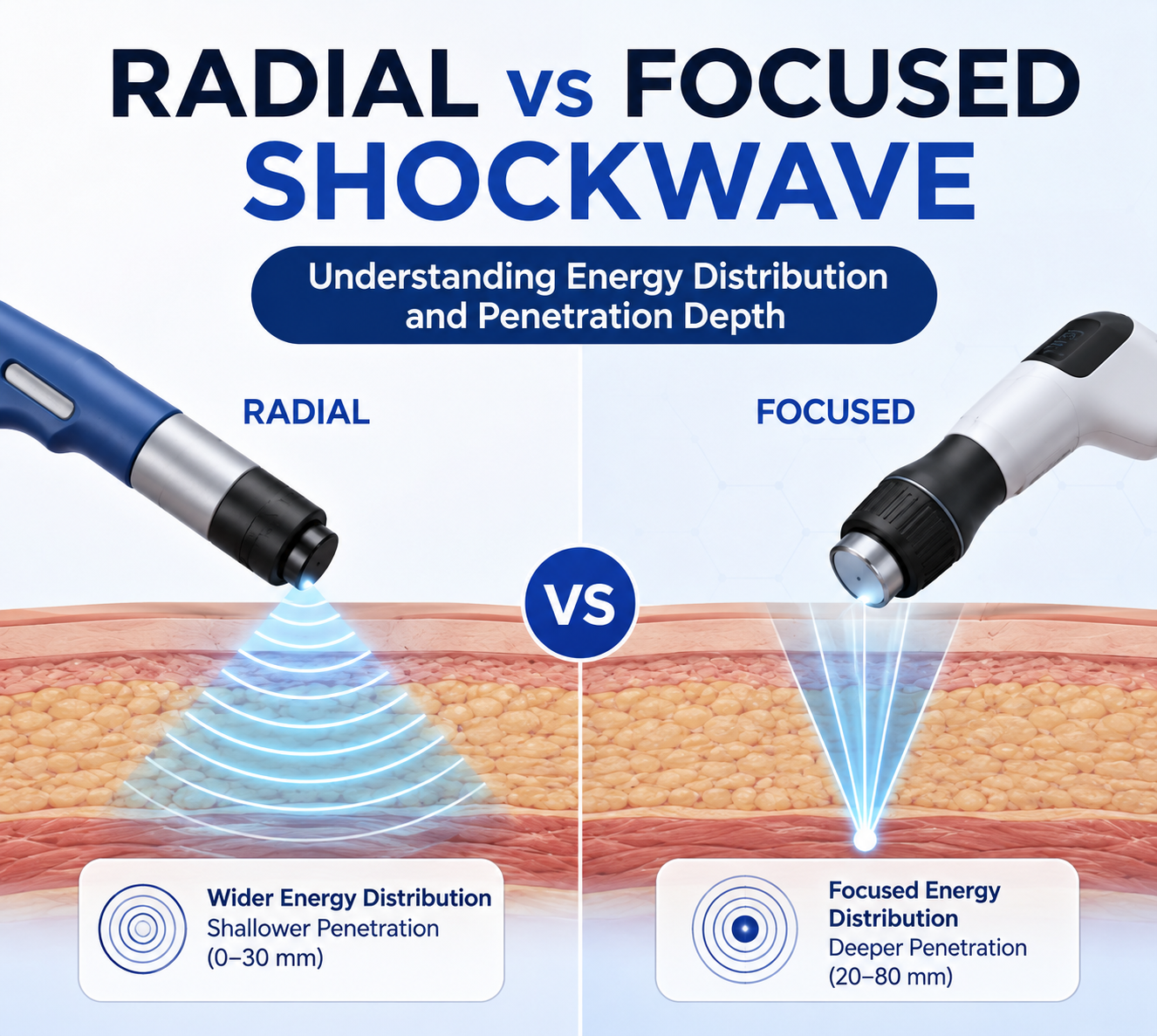
Radial vs Focused Shockwave: Understanding Energy Distribution and Penetration Depth
- 셰프몬
충격파 치료 has become an important non-invasive technology in both physiotherapy and aesthetic medicine. It is widely used for pain relief, cellulite reduction, tissue regeneration, and muscle recovery. However, not all shockwave systems are the same. The two most commonly discussed types are radial shockwave therapy (RSWT) and focused shockwave therapy (FSWT). Although they are often grouped under the same category, they differ significantly in energy delivery, penetration depth, and clinical applications. Understanding these differences is essential for clinics, therapists, and equipment buyers who want to choose the right system for specific treatment goals.

1. Basic Technology Principles
1.1 Radial Shockwave Therapy (RSWT)
Radial shockwave devices generate mechanical pressure waves using a pneumatic ballistic system. Compressed air accelerates a projectile inside the handpiece, which then strikes a transmitter. This impact produces a pressure wave that spreads outward in a radial pattern.
In simple terms, radial shockwaves behave like a surface-expanding force. The energy is highest at the contact point and gradually decreases as it moves deeper into tissue.
Radial systems are commonly used in muscle relaxation, superficial fascia treatment, cellulite reduction, and blood circulation improvement.
1.2 Focused Shockwave Therapy (FSWT)
Focused shockwave devices use electromagnetic, electrohydraulic, or piezoelectric technology to concentrate energy into a specific focal point inside the tissue. Instead of spreading outward, the energy is precisely directed.
This allows FSWT to deliver high-intensity energy at a controlled depth beneath the skin without significantly affecting surrounding tissues.
Focused shockwaves are commonly used for deep tendon injuries, calcified tissue treatment, chronic musculoskeletal pain, and targeted regenerative therapy.
2. Energy Distribution Differences
2.1 Radial Energy Pattern
Radial shockwaves distribute energy in a cone-shaped pattern that expands outward from the applicator tip. The energy density is highest at the surface and decreases with depth.
This makes RSWT more suitable for large treatment areas, superficial tissue layers (0–30 mm), and diffuse conditions such as cellulite or muscle tightness.
However, because energy is not concentrated, it is less effective for deep-seated pathological tissues.
2.2 Focused Energy Pattern
Focused shockwaves converge energy into a specific point below the skin surface. The energy peak occurs at a selected depth, which can often be adjusted depending on the device.
This allows FSWT to target deep tissues (up to 60–80 mm or more depending on device type), precise anatomical structures, and localized injuries such as tendon microtears or calcifications.
Unlike radial systems, focused shockwaves minimize energy loss on the surface and maximize impact at the target depth.
3. Penetration Depth Comparison
3.1 Radial Shockwave Depth Characteristics
Radial shockwaves typically penetrate superficial fascia at 5–15 mm and muscle layers up to around 30–40 mm depending on pressure settings.
However, energy intensity decreases significantly with depth, meaning deeper structures receive weaker stimulation.
This is why radial systems are often described as a surface-to-mid tissue technology.
3.2 Focused Shockwave Depth Characteristics
Focused shockwaves can penetrate approximately 20 mm to 80 mm or more depending on the focal zone design, while maintaining consistent energy intensity at the target point.
This makes FSWT a deep-target precision technology, especially effective for conditions requiring energy delivery inside joints, tendons, or deep muscle layers.

4. Clinical Applications and Treatment Outcomes
4.1 Radial Shockwave Applications
Radial systems are widely used in aesthetic and rehabilitation settings due to their broad coverage and comfortable treatment experience.
Common applications include cellulite reduction and skin texture improvement, muscle relaxation and spasm relief, lymphatic circulation enhancement, and post-exercise recovery in sports therapy.
In aesthetic clinics, radial shockwaves are often combined with RF or cavitation systems as part of body contouring protocols, where surface remodeling and circulation improvement are primary goals.
4.2 Focused Shockwave Applications
Focused shockwaves are more medical-oriented and are typically used in clinical rehabilitation environments.
They are commonly applied in chronic tendinopathies such as Achilles tendonitis, plantar fasciitis, calcific shoulder conditions, and deep musculoskeletal pain syndromes.
FSWT is preferred when precision, depth control, and structural tissue regeneration are required rather than general surface improvement.
5. Safety and Patient Experience
5.1 Radial Shockwave Safety Profile
Radial shockwave therapy is generally considered safe and non-invasive. Because energy is distributed over a larger surface area, the risk of localized tissue overload is relatively low.
Some patients may experience mild redness, temporary soreness, or sensitivity in treated areas, but these effects are typically short-lived.
Overall, RSWT is well tolerated and suitable for wellness, aesthetic, and sports recovery markets.
5.2 Focused Shockwave Safety Profile
Focused shockwave therapy delivers higher energy density at specific depths, so treatment must be carefully controlled.
Patients may feel a sharper and more localized discomfort during treatment, and some post-treatment tenderness can occur in targeted tissues.
Proper parameter selection and operator training are essential to ensure safety and avoid overstimulation of deep structures.
6. Parameter and Performance Comparison
Radial systems are typically measured in pressure units such as bar, with common working ranges from low to high intensity depending on the device design. Energy delivery is indirect and influenced by air pressure and projectile impact force.
Focused systems, by contrast, are measured in energy flux density (mJ/mm²), allowing more precise control over delivered energy at specific depths.
Both systems operate within similar frequency ranges, often between 1–20 Hz, but their clinical impact differs due to how energy is distributed.
Radial systems prioritize coverage and surface stimulation, while focused systems prioritize depth accuracy and targeted therapeutic intensity.
결론
Radial and focused shockwave therapies serve different clinical purposes despite sharing the same physical principle. Radial systems are ideal for superficial and broad-area treatments in aesthetic and wellness applications, while focused systems provide precise, deep-tissue energy delivery for medical rehabilitation and chronic conditions. Choosing between them depends on whether the treatment goal is surface remodeling or targeted structural repair.