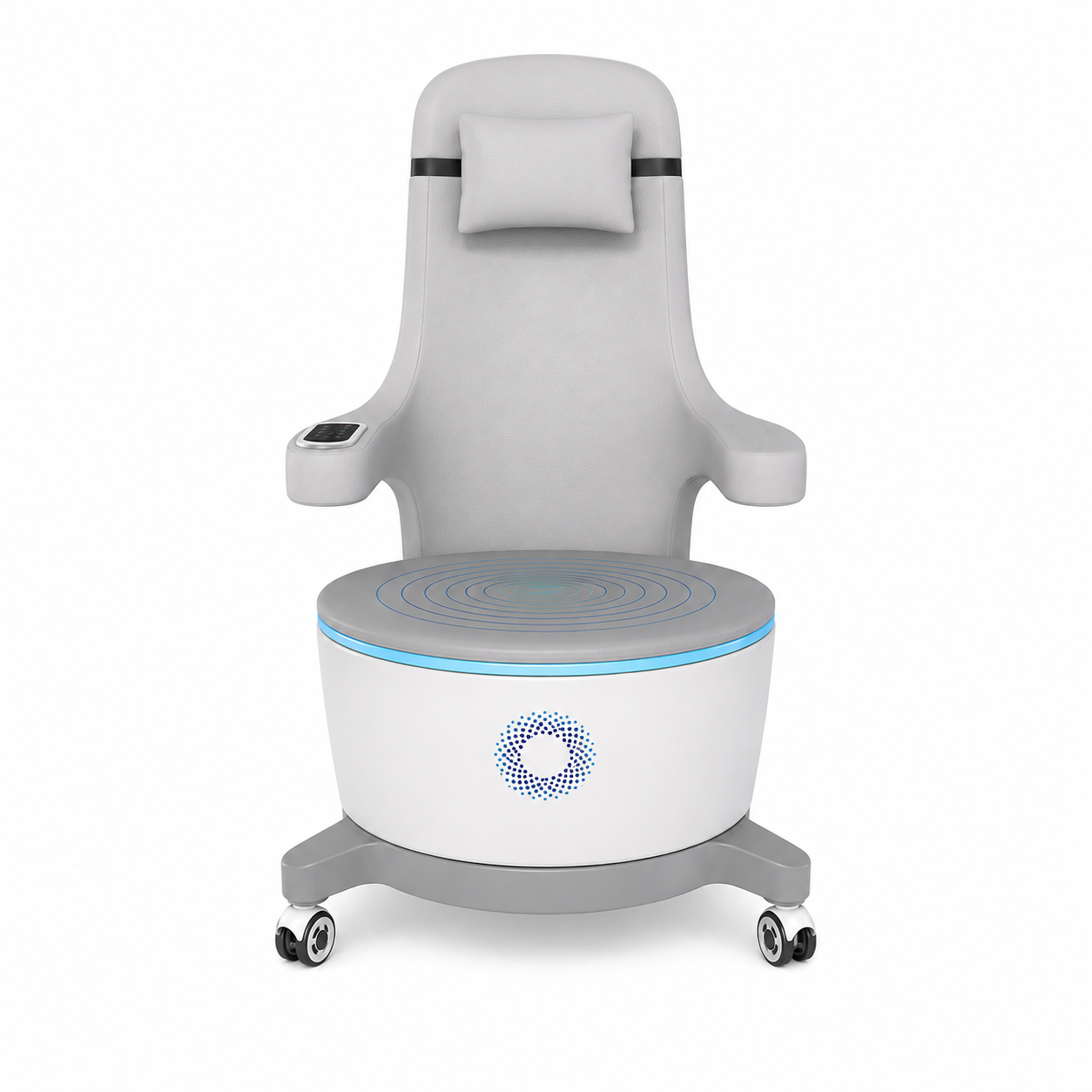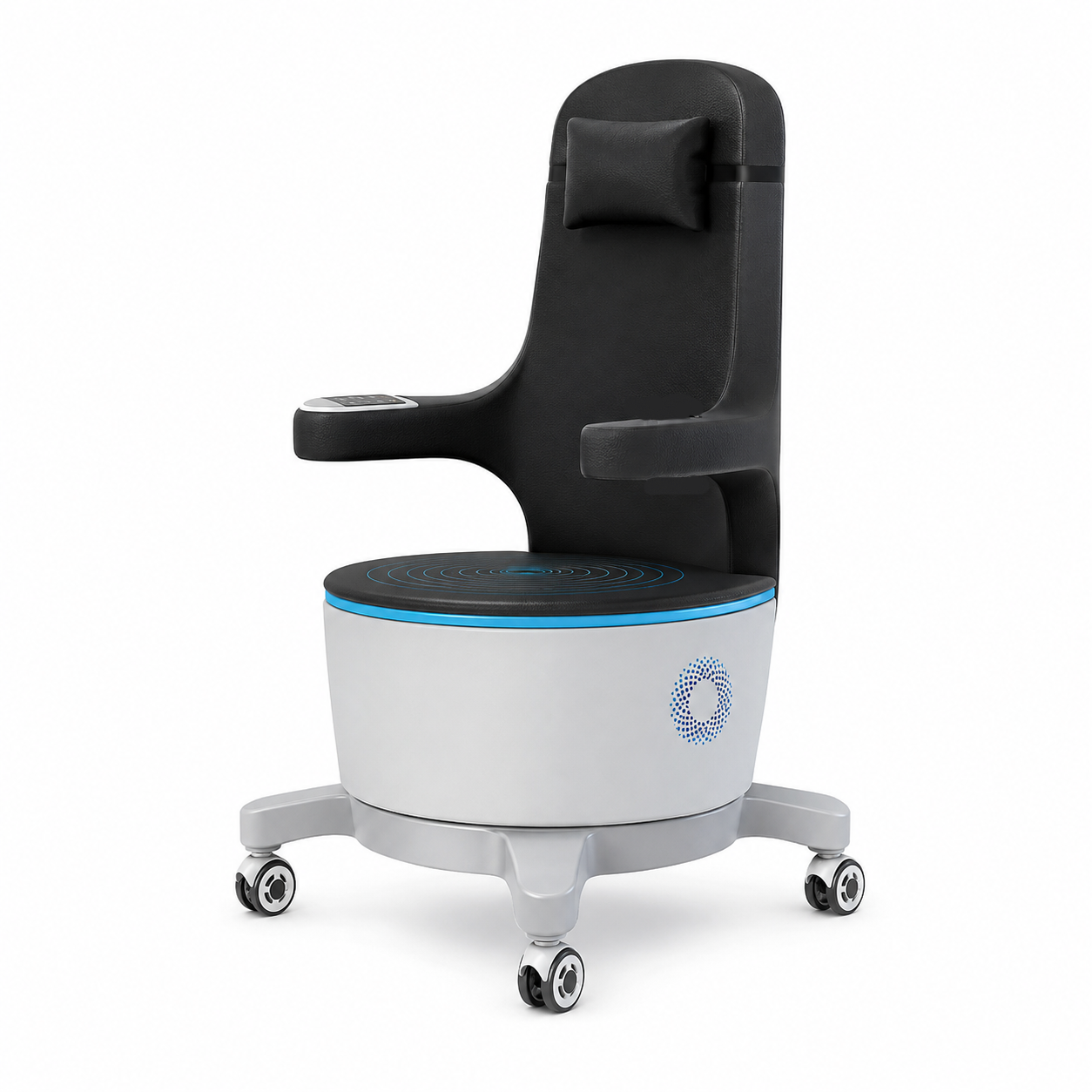










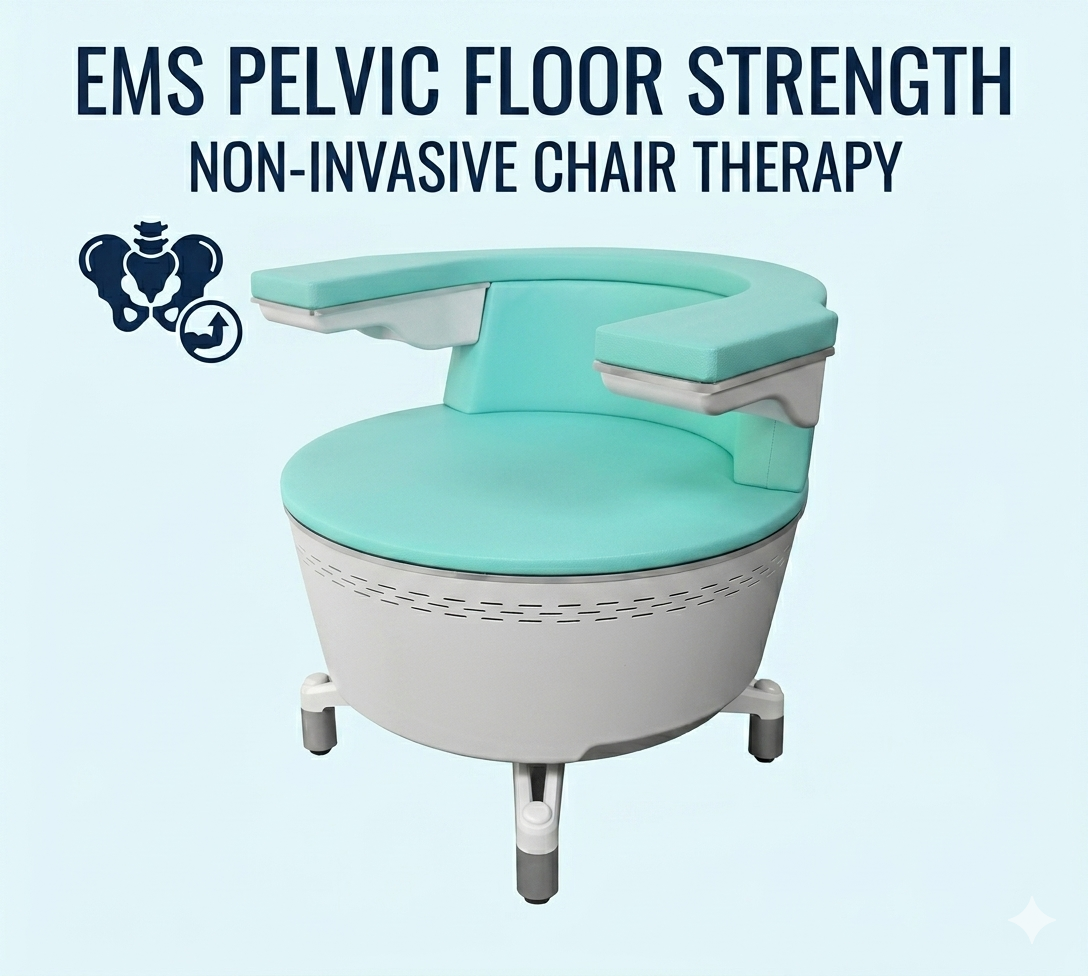
Die Gesundheit des Beckenbodens spielt eine entscheidende Rolle für die Harnkontrolle, die Rumpfstabilität und die allgemeine Lebensqualität, insbesondere nach der Geburt oder im Alter. In den letzten Jahren haben sich nicht-invasive elektromagnetische Stimulationssysteme als Alternative zu traditionellen Beckenbodentrainingsmethoden etabliert. E0435 EMS-Stuhl Beckenbodenmuskelstimulator ist darauf ausgelegt, die Muskelstärkung und die funktionelle Erholung durch gezielte elektromagnetische Energie zu unterstützen und bietet einen strukturierten Ansatz sowohl für die Rehabilitation von Frauen nach der Geburt als auch für die allgemeine Verbesserung der Beckengesundheit.
1. Wie die EMS-Stuhltechnologie funktioniert
Pulsierende elektromagnetische Feldtherapie Die in EMS-Stühlen verwendeten Geräte setzen fokussierte elektromagnetische Impulse ein, um tiefe Muskelkontraktionen ohne körperliche Anstrengung des Benutzers zu stimulieren.
1.1 Supramaximale Muskelkontraktionen
Das System erzeugt hochintensive Impulse, die unwillkürliche Muskelkontraktionen im Beckenboden auslösen. Jede Sitzung kann in kurzer Zeit Tausende von Kontraktionen simulieren und übertrifft damit das, was üblicherweise durch willkürliches Training erreicht wird.
1.2 Tiefenmuskelaktivierung ohne Invasivität
Im Gegensatz zu herkömmlichen Trainingsmethoden dringt elektromagnetische Energie tief in die Muskelschichten ein und aktiviert Bereiche, die durch willkürliche Bewegungen allein schwer zu erreichen sind.
1.3 Freihändiges Behandlungsverfahren
Der Benutzer bleibt während der Stimulation durch das Gerät vollständig bekleidet und sitzt, was es zu einer bequemen und komfortablen Therapieoption macht.
2. Kernvorteile für die Beckenbodengesundheit
2.1 Stärkung der Beckenbodenmuskulatur
Das Hauptziel des Systems ist die Stärkung der Pubococcygeus-Muskulatur (PC-Muskulatur), die die Blasenkontrolle und die Rumpfstabilität unterstützt.
2.2 Unterstützung bei Harninkontinenz
Regelmäßige Sitzungen können dazu beitragen, Symptome der Belastungsinkontinenz, wie z. B. unwillkürlichen Harnverlust beim Husten, Niesen oder bei körperlicher Anstrengung, zu reduzieren.
2.3 Verbesserter Muskeltonus und verbesserte Muskelkontrolle
Eine stärkere Beckenbodenmuskulatur trägt zu einer besseren Kontrolle über die Blasen- und Darmfunktion bei und unterstützt so das tägliche Wohlbefinden und das Selbstvertrauen.
2.4 Verbesserte Durchblutung und Nervenaktivierung
Elektromagnetische Stimulation kann die lokale Durchblutung und die Nervenreaktion im Beckenbereich verbessern und so die Gewebefunktion unterstützen.
3. Anwendungen zur Erholung nach der Geburt
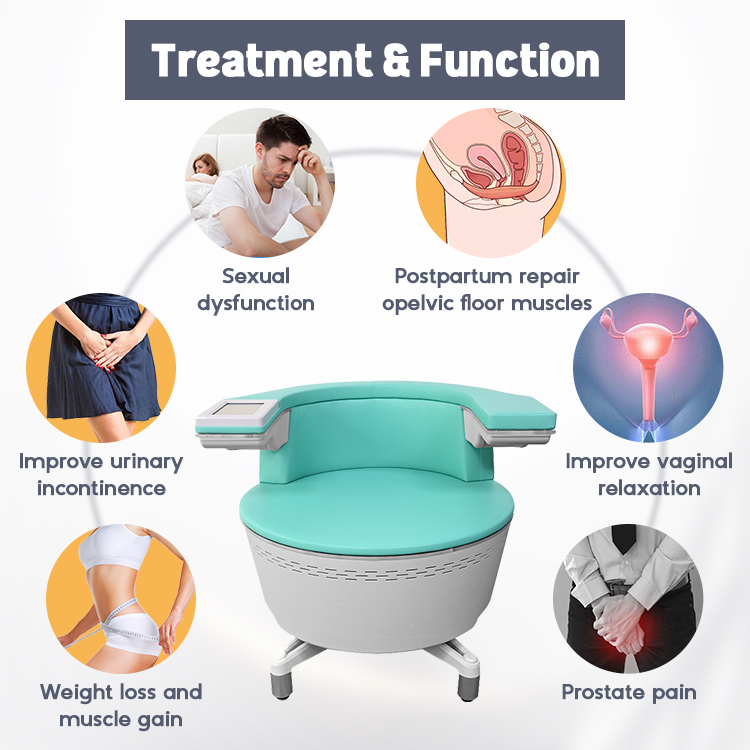
Nach der Geburt leiden viele Frauen unter einer Schwächung der Beckenbodenmuskulatur. Das EMS-Stuhlsystem wurde entwickelt, um diese Erholungsphase zu unterstützen.
3.1 Wiederherstellung der Muskelkraft nach der Entbindung
Die Behandlung hilft, Muskeln zu reaktivieren und zu stärken, die während der Schwangerschaft und Geburt möglicherweise gedehnt oder geschwächt wurden.
3.2 Unterstützung des vaginalen Muskeltonus
Eine verbesserte Muskelaktivierung kann mit der Zeit dazu beitragen, die Festigkeit und Elastizität im Beckenbereich wiederherzustellen.
3.3 Reduzierung von Beschwerden nach der Geburt
Durch die Stärkung innerer Stützstrukturen kann das System dazu beitragen, Beschwerden im Zusammenhang mit einer Schwäche des Beckenbodens zu reduzieren.
4. Vorteile für Männer und Frauen
4.1 Anwendungen mit Fokus auf Frauen
Für Frauen wird das System üblicherweise verwendet, um:
- Verbesserung der Blasenkontrolle
- Unterstützung der postpartalen Erholung
- Verbesserung des Beckenbodenmuskeltonus
- Reduzieren Sie den Flüssigkeitsverlust bei körperlicher Aktivität
- Verbesserung der sexuellen Funktion und Sensibilität
4.2 Anwendungen mit Fokus auf Männer
Für Männer kann die Stärkung des Beckenbodens folgende Vorteile bieten:
- Verbesserte Blasenkontrolle
- Unterstützung der Harnfunktion im Alter
- Verbesserte Beckenstabilität
- Bessere Aktivierung der Rumpfmuskulatur
5. Wie eine Behandlungssitzung abläuft
5.1 Hochintensive Muskelaktivierung
Bei jeder Sitzung werden elektromagnetische Impulse abgegeben, die je nach Behandlungsparametern etwa 12.000 Muskelkontraktionen simulieren.
5.2 Bequeme Sitzposition
Die Behandlung erfolgt im Sitzen, ohne dass der Anwender körperliche Anstrengung aufbringen muss.
5.3 Allmählicher Fortschritt über mehrere Sitzungen
Die Ergebnisse sind in der Regel kumulativ, wobei die Verbesserungen im Laufe einer Reihe von Behandlungen deutlicher sichtbar werden.

6. Wesentliche Vorteile gegenüber traditionellen Übungen
6.1 Über Kegelübungen hinaus
Während Kegel-Übungen auf willkürlicher Kontraktion beruhen, aktiviert die EMS-Stuhltechnologie tiefer liegende Muskelgruppen gleichmäßiger und intensiver.
6.2 Zeiteffizienz
Mit einer einzigen Trainingseinheit lässt sich erreichen, wofür man mit manuellen Übungsprogrammen deutlich mehr Zeit bräuchte.
6.3 Gleichmäßige Muskelaktivierung
Das System gewährleistet eine gleichmäßige Stimulation des gesamten Beckenbodenbereichs und reduziert so Inkonsistenzen im Muskeltraining.
7. Physiologische Wirkungen der EMS-Stimulation
7.1 Aktivierung der Muskelfasern
Die elektromagnetischen Impulse stimulieren sowohl schnelle als auch langsame Muskelfasern und verbessern so die allgemeine Kraft und Ausdauer.
7.2 Geweberegeneration
Wiederholte Stimulation hilft, die Muskelreaktion und Koordination im Beckenbereich neu zu trainieren.
7.3 Kreislaufunterstützung
Eine verbesserte Durchblutung kann zu einer besseren Sauerstoff- und Nährstoffversorgung des Muskelgewebes beitragen.
8. Wer kann von der EMS-Stuhltherapie profitieren?
Dieses System wird üblicherweise verwendet von:
- Frauen nach der Geburt
- Personen, die unter leichter Harninkontinenz leiden
- Menschen, die eine Stärkung des Beckenbodens anstreben
- Patienten in Rehabilitationsprogrammen
- Ältere Bevölkerungsgruppen, die ihre Muskelfunktion erhalten möchten
Durch seine nicht-invasive Natur eignet es sich für eine breite Zielgruppe.
Abschluss
Der E0435 EMS-Stuhl Beckenboden Muskelstimulator Die EMS-Stuhltherapie stellt einen modernen, nicht-invasiven Ansatz für die Beckenbodengesundheit und die Rehabilitation der Beckenbodenmuskulatur dar. Durch die gezielte Anwendung elektromagnetischer Energie zur Auslösung tiefer Muskelkontraktionen bietet sie eine effiziente Methode zur Stärkung des Beckenbodens, zur Unterstützung der Rückbildung nach der Geburt und zur Verbesserung der Blasenkontrolle. Im Vergleich zu herkömmlichen Trainingsmethoden ist die EMS-Stuhltherapie eine intensivere und zeitsparendere Lösung und somit eine praktische Option für klinische und private Wellness-Anwendungen.
Häufig gestellte Fragen
Ist die EMS-Stuhltherapie schmerzhaft?
Nein, es ist im Allgemeinen nicht-invasiv und angenehm.
Wie viele Sitzungen sind erforderlich?
Die Ergebnisse variieren, aber in der Regel werden mehrere Sitzungen empfohlen.
Kann es bei Harninkontinenz helfen?
Ja, es wird häufig zur Unterstützung bei leichter Belastungsinkontinenz eingesetzt.
Ist es nur für Frauen?
Nein, es kann auch Männern mit Beckenbodenschwäche oder Harnwegsproblemen helfen.
Müssen die Patienten während der Behandlung Sport treiben?
Nein, das Gerät funktioniert automatisch ohne körperliche Anstrengung.