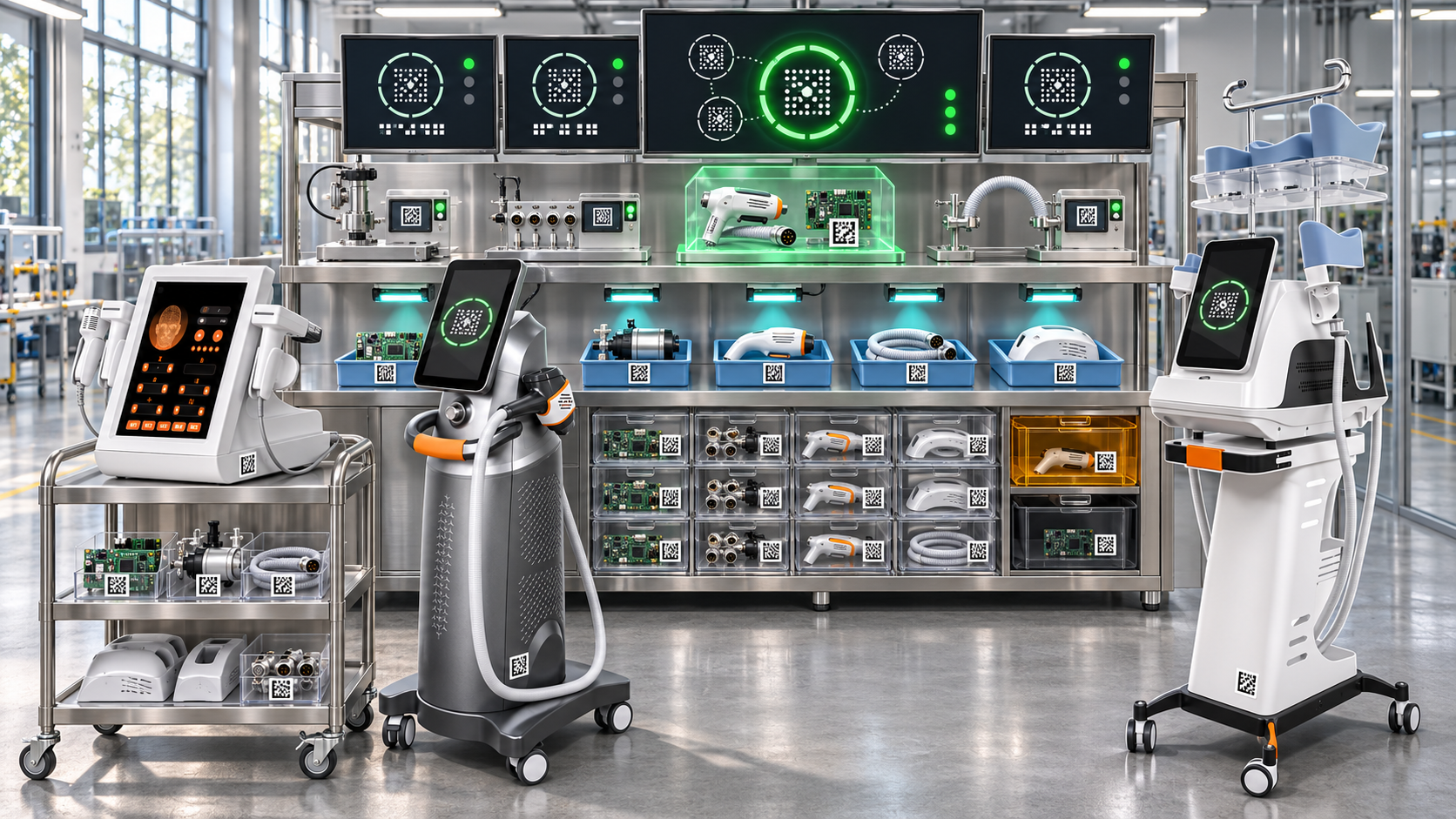
A serial number identifies a beauty device, but identification alone is not traceability. When a finished unit fails a cooling test, develops an intermittent connector fault, or receives the wrong software package, the factory needs to answer more difficult questions: Which components were installed? Which supplier lots were used? Who assembled and tested the unit? Which equipment and methods produced the results? Was the device reworked? Which other units share the same exposure? Where were they shipped?
Product traceability creates these connections. It links the finished-device serial number to controlled product configuration, component and lot identities, assembly events, software versions, test records, deviations, release status, packaging, orders, and later service changes. The purpose is not to collect the largest possible database. It is to preserve enough reliable genealogy to reconstruct what happened and define an affected population when a real decision is required.
This guide explains how beauty device factories can design that traceability chain across facial systems, diode lasers, multi-handle body devices, and other professional equipment. It focuses on record relationships, identity rules, transaction controls, exception handling, and practical retrieval rather than treating a barcode label or ERP screen as proof that traceability works.
Zusammenfassung
A useful beauty device product-traceability system should:
- Start with decision needs. Define which failure investigations, supplier issues, configuration checks, containment actions, service questions, and market obligations the records must support.
- Give each finished unit a stable serial identity. The identifier should remain unique and unchanged through production, shipment, transfer, repair, and upgrade.
- Separate identity levels. Product family, model, configuration, unit serial, assembly, component serial, component lot, consumable lot, software build, test record, and order number answer different questions.
- Build an as-built genealogy. Do not assume the engineering BOM proves what was actually installed in one unit.
- Link every test to the tested configuration. Record the unit, software, handles, method, equipment, limits, result, time, operator, deviation, and disposition.
- Preserve change events. Rework, component replacement, software updates, retesting, deviation approval, and release should add history rather than overwrite the original state.
- Use risk-based traceability depth. Track critical or variable components at the serial or lot level; do not serialize every washer without a decision need.
- Connect forward and backward queries. The factory should move from one unit to its materials and tests, and from one suspect lot, component, or software build to every affected unit.
- Extend the chain through packaging and delivery. Carton, order, shipment, customer, site, and service records should reference the factory serial without replacing it.
- Prove retrieval through drills. A traceability system is effective only when trained teams can produce a complete, accurate affected-unit list within a defined decision window.
The best traceability architecture is not the one with the most fields. It is the one that preserves trustworthy relationships at every point where identity, configuration, evidence, or product state can change.
1. What Product Traceability Means for Beauty Devices
Product traceability is the ability to reconstruct the history, application, configuration, and movement of a defined product or component through linked records.
For a finished beauty device, this can mean tracing:
- backward to supplier, material, and component lots;
- inward to installed subassemblies, handles, and accessories;
- through assembly, software loading, calibration, inspection, and testing;
- across nonconformity, rework, and release decisions;
- forward to packaging, order, shipment, distributor, or customer records; and
- over time through service, replacement, upgrade, transfer, and retirement events.
Traceability does not guarantee product quality. It makes product history visible so quality, engineering, production, service, and commercial teams can make bounded decisions.
2. Distinguish Identification, Traceability, and Configuration Control
| Discipline | Hauptfrage | Example output |
|---|---|---|
| Identification | What item is this? | model, part number, serial number, lot number or barcode |
| Rückverfolgbarkeit | What happened to this item, what is it connected to, and where did it go? | genealogy, event history, test links and shipment relationship |
| Konfigurationssteuerung | Which approved combination of hardware, software, documents and options is authorized? | released baseline, revision and applicability rules |
| Inspection/test control | Does the item meet defined criteria? | result, measurement, pass/fail and disposition |
| Asset management | Where is the delivered unit and who is responsible for it? | customer, site, status and service ownership |
A serial label provides identification. It becomes useful traceability only when other records consistently reference that identity.
3. Define the Questions the System Must Answer
Start with real decisions rather than software features. The system may need to answer:
- Which units contain a component from supplier lot X?
- Which tests were performed on serial number Y, using which method and equipment?
- Which units received software build Z?
- Was a failed unit reworked, and what was replaced?
- Did the retest cover every function affected by the change?
- Which finished units share a pump, power module, board, optical module, motor, or handle lot?
- Which units were built before and after a process change?
- Which orders received an affected configuration?
- Has a component moved between devices during repair?
- Which units remain unlocated or have incomplete genealogy?
These questions define the identity, event, and relationship fields worth controlling.
4. Build a Hierarchy of Traceable Objects
| Object level | Example identity | Warum es wichtig ist |
|---|---|---|
| Product family | hydro facial, diode laser or body platform family | groups related architectures without implying identical configuration |
| Model/configuration | approved saleable hardware, software, handle and regional package | defines what the unit is supposed to be |
| Finished unit | permanent device serial number | anchors unit-level genealogy and history |
| Durable child component | serialized handpiece, laser module, power module or controller | supports installation, replacement and movement history |
| Lot-controlled component | pump, tube, connector, board, motor, seal or cable lot | supports supplier-lot containment |
| Verbrauchbare Beziehung | approved tip, cartridge, filter or needle family/lot | supports compatibility and lot-specific investigation where required |
| Software/configuration | firmware, application, parameters, language and calibration package | proves the digital state applied to the unit |
| Process/test event | assembly, inspection, test, rework or release record | connects evidence to the product state at a point in time |
| Commercial/logistics record | order, carton, shipment and delivery identity | connects factory genealogy to the outside world |
Do not use one field called “serial” for all these identities. Name the object type and issuing source.
5. Design a Stable Finished-Unit Serial Number
A finished-unit serial should be:
- unique across the intended product population;
- permanent for the life of the physical unit;
- readable by people and systems;
- available early enough to collect production records;
- resistant to duplicate creation;
- connected to the product model without relying on guesswork;
- controlled when labels are damaged or reprinted; and
- retained when the device changes owner, location, software, handle set, or service status.
Avoid encoding too much changeable information into the serial. Dates, factories, models, or markets embedded in the number can become misleading after transfers or product changes. Store descriptive attributes as controlled fields rather than forcing every fact into the identifier.
6. Control Serial Issuance and Label Application
The issuance process should prevent:
- manual creation outside the authorized sequence;
- duplicate numbers;
- skipped numbers without reason;
- one serial applied to two physical units;
- multiple competing serial labels on one unit;
- a carton label printed before the correct unit is assigned;
- label reprints without audit history; and
- use of a finished serial on a prototype or scrap unit without controlled status.
Record serial creation, reservation, assignment, label printing, verification, cancellation, reprint, and final status as separate events where practical.
7. Decide Which Components Need Serial- or Lot-Level Traceability
Use a risk-based decision considering:
- effect on function, output, cooling, movement, electrical behavior, or protective controls;
- supplier and process variability;
- likelihood of lot-specific defects;
- replacement frequency;
- repair and warranty value;
- independent software, calibration, or life counter;
- compatibility with different models or revisions;
- applicable market or quality requirements; and
- ability to identify the part after assembly.
Serial-level candidates
These may include high-value, individually calibrated, repairable, life-limited, or independently replaceable assemblies such as selected handpieces, optical or energy modules, controllers, or power assemblies.
Lot-level candidates
These may include pumps, tubing, valves, connectors, cables, boards, motors, seals, sensors, fasteners, adhesives, or materials where a supplier batch can define common exposure.
BOM-only candidates
Low-risk standard parts may be controlled through the approved BOM and production period without individual capture when that level supports the required decisions.
8. Create the As-Built Genealogy
The engineering BOM states what should be installed. The as-built genealogy states what was installed in a particular unit.
The record can connect the finished serial to:
- model and configuration revision;
- main chassis or subassembly identity;
- critical component part, revision, supplier, and serial or lot;
- installed handles and modules;
- fluid, vacuum, cooling, optical, electrical, motion, or energy-delivery assemblies as relevant;
- software and parameter package;
- calibration relationship;
- regional cord, plug, language, and label version;
- packaging and included accessory profile; and
- build and release dates.
Capture the relationship when installation occurs or while it remains verifiable. Reconstructing genealogy later from material consumption totals is weaker and may be impossible after lot mixing.
9. Use Parent–Child Installation Events
A durable component relationship should include:
- parent finished-unit serial;
- child component identity;
- part and revision;
- installation time and station;
- installer or automated source;
- reason for installation;
- status before and after the event;
- removal time and reason when applicable;
- replacement component identity; and
- verification or test following the change.
This event model preserves movement. Editing the current component field from A to B without retaining the removal event destroys the unit’s history and the component’s history.
10. Link Supplier Lots to Factory Receiving Records
For lot-controlled parts, connect:
- supplier name and manufacturing site where relevant;
- supplier part number and revision;
- factory part number and revision;
- supplier lot or serial;
- factory receipt lot;
- purchase order and receipt date;
- quantity received, accepted, rejected, or quarantined;
- incoming inspection or supplier-release result;
- approved deviation or substitution;
- storage and issue status; and
- production units that consumed the material.
Relabeling a supplier lot with a factory lot is acceptable only when the relationship remains intact.
11. Preserve Lot Identity through Storage and Kitting
Traceability can break between incoming inspection and assembly. Control:
- bin and container identity;
- lot segregation and permitted mixing;
- partial-container movement;
- repacking and relabeling;
- line-side replenishment;
- returned material;
- work-in-process kits;
- expired or obsolete material;
- substitutions; and
- reconciliation of issued, used, scrapped, and returned quantities.
If two lots are mixed in one bin and unit-level consumption is not captured, the affected population may expand to every unit built during the uncertain period.
12. Connect Assembly Events to the Unit Serial
Useful assembly-event data can include:
- workstation and operation;
- start and completion time;
- operator or automated equipment;
- work-instruction revision;
- tool, fixture, or program identity where relevant;
- measured value or confirmation;
- material or subassembly identity;
- exception, pause, or rework reference;
- completion status; and
- next authorized step.
Do not collect operator scans merely to assign blame. The purpose is to reconstruct the controlled process, identify training or instruction gaps, and narrow the scope of a process problem.
13. Link Software, Parameters, Language, and Calibration
The unit record should identify the digital configuration actually loaded, not only the latest approved version.
Schiene:
- firmware and application build;
- checksum or package identity where used;
- parameter and limit set;
- language and unit profile;
- model and hardware compatibility;
- enabled handles, modes, and options;
- calibration file or coefficients;
- loading station, tool, time, and operator;
- loading result and verification;
- approved deviation; and
- update, rollback, or service change.
If a software update occurs after final testing, determine which tests remain valid and which must be repeated.
14. Make Every Test Record Configuration-Specific
| Test field | Why it is needed |
|---|---|
| Unit serial | identifies the physical device evaluated |
| Configuration state | shows hardware, software, handles and parameters at the time of test |
| Test method/revision | identifies how the result was produced |
| Equipment/fixture | supports calibration, maintenance and fixture-impact review |
| Operator/system | identifies the source and authorization of the result |
| Time and sequence | places the test before or after rework, updates and other events |
| Conditions and inputs | provides context for voltage, load, environment, fluid, handle or setup |
| Raw result | preserves measurements, logs, images or observations rather than only a status |
| Acceptance limit | shows the decision rule applied at that time |
| Result/disposition | records pass, fail, hold, deviation, retest or rejection |
A test database that stores only serial number and PASS cannot explain whether the right configuration was tested under the right conditions.
15. Keep Test Attempts and Retests Visible
When a unit fails:
- retain the original result;
- create a nonconformity or investigation link;
- record containment and product status;
- identify any diagnosis, adjustment, repair, replacement, or software change;
- define the retest scope and rationale;
- retain every retest result; and
- record the authorized final disposition.
Overwriting a failure with a later pass makes the unit look clean but removes the evidence needed to detect recurring weaknesses.
16. Connect Measurement and Test Equipment History
When a test instrument or fixture is later found out of calibration, the factory needs to identify results potentially affected during the relevant period.
Link test records to:
- Geräte- oder Anlagenidentität;
- calibration or verification status;
- software/program revision;
- maintenance and repair history;
- operating range and setup;
- reference standard where applicable;
- last known acceptable check; and
- units tested within the affected window.
This relationship supports impact assessment without automatically rejecting every unit ever tested on that equipment.
17. Trace Nonconformity, Rework, and Deviation Decisions
The product timeline should show:
- detected condition;
- unit and component scope;
- detection station and time;
- product status and physical location;
- containment action;
- investigation and cause status;
- rework or repair instruction and revision;
- removed and installed components;
- software or parameter changes;
- inspection and retest evidence;
- deviation or concession authority; and
- final release or rejection decision.
A deviation should not change the approved product baseline invisibly. It should remain attached to the affected unit or lot.
18. Separate Planned Configuration from Actual Product State
Maintain at least three views:
- Approved baseline: what the model or configuration is authorized to contain.
- As-built state: what was installed and tested at production release.
- Current state: what is installed after upgrades, repairs, replacements, or service updates.
Comparing these views reveals unauthorized substitutions, incomplete updates, and compatibility questions. Never overwrite the as-built state merely to make it match the current state.
19. Connect Packaging, Cartons, and Shipment Records
Finished-product traceability should extend through:
- final unit serial;
- package configuration and revision;
- carton or crate identity;
- multi-carton parent–child relationship;
- included serialized handles or modules;
- accessory and document profile;
- pack-out verification;
- order and line item;
- shipment and carrier record;
- distributor or customer destination; and
- delivery discrepancy or damage case.
The carton serial should be verified against the physical unit during packing. A preprinted or reused carton label can create a false forward-trace record.
20. Extend Factory Traceability into the Installed Base
After delivery, downstream systems may add:
- Kunde und Standort;
- asset registration;
- installation and acceptance date;
- warranty entitlement;
- training relationship;
- operating location transfers;
- service events;
- replacement components;
- software updates;
- upgrades; and
- retirement or disposal status.
The factory serial should remain the stable bridge. Customer asset IDs, distributor labels, and local QR codes can coexist, but their relationship to the original serial must be controlled.
21. Support Backward and Forward Trace Queries
| Query direction | Starting point | Erwartete Ausgabe |
|---|---|---|
| Unit backward trace | finished serial | as-built components, lots, software, assembly, tests, rework and release |
| Component forward trace | supplier lot or component serial | every unit, WIP item, spare, scrap item and inventory location using it |
| Software forward trace | build or parameter package | every unit loaded, updated, shipped or awaiting correction |
| Test-equipment impact | equipment/fixture and time window | all product results potentially affected |
| Process impact | station, instruction, operator authorization or date range | candidate units requiring review |
| Shipment forward trace | unit or carton serial | order, shipment, destination, delivery and installed-base relationship |
| Service backward trace | field unit serial | factory baseline, tests, components and prior changes |
Both directions should be tested. A system that can display one unit’s history may still be unable to find all units sharing a suspect lot.
22. Define Affected Populations Carefully
When a problem is found, begin with the narrowest evidence-based population and expand when records are uncertain.
Potential boundaries include:
- supplier lot or serial range;
- factory receipt lot;
- production date or shift;
- model and hardware revision;
- software build;
- workstation, tool, fixture, or test-equipment window;
- rework instruction;
- packaging revision;
- order, distributor, region, or shipment; and
- service replacement campaign.
Document inclusion and exclusion logic. Do not exclude a unit merely because it has not yet reported the same symptom.
23. Use Statuses That Prevent Uncontrolled Movement
Useful unit and component statuses may include:
- created or reserved;
- in production;
- awaiting test;
- passed but not released;
- failed;
- on hold or quarantined;
- under investigation;
- rework authorized;
- retest required;
- released;
- packed;
- shipped;
- installed;
- suspended; and
- scrapped or retired.
Status changes should require defined authority and evidence. A released status must not be inferred simply because a shipping label exists.
24. Prevent Common Data-Capture Errors
Controls can include:
- barcode or data-matrix scanning rather than unrestricted typing;
- duplicate and format validation;
- part-to-model compatibility rules;
- lot status and expiry checks;
- sequence enforcement;
- mandatory test-result fields;
- automated software and equipment identity capture;
- parent–child relationship confirmation;
- reason codes for removal, replacement, skip, reprint, and override;
- second-person or automated verification for critical manual entries; and
- reconciliation between physical inventory and electronic genealogy.
Scanning improves speed but not truth when the wrong label is attached to the item. Physical identity controls remain necessary.
25. Handle Missing, Damaged, or Incorrect Identities
When a serial or lot label is unreadable, duplicated, mismatched, or missing:
- stop the affected product from moving forward;
- preserve the physical and electronic evidence;
- determine whether identity can be reconstructed from controlled sources;
- assess connected units and materials;
- authorize relabeling or record correction through a controlled process;
- retain the old and new identity relationship; and
- investigate why the control failed.
Never assign a convenient new serial merely to make the system accept the unit.
26. Protect Traceability Data Integrity
The system should control:
- user roles and authorization;
- creation, edit, approval, and deletion rights;
- timestamp and source;
- append-only or auditable event history;
- reason for correction;
- electronic signatures where used;
- interfaces between ERP, MES, test, warehouse, CRM, and service systems;
- failed data transfers and reconciliation;
- Datensicherung und Wiederherstellung;
- retention and archival;
- privacy and customer-data boundaries; and
- access for suppliers, distributors, and service partners.
Traceability records lose value when administrators can silently rewrite history.
27. Choose Retention Based on Product and Decision Needs
Retention rules should consider:
- expected product and service life;
- warranty and support period;
- replacement-part availability;
- market and quality requirements identified by qualified reviewers;
- investigation and trend needs;
- software and configuration history;
- supplier and purchase records;
- installed-base obligations; and
- secure archive readability over time.
Do not retain personal or commercially sensitive data without a defined purpose and access rule. Product genealogy and customer identity can be linked through controlled references rather than copied into every system.
28. Apply Traceability to Different Beauty Device Architectures
Public SHEFMON product pages demonstrate why traceability depth should follow the device architecture. These examples illustrate record relationships only; they do not claim access to confidential SHEFMON serial schemes, component genealogy, test results, factory systems, or installed-base data.
A0648: multi-function facial and fluid-path system
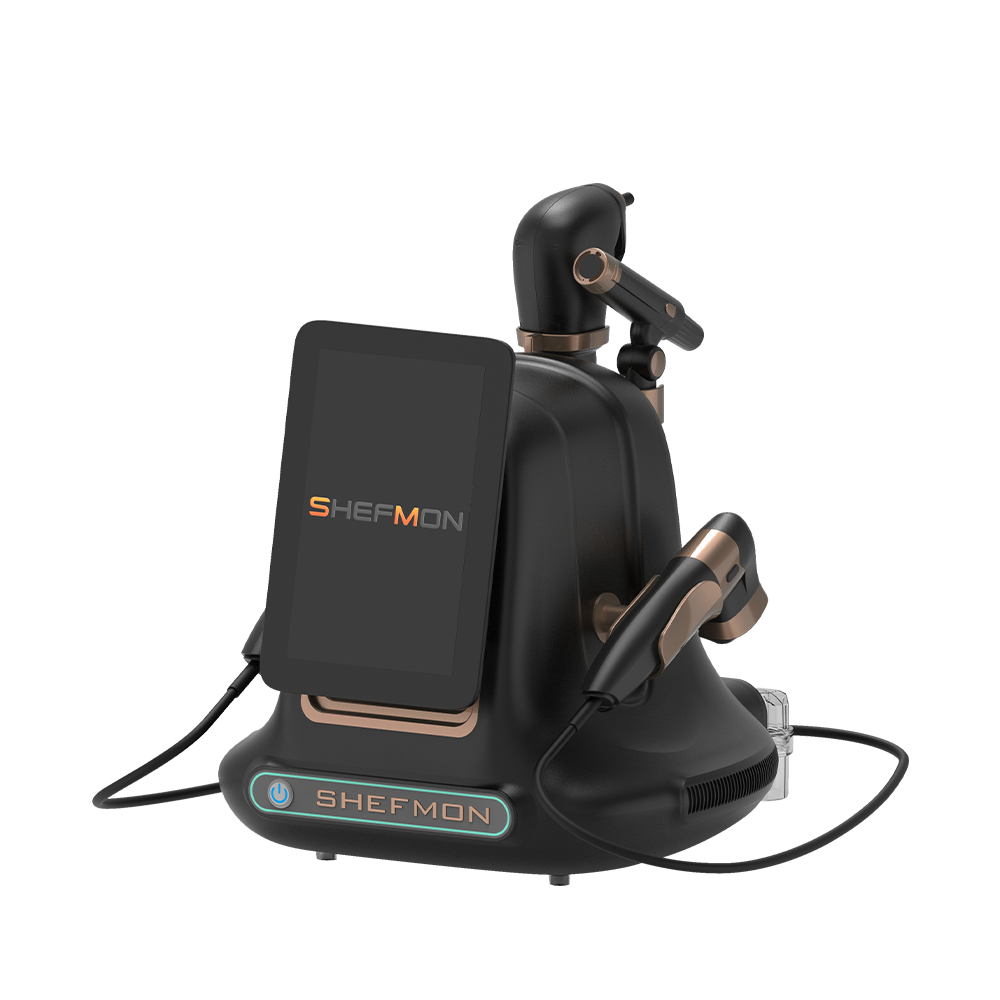
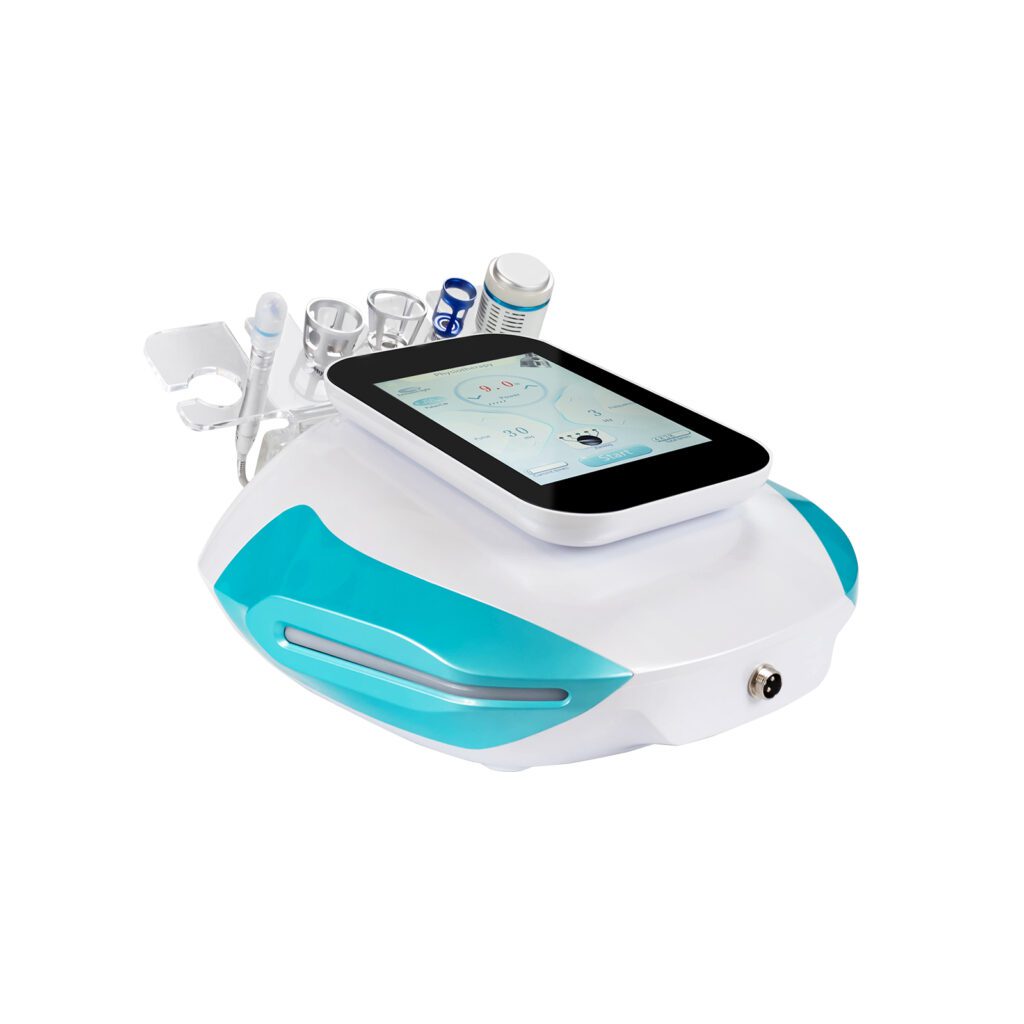
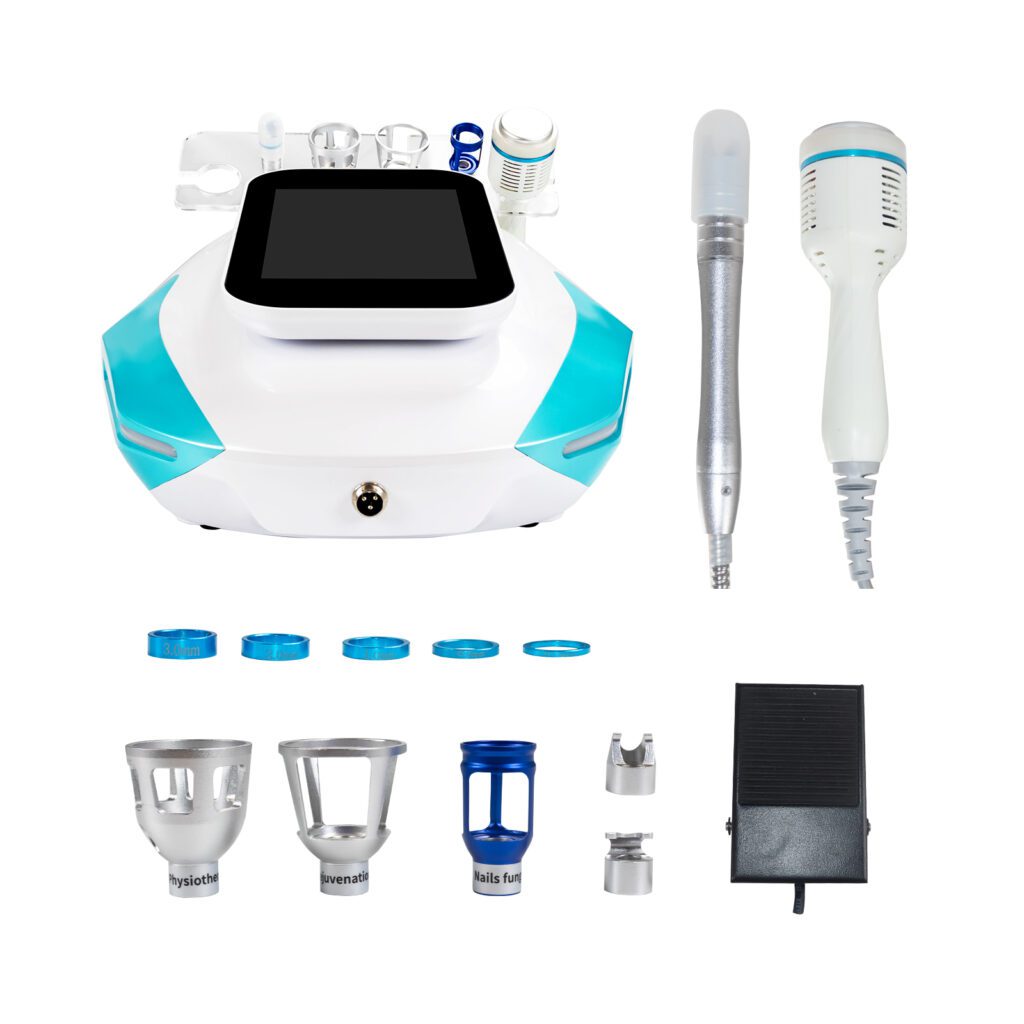
The public SHEFMON A0648 Hydro-Mikrodermabrasionssystem is presented as a vertical 9-in-1 system with vacuum and cleansing, exfoliation, extraction, and hydration positioning. Traceability can connect the console serial to pump or vacuum-related component lots, tubing and bottle configuration, included handles and tips, software profile, leak and functional tests, cleaning preparation, packaging, and later replacement parts.
A0426: configurable diode laser system
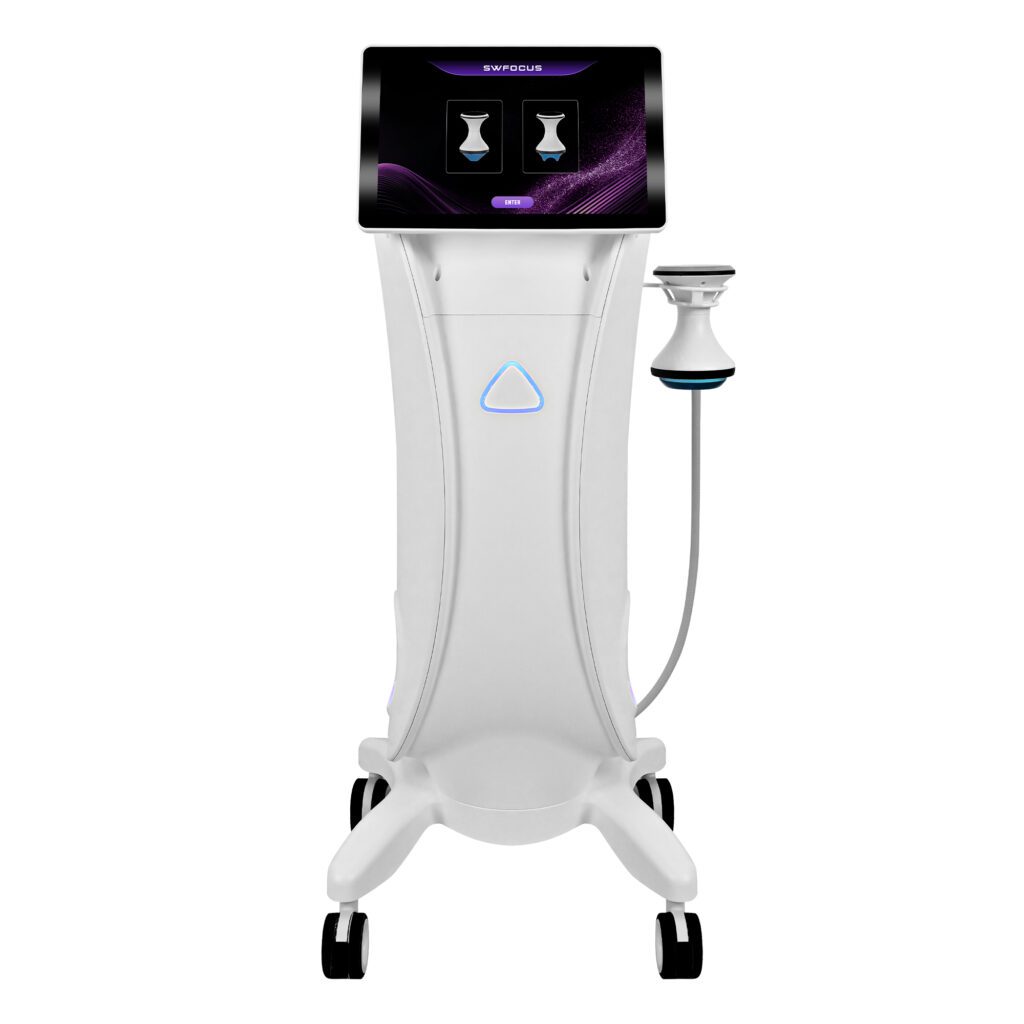
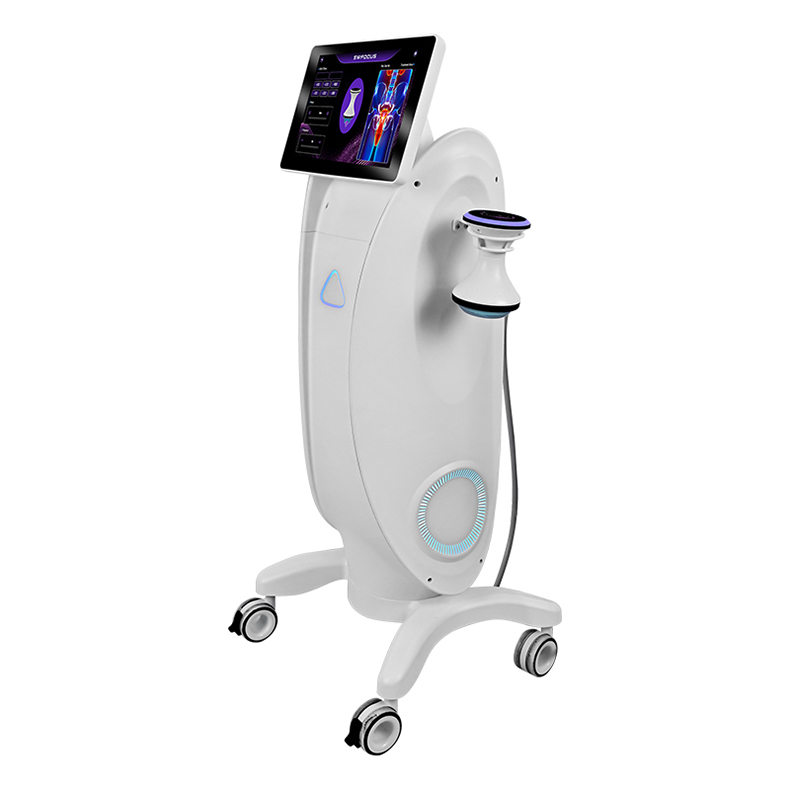
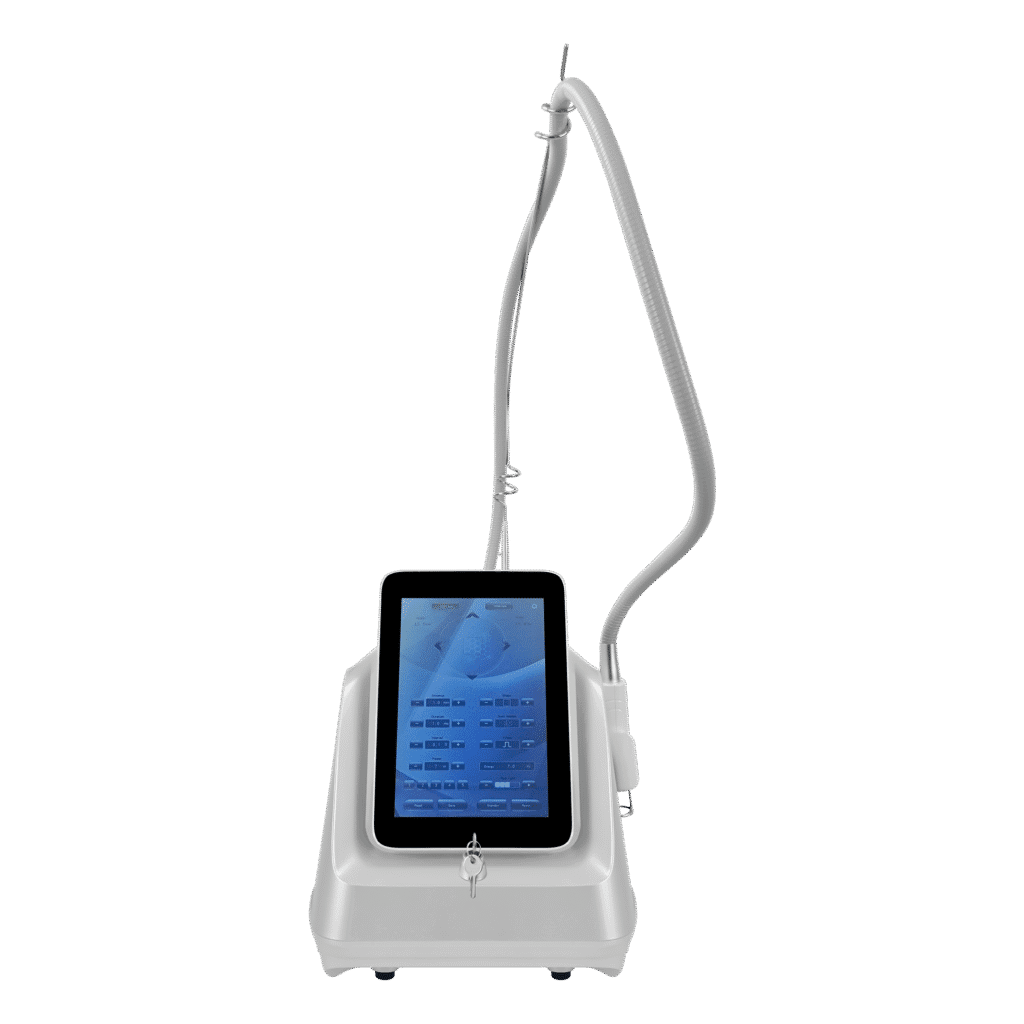
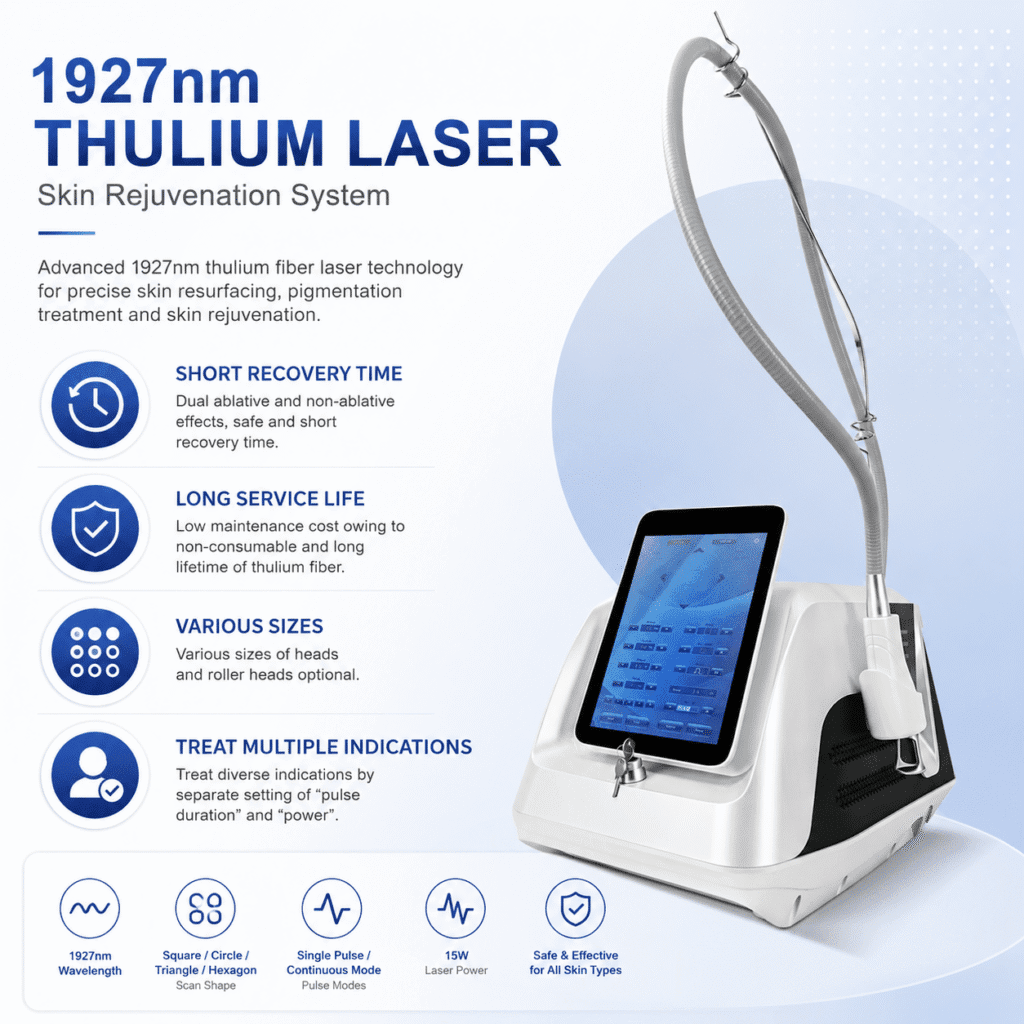
The public SHEFMON A0426 diode laser system lists wavelength, spot-size, cooling, touchscreen, voltage, and language choices. A useful genealogy should connect the unit serial to the exact handpiece and optical configuration, cooling and flow components, power and control assemblies, software and parameter package, regional electrical profile, output-related and cooling tests, and any handpiece or software replacement.
B0155: multi-handle body platform
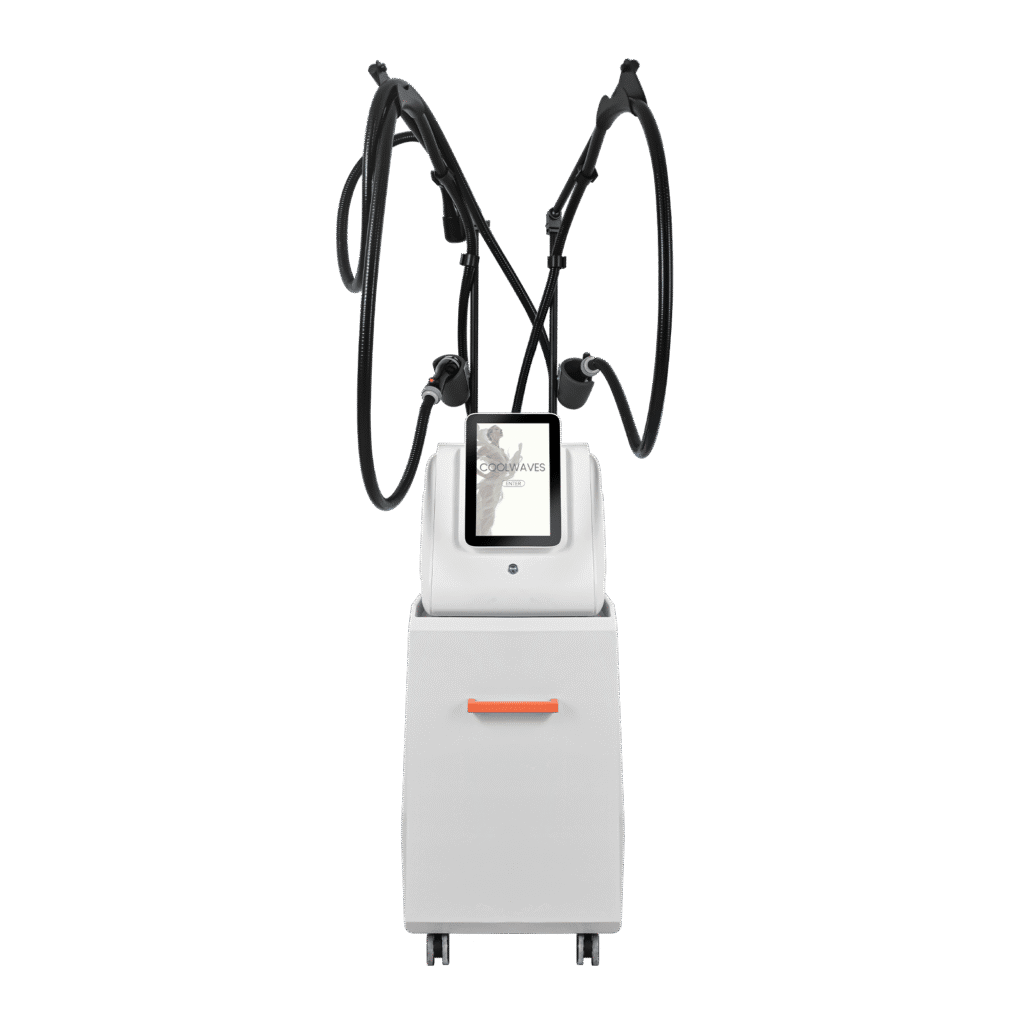
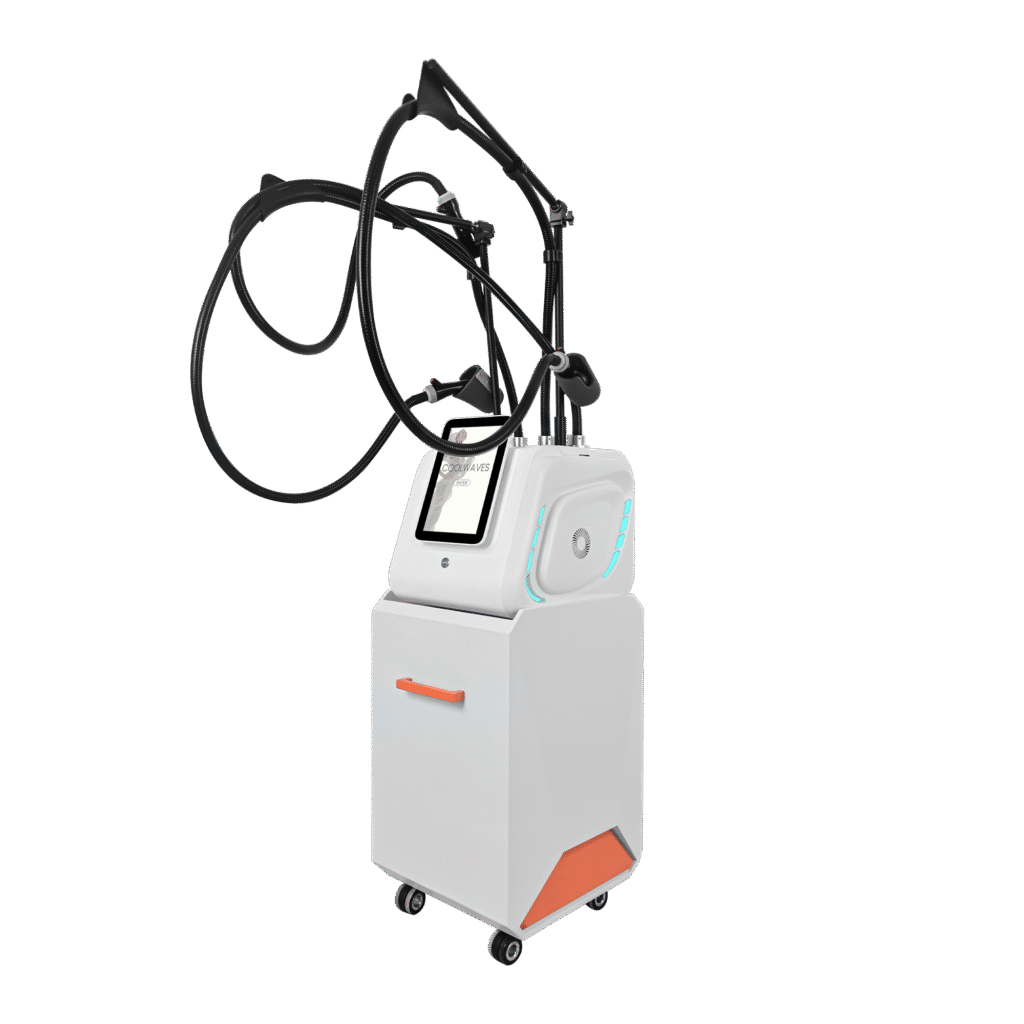
The public SHEFMON B0155 Desktop Endos Velapro is presented as a desktop 5-in-1 platform that can combine different handles, including vacuum-roller, rotating, RF-related, and cavitation functions. Traceability should preserve the actual handle set, compatible console and software state, connector and vacuum-path evidence, handle-specific tests, accessory packaging, and future movement or replacement of durable applicators.
29. Connect OEM/ODM Customization to the Traceability Baseline
Customized models can change:
- public and internal model identity;
- enclosure, layout, connectors, or handles;
- software, parameters, interface, and language;
- logos, labels, manuals, and packaging;
- power cord and regional configuration;
- supplier components or materials;
- test methods or limits; and
- service and spare-part relationships.
Der SHEFMON OEM/ODM capabilities page publicly discusses mechanical layout, wiring, airflow, handpiece connections, interface, language, branding, packaging, manuals, prototypes, and small-batch trial production. For any customized project, the buyer and factory should agree which unit, component, software, test, and package identities will be captured and how future changes will remain traceable.
30. Audit Traceability with Real Retrieval Drills
An effective drill can start with:
- one finished-unit serial;
- one critical supplier lot;
- one serialized handle;
- one software build;
- one failed test fixture;
- one rework instruction; or
- one shipment.
Measure whether the team can retrieve:
- complete and accurate relationships;
- physical and system status;
- all affected and potentially affected units;
- evidence for inclusion and exclusion;
- current location or shipment destination;
- open gaps and uncertainty; and
- responsible decision owners.
Record retrieval time, missing links, false matches, duplicate records, inaccessible archives, and manual workarounds. Correct the system, not just the drill report.
31. Measure Traceability Quality without Rewarding Data Volume
Useful measures can include:
- serial uniqueness and duplicate rate;
- genealogy completeness for required components;
- test-record linkage completeness;
- software-version capture completeness;
- unresolved identity exceptions;
- time required for backward and forward trace;
- percentage of units with ambiguous lot exposure;
- reconciliation differences;
- late record entry;
- failed interface transfers; and
- audit-drill accuracy.
A high scan count is not a quality metric if scans do not create correct product relationships.
32. Product Traceability Checklist
Before releasing the traceability system for a beauty device model, confirm that:
- Traceability questions and decision needs are documented.
- Object levels and identity types are clearly separated.
- Finished-unit serial numbers are unique and permanent.
- Serial issuance, assignment, reprint and cancellation are controlled.
- Prototype, demo, production, rejected and scrap identities remain distinct.
- Risk-based rules define serial-, lot- and BOM-level component tracking.
- Supplier and factory lot relationships are preserved.
- Lot identity survives storage, repacking, kitting and line replenishment.
- As-built genealogy reflects actual installed components.
- Durable child components use installation and removal events.
- Hardware and software configuration are linked to the unit.
- Language, parameter and calibration packages are identifiable.
- Assembly events reference controlled instructions and stations.
- Test records name the unit, method, equipment, conditions and limits.
- Raw results remain available for critical evaluations.
- Failed attempts and retests are never overwritten.
- Measurement and test equipment history links to product results.
- Nonconformity, rework, deviation and release decisions are connected.
- Removed and replacement components retain their histories.
- Approved, as-built and current configurations remain separate.
- Package, carton, order and shipment records reference the unit serial.
- Multi-carton and serialized-handle relationships are controlled.
- Customer asset IDs link to rather than replace factory serials.
- Both backward and forward trace queries are supported.
- Affected-population logic records inclusion and exclusion evidence.
- Statuses prevent unauthorized movement or shipment.
- Scanning and compatibility rules reduce manual identity errors.
- Missing, duplicate or damaged labels trigger controlled investigation.
- Corrections preserve audit history and reason.
- System interfaces are monitored and reconciled.
- Access, retention, backup and privacy rules are defined.
- OEM/ODM differences map to traceable fields.
- Retrieval drills test realistic component, software and shipment scenarios.
- Traceability-quality metrics focus on completeness and accuracy.
Häufig gestellte Fragen
1. Is a beauty device serial number the same as product traceability?
No. The serial number is the finished unit’s identity. Traceability is the network of records connecting that serial to configuration, components, software, production events, tests, rework, release, shipment, and later product-state changes.
2. Does every component need its own serial number?
No. Traceability depth should match risk and decision needs. Some durable or high-value components may need individual serials, other parts may need supplier-lot tracking, and low-risk standard items may be controlled through the BOM and production period.
3. What is the difference between the BOM and as-built genealogy?
The BOM defines the authorized parts for a model or configuration. As-built genealogy records which specific revisions, suppliers, lots, serials, software, and options were actually installed in one finished unit.
4. Why should failed tests remain in the record after a unit passes retest?
The original failure explains product history and may reveal recurring design, material, process, equipment, or instruction problems. Keeping the failure, intervention, and retest connected supports trend analysis and defensible release decisions.
5. How should replacement handpieces be traced?
Record the original handpiece removal, its status and destination, the replacement handpiece serial or lot, installation time, compatibility basis, required software or calibration changes, verification results, and current parent-device relationship.
6. Can a carton barcode serve as the device serial number?
It can display or reference the unit serial, but the relationship must be verified during packing. The permanent device identity should not depend only on packaging that may be discarded, damaged, reprinted, or separated from the unit.
7. How should software updates appear in traceability records?
Treat each update as an event with prior version, new version, package identity, unit serial, time, tool, operator, reason, result, affected configuration, required retest, and rollback or failure status.
8. What happens when component lot identity is lost?
Stop affected material or units, preserve evidence, reconstruct the relationship only from controlled sources, assess uncertainty, and expand the potentially affected population where necessary. Do not invent a lot value to complete the record.
9. How can a factory verify that forward traceability works?
Start with a supplier lot, serialized component, software build, test-equipment window, or rework instruction and require the team to identify every affected unit, inventory location, shipment, and unresolved record within a defined time.
10. What traceability information should an OEM/ODM buyer discuss with SHEFMON?
Define the finished-unit identifier, critical component and handle tracking, software and language records, test-result linkage, packaging and shipment relationship, service replacement history, data access, retention, change notification, and evidence available for the exact customized configuration.
Abschluss
Product traceability turns a beauty device serial number into a usable evidence anchor. It connects the physical unit to the components installed, software loaded, processes completed, tests performed, failures encountered, changes authorized, package shipped, and service events added later.
The strongest system separates identity levels, captures actual as-built relationships, preserves failed and corrected states, and supports both backward and forward retrieval. It does not treat scanning volume as proof of control. Instead, it demonstrates that the factory can reconstruct product history and define an affected population accurately when a supplier, test, software, production, delivery, or service issue occurs.
SHEFMON’s public Übersicht der Qualitätskontrolle describes raw-material testing, assembly, circuit-board aging and power testing, functional aging, inspection, and use of ERP management. These public statements can begin a traceability discussion, but buyers should ask which records apply to the exact model and configuration rather than infer unit-level genealogy from a general quality page.
To discuss traceability for a facial, laser, body, or customized product, explore the SHEFMON Beauty-Geräte-Portfolio Und Kontaktieren Sie SHEFMON. Share the intended model, critical components, handles, software, market configuration, test evidence, packaging, service plan, and buyer reporting needs so both parties can define an appropriate traceability boundary.