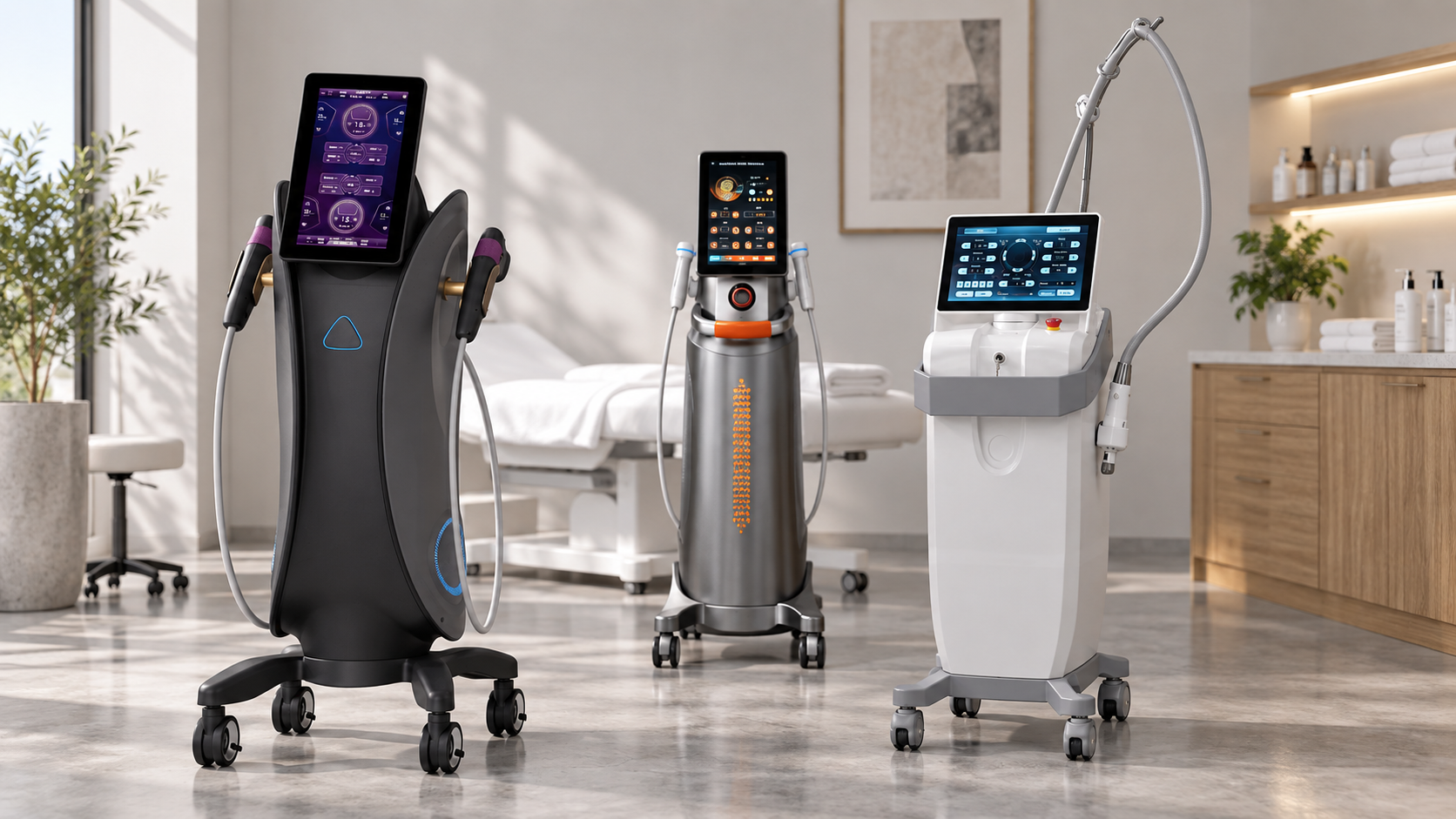
A multi-room aesthetic center has very different equipment needs from a small boutique salon.
When there are several treatment rooms, multiple technicians, and a wider range of services, equipment selection becomes less about finding a few versatile machines and more about building a coordinated beauty device system.
The goal is to make sure every room has a clear purpose, every major treatment category has appropriate equipment, and the overall portfolio can handle customer demand without creating unnecessary duplication.
A well-planned aesthetic center might have separate rooms for:
- علاجات الوجه
- تجديد البشرة
- إزالة الشعر
- تحديد شكل الجسم
- Advanced aesthetic treatments
- Consultation and aftercare
The equipment should support this structure rather than being purchased as a random collection of machines.
The basic planning principle is:
Room function → Treatment category → Equipment → Staff workflow → Customer journey
This guide explains how to select beauty devices for multi-room aesthetic centers, how to assign equipment across treatment rooms, and how to build a scalable equipment portfolio.
Why Multi-Room Aesthetic Centers Need a Different Equipment Strategy
A small salon may need to maximize the versatility of every machine.
A multi-room center has a different challenge: capacity and specialization.
If three technicians need to provide treatments simultaneously, one multifunctional machine may become a bottleneck.
For example, imagine an aesthetic center has:
- Room 1: Facial treatments
- Room 2: Hair removal
- Room 3: Body contouring
If all three services depend on one shared machine, staff may have to wait for equipment availability.
Therefore, once a business has multiple treatment rooms, equipment availability becomes part of operational planning.
The question changes from:
“Which machine can perform several treatments?”
ل:
“Which equipment should be permanently or semi-permanently assigned to each treatment workflow?”
1. Start With the Treatment-Room Layout
Before selecting equipment, map the rooms.
Create a simple table:
| Room | Primary Service | Secondary Service | Equipment |
|---|---|---|---|
| Room 1 | Facial | الترطيب | هيدرو فيشال |
| Room 2 | تجديد البشرة | شد | RF/HIFU |
| Room 3 | إزالة الشعر | صيانة | ليزر ثنائي |
| Room 4 | نحت الجسم | Body Shaping | خدمات الطوارئ الطبية |
| Room 5 | Advanced Treatments | Skin Treatments | MNRF/Laser |
This immediately shows where equipment is needed.
It also helps identify which machines need to be mobile and which should remain in a dedicated room.
2. Separate Core Rooms From Flexible Rooms
Not every room needs to be equally specialized.
A useful approach is to create two types of treatment rooms.
Dedicated Treatment Rooms
These rooms are designed around one major equipment category.
أمثلة:
- Diode laser room
- Body-contouring room
- Advanced laser room
Dedicated rooms make sense when equipment is large, expensive, or used frequently.
Flexible Treatment Rooms
These rooms can accommodate several related treatments.
على سبيل المثال:
Hydro facial + RF + selected skin treatments
This approach can help the center use its available space efficiently.
3. Build Your Equipment Portfolio by Treatment Category
Instead of purchasing machines one by one, group them by treatment category.
A multi-room center might consider:
Facial & Skin Care
- Hydro facial equipment
- Facial-care systems
- Skin-rejuvenation devices
شد البشرة وتجديدها
- ترددات الراديو
- الموجات فوق الصوتية عالية الكثافة
- صندوق الموارد الطبيعية والموارد البشرية
إزالة الشعر
- ليزر ثنائي
نحت الجسم
- خدمات الطوارئ الطبية
- تجميد الدهون
- إندوس فيلابرو
Specialized Aesthetic Treatments
- ليزر ثاني أكسيد الكربون
- Nd:YAG/picosecond laser
- Other specialized systems
This creates a portfolio that corresponds directly to the center’s treatment menu.
4. Create a Dedicated Facial Room
Facial services are often among the most frequently scheduled treatments in an aesthetic center.
A dedicated facial room can therefore be equipped around a core facial platform.
Hydro facial equipment is one possible foundation.
شيفمن Hydra beauty device guide explains the general role of this category of equipment.
A facial room might include:
جوهر
Hydro facial equipment
Supporting
RF or another skin-rejuvenation device
Optional
Compact specialized facial equipment
The goal is to keep the room optimized for facial workflows rather than filling it with unrelated equipment.
5. Create a Skin-Rejuvenation Room
A second room can be dedicated to more advanced skin-rejuvenation treatments.
Potential equipment categories include:
- ترددات الراديو
- الموجات فوق الصوتية عالية الكثافة
- صندوق الموارد الطبيعية والموارد البشرية
HIFU is particularly useful when the center wants a dedicated room for focused ultrasound treatments.
شيفمن HIFU machine guide provides an introduction to the technology.
ال A0270 Vmax HIFU مع RF combines HIFU and RF in one system and supports multiple cartridge depths.
For a smaller multi-room center, a combination platform may reduce equipment duplication.
For a larger center with high appointment volume, dedicated equipment for different treatment categories may provide better scheduling flexibility.
6. Plan a Dedicated Hair-Removal Room
Hair removal is a particularly good candidate for a dedicated treatment room.
A diode laser can remain permanently installed in the room, reducing setup time and equipment movement.
شيفمن جهاز إزالة الشعر بالليزر الثنائي A0426 supports 755nm, 810nm, and 1064nm wavelengths, with an optional 940nm wavelength.
A dedicated laser room can simplify:
- Equipment setup
- تدريب الموظفين
- بروتوكولات العلاج
- صيانة
- Scheduling
- إجراءات السلامة
For a center with multiple technicians providing hair-removal services simultaneously, additional laser systems may eventually be justified by appointment demand.
7. Build a Dedicated Body-Contouring Room
Body treatments often require larger equipment and more floor space than facial treatments.
This makes a dedicated body room practical.
Potential equipment categories include:
خدمات الطوارئ الطبية
For muscle-stimulation and body-contouring services.
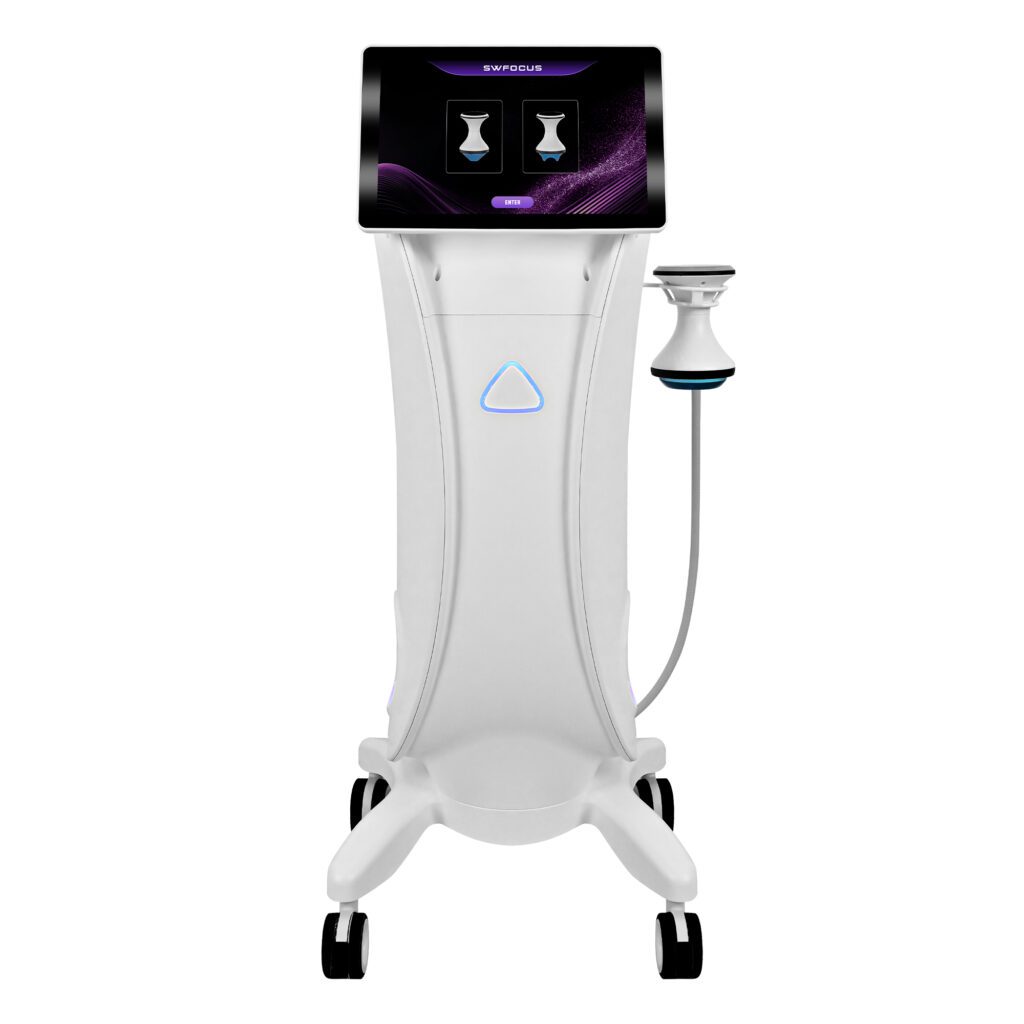
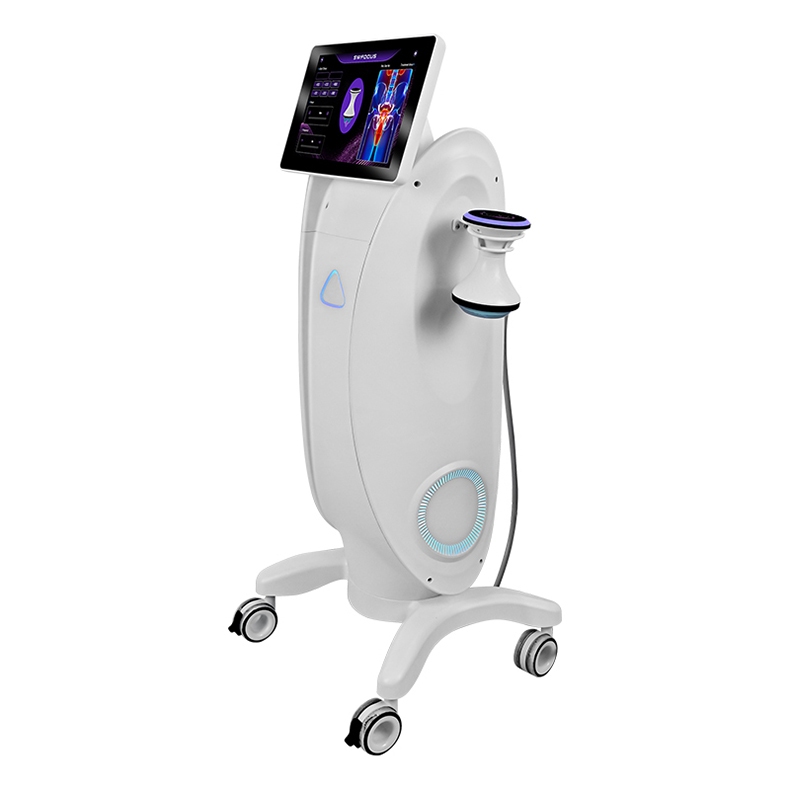
شيفمن A0241 5-in-1 EMSlim / Emsculpting NEO combines EMS/HIPEM and RF.
تجميد الدهون
For controlled-cooling body-contouring applications.
شيفمن Cryolipolysis collection includes several configurations.
إندوس فيلابرو
For body-shaping services involving combinations of vacuum, roller, RF, and related technologies depending on the model.
استكشف SHEFMON Endos Velapro collection.
A body room could therefore support several complementary treatment categories without requiring every room to contain every machine.
8. Consider Dedicated Advanced-Laser Rooms
If an aesthetic center provides specialized laser services, those treatments should generally have their own carefully planned space.
ومن الأمثلة على ذلك:
- Fractional CO2
- Nd:YAG
- ليزر بيكو ثانية
- Other specialized laser treatments
SHEFMON offers equipment such as the A0507 Q-switched/picosecond YAG laser و A0529 10600nm CO2 fractional laser.
These machines should not simply be placed into a spare treatment room without considering the equipment’s operating requirements, staff qualifications, local regulations, and appropriate safety procedures.
9. Don’t Put Every Device in Every Room
One of the biggest mistakes in a multi-room center is excessive duplication.
For example, if the center has five treatment rooms, it does not automatically need:
5 RF machines + 5 HIFU machines + 5 facial machines.
Instead, analyze appointment demand.
Suppose the center has:
- 40 facial appointments/day
- 15 RF appointments/day
- 10 HIFU appointments/day
- 25 hair-removal appointments/day
- 20 body-contouring appointments/day
The equipment allocation should reflect these workloads.
The principle is:
Equipment quantity should follow treatment demand, not room count alone.
10. Calculate Equipment Utilization
For each major device, estimate:
Expected daily treatments × average treatment time
Then compare this with the available operating hours.
على سبيل المثال:
If a treatment takes 60 minutes and the center expects 12 appointments per day, the equipment needs roughly 12 treatment hours of capacity.
If one room operates 10 hours per day, one machine may not be sufficient for that demand.
This simple calculation can help determine when a second device is justified.
11. Decide Which Equipment Should Be Shared
Some equipment can be shared between rooms.
Other equipment is better kept in one dedicated room.
Better Candidates for Dedicated Placement
- ليزر ثنائي
- ليزر ثاني أكسيد الكربون
- تجميد الدهون
- Large body-contouring systems
Potentially Shareable Equipment
- Compact RF systems
- Desktop MNRF
- Smaller facial equipment
For example, a desktop system such as the A0152 Desktop MMRF Depth 8 can be easier to integrate into a flexible treatment-room environment than a large floor-standing platform.
12. Consider Equipment Mobility
Not every machine needs to remain permanently installed.
بسأل:
- Does the machine have wheels?
- Can it fit through the treatment-room doorway?
- Can technicians move it safely?
- Does moving it affect calibration or setup?
- How long does installation take?
- Are accessories easy to transport?
Mobile equipment can increase room flexibility, but excessive movement can also create workflow problems.
A good multi-room center therefore uses a combination of:
Dedicated equipment + strategically mobile equipment
13. Standardize Equipment Across Similar Rooms
If an aesthetic center has multiple facial rooms, using different brands and interfaces in every room can make staff training more complicated.
Where practical, standardizing equipment models or technology platforms can simplify:
- تدريب الموظفين
- بروتوكولات العلاج
- صيانة
- قطع غيار
- استكشاف الأخطاء وإصلاحها
- Inventory management
For example, if three rooms provide the same type of facial treatment, using similar equipment configurations can make staff rotation easier.
14. Standardize Treatment Protocols
Equipment standardization is only one part of operational consistency.
Treatment protocols should also be standardized.
For each device, establish:
- Approved treatment workflow
- Preparation procedure
- Operating parameters according to manufacturer guidance
- Cleaning procedure
- Documentation requirements
- جدول الصيانة
- Post-treatment instructions
This is particularly important when several technicians use the same technology.
15. Match Equipment to Staff Specialization
A multi-room aesthetic center may have different levels of staff specialization.
على سبيل المثال:
| Staff Role | Typical Equipment |
|---|---|
| Facial Technician | Hydro facial, selected facial devices |
| Skin Specialist | RF, HIFU, MNRF |
| Laser Technician | ليزر ثنائي |
| Body Technician | EMS, Endos Velapro, cryolipolysis |
| Advanced-Laser Specialist | CO2, Nd:YAG, other specialized systems |
The actual staffing model will vary by center and jurisdiction.
The important principle is to make sure equipment complexity matches staff training and authorization.
16. Think About Room Turnaround Time
Equipment selection can affect how quickly a room becomes available for the next customer.
يعتبر:
Treatment → Cleaning → Equipment reset → Customer exit → Next treatment
A machine that requires extensive setup or cleanup may reduce room capacity.
For high-volume centers, even a few minutes of additional turnaround time per appointment can accumulate significantly throughout the day.
17. Plan Storage Before Buying Equipment
Multi-room centers often underestimate storage requirements.
You may need space for:
- قطع اليد
- أدوات التطبيق
- الكابلات
- ملحقات الحماية
- المواد الاستهلاكية
- قطع الغيار
- مواد التنظيف
- الوثائق
Do not treat storage as an afterthought.
A treatment room that is physically large enough for a machine may still be impractical if accessories have nowhere to go.
18. Plan Electrical and Infrastructure Requirements
Different equipment may have different electrical and environmental requirements.
قبل الشراء، تأكد مما يلي:
- Voltage requirements
- Power consumption
- Outlet locations
- Cooling requirements
- Ventilation requirements where applicable
- Floor loading
- Machine dimensions
- امتداد المدخل
This is particularly important for large or advanced equipment.
It is much easier to design infrastructure before delivery than to redesign a treatment room afterward.
19. Create a Central Equipment Inventory
A multi-room center should maintain a clear equipment inventory.
سِجِلّ:
- نموذج
- رقم سري
- Room location
- تاريخ الشراء
- فترة الضمان
- Maintenance history
- Service records
- مُكَمِّلات
- قطع غيار
This becomes increasingly important as the center grows.
A centralized inventory can also make it easier to identify underused equipment.
20. Consider Redundancy for High-Demand Services
Redundancy is different from unnecessary duplication.
If hair removal is one of the center’s highest-volume services, having two diode lasers may be justified.
لماذا؟
Because if the only laser is unavailable for maintenance, the entire service category could be interrupted.
For high-demand equipment, consider:
Primary machine + backup capacity
This can improve operational resilience.
Build the Portfolio in Three Layers
A multi-room aesthetic center can organize its equipment portfolio into three layers.
Layer 1: Core Equipment
These machines support the center’s most frequently booked treatments.
أمثلة:
- هيدرو فيشال
- ليزر ثنائي
- خدمات الطوارئ الطبية
- ترددات الراديو
Layer 2: Advanced Equipment
These devices support higher-value or specialized treatments.
أمثلة:
- الموجات فوق الصوتية عالية الكثافة
- صندوق الموارد الطبيعية والموارد البشرية
- تجميد الدهون
- إندوس فيلابرو
Layer 3: Specialized Equipment
These machines serve narrower treatment categories.
أمثلة:
- ليزر ثاني أكسيد الكربون
- Nd:YAG
- ليزر بيكو ثانية
This hierarchy helps prevent excessive spending on specialized equipment before there is sufficient demand.
A Sample Five-Room Equipment Layout
Consider a hypothetical five-room aesthetic center.
Room 1 — Facial Care
Hydro facial + selected facial equipment
Primary purpose: cleansing, hydration, and routine facial services.
Room 2 — Skin Rejuvenation
الترددات الراديوية + الموجات فوق الصوتية المركزة عالية الكثافة
Primary purpose: skin tightening and rejuvenation services.
Room 3 — Hair Removal
ليزر ثنائي
Primary purpose: laser hair-removal services.
Room 4 — Body Contouring
EMS + Endos Velapro
Primary purpose: body-contouring and body-shaping services.
Room 5 — Advanced Treatments
MNRF + specialized laser
Primary purpose: advanced aesthetic procedures.
This structure gives every room a clear role while maintaining some flexibility.
A Sample Larger-Center Portfolio
For a larger center with high appointment volume, the structure could expand:
| Room | Main Equipment |
|---|---|
| Facial Room 1 | هيدرو فيشال |
| Facial Room 2 | Hydro facial + RF |
| Skin Room 1 | الموجات فوق الصوتية عالية الكثافة |
| Skin Room 2 | MNRF/RF |
| Laser Room 1 | ليزر ثنائي |
| Laser Room 2 | ليزر ثنائي |
| Body Room 1 | خدمات الطوارئ الطبية |
| Body Room 2 | تجميد الدهون |
| Body Room 3 | إندوس فيلابرو |
| Advanced Room | CO2 / Nd:YAG / specialized laser |
The key difference is that equipment is duplicated where demand and capacity justify it, not simply because the center has many rooms.
How to Evaluate Equipment Suppliers
When purchasing multiple machines, supplier capability becomes increasingly important.
Instead of evaluating each machine independently, consider whether the supplier can support the center’s broader equipment strategy.
اسأل عن:
- مجموعة المنتجات
- تمرين
- ضمان
- قطع غيار
- الدعم الفني
- تثبيت
- الوثائق
- التخصيص
- توصيل
- Long-term service
For a multi-room center, having a supplier that can provide several compatible categories may simplify purchasing and support.
تقدم شركة شيفمون خدمات احترافية Beauty Equipment across categories including HIFU, RF, EMS, diode laser, cryolipolysis, body-shaping, facial, and other aesthetic technologies.
Don’t Choose Equipment Based Only on Specifications
A machine may have an impressive specification sheet but still be unsuitable for a particular treatment room.
يقيم:
تكنولوجيا
Does it fit the intended treatment?
Capacity
Can it handle expected appointment volume?
Workflow
Can technicians use it efficiently?
فضاء
Does it fit the room?
تمرين
Can the staff operate it appropriately?
يدعم
Can the supplier provide assistance when needed?
Total Cost
What are the equipment, maintenance, consumable, and downtime costs?
This is a much more useful framework than comparing one specification at a time.
Think About Future Expansion
A multi-room aesthetic center may eventually add:
- More treatment rooms
- Additional technicians
- New treatment categories
- More advanced laser equipment
- Additional body-contouring services
Therefore, today’s equipment decisions should not unnecessarily restrict tomorrow’s expansion.
For example, if the center expects to add a second laser room later, it may make sense to standardize the initial laser platform where practical.
Similarly, a center can initially use multifunctional equipment and later add dedicated machines when treatment volume grows.
Common Equipment Selection Mistakes
Mistake 1: One Machine for Everything
This can create scheduling bottlenecks.
Mistake 2: One Machine Per Room
A room does not automatically need a dedicated machine for every possible treatment.
Mistake 3: Ignoring Appointment Volume
Equipment quantity should reflect actual and expected treatment demand.
Mistake 4: Buying Specialized Equipment Too Early
Expensive specialized equipment may remain underused if customer demand has not been established.
Mistake 5: Ignoring Workflow
A technically excellent machine can still reduce efficiency if setup and turnaround are complicated.
Mistake 6: Using Too Many Different Platforms
Different equipment interfaces can increase training and maintenance complexity.
Mistake 7: Forgetting Backup Capacity
High-demand services can be vulnerable if they depend on a single machine.
A Practical Selection Checklist
Before purchasing equipment for a multi-room aesthetic center, evaluate each machine against these questions:
علاج
- What treatment category does it support?
- Which customers will use it?
- Does it complement another treatment?
Capacity
- How many appointments are expected?
- What is the average treatment time?
- Does one machine provide enough capacity?
Room
- What is the machine footprint?
- Is it mobile or dedicated?
- Does the room have the required infrastructure?
Staff
- How many technicians can operate it?
- ما التدريب المطلوب؟
- Can staff be moved between rooms?
Operations
- How long is setup and cleanup?
- ما هي أعمال الصيانة المطلوبة؟
- What accessories need to be stored?
Business
- What services will generate demand?
- Can the equipment support packages?
- Does it have a realistic role in the center’s long-term portfolio?
Final Thoughts: Build a System, Not a Collection of Machines
Selecting beauty devices for multi-room aesthetic centers requires a different mindset from buying equipment for a small salon.
The goal is to build a system in which:
Rooms have clear purposes.
Equipment matches treatment demand.
Staff can work efficiently.
High-demand services have enough capacity.
Specialized equipment has a clear business role.
The portfolio can expand as the center grows.
A practical center might organize its rooms around:
Facial Care → Skin Rejuvenation → Hair Removal → Body Contouring → Advanced Treatments
Within those rooms, equipment such as Hydra systems, RF, HIFU, diode laser, EMS, cryolipolysis, Endos Velapro, MNRF, and specialized laser systems can be assigned according to treatment demand and operational requirements.
The most important principle is simple:
Don’t select beauty devices room by room. Design the entire equipment portfolio first, then assign the right devices to each room.
That approach makes it easier to control investment, improve staff workflow, reduce equipment bottlenecks, and build a scalable aesthetic center.
الأسئلة الشائعة
1. How should a multi-room aesthetic center divide its beauty equipment?
Start by dividing the center into treatment categories such as facial care, skin rejuvenation, hair removal, body contouring, and advanced treatments. Then assign equipment according to expected demand and room requirements.
2. Does every treatment room need its own beauty machine?
No. High-demand treatments may justify dedicated equipment, while lower-volume equipment can potentially be shared between compatible rooms. The decision should be based on appointment volume, equipment mobility, and workflow.
3. Which beauty devices are suitable for dedicated treatment rooms?
Diode lasers, CO2 lasers, cryolipolysis systems, and larger body-contouring platforms can be candidates for dedicated rooms because of their size, infrastructure requirements, or specialized workflows.
4. When should an aesthetic center buy duplicate equipment?
Duplicate equipment can make sense when treatment demand regularly exceeds the capacity of one machine or when a critical service needs backup capacity. Room count alone is not sufficient justification.
5. What should a large aesthetic center look for in an equipment supplier?
Look beyond the individual machine. Consider the supplier’s product range, training, warranty, technical support, spare parts, documentation, delivery, and ability to support the center as its equipment portfolio expands.