







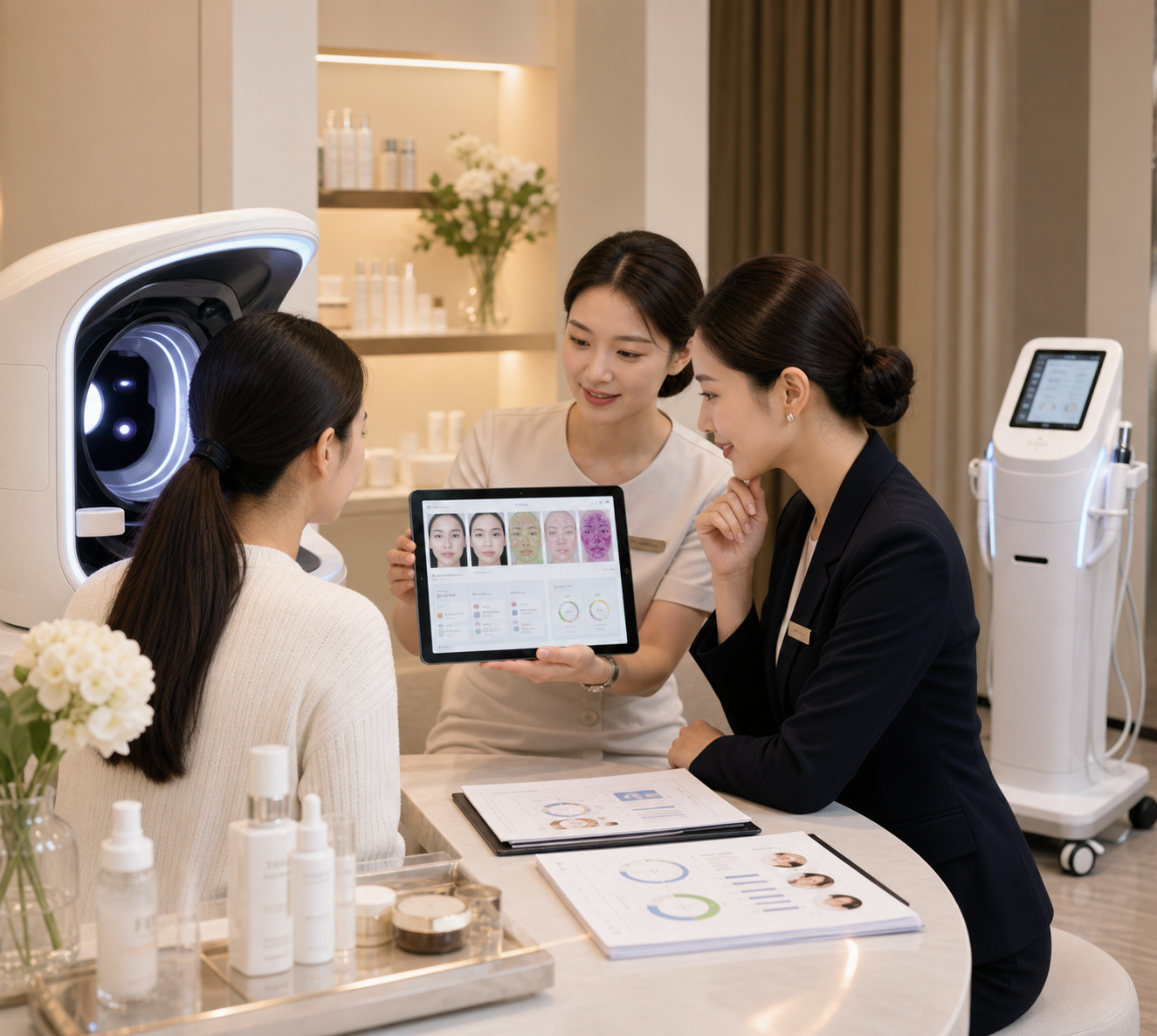
أصبحت أجهزة تحليل البشرة بالذكاء الاصطناعي أداةً أساسيةً في صالونات التجميل، ومراكز العناية بالبشرة، والمنتجعات الصحية الطبية، ومتاجر بيع منتجات العناية بالبشرة، وقنوات توزيع معدات التجميل. ولا تقتصر فوائدها على عرض صور البشرة فحسب، بل يمكنها في صالونات التجميل دعم الاستشارات، وتثقيف العملاء، وتخطيط العلاجات، وتحويل الباقات، ومتابعة التقدم، وتجديد الاشتراكات، والتوصية بالمنتجات.
بالنسبة لصالونات التجميل، لا يكمن السؤال الأهم في ما إذا كان تحليل البشرة بالذكاء الاصطناعي يبدو عصرياً، بل في ما إذا كان يساعد الصالون على زيادة دقة المبيعات، وتقديم خدمة احترافية للعملاء، وبناء مشاريع قابلة للتكرار لإدارة البشرة.
يحلل هذا التقرير كيفية استخدام أجهزة تحليل البشرة بالذكاء الاصطناعي في سيناريوهات صالونات التجميل، والفوائد التي يمكن أن تخلقها، والمخاطر التي يجب على الصالونات السيطرة عليها، والفرص المتاحة للمصنعين والموزعين.
ملخص تنفيذي
يحظى تحليل البشرة بالذكاء الاصطناعي باهتمام متزايد، إذ يتوقع عملاء التجميل بشكل متزايد الحصول على عناية شخصية بالبشرة، ونتائج استشارة واضحة، وخطط علاجية مدعومة بالتكنولوجيا. وتشير تقارير السوق العامة إلى نمو قوي. تُقدّر شركة Coherent Market Insights حجم سوق تحليل البشرة بالذكاء الاصطناعي عالميًا بـ 2.13 مليار دولار أمريكي في عام 2026، وتتوقع أن يصل إلى 6.30 مليار دولار أمريكي بحلول عام 2033. بينما تُقدّر شركة Precedence Research حجم هذا السوق بـ 1.79 مليار دولار أمريكي في عام 2025، وتتوقع أن يصل إلى حوالي 8.02 مليار دولار أمريكي بحلول عام 2035. أما شركة Research and Markets، فتُقدّر حجم سوق أجهزة تحليل بشرة الوجه بالذكاء الاصطناعي بـ 0.9 مليار دولار أمريكي في عام 2026، وتتوقع أن يصل إلى 1.35 مليار دولار أمريكي بحلول عام 2030.
تستخدم هذه المصادر تعريفات سوقية مختلفة، لكنها تُظهر نفس الاتجاه: أصبح تحليل البشرة بالذكاء الاصطناعي فئة تكنولوجية مهمة في أسواق التجميل والعناية بالبشرة والخدمات التجميلية.
أهم النتائج:
- تُعد أجهزة تحليل البشرة بالذكاء الاصطناعي ذات قيمة كبيرة كأدوات استشارية وتحويلية، وليس فقط كخدمات مدفوعة مستقلة.
- يمكن لصالونات التجميل استخدام تحليل البشرة لشرح احتياجات العملاء، وبناء الثقة، وتصميم باقات العلاج، وتتبع التقدم المحرز.
- تشمل أقوى تطبيقات الصالون الاستشارة الأولى، ومبيعات باقات مكافحة الشيخوخة بتقنية الترددات الراديوية، وخطط الترطيب والتنظيف، والعناية بتقنية LED، والتوصية بالمنتجات، وتجديد العضوية، وإدارة ما قبل وما بعد العلاج.
- تستخدم صالونات التجميل المجتمعية تحليل البشرة بالذكاء الاصطناعي لبناء الثقة وجعل إدارة البشرة الأساسية أكثر احترافية.
- تستخدم مراكز إدارة البشرة الراقية تحليل البشرة بالذكاء الاصطناعي لدعم الاستشارات التشخيصية المتميزة، والبرامج المخصصة، والسجلات طويلة الأجل.
- يمكن لسلسلة صالونات التجميل استخدام تحليل الذكاء الاصطناعي لتوحيد استشارات الموظفين وتوصيات الخدمات.
- تُعدّ الخصوصية والمعلومات البيومترية وتخزين الصور والتحيز والمبالغة في الادعاءات والادعاءات ذات الطابع الطبي من مجالات الخطر الرئيسية.
- بإمكان الموزعين خلق فرص من خلال دمج أجهزة تحليل البشرة بالذكاء الاصطناعي مع حزم مشاريع الترددات الراديوية، والمصابيح LED، والتنظيف المائي للوجه، والتيار الدقيق، والعناية بالبشرة.
1. ما معنى تحليل البشرة بالذكاء الاصطناعي في صالونات التجميل
في صالونات التجميل، يعني تحليل البشرة بالذكاء الاصطناعي عادةً استخدام جهاز أو نظام برمجي لالتقاط صور الوجه وتقييم مؤشرات البشرة المرئية من خلال رؤية الكمبيوتر والتصوير والإضاءة والتحليل الخوارزمي.
قد تتضمن مخرجات التحليل الشائعة ما يلي:
- المسام.
- نَسِيج.
- مؤشرات الترطيب.
- مؤشرات توازن الزيت.
- خطوط دقيقة.
- مظهر التجاعيد.
- مظهر التصبغ.
- مظهر الاحمرار.
- بقع داكنة.
- علامات البشرة المعرضة لحب الشباب.
- عدم توحد لون البشرة.
- تقدير عمر الجلد.
- مؤشرات متعلقة بالحساسية.
- مقارنة التقدم المحرز في العلاج.
قد يكون الجهاز عبارة عن محلل جلد مكتبي، أو مرآة ذكية، أو ماسح ضوئي محمول باليد، أو نظام قائم على جهاز لوحي، أو تطبيق جوال، أو منصة ذكاء اصطناعي قائمة على السحابة.
في صالونات التجميل، يُنصح عادةً بتقديم تحليل البشرة بالذكاء الاصطناعي كأداة للاستشارة التجميلية ودعم العناية بالبشرة. ولا ينبغي تسويقه كأداة تشخيص طبي إلا إذا كان الجهاز حاصلاً على التراخيص التنظيمية اللازمة، والاستخدام المقصود، ومشغلين مؤهلين، وتصريح محلي.
2. لماذا تهتم صالونات التجميل بتحليل البشرة بالذكاء الاصطناعي؟
تهتم صالونات التجميل بتحليل البشرة بالذكاء الاصطناعي لأنه يحل العديد من المشاكل العملية.
تعتمد الاستشارات التقليدية في كثير من الأحيان بشكل كبير على خبرة الموظفين وشرحهم الشفهي. وقد لا يثق بعض العملاء بالمستشار، خاصةً عندما تتضمن التوصية باقة باهظة الثمن. أما تحليل البشرة بالذكاء الاصطناعي فيضيف أدلة مرئية وتقريراً منظماً، مما يجعل الحوار أكثر موضوعية.
ترغب صالونات التجميل في استخدام تحليل البشرة بالذكاء الاصطناعي لأنه يمكن أن يساعد في:
- بناء الثقة مع العملاء الجدد.
- اجعل مشاكل البشرة غير المرئية مرئية.
- اشرح سبب التوصية بهذا العلاج.
- قم بتخصيص خطة الخدمة.
- زيادة معدل تحويل الحزم.
- تتبع التقدم بمرور الوقت.
- ادعم تجديد العضوية.
- ميّز صالونك عن منافسيه في مجال العناية بالبشرة الأساسية.
- اجعل عملية التشاور بين الموظفين أكثر توحيداً.
- أنشئ صورة أكثر احترافية للعلامة التجارية.
بالنسبة للصالونات التي تنتقل من خدمات العناية الأساسية بالوجه إلى إدارة البشرة، يمكن أن يصبح تحليل البشرة بالذكاء الاصطناعي نقطة انطلاق نظام الخدمة بأكمله.
3. سيناريو التطبيق الأول: استشارة العميل لأول مرة
تُعد الاستشارة الأولى واحدة من أقوى سيناريوهات تطبيق تحليل البشرة بالذكاء الاصطناعي.
عند دخول عميل جديد إلى الصالون، يمكن للموظفين استخدام جهاز تحليل البشرة للقيام بما يلي:
- التقاط صور أساسية للبشرة.
- تحديد المشاكل الظاهرة.
- اطرح أسئلة استشارية أكثر تحديداً.
- اشرح أولويات العلاج.
- أوصي بخطة رعاية أولية.
- تجنب التوصية بخدمات غير ذات صلة.
- احفظ السجلات للمقارنة المستقبلية.
يعزز هذا الأمر الثقة لأن العميل يرى عملية استشارة منظمة بدلاً من عرض بيع مباشر. وهذا ذو قيمة خاصة للصالونات الجديدة وصالونات التجميل المجتمعية، لأن الثقة غالباً ما تكون أكبر عائق أمام الشراء الأول.
ينبغي على الصالون تبسيط الشرح. فالزبائن لا يحتاجون إلى مصطلحات تقنية معقدة. بل يحتاجون إلى فهم ما يُظهره التحليل، وماذا يعني ذلك بالنسبة لأهدافهم في العناية بالبشرة، وما هي توصيات الصالون التالية.
4. سيناريو التطبيق الثاني: تثقيف العملاء
لا يدرك العديد من العملاء الفرق بين الجفاف، والدهنية، وبهتان البشرة، والمسام الواسعة، والتصبغات، والشيخوخة المبكرة، والحساسية، ومشاكل حاجز البشرة. ويمكن لتحليل البشرة بالذكاء الاصطناعي أن يساعد الموظفين على تثقيف العملاء بصريًا.
على سبيل المثال، يمكن للموظفين إظهار ما يلي:
- لماذا قد تكون هناك حاجة إلى التنظيف العميق؟.
- لماذا يجب أن تأتي الترطيبات قبل مكافحة الشيخوخة؟.
- لماذا لا ينبغي للعميل اختيار العلاج العدواني أولاً؟.
- لماذا يمكن أن تتغير نتائج تحليل البشرة بمرور الوقت؟.
- لماذا قد تكون خطة الدورة التدريبية أكثر ملاءمة من جلسة واحدة؟.
- لماذا تُعدّ منتجات العناية المنزلية مهمة؟.
يمكن للتعليم المرئي أن يقلل من مقاومة العملاء لأن الحوار يصبح أقل ذاتية. فبدلاً من قول "بشرتكِ تحتاج إلى هذا"، يمكن للموظفين أن يقولوا "هذا ما نراه، ولهذا السبب نوصي بخطة العناية هذه".“
5. سيناريو التطبيق الثالث: تصميم خطة العلاج
يُمكن لتحليل البشرة بالذكاء الاصطناعي أن يُساعد الصالونات في تصميم خطط علاجية مُخصصة. وهذه إحدى أهم مزايا العمل.
بناءً على التحليل والاستشارة، قد يوصي الصالون بما يلي:
- تنظيف عميق وإدارة المسام.
- العناية بالترطيب والإشراق.
- عناية مريحة للبشرة الحساسة.
- الصيانة المبكرة لمكافحة الشيخوخة.
- دورة شد البشرة بتقنية الترددات الراديوية.
- برنامج تحديد ملامح الوجه بتقنية التيار الدقيق EMS.
- باقة العناية بالبشرة بتقنية LED.
- إدارة التصبغات واللون عند الاقتضاء.
- دعم المنتجات والرعاية المنزلية.
- خطة الصيانة الشهرية.
لا يغني هذا الجهاز عن التقييم المهني. ينبغي على الموظفين الجمع بين نتائج التحليل وعمر العميل ونوع بشرته وحساسيتها وتاريخ العلاج وموانع الاستخدام والميزانية ونطاق الخدمة المحلية.
إن أفضل استخدام لتحليل البشرة بالذكاء الاصطناعي هو توجيه منطق العلاج، وليس الترويج التلقائي لأغلى باقة علاجية.
6. سيناريو التطبيق الرابع: زيادة تحويل مشروع المعدات
يمكن لتحليل البشرة بالذكاء الاصطناعي أن يحسن معدل التحويل لمشاريع معدات التجميل الأخرى. ولهذا السبب فهو ذو قيمة للموزعين وصالونات التجميل.
يمكنه دعم مبيعات:
- معدات مكافحة الشيخوخة بتقنية الترددات الراديوية.
- معدات التيار الدقيق EMS.
- العلاج بالضوء بتقنية LED.
- أجهزة تنظيف الوجه بالماء وأجهزة الفقاعات الصغيرة.
- معدات ضخ الأكسجين.
- أجهزة التسريب بالموجات فوق الصوتية.
- مشاريع تحديد ملامح الجسم والوجه عند الاقتضاء.
- منتجات العناية بالبشرة ومجموعات العناية المنزلية.
على سبيل المثال، قبل التوصية بجلسة شد البشرة بتقنية الترددات الراديوية، يمكن للصالون استخدام تحليل البشرة للكشف عن علامات متعلقة بملمسها، والخطوط الدقيقة، وجودتها. وقبل التوصية بجلسة تنظيف البشرة بالماء، يمكن للصالون الكشف عن مشاكل المسام أو إفراز الزيوت. وقبل التوصية بجلسة العلاج بالضوء LED، يمكن للصالون شرح كيفية ملاءمتها لخطة العناية الشاملة بالبشرة.
هذا يحول العلاج الآلي إلى خطة علاجية شخصية.
7. سيناريو التطبيق الخامس: تتبع التقدم قبل وبعد
يُعدّ تتبّع التقدّم ميزةً رئيسيةً لأجهزة تحليل البشرة بالذكاء الاصطناعي. غالبًا ما تتطلّب مشاريع صالونات التجميل جلساتٍ متعدّدة، وقد ينسى العملاء نقطة البداية. تساعد السجلات المرئية الصالون على إظهار التغيير بمرور الوقت.
يمكن أن يدعم تتبع التقدم ما يلي:
- تجديد الدورة.
- الحفاظ على العضوية.
- رضا العملاء.
- تقييم أداء الموظفين.
- تعديل خطة العلاج.
- توصية بالرعاية المنزلية.
- العناية بالبشرة على المدى الطويل.
ينبغي على الصالون الحفاظ على ثبات الإضاءة والزاوية والمسافة وظروف الصورة قدر الإمكان. فعدم ثبات جودة الصورة قد يجعل المقارنة غير موثوقة، وقد يقلل من ثقة العملاء.
ينبغي استخدام سجلات التقدم بشكل مسؤول. لا ينبغي التلاعب بها أو تقديمها على أنها نتائج مضمونة لجميع العملاء.
8. سيناريو التطبيق السادس: إدارة العضوية وإعادة الشراء
يمكن لتحليل البشرة بالذكاء الاصطناعي أن يساعد الصالونات على الانتقال من العلاجات الفردية إلى عضويات إدارة البشرة طويلة الأمد.
قد يتضمن نموذج العضوية ما يلي:
- تحليل البشرة شهرياً.
- خطة علاجية مخصصة للوجه.
- مراجعة التقدم المحرز.
- حزمة معالجة المعدات.
- توصية بالمنتج.
- التكيف الموسمي للبشرة.
- تذكيرات للمتابعة.
يُتيح تقرير التحليل للموظفين فرصة دعوة العملاء للعودة. فبدلاً من قول "تفضلوا بزيارتنا الشهر القادم"، يمكن للصالون أن يقول "سنعيد فحص ترطيب الشعر، وتوازن الزيوت، والمسام، وملمس الشعر الشهر القادم، وسنقوم بتعديل خطة زيارتكم".“
يؤدي ذلك إلى تحسين الاحتفاظ بالعملاء لأن الخدمة تصبح عملية إدارة مستمرة.
9. سيناريو التطبيق السابع: التوصية بالمنتج ومبيعات التجزئة
يمكن لتحليل البشرة بالذكاء الاصطناعي أن يدعم مبيعات منتجات العناية بالبشرة. فعندما يلاحظ العملاء مشاكل محددة في بشرتهم، يصبحون أكثر قدرة على فهم سبب التوصية باستخدام سيروم أو قناع أو غسول أو واقي شمس أو مرطب أو مجموعة للعناية المنزلية.
ينبغي أن تستند توصيات المنتجات إلى ما يلي:
- مؤشرات تحليل الجلد.
- مخاوف العملاء.
- حساسية الجلد.
- خطة العلاج.
- ميزانية.
- عادات العناية المنزلية.
- مدى ملاءمة المكونات.
- قواعد الإعلان المحلي والادعاءات المتعلقة بمستحضرات التجميل.
ينبغي على الصالون تجنب المبالغة في ادعاءات المنتج. يمكن لتحليلات الذكاء الاصطناعي تحسين تجربة التخصيص، ولكن لا ينبغي استخدامها لتبرير وعود مبالغ فيها.
10. سيناريو التطبيق الثامن: التسويق عبر وسائل التواصل الاجتماعي وتسويق المحتوى
يمكن لتحليل البشرة بالذكاء الاصطناعي أن يدعم التسويق بالمحتوى لأنه يُنشئ مواد مرئية وتعليمية.
قد يتضمن المحتوى ما يلي:
- منشورات تعليمية حول تحليل البشرة.
- قصص التقدم قبل وبعد بموافقة أصحابها.
- مقاطع فيديو قصيرة تشرح مشاكل البشرة.
- حملات فحص الجلد الشهرية.
- عروض استشارية للعملاء الجدد.
- حملات تقييم مكافحة الشيخوخة.
- حملات فحص الترطيب والإشراق.
ينبغي على الصالونات الحصول على موافقة العملاء قبل استخدام أي صور أو تقارير أو معلومات شخصية في التسويق. كما ينبغي عليها تجنب استخدام ادعاءات تبدو طبية أو الإيحاء بأن كل عميل سيحصل على نفس النتيجة.
أفضل زاوية للمحتوى هي التعليم، وليس البيع القائم على التخويف.
11. سيناريو التطبيق التاسع: الاستشارة المسبقة عبر الإنترنت
تدعم بعض أنظمة تحليل البشرة بالذكاء الاصطناعي التقاط الصور عبر الهاتف المحمول أو عن بُعد. قد يكون هذا مفيدًا قبل زيارة العملاء للصالون.
يمكن أن تساعد الاستشارة المسبقة عبر الإنترنت في:
- اجذب عملاء جدد.
- تقسيم احتياجات العملاء.
- قم بالتوصية بنوع الحجز المناسب.
- قم بإعداد الموظفين قبل الزيارة.
- روّج لحزم تجريبية.
- ادعموا التجارة الإلكترونية لمنتجات العناية بالبشرة.
- متابعة العملاء غير النشطين.
مع ذلك، فإن تحليل الصور عن بُعد له حدود. فالإضاءة وجودة الكاميرا والمكياج والفلاتر وزاوية التصوير قد تؤثر على النتائج. لذا، ينبغي على الصالونات توضيح أن النتائج المعروضة على الإنترنت أولية ويجب تأكيدها خلال الاستشارة داخل الصالون.
12. سيناريو التطبيق العاشر: توحيد معايير صالونات التجميل المتسلسلة
يمكن لصالونات التجميل المتسلسلة ومراكز إدارة البشرة متعددة المواقع استخدام تحليل البشرة بالذكاء الاصطناعي لتوحيد عملية الاستشارة.
يمكن أن يشمل التقييس ما يلي:
- أسئلة استقبال متسقة.
- عملية التقاط الصور القياسية.
- نموذج تقرير التحليل المشترك.
- تخطيط المشروع الموصى به.
- نصوص استشارات الموظفين.
- نماذج خطط العلاج.
- قواعد تتبع التقدم.
- إدارة مركزية لبيانات العملاء.
يقلل هذا من الاعتماد على خبرة الموظفين الفردية، ويساعد السلسلة على الحفاظ على اتساق الخدمة في جميع المواقع. كما أنه يوفر بيانات تجارية مفيدة حول مخاوف العملاء، وتحويل المشاريع، وطلب العلاج حسب المنطقة.
13. قيمة التطبيق لصالونات التجميل المجتمعية
تعتمد صالونات التجميل المجتمعية عادةً على الزبائن الدائمين القريبين وعلى التوصيات الشفهية. ويمكن لتحليل البشرة بالذكاء الاصطناعي أن يساعدها على الظهور بمظهر أكثر احترافية دون الحاجة إلى شراء العديد من الأجهزة باهظة الثمن على الفور.
يمكن لصالونات التجميل المجتمعية استخدام تحليل البشرة بالذكاء الاصطناعي من أجل:
- بناء ثقة العملاء الجدد.
- خدمات فحص الجلد الشهرية.
- باقات العناية الأساسية بالبشرة.
- توصيات بشأن علاج الوجه المائي والترطيب.
- التثقيف المبكر لمكافحة الشيخوخة.
- تجديد العضوية.
- مبيعات المنتجات.
بالنسبة لصالونات التجميل المجتمعية، يجب أن يكون الجهاز سهل الاستخدام، صغير الحجم، وبسعر معقول، ومتصلاً بخدمات عملية. الهدف ليس الظهور بمظهر متطور لمجرد التظاهر، بل تحسين تجربة الاستشارة وزيادة الإقبال المتكرر.
14. القيمة التطبيقية لمراكز العناية بالبشرة الراقية
يمكن لمراكز العناية بالبشرة الراقية استخدام تحليل البشرة بالذكاء الاصطناعي كأساس للخدمة المتميزة.
تشمل حالات الاستخدام ما يلي:
- استشارة متقدمة.
- برامج مخصصة لمكافحة الشيخوخة.
- تخطيط دورات الترددات الراديوية والتيارات الدقيقة.
- اختيار مؤشر LED وبروتوكول الاستعادة.
- برامج تحسين جودة البشرة.
- ملفات إدارة بشرة الشخصيات المهمة.
- خطط العضوية السنوية.
- توصية بمنتجات مميزة.
- تتبع التقدم المحرز على مدار الأشهر.
يتوقع العملاء المميزون خدمات مُخصصة وموثقة. يساعد تحليل البشرة بالذكاء الاصطناعي المركز على تبرير الأسعار المرتفعة عند ربطها بالاستشارة المتخصصة، وجودة الأجهزة، والخصوصية، والخدمة طويلة الأمد.
15. قيمة التطبيق لموزعي معدات التجميل
بالنسبة للموزعين، تعتبر أجهزة تحليل الجلد بالذكاء الاصطناعي ذات قيمة لأنها يمكن أن تفتح الباب أمام مبيعات أوسع للمعدات.
تشمل فرص التوزيع ما يلي:
- بيع أجهزة تحليل البشرة بالذكاء الاصطناعي كأدوات احترافية للمبتدئين.
- تجميع أجهزة تحليل البشرة مع أجهزة الترددات الراديوية، وأجهزة LED، وأجهزة الترطيب المائي للوجه، وأجهزة التيار الدقيق، وأجهزة ضخ الأكسجين.
- تقديم التدريب الاستشاري.
- توفير نماذج تقارير.
- مساعدة الصالونات في إعداد قوائم باقات العلاج.
- دعم أنظمة العضوية والمتابعة.
- إنشاء حالات تجريبية توضح عملية تحويل الحزم.
- تقديم خدمات الاشتراك في البرامج أو ترقيتها عند الاقتضاء.
يمكن أن يصبح تحليل البشرة بالذكاء الاصطناعي منتجًا وسيطًا. فهو يساعد الصالونات على فهم احتياجات العملاء، ومن ثم بيع علاجات أخرى تعتمد على الأجهزة بشكل أكثر منطقية.
16. الأنواع الرئيسية لحلول تحليل البشرة بالذكاء الاصطناعي
يمكن تصنيف حلول تحليل البشرة بالذكاء الاصطناعي إلى عدة أنواع.
أجهزة تحليل البشرة المكتبية:
- مناسب لصالونات التجميل ومراكز العناية بالبشرة والعيادات.
- غالباً ما توفر إضاءة وتصويراً أكثر استقراراً.
- مناسب لغرف الاستشارات المهنية.
المرايا الذكية:
- مناسب للبيع بالتجزئة، وأقسام العناية بالبشرة، والصالونات الراقية.
- تجربة بصرية قوية.
- مفيد للتفاعل مع العملاء.
أجهزة التحليل المحمولة باليد:
- صغير الحجم ومرن.
- مناسب للصالونات الصغيرة والاستشارات المتنقلة.
- قد يكون اتساق الصور أقل اعتمادًا على الطراز.
تطبيق الهاتف المحمول أو التحليل القائم على صور السيلفي:
- مفيد للاستشارة المسبقة عبر الإنترنت وتوليد العملاء المحتملين.
- سهل التوسع.
- تتأثر جودة الصورة والإضاءة بشكل أكبر.
منصات الذكاء الاصطناعي السحابية:
- مناسب للسلاسل التجارية، وعلامات التجميل التجارية، والموزعين.
- يمكن ربط التقارير وسجلات العملاء وأنظمة التوصية بالمنتجات.
يعتمد الاختيار الصحيح على حجم الصالون، والميزانية، وسير عمل الاستشارة، واحتياجات البيانات، وتجربة العملاء.
17. السمات الرئيسية التي يجب على صالونات التجميل تقييمها
قبل شراء جهاز تحليل البشرة بالذكاء الاصطناعي، ينبغي على الصالونات تقييم كل من الأجهزة والبرامج.
تشمل الميزات الرئيسية ما يلي:
- وضوح الصورة.
- ثبات الإضاءة.
- فئات التحليل.
- تقرير عن سهولة القراءة.
- قاعدة بيانات العملاء.
- مقارنة قبل وبعد.
- إعدادات توصيات العلاج.
- إعدادات توصيات المنتجات.
- دعم لغات متعددة.
- خيارات التخزين السحابي.
- تصدير البيانات.
- صلاحيات المستخدم.
- ضوابط الخصوصية.
- سياسة تحديث البرامج.
- مواد تدريبية.
- الدعم الفني.
- ضمان الأجهزة.
ليس بالضرورة أن يكون أفضل جهاز هو الذي يقدم أطول تقرير، بل هو الجهاز الذي يمكن للموظفين استخدامه بسرعة ويفهمه العملاء بسهولة.
18. كيف يُحسّن تحليل البشرة بالذكاء الاصطناعي عائد الاستثمار في الصالونات
غالباً ما يكون العائد على الاستثمار في تحليل البشرة باستخدام الذكاء الاصطناعي غير مباشر. قد لا يُدرّ دخلاً مرتفعاً كخدمة مدفوعة مستقلة، ولكنه قد يُحسّن العديد من مؤشرات الإيرادات.
قد يزداد:
- تحويل الزيارة الأولى.
- تحويل الحزمة.
- متوسط قيمة المعاملة.
- مبيعات المنتجات.
- تجديد العضوية.
- زيارات متكررة.
- ثقة العملاء.
- اتساق التشاور مع الموظفين.
ينبغي قياس العائد على الاستثمار من خلال:
- عدد الاستشارات شهرياً.
- التحويل من التحليل إلى العلاج.
- التحويل من النسخة التجريبية إلى النسخة الكاملة.
- متوسط قيمة الباقة.
- معدل تعلق المنتج.
- معدل الحجوزات المتكررة.
- معدل تجديد العضوية.
- تأثرت الإيرادات بالتحليل.
إذا كان سعر جهاز تحليل البشرة 2000 دولار أمريكي، وساهم في بيع خمس عبوات إضافية بقيمة 300 دولار أمريكي شهريًا، فقد يُعوّض الجهاز تكلفته بسرعة. ولكن إذا لم يستخدمه الموظفون بانتظام، فسيكون العائد على الاستثمار ضعيفًا.
19. آلية التنفيذ لصالونات التجميل
يمكن أن تبدو آلية العمل العملية في الصالون على النحو التالي:
1. استقبال العملاء والحصول على موافقتهم.
2. أزيلي المكياج أو نظفي البشرة إذا لزم الأمر.
3. التقاط الصور في ظل ظروف ثابتة.
4. إنشاء تقرير تحليل البشرة باستخدام الذكاء الاصطناعي.
5. يشرح الموظفون اثنين إلى ثلاثة من الشواغل ذات الأولوية.
6. التوصية بخطة علاجية.
7. تقديم فترة تجريبية أو دورة تدريبية أو عضوية.
8. سجل المنتجات والمعدات المستخدمة.
9. جدولة تحليل المتابعة.
10. قارن التقدم المحرز وقم بتعديل الخطة.
أهم نقطة هي التركيز. لا ينبغي للموظفين شرح كل مقياس في التقرير. عادةً ما يتخذ العملاء قرارات أفضل عندما يُسلط المستشار الضوء على الشاغل الرئيسي، والخطة المُوصى بها، وعملية المتابعة المتوقعة.
20. متطلبات تدريب الموظفين
قد تفشل تقنية تحليل البشرة بالذكاء الاصطناعي إذا لم يتم تدريب الموظفين. قد يُصدر الجهاز تقريرًا، لكن لا يزال يتعين على الموظفين تفسيره وربطه بخدمات الصالون.
ينبغي أن يشمل التدريب ما يلي:
- عملية التقاط الصور.
- كيفية شرح كل مؤشر.
- كيفية تجنب المبالغة في المطالبات.
- كيفية ربط النتائج بالعلاجات.
- كيفية التوصية بالباقات.
- كيفية التعامل مع استفسارات العملاء.
- كيفية مناقشة القيود.
- كيفية الحصول على الموافقة.
- كيفية إدارة بيانات العملاء.
- كيفية مقارنة التقدم بمسؤولية.
أفضل الموظفين لا يكتفون بقراءة التقرير، بل يترجمونه إلى خطة خدمة واضحة.
21. خصوصية البيانات ومخاطر المعلومات البيومترية
غالباً ما تتضمن تحليلات البشرة باستخدام الذكاء الاصطناعي صوراً للوجه، وسجلات العملاء، وربما بيانات متعلقة بالبيانات البيومترية. وهذا يُرتب مسؤوليات تتعلق بالخصوصية وأمن البيانات.
ينبغي على الصالونات مراعاة ما يلي:
- ما هي البيانات التي يتم جمعها؟.
- سواء تم تخزين الصور محليًا أو في السحابة.
- من يمكنه الوصول إلى سجلات العملاء؟.
- ما إذا كان العملاء يقدمون موافقة مستنيرة.
- مدة الاحتفاظ بالبيانات.
- ما إذا كان بإمكان العملاء طلب الحذف.
- ما إذا كانت البيانات تُشارك مع البائعين.
- ما إذا كان البائع يستخدم البيانات لتدريب نماذج الذكاء الاصطناعي.
- كيفية حماية الصور.
- سواء كانت القوانين المحلية المتعلقة بالبيانات البيومترية أو الخصوصية سارية أم لا.
حذرت لجنة التجارة الفيدرالية من إساءة استخدام المعلومات البيومترية وما يترتب عليها من أضرار للمستهلكين. كما يؤكد إطار إدارة مخاطر الذكاء الاصطناعي التابع للمعهد الوطني للمعايير والتكنولوجيا على اعتبارات الموثوقية في تصميم وتطوير واستخدام وتقييم أنظمة الذكاء الاصطناعي.
بالنسبة للصالونات والموزعين، لا تُعدّ الخصوصية مسألة تقنية بسيطة، بل هي جزء من ثقة العملاء.
22. اعتبارات الامتثال والمطالبات الإعلانية
ينبغي تسويق أجهزة تحليل البشرة بالذكاء الاصطناعي بحذر. يجب على صالونات التجميل تجنب تقديم أداة استشارة تجميلية على أنها جهاز تشخيص طبي إلا إذا كان الجهاز مرخصًا ومصرحًا للصالون بتقديم هذه الخدمة.
تشير إدارة الغذاء والدواء الأمريكية إلى أن أجهزة التجميل قد تخضع للتنظيم بناءً على الاستخدام المقصود وما إذا كانت تؤثر على بنية الجسم أو وظيفته. كما تنص لجنة التجارة الفيدرالية على أن الادعاءات الإعلانية يجب أن تكون صادقة، وغير مضللة أو غير عادلة، وأن تستند إلى أدلة علمية.
ينبغي على الصالونات تجنب الادعاءات غير المدعومة بأدلة مثل:
- يقوم هذا النظام الذكي بتشخيص الأمراض الجلدية.
- يضمن هذا الجهاز نتائج دقيقة لكل عميل.
- يثبت هذا التحليل أنك بحاجة إلى علاج محدد باهظ الثمن.
- يمكن لهذا التقرير أن يحل محل طبيب الأمراض الجلدية.
- هذا العلاج سيزيل التجاعيد أو التصبغات بشكل دائم.
- يمكن للذكاء الاصطناعي التنبؤ بنتائج العلاج بدقة.
تركز الصياغة الأكثر أمانًا على تقييم البشرة المرئي، والاستشارة التجميلية، ودعم تخطيط العلاج، وتتبع التقدم ضمن نطاق خدمات الصالون.
23. التحيز وقيود الدقة
تحليل البشرة بالذكاء الاصطناعي ليس مثاليًا. قد تتأثر النتائج بما يلي:
- ظروف الإضاءة.
- جودة الكاميرا.
- ماكياج.
- زاوية الوجه.
- تنوع ألوان البشرة.
- قيود بيانات التدريب.
- تحديثات الخوارزمية.
- خطأ في عملية المستخدم.
- معايرة الجهاز.
- حركة العملاء.
ينبغي على الصالونات أن توضح أن التحليل أداة مساعدة، وليس حقيقة مطلقة. في حال وجود آفة مشبوهة، أو حب شباب حاد، أو عدوى، أو تغير مفاجئ في الجلد، أو أي مشكلة صحية لدى العميل، ينبغي على الصالون أن ينصح باستشارة أخصائي رعاية صحية مؤهل.
الاستخدام المسؤول يعزز الثقة. أما المبالغة في تقدير دقة الذكاء الاصطناعي فقد تؤدي إلى خيبة أمل ومخاطر.
24. الأخطاء الشائعة التي ترتكبها صالونات التجميل
تشمل الأخطاء الشائعة ما يلي:
- شراء الجهاز للعرض فقط.
- عدم تدريب الموظفين على شرح التقارير.
- عرض الكثير من المؤشرات وإرباك العملاء.
- استخدام نتائج التحليل للضغط على العملاء.
- تقديم ادعاءات طبية خارج نطاق عمل الصالون.
- تجاهل الموافقة على البيانات والخصوصية.
- الفشل في توحيد معايير التقاط الصور.
- لا يتم تتبع عمليات التحويل وإعادة الشراء.
- عدم ربط التقارير بحزم الخدمات.
- اختيار برامج ذات دعم ضعيف أو سياسة بيانات غير واضحة.
- التعامل مع مخرجات الذكاء الاصطناعي كحكم نهائي بدلاً من كونها دعماً استشارياً.
تعتمد قيمة تحليل الجلد باستخدام الذكاء الاصطناعي على سير العمل والتدريب وتصميم المشروع.
25. كيفية اختيار جهاز تحليل البشرة بالذكاء الاصطناعي
ينبغي على صالونات التجميل اختيار أجهزة تحليل البشرة بالذكاء الاصطناعي باستخدام قائمة مرجعية عملية.
قبل الشراء، اسأل:
- هل يتوافق الجهاز مع موقعه في صالوننا؟
- هل يمكن للموظفين استخدامه ضمن عملية التشاور؟
- هل التقارير سهلة الفهم بالنسبة للعملاء؟
- ما هي مؤشرات الجلد المشمولة؟
- هل بيئة التصوير مستقرة؟
- هل يدعم المقارنة قبل وبعد؟
- هل يمكنه تخزين سجلات العملاء بأمان؟
- ما هي سياسات الخصوصية والبيانات المطبقة؟
- هل يتم تحديث البرامج بانتظام؟
- هل يشمل ذلك التدريب؟
- هل يتوفر الدعم الفني؟
- هل يمكن ربطه ببرامج العلاج الخاصة بنا؟
- هل يتناسب السعر مع العائد المتوقع على الاستثمار؟
- هل الادعاءات والاستخدام المقصود واضحة؟
ينبغي على الصالونات طلب عرض توضيحي واختبار ما إذا كان بإمكان الموظفين استخدام التقرير لبيع مشاريع حقيقية، وليس فقط ما إذا كانت واجهة المستخدم تبدو مثيرة للإعجاب.
26. الاتجاهات المستقبلية في تحليل البشرة بالذكاء الاصطناعي لصالونات التجميل
قد تشهد السنوات الثلاث إلى الخمس القادمة عدة اتجاهات.
الاتجاه الأول: تستخدم المزيد من الصالونات تحليل البشرة بالذكاء الاصطناعي كأداة استشارة قياسية.
مع اعتياد العملاء على العناية الشخصية بالبشرة، ستستخدم الصالونات التحليل لدعم تخطيط العلاج وبناء الثقة.
الاتجاه الثاني: ربط تحليل البشرة بالذكاء الاصطناعي بحزم المعدات.
سيتم تزويد أجهزة تحليل البشرة بأنظمة الترددات الراديوية، ومصابيح LED، والترطيب المائي للوجه، والتيار الدقيق، وحقن الأكسجين، ومنتجات العناية بالبشرة.
الاتجاه الثالث: المزيد من التحليلات السحابية والمتنقلة.
ستصبح الاستشارات المسبقة عن بعد، وتوليد العملاء المحتملين عبر الإنترنت، وإدارة بيانات سلسلة التوريد أكثر شيوعًا.
الاتجاه الرابع: تحسين تتبع التقدم.
ستستخدم الصالونات البيانات لدعم تجديد الدورات التدريبية والحفاظ على العضوية.
الاتجاه الخامس: تزداد أهمية الخصوصية وحوكمة الذكاء الاصطناعي.
سيولي العملاء والجهات التنظيمية مزيدًا من الاهتمام لتخزين الصور، واستخدام البيانات، والمعلومات البيومترية، والتحيز، ومزاعم الذكاء الاصطناعي.
الاتجاه السادس: يبيع الموزعون البرامج والتدريب، وليس الأجهزة فقط.
يُتيح تحليل البشرة بالذكاء الاصطناعي فرصًا متكررة من خلال تحديثات البرامج والتدريب والدعم وأنظمة الخدمات الرقمية.
27. توصيات استراتيجية لصالونات التجميل
ينبغي على صالونات التجميل ما يلي:
1. استخدم تحليل البشرة بالذكاء الاصطناعي كجزء من الاستشارة، وليس فقط للتزيين.
2. تدريب الموظفين على شرح التقارير ببساطة.
3. ربط نتائج التحليل بحزم العلاج.
4. توحيد معايير التقاط الصور.
5. استخدم خاصية التتبع قبل وبعد بشكل مسؤول.
6. قياس معدل التحويل وتأثير العضوية.
7. الحصول على موافقة العميل على التقاط الصور وتخزينها.
8. مراجعة سياسات الخصوصية والبيانات الخاصة بالبائعين.
9. تجنب التشخيص الطبي والمزاعم المبالغ فيها.
10. اختر جهازًا يناسب سير العمل وعائد الاستثمار.
أفضل استخدام في الصالونات هو حلقة كاملة لإدارة البشرة: التحليل، والشرح، والعلاج، والتتبع، والتعديل، والاحتفاظ.
28. توصيات استراتيجية للموزعين
ينبغي على موزعي معدات التجميل ما يلي:
1. وضع أجهزة تحليل البشرة بالذكاء الاصطناعي كأدوات للاستشارة والتحويل.
2. قم بتجميعها مع أجهزة الترددات الراديوية، وأجهزة LED، وأجهزة تنظيف الوجه بالماء، وأجهزة التيار الدقيق، وأجهزة التسريب.
3. تقديم نصوص استشارات الصالون.
4. توفير نماذج لحزم العلاج.
5. تدريب الصالونات على شرح التقارير.
6. تقديم نماذج الخصوصية والموافقة عند الاقتضاء.
7. اشرح حدود تحليل الذكاء الاصطناعي.
8. مساعدة الصالونات على تتبع عائد الاستثمار وتحويل الباقات.
9. اختر الموردين الذين يقدمون دعمًا برمجيًا مستقرًا.
10. قم بإنشاء حالات تجريبية حسب نوع الصالون.
بإمكان الموزعين الذين يساعدون الصالونات على استخدام تحليل الذكاء الاصطناعي بنجاح زيادة ولاء العملاء وبيع المزيد من فئات المعدات.
خاتمة
تتمتع أجهزة تحليل البشرة بالذكاء الاصطناعي بقيمة تطبيقية كبيرة في صالونات التجميل. ولا يكمن دورها الرئيسي في الاستغناء عن الموظفين أو تشخيص الحالات الطبية، بل تكمن قيمتها الحقيقية في تحسين الاستشارات، وتعزيز ثقة العملاء، وتخطيط العلاجات، وتحويل الباقات، ومتابعة التقدم، والتوصية بالمنتجات، والحفاظ على العملاء.
بالنسبة لصالونات التجميل المجتمعية، يُمكن لتحليل البشرة بالذكاء الاصطناعي أن يجعل إدارة البشرة الأساسية أكثر احترافية. أما بالنسبة لمراكز العناية بالبشرة الراقية، فيُمكنه دعم برامج شخصية متميزة. وبالنسبة لصالونات التجميل المتسلسلة، يُمكنه توحيد معايير الاستشارات. وبالنسبة للموزعين، يُمكن أن يُصبح منتجًا وسيطًا يُساعد في بيع مشاريع أخرى تعتمد على المعدات.
الفرصة حقيقية، لكن على الصالونات والموزعين استخدام هذه التقنية بمسؤولية. يجب إدارة الخصوصية، والموافقة، وأمن البيانات، ودقة الذكاء الاصطناعي، والتحيز، والاستخدام المقصود، والادعاءات الإعلانية بعناية.
من المرجح أن يصبح تحليل البشرة بالذكاء الاصطناعي جزءًا أساسيًا من الاستشارات المهنية في صالونات التجميل خلال السنوات القليلة المقبلة. وستكون الصالونات الأكثر استفادة هي تلك التي تحوّل نتائج التحليل إلى خدمات واضحة وأخلاقية وقابلة للتكرار لإدارة البشرة.
التعليمات
ما هو الاستخدام الرئيسي لأجهزة تحليل البشرة بالذكاء الاصطناعي في صالونات التجميل؟
يتمثل الاستخدام الرئيسي في دعم الاستشارات. يساعد تحليل البشرة بالذكاء الاصطناعي الصالونات على إظهار مشاكل البشرة الظاهرة، وشرح احتياجات العلاج، وتصميم الباقات، وتتبع التقدم، والتوصية بالمنتجات، وتعزيز ثقة العملاء.
هل يمكن لتحليل البشرة بالذكاء الاصطناعي أن يحسن مبيعات الصالونات؟
نعم، يمكن أن يُحسّن الجهاز المبيعات عندما يستخدمه الموظفون لدعم الاستشارات، وتحويل الباقات، وتجديد العضويات، والتوصية بالمنتجات. لا يقوم الجهاز نفسه بالبيع تلقائيًا، لذا فإن تدريب الموظفين وتصميم الخدمة أمران أساسيان.
هل ينبغي على كل صالون تجميل شراء جهاز تحليل البشرة بالذكاء الاصطناعي؟
لا يحتاج كل صالون إلى ذلك على الفور، ولكن الصالونات التي تركز على إدارة البشرة، ومكافحة الشيخوخة، واستشارات العملاء، ومبيعات الباقات، أو التموضع المهني يمكن أن تستفيد من تحليل البشرة بالذكاء الاصطناعي إذا استخدمته باستمرار.
ما هي المخاطر التي يجب على صالونات التجميل مراعاتها قبل استخدام تحليل البشرة بالذكاء الاصطناعي؟
ينبغي على الصالونات مراعاة الخصوصية، وتخزين الصور، والموافقة، والمعلومات البيومترية، وأمن البيانات، ودقة الذكاء الاصطناعي، والتحيز، والادعاءات التي تبدو طبية، وما إذا كان بإمكان الموظفين شرح النتائج بمسؤولية.
كيف يمكن للموزعين بيع أجهزة تحليل البشرة بالذكاء الاصطناعي بشكل أكثر فعالية؟
يمكن للموزعين بيعها بشكل أكثر فعالية من خلال تجميع أجهزة تحليل البشرة مع تقنيات الترددات الراديوية، ومصابيح LED، والعلاج المائي للوجه، والتيار الدقيق، وحزم مشاريع العناية بالبشرة، مع توفير نصوص الاستشارة والتدريب وأدوات قياس العائد على الاستثمار وإرشادات الخصوصية.