









A distributor catalog should help buyers recognize the right starting point, understand the next useful category, and see which advanced systems require a deeper consultation. When every beauty device appears in one undifferentiated list, first-time salon owners can be overwhelmed while experienced clinics receive too little technical guidance.
An entry-level, growth, and premium structure solves this problem when the tiers reflect business readiness rather than price alone. Entry-level products support a focused launch. Growth devices add a distinct service line. Premium systems require stronger qualification, configuration control, training, and after-sales planning.
This guide shows how distributors can organize أجهزة التجميل من شيفمون into those three catalog tiers while keeping facial, hair-removal, body-contouring, med-spa, and clinical buyers on appropriate purchasing paths.
ملخص تنفيذي
- Entry-level catalog tier: Focus on understandable service roles, manageable configurations, practical demonstrations, and buyers launching their first device-led category. The A0648 hydro microdermabrasion system is a representative facial foundation.
- Growth catalog tier: Add technologies that create a separate service family for businesses with established demand. A0272-F can extend a facial menu, A0423 can establish a specialist hair-removal line, and B0155 can support selected multifunction body care.
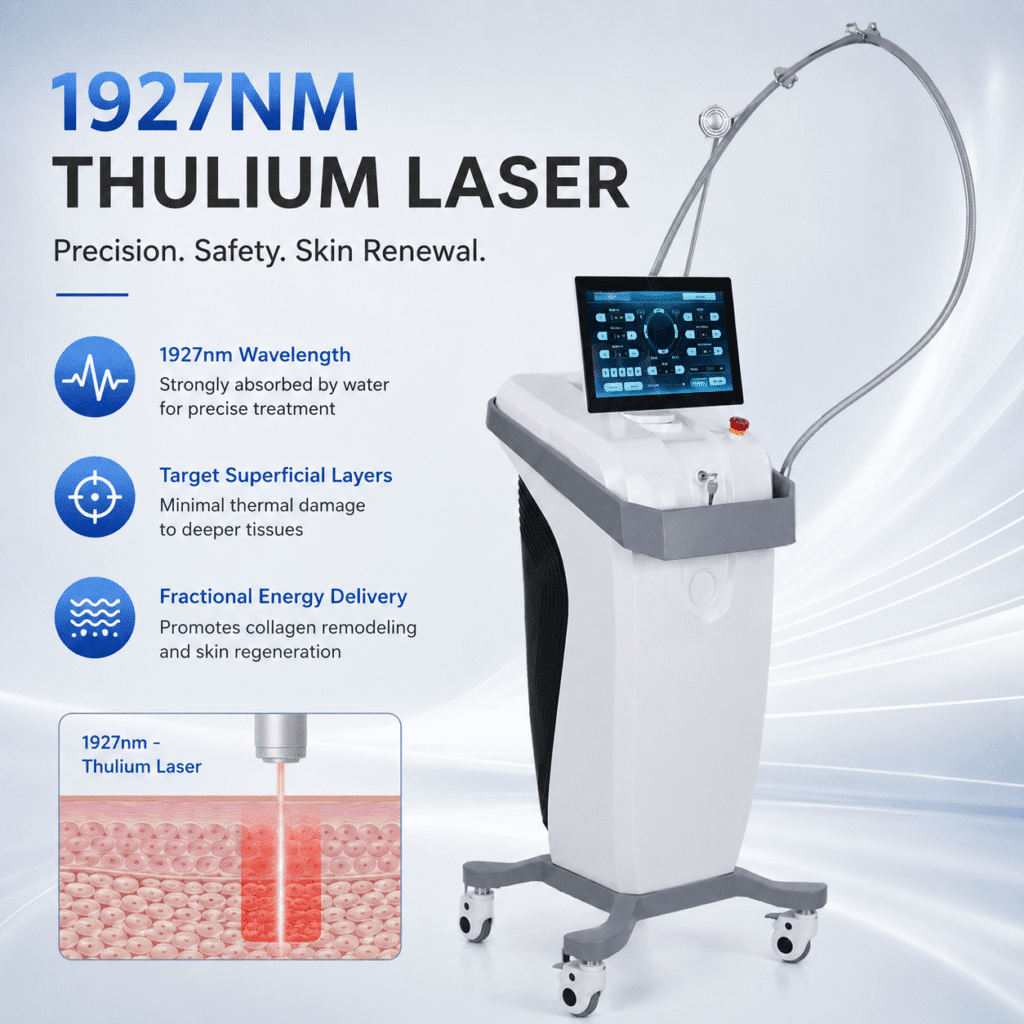
- Premium catalog tier: Reserve advanced or support-intensive products for qualified buyers. A0204 focused HIFU, A0152 RF microneedling, A0241 electromagnetic stimulation with RF, and S9 localized cooling each need technology-specific qualification.
The tiers should not claim that a premium device guarantees better results. They describe the buyer readiness, sales process, technical complexity, and support commitment associated with the product. A well-designed catalog also allows a model to appear in a specialist collection without forcing every category into three artificial price bands.
1. Why Distributor Catalogs Need Product Tiers
A catalog performs more than a listing function. It helps a prospect decide whether a product belongs in the business now, later, or only after further preparation. Clear tiers can improve that decision in four ways:
- They reduce irrelevant comparisons between a first facial platform and an advanced clinical procedure system.
- They give sales representatives a consistent starting point for qualification.
- They connect product pages to business stages and service-menu goals.
- They guide inventory, demonstration, training, and technical-support priorities.
Without this structure, “more functions” or a higher quoted price may be mistaken for a better fit. A tiered catalog makes operating readiness visible before a buyer focuses on specifications.
2. Define the Three Tiers by Readiness, Not Price Alone
Price can influence a purchasing decision, but it is an unstable foundation for catalog architecture. Freight, configurations, promotions, and market conditions change. The operating demands of a technology provide a more durable distinction.
| المستوى | وضع المشتري | خصائص المنتج | مسؤولية الموزع |
|---|---|---|---|
| مستوى الدخول | Starting a first device service or adding a simple, focused category | Clear menu role, controlled configuration, teachable daily workflow | Explain the service role, confirm basic setup, and support a reliable launch |
| Growth | Expanding an established menu after demand has been observed | Distinct new modality, more consultation choices, additional workflow requirements | Qualify demand, demonstrate differentiation, and plan accessories and training |
| غالي | Adding an advanced, specialist, or configuration-sensitive category | Greater professional, technical, room, screening, or aftercare requirements | Conduct deeper qualification, document configuration, and define support boundaries |
An expensive salon device may still belong in a growth tier if it is straightforward to position and support. A compact clinical system may belong in the premium tier because its procedure, risks, and operator requirements are more demanding.
3. Use a Tier Assignment Scorecard
Before placing a model in a tier, score it against the same practical criteria:
- Service clarity: Can the target buyer explain the service without vague promises?
- Operator requirement: What training, experience, or professional scope is needed?
- Client qualification: How detailed are screening, consent, records, and follow-up?
- Configuration complexity: How many wavelengths, handles, cartridges, tips, or applicators must be selected?
- Facility requirement: Does the product need a specialist room, protective equipment, power planning, or additional controls?
- Demonstration burden: Can the device be shown through a simple workflow, or does a meaningful demonstration require advanced knowledge?
- After-sales burden: How much installation, troubleshooting, consumable, and application support should the distributor prepare?
- Regulatory sensitivity: Are local classification, operator, import, or advertising rules likely to narrow the buyer group?
Assign the tier from the combined pattern. No single specification should decide it.
4. Recommended Catalog Architecture
The customer-facing catalog can use three main gateways and retain technology categories underneath them.
| Catalog gateway | Main message | Suitable content | Primary call to action |
|---|---|---|---|
| Start Your First Device Service | Build one clear, repeatable treatment category | Entry-level models, room checklist, starter configuration, basic menu example | Compare starter devices |
| Expand Your Treatment Menu | Add a differentiated facial, hair, or body service | Growth models, category comparisons, upgrade paths, demand questions | Plan your next category |
| Build an Advanced Aesthetic Program | Evaluate specialist technologies with stronger operational requirements | Premium models, configuration notes, qualification form, safety and support information | Request a technical consultation |
A buyer should also be able to browse by technology, such as Hydra, laser hair removal, HIFU, or RF microneedling. Tier navigation answers “where should I start?” while technology navigation answers “which type of system am I comparing?” The two paths serve different search needs.
5. Entry-Level Facial Foundation: A0648
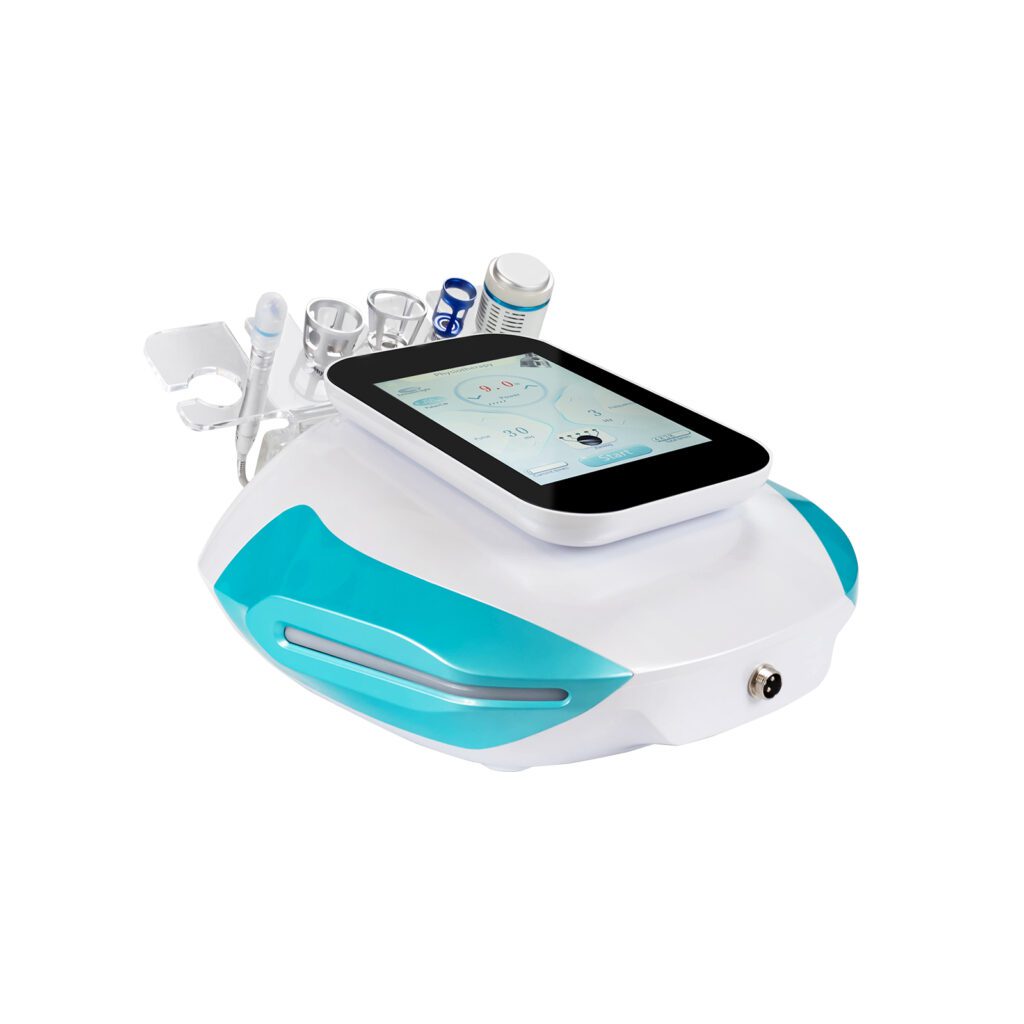
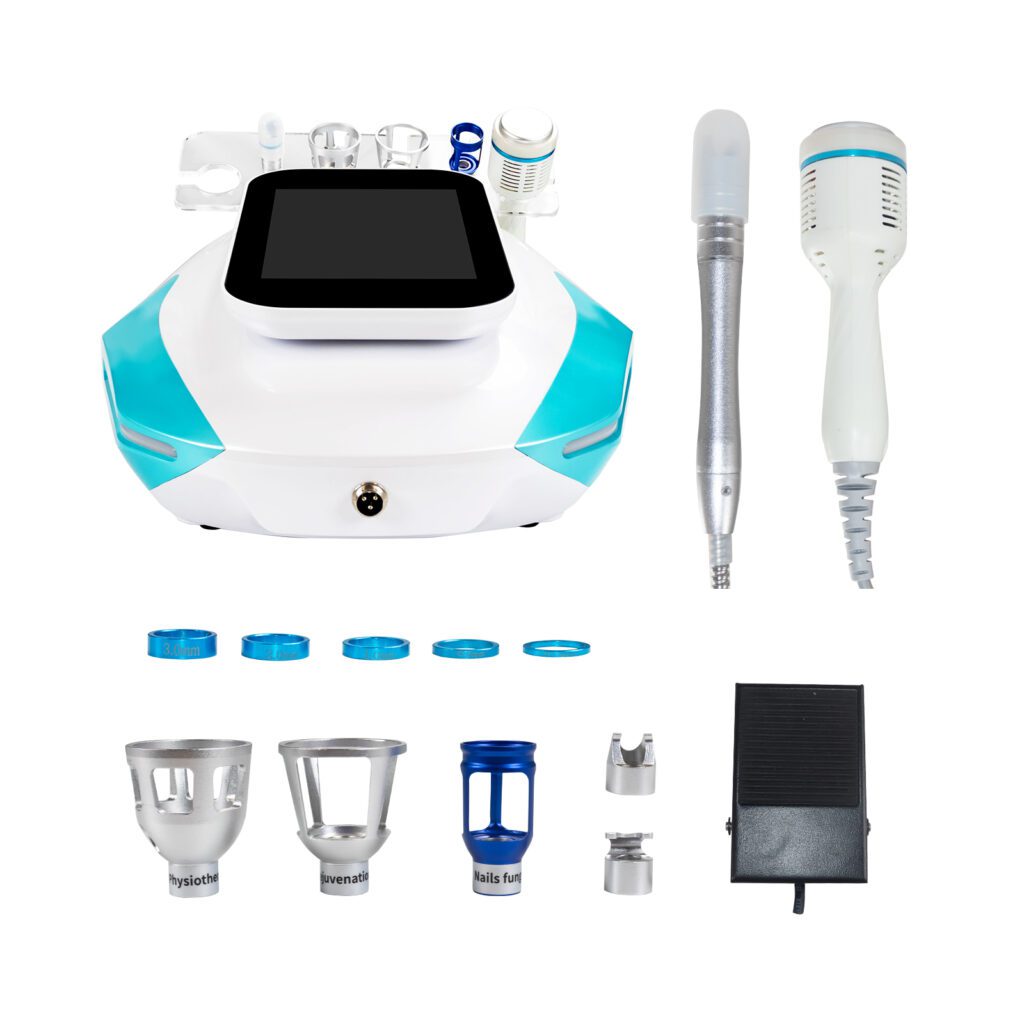
ال A0648 9-in-1 hydro microdermabrasion system is a relevant entry-level catalog anchor for facial salons, beauty studios, and distributors serving first-time device buyers. Its commercial role is a cleansing and hydration-oriented facial platform built around exfoliation, vacuum-assisted extraction, and hydration steps.
The catalog page should lead with that service logic rather than the function count. Explain who the platform is for, which facial category it creates, what is included, what recurring supplies need planning, and what daily cleaning steps the operator must understand.
A suggested catalog label is Facial Service Starter. The product can also appear in med-spa or clinic collections as a maintenance-care device, but its tier position does not turn it into a clinical procedure system.
6. What Makes a Good Entry-Level Device
An entry-level device is not a disposable or low-quality option. It should provide a stable foundation for a defined buyer group. Distributors should look for:
- one clear service family rather than several unrelated claims;
- a standard configuration that sales staff can quote consistently;
- a room and setup process suitable for the target business;
- training that can cover operation, cleaning, routine care, and consultation boundaries;
- understandable accessory and consumable planning;
- a natural next category for buyers who later expand; and
- product language that does not depend on guaranteed clinical outcomes.
If the buyer cannot explain how the device becomes a bookable service, calling it entry-level does not solve the positioning problem.
7. Entry-Level Catalog Content That Helps Buyers Decide
Every entry-level page should answer practical launch questions:
- What type of business commonly considers this device?
- What service family can it support?
- Which functions are included in the quoted configuration?
- What space, electrical supply, water or solution handling, and storage are needed?
- Which consumables and cleaning supplies should be prepared?
- What does operator familiarization cover?
- Which upgrade category becomes relevant after demand is established?
This information is more useful than a dense list of benefits. It also gives the sales team a structured discovery call.
8. Growth Facial Category: A0272-F
ال A0272-F facial electrical stimulation and RF system can sit in the growth tier for salons and med spas that already have a stable facial menu. It creates a separate facial tone and contour consultation rather than adding another cleansing step.
The catalog should show the difference between A0648 and A0272-F clearly:
| نموذج | دور الخدمة | Buyer stage | Catalog message |
|---|---|---|---|
| أ0648 | Cleansing and hydration-oriented facial care | Launching or strengthening a facial foundation | Start a structured facial service |
| A0272-F | Facial electrical stimulation and RF category | Adding a distinct consultation to an established facial menu | Expand into facial tone and contour services |
Avoid presenting the two systems as a mandatory same-day package. A buyer may own both because they serve different menu families; treatment suitability and sequence require separate professional judgment.
9. Growth Hair-Removal Category: A0423
ال ليزر ثنائي A0423 can anchor a growth or specialist catalog collection for qualified hair-removal buyers. Its page lists multiple wavelength and spot-size choices, which means the catalog must separate the general model family from the exact configuration being quoted.
The distributor should confirm wavelength selection, spot size, handle power, cooling arrangement, electrical requirements, supplied protective items, and documentation. A catalog badge such as Configuration Consultation Required is more useful than implying that every listed option arrives as standard.
Laser hair removal also needs an experienced operator, individual suitability assessment, and appropriate facility controls. The American Academy of Dermatology’s laser hair removal FAQs explain that treatment commonly involves multiple sessions and that results and risks vary. Distributors should keep marketing language realistic and require buyers to check local operating rules.
10. Growth Body-Care Category: B0155
ال B0155 سطح المكتب Endos Velapro lists vacuum roller, RF, rotating massage, and 80K cavitation functions. It can occupy the growth tier for an established salon or body studio that wants a selected multifunction body-care category.
The sales story should not be “more handles for every client.” Instead, the distributor should help the buyer define which handles relate to which menu item, how suitability will be assessed, who will operate the equipment, and how the workflow will be documented. This turns a multifunction platform into a manageable service line.
B0155 may be an entry point into body care for an established beauty business, yet it is a growth purchase at the business level because the operator is adding a new service family. This illustrates why tiers should describe buyer readiness as well as machine complexity.
11. When a Device Belongs in the Growth Tier
A device is a strong growth candidate when it meets most of these conditions:
- it answers a demand already visible in consultations;
- it creates a service category distinct from the buyer’s existing equipment;
- the team can allocate time for new training and workflow development;
- the room and support requirements are understood;
- the buyer can describe the new service without overstating outcomes;
- the configuration can be finalized before order; and
- the business can maintain the original core menu after expansion.
Growth devices should solve a defined portfolio gap. They should not be included only because a buyer wants a longer equipment list.
12. Premium Focused HIFU Category: A0204
ال A0204 9D/7D focused HIFU platform belongs in a premium, consultation-led section for appropriately prepared med spas and clinics. SHEFMON’s page presents standard and optional components, so the buyer must confirm the ordered handpieces, cartridges, intended treatment areas, consumable expectations, software, and documentation.
The premium page should include a pre-quotation form that asks about operator qualifications, current services, local scope, proposed treatment areas, screening process, and follow-up capacity. A simple “buy now” presentation does not give either party enough information for a configuration-sensitive system.
The product should be positioned as a focused-ultrasound category, not as a universal upgrade from routine facials. The change in tier represents additional responsibility as well as additional capability.
13. Premium Clinical Skin Category: A0152
ال A0152 سطح المكتب MNRF العمق 8 is a premium clinical-line candidate for appropriately qualified settings. Its page lists multiple needle-head options and selectable handle configurations. The distributor should document exactly which components are included and how consumable heads will be supplied.
RF microneedling should receive a dedicated clinical catalog page, not a small tile beside routine facials. The page should address professional qualification, infection control, contraindication screening, parameter training, records, aftercare, and adverse-event escalation. The U.S. FDA has issued a safety communication about certain uses of RF microneedling, reinforcing the need for careful buyer qualification and locally appropriate practice.
Premium placement must never imply universal suitability or guaranteed results. It signals that the sales process needs more technical and clinical scrutiny.
14. Premium Body Stimulation Category: A0241
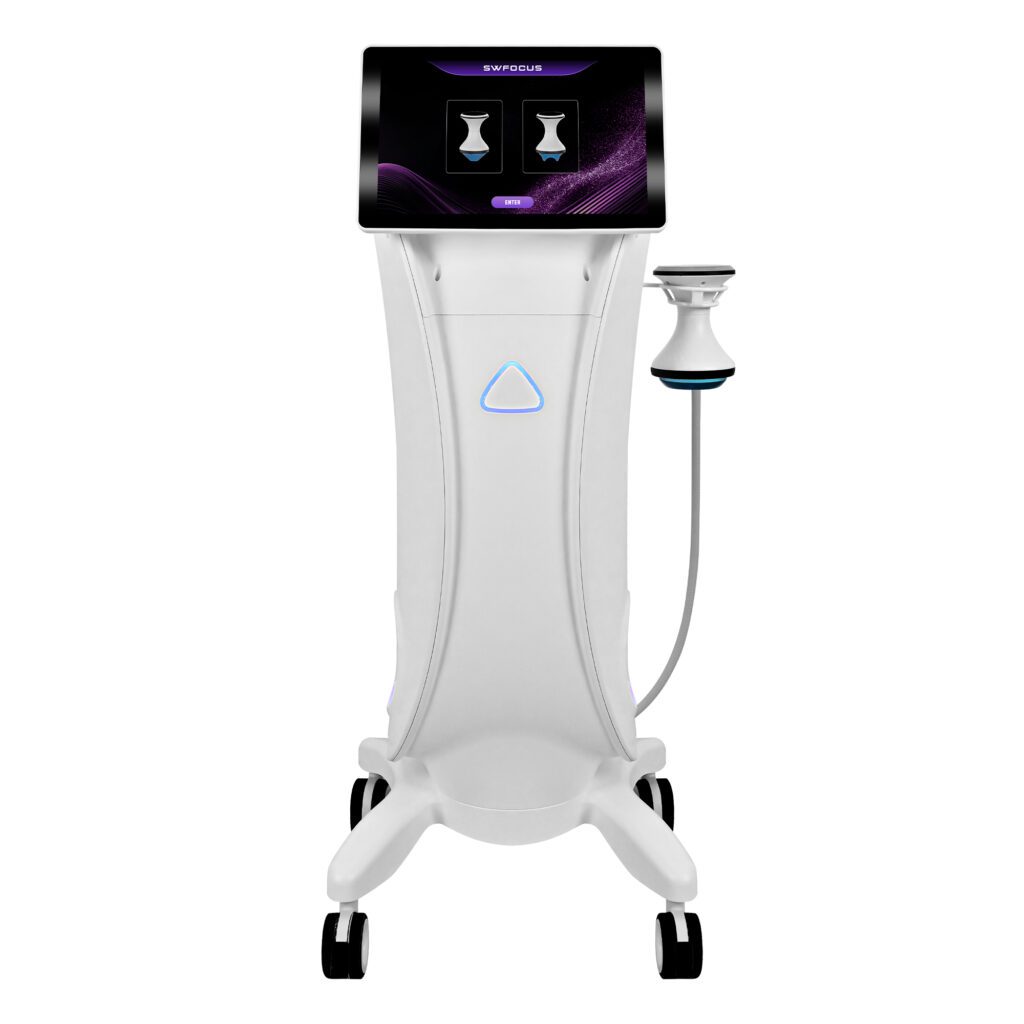
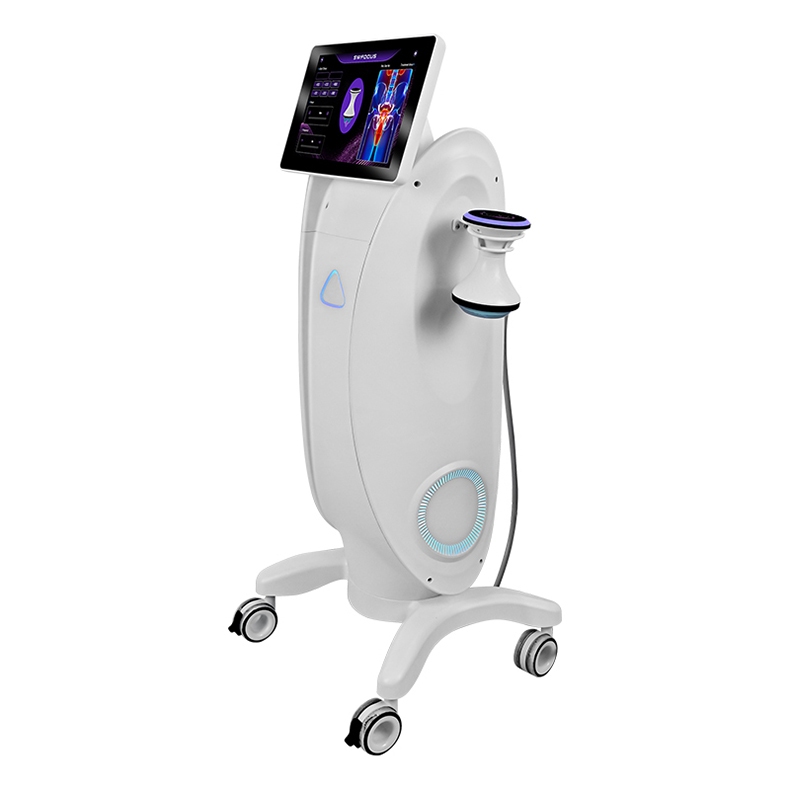
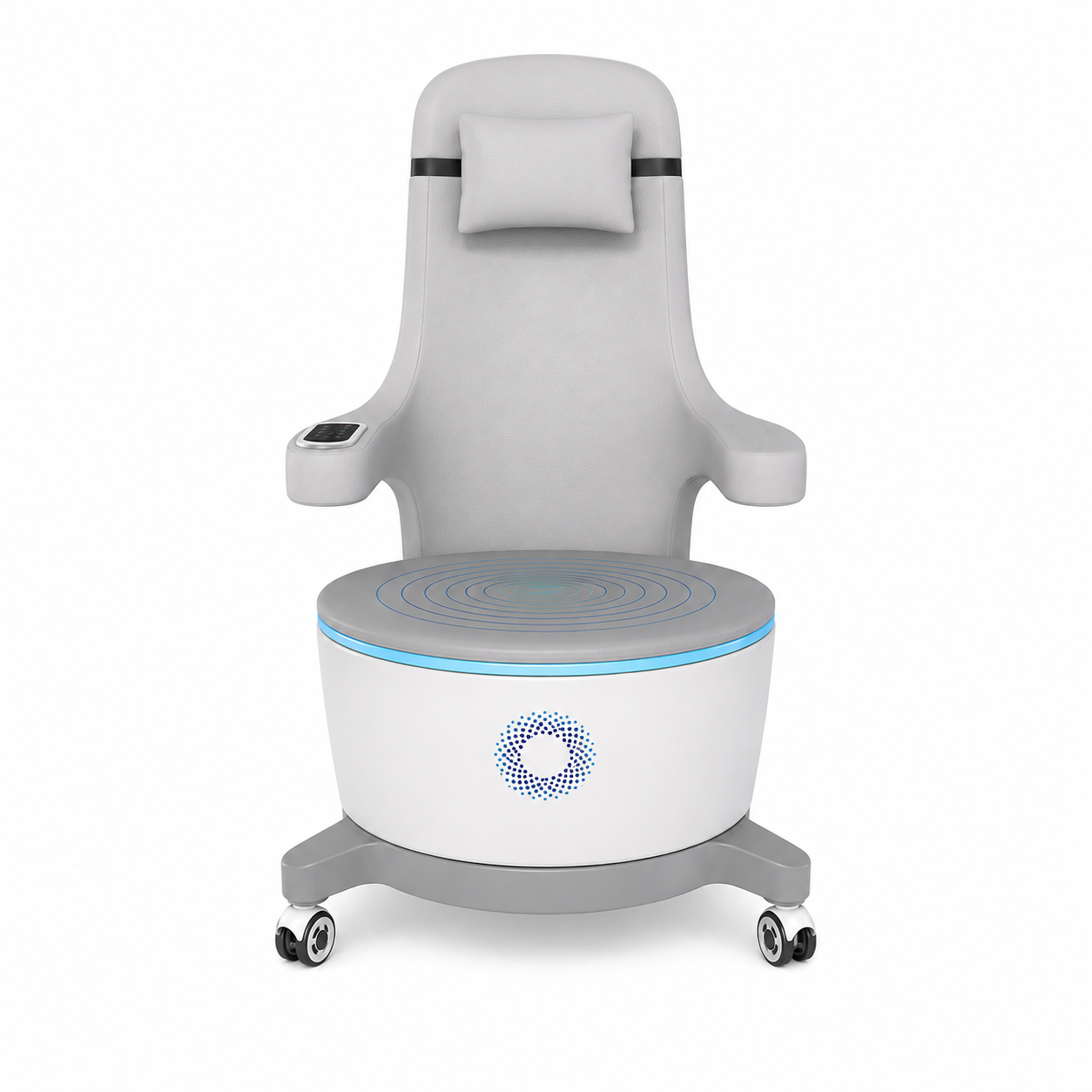
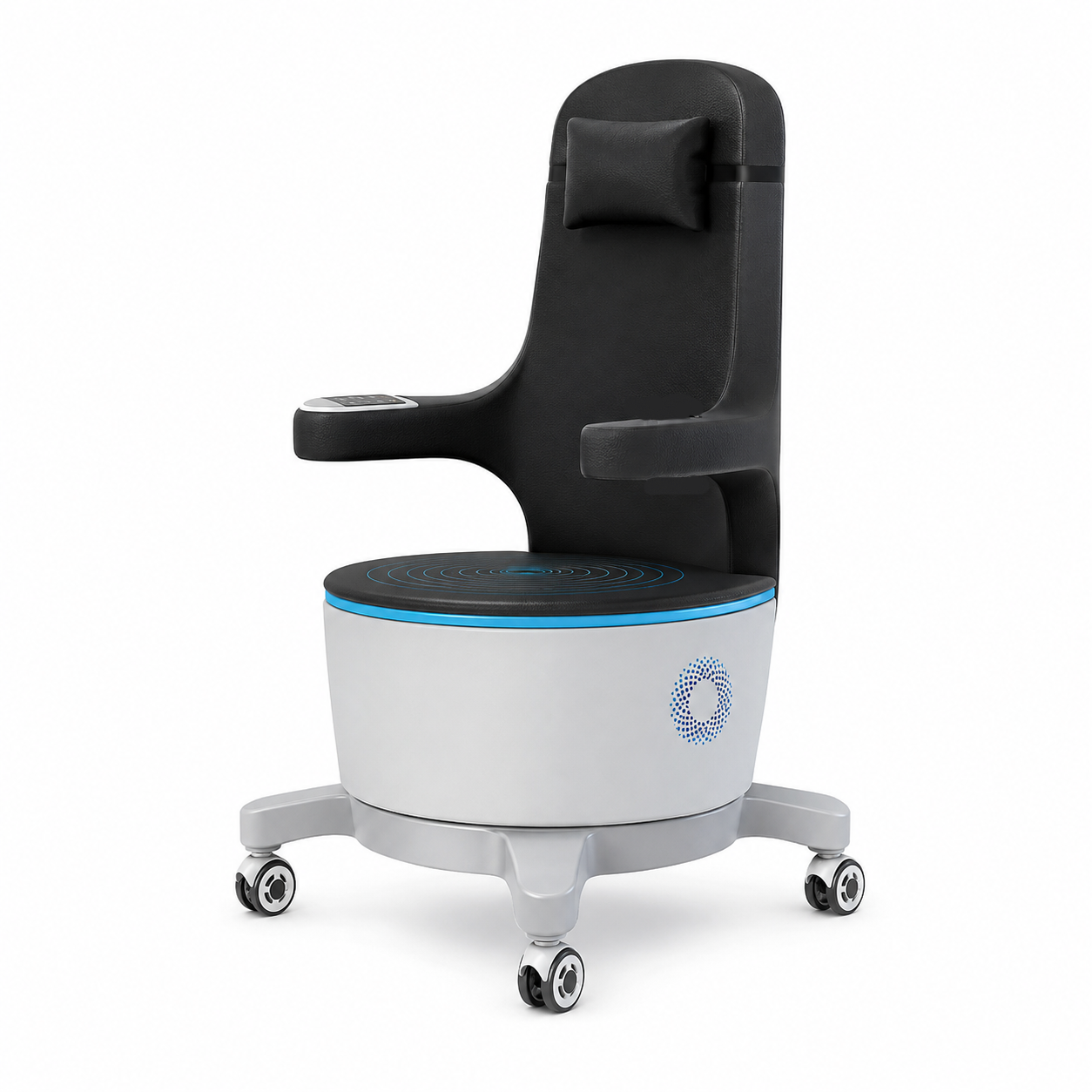
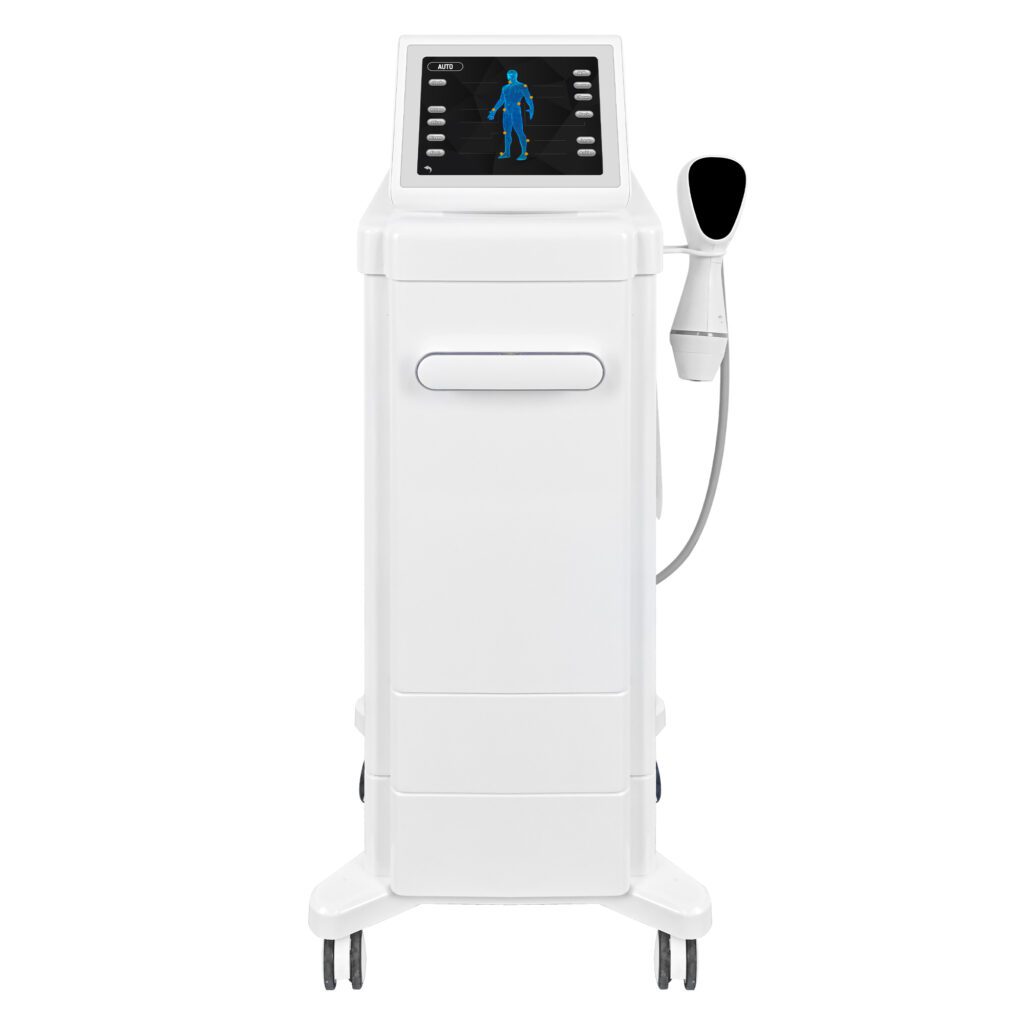
ال A0241 electromagnetic stimulation and RF system can appear in a premium body-program section. Its role is a muscle-focused service category, separate from vacuum-roller body care and localized cooling.
The catalog should explain the technology direction, application setup, standard and optional components, space and power considerations, screening responsibilities, and the difference between this category and other body devices. Avoid repeating dramatic percentages, exercise-equivalent claims, or promises of a fixed result.
For a distributor, the key commercial question is whether the target buyer can build and support a coherent program around the modality. If demand and operating readiness are uncertain, the model can remain order-led rather than stocked widely.
15. Premium Localized Cooling Category: S9
ال نظام S9 للتجميد الدهني is positioned around vacuum-assisted localized cooling and multiple applicator options. It belongs in a premium or specialist body-contouring collection because buyer selection, applicator planning, screening, monitoring, and follow-up are central to the service.
Catalog language should describe it as a localized contour category rather than a general weight-loss solution. The U.S. FDA’s overview of non-invasive body contouring technologies explains that these procedures have limitations and possible complications. Distributors should direct buyers to applicable local rules and require appropriate operating protocols.
The quotation should specify the number and type of applicators, included accessories, operating ranges, electrical requirements, training scope, and items the buyer must source locally.
16. Tiered Model Matrix for a Distributor Catalog
| نموذج | Suggested tier | Primary buyer | Catalog role | Preferred supply approach |
|---|---|---|---|---|
| أ0648 | مستوى الدخول | Facial salons and beauty studios | Hydro cleansing and hydration foundation | Standardized core configuration |
| A0272-F | Growth | Established salons and med spas | Facial tone and contour expansion | Demonstration-led growth line |
| أ0423 | Growth / Specialist | Qualified hair-removal businesses | Diode laser hair-removal category | Configuration-led quotation |
| ب0155 | Growth | Salons and body-care studios | Multifunction body-care expansion | Demonstration plus handle workflow |
| أ0204 | غالي | Qualified med spas and clinics | Focused HIFU category | Technical consultation and order-led supply |
| أ0152 | Premium / Clinical | بيئات سريرية مؤهلة بشكل مناسب | RF microneedling procedure line | Clinical qualification and exact component control |
| A0241 | Premium / Body | Body-focused studios and med spas | Electromagnetic stimulation with RF | Demand-qualified demonstration or order-led supply |
| س9 | Premium / Body | Qualified contouring providers | Localized cooling-based contour category | Applicator-specific consultation |
This matrix is a commercial framework, not a clinical authorization chart. The distributor must still verify the buyer’s market, operator scope, intended use, and exact product configuration.
17. Do Not Force Every Technology into All Three Tiers
A common catalog mistake is creating basic, standard, and premium versions of every category even when the models do not serve meaningfully different buyers. This creates artificial choices and encourages price-only comparisons.
It is acceptable to have one well-defined hair-removal family, one entry-level facial anchor, and several premium systems with different technologies. Add a new model to a tier only when it provides a clear difference in format, configuration, service role, capacity, or support requirement.
The goal is an understandable catalog, not visual symmetry.
18. Create Upgrade Paths Between Tiers
An upgrade path should describe business readiness rather than a sales deadline.
Entry-Level to Growth
A facial salon may move from A0648 to a separate A0272-F category when its core menu is stable, operators follow consistent procedures, and clients are asking for a different facial objective. An established studio may add B0155 when it has a defined plan for body services and sufficient room and staff capacity.
Growth to Premium
A med spa may evaluate A0204 after confirming professional scope, consultation standards, room readiness, and aftercare. A body business may compare A0241 and S9 after identifying whether client demand fits muscle-focused stimulation or localized cooling.
Specialist Rather Than Sequential
A hair-removal business may begin with A0423 because laser is its core category. It does not need to buy a facial entry-level system first. Catalog tiers should guide fit without imposing an irrelevant purchasing sequence.
19. Match Stock Strategy to Each Tier
| المستوى | Inventory approach | Demonstration approach | Sales documentation |
|---|---|---|---|
| مستوى الدخول | Stock a validated standard configuration where demand supports it | Repeatable demonstration focused on setup and service workflow | Starter specification, supplied items, consumables, room checklist |
| Growth | Hold selected demonstration or fast-moving configurations after demand review | Show how the technology differs from the buyer’s current menu | Comparison sheet, qualification form, configuration record |
| غالي | Prefer order-led or tightly controlled stock for configuration-sensitive models | Conduct planned technical demonstrations for qualified prospects | Signed configuration, facility and operator questions, support scope |
No tier automatically determines inventory quantity. Distributors should use their own verified inquiry, conversion, service, and stock-turn data before committing capital.
20. Design Tier-Specific Product Pages
An entry-level page should be concise and operational. Show the target business, service role, main functions, standard package, daily workflow considerations, consumables, and next-step category.
A growth page should add comparison tools. Explain what new client need the device addresses, how it differs from the buyer’s current equipment, what extra training is required, and when the purchase should be postponed.
A premium page should be consultation-led. Include configuration notes, professional-use boundaries, buyer qualification questions, room and power considerations, consumables or applicators, training scope, and an explicit request for technical review.
This content hierarchy allows catalog depth to increase with the buying decision.
21. Use Clear Badges Without Making Risky Claims
Helpful catalog badges describe process and fit:
- Starter Facial Platform
- Established Business Upgrade
- Specialist Hair-Removal System
- Configuration Consultation Required
- Professional or Clinical Buyer Review
- Order-Led Model
- Consumable Planning Required
- خيارات تطبيق متعددة
Avoid badges such as “guaranteed results,” “risk-free,” “works for everyone,” or “best profit.” These statements cannot replace individual suitability, verified performance evidence, or the buyer’s own commercial analysis.
22. Build Bundles by Business Stage
Distributors can present portfolio bundles while keeping each service separate.
| Bundle | Included category direction | مشتري مناسب | Important boundary |
|---|---|---|---|
| Facial Launch | A0648 hydro facial foundation | New or refocused facial salon | Define included functions and recurring supplies |
| Facial Growth | A0648 plus A0272-F | Established salon or med spa | Treat as two menu families, not an automatic combined protocol |
| Hair Specialist | A0423 configuration plus relevant room and protective planning | Qualified hair-removal business | Confirm wavelength, spot size, operator, and local rules |
| Body Growth | B0155 with defined handle workflows | Salon adding selected body care | Do not market all handles as suitable for every client |
| Body Specialist | A0241 or S9 selected by modality | Body-focused practice | Choose from demand and readiness, not from a generic slimming claim |
| Advanced Skin | A0152 with its documented configuration | Appropriately qualified clinic | Maintain clinical screening, infection control, and aftercare |
These bundles organize procurement and marketing. They do not establish treatment sequences, same-day combinations, or clinical protocols.
23. Align Sales Training with the Catalog Tiers
Sales representatives should learn different behaviors for each tier.
Entry-Level: Identify the buyer’s first service category, explain the standard configuration, and confirm basic operational readiness.
Growth: Ask what the buyer already owns, what consultation demand is unmet, and how the proposed technology creates a separate service.
Premium: Qualify the business before discussing a final configuration. Escalate technical, professional, regulatory, and clinical questions to the appropriate specialist rather than improvising an answer.
All sales teams should be able to distinguish a product demonstration from operator certification and clinical training. The catalog should state the limits of the support offered.
24. Control Options, Accessories, and Consumables
Tiered catalogs often fail when the headline model and delivered package differ. Use a specification record that identifies:
- model and configuration code;
- standard and optional handles, cartridges, tips, heads, or applicators;
- software language, voltage, and plug;
- included accessories and protective items;
- consumables and expected replacement components;
- packaging and delivery details;
- training and after-sales inclusions; and
- exclusions or locally sourced items.
This is especially important for A0423, A0204, A0152, and S9 because the product family may contain configuration choices. The same record should inform the web page, quotation, invoice, and handover.
25. Measure Whether the Tier Structure Works
Do not judge the catalog only by page views. Track how well it routes buyers:
- qualified inquiries by tier and buyer type;
- requests that move to a more appropriate tier after consultation;
- quotation-to-order conversion by model and configuration;
- time needed to finalize technical specifications;
- demonstration completion and next action;
- installation and training workload;
- support cases linked to unclear configurations; and
- buyers adding a second category after a stable first launch.
This evidence can show whether a model is misplaced. If an entry-level listing repeatedly requires advanced qualification, it may belong in the growth or premium section. If a premium page attracts unqualified inquiries, its buyer requirements may need to be more visible.
26. Common Catalog Tiering Mistakes
Using price as the only dividing line
Price does not reveal operator scope, configuration difficulty, room requirements, or support burden.
Calling every multifunction model entry-level
A large feature count can increase training and workflow complexity. Entry-level should mean a clear starting role, not merely one chassis containing many functions.
Presenting premium as a promise of stronger results
Premium should describe the buying and support process. Results depend on technology, client selection, operation, individual response, and other factors.
Hiding optional configurations
If a page lists multiple components without identifying the standard package, prospects may compare quotations incorrectly.
Mixing salon and clinical audiences
Clinical procedure devices require a different page, qualification process, and content depth from routine salon facial equipment.
Creating bundles that look like treatment protocols
A commercial bundle can contain more than one service category, but it should not imply that the devices must be used together or in one appointment.
27. Distributor Catalog Checklist
Before publishing the tiered range, confirm the following:
- Is each tier defined by buyer readiness and operational demands?
- Does every listed model have one clear commercial role?
- Can prospects browse both by tier and by technology?
- Are the target buyer and reasons to postpone visible?
- Is the standard configuration separate from optional components?
- Are voltage, plug, accessories, consumables, and delivery items documented?
- Do premium pages use a qualification-led call to action?
- Are salon, med-spa, body-specialist, hair-removal, and clinical audiences separated appropriately?
- Are bundles described as business portfolios rather than treatment protocols?
- Has the team removed unsupported outcome, profit, safety, and bestseller claims?
- Can sales staff explain when to move a buyer to another tier?
- Is performance tracked by qualified demand and support data?
الأسئلة الشائعة
1. What makes a beauty device entry-level?
An entry-level device provides a clear starting service, manageable configuration, teachable workflow, and practical support path for its intended buyer. It does not mean poor quality or suitability for every operator.
2. Should catalog tiers be based on wholesale price?
Wholesale price may be shown within a sales process, but it should not define the tier by itself. Buyer readiness, technology complexity, configuration choices, room needs, training, and after-sales workload provide a stronger structure.
3. Which SHEFMON model can anchor an entry-level facial range?
A0648 can anchor a hydro cleansing and hydration-oriented facial range for salons and studios. Distributors should still confirm the supplied functions, consumables, operating workflow, and local business requirements.
4. Which devices fit a growth catalog tier?
A0272-F can expand an established facial menu, A0423 can establish a qualified hair-removal category, and B0155 can add selected multifunction body care. Their fit depends on the buyer’s current services and readiness.
5. Which models belong in a premium catalog section?
A0204, A0152, A0241, and S9 are relevant premium or specialist candidates because they require deeper technology-specific qualification. Premium placement does not mean that every model fits every advanced business.
6. Can one device have different tiers for different buyers?
Yes. B0155 may be a body-care starting point for an established studio but still represent a growth purchase because it adds a new service family. Explain the context rather than assigning the tier from hardware alone.
7. Should distributors stock premium devices?
That depends on verified local demand, configuration consistency, demonstration needs, capital planning, and support capacity. Configuration-sensitive systems can remain order-led until the distributor has evidence for a standard stock unit.
8. How should optional handles and configurations appear in the catalog?
Show a clearly defined standard package, then list optional components separately. Confirm the final selection in a signed specification or configuration record before accepting the order.
9. Can entry-level and premium devices be sold as one package?
They can form a business portfolio when each has a separate menu role and the buyer is qualified for every category. The package should not imply a same-day treatment sequence or bypass technology-specific training.
10. What should a distributor send SHEFMON for a catalog recommendation?
Send the destination market, target buyer types, priority service categories, preferred product tiers, expected demonstration needs, voltage and plug, current support capacity, and any configuration requirements. This allows the range to be narrowed before quotation.
خاتمة
Entry-level, growth, and premium tiers make a distributor catalog useful when they represent stages of business readiness. A0648 can provide a focused facial starting point. A0272-F, A0423, and B0155 can open distinct growth categories. A0204, A0152, A0241, and S9 can form selective premium collections for buyers prepared to meet their technical and professional demands.
The result is a catalog that guides buyers instead of displaying a wall of machines. It also gives the distributor a practical basis for stock, demonstrations, qualification, training, and after-sales support.
تصفح فئات أجهزة التجميل من شيفمون أو اتصل بشيفمون with your target buyer groups, market, tier plan, and preferred configurations to build a more focused distributor range.