







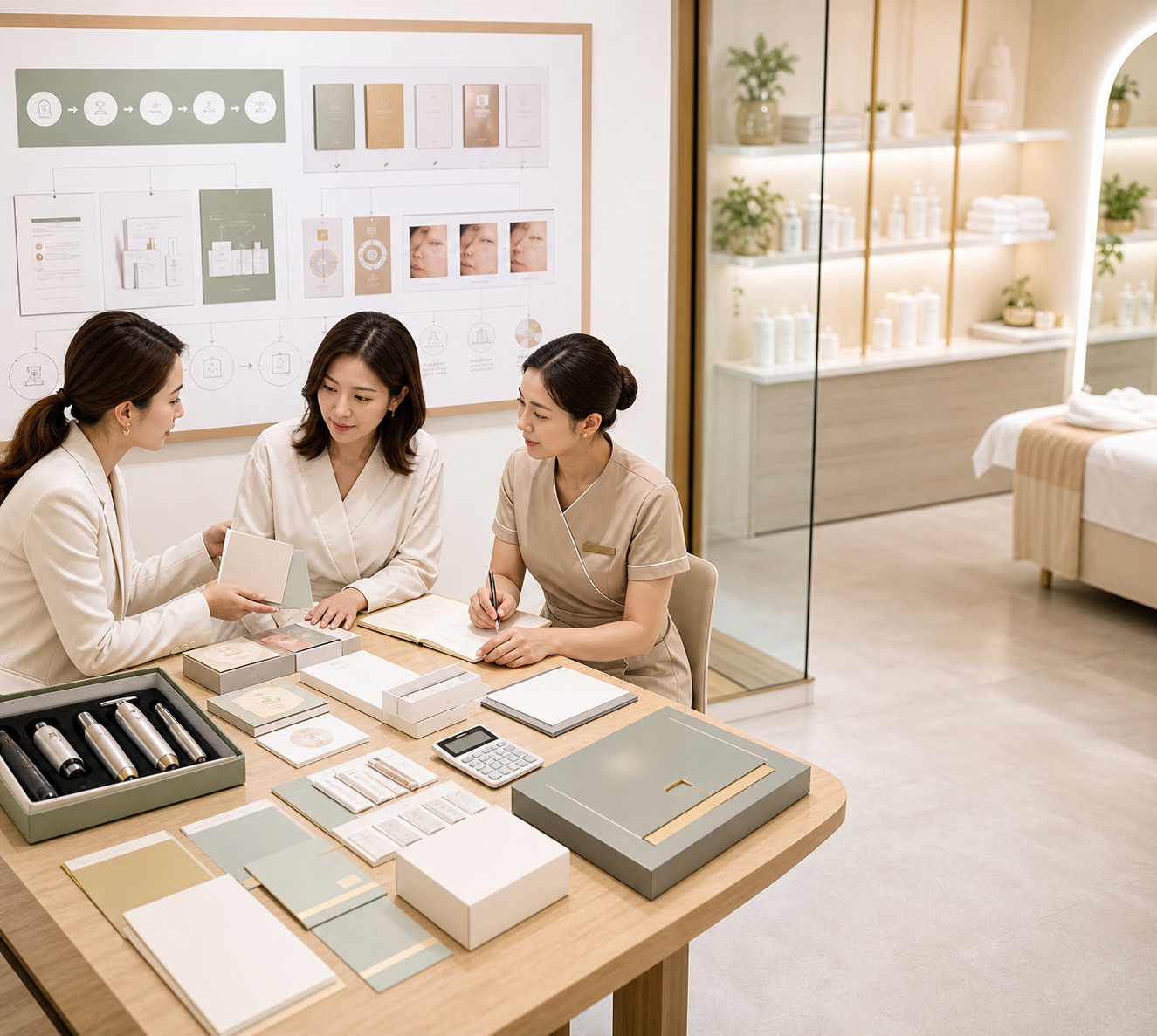
Beauty salons are paying more attention to project packaging because equipment alone is no longer enough to win customers or protect profit margins. A machine can provide technology, but a well-packaged project gives the salon a clear service name, customer promise, pricing structure, consultation process, treatment course, staff sales script, aftercare plan, and repeat-purchase path.
In today’s beauty market, customers are surrounded by choices. They can compare salons, home-use devices, medical aesthetic clinics, skincare brands, and social media recommendations within minutes. If a salon only says, “We have RF, HIFU, laser, hydro facial, or body sculpting,” customers may not understand why they should pay more. But if the salon presents the same technology as a complete project, such as a skin barrier repair program, pre-wedding lifting plan, postpartum body management course, acne recovery system, or anti-aging membership, the value becomes easier to understand.
This is why project packaging has become a key part of beauty salon growth. It helps salons transform machines into products, treatments into solutions, and one-time services into repeatable revenue.
What Project Packaging Means in Beauty Salons
Project packaging means turning an equipment-based treatment into a complete commercial service system. It is not only a beautiful name or a discount bundle. A real project package should answer several business questions:
- Who is the target customer?
- What beauty problem does the project solve?
- Which technology or device is used?
- How many sessions are recommended?
- What result can the customer reasonably expect?
- How should the consultant explain the treatment?
- How should the salon price the package?
- What products, aftercare, or membership plan can be connected?
- How can the salon track progress and encourage repeat visits?
For example, a simple RF facial treatment may be sold as one session. A stronger package may turn it into a “30-Day Firming and Contour Program” with skin analysis, three RF lifting sessions, LED repair, homecare recommendations, progress photos, and a membership renewal offer. The machine is the same, but the business value is very different.
Project packaging makes the service easier to sell, easier to train, easier to promote, and easier for customers to remember.
Customers Buy Solutions, Not Machine Parameters
Many beauty equipment suppliers like to talk about frequency, wavelength, energy output, cooling system, probes, handles, screen size, and technical certifications. These details are important for professional buyers, but most salon customers do not make decisions based on machine specifications.
Customers care about clearer questions:
- Can this improve my skin condition?
- Is it suitable for my age and skin type?
- How many times do I need to do it?
- Will I see a visible change?
- Is it safe and comfortable?
- Why should I choose this salon instead of another one?
Project packaging translates technical language into customer language. Instead of saying “multipolar RF and EMS stimulation,” the salon can explain a firming plan for loose facial contours. Instead of saying “hydro dermabrasion and oxygen infusion,” the salon can explain a hydration and pore-refining treatment for dull or congested skin.
This does not mean salons should exaggerate results. In fact, good project packaging should make the promise more professional, not more unrealistic. The goal is to explain the value clearly, set the right expectations, and help customers choose a treatment plan with confidence.
Competition Is Pushing Salons to Differentiate
The beauty equipment market has become crowded. Many salons now have similar devices: hydro facial machines, RF devices, LED therapy, HIFU systems, diode laser hair removal, body contouring equipment, and skin analyzers. When many salons offer similar technologies, price competition becomes easy.
Project packaging helps salons avoid looking the same. Two salons may both own an RF machine, but one sells a basic RF session while the other sells a structured anti-aging management plan with consultation, treatment stages, skin records, aftercare, and membership benefits. The second salon is easier to position as professional and worth paying for.
This is especially important for small and medium beauty salons. They may not have the biggest location, the most expensive decoration, or the strongest brand awareness. But they can still build differentiation through better service design. A well-packaged project can make a salon look more organized, more expert, and more trustworthy.
For equipment distributors, this also matters. A distributor that only sells machines may be compared mainly by price. A distributor that helps salons build service packages can become a business partner instead of a simple supplier.
Project Packaging Increases Perceived Value
One reason salons care about project packaging is that it improves perceived value. A single treatment is easy to compare by price. A full project is harder to compare because it includes consultation, progress tracking, combined treatments, service experience, aftercare, and follow-up.
For example, a single hydro facial session may face strong price pressure. Many salons can offer similar services. But a “Sensitive Skin Recovery Program” that includes skin analysis, gentle cleansing, hydration, LED repair, barrier-care product recommendations, and two follow-up checks can justify a higher price.
The customer is not only paying for machine operation. They are paying for diagnosis, planning, professional care, time, confidence, and visible progress. This gives salons more room to protect margins.
Project packaging is particularly useful for high-end beauty equipment. Expensive machines need higher treatment prices and stronger utilization to recover investment. If the salon cannot package the device into premium service plans, the machine may become difficult to monetize even if the technology is good.
It Helps Turn One-Time Treatments Into Repeat Revenue
Many equipment-based services work best as a course rather than a single session. Hair removal, body contouring, RF tightening, acne care, pigmentation improvement, skin rejuvenation, and anti-aging management usually require repeated visits.
Project packaging helps salons sell these repeated visits naturally. Instead of pushing customers to buy more sessions after every visit, the salon can present a complete plan from the beginning:
- Initial consultation and skin or body assessment
- Recommended number of sessions
- Treatment frequency
- Combination with other services
- Expected progress stages
- Maintenance plan after the course
- Membership or renewal option
This structure increases customer commitment. It also improves salon cash flow because packages and memberships can bring more predictable revenue than single appointments.
For salon owners, this is one of the biggest reasons to package equipment projects. The goal is not only to sell one treatment. The goal is to create a repeatable service model that keeps customers coming back.
It Makes Staff Training and Sales Easier
Many salons buy good equipment but fail to sell enough treatments because staff do not know how to explain the project. If every employee describes the machine differently, customers receive inconsistent information. This weakens trust and lowers conversion.
Project packaging solves this by standardizing the service. A clear package gives staff:
- A treatment name
- A target customer profile
- A simple explanation of benefits
- Contraindication reminders
- Recommended session count
- Pricing options
- Upsell and cross-sell logic
- Aftercare instructions
- Answers to common objections
This is especially valuable for salons with new employees or multiple branches. Staff do not need to invent explanations on the spot. They can follow a professional framework.
For distributors and manufacturers, providing this kind of project training can increase customer satisfaction. The salon is more likely to reorder, upgrade, or recommend the supplier if the machine actually helps generate revenue.
Consumers Expect More Personalized Beauty Plans
Beauty consumers are becoming more interested in personalization. They do not want generic treatments that feel the same for everyone. They want services that match their skin condition, age, budget, lifestyle, and beauty goals.
This shift is one reason AI skin analysis devices, digital consultation tools, and salon software are becoming more relevant. These tools help salons collect customer data, record treatment history, recommend suitable plans, and manage follow-up.
Project packaging fits this trend because it gives salons a way to personalize without becoming chaotic. A salon can design several structured packages, then adjust intensity, frequency, and add-on services based on the customer’s needs.
For example, an anti-aging project may have different versions:
- Entry-level hydration and glow maintenance
- Mid-level RF firming and contour improvement
- Premium lifting program with RF, ultrasound, LED repair, and homecare
This gives customers choices while keeping the salon’s operation manageable.
Project Packaging Improves Equipment Utilization
One common problem in salons is low equipment utilization. A salon may buy a machine because it looks popular, but after a short promotion period, staff stop recommending it. The machine sits idle, and the owner feels the investment was not worthwhile.
Project packaging helps prevent this problem. When a device is connected to clear service packages, seasonal campaigns, memberships, and staff incentives, it becomes part of the salon’s daily revenue system.
A device with multiple handles or technologies can also be packaged into different projects for different customer groups. For example, a multifunctional platform may support:
- Facial lifting packages
- Hydration and repair packages
- Neck care packages
- Body firming packages
- Postpartum body management packages
- Seasonal skin renewal packages
This increases machine usage and helps the salon recover investment faster.
For equipment suppliers, this is a strong selling point. Salons do not only want to know what the machine can do. They want to know how many projects it can support and how quickly it can create revenue.
It Supports Better Marketing Content
Project packaging also makes marketing easier. A machine photo alone is often not enough to attract customers. Many consumers do not understand what the machine does, and technical posts can feel cold or confusing.
A packaged project gives the salon more marketing angles:
- Before-and-after progress stories
- Seasonal campaign themes
- Customer problem education
- Treatment course explanations
- Membership promotions
- Short video consultation scripts
- Social media posts about common concerns
- Holiday beauty packages
For example, “RF machine promotion” is not as attractive as “V-line firming plan before wedding season.” “Hydro facial discount” may be weaker than “7-day skin glow preparation before vacation.” Packaging connects the device to real customer occasions and emotions.
This is why many salons now ask equipment suppliers not only for product manuals, but also for marketing materials, project names, treatment menus, posters, short video ideas, and consultation scripts.
It Reduces Price Competition
When a service is not packaged, customers often compare it only by price. If one salon offers a hydro facial for less money, another salon may feel forced to discount. Over time, this reduces profit and makes the market unhealthy.
Project packaging makes the comparison more complex in a positive way. A customer may understand that one package includes skin analysis, multiple technologies, professional consultation, aftercare, and follow-up, while another salon only offers a basic single session.
This helps salons defend pricing with value instead of relying only on discounts. It also encourages customers to compare the complete experience rather than only the machine name.
For high-end salons, this is essential. Premium positioning requires more than expensive equipment. It requires a service system that feels professional from consultation to follow-up.
It Makes High-End Equipment Easier to Sell
High-end beauty equipment often requires a larger investment. Salon owners may hesitate if they cannot clearly see how the machine will generate revenue. Project packaging can reduce this hesitation.
When a supplier presents a high-end device with ready-to-use treatment packages, pricing models, staff training, and promotional calendars, the salon can imagine the business outcome more clearly. The conversation changes from “How much is this machine?” to “How can this project increase my average transaction value and customer retention?”
This is one reason high-end beauty equipment manufacturers are increasingly expected to provide more complete business support. Technology is important, but salons also want protocols, project planning, training, marketing, and after-sales guidance.
In competitive markets, the manufacturer that can help salons launch profitable projects has an advantage over the manufacturer that only provides hardware.
What a Strong Equipment Project Package Should Include
A strong project package should be practical enough for the salon to use immediately. It should not be only a decorative concept. A complete package may include:
- Project name and positioning
- Target customer group
- Main skin or body problem
- Device technology explanation
- Treatment process
- Recommended session count
- Pricing tiers
- Add-on service suggestions
- Homecare or product connection
- Contraindication and safety reminders
- Staff consultation script
- Customer FAQ
- Before-and-after photo guidance
- Marketing copy
- Membership or renewal plan
- Performance tracking indicators
The more complete the package, the easier it is for the salon to launch the project and train staff.
However, salons should avoid overcomplicating the package. If the project is too difficult to explain, customers may hesitate. The best packages are professional, clear, and easy to remember.
Which Equipment Categories Need Project Packaging Most?
Almost every beauty device can benefit from project packaging, but some categories need it more than others.
High-end anti-aging equipment needs packaging because customers must understand why the treatment is worth a premium price. RF lifting, HIFU, ultrasound lifting, and multi-technology anti-aging platforms should be connected to structured treatment plans.
Body contouring equipment needs packaging because results often depend on multiple sessions, lifestyle support, and progress tracking. Salons can package body projects around waistline management, postpartum recovery, summer preparation, or membership maintenance.
Laser and IPL systems need packaging because customers care about safety, session frequency, and visible improvement. Clear education can reduce fear and improve trust.
Skin management devices need packaging because basic facial services are easy to commoditize. Hydro facial, oxygen infusion, LED therapy, RF facial, and skin analysis devices become more valuable when combined into targeted programs.
AI skin analysis devices need packaging because analysis alone does not create revenue unless it leads to a recommended treatment plan. The real value comes from connecting diagnosis, project recommendation, and follow-up.
Mistakes Salons Should Avoid
Project packaging is powerful, but poor packaging can create problems. Some salons make packages too complicated, too expensive, or too exaggerated. Others use attractive names but fail to train staff properly.
The most common mistakes include:
- Making unrealistic result claims
- Copying project names without adapting to local customers
- Offering too many packages at once
- Failing to connect the project to actual machine capability
- Ignoring contraindications and safety communication
- Pricing the package without calculating cost and staff time
- Training only the owner but not the front-line team
- Launching a project without follow-up or retention strategy
Good packaging should increase trust, not create confusion. It should make the customer feel guided, not pressured.
What This Means for Beauty Equipment Distributors
For distributors, project packaging creates a major opportunity. Many salon owners do not want to buy a machine and then figure out the business model alone. They want practical support that helps them launch, promote, and sell treatments faster.
Distributors can improve competitiveness by offering:
- Project launch plans
- Treatment menu templates
- Staff training materials
- Seasonal campaign ideas
- ROI calculation examples
- Consultation scripts
- Package pricing suggestions
- Social media copy
- After-sales service support
This kind of support can make a distributor more valuable than competitors who only compete on machine price. It also improves customer loyalty because salons are more likely to keep working with suppliers that help them make money.
In the future, equipment distributors may need to act more like project solution providers. The product is still important, but the service model around the product may become the stronger differentiator.
Conclusion
Beauty salons are increasingly focused on project packaging because it turns equipment-based treatments into clear, sellable, and profitable service systems. A machine can provide technology, but a project package creates customer understanding, staff consistency, pricing power, repeat revenue, and stronger brand differentiation.
As competition grows, salons cannot rely only on owning popular devices. They need to explain value better, design treatment courses, build memberships, personalize recommendations, and help customers see progress. For manufacturers and distributors, this means the best opportunity is no longer just selling machines. It is helping salons transform machines into successful business projects.
FAQ
What is project packaging in beauty salons?
Project packaging means turning a machine-based treatment into a complete service plan with positioning, target customers, treatment process, pricing, staff script, marketing content, and follow-up strategy.
Why do beauty salons need project packaging?
Salons need project packaging because it makes treatments easier to sell, improves perceived value, supports repeat purchases, reduces price competition, and helps staff explain services more professionally.
Does project packaging help increase salon revenue?
Yes. A well-designed package can increase average transaction value, encourage multi-session purchases, improve customer retention, and raise equipment utilization.
Which beauty equipment needs project packaging most?
High-end anti-aging devices, body contouring machines, laser and IPL systems, skin management devices, and AI skin analysis equipment all benefit strongly from project packaging.
How can equipment distributors support salons with project packaging?
Distributors can provide treatment plans, pricing suggestions, staff training, marketing materials, consultation scripts, seasonal campaign ideas, and after-sales support to help salons launch equipment projects successfully.