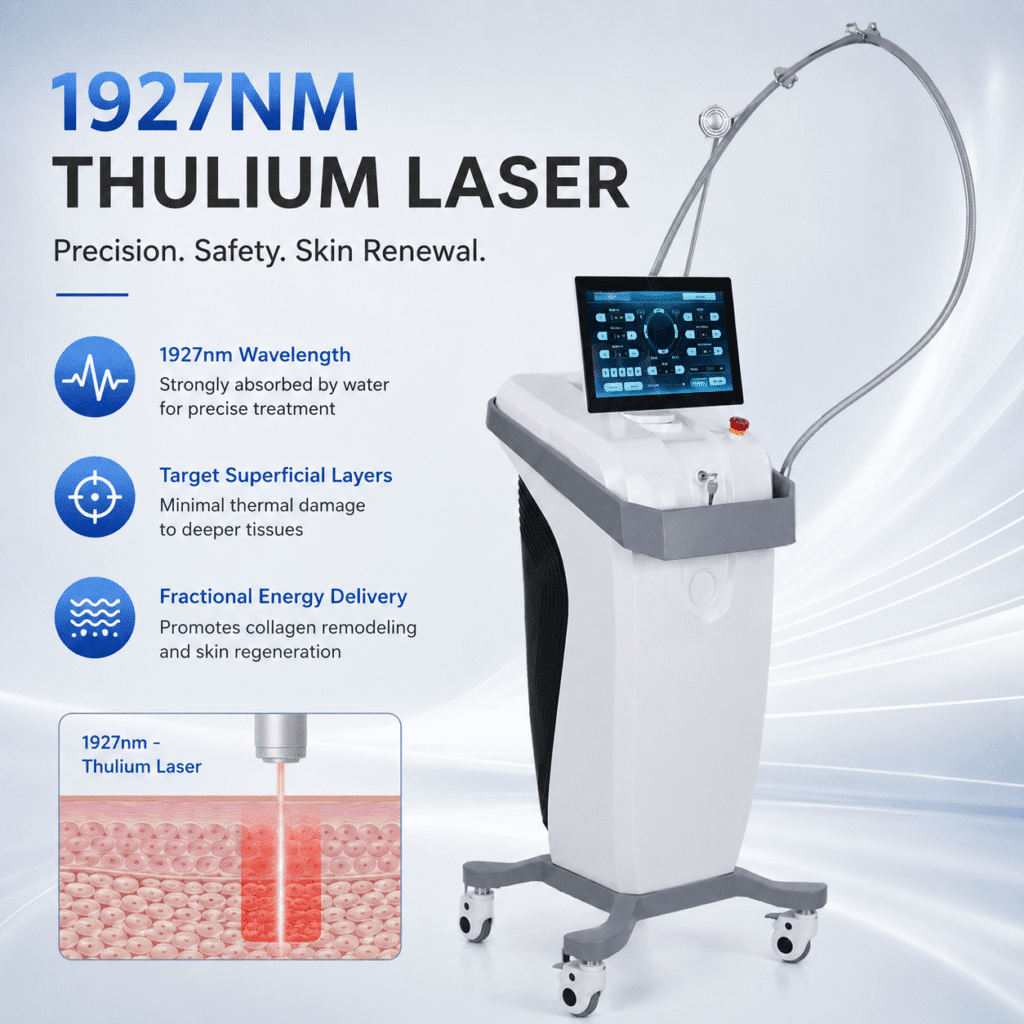









Acne scars are one of the most challenging skin concerns for both patients and aesthetic professionals. As demand for effective, non-invasive, and results-driven solutions continues to grow, laser-based acne scars treatment has become a core service in many clinics and medical aesthetic practices. However, choosing the right laser device is not a one-size-fits-all decision. Different scar types, skin tones, downtime expectations, and business goals all play a role. This guide explains how to evaluate and select the most suitable laser technology for acne scars treatment, helping clinics deliver consistent results while maximizing return on investment.

1. Understanding Acne Scars and Why Laser Treatment Works
1.1 Common Types of Acne Scars
Acne scars are typically categorized into atrophic scars (ice pick, boxcar, and rolling scars), hypertrophic scars, and scars with post-inflammatory pigmentation. Atrophic scars are the most common and result from collagen loss during the healing process, making them ideal candidates for collagen-stimulating laser treatments.
1.2 Why Lasers Are a Preferred Solution
Laser-based acne scars treatment works by delivering controlled energy into the skin to stimulate collagen remodeling, resurface damaged tissue, and improve texture and tone. Compared to topical treatments or chemical peels, lasers can reach deeper skin layers with greater precision, producing more visible and long-lasting results.
2. Fractional CO₂ Lasers for Acne Scars Treatment
2.1 How Fractional CO₂ Technology Works
Fractional CO₂ lasers operate by creating microscopic thermal zones in the skin while leaving surrounding tissue intact. This fractional approach accelerates healing and promotes strong collagen regeneration, making it highly effective for moderate to severe acne scars.
2.2 Benefits for Clinics and Patients
Fractional CO₂ lasers are considered a gold standard for acne scars treatment due to their ability to significantly improve skin texture, reduce scar depth, and tighten skin simultaneously. Clinics can position these treatments as premium services with high patient satisfaction and visible before-and-after results.
A professional option is the Shefmon 2910nm Fiber Fractional CO₂ Ultra Laser, designed for precise energy delivery, strong collagen stimulation, and controlled downtime, making it suitable for advanced acne scar correction.
https://shefmon.com/product/shefmon-2910nm-fiber-fractional-co2-ultra-laser/
3. 10600nm CO₂ Fractional Lasers for Deep Scar Remodeling
3.1 Treating Severe and Atrophic Acne Scars
For deep boxcar and rolling scars, 10600nm CO₂ fractional lasers offer deeper penetration and stronger thermal impact. This wavelength is particularly effective for patients who need intensive resurfacing and structural skin repair.
3.2 Business Advantages for Medical Aesthetic Practices
Clinics that invest in high-powered CO₂ fractional laser equipment can treat a wider range of acne scar severities and command higher treatment fees. These systems are ideal for dermatology clinics and medical spas targeting long-term skin rejuvenation outcomes.
The professional 10600nm CO₂ Fractional Laser Equipment for acne scar removal is engineered for clinical-grade performance, offering adjustable parameters for customized treatment protocols.
https://shefmon.com/product/a0529-professional-acne-scar-removal-10600nm-co2-fractional-laser-equipment/
4. Picosecond Lasers for Pigmented and Mixed Acne Scars
4.1 When Picosecond Technology Is the Better Choice
Not all acne scars are purely textural. Many patients present with pigmented scars or residual discoloration. Picosecond lasers use ultra-short pulse durations to break down pigment particles while minimizing heat damage, making them ideal for acne scars treatment involving pigmentation issues.
4.2 Expanding Treatment Options with Minimal Downtime
Picosecond lasers are known for faster recovery times and suitability for multiple skin tones. They can be used alone for mild scars or combined with fractional lasers in multi-modal treatment plans, increasing clinic versatility and patient retention.
The 1064nm/532nm Q-Switched Super Picosecond YAG Laser is a versatile device that supports acne scars treatment by targeting pigmentation, improving skin clarity, and enhancing overall tone.
https://shefmon.com/product/a0507-1064nm-532nm-q-switched-super-picosecond-picosure-yag-laser-tattoo-removal/
5. How to Choose the Right Laser for Your Clinic
5.1 Assess Your Target Patient Demographics
Clinics serving patients with severe, deep acne scars should prioritize CO₂ fractional systems, while practices focusing on mild scars and pigmentation may benefit more from picosecond technology. Understanding your client base is essential for making the right investment.
5.2 Consider Downtime, Safety, and Training
Fractional CO₂ lasers typically involve longer downtime and require experienced operators, while picosecond lasers offer quicker recovery and easier integration into busy clinics. Equipment safety features, manufacturer support, and training availability should also factor into decision-making.
5.3 Maximizing ROI and Treatment Flexibility
Choosing devices that support multiple indications—such as acne scars, skin resurfacing, pigmentation, and rejuvenation—allows clinics to diversify services and maximize equipment utilization, improving profitability over time.

A0529 shefmon co2 fractional laser
Conclusion
Selecting the right laser for acne scars treatment is a strategic decision that directly impacts clinical results, patient satisfaction, and business growth. Fractional CO₂ lasers remain the top choice for deep and atrophic scars, while picosecond lasers excel in treating pigmentation and mild scarring with minimal downtime. By understanding scar types, patient needs, and device capabilities, clinics and practices can build a comprehensive acne scars treatment portfolio that delivers reliable results and long-term success.