










Professional beauty devices are often compared by functions, specifications, and purchase price. Those factors do not show how easily a salon, clinic, med spa, or distributor can identify a fault, obtain the correct component, restore an approved configuration, document the work, and keep the device supported as versions change.
A serviceability score turns those questions into a structured assessment. It should measure both the device’s service architecture and the local support system around it. The score can help buyers compare equipment, help distributors prioritize support improvements, and help multi-location businesses standardize purchasing decisions. This guide explains how to build the score without inventing claims or hiding missing evidence behind a single number.
Управляющее резюме
- Score device service architecture and distributor support readiness as separate sections.
- Use defined evidence and anchored ratings rather than impressions such as “easy to maintain.”
- Evaluate identity, revision traceability, component structure, diagnostic visibility, replacement controls, documentation, parts support, escalation, logistics, and lifecycle planning.
- Use a weighted 0–100 formula, but show every dimension and its evidence beside the total.
- Mark unknown data explicitly and apply a consistent rule for provisional assessments.
- Add non-negotiable gates for unresolved device identity, unsafe repair scope, missing critical compatibility, or unclear market eligibility.
- Adapt the evidence checklist for multifunction facial, RF-microneedling, HIFU, laser hair-removal, and body-care equipment.
- Do not assign public scores to SHEFMON models from product-page specifications alone.
- Recalculate the score after configuration, component, documentation, support, logistics, or lifecycle changes.
- Validate the framework against actual service cases before using it for purchasing or distributor policy.
1. What Serviceability Means for Beauty Devices
Serviceability is the ability to identify, diagnose, support, maintain, and restore a device through an approved process. It includes the design and configuration of the equipment, but it also depends on the records, components, people, and logistics available in the market where the device operates.
For professional beauty equipment, serviceability can involve:
- identifying the exact model and revision;
- knowing which handles, cartridges, tips, or applicators are installed;
- separating an operator issue from a component or main-unit issue;
- obtaining usable diagnostic evidence;
- finding the correct approved replacement;
- knowing what trained operators may check and what requires technical service;
- accessing current manuals and procedures;
- tracking the device, case, replacement, and outcome;
- supporting older installed versions after new configurations appear.
The score should not predict whether a device will fail. It measures how prepared the buyer and support organization are to handle an issue if one occurs.
2. Why One Number Is Not Enough
A total score is useful for comparison, but it can conceal important weaknesses. Two devices might both score 72 while having different risk profiles: one may have clear diagnostics but limited regional component support, while the other has good stock coverage but poor revision traceability.
Always publish the score with:
- dimension ratings;
- assigned weights;
- evidence references;
- unknown fields;
- assessment date;
- configuration and market scope;
- confidence grade;
- failed gates;
- improvement actions.
The detailed profile supports a decision. The total only summarizes it.
3. Separate Device Serviceability from Support Readiness
Use two main sections.
| Score section | What it measures | Who can influence it |
|---|---|---|
| Device service architecture | Identity, component structure, diagnostics, replacement controls, safety boundaries, and lifecycle design | Product and technical teams |
| Local support readiness | Documents, stock and supply visibility, installed-base records, training, escalation, logistics, and returns | Distributor, regional support team, and device owner |
This separation prevents a strong device design from compensating completely for weak local support. It also shows where improvement is possible without changing the equipment itself.
For example, a distributor can improve document control, staff training, installed-unit records, regional stock visibility, and case escalation. It cannot independently declare a handle compatible with another device revision.
4. Define the Assessment Object Precisely
Never score only a broad product name. Define the exact object:
- device model;
- sellable configuration;
- hardware and software revision where relevant;
- installed handle or module set;
- рыночный и электротехнический профиль;
- intended business setting;
- servicing region;
- assessment date;
- evaluator and approver.
If the same model is sold with materially different modules or support arrangements, create separate scorecards. A high score for one configuration should not automatically transfer to every version.
5. Use an Anchored 0–5 Rating Scale
Define what each rating means before scoring any device.
| Rating | Значение | Evidence expectation |
|---|---|---|
| 0 | No usable capability or required control is absent | Evidence confirms the gap |
| 1 | Ad hoc, unclear, or dependent on individual memory | Fragmented or outdated evidence |
| 2 | Partial capability with important limitations | Some current records, but scope or control is incomplete |
| 3 | Defined and usable for the assessed configuration | Current documents and a repeatable process exist |
| 4 | Strong, structured, and integrated across relevant teams | Current controlled records plus operational use |
| 5 | Mature, validated, and continuously improved | End-to-end evidence, measured performance, and closed-loop review |
| U | Unknown or not verified | Evidence is missing or cannot be applied to the assessed version |
Do not turn U into a favorable average. For early research, keep the total provisional. For a risk-screening process, the organization may assign zero until the evidence is verified. State the chosen rule and use it consistently.
6. Build the Device Service Architecture Score
The following example assigns 60 points to the device-related section. Organizations can adjust the weights after validating them against their portfolio.
| Измерение | Масса | What to assess |
|---|---|---|
| Identity and revision traceability | 10 | Model, configuration, serial or asset identity, hardware/software revision, market profile |
| Component architecture and mapping | 10 | Handles, modules, cartridges, consumables, companions, exclusions, and stable component IDs |
| Diagnostic visibility | 12 | Error information, observable symptoms, logs, test steps, and evidence collection |
| Replacement procedure and control | 10 | Approved replaceable units, identification steps, authorization boundary, verification after replacement |
| Safety and professional-service boundaries | 8 | Stop-use criteria, internal-access restrictions, operator versus technician scope, market requirements |
| Lifecycle and successor structure | 10 | Active, replacement-only, service-only, retired, predecessor, successor, and legacy support records |
| Device architecture subtotal | 60 |
The score assesses the available support structure. It should not reward the number of components or the apparent simplicity of the exterior.
7. Build the Local Support Readiness Score
The example assigns 40 points to the distributor or local support system.
| Измерение | Масса | What to assess |
|---|---|---|
| Documentation control | 8 | Current manuals, service guidance, configuration lists, translations, revision access |
| Component supply visibility | 8 | Correct item identity, compatibility, regional availability, order route, lifecycle state |
| Installed-base and case records | 8 | Unit-level configuration, service history, replacements, open cases, outcome tracking |
| Training and escalation | 8 | Operator guidance, technical roles, authorization, escalation contacts, handoff rules |
| Regional logistics and returns | 8 | Shipping route, quarantine, return authorization, transfer process, removed-item handling |
| Support readiness subtotal | 40 |
A buyer assessing more than one distributor can keep the device architecture score fixed and compare local support readiness separately.
8. Calculate the Weighted Score
For each dimension:
Dimension contribution = (Rating ÷ 5) × Dimension weight
Then add all contributions:
Serviceability score = Device architecture subtotal + Support readiness subtotal
The maximum is 100. Keep one decimal place during calculation and round only the final display if needed.
An organization might use internal interpretation bands such as:
- 80–100: strong documented serviceability;
- 65–79: workable with identified improvement items;
- 50–64: material support gaps require action;
- below 50: high serviceability risk for the assessed setting;
- Provisional: one or more important dimensions are Unknown.
These bands are an example. Calibrate thresholds against actual service cases, equipment categories, and business risk before making them purchasing rules.
9. Add a Separate Evidence-Confidence Grade
A precise-looking score can still be weak if it relies on marketing copy or old files. Add a confidence grade.
| Grade | Evidence condition |
|---|---|
| А | Current controlled evidence covers the assessed configuration, and operational records validate the process |
| B | Most evidence is current and configuration specific; limited operational gaps remain |
| C | Several dimensions rely on partial, indirect, or older evidence |
| Д | Major dimensions are unverified, conflicting, or based on informal statements |
Display results as, for example, 67.2 / 100, Confidence B. Do not compare a Confidence A score and a Confidence D score as if they have equal certainty.
10. Use Gates for Non-Negotiable Risks
Some gaps should block approval regardless of the total.
Possible gates include:
- exact device or configuration cannot be identified;
- a critical handle or module has no confirmed replacement relationship;
- professional-use or market eligibility is unresolved;
- service instructions encourage unqualified internal access;
- no stop-use or escalation path exists for a high-energy or electrical issue;
- required documentation does not match the assessed revision;
- the proposed successor is not confirmed for the installed population;
- no process exists for quarantining a disputed or returned component.
A device with a failed gate may still receive a diagnostic score, but its decision status should read Hold, Verification Required, or Not Approved under the organization’s policy.
11. Define the Evidence Package
Collect evidence before the scoring meeting.
Recommended sources include:
- official product page for current model context;
- approved configuration schedule;
- component and compatibility records;
- current operator manual;
- approved maintenance or service instructions;
- packing and included-item list;
- error-code or diagnostic reference where available;
- replacement-component and consumable list;
- installed-unit records;
- training records;
- closed and open support cases;
- regional inventory and orderability records;
- return and quarantine workflow;
- lifecycle and successor decisions.
Use product pages as starting references, not as complete proof of service procedures, parts availability, or replacement compatibility.
12. Score Observable Capabilities, Not Promises
Rewrite vague claims into testable questions.
| Vague statement | Scorable question |
|---|---|
| Простота в обслуживании | Is there a current model-specific maintenance schedule with assigned tasks and boundaries? |
| Parts are available | Are component IDs, compatible revisions, supply status, region, and order route current? |
| Remote support is provided | Is there a triage workflow defining evidence, safe checks, escalation, and case ownership? |
| Handles are replaceable | Which handle ID replaces which installed version, who may perform the change, and how is function verified? |
| Long-term support | Which lifecycle states, legacy components, successors, and review dates are documented? |
Award points for evidence-backed capability. Do not award a 4 or 5 because a promise sounds reassuring.
13. Use an Illustrative Scoring Worksheet
The following example shows the calculation for an unnamed hypothetical device and support region. It is not a score for a SHEFMON model.
| Измерение | Масса | Rating | Contribution | Main evidence gap |
|---|---|---|---|---|
| Identity and revision traceability | 10 | 4 | 8.0 | One older revision lacks a complete configuration record |
| Component architecture and mapping | 10 | 3 | 6.0 | Some accessory exclusions remain in free text |
| Diagnostic visibility | 12 | 3 | 7.2 | Case logs are not yet categorized consistently |
| Replacement procedure and control | 10 | 4 | 8.0 | Post-replacement verification form needs one update |
| Safety and professional boundaries | 8 | 4 | 6.4 | Local translation review is pending |
| Lifecycle and successor structure | 10 | 3 | 6.0 | Two legacy components need successor decisions |
| Documentation control | 8 | 4 | 6.4 | Regional document portal lacks an archive label |
| Component supply visibility | 8 | 3 | 4.8 | Central and regional stock statuses are refreshed at different times |
| Installed-base and case records | 8 | 2 | 3.2 | Some reseller-installed units are unverified |
| Training and escalation | 8 | 4 | 6.4 | Refresher schedule is incomplete |
| Regional logistics and returns | 8 | 3 | 4.8 | Cross-region transfer ownership needs clarification |
| Total | 100 | 67.2 | Use the action list before changing the score |
The detailed gaps are more useful than the 67.2 total because they identify what the team can improve.
14. Evaluate A0648 as a Multifunction Facial Platform
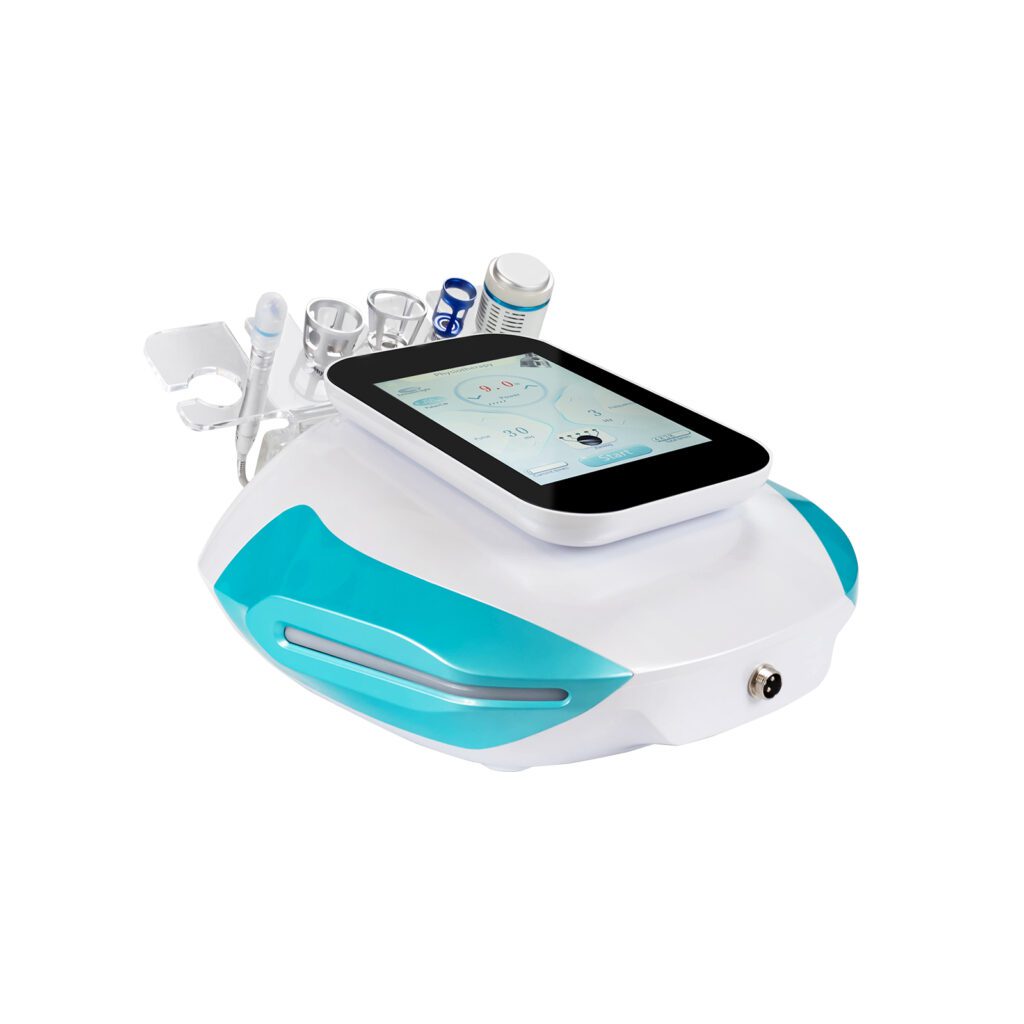
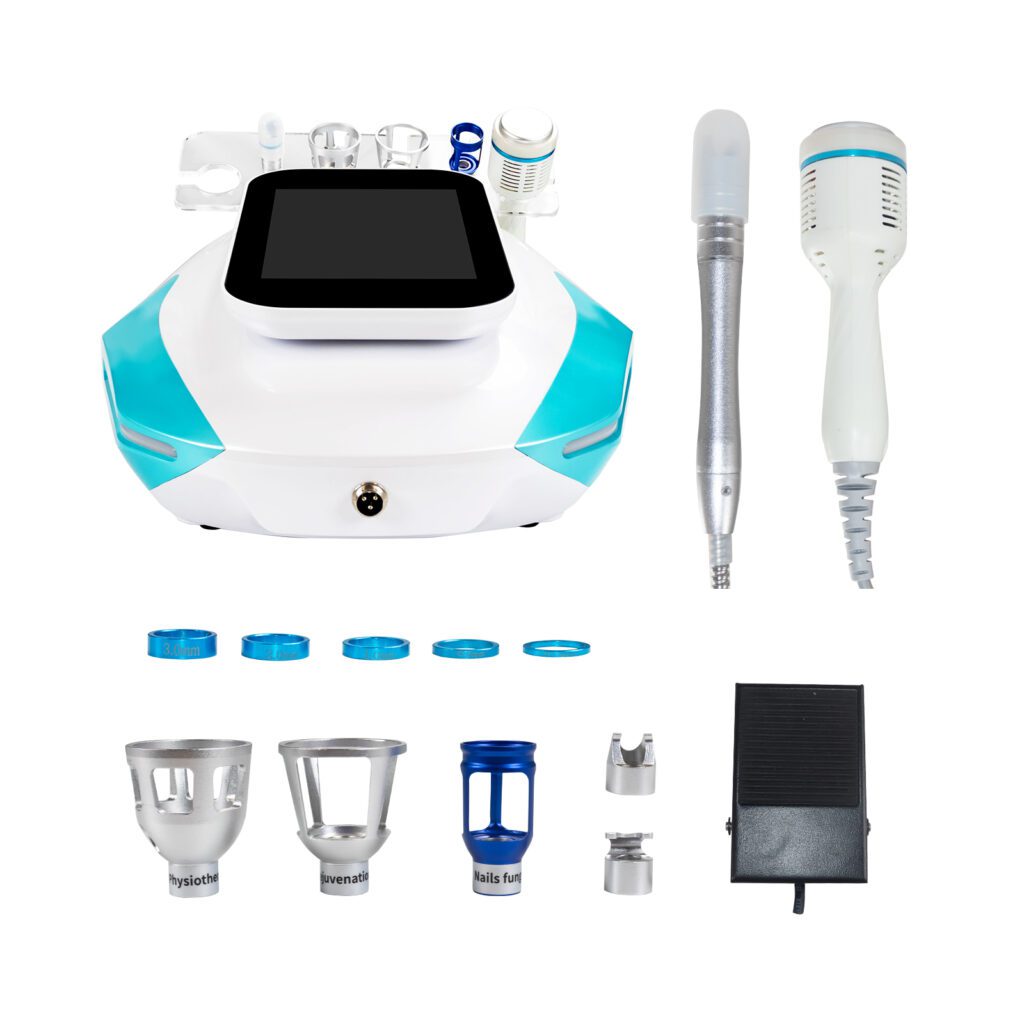
The SHEFMON A0648 hydro microdermabrasion machine is presented as a multifunction facial system. Its assessment should map the actual installed tools rather than score only the “9-in-1” description.
Evidence to collect includes:
- configuration and supplied handpiece list;
- stable identities for tools, tips, containers, tubing, cables, and controlled accessories;
- reusable, consumable, operator-replaceable, and service-restricted classifications;
- cleaning and maintenance instructions;
- symptom-to-check guidance for suction, flow, connection, or accessory issues where documented;
- replacement and reorder relationships;
- regional component availability;
- legacy tool or configuration records.
A multifunction design may allow some services to continue when one secondary tool is unavailable. Score that only when the configuration, operating boundaries, and actual workflow support the conclusion.
15. Evaluate A0152 by Handle and Consumable Structure
The SHEFMON A0152 RF-microneedling device currently lists different working-handle arrangements and several tip configurations. The score should examine how clearly the durable handles and recurring needle heads are identified and supported.
Проверять:
- device and handle configuration identity;
- handle recognition and documented connection checks;
- needle-head identity and approved handle relationship;
- separation of consumable reorders from handle replacements;
- error or symptom evidence required for escalation;
- replacement authorization and post-change verification;
- current component and pack records;
- professional-use boundaries and local requirements.
Do not assign a high replacement score merely because a handle can be physically disconnected. The approved identification, compatibility, procedure, safety boundary, and verification steps must also be clear.
16. Evaluate A0204 by Module and Cartridge Complexity
The SHEFMON A0204 focused HIFU platform lists multiple functions, handles, and cartridge groups. Its serviceability assessment should preserve the chain from configuration to handle or module to cartridge.
Обзор:
- A0204 configuration and revision;
- installed 9D or 7D arrangement where applicable;
- optional module and handle identities;
- cartridge IDs, depth or size designations, and parent relationships;
- usage, replacement, and lifecycle status;
- diagnostic evidence for handle recognition or cartridge status where documented;
- procedures and authorization for component changes;
- regional availability of configuration-specific items;
- successor rules for older cartridges or handles.
Complexity does not automatically mean poor serviceability. The score should reflect how well that complexity is identified, documented, diagnosed, and supported.
17. Evaluate A0423 and A0426 as Separate Laser Configurations
The current pages for the SHEFMON A0423 diode laser и SHEFMON A0426 diode laser list choices involving wavelength arrangement, handle power, and spot size. Score each exact model and configuration separately.
The evidence set should cover:
- model, configuration, and installed-handle identity;
- wavelength, handle-power, and spot-size relationships;
- cooling and electrical checks within the approved service boundary;
- stop-use criteria for abnormal heat, cooling, output, or electrical symptoms;
- diagnostic and escalation process;
- replacement-handle compatibility by revision;
- regional handle availability or supply route;
- post-replacement verification and case closure;
- lifecycle and legacy-handle support.
Do not award cross-model serviceability points because the two pages contain similar option values. Shared-component support requires a confirmed relationship for the exact identified handle.
18. Evaluate B0155 by Durable Applicator Support
The SHEFMON B0155 body-care system is described with handles for body and smaller-area applications. The assessment should examine whether each durable applicator can be identified, diagnosed, replaced, and tracked.
Обзор:
- installed handle set and quantity;
- connector, cable, control, and configuration identity;
- symptoms and evidence used for remote triage;
- boundary between an external check and technical service;
- replacement-only and optional-component relationships;
- regional pooling or supply-to-order policy;
- removed-component return and quarantine process;
- successor and legacy relationships.
Score the support process for the actual installed package. A broad body-area description is not enough to establish a replacement path.
19. Adjust Weights for the Buyer Type
Different buyers can use the same dimensions with different approved weights.
Single-location salon
Regional logistics, clear operator checks, fast escalation, and consumable or handle identification may carry more weight because the business has limited backup equipment.
Multi-location salon group
Standardized configuration records, training, case tracking, transferable stock, and comparison across sites become more important.
Косметологическая клиника или медицинский спа-салон
Professional boundaries, revision control, documentation, escalation, and local eligibility may require higher weights.
Распределитель
Installed-base visibility, component mapping, regional logistics, legacy support, multilingual documents, and exception control often deserve more emphasis.
Keep the weight set stable within one comparison. Changing weights for each model can produce the preferred result instead of an honest comparison.
20. Use the Score Before Purchase
A pre-purchase assessment should include more than a product demonstration.
Ask for evidence that answers:
- Can the exact configuration be coded and preserved?
- Are major handles, modules, cartridges, and consumables individually identified?
- Which checks can trained operators perform safely?
- What evidence must be collected before escalation?
- Which components are replaceable, service controlled, or unavailable separately?
- How are current availability and lead-time records maintained?
- What documents match the selected revision and market?
- How are older installed configurations supported?
- Who owns a case from first report through closure?
Use the scorecard to record the answer and source. Avoid awarding points for a verbal answer that cannot be tied to the assessed configuration.
21. Recalculate After Installation
The pre-purchase score describes an expected support setup. Reassess after the device is installed because local readiness may differ from the planned state.
Подтверждать:
- final delivered configuration;
- serial or installed-unit record;
- installed handles and components;
- current manuals and training completion;
- assigned service contact and escalation route;
- local and regional component visibility;
- return and quarantine process;
- first maintenance and record-review date.
The installed score becomes the operating baseline for later audits.
22. Update Scores from Real Service Cases
Service cases provide evidence about whether the process works.
After closure, record:
- time to identify the device and configuration;
- completeness of customer evidence;
- diagnostic path used;
- incorrect or repeated steps;
- component selected and compatibility revision;
- escalation handoffs;
- shipment, return, or service events;
- resolution and verification;
- documentation or training gaps;
- corrective action owner.
Use repeated patterns to change the relevant dimension and process. Do not automatically lower the entire product score after one unrelated event.
23. Compare Devices Fairly
For a valid comparison:
- use the same scoring version;
- use the same weight set;
- define the same market and business setting;
- score comparable configurations;
- apply the same treatment of Unknown values;
- require the same evidence standard;
- use assessors with equivalent training;
- show confidence grades;
- disclose failed gates;
- record the assessment date.
A current local support score should not be compared directly with an old score from another region without explaining the difference in scope.
24. Prevent Score Gaming
К числу распространенных проблем относятся:
- giving maximum points because a feature exists on a product page;
- scoring documents without checking whether they match the current revision;
- awarding supply points because an item has a name but no confirmed order route;
- treating a connected handle as safely user replaceable;
- ignoring Unknown values;
- changing weights after seeing the result;
- averaging away a failed safety or compatibility gate;
- using one successful support case as proof of a mature process;
- combining several models under one favorable score;
- publishing internal draft scores as objective product claims.
Require evidence review and approval before a score is used in purchasing, marketing, or distributor evaluation.
25. Implementation Workflow
Step 1: Define purpose and scope
Choose whether the score supports purchasing, portfolio review, regional readiness, or service improvement. Define models, configurations, markets, and users.
Step 2: Approve dimensions and weights
Use a cross-functional team with product, technical, support, inventory, and local-market input. Document every definition.
Step 3: Build evidence templates
Create a scorecard, evidence register, gap list, gate decision, confidence grade, and approval record.
Step 4: Pilot different device categories
Test one multifunction facial platform, one handle-and-consumable device, one cartridge-based platform, one laser, and one body-care system. Check whether the rubric handles their differences.
Step 5: Calibrate with service history
Compare scores with actual identification problems, case delays, incorrect-item returns, unresolved components, and document gaps. Adjust definitions before changing weights.
Step 6: Govern future revisions
Assign a scoring-version number, review date, owner, and change log. Recalculate affected devices when the framework or evidence changes.
26. Serviceability Score Checklist
- The exact model, configuration, revision, market, and support region are defined.
- Device architecture and local support readiness are scored separately.
- Every rating uses the approved 0–5 anchor.
- Unknown values remain visible.
- Weight totals equal 100.
- Evidence is current, retrievable, and configuration specific.
- Product-page information is not treated as complete service evidence.
- Compatibility, availability, and price are assessed separately.
- Operator checks and technical-service boundaries are explicit.
- Critical gates are reviewed before the total is interpreted.
- Confidence grade and assessment date accompany the score.
- Category-specific component structures are preserved.
- Installed-unit and service-case evidence are included after deployment.
- The same weights and Unknown policy are used for comparisons.
- Improvement actions have owners and due dates.
- The framework version and approval history are controlled.
Часто задаваемые вопросы
1. What does a beauty-device serviceability score measure?
It measures how well an exact device configuration can be identified, diagnosed, supported, maintained, and restored through an approved process, together with the readiness of the local documents, components, people, records, and logistics.
2. Is serviceability the same as reliability?
No. Reliability concerns how consistently equipment performs over time. Serviceability concerns how effectively an issue can be identified and resolved. A complete evaluation may track both, but they require different evidence.
3. Should the score include price?
Purchase price should remain outside the technical serviceability score. Component cost or minimum order can inform support planning, but mixing price directly into serviceability can hide technical or operational weaknesses.
4. What should happen when evidence is missing?
Mark the dimension Unknown and make the total provisional, or apply a documented risk-screening rule that assigns zero until verification. Do not assume an average or favorable rating.
5. Can a product page support the score?
It can confirm current model context and listed options. It usually cannot prove complete diagnostic procedures, component availability, item-level compatibility, service authorization, or local support performance.
6. How should multifunction devices be scored?
Map the installed functions, handles, tools, cartridges, and consumables first. Score the clarity and supportability of that exact configuration instead of rewarding the headline number of functions.
7. Can A0423 and A0426 share one laser serviceability score?
They should be scored separately by exact configuration and support region. Similar wavelength, power, or spot-size listings do not establish identical handles, replacement paths, diagnostics, or local component support.
8. How often should the score be updated?
Review it after major configuration, component, document, training, logistics, compatibility, lifecycle, or support-process changes. Also schedule a periodic review appropriate to the device’s risk and service activity.
9. Who should approve the score?
A cross-functional review should include product-data, technical, support, inventory, and relevant local-market roles. The organization should name one owner and one final approver for the scorecard version.
10. When should SHEFMON be contacted?
Contact SHEFMON when current records do not resolve a model configuration, component relationship, diagnostic reference, replacement boundary, document revision, supply path, successor, or lifecycle status needed for the assessment.
Заключение
A useful serviceability score makes support capability visible without replacing technical judgment. It defines the exact device, separates product architecture from local readiness, uses evidence-based ratings, preserves unknowns, applies critical gates, and shows the detailed gaps behind the total.
Businesses can review relevant facial, RF-microneedling, HIFU, laser, and body-care platforms in the SHEFMON beauty-machine range. To verify information needed for a model-specific score, свяжитесь с Шефмоном with the device configuration, revision, market, installed components, and exact serviceability question.