









Управляющее резюме
Косметическое оборудование может подойти некоторым клиентам с чувствительной кожей, но его следует использовать с осторожностью. Чувствительная кожа — это не простая категория «да» или «нет». Некоторые клиенты реагируют только на отдушки или агрессивные средства. У других наблюдается покраснение, сухость, жжение, чувствительность, похожая на розацею, склонность к экземе, недавнее раздражение, повреждение кожного барьера или активное воспаление. Не всем этим клиентам следует назначать одинаковую процедуру использования оборудования.
Практический ответ таков:
- Для некоторых клиентов с чувствительной кожей могут подойти аппараты с мягким воздействием и низкой интенсивностью стимуляции.
- Сильное всасывание, высокая температура, агрессивное отшелушивание, высокоэнергетическая обработка, агрессивные кислоты, сильное раздражение и непроверенные продукты следует использовать с осторожностью или избегать.
- Пациентам с активными обострениями, открытыми ранами, сильным покраснением, кожной инфекцией, солнечным ожогом, недавним шелушением, недавней лазерной терапией, сильной аллергической реакцией или кожным заболеванием следует отложить визит или обратиться за консультацией к врачу.
- Салон должен проводить проверку на соответствие требованиям, использовать щадящие средства, начинать с низких температур, сокращать время процедуры, при необходимости тестировать процедуру на небольшом участке кожи, следить за комфортом пациента, фиксировать отзывы и проводить последующее наблюдение после процедуры.
Для многих салонов красоты самая безопасная стратегия для чувствительной кожи заключается не в продаже самого сильного средства, а в продаже успокаивающего, поддерживающего барьерную функцию кожи и не вызывающего раздражения плана ухода.
В качестве первого варианта могут подойти следующие:
- Консультация по анализу кожи
- Мягкое увлажняющее средство для лица
- Гидромассаж лица с низким уровнем всасывания (при необходимости).
- Поддержка светодиодов в рамках консервативного протокола.
- Кислородный спрей или успокаивающая маска
- Удобная ступенька из материала Cold hammer там, где это уместно.
- Простой ежемесячный набор для ухода за чувствительной кожей
К проектам, требующим большей осторожности, относятся:
- Сильный радиочастотный нагрев
- Электромиостимуляция или микроток высокой интенсивности
- Агрессивное всасывание
- Очищение с помощью абразивных средств
- IPL или лазерная эпиляция
- Устройства для коррекции контуров тела с использованием тепла, холода, вакуума или стимуляции.
- Средства, сочетающие кислоты, ретиноиды, отдушки или активные пилинги.
Основной принцип прост:
Клиентам с чувствительной кожей требуется более тщательная оценка состояния, меньше раздражения, более четкие объяснения и более качественное последующее наблюдение.
1. Почему этот вопрос важен для салонов красоты
Клиенты с чувствительной кожей часто становятся ценными постоянными клиентами, поскольку им необходимы доверие, терпение и регулярный уход. Однако после процедуры у них также чаще могут возникать дискомфорт, покраснение, сухость, жжение или раздражение.
Если салон хорошо работает с чувствительной кожей, он может завоевать лояльность клиентов. Если же он плохо подходит к уходу за чувствительной кожей, это может привести к жалобам, возврату денег, негативным отзывам или потере клиентов.
Этот вопрос важен, потому что проекты по модернизации оборудования могут включать в себя:
- Нагревать
- Свет
- Всасывание
- Трение
- Вибрация
- Микротоковая или ЭМС-стимуляция
- Ультразвуковой контакт
- Гель, сыворотка, маска или раствор
- Чистящие и дезинфицирующие средства
- Многоразовые наконечники
- Время проведения лечения и давление
Любой из этих факторов может негативно повлиять на чувствительную кожу, если его не применять должным образом.
Аппарат может быть безопасен для обычных клиентов, но все же не подходит для клиентов с активным раздражением. Именно поэтому салонам необходима процедура для чувствительной кожи.
2. Краткий ответ
Подходит ли косметическое оборудование для чувствительной кожи?
Да, иногда. Но это зависит от текущего состояния кожи клиента, типа оборудования, цели лечения, используемых средств, настроек и квалификации оператора.
Клиентам с чувствительной кожей могут подойти щадящие, ориентированные на комфорт, увлажняющие, успокаивающие процедуры, а также процедуры, проводимые по рекомендации специалиста.
Они могут не подходить для использования при сильном энергетическом воздействии, мощном всасывании, агрессивном отшелушивании, высокой температуре, интенсивной стимуляции или при использовании средств, содержащих раздражающие ингредиенты.
Перед началом лечения персонал должен задать следующие вопросы:
- Кожа в данный момент покраснела, зудит, жжёт, покалывает, опухла, повреждена, инфицирована или шелушится?
- Использовал ли клиент в последнее время кислоты, ретиноиды, сильнодействующие отшелушивающие средства или рецептурные средства для ухода за кожей?
- Клиент недавно получал солнечные ожоги, проходил шелушение кожи, лазерную терапию, микронидлинг, химический пилинг или другие интенсивные процедуры?
- Есть ли у клиента известные аллергии на продукцию, отдушки, латекс, металлы, гели, маски или дезинфицирующие средства?
- Была ли у клиента ранее подобная реакция на лечение?
- Цель состоит в обеспечении комфорта и поддержании формы тела или в более заметных и существенных изменениях?
Если кожа активно раздражена, наиболее безопасным решением может быть отсрочка лечения.
3. Чувствительная кожа — это не одно единственное заболевание.
“Понятие ”чувствительная кожа» может означать разное для разных клиентов.
Некоторые клиенты имеют в виду:
- Их кожа легко краснеет.
- Их кожа кажется сухой или стянутой.
- Эти средства вызывают жжение или покалывание.
- Они реагируют на аромат.
- У них склонность к экземе.
- У них склонность к покраснению, характерному для розацеа.
- Их кожный барьер кажется ослабленным.
- Недавно они слишком сильно отшелушили кожу.
- Они восстанавливаются после очередного курса лечения.
- У них и раньше была аллергия, и они боятся пробовать новые услуги.
Поскольку значение этого выражения может варьироваться, персоналу не следует считать фразу “У меня чувствительная кожа” достаточной информацией. Им следует спрашивать, что обычно вызывает реакцию и как она проявляется.
Полезные вопросы:
- Какие средства или процедуры ранее вызывали раздражение вашей кожи?
- Что происходит, когда ваша кожа реагирует?
- Как долго длится реакция?
- У вас сейчас наблюдается кожная реакция?
- Вы обращались к дерматологу по поводу этого заболевания?
- Вы используете какие-либо активные средства по уходу за кожей или лекарственные препараты?
Качественная консультация снижает риски.
4. В каких случаях клиентам с чувствительной кожей следует отложить проекты по установке оборудования?
Клиентам с чувствительной кожей не следует пользоваться услугами по обслуживанию оборудования в этот день.
Отложите проект, если у заказчика есть:
- Открытая рана
- Активная сыпь
- Активная кожная инфекция
- Сильное покраснение
- Жжение или покалывание перед лечением
- Припухлость
- Свежий солнечный ожог
- Недавняя аллергическая реакция
- Активное обострение экземы
- Активное обострение розацеа
- Недавний химический пилинг
- Недавнее лазерное или IPL-лечение
- Недавняя процедура микронидлинга или интенсивной шлифовки кожи.
- Сильное шелушение или чрезмерное отшелушивание
- Неизвестная реакция на новое средство по уходу за кожей
- Любое состояние, требующее медицинской консультации.
В салоне можно получить деликатную консультацию и при необходимости получить профессиональную медицинскую помощь.
Сказав “сегодня нет”, можно защитить и клиента, и салон.
5. Какое оборудование обычно более подходит?
Для некоторых клиентов с чувствительной кожей могут больше подойти проекты с низким уровнем раздражения.
К потенциально подходящим вариантам относятся:
- Консультация по анализу кожи
- Мягкое увлажняющее средство для лица
- Гидромассаж лица с низким уровнем всасывания, где это необходимо.
- Поддержка светодиодов в рамках консервативного протокола.
- Кислородный спрей
- Удобная ступенька из холодного молотка
- Мягкое ультразвуковое исследование с использованием подходящего вспомогательного вещества, где это необходимо.
- Набор успокаивающих масок
- Ежемесячная подписка на уход для чувствительной кожи
Эти проекты, как правило, проще позиционировать как поддержку в обеспечении комфорта, увлажнении и поддержании жизнедеятельности.
Однако даже щадящее оборудование следует использовать с осторожностью. У клиентов с чувствительной кожей может возникнуть реакция на косметические средства, трение, чистящие средства, тепло, давление или стресс.
6. Какое оборудование требует большей осторожности?
Некоторые категории оборудования требуют большей осторожности при использовании людьми с чувствительной кожей.
Будьте осторожны при:
- проекты по использованию радиочастотного тепла
- ЭМС и микротоковая терапия
- IPL и лазерная эпиляция
- Мощные устройства для отсасывания
- Абразивные или отшелушивающие устройства
- HIFU и другие устройства высокой интенсивности
- Устройства для коррекции контуров тела с использованием тепла, холода, вакуума или стимуляции.
- Лечение в сочетании с кислотами или ретиноидами.
- Проекты, требующие многократного прохождения по красным или раздраженным участкам.
Использование этих устройств не запрещено автоматически, но требует более тщательной проверки, консервативных протоколов, квалифицированных операторов и согласия клиента.
Если кожа клиента чувствительна к условиям процедуры, следует отложить обслуживание.
7. Анализатор кожи для чувствительной кожи
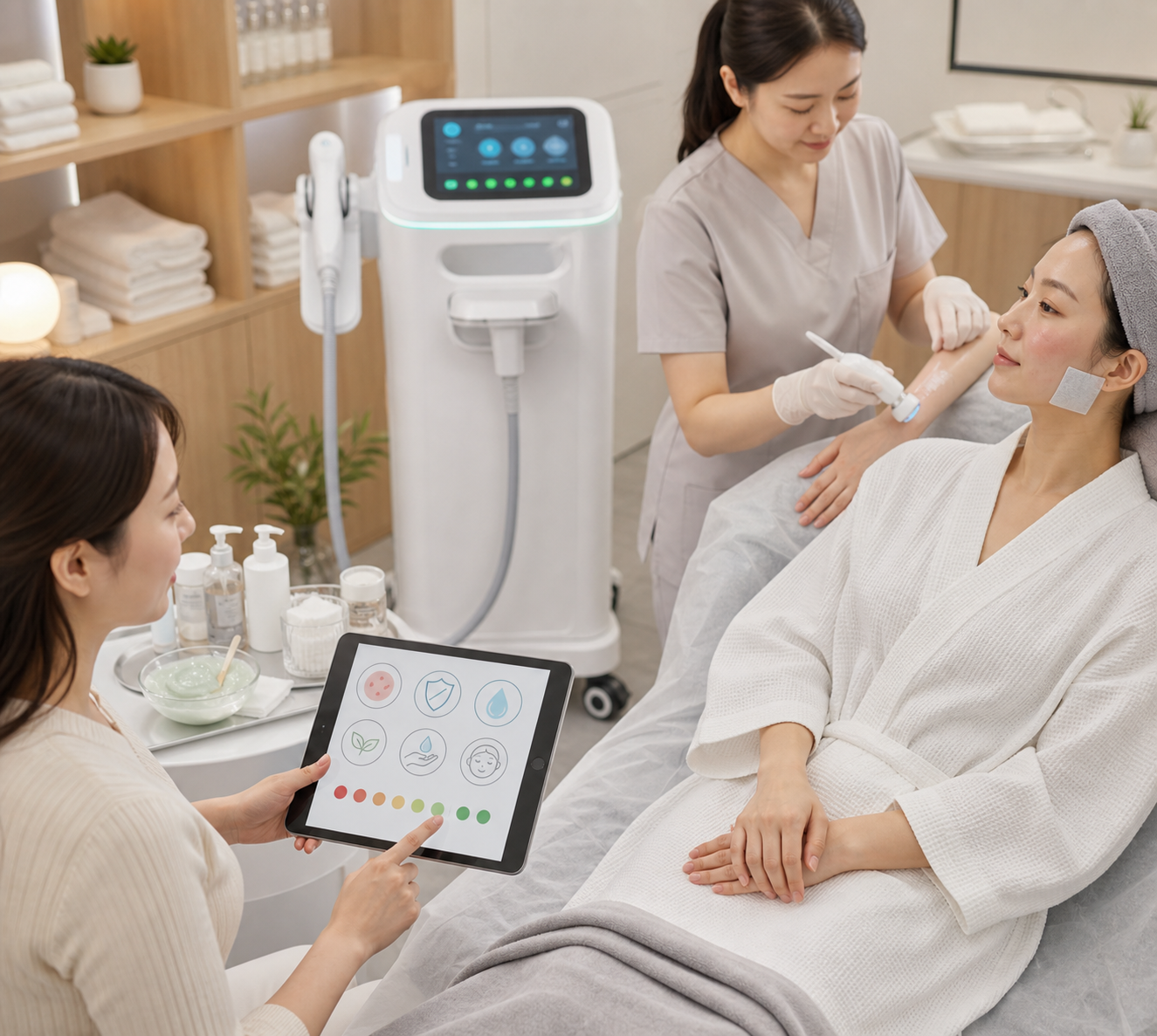
Анализаторы кожи могут быть полезны для клиентов с чувствительной кожей, поскольку во многих салонах красоты они представляют собой бесконтактные или минимально контактные инструменты для проведения консультаций.
Они могут помочь сотрудникам:
- Зафиксируйте исходное состояние клиента.
- Обсудите покраснение, сухость, баланс жирности кожи или текстуру волос.
- Выберите более щадящий план обслуживания.
- Избегайте необдуманных продаж.
- Отслеживайте прогресс с течением времени.
- Объясните, почему применение сильнодействующих методов лечения может быть отложено.
Однако анализатор не следует использовать для запугивания клиентов.
Не говорите:
- “У вас очень плохое состояние кожи”.”
- “Вы обязаны приобрести этот курс, иначе состояние вашей кожи ухудшится”.”
- “Этот отчет представляет собой медицинский диагноз”.”
Лучше:
- “Этот отчет служит ориентиром для ухода за кожей в салоне. Поскольку сегодня ваша кожа выглядит раздраженной, я предлагаю начать с щадящей процедуры, а не с интенсивного использования аппарата”.”
8. Светодиодная терапия для чувствительной кожи
Светодиодное освещение часто считается одним из наиболее щадящих методов модернизации оборудования, но все же требует проверки на пригодность.
Перед внедрением светодиодов поинтересуйтесь:
- Светочувствительность
- Лекарственные препараты, которые могут повышать светочувствительность
- повышенная чувствительность глаз
- Недавние сильнодействующие методы лечения
- Текущее раздражение
- Были ли зафиксированы какие-либо необычные реакции на световые воздействия?
Использовать:
- При необходимости используйте средства защиты глаз.
- Время консервативного лечения
- Подходящий протокол
- Успокаивающие средства
- мониторинг комфорта
Светодиод может использоваться в паре со следующими устройствами:
- Успокаивающая маска
- Увлажняющая процедура для лица
- Комфортный набор для чувствительной кожи
- При необходимости выполните процедуру для повышения комфорта после ухода за лицом.
Не стоит обещать, что светодиодная терапия вылечит кожные заболевания или гарантирует видимый результат для каждого клиента с чувствительной кожей.
9. Гидромассаж лица и процедура с использованием мелких пузырьков для чувствительной кожи.
Гидромассажные процедуры для лица, кислородная терапия и аппараты для создания мелких пузырьков могут быть полезны для очищения и увлажнения, но клиенты с чувствительной кожей могут реагировать на вакуумное воздействие, трение, отшелушивание или растворы.
Для чувствительной кожи:
- Используйте меньшую мощность всасывания.
- Избегайте агрессивных пасов.
- Избегайте чрезмерного отшелушивания.
- Выбирайте щадящие решения.
- Избегайте продуктов с высоким содержанием отдушек.
- При необходимости сократите время лечения.
- Избегайте зон активного распространения огня.
- Следите за покраснением и самочувствием.
- После процедуры используйте успокаивающую маску или охлаждающее средство.
Не используйте тот же протокол глубокого очищения, что и для жирной, устойчивой кожи.
Для чувствительной кожи необходим более щадящий уход.
10. Кислородный спрей и холодный молоток для чувствительной кожи
При наличии соответствующих особенностей кожи пациента в качестве дополнительных процедур для повышения комфорта можно использовать кислородное распыление и обработку холодным молотком.
Их можно сочетать со следующими компонентами:
- Уход за водным балансом
- Успокаивающая маска
- поддержка светодиодов
- Комфорт после чистки
- Пакеты услуг по уходу за чувствительной кожей
Сотрудникам все равно следует проверить:
- Состав продукта
- Комфортная температура
- Реакция кожи
- чистота устройства
- Отзывы клиентов
Эти шаги не являются медицинским лечением. Их следует описывать как меры по обеспечению комфорта и поддерживающий уход в салоне красоты.
11. Ультразвуковые и инфузионные аппараты для чувствительной кожи
Для ультразвуковых или инфузионных устройств требуется тщательный выбор продукта, поскольку именно применяемое с помощью устройства средство может быть основным фактором, вызывающим раздражение.
Для чувствительной кожи:
- По возможности выбирайте мягкие средства без отдушек.
- Избегайте сочетания с сильными кислотами или ретиноидами.
- При необходимости используйте достаточное количество геля или среды.
- Избегайте высокого давления.
- Избегайте участков, вызывающих активное раздражение.
- Продолжительность лечения следует придерживаться умеренного графика.
- Следите за появлением жжения или покалывания.
Если клиент жалуется на неприятные ощущения от продукта до прохождения этапа обработки устройством, не следует продолжать работу только потому, что протокол устройства предписывает это сделать.
Остановитесь и переоцените ситуацию.
12. Радиочастотное оборудование для чувствительной кожи
Для чувствительной кожи радиочастотная терапия может быть более сложной, поскольку она связана с выделением тепла.
Перед проверкой радиочастотного сигнала проверьте:
- Текущее покраснение
- Повышенная чувствительность, схожая с розацеа
- Чувствительность к теплу
- Недавнее пребывание на солнце
- Недавний пилинг или лазерная эпиляция
- состояние кожного барьера
- Противопоказания
- Комфорт для клиентов с теплотой
Подходит для клиентов с чувствительной кожей:
- Начните с более низких настроек.
- Используйте подходящий гель или контактные линзы.
- Поддерживайте комфортную температуру в помещении.
- Избегайте покрасневших или раздраженных участков кожи.
- При необходимости сократите время лечения.
- Регулярно проверяйте чувствительность.
- Записывайте настройки и отзывы.
Никогда не делайте процедуру слишком горячей только потому, что клиент хочет более сильных ощущений. Комфорт и соблюдение протокола важнее интенсивности.
13. Электростимуляция мышц и микротоковая терапия для чувствительной кожи
Электромиостимуляция (ЭМС) и микротоковая терапия могут вызывать покалывание, стимуляцию мышц или необычные ощущения. Клиенты с чувствительной кожей могут испытывать повышенную тревожность или реактивность.
Перед применением ЭМС или микротоковой терапии:
- При необходимости проверьте наличие имплантированных электронных устройств.
- Проверьте наличие раздражения кожи.
- Проверьте чувствительность к проводящим гелям.
- Спросите о дискомфорте, возникающем при стимуляции.
- Начните с низкого уровня.
- Увеличивайте постепенно, только если это комфортно и целесообразно.
Если клиент чувствует жжение, покалывание, резкую боль или необычный дискомфорт, следует остановиться и повторно оценить ситуацию.
Применение электромиостимуляции (ЭМС) и микротоковой терапии следует начинать постепенно и четко объяснять.
14. Удаление волос, IPL и лазерная эпиляция для чувствительной кожи.
Для процедур по удалению волос, IPL-эпиляции и лазерной терапии следует проявлять особую осторожность при работе с чувствительной кожей.
Перед началом лечения необходимо оценить следующее:
- Тип кожи
- Тип волос
- Область лечения
- Недавнее пребывание на солнце
- Светочувствительность
- Лекарства
- Активное раздражение
- В анамнезе ожоги или аллергические реакции.
- Требования к средствам защиты глаз
- Местные правила лицензирования и профессиональной деятельности
Клиентам с чувствительной кожей может потребоваться:
- При необходимости нанесите пластырь или проведите пробное тестирование.
- Консервативные настройки
- Более длительное наблюдение
- Очевидный послеоперационный уход
- Строгие рекомендации по защите от солнца
- При раздражении лечение следует отложить.
Избегайте необоснованных заявлений, таких как гарантированные постоянные результаты, отсутствие риска или безболезненность для всех.
15. Инструменты для коррекции контуров тела для чувствительной кожи
Коррекция контуров тела может включать использование тепла, холода, вакуума, давления, вибрации или стимуляции. Чувствительная кожа также имеет значение, особенно если у клиента легко появляются синяки, он реагирует на холод или тепло, или у него есть раздражение кожи в проблемной зоне.
Перед лечением:
- Проверьте состояние кожи в проблемной зоне.
- Спросите о синяках, чувствительности к холоду, чувствительности к теплу и раздражении.
- Проверьте противопоказания.
- Начните с малого.
- Отслеживайте чувствительность и реакцию кожи.
- Настройки документа.
- Окажите последующий уход.
Не следует продавать средства для коррекции фигуры, обещающие похудение или имеющие медицинские преимущества.
16. Реакцию могут вызывать продукты, а не машина.
Если после обслуживания оборудования возникает реакция чувствительной кожи, это не всегда связано с самим аппаратом.
Возможные триггеры включают:
- Аромат
- Эфирные масла
- Продукты с высоким содержанием алкоголя
- Сильные кислоты
- Ретиноиды
- Отшелушивающие частицы
- Консерванты
- Латекс
- Металлический контакт
- Ингредиенты геля
- Ингредиенты маски
- Остатки дезинфицирующего средства
- Полотенца или средства для стирки
Салоны красоты должны вести учет средств, используемых во время каждой процедуры для чувствительной кожи.
Если клиент реагирует, запись помогает определить, был ли причиной продукт, протокол или настройка устройства.
17. Кожный тест против теста на небольшом участке кожи.
В салонах красоты сотрудники часто говорят “тест на аллергию”, но использовать этот термин следует с осторожностью.
Медицинский патч-тест — это диагностическая процедура, проводимая квалифицированными специалистами. Пробный тест на небольшом участке кожи в салоне — это совсем другое дело.
Для клиентов с чувствительной кожей салон может провести пробный уход на небольшом участке кожи, если это необходимо:
- Используйте небольшую, менее заметную область.
- Используйте шаг, предпринятый при работе с изделием или устройством, с осторожностью.
- В зависимости от типа обслуживания, следует подождать и понаблюдать.
- Зафиксируйте любое покраснение, зуд, жжение, отек или дискомфорт.
- Не продолжайте, если клиент отреагирует негативно.
Клиентам с повторяющимися реакциями, сильными аллергическими реакциями, экземой, розацеей или неясными кожными заболеваниями рекомендуется обратиться к дерматологу, а не полагаться на салонные анализы.
18. По возможности используйте средства без отдушек и с мягкими отдушками.
Клиентам с чувствительной кожей часто больше подходят более простые и щадящие средства.
Принципы использования салонной продукции:
- По возможности отдавайте предпочтение продуктам без отдушек.
- Избегайте использования ненужных эфирных масел.
- Избегайте применения сильных кислот перед оборудованием, если протокол и условия заказчика явно этого не требуют.
- Избегайте агрессивного отшелушивания.
- Избегайте использования большого количества новых продуктов за один сеанс.
- Уточняйте информацию об ингредиентах, на которые могут быть направлены вопросы покупатели, сообщающие об аллергии.
- Не следует предполагать, что “натуральный” означает более безопасный.
- Не следует предполагать, что “гипоаллергенный” означает полное отсутствие реакции.
Чем меньше факторов влияет на процесс лечения, тем проще справляться с чувствительной кожей.
19. Очистка оборудования без оставления раздражающих остатков.
Очистка и дезинфекция необходимы, но у людей с чувствительной кожей может возникнуть реакция, если остатки средства останутся на контактных поверхностях.
Салоны красоты должны:
- Следуйте методам очистки, совместимым с продукцией производителя.
- Используйте соответствующие дезинфицирующие средства.
- Уважайте время, отведенное на общение, когда это необходимо.
- Протрите или смойте в соответствии с инструкциями к изделию.
- Дайте деталям высохнуть по мере необходимости.
- Храните наконечники в чистоте.
- Избегайте использования изделий, несовместимых с данным устройством.
- Обучите персонал методам уборки.
Соблюдение правил гигиены защищает клиентов. Правильная процедура также помогает избежать раздражения, вызванного остатками неподходящих чистящих средств.
20. Создайте форму консультации для обладателей чувствительной кожи.
Для чувствительной кожи следует выбирать следующие варианты:
- Главная проблема
- Текущее состояние кожи
- Известные аллергии
- Продукты, вызывавшие реакции ранее
- Недавние процедуры
- Современные активные средства по уходу за кожей
- Фоточувствительность, связанная с приемом лекарств, если таковая имеется.
- Беременность или грудное вскармливание (в соответствующих случаях)
- Наличие в анамнезе экземы, розацеа, дерматита или других кожных заболеваний.
- Недавний солнечный ожог
- Открытые раны или инфекция
- Предпочтения клиента в отношении комфорта
- В случае необходимости может потребоваться контактная информация для экстренной связи или процедура направления к специалисту.
Эта форма помогает сотрудникам не полагаться исключительно на память.
21. Создайте протокол с низкой интенсивностью стимуляции.
Протокол с низкой интенсивностью стимуляции полезен для клиентов с чувствительной кожей.
Это может включать в себя:
- Мягкое очищение
- Не требует использования жестких чистящих средств.
- Не содержит сильных кислот
- Нижнее всасывание
- Снизьте температуру
- Более низкий уровень стимуляции
- Более короткое время лечения
- Меньше передач
- Продукты без отдушек
- Успокаивающая маска
- Светодиодная поддержка там, где это уместно.
- При необходимости используйте успокаивающий холодный шаг.
- Очевидный послеоперационный уход
- Повторный осмотр в течение 24–72 часов.
Протокол должен быть специфичным для каждого устройства. Не следует использовать один и тот же протокол для всех машин.
22. Объясните план клиенту.
Клиентам с чувствительной кожей необходима спокойная и понятная коммуникация.
Пример скрипта:
“Поскольку ваша кожа чувствительна, я не рекомендую начинать сегодня с интенсивных процедур. Мы начнем с щадящего протокола, будем использовать более низкие настройки, избегать агрессивных средств и следить за вашим самочувствием. Если ваша кожа хорошо отреагирует, мы постепенно разработаем план поддержания результата”.”
Это свидетельствует о профессионализме.
Избегайте слов:
- “Не волнуйтесь, это безопасно для всех”.”
- “Этот аппарат предназначен для людей с чувствительной кожей”.”
- “Вы точно никак не отреагируете”.”
- “Чем сильнее, тем лучше”.”
Честное общение внушает больше доверия, чем громкие обещания.
23. Уход после процедуры для клиентов с чувствительной кожей.
Уход после процедуры должен быть простым и щадящим.
К общим рекомендациям по послеоперационному уходу могут относиться:
- В течение короткого периода времени избегайте агрессивного отшелушивания.
- Избегайте применения сильных кислот или ретиноидов, за исключением случаев, когда это рекомендовано квалифицированным специалистом.
- Уход за кожей должен быть простым.
- При необходимости используйте мягкий увлажняющий крем.
- При необходимости используйте солнцезащитные средства.
- В течение короткого периода времени следует избегать воздействия тепла, посещения сауны или интенсивных физических нагрузок, если это рекомендовано протоколом лечения.
- Обратите внимание на необычное покраснение, жжение, отек, сыпь или дискомфорт.
- В случае сильной аллергической реакции обратитесь в салон или к врачу.
Дальнейший уход зависит от типа устройства и состояния пациента. Используйте протоколы поставщика и рекомендации квалифицированных специалистов.
24. Последующее наблюдение после лечения
Клиентам с чувствительной кожей необходимо обеспечить последующее наблюдение.
Сроки дальнейших действий:
- В тот же день для случаев повышенной чувствительности.
- через 24–72 часа после лечения
- Перед следующим занятием
Дополнительное сообщение:
“Здравствуйте, это краткий отзыв после сеанса ухода за чувствительной кожей. Как вы себя чувствуете сегодня? Есть ли покраснение, зуд, жжение или ощущение стянутости? Если все в порядке, мы можем провести следующий сеанс в более щадящем режиме и оценить вашу реакцию, прежде чем переходить к более интенсивному уходу”.”
Последующее наблюдение укрепляет доверие и помогает салону выявлять проблемы на ранней стадии.
25. Тщательно упаковывайте продукты для чувствительной кожи.
Наборы средств для чувствительной кожи не должны обещать кардинальных изменений.
Улучшенные темы оформления пакетов:
- Уход для чувствительной кожи
- Бережное поддержание водного баланса
- Комфорт для кожного барьера лица
- Комплект светодиодной подсветки для создания успокаивающего эффекта
- Ежемесячный уход за чувствительной кожей
- Сезонное покраснение кожи: комфортный уход
Избегайте таких названий:
- Мгновенный ремонт
- Лечение аллергии
- Гарантированное устранение покраснения
- Однократное восстановление кожного барьера
- Медицинское лечение чувствительной кожи
Названия пакетов должны быть приятными и реалистичными.
26. Ценообразование для проектов, ориентированных на чувствительную кожу.
Для процедур, предназначенных для чувствительной кожи, может потребоваться больше времени на консультацию и более тщательное выполнение. Цена должна это отражать.
Факторы ценообразования:
- Время консультации
- Время лечения
- Стоимость щадящего продукта
- Одноразовые принадлежности
- Навыки персонала
- Время последующего наблюдения
- Снижение скорости или уменьшение количества клиентов в номере.
- Ведение учета
- Управление рисками
Процедуры для чувствительной кожи не всегда должны быть дешевле. Они могут быть более щадящими, но при этом требовать более профессионального подхода.
27. Обучение персонала имеет важное значение.
Сотрудники должны знать:
- Как определить активное раздражение
- Когда следует отложить обслуживание
- Как спросить об аллергии
- Как выбрать щадящие средства
- Как понизить настройки
- Как остановиться при появлении дискомфорта
- Как объяснить реалистичные ожидания
- Как записывать подробности лечения
- Как продолжить
- Как избежать необоснованных заявлений
Если персонал не может спокойно объяснить особенности ухода за чувствительной кожей, салону не следует предлагать клиентам с чувствительной кожей агрессивные средства.
28. Что сотрудникам никогда не следует говорить
Избегайте следующих утверждений:
- “Подходит для всех типов чувствительной кожи”.”
- “Этот аппарат навсегда восстанавливает кожный барьер”.”
- “Аллергической реакции не возникнет”.”
- “Он подходит каждому покупателю”.”
- “Чем сильнее чувство, тем лучше”.”
- “Здесь вылечат ваше кожное заболевание”.”
- “Вам не нужен дерматолог”.”
- “Гипоаллергенный означает, что он не может вызвать реакцию”.”
- “Натуральные продукты никогда не раздражают кожу”.”
Эти заявления рискованны и могут ввести в заблуждение.
29. Когда следует рекомендовать клиента
Салоны красоты должны рекомендовать консультации врача или дерматолога в следующих случаях:
- У клиента наблюдаются необъяснимые реакции.
- Кожа активно воспалена.
- Имеются открытые раны или инфекция.
- У клиента наблюдается сильная сыпь, отек, боль или жжение.
- У клиента диагностировано кожное заболевание, и он не уверен, что ему безопасно.
- Клиент принимает лекарства по рецепту, которые могут повлиять на состояние кожи.
- У клиента наблюдалась сильная негативная реакция на предыдущие процедуры.
- В салоне не уверены, подходит ли этот проект.
Рекомендации — это не потеря клиента, а его защита.
30. Практичный алгоритм действий для чувствительной кожи.
Используйте следующий алгоритм действий:
1. Спросите, что для этого клиента означает "чувствительная кожа".
2. Проверьте текущее состояние кожи.
3. Проверьте наличие аллергии, информацию о недавнем лечении и активных лекарственных препаратах.
4. Примите решение о том, следует ли продолжить, изменить, отложить или направить дело на рассмотрение.
5. Выберите щадящий протокол.
6. Начните с низких настроек и короткого времени лечения.
7. Следите за ощущениями и покраснением.
8. Прекратите действия при возникновении ненормального дискомфорта.
9. Запишите настройки, продукты и ответ.
10. Обеспечьте последующий уход.
11. Повторный осмотр в течение 24–72 часов.
12. Корректируйте следующий сеанс только в том случае, если кожа хорошо реагирует.
Этот рабочий процесс защищает как качество обслуживания клиентов, так и репутацию салона.
31. Окончательный практический ответ
Некоторые модели косметического оборудования подходят для людей с чувствительной кожей, но только после тщательной оценки состояния кожи и бережного обращения.
В качестве первого выбора обычно подходят мягкое увлажнение, анализ кожи, светодиодная терапия, кислородный спрей, охлаждающие процедуры, очищение с низким уровнем всасывания и успокаивающие процедуры. Более интенсивные процедуры, такие как RF, EMS, IPL, лазерная терапия, сильное всасывание, пилинг, HIFU и коррекция контуров тела, требуют большей осторожности.
Если у клиента наблюдается активное раздражение, открытые раны, сильное покраснение, недавняя аллергическая реакция, солнечный ожог, недавнее шелушение или неясное кожное заболевание, салон должен отложить оказание услуги или порекомендовать обратиться к врачу.
Наилучший подход — начинать осторожно, вести записи, контролировать результаты и никогда не обещать, что чувствительная кожа не будет реагировать.
Заключение
Косметическое оборудование само по себе не является непригодным для чувствительной кожи, но клиентам с чувствительной кожей требуется более внимательное обслуживание.
В салоне не следует применять один и тот же протокол для всех клиентов. Необходимо оценить текущее состояние кожи, выяснить причины раздражения, проверить, какие процедуры и средства использовались в последнее время, выбрать щадящие режимы, избегать агрессивных ингредиентов, следить за комфортом и проводить последующее наблюдение после процедуры.
Бережные процедуры с использованием специального оборудования могут помочь салонам красоты эффективно обслуживать клиентов с чувствительной кожей, если они предлагаются в вариантах для комфортного, увлажняющего, успокаивающего или поддерживающего ухода. Более интенсивные процедуры с использованием энергии, тепла, вакуума или отшелушивания требуют осторожности и могут быть неприемлемы при активном раздражении кожи.
Самое безопасное обещание — это не “отсутствие реакции”. Самое безопасное обещание — это “мы тщательно оценим ситуацию, используем консервативный протокол, будем отслеживать вашу реакцию и скорректируем план в зависимости от типа вашей кожи”.”
Часто задаваемые вопросы
Могут ли клиенты с чувствительной кожей пользоваться косметическим оборудованием?
Некоторым клиентам с чувствительной кожей подходит использование щадящих косметических процедур, но им необходима оценка состояния кожи, щадящие настройки, мягкие средства и последующее наблюдение. Клиентам с активным раздражением следует отложить процедуру.
Какое косметическое оборудование лучше подходит для чувствительной кожи?
Для некоторых клиентов с чувствительной кожей больше подойдут анализаторы состояния кожи, устройства для бережного увлажнения, светодиодная терапия, кислородный спрей, комфортные процедуры с использованием холодного молотка и очищение с низким уровнем всасывания.
С каким косметическим оборудованием следует быть осторожными клиентам с чувствительной кожей?
Клиентам с чувствительной кожей следует с осторожностью относиться к радиочастотному нагреву, электромиостимуляции (EMS), IPL, лазерной эпиляции, сильному вакуумному всасыванию, абразивной эпиляции, HIFU, коррекции контуров тела, а также к процедурам, сочетающимся с кислотами или ретиноидами.
Следует ли салонам проводить тест перед обработкой чувствительной кожи?
В некоторых случаях может быть полезно провести пробное тестирование на небольшом участке кожи, но это не то же самое, что медицинское патч-тестирование. Клиентам с повторяющимися реакциями или кожными заболеваниями следует проконсультироваться с дерматологом.
Что следует избегать использовать в салонах красоты на чувствительной коже?
В салонах следует избегать жестких скрабов, сильных кислот, средств с высоким содержанием отдушек, агрессивного всасывания, высокой температуры, чрезмерного количества проходов и слишком большого количества новых средств за один сеанс.
Что должны говорить сотрудники клиентам с чувствительной кожей?
Персонал должен объяснить, что в салоне будет использоваться щадящий протокол, низкие температуры, тщательный контроль, простые средства и последующее наблюдение. Не следует обещать, что никакой реакции не возникнет.
В каких случаях салон должен отказать в проведении процедуры или отложить ее?
Лечение следует отложить, если у пациента наблюдается активная сыпь, открытая рана, сильное покраснение, жжение, отек, инфекция, солнечный ожог, недавняя аллергическая реакция, недавнее сильнодействующее лечение или любое другое состояние, требующее медицинской консультации.