







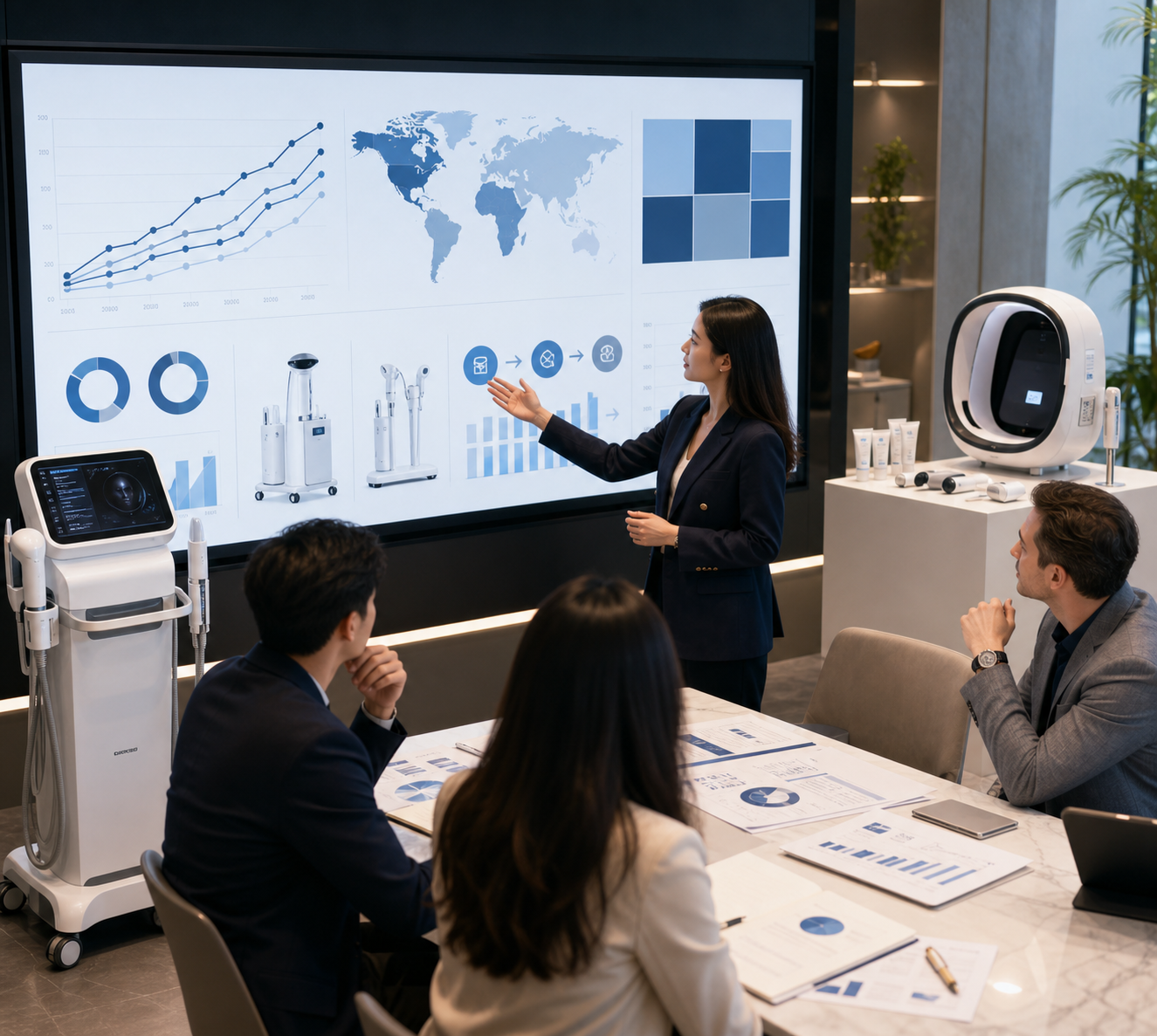
The beauty equipment industry is entering a more mature but still opportunity-rich stage. Demand is no longer driven only by salons wanting to buy new machines. It is increasingly driven by consumers wanting visible results, beauty salons needing higher-value projects, skin management centers building professional service systems, and distributors looking for products that can create repeat sales instead of one-time transactions.
For beauty equipment distributors, this creates both opportunity and pressure. Market demand is growing in many categories, but competition is also becoming more intense. Products are more similar, prices are more transparent, customers ask more technical questions, and after-sales service has become a major factor in purchasing decisions.
This report analyzes the main beauty equipment industry trends and the key opportunities distributors should focus on in the next few years.
요약 보고서
The global aesthetic and beauty equipment market is expected to continue growing, especially in non-invasive and energy-based categories. Public market reports differ in scope and numbers, but most point to steady expansion through the early 2030s. Grand View Research projects the energy-based aesthetic devices market to grow from USD 8.1 billion in 2026 to USD 15.7 billion by 2033. Fortune Business Insights projects the broader medical aesthetics market to grow from USD 28.49 billion in 2025 to USD 89.59 billion by 2034. IMARC estimates the medical aesthetics market will grow from USD 19.8 billion in 2025 to USD 39.9 billion by 2034.
For distributors, the most important opportunity is not simply selling more machines. The larger opportunity is helping salons and skin management centers build profitable equipment-based projects.
주요 결과:
- Anti-aging, firming, lifting, and skin quality improvement remain core demand drivers.
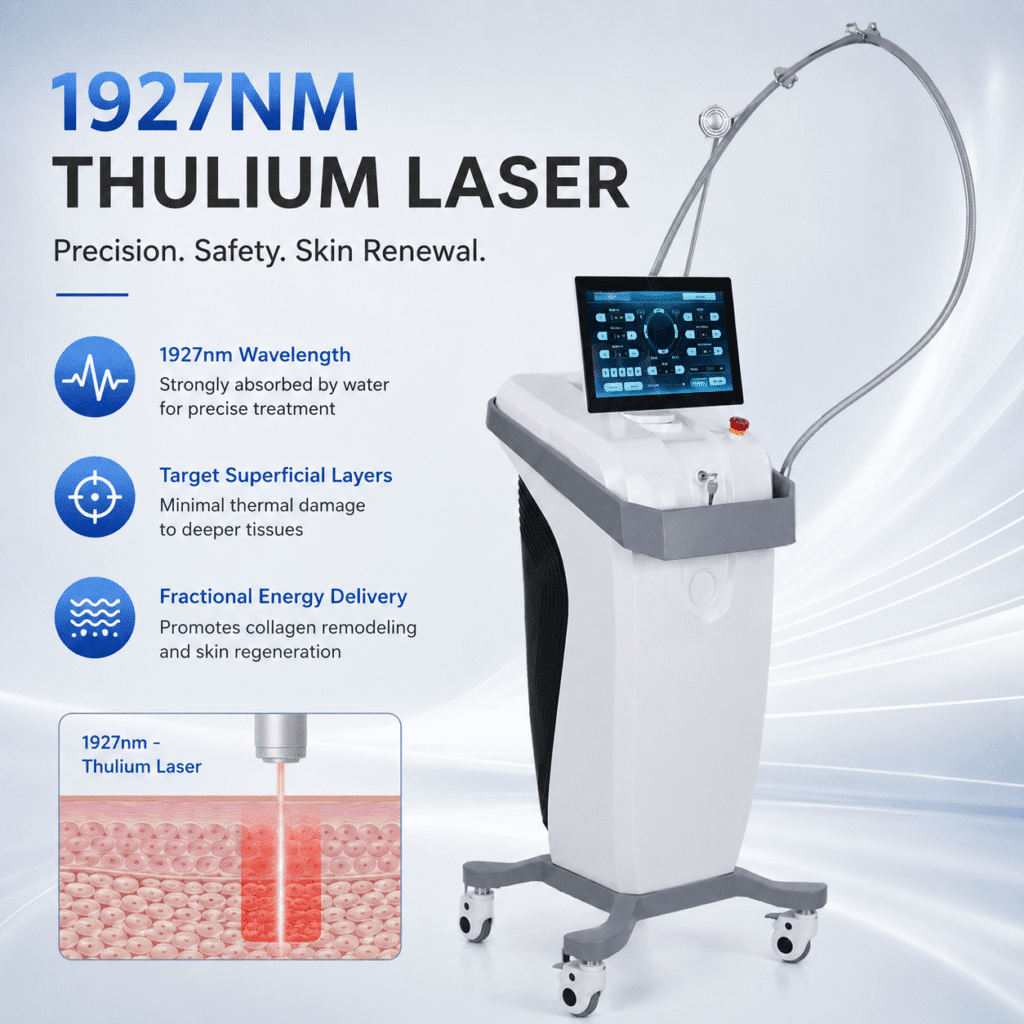
- Energy-based devices such as RF, microcurrent, ultrasound-related systems, LED, laser, IPL, and body contouring equipment continue to attract attention.
- AI skin analysis and digital consultation tools are becoming more important in salon conversion and treatment planning.
- Multifunction beauty equipment remains attractive for small and medium salons, but high-end centers prefer stronger, more professional systems.
- Beauty salons are becoming more rational when purchasing equipment. They care about ROI, customer acceptance, training, consumables, compliance, and after-sales service.
- Distributor competition is shifting from product price to total support capability.
- Regional agents still have opportunities if they build local service networks, training systems, project packaging, and product differentiation.
1. Market Growth Is Still Present, But It Is More Selective
The beauty equipment market still has growth space, but growth is no longer equal across all categories. In the earlier stage, many salons bought machines because equipment-based treatments looked modern and profitable. Today, salon owners are more careful. They want to know whether a device can attract customers, sell packages, create repeat visits, recover investment, and receive reliable service support.
This means distributors should avoid assuming that any new device can sell well. Growth is more selective and usually concentrated in categories that match real consumer concerns:
- Anti-aging.
- Firming and lifting.
- Skin analysis and personalization.
- Hydration and skin quality improvement.
- 제모.
- 체형 교정.
- 기본적인 피부 관리.
- Recovery and soothing care.
- Private and postpartum care in selected markets.
The market is not simply expanding by machine quantity. It is expanding by project value, treatment standardization, and customer retention.
2. Non-Invasive And Minimally Invasive Beauty Demand Supports Equipment Sales
Consumers increasingly prefer treatments that offer visible improvement without long downtime. This supports demand for non-invasive and minimally invasive aesthetic services, especially in salons, med spas, skin management centers, and aesthetic clinics.
Beauty equipment distributors should pay attention to this demand because it creates demand for technologies such as:
- RF.
- EMS 미세전류.
- LED 광선 치료.
- Ultrasound-related equipment.
- Laser and IPL where legally permitted.
- 하이드로 페이셜 및 하이드라더마브레이션 기기.
- 체형 교정 시스템.
- 피부 분석 장비.
However, distributors should be careful with claims. A device may be popular because it is non-invasive, but marketing still needs to follow the device’s intended use, local rules, and advertising standards.
3. Anti-Aging Equipment Remains One Of The Strongest Opportunities
Anti-aging remains one of the strongest long-term categories because it is linked to broad demographic demand and higher customer spending power. Customers aged 30 and above often care about fine lines, sagging, facial contour, neck lines, firmness, dullness, and skin quality.
For distributors, anti-aging equipment is attractive because it often supports:
- Higher treatment prices.
- 코스 패키지.
- 회원 관리.
- 복합 프로젝트.
- 재방문.
- Premium salon positioning.
Key product opportunities include:
- RF 미용 기기.
- EMS 미세전류 장비.
- LED red light and near-infrared systems where appropriate.
- 법적으로 허용된 지역에서 초음파 미용 기기를 사용할 수 있습니다.
- Skin analysis systems.
- Infusion and recovery devices.
- Neck and facial contour devices.
The best distributor strategy is not only to sell an anti-aging machine. It is to sell a complete anti-aging project package with treatment protocols, consultation scripts, pricing suggestions, customer education materials, contraindication guidance, and follow-up templates.
4. RF Beauty Equipment Will Continue To Receive Attention
RF beauty equipment remains one of the most discussed categories because it fits consumer demand for firming, tightening, facial contour, and anti-aging maintenance. It can be sold to high-end salons, skin management centers, community salons with mature customers, and distributors targeting premium projects.
RF has strong market attention because:
- Customers understand firming and anti-aging needs.
- Salons can sell RF as a course instead of only a single session.
- It can be combined with cleansing, hydration, microcurrent, LED, and recovery.
- It supports mid-to-high ticket pricing.
- It fits both facial and body applications depending on device design.
The distributor opportunity is strongest when the product offers stable quality, clear parameters, safety controls, strong training, and realistic treatment positioning.
The risk is also clear: low-quality RF products, exaggerated claims, poor operator training, and weak after-sales service can damage both salon trust and distributor reputation.
5. AI Skin Analysis Is Moving From Optional Tool To Conversion Tool
AI skin analysis and digital skin detection equipment are becoming more important in beauty salons and skin management centers. They help salons show skin condition visually, explain customer concerns, recommend personalized treatment plans, and track progress.
For distributors, skin analysis equipment is attractive because it can be sold to many types of customers:
- New beauty salons.
- Community salons.
- High-end skin management centers.
- Aesthetic clinics.
- Chain salons.
- Training institutions.
- Skincare brand stores.
The biggest value of AI skin detection is often not the direct service fee. Its value is improving consultation, increasing package conversion, and helping salons sell other equipment-based treatments.
유통업체 기회는 다음과 같습니다.
- Selling skin analyzers as entry products.
- Bundling skin analysis with RF, LED, hydro facial, or microcurrent equipment.
- Offering consultation training.
- Providing report templates.
- Helping salons build digital customer records.
- Creating before-and-after tracking systems.
Over time, skin analysis may become a standard consultation tool in more professional salons, especially those that want to move from basic facial care to skin management.
6. Multifunction Equipment Still Has Demand, But Buyers Are More Careful
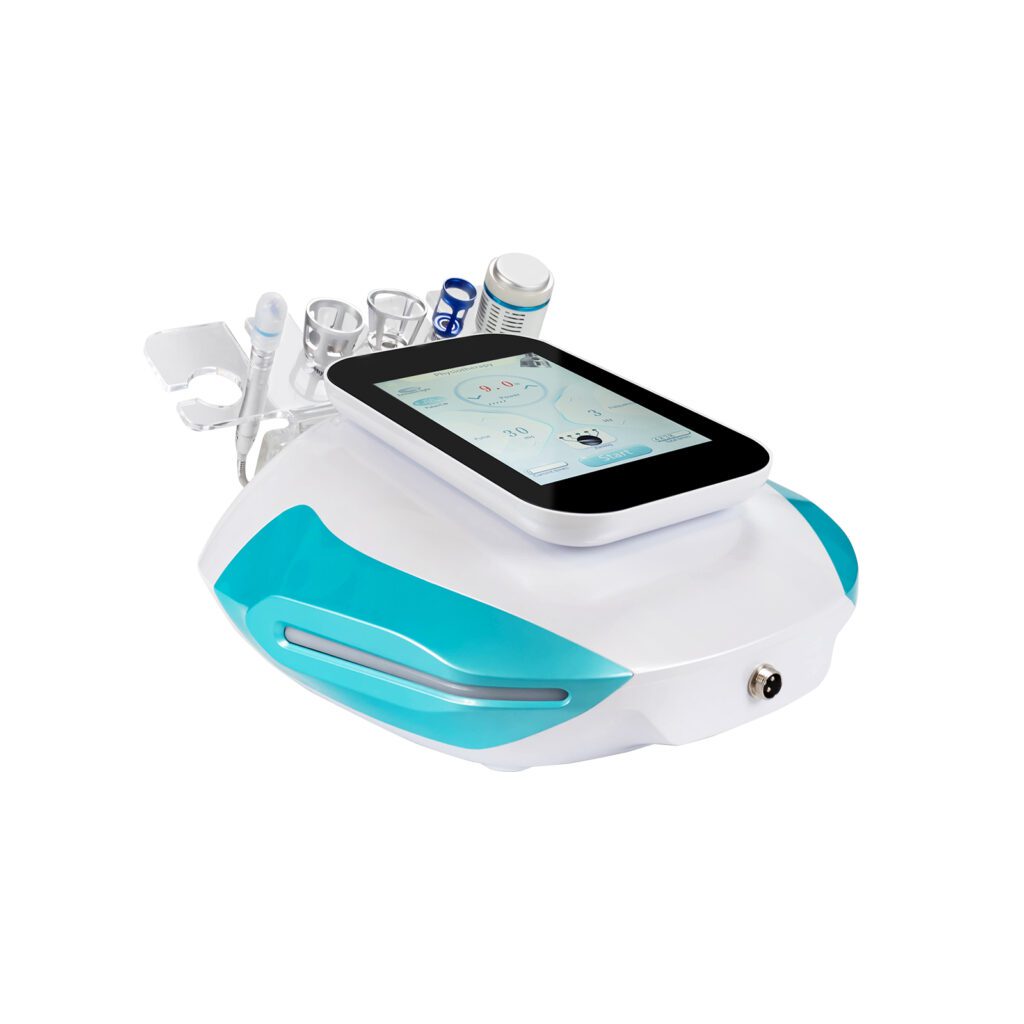
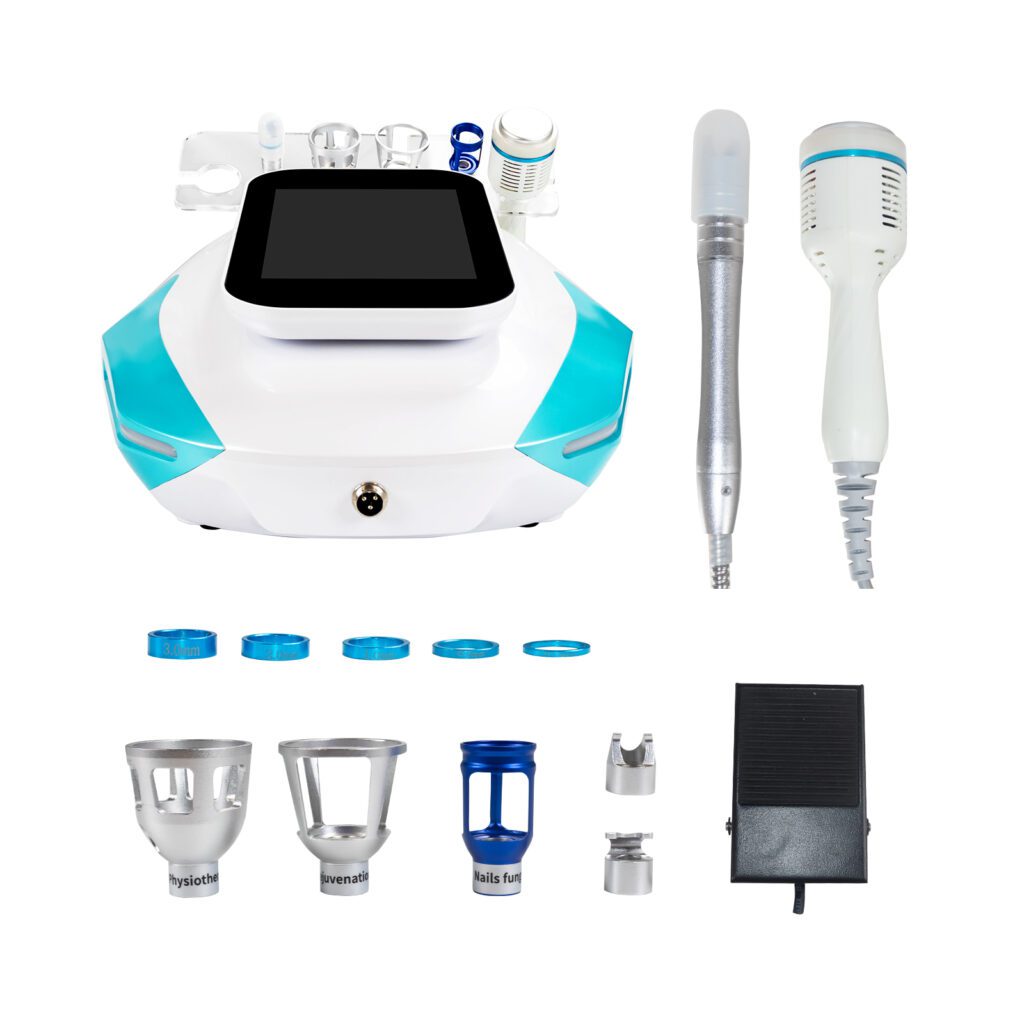
Multifunction beauty equipment remains popular among small and medium salons because it can reduce initial investment, save space, and support multiple service items. A single machine may include cleansing, oxygen spray, ultrasonic infusion, RF, microcurrent, LED, cooling, or small bubble functions.
This is especially suitable for:
- New salons.
- Community salons.
- Small skin management studios.
- Salons with limited rooms.
- Buyers testing several project categories.
However, the market is becoming more careful. Salons no longer trust a long function list automatically. They want to know whether each function is strong enough, whether accessories are available, whether protocols are clear, and whether staff can actually sell the projects.
Distributor opportunity:
- Offer practical multifunction systems, not overcomplicated machines.
- Provide clear treatment menus.
- Train salons to package functions into simple projects.
- Explain which functions are core and which are supporting.
- Keep spare parts and consumables available.
Multifunction equipment is still a good opportunity, but only when it solves real salon operation problems.
7. Basic Skin Management Equipment Remains Stable
Not every opportunity is high-end. Basic skin management equipment continues to have stable demand because many salons need high-frequency, easy-to-sell services.
Stable categories include:
- Hydro facial devices.
- 소형 버블 장치.
- 산소 주입 장비.
- Ultrasonic cleansing and infusion devices.
- LED 광선 치료 장비.
- 시원하고 진정 효과가 있는 기기.
- Basic skin analyzers.
These devices are attractive because:
- Customers understand the benefits.
- Treatments can be repeated monthly or biweekly.
- Prices can fit a wide customer base.
- They are suitable for new salons and community salons.
- They can be bundled with skincare products.
- They help salons create entry-level packages.
For distributors, these categories may not always have the highest unit price, but they can create stable volume, repeat consumable sales, and after-sales relationships.
8. Body Contouring Equipment Still Has Growth Opportunity
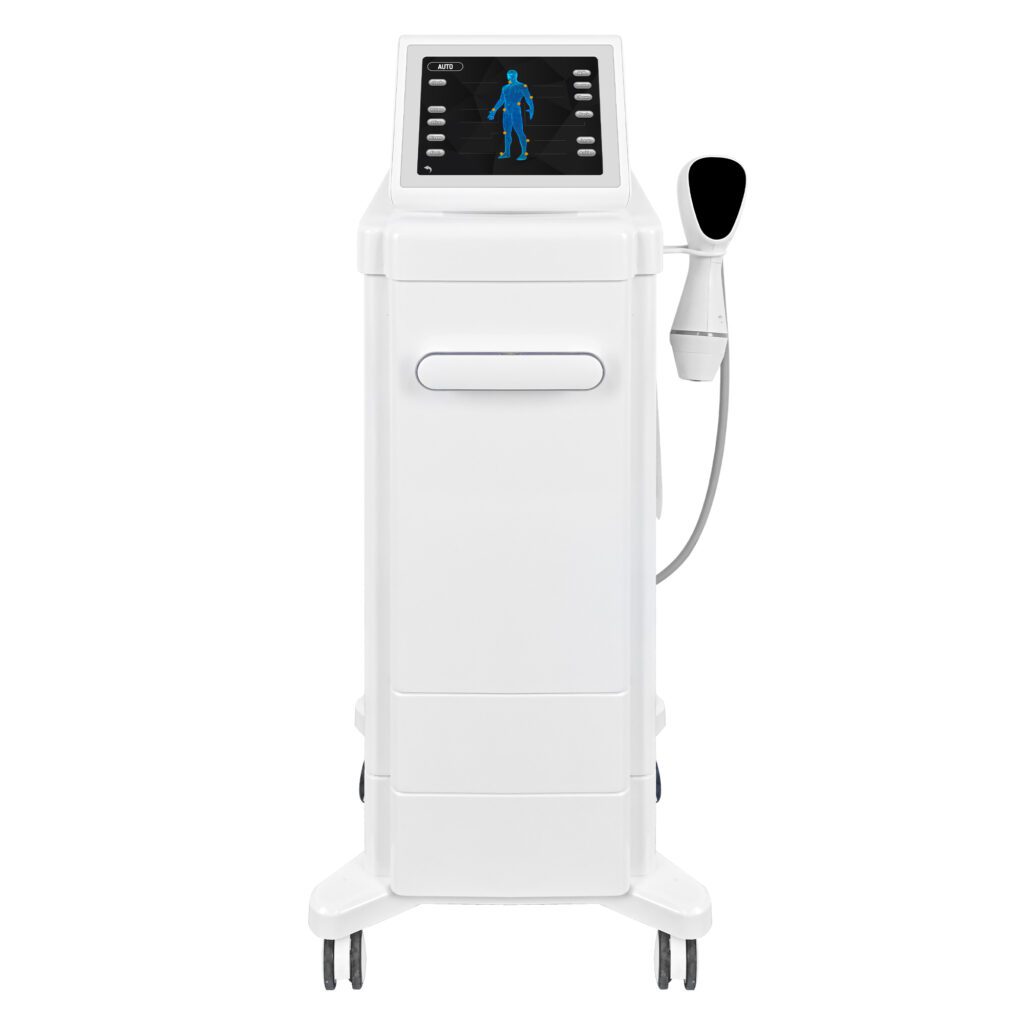
Body contouring and slimming-related equipment continue to attract attention because many consumers care about body shape, localized fat appearance, postpartum body changes, and non-surgical body management.
Product opportunities include:
- Body RF equipment.
- 응급 의료용 신체 장비.
- 진공 신체 기기.
- Cryolipolysis-related equipment where legally allowed.
- Muscle stimulation systems where permitted.
- Measurement and tracking tools.
This category can support high-ticket packages, but it is not suitable for every salon. Body projects usually require private rooms, longer treatment times, measurement tracking, customer education, and realistic result communication.
Distributor opportunity:
- Focus on salons with body management positioning.
- Provide body measurement templates.
- Offer package design for multi-session courses.
- Train staff on consultation and expectation management.
- Avoid overpromising weight loss or medical claims.
Body equipment can be profitable, but distributors should help salons validate local demand before purchase.
9. Hair Removal Equipment Is Mature But Still Has Selective Opportunity
Hair removal equipment is a mature category in many markets. This means demand can be broad, but competition and price pressure can also be strong.
Distributor opportunities remain in:
- Markets where professional hair removal penetration is still growing.
- Community salons adding privacy-based hair removal packages.
- Clinics or med spas upgrading older systems.
- Salons that want stronger devices, better cooling, faster treatment speed, or safer protocols.
- Regions where customers prefer package-based hair removal rather than single-session discounts.
위험 요소는 다음과 같습니다.
- Local price wars.
- Strong competition from chains.
- Compliance and operator training requirements.
- High expectations for comfort and results.
- Device maintenance and lamp or handpiece cost.
For distributors, hair removal is not a simple growth category anymore. It requires careful regional analysis, competitor pricing research, and service support.
10. LED Light Therapy Has Strong Combination Value
LED light therapy is often most valuable as part of a complete skin management protocol. It can support calming, recovery-style care, anti-aging maintenance, acne-prone skin management where appropriate, and post-treatment support.
LED equipment may not always generate high direct revenue alone, but it helps salons create more complete packages.
Distributor opportunities:
- Bundle LED with hydro facial, RF, microcurrent, and infusion devices.
- Provide treatment protocols by skin concern.
- Help salons use LED as a package enhancement.
- Position LED realistically within the device’s intended use.
LED is suitable for distributors who sell project systems rather than standalone machines.
11. Private Care And Postpartum Recovery Are Niche But High-Trust Markets
Private care and postpartum recovery equipment can be attractive in selected markets, especially where salons already have strong trust with female clients. These categories may support premium packages, but they require careful positioning.
Opportunity conditions:
- Strong local demand.
- Privacy-focused service environment.
- Trained female staff where relevant.
- Clear service scope.
- Sensitive marketing language.
- Good customer education.
- Compliance and claim review.
위험 요소:
- Cultural sensitivity.
- Privacy concerns.
- Regulatory uncertainty.
- 직원 교육 난이도.
- Reputation risk if marketed aggressively.
For distributors, these categories are not ideal for beginners. They are better suited for agents who understand local customer culture and can support salon training.
12. Salons Are Buying Projects, Not Just Machines
One of the most important market changes is that salons increasingly care about project packaging. They do not only ask, “How much is the machine?” They ask:
- How do I sell this project?
- What treatment name should I use?
- 얼마를 청구할 수 있을까요?
- 총 몇 회의 세션이 필요합니까?
- 어떤 고객층을 타겟으로 해야 할까요?
- What training do you provide?
- 필요한 소모품은 무엇입니까?
- 기계가 고장 나면 어떻게 되나요?
- Can this project help me increase average transaction value?
This creates a major distributor opportunity. Distributors who can provide project design will outperform distributors who only provide product catalogs.
유용한 유통업체 지원 사항은 다음과 같습니다.
- 치료 프로토콜.
- Project names.
- Package pricing suggestions.
- 상담 스크립트.
- 고객 설문조사 템플릿.
- 투자수익률(ROI) 계산기.
- 캠페인 계획을 시작하세요.
- 필요에 따라 전후 비교 추적 템플릿을 제공합니다.
- 직원 교육 매뉴얼.
- After-sales service process.
In the future, many salons will choose distributors based on business support, not only machine price.
13. After-Sales Service Is Becoming A Core Competitive Advantage
As equipment competition becomes more intense, after-sales service becomes one of the strongest ways for distributors to differentiate.
미용실은 다음 사항을 중요하게 생각합니다:
- 보증 조건.
- 예비 부품 재고 현황.
- 소모품 공급.
- Technical response speed.
- 수리 시간.
- 원격 문제 해결.
- 운영자 교육.
- 프로토콜 업데이트.
- 유지보수 안내.
- 교체용 액세서리.
Poor after-sales service can destroy a distributor’s reputation quickly. A machine that stops working during a paid treatment affects customer trust, salon revenue, and future purchases.
Distributors should build after-sales systems early:
- Keep common spare parts in stock.
- 현지 기술자를 훈련시키십시오.
- Create response time standards.
- Offer remote support.
- Provide maintenance videos.
- Track warranty claims.
- 고객 의견을 수집하세요.
In a mature market, service capability is not an extra feature. It is part of the product.
14. Price Competition Will Continue, But It Is Not The Best Strategy
Beauty equipment prices vary widely because of different technology, components, brand positioning, certification, manufacturing quality, service support, training, software, and channel strategy. Price competition is unavoidable, especially in common categories such as small bubble, hydro facial, LED, and multifunction facial machines.
However, distributors who compete only on low price often face:
- Lower margins.
- Weak after-sales ability.
- 고객 불만 사항.
- 제품 균질화.
- Poor brand loyalty.
- Difficult repeat purchases.
Better strategies include:
- Build exclusive product configurations.
- Offer local training.
- Provide project packaging.
- Develop private-label options.
- Offer service contracts.
- Bundle consumables.
- Create regional demo centers.
- Support financing or staged purchasing.
- Build a clear product ladder from entry to premium.
The strongest distributors use price as one part of strategy, not the whole strategy.
15. Import And Compliance Awareness Is Increasing
In many markets, buyers are paying more attention to documents, certifications, user manuals, labeling, intended use, and advertising claims. This is especially important for energy-based devices, light-based devices, hair removal systems, body contouring equipment, and devices promoted with strong result claims.
유통업체는 다음을 준비해야 합니다.
- 제품 사양.
- 사용자 설명서.
- 보증서류.
- 훈련 기록.
- Safety guidance.
- 금기사항 목록.
- 필요한 경우 수입 서류를 제출하십시오.
- Local compliance references.
- Claim guidance for salons.
The FDA notes that aesthetic devices may be regulated depending on intended use and whether they affect the structure or function of the body. The FTC also emphasizes that health-related advertising claims should be truthful, not misleading, and supported.
Even distributors outside the United States can learn from this logic: the more advanced the device and the stronger the claim, the more careful the compliance review should be.
16. Digitalization Will Change Distributor Support
Digital tools are becoming more important in the beauty equipment value chain.
예시로는 다음과 같은 것들이 있습니다.
- AI 기반 피부 분석.
- 디지털 고객 기록.
- Treatment plan software.
- Online training platforms.
- Remote equipment troubleshooting.
- QR 코드 매뉴얼.
- CRM 연동.
- Usage tracking.
- 소모품 재주문 알림.
- 온라인 보증 등록.
Distributors can use digitalization to increase customer stickiness. A salon that uses the distributor’s training system, customer templates, software support, consumable reminders, and maintenance records is less likely to switch suppliers based only on price.
Future distributor opportunity is not only product distribution. It is building a service ecosystem around equipment.
17. Channel Structure Is Becoming More Segmented
Beauty equipment buyers are no longer one group. They include:
- Small community salons.
- New beauty salons.
- High-end skin management centers.
- 메디컬 스파 및 미용 클리닉.
- Chain salons.
- Home beauty device brands.
- Training schools.
- Regional wholesalers.
- Online sellers.
- Private-label buyers.
Each buyer needs a different product and support model.
커뮤니티 살롱에 필요한 것:
- Affordable devices.
- Easy training.
- High-frequency projects.
- 신속한 사후 지원.
High-end centers need:
- Stronger devices.
- Premium protocols.
- Professional consultation tools.
- Brand and service consistency.
Distributors need:
- Product lines with clear levels.
- Training materials by customer type.
- Pricing systems by channel.
- Territory and customer protection.
- 로컬 데모 지원.
The distributor who understands customer segmentation can avoid selling the wrong machine to the wrong buyer.
18. Regional Distributors Still Have Strong Opportunities
Some people think online sales and direct factory sales reduce the value of distributors. In reality, regional distributors still have strong opportunities if they provide services factories and online sellers cannot provide locally.
Regional distributors can win through:
- Local demonstrations.
- Local installation.
- 현지 교육.
- Fast repair.
- 예비 부품 공급.
- Market understanding.
- Salon visits.
- Project launch support.
- Local language materials.
- Credit and payment flexibility.
- Relationship management.
Beauty equipment is not like a simple consumer product. Many salons still need advice, training, and support after purchase. This creates room for professional regional distributors.
19. Best Opportunities For New Beauty Equipment Distributors
New distributors should avoid starting with too many complex categories. They should choose products with clear demand, manageable service requirements, and strong training support.
Suitable categories for new distributors may include:
- 하이드로 페이셜 및 소형 버블 기기.
- 피부 분석 장비.
- LED 광선 치료 기기.
- Oxygen infusion and ultrasonic infusion devices.
- 소형 다기능 얼굴 관리 기기.
- EMS 미세전류 장치.
- Gentle RF devices with strong supplier support.
New distributors should be cautious with:
- High-cost laser systems.
- Advanced body contouring systems.
- 개인 간병 장비.
- Postpartum recovery devices.
- Devices with unclear compliance status.
- Machines requiring difficult repair.
The best beginner strategy is to build customer trust through reliable, easy-to-sell, high-frequency products before entering more advanced categories.
20. Best Opportunities For Established Distributors
Established distributors can pursue more advanced opportunities because they may already have customer relationships, technicians, training systems, and cash flow.
Opportunities include:
- 전문 RF 시스템.
- Advanced skin analysis platforms.
- Premium anti-aging devices.
- 체형 교정 시스템.
- Hair removal upgrades.
- Digital treatment management tools.
- Private-label product lines.
- Exclusive regional agency agreements.
- Consumable and accessory supply programs.
- Salon education and certification programs.
Established distributors should move from product sales to platform sales. The goal is to become the salon’s equipment partner across multiple categories, not only a one-time seller.
21. Distributor Product Portfolio Strategy
A distributor should build a product portfolio with clear levels:
Entry-level products:
- 작은 기포.
- 하이드로 페이셜.
- 산소 주입.
- 주도의.
- Basic multifunction devices.
Mid-level products:
- 피부 분석.
- 미세전류.
- 부드러운 RF.
- More advanced multifunction facial systems.
- Premium hydration and recovery devices.
High-level products:
- 전문 RF 시스템.
- Advanced skin analysis platforms.
- Ultrasound-related equipment where allowed.
- 체형 교정 시스템.
- 제모 시스템.
- Specialized anti-aging equipment.
This structure allows distributors to serve different salons without confusing pricing or positioning. It also creates upgrade paths for customers.
22. How Distributors Should Judge Product Potential
Before代理ing or importing a product, distributors should evaluate:
- 현지 고객 수요.
- Target salon type.
- 치료 비용 잠재력.
- Equipment ROI for salons.
- 제품 차별화.
- 공급업체의 신뢰성.
- 예비 부품 재고 현황.
- 훈련 난이도.
- Consumable margin.
- Compliance risk.
- Competition level.
- 판매 후 비용.
- Marketing material quality.
- Package design potential.
A product with strong technology but weak salon business logic may still be hard to sell. Distributors should choose products that salons can understand, sell, operate, and profit from.
23. Major Risks Distributors Must Manage
The beauty equipment market has opportunities, but distributors must manage risk carefully.
일반적인 위험 요소는 다음과 같습니다.
- 제품 균질화.
- 가격 경쟁.
- Unstable manufacturers.
- Poor quality control.
- Lack of spare parts.
- High warranty cost.
- 훈련이 부실합니다.
- Compliance issues.
- Exaggerated advertising claims.
- 재고 압박.
- Slow-moving stock.
- 채널 충돌.
- Customer bad debt.
- Overdependence on one factory.
- Reputation damage from poor after-sales service.
Distributors should build risk controls before scaling:
- Test products in small batches.
- Verify supplier documents.
- Keep spare parts.
- Create warranty rules.
- Train technicians.
- Set channel pricing policies carefully.
- 근거 없는 주장은 삼가십시오.
- 고객 피드백을 추적하세요.
- Maintain cash-flow discipline.
24. Future 3 To 5 Year Distributor Opportunities
Over the next 3 to 5 years, the most attractive opportunities are likely to come from:
- Anti-aging and firming devices.
- AI 기반 피부 분석 및 디지털 상담.
- Energy-based aesthetic devices.
- 검증된 시장에서의 바디 컨투어링.
- High-frequency skin management equipment.
- Multifunction systems for small salons.
- 고급 센터를 위한 프리미엄 장비 포트폴리오.
- Training and project packaging services.
- 소모품 및 액세서리.
- Local after-sales service networks.
- Private-label and exclusive regional products.
- Digital service ecosystems.
The strongest distributors will combine product selection, local market knowledge, training, service, compliance awareness, and salon project planning.
25. Strategic Recommendations For Beauty Equipment Distributors
Distributors should focus on the following actions:
1. Build a segmented product portfolio for community salons, new salons, high-end skin management centers, and clinics.
2. Prioritize products with repeat purchase logic and clear salon ROI.
3. Sell project packages, not only machines.
4. Create training materials and treatment protocols for each device.
5. Build a local after-sales system before expanding aggressively.
6. Keep spare parts and consumables available.
7. Use market research to choose regional products.
8. Avoid overdependence on one factory or one device category.
9. Develop private-label or exclusive models where possible.
10. Provide compliance and advertising claim guidance to salon customers.
11. Build demo cases and real salon success stories.
12. Track customer satisfaction and repurchase behavior.
The distributor’s future value will come from helping salons succeed after buying the machine.
결론
The beauty equipment industry still has strong growth space, especially in anti-aging, energy-based devices, skin analysis, digital consultation, high-frequency skin management, body contouring, and premium project packaging. However, the market is also becoming more competitive, more service-driven, and more rational.
For distributors, the opportunity is shifting from product reselling to business enablement. Salons need help with product selection, treatment positioning, pricing, ROI calculation, staff training, after-sales service, consumables, compliance, and customer retention.
The distributors that grow in the next few years will not be those with the longest product catalog. They will be those that understand local markets, choose practical and differentiated products, support salons after the sale, and turn beauty equipment into profitable service projects.
자주 묻는 질문
Does the beauty equipment industry still have growth potential?
Yes. Public market reports continue to project growth in aesthetic devices, energy-based equipment, non-invasive treatments, and medical aesthetics through the early 2030s. Growth is strongest in categories linked to anti-aging, skin quality improvement, body contouring, and digital consultation.
What beauty equipment categories offer the best distributor opportunities?
Strong opportunities include RF, EMS microcurrent, AI skin analysis, LED light therapy, hydro facial, oxygen infusion, multifunction facial systems, body contouring, hair removal in selected markets, and premium anti-aging equipment.
Can new distributors still enter the beauty equipment market?
Yes, but new distributors should start with products that are easy to explain, easy to train, have clear demand, and require manageable after-sales service. Skin analysis, hydro facial, LED, oxygen infusion, compact multifunction devices, microcurrent, and gentle RF may be suitable starting categories.
What is the biggest change in salon purchasing behavior?
Salons are becoming more rational. They care about customer demand, ROI, pricing, training, consumables, compliance, after-sales service, and project packaging rather than only machine price.
How can beauty equipment distributors avoid price wars?
Distributors can avoid price wars by offering differentiated products, exclusive configurations, local training, after-sales service, project packaging, spare parts supply, consumable programs, demo cases, and clear channel strategy.