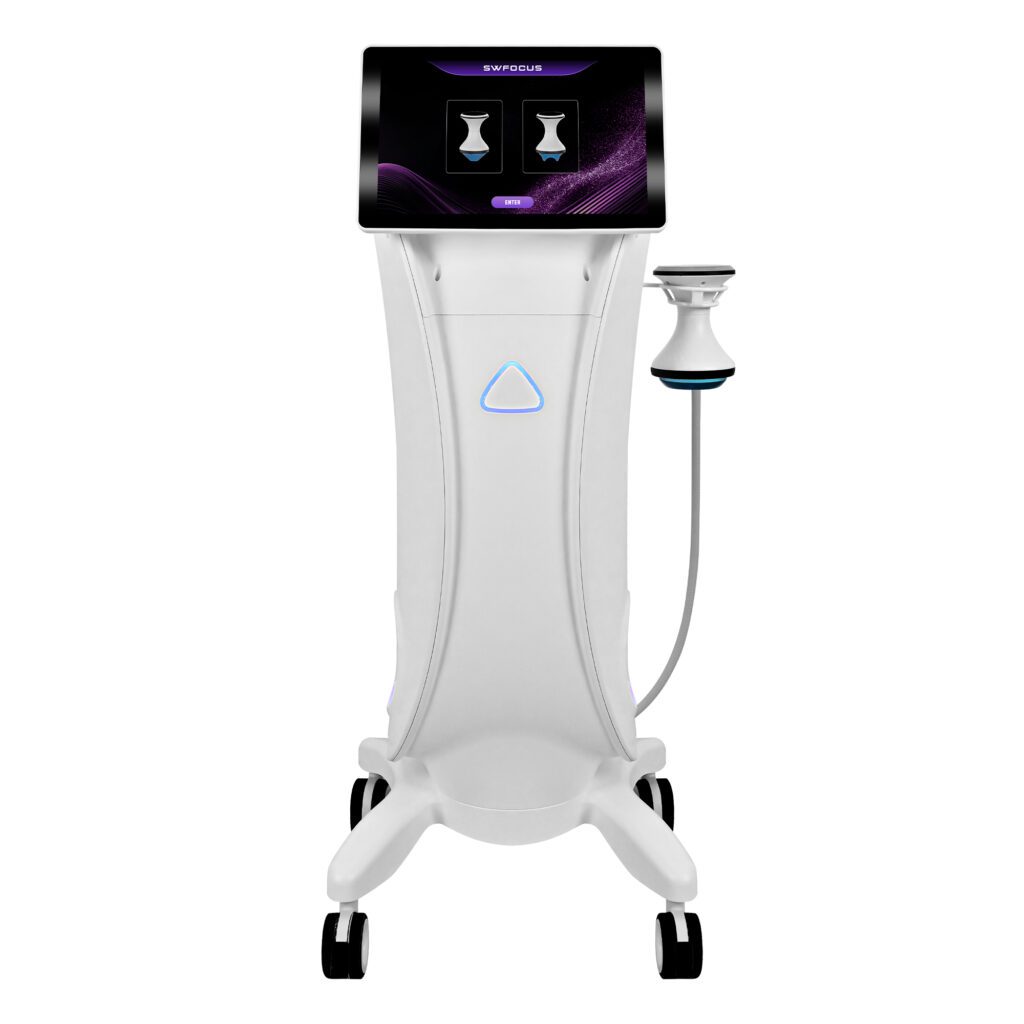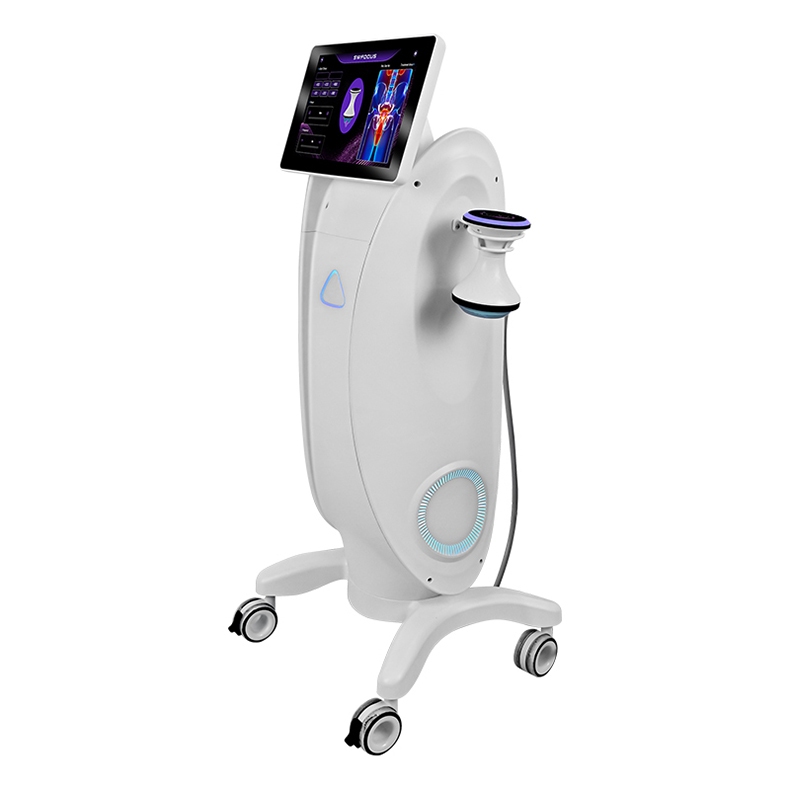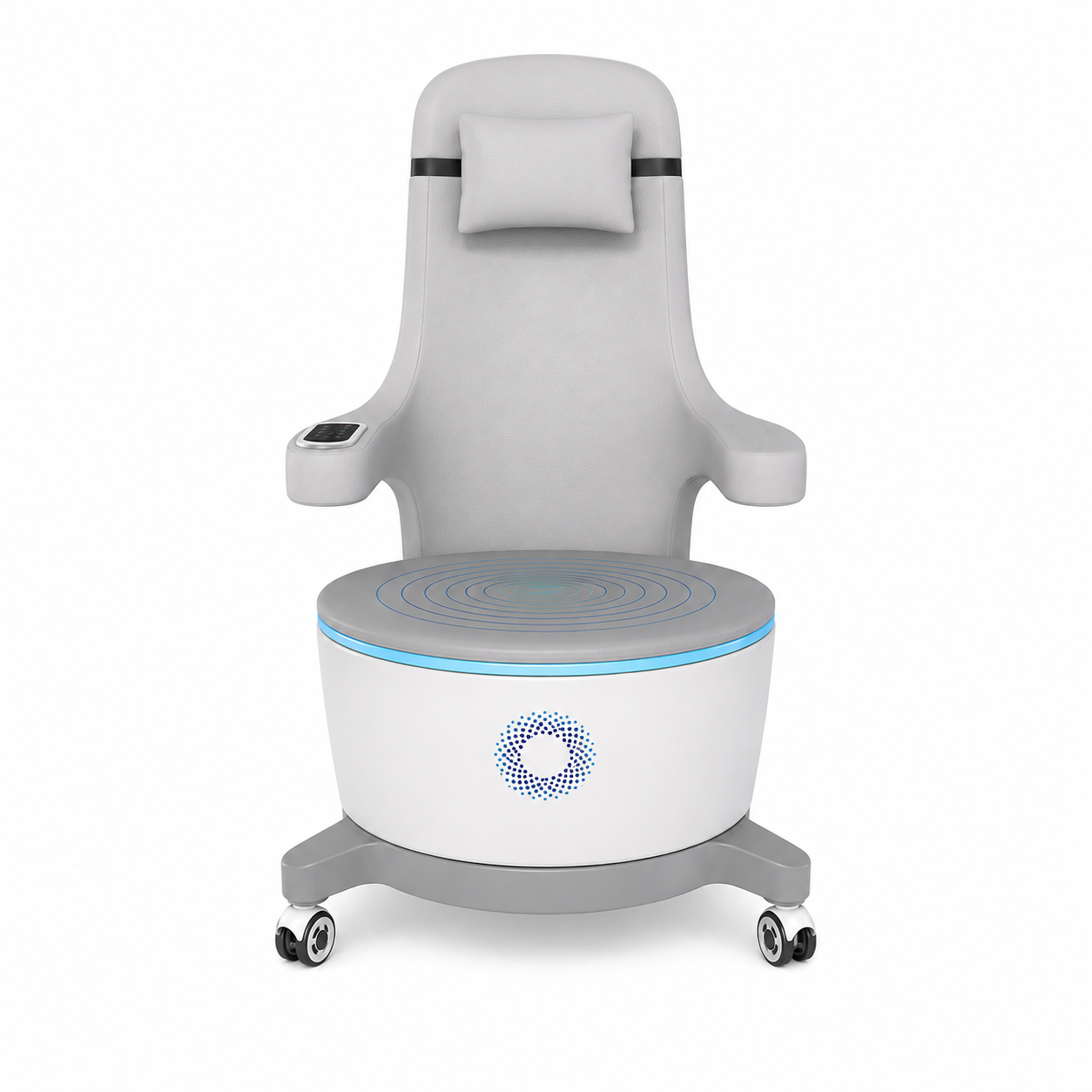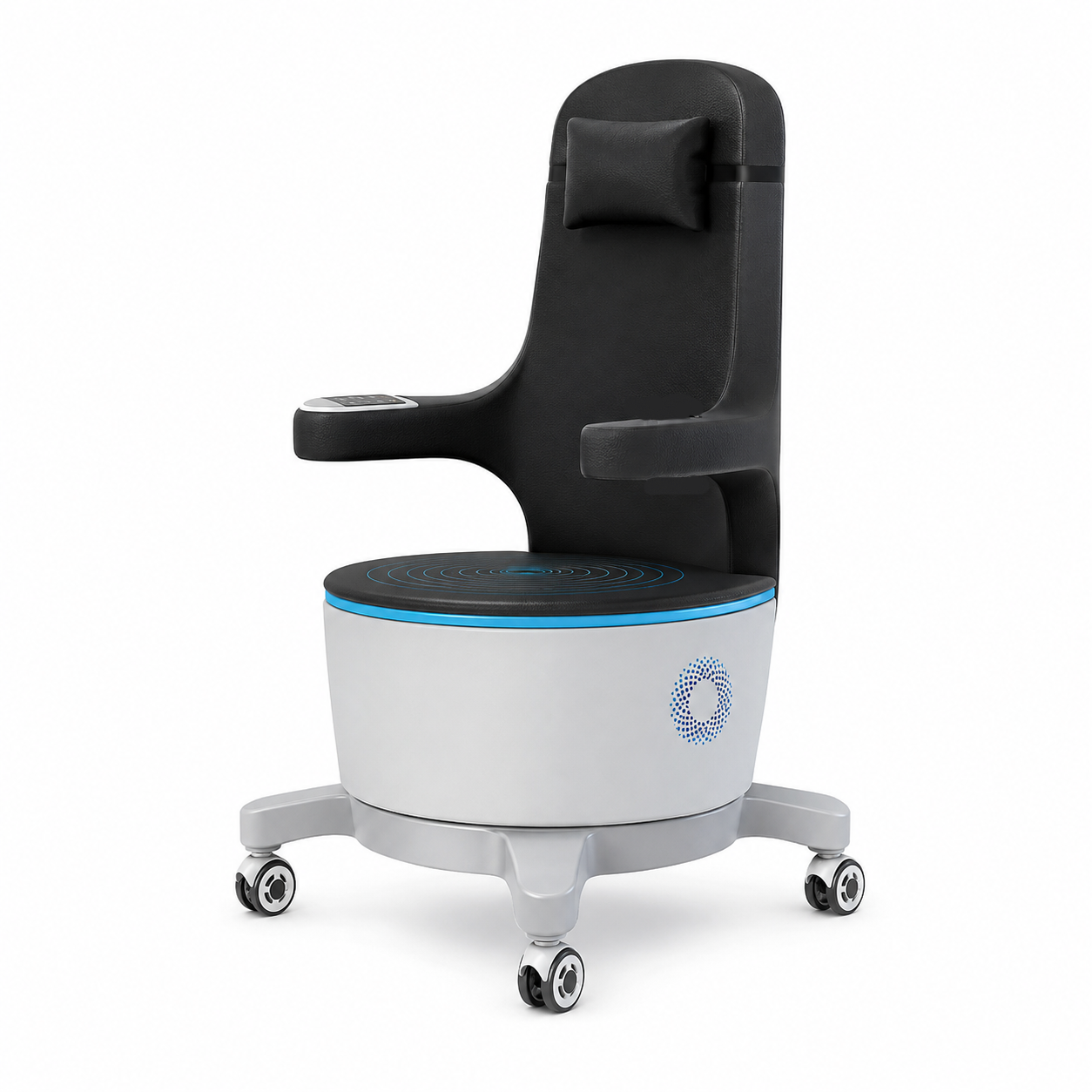










For a beauty equipment distributor, the best-selling category is the one that repeatedly converts qualified buyers into profitable, supportable orders. That may be facial-care equipment in a salon-heavy customer base, diode hair-removal systems in a specialist channel, or body-contouring devices in an established aesthetic network.
There is no verified SHEFMON category-level sales dataset presented here that establishes a universal sales ranking. Instead, this guide offers a practical selection framework: which categories to test first, which buyers they fit, and how to turn relevant 셰프몬 뷰티 디바이스 into a focused distributor portfolio.
요약 보고서
For a distributor building a salon-oriented range, hydro facial equipment and selected multifunction body-care devices are sensible foundation candidates to test. Their proposed roles connect directly to recognizable service menus. That is a commercial hypothesis to validate locally, not evidence of market leadership.
For a distributor already serving qualified hair-removal operators, diode laser equipment may deserve first priority. For a body-focused channel, evaluate EMS/RF and cryolipolysis as separate categories, because muscle-tone and localized-contour inquiries are different.
대하다 HIFU and other advanced clinical categories as selective additions when the customer base, training, and support arrangements justify them. A higher selling price does not automatically mean higher profit or faster stock turnover.
A useful starting shortlist is A0648 for facial care, B0155 for multifunction body care, A0423 for hair removal, A0241 for muscle-focused services, S9 for localized cooling, and A0204 for a selective focused-ultrasound offering.
1. Define “Sell Best” Before Comparing Categories
Unit volume, revenue, contribution, and repeat orders measure different things. A category can lead one measure and perform poorly on another.
| Measure | What it tells a distributor | What it does not establish |
|---|---|---|
| Units sold to end-business customers | Local movement of equipment | Profitability or low support burden |
| Sales revenue | Value of completed sales | Cash collected or contribution retained |
| Contribution after direct costs | What remains from the sale after attributable costs | Total company profit |
| Time from inquiry to payment | How quickly qualified interest converts | Future demand |
| 반복 구매 | Evidence of ongoing account demand | Whether repetition is equipment expansion or consumable replacement |
| Warranty and support workload | Resources required after delivery | Clinical efficacy |
Distinguish purchases from your supplier from sales through to salons or clinics. A large opening order can make a category look successful while the equipment remains in storage.
Also separate a salon’s repeat treatment bookings from its machine purchases. A device may support recurring services without generating frequent replacement-machine orders for the distributor.
2. Category Priorities Depend on the Customer Channel
The following table is a proposed testing order by buyer fit, not a verified best-seller ranking.
| 범주 | Customer channel to evaluate | Initial portfolio role | Main condition for prioritizing it |
|---|---|---|---|
| 하이드로 페이셜 | Facial salons and skin-care businesses | Foundation candidate | Qualified demand for cleansing and hydration services |
| Multifunction body care | Salons adding body services | Complementary foundation candidate | Buyers can define the functions they will actually use |
| 다이오드 제모 | Hair-removal practices and qualified aesthetic operators | Specialist anchor | Operator scope, training and support are established |
| EMS/RF body systems | Muscle-tone and body-sculpting businesses | Targeted expansion | Demand specifically matches muscle-focused services |
| 크라이오리폴리시스 | Localized body-contour providers | Targeted expansion | Screening, applicator fit and follow-up can be supported |
| 하이푸 | Qualified tightening-focused practices | Selective or order-led offering | Configuration and professional requirements are clear |
A distributor with a strong specialist network should not follow a generic salon-first sequence. Start where the existing relationships and expertise are strongest.
3. Hydro Facial Devices: A Foundation Category to Test
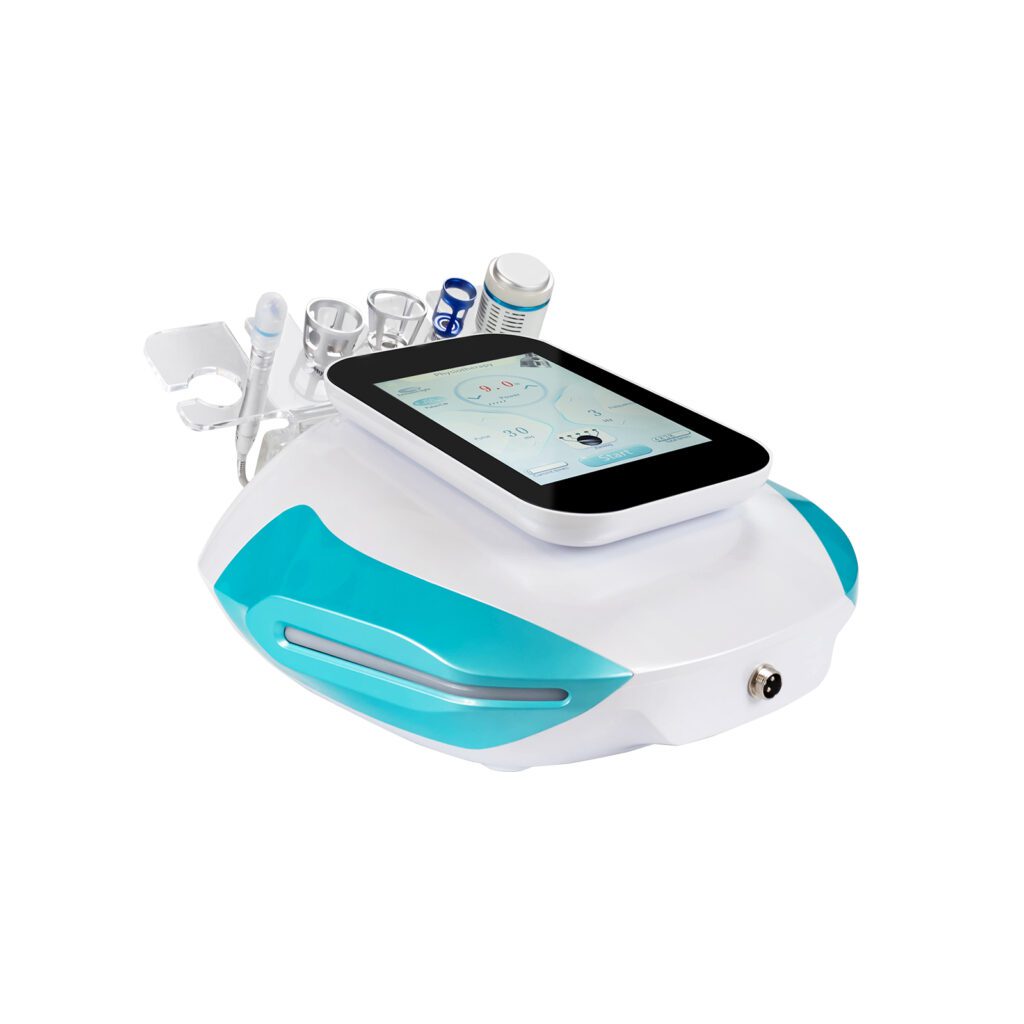
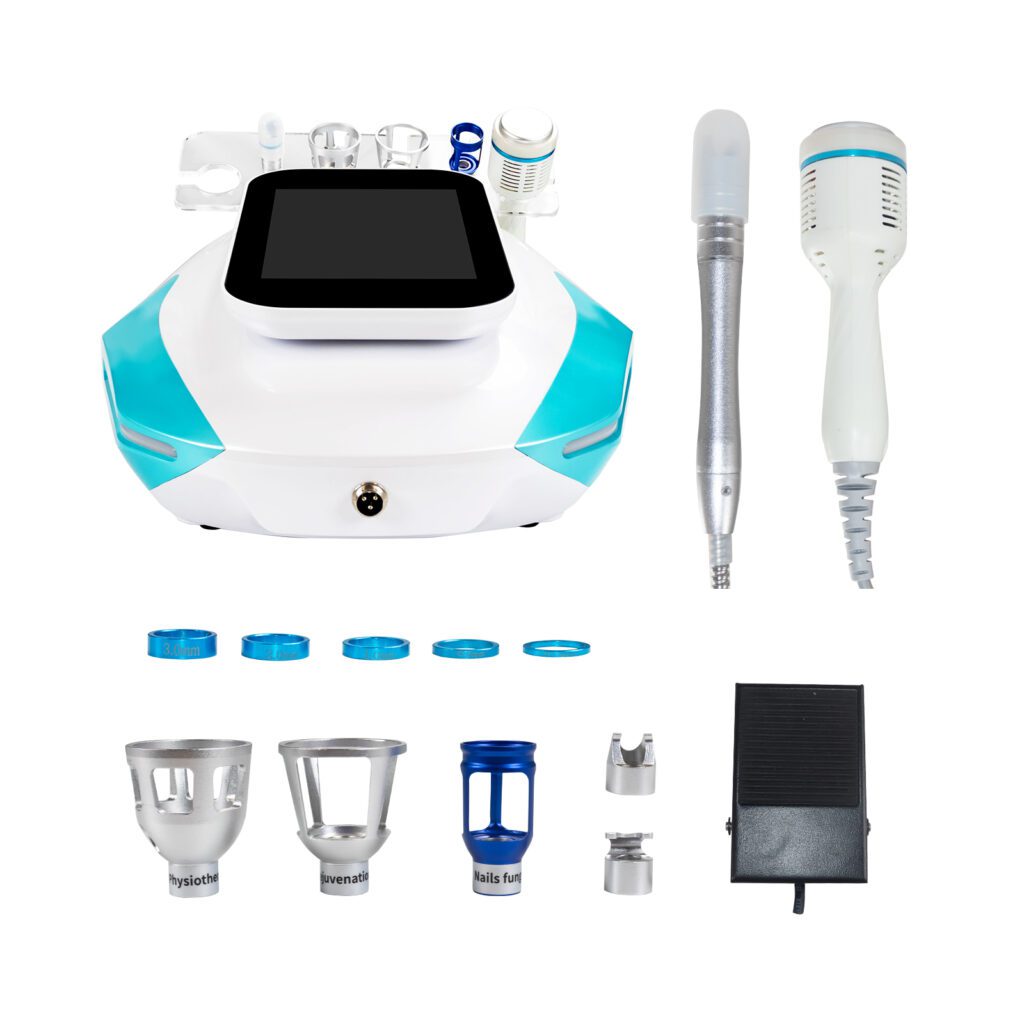
그만큼 A0648 hydro microdermabrasion device is positioned around cleansing, exfoliation, extraction, and hydration. That creates an understandable service role for a facial salon evaluating an initial or replacement platform.
The proposed sales story is a clear facial-care menu, rather than a claim that one device solves every skin concern. Show how the buyer could distinguish an initial facial consultation from an ongoing care appointment.
Confirm the complete handpiece and consumable list. The “9-in-1” name does not establish that every function a customer expects is included.
For inventory planning, test one clearly specified configuration before stocking several variants. Ask buyers what equipment they currently use, why they are replacing it, and which functions influence their decision. Those answers are more useful than assuming all facial salons want the same machine.
4. Multifunction Body Care: Sell a Defined Menu, Not a Handle Count
그만큼 B0155 데스크탑 엔도스 벨라프로 combines vacuum roller, RF, rotating massage, and 80K cavitation functions in its listing. Its proposed distributor role is a compact body-care option for businesses evaluating a service expansion.
A useful demonstration explains the role of selected functions and the exact delivered configuration. Avoid presenting every handle as another guaranteed revenue stream.
For the buyer, the important question is whether the platform supports a service the team can deliver. For the distributor, the important question is whether the accessories, training, and maintenance are manageable.
Compare the customer’s available room, staffing, and menu plans before recommending it. Multifunction capability can be commercially useful, but it also creates more configuration questions. Standardizing quotations helps prevent misunderstandings about included handles.
5. Diode Hair Removal: A Specialist Anchor Where the Channel Fits
그만큼 A0423 다이오드 레이저 is a relevant example for distributors serving qualified hair-removal businesses. Its product listing includes wavelength and spot-size configurations that should be confirmed against the final technical sheet and quotation.
The proposed menu story is area-based hair-reduction services with a consultation pathway. Do not use a multi-wavelength title to promise identical suitability for every client or hair color.
A distributor should assess whether it can support equipment demonstrations, operator training, maintenance, and the local requirements that apply to the actual device and intended use.
Before holding stock, ask prospective buyers about their existing systems, expected treatment-area demand, replacement needs, and service expectations. A strong hair-removal customer base may justify prioritizing this category ahead of general facial equipment; website interest alone does not.
6. EMS/RF: Match the Product to Muscle-Focused Demand
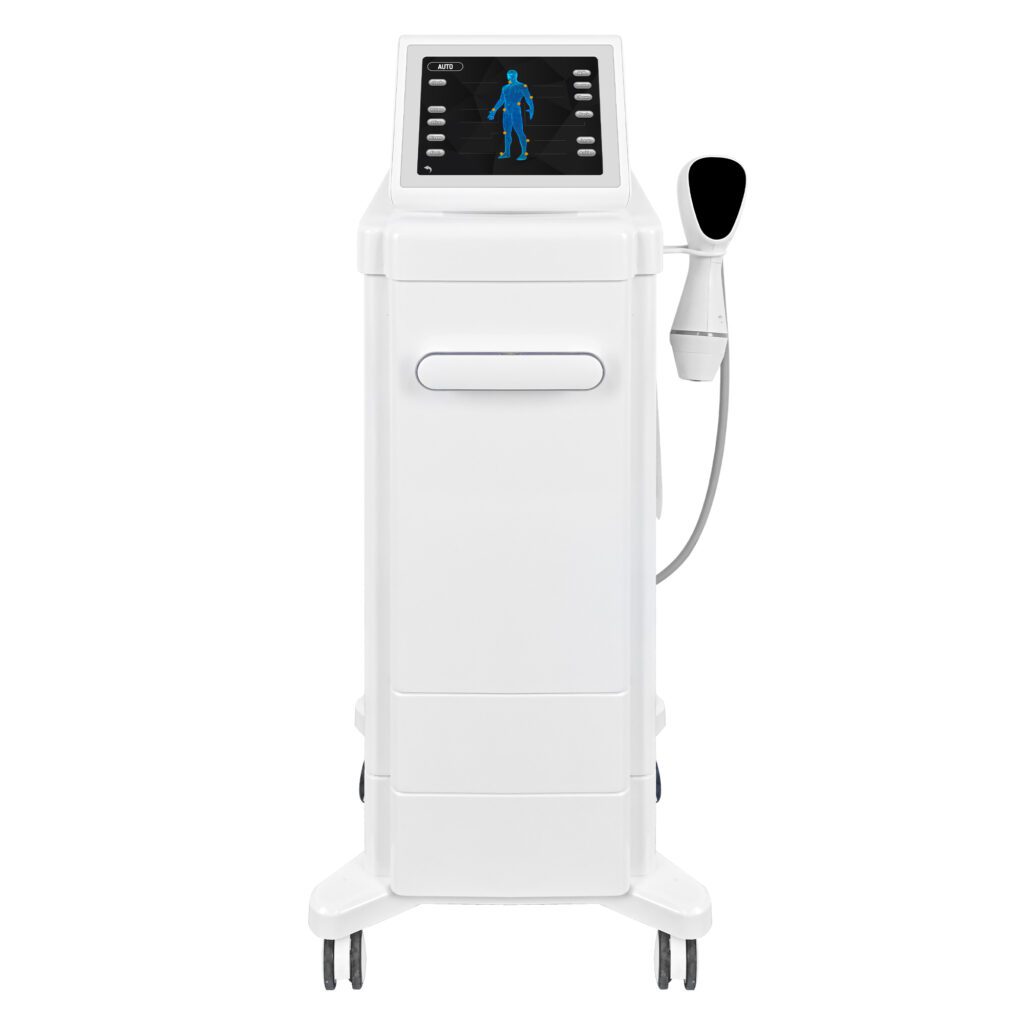
SHEFMON positions A0241 EMS/RF around electromagnetic muscle stimulation with RF. Its proposed role is a body muscle-tone category.
The current page lists four handles in the specification block and two applicators elsewhere. Resolve the delivered configuration in writing before quoting customers. Optional functions should be separately identified.
The commercial conversation should establish whether the buyer actually receives muscle-tone inquiries. Do not treat every request for “slimming” as a reason to recommend this system.
Avoid exercise-equivalent claims, copied treatment prices, or a promised payback period. A more useful sales discussion examines the buyer’s service plan, staff competence, available space, and realistic delivery capacity.
7. Cryolipolysis: A Distinct Localized-Contour Category
그만큼 S9 cryolipolysis system is listed as a vacuum-assisted cooling platform with multiple applicator options. It fits a proposed localized-contour service category rather than a general weight-loss menu.
For a distributor, applicator suitability, protective consumables, technical support, and buyer screening capabilities are important parts of product selection. Confirm the supplied set rather than assuming every pictured accessory is standard.
This category deserves consideration when the customer channel includes providers prepared to support its specific workflow. A request for a large machine or more handles is not enough to establish readiness.
Use an order-led approach while demand is unproven. Expand stock when paid orders, installation experience, and support records justify it.
8. HIFU and Advanced Categories: Selective Portfolio Additions
그만큼 A0204 focused HIFU platform is a relevant example for distributors evaluating a tightening-focused category. Buyers need written clarity on cartridges, handles, standard components, and options.
Its proposed role is a selective offering for appropriately qualified practices. The distributor should understand the intended service before promoting a configuration.
Other advanced categories should follow the same logic. A broad catalog does not require stocking every technology. For example, the FDA describes RF microneedling as a medical procedure and reports serious complications with certain uses in its RF microneedling safety communication. That reinforces the importance of matching advanced equipment to qualified customers rather than selling it as an ordinary salon upgrade.
A selective category can still be valuable when supported through named customer demand. It does not need to be a high-volume inventory line to have a place in the portfolio.
9. Functional Principle: A Sales Team Needs Accurate Category Language
The team should be able to explain each category in plain language without making clinical promises.
| 기술 | Basic principle | Service distinction to preserve |
|---|---|---|
| Hydro microdermabrasion | Cleansing and exfoliation-oriented care with a hydration service role | Different from a lifting procedure |
| RF-based care | Radiofrequency energy produces tissue heating | Intended use depends on the particular device and handle |
| Diode hair-removal laser | Light targets pigment associated with hair | Different from tattoo removal or general resurfacing |
| 전자기 자극 | Produces muscle contractions | Muscle goals differ from skin laxity or localized fat concerns |
| 크라이오리폴리시스 | Controlled cooling for localized contour concerns | Not general weight management |
| Focused ultrasound | Concentrates ultrasound energy | Cartridge and indication details matter |
This level of explanation helps qualify a buyer. It should lead to device documentation and professional assessment, not replace operator training.
10. Build Bundles Around the Buyer’s Service Menu
A distributor can make category selection easier by showing how equipment supports distinct services.
| Proposed bundle | Equipment direction | 구매자 프로필 | Menu example |
|---|---|---|---|
| Facial Foundation | A0648 | Facial-care business | Initial facial assessment and ongoing care |
| Face and Body Starter | A0648 + B0155 | Salon adding body care | Separate facial and selected body-care services |
| Facial and Hair-Removal Range | A0648 + A0423 | Qualified operator serving both categories | Facial care and area-based hair-reduction consultations |
| Body Goal Portfolio | A0241 + S9 | Established body-focused practice | Separate muscle-tone and localized-contour pathways |
| Selective Tightening Expansion | A0204 with existing suitable equipment | Qualified practice | Consultation-led tightening category |
These are equipment and service-menu bundles, not same-day combined treatment protocols. A customer may serve different people with each device.
Every bundle should have an itemized configuration, optional components, consumable requirements, and support arrangements. Give the buyer a clear reason for each device. Avoid padding the package with an unrelated category simply to raise the order value.
11. Evaluate Profit After the Costs That Actually Follow the Sale
The difference between purchase price and resale price is not the whole commercial picture.
For each completed order, track net revenue after discounts and refunds, then subtract the attributable equipment, freight, installation, commission, training, and support costs. Keep the treatment consistent across categories so comparisons are meaningful.
A category that produces more revenue may also require more demonstration time, longer payment collection, or more service travel. Compare contribution alongside the resources needed to earn it.
Consumables may create repeat-order opportunities, but do not assume recurring revenue is guaranteed. Confirm that the buyer uses the relevant items, that the supply is compatible, and that repeat purchases actually occur. Replacement parts also create obligations and costs, not just additional sales.
12. Decide What to Stock and What to Sell Against Orders
Use three inventory roles:
Core stock
Hold a standardized configuration when repeat paid demand and replenishment needs justify it. This might be a facial-care category in one territory and a specialist device in another.
Demonstration stock
Keep a representative unit when demonstrations help qualified buyers make decisions. Treat it as a sales asset with its own cost and usage record, rather than counting it as evidence of customer demand.
Order-led products
Offer configurable or less predictable categories against confirmed customer requirements. This reduces the chance of holding the wrong accessories or a configuration that few buyers request.
The choice should follow actual local data. Do not assign a fixed stock percentage to every category without considering order history, delivery lead time, and available cash.
13. Run a Category Test Before Expanding the Range
Use a defined sales review period and comparable records for each category. Log the buyer type, intended service, quoted configuration, price offered, decision date, and reason for winning or losing the order.
| Signal | What to investigate |
|---|---|
| Many inquiries, few qualified buyers | Audience targeting or mismatch with operator requirements |
| Many demonstrations, few orders | Price, configuration, financing expectations or unclear service fit |
| Strong sales, heavy support demand | Training quality, product issues or unsuitable buyer selection |
| Slow sales but sound contribution | Whether an order-led model fits better than stocked inventory |
| Repeat account purchases | Whether expansion demand is reproducible across similar customers |
| Frequent accessory disputes | Whether quotations and handover records are sufficiently clear |
Normalize comparisons where possible. A category promoted heavily for several months should not be declared stronger than one shown briefly to a smaller audience without accounting for that difference.
Keep lost-order reasons specific. “Too expensive” may mean a genuine budget gap, an incomparable configuration, or a buyer who never intended to purchase.
14. Match the Range to Your Existing Accounts
A distributor serving mostly facial salons can begin by testing a facial foundation and a complementary body-care offer. A distributor serving hair-removal practices may instead prioritize a dedicated laser line and the support it requires.
A body-focused account base calls for distinguishing muscle tone, localized contour, and skin or mechanical-care requests. A clinically focused channel may justify selective advanced equipment, but only with the corresponding documentation and support capacity.
The strongest expansion opportunity may be within existing accounts. Ask what service they want to add, which current machine is limiting them, and what prevented their last purchase. These questions can reveal a more actionable category gap than a general list of trending technologies.
15. Common Mistakes in Choosing “Best Sellers”
- Treating a supplier’s “hot products” section as an audited sales ranking.
- Confusing frequent consumer appointments with frequent machine replacement.
- Comparing revenue without support costs or payment collection.
- Stocking many similar configurations before proving demand for one.
- Recommending advanced equipment to every salon regardless of scope.
- Selling a bundle without a distinct service role for each device.
- Copying clinical claims or payback figures from promotional pages.
- Interpreting social engagement as completed local sales.
A focused range with repeatable delivery can be more useful than a large catalog that the sales and service teams cannot support consistently.
자주 묻는 질문
1. Which beauty device category sells best overall?
There is no verified universal ranking established in this article. The answer depends on customer mix, territory, price, support, and the performance measure used. Compare completed local orders and retained contribution rather than assuming one global winner.
2. What should a new salon-focused distributor test first?
Hydro facial equipment and selected multifunction body-care options are reasonable candidates to evaluate against local demand. Begin with a clear configuration and a defined buyer profile rather than a large opening inventory.
3. Should diode laser devices be a first purchase for distributors?
They may be a priority for a distributor already serving qualified hair-removal operators. Confirm buyer demand, local requirements, training, and maintenance capability before committing to stock.
4. Are expensive devices more profitable?
Not necessarily. Higher revenue can be offset by demonstration costs, installation, support, discounts, or slow payment. Compare contribution after attributable costs and the resources needed to deliver each order.
5. Should EMS/RF and cryolipolysis be treated as one category?
Track them separately because their primary proposed service roles differ. Combining all body equipment into one sales bucket can hide which client need is actually generating orders.
6. Do consumables guarantee repeat revenue?
No. Repeat purchases depend on actual usage, compatibility, purchasing behavior, and supply arrangements. Confirm real reorder history rather than assuming every installed machine creates a predictable recurring sale.
7. Should distributors stock HIFU or advanced clinical devices?
Use customer demand, configuration requirements, qualifications, and support capacity to decide. An order-led offering may be more appropriate while sales are infrequent or configurations vary.
8. How many categories should a new distributor launch?
Start with the categories the team can explain, demonstrate, and support well. There is no fixed number that fits every business. Expand after identifying a repeatable gap in qualified customer demand.
9. What makes an equipment bundle easier to sell?
A clear buyer profile, distinct service roles, itemized inclusions, and realistic support arrangements make comparison easier. A larger machine count alone does not make a bundle more useful.
10. How can a distributor identify its own best sellers?
Track completed sales, conversion, contribution, repeat purchases, and support workload over a defined period. Separate supplier purchases from customer sell-through, and account for differences in promotional effort and time on the market.
결론
The beauty device categories that sell best for a distributor are those that match its customer channel and produce repeatable, supportable orders. Hydro facial and multifunction body-care devices are practical foundation candidates for a salon-focused range, while hair removal, muscle-tone, localized-contour, and focused-ultrasound categories should follow qualified demand.
Use local sales evidence to decide what to stock, demonstrate, or supply against orders. To compare suitable models and configurations, 셰프몬에게 연락하세요 with your target customer types, existing product range, requested services, and support capabilities.