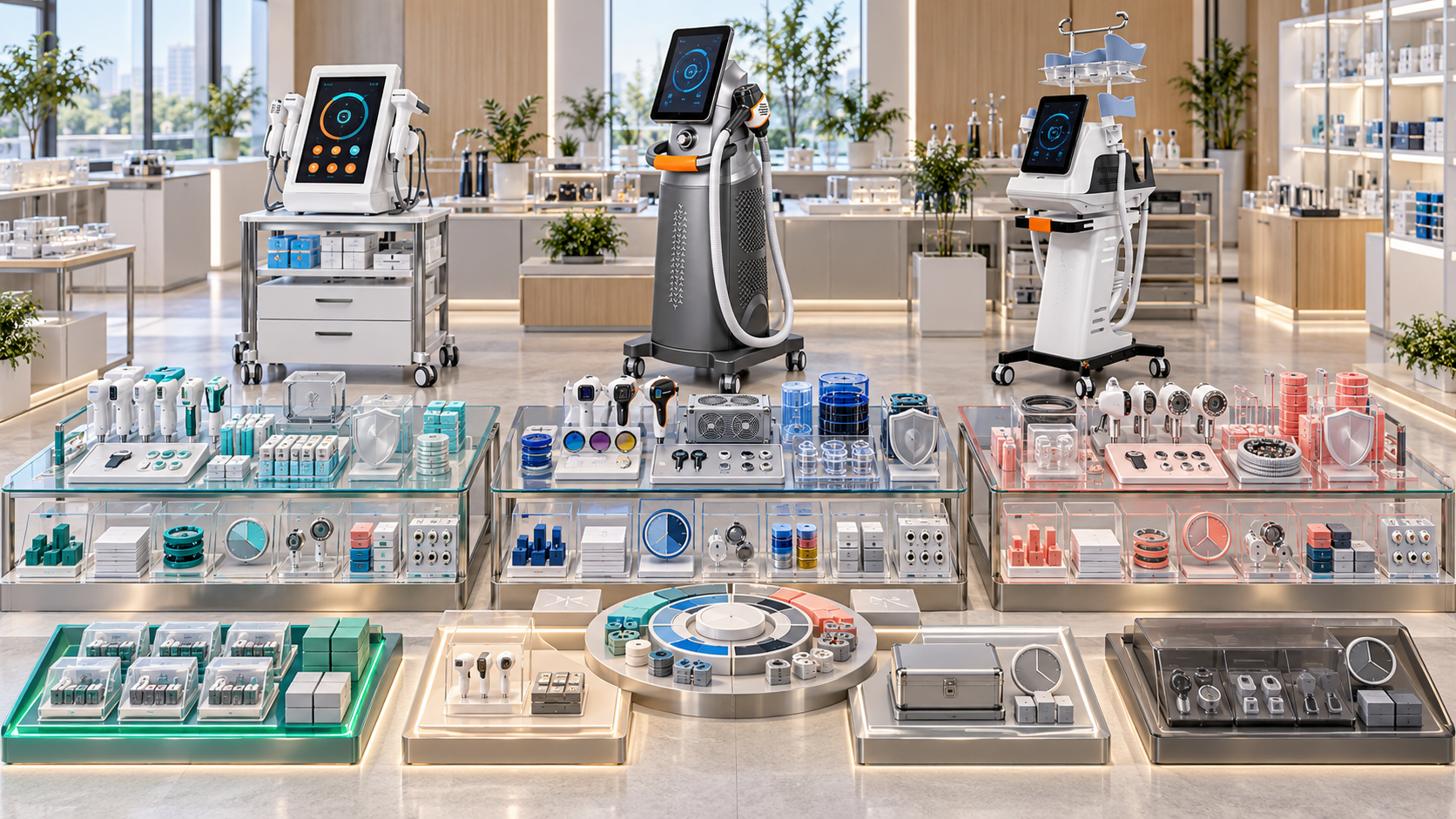
A beauty device model can attract strong interest while one particular configuration remains difficult to sell. Buyers may prefer another wavelength arrangement, remove an optional handle, choose a different cartridge package, or postpone a system that requires more room, training, or support than their business can provide. If the distributor stocks by model name alone, these differences remain hidden until capital is tied up in the wrong unit.
Slow-moving risk should be assessed at configuration level before inventory is purchased. The review needs qualified demand, final quotation behavior, accepted orders, buyer segments, regional requirements, configuration stability, demonstration evidence, support readiness, and the ability to use components across more than one approved package.
This guide explains how distributors can screen configurations across the SHEFMON beauty device portfolio and decide whether each one belongs in saleable stock, demonstration inventory, a limited test, or a supply-to-order workflow.
요약 보고서
To identify slow-moving beauty device configurations before stocking:
- Define the complete stock unit. Record the model, handles, applicators, wavelengths, cartridges, tips, accessories, market version, and included supplies.
- Measure qualified demand rather than general interest. Inquiries and page views do not prove that buyers accept the exact configuration.
- Follow configuration movement through the sales process. Compare the first shortlist, final quotation, accepted order, and installed package.
- Look for removal and substitution signals. Repeated option deletion, model replacement, and special exceptions indicate weak stock suitability.
- Measure demand interval and concentration. A configuration supported by one buyer, one region, or one salesperson has higher movement risk.
- Separate the base system from variable components. The console may justify stock while specialized handles or cartridges remain supply-to-order.
- Apply category-specific checks. A0648, A0426, B0155, A0204, and A0152 require different configuration and readiness evidence.
- Use staged commitments. Validate with demos, controlled quotations, deposits or confirmed orders under internal policy, and limited pilots before expanding stock.
The objective is not to eliminate every slow period. It is to make the risk visible before the distributor commits to an exact package.
1. Define a Slow-Moving Configuration
A slow-moving configuration is an exact product package that takes longer to sell or convert into supported use than the distributor’s approved inventory policy allows. The definition should consider:
- expected sales interval;
- procurement and replenishment lead time;
- inventory review period;
- value tied up in the package;
- configuration-specific aging risk;
- local buyer population;
- support and training cost;
- compatibility and version-change risk; and
- realistic alternatives for redeployment.
There is no universal number of days that makes every beauty device slow-moving. A core facial package and a specialist advanced system should have different thresholds.
2. Treat Each Configuration as a Distinct Stock Decision
The model number is only one layer. A stock unit may also depend on:
- console format;
- handpiece or applicator selection;
- wavelength arrangement;
- spot size;
- cartridge or depth package;
- tip or needle format;
- electrical and market version;
- language or approved software setup;
- standard accessories;
- 소모품 개봉;
- training package; and
- region-specific documentation.
Two units with the same model name may not be commercially interchangeable if their components or market versions differ. Give each approved stock configuration a controlled identity and bill of included items.
3. Separate Four Types of Inventory
| Inventory type | 목적 | Movement expectation |
|---|---|---|
| 판매 가능 재고 | Ready for a defined buyer segment and approved standard package | Expected to convert within the published stock window |
| Demonstration unit | Supports evaluation, training, or showroom use | Measured by qualified demo impact, not ordinary inventory turns |
| Loan or service unit | Protects continuity for supported customers | Held according to service policy rather than sales demand |
| Supply-to-order configuration | Prepared after buyer and configuration approval | No routine local unit required |
Do not label a showroom unit as fast-moving stock because it is frequently used. Do not classify a service backup as slow simply because it is not sold.
4. Start with the Exact Buyer Use Case
Stock suitability begins with a repeatable buyer profile. Define:
- business type;
- service category and menu role;
- current equipment;
- target clients;
- 예상되는 진료 예약 패턴;
- available rooms and utilities;
- staff capability;
- professional setting where required;
- training capacity;
- regional requirements;
- intended launch timing; and
- support expectations.
A configuration that suits established multi-room clinics may move slowly in a territory dominated by small facial salons. Demand should be attached to a buyer context, not averaged across every account.
5. Build the Pre-Stock Evidence File
Before assigning saleable-stock status, assemble:
- qualified opportunities by category and buyer type;
- current model shortlists;
- latest valid quotation lines;
- quotation revisions and removed options;
- accepted orders and final configurations;
- lost or deferred reasons;
- 시연 요청 및 결과;
- unquoted requirements;
- regional version needs;
- installed-base configuration records;
- component, consumable, training, and support requirements; and
- confirmed lead-time information used by the distributor.
Keep source dates and sample sizes visible. Evidence from an old range or a different regional version should not silently support a current stock decision.
6. Use a Configuration Funnel
Track the configuration through increasingly strong commitment points.
| Funnel stage | 증거 | Slow-moving warning |
|---|---|---|
| Qualified need | Buyer has a documented service and business requirement | Interest exists only at general category level |
| Model shortlist | Configuration is relevant enough for comparison | Model appears only as a secondary alternative |
| Reviewed configuration | Technical and product owners validate the package | Required options remain unresolved or frequently change |
| Final quotation | Buyer receives a controlled offer | Configuration is repeatedly removed or replaced |
| Confirmed order | Buyer accepts the exact package | Orders converge on a different configuration |
| Installed use | Delivered package enters support records | Specialized components remain unused or create support issues |
The closer evidence is to the accepted order, the stronger it is for stocking. A high number of early inquiries cannot compensate for poor final-quote retention.
7. Measure Final-Quote Retention
For each configuration, calculate:
Final-quote retention = opportunities keeping the configuration in the last valid quote ÷ opportunities that quoted it earlier
Then inspect why it was removed:
- buyer chose a smaller or simpler package;
- another model fitted the service goal better;
- optional functions were not needed;
- room or electrical conditions changed;
- staff or professional readiness was incomplete;
- technical compatibility failed;
- budget was redirected to another category;
- delivery timing changed; or
- the original quote contained an error.
Only buyer-driven fit signals should influence assortment demand directly. Data or quotation errors call for process correction.
8. Measure Quote-to-Order Conversion by Exact Package
Use mature opportunities with a valid, reviewed configuration:
Configuration conversion = orders for the package ÷ mature opportunities receiving that package
Show the count beside the rate. One order from one quote produces 100%, but it does not establish repeat demand.
Compare exact packages within the same buyer segment and region. A specialist clinic configuration should not be judged against a core salon package. Also separate new buyers, repeat buyers, and reseller stock requests.
9. Measure Time Between Accepted Orders
Demand interval helps expose irregular movement. Record:
- days between qualified requests;
- days between final quotations;
- days between confirmed orders;
- seasonal gaps;
- longest period without an order;
- number of periods with zero demand; and
- whether demand is accelerating, stable, or fading.
A configuration ordered twice in one week by the same project is different from one ordered regularly by independent buyers. Use rolling periods long enough to reflect the category’s normal buying cycle.
10. Test Demand Concentration
High concentration increases slow-moving risk. Check the share of demand connected to:
- one buyer or buyer group;
- one sales representative;
- one region;
- one tender or rollout;
- one promotional campaign;
- one demonstration unit;
- one reseller without end-buyer evidence; or
- one short seasonal period.
If most demand comes from one multi-location project, separate the confirmed pilot, approved rollout, and unapproved potential. Do not treat possible locations as recurring market demand.
11. Review Configuration Revision Patterns
Quotation changes show which parts of a package are unstable. Classify material revisions:
- base model changed;
- handle or applicator added or removed;
- wavelength or spot-size choice changed;
- cartridge or depth package changed;
- tip or consumable quantity changed;
- electrical version corrected;
- accessories reduced;
- full package divided into phases;
- quantity reduced to a pilot; or
- approved option replaced a special request.
A package that requires frequent material revision is a weak stock definition even if the underlying model sells. The better response may be to stock the common base and configure variable elements after the buyer is qualified.
12. Calculate Option Attach and Removal Rates
For each eligible option:
Attach rate = accepted configurations containing the option ÷ accepted configurations eligible for it
Also calculate removal rate from first valid quote to accepted order. Low attach rate does not always mean the option lacks value. It may belong to a specialist segment. Label the relevant buyer profile and required prerequisites.
An option is a slow-stock risk when it has low, irregular attachment, serves a narrow region, cannot be redeployed easily, and needs configuration-specific training or support.
13. Check Substitution and Cannibalization
Record which product or configuration replaces the proposed package. Patterns may show:
- a simpler package wins among first-time buyers;
- a broader multifunction system replaces two separate devices;
- an advanced system is selected only after professional qualification;
- buyers prefer another body-service approach;
- one configuration exists mainly as a comparison anchor; or
- two stock units compete for the same buyer without distinct roles.
Substitution within the same category is more useful than a generic loss reason. If two configurations serve the same segment and one is consistently removed, stocking both may create avoidable aging.
14. Measure Configuration Forecast Error
Compare prior forecasts with accepted orders:
- forecast configuration versus ordered configuration;
- forecast units versus ordered units;
- predicted order period versus actual order period;
- expected options versus accepted options; and
- opening consumables versus final quantities.
Repeated over-forecasting of one handle package is a stronger slow-moving signal than a single lost opportunity. Report absolute unit error and bias by exact configuration, while keeping sample size and forecast horizon visible.
15. Identify Market-Version Risk
A saleable unit needs the correct destination-market profile. Confirm:
- electrical requirements;
- plugs or connections;
- language and interface needs;
- applicable documentation;
- allowed configuration in the target market;
- packaging and labeling needs;
- staff and professional prerequisites; and
- local service capability.
A configuration that cannot move easily between territories has higher aging exposure. Do not assume regional demand can absorb a unit prepared for another market.
16. Assess Support Complexity Before Stocking
Stock creates a support obligation. Review:
- onboarding and training resources;
- technical knowledge;
- compatible replacement components;
- tips, cartridges, needles, filters, or other recurring items;
- cleaning and operating procedures;
- service escalation route;
- loan-unit or continuity policy where relevant;
- regional support access; and
- installed-base documentation.
A configuration may sell slowly and still consume disproportionate support resources. Support readiness belongs in the stock screen, especially for advanced or highly configurable systems.
17. Use a Slow-Moving Risk Scorecard
| 차원 | Lower-risk evidence | Higher-risk evidence |
|---|---|---|
| 적격 수요 | Repeated projects from several suitable buyers | General interest or one dependent project |
| Final-quote retention | Package usually remains through decision | Frequent removal or substitution |
| Order pattern | Repeat orders across periods | Long, irregular gaps or zero-demand periods |
| 구성 안정성 | Accepted packages converge | Handles, wavelengths, or components vary widely |
| Buyer concentration | Demand spread across accounts and regions | Demand depends on one buyer, region, or campaign |
| Redeployment | Base and components fit several approved packages | Unit is highly specific to one market or use case |
| Support readiness | Training, consumables, parts, and service are prepared | Support path remains incomplete |
| Forecast quality | Units and configurations are consistently predicted | Persistent positive bias or configuration mismatch |
Use a small scale such as strong, moderate, weak, or unknown for each dimension. Do not hide unknown evidence inside a numerical total.
18. Screen A0648 Facial Configurations
그만큼 A0648 9-in-1 하이드로 마이크로더마브레이션 시스템 is presented as a vertical multifunction facial system supporting cleansing, exfoliation, extraction, and hydration-oriented workflows.
Before stocking, review:
- number of qualified first-device and expansion buyers;
- service-menu fit;
- overlap with installed facial equipment;
- room and storage acceptance;
- functions and accessories retained in final quotes;
- tips, liquids, bottles, and opening supplies;
- training demand; and
- time between accepted salon orders.
The console may support a core facial role while some accessory or supply combinations remain variable. Define the standard package from repeated accepted configurations rather than offering every possible bundle as stock.
19. Screen A0426 Hair-Removal Configurations
그만큼 A0426 다이오드 레이저 제모기 lists 755, 810, 940, and 1064 nm choices, several spot sizes, and a cooling system. These variables make configuration-level screening essential.
확인하다:
- wavelength arrangement requested and ordered;
- handpiece and spot-size preference;
- expected utilization;
- room and electrical readiness;
- 보호 장치 설치;
- 직원의 역량 및 교육;
- 현지 요구 사항;
- demo unit configuration;
- final quoted package; and
- technical support coverage.
If buyers agree on the model but select different configurations, stock policy may favor a controlled local demo and buyer-approved supply rather than several finished packages.
20. Screen B0155 Body-Care Configurations
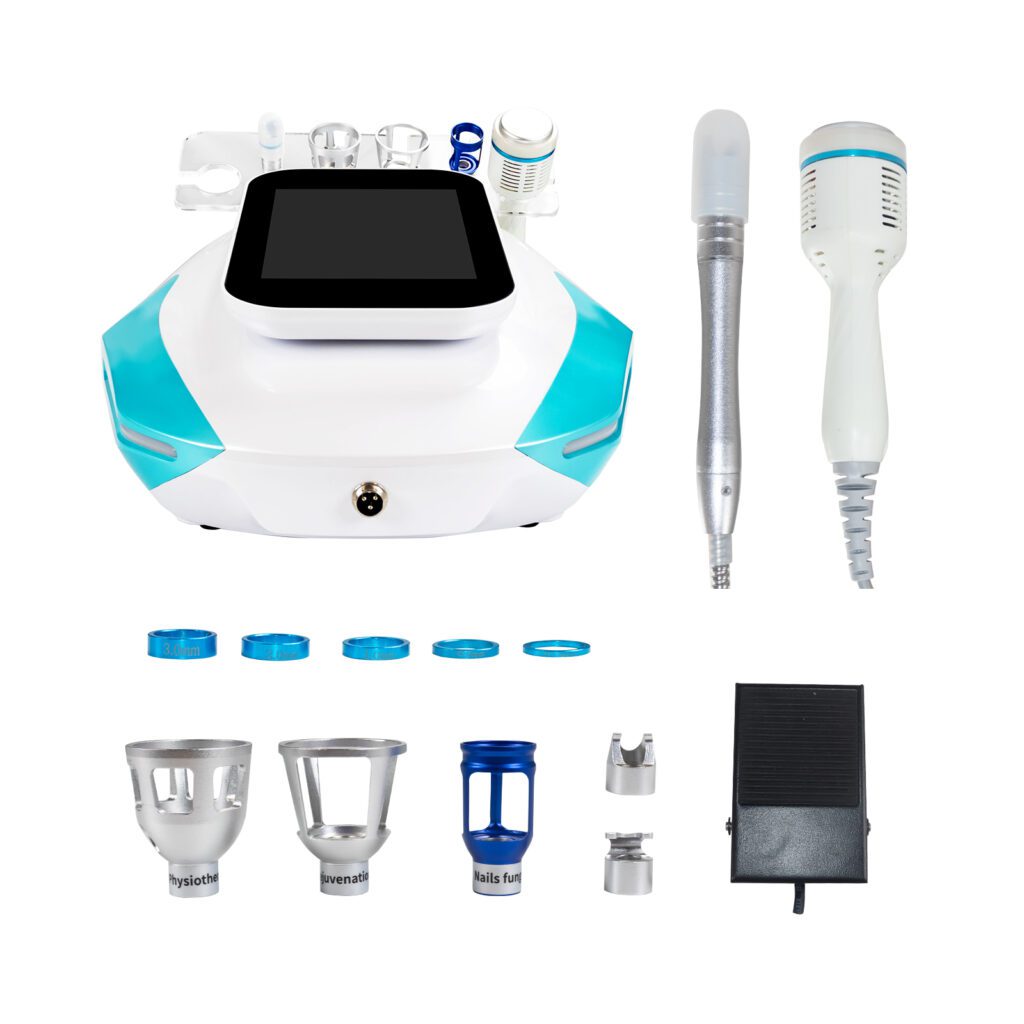
그만큼 B0155 데스크탑 엔도스 벨라프로 combines listed vacuum roller, RF, rotating massage, and 80K cavitation functions through different handle roles.
평가하다:
- buyer type and intended service pathway;
- handles retained from first quote to order;
- facial versus body roles;
- room, storage, cleaning, and changeover workflow;
- service overlap with existing equipment;
- operator training;
- accessory requirements; and
- package differences between salons and body-focused studios.
A full package may fit multi-service body centers, while a narrower approved package may move better with general salons. Do not average these segments into one stock assumption.
21. Screen A0204 Advanced-Lifting Configurations
그만큼 A0204 9D/7D 포커스형 HIFU 시스템 presents multiple cartridge depths and optional handles. The exact handpiece and cartridge selection should be approved before a finished configuration is treated as saleable stock.
검토:
- intended advanced-service role;
- standard and optional cartridge demand;
- optional handle retention;
- 소모품 개봉;
- qualified professional setting;
- staff and training readiness;
- consultation and operating process;
- applicable local requirements; and
- specialist and technical review milestones.
Low general volume does not automatically make A0204 unsuitable for the assortment. It may justify a specialist, demonstration, or supply-to-order role rather than broad stock.
22. Screen A0152 Advanced-Skin Configurations
그만큼 A0152 RF 마이크로니들링 시스템 product page identifies 12-pin, 24-pin, 40-pin, and nano tips, a depth profile from 1 to 7 mm, an additional heat profile, and optional handle arrangements.
Before stocking, assess:
- intended facial or body use;
- selected handle setup;
- tip mix and opening quantities;
- replenishment expectations;
- infection-control and disposal workflow;
- appropriate professional environment;
- staff competency and training;
- consultation, records, and aftercare processes; and
- local review requirements.
A console forecast without tip and handle demand is incomplete. Separate base-system availability from variable consumables and specialized arrangements.
23. Decide What to Stock Separately
One model may need different supply statuses for different elements:
- stock the common base console;
- keep only high-attachment standard components locally;
- use one controlled demonstration configuration;
- supply low-attachment handles after buyer approval;
- replenish consumables from installed-base usage;
- reserve replacement components according to service exposure; and
- keep region-specific versions inside their intended territory.
This modular approach reduces the risk of holding complete packages that few buyers want while preserving a responsive offer for common needs.
24. Use Pre-Stock Decision Gates
Gate 1: Category relevance
Confirm repeated qualified need from the intended market and buyer segment.
Gate 2: Configuration evidence
Confirm that final quotes and accepted orders converge on the proposed package.
Gate 3: Commercial validation
Confirm mature conversion, acceptable decision interval, and limited dependence on unusual exceptions.
Gate 4: Operational readiness
Confirm storage, demo, training, consumables, replacement components, technical support, and installed-base records.
Gate 5: Controlled commitment
Approve a limited quantity, review period, owner, aging threshold, and exit or redeployment plan.
Do not advance because the configuration passed only one gate.
25. Choose a Supply Status
| 상태 | 사용 시 | 제어 |
|---|---|---|
| Core saleable stock | Demand is repeated, configuration is stable, and support is ready | Reorder point and aging review |
| Limited test stock | Evidence is promising but sample size or regional depth is limited | Fixed quantity and review date |
| Demonstration only | Buyer validation materially affects decisions, but finished-package demand varies | Demo calendar and configuration record |
| 주문 공급 | Exact options depend on buyer approval or demand is specialist | Configuration and deposit or order gate under internal policy |
| Hold for review | Evidence is weak, outdated, contradictory, or unsupported | No new commitment until issues close |
Apply the status to the exact configuration, not merely the model family.
26. Set Early-Warning Triggers
Before the first stock purchase, define triggers that will pause replenishment:
- no qualified opportunity within the expected review interval;
- final-quote retention falls below the internal threshold;
- repeated substitution to another package;
- option-removal rate rises;
- positive forecast bias persists;
- regional requirements change;
- support or component coverage becomes incomplete;
- product-data or compatibility question remains open;
- demo interest does not progress to reviewed quotes; or
- the initial test unit reaches its aging review date.
An early-warning trigger should create a review, not an automatic discount or unsupported substitution.
27. Plan Redeployment Before Purchase
For limited stock, define legitimate alternatives in advance:
- another approved buyer segment;
- another region with compatible market requirements;
- conversion into a controlled demo unit;
- approved package reconfiguration;
- use as a service or loan unit where policy permits; or
- return or cancellation terms available before commitment.
Do not assume every component can be moved between models. Verify compatibility and preserve the configuration history.
28. Build a Monthly Risk Dashboard
길:
- exact configurations under consideration;
- qualified opportunities;
- final valid quotes;
- final-quote retention;
- mature conversion;
- time between orders;
- demand concentration;
- option attach and removal rates;
- substitution destination;
- forecast bias;
- support-readiness status;
- proposed supply status; and
- 다음 검토 예정일.
Once inventory exists, add units on hand, age, reserved quantity, demo status, and compatible installed-base demand. Keep demo and service units outside normal saleable turns.
29. Avoid Common Slow-Moving Risk Errors
- Treating the model number as a complete configuration.
- Using inquiries as if they were accepted orders.
- Counting every quotation revision as separate demand.
- Adding mutually exclusive options together.
- Assuming a reseller’s potential volume is confirmed end-buyer demand.
- Ignoring long gaps between independent orders.
- Averaging distinct salon, clinic, hair, and body buyer profiles.
- Stocking all available handles because the console sells.
- Using one region’s demand to justify another market version.
- Confusing showroom use with saleable inventory movement.
- Adding stock before training, consumables, components, and support are ready.
- Discounting a slow package before identifying the real fit or configuration problem.
30. Pre-Stock Configuration Checklist
- The exact model, options, components, market version, and included supplies are controlled.
- Saleable, demo, loan, service, and supply-to-order units are classified separately.
- Demand comes from qualified buyers in the intended segment and region.
- Final-quote retention and mature conversion are known.
- Order intervals, zero-demand periods, and concentration are visible.
- Revisions, substitutions, option attachment, and removal reasons are analyzed.
- The base console is separated from variable handles, cartridges, tips, and consumables.
- A0648, A0426, B0155, A0204, and A0152 use relevant configuration fields.
- Training, technical help, replacement components, and replenishment are ready.
- A limited commitment, review date, warning triggers, and redeployment plan are approved.
자주 묻는 질문
1. What is a slow-moving beauty device configuration?
It is an exact model and component package that takes longer to convert into a supported sale than the distributor’s approved inventory window allows. The definition should reflect category, value, lead time, support, and redeployment risk.
2. Why analyze configurations instead of model numbers?
Buyers may choose different handles, wavelengths, cartridges, tips, electrical versions, or accessory packages within one model. Model-level demand can hide a finished package that few buyers accept.
3. How much quotation history is needed before stocking?
Use enough mature cases to cover the intended buyer segment, region, and decision cycle. When the sample is small, use a limited test, demo, or supply-to-order status instead of presenting a precise demand rate.
4. Which quotation signal best predicts slow-moving risk?
No single signal is sufficient. Final-quote retention, accepted-order conversion, configuration stability, time between independent orders, demand concentration, and substitution patterns should be reviewed together.
5. Should a distributor stock the base device but not every option?
Yes, when the base console has stable demand and options vary by buyer. Stock high-attachment approved components and supply specialized handles, cartridges, or packages after configuration approval.
6. What should be checked before stocking A0426?
Confirm repeat demand for the exact wavelength, handpiece, spot size, electrical, room, protective, training, and market configuration. Compare the demo setup, final quote, and accepted order.
7. How should B0155 configurations be screened?
Track the buyer’s intended service roles, handles retained through quotation, room and cleaning workflow, existing service overlap, training, accessories, and differences between general salons and body-focused studios.
8. Should A0204 or A0152 automatically be treated as slow-moving?
No. Their demand may be narrower and more qualification-dependent. Use specialist, demonstration, or supply-to-order roles when appropriate, based on exact configuration demand and support readiness.
9. What if one large buyer supports the whole stock proposal?
Separate confirmed units from the possible rollout. Do not treat one project as diversified market demand. Link inventory to approved purchase commitments and define what happens if later locations do not proceed.
10. How often should configuration risk be reviewed?
Review active pre-stock candidates monthly and reassess supply status at a defined quarterly or category-appropriate interval. Trigger an immediate review when compatibility, regional, support, or demand evidence changes materially.
결론
Slow-moving beauty device risk begins at configuration level. A popular model can still create aging inventory when the wavelength, handle, cartridge, tip, market version, or accessory package does not match repeat buyer demand.
Use qualified opportunities, final quotation retention, accepted orders, order intervals, concentration, substitutions, forecast accuracy, and support readiness together. Evaluate A0648 as a repeatable facial package, A0426 through its exact hair-removal configuration, B0155 by handle and buyer type, and A0204 and A0152 through qualified advanced-service pathways.
탐색해 보세요 셰프몬 뷰티 디바이스 제품군, review the SHEFMON 사후 지원 개요, 또는 셰프몬에게 연락하세요 with your target buyer profiles, candidate models, required configurations, regional versions, estimated quantities, demo needs, and support plan. SHEFMON can provide relevant product information before you assign a local supply status.