









Partagez des solutions optimisées, des connaissances professionnelles en matière de vannes et des actualités du secteur
Veuillez saisir les termes ou mots-clés pertinents que vous souhaitez consulter ; les articles pertinents apparaîtront dans les résultats de recherche. Si vous ne trouvez pas la réponse à votre question, n'hésitez pas à nous contacter ; nous serons ravis de vous aider. Vous pouvez également nous envoyer un e-mail directement à beauty@shefmon.com.
Approches non invasives de cryolipolyse pour le remodelage corporel en pratique clinique
- Sheffield
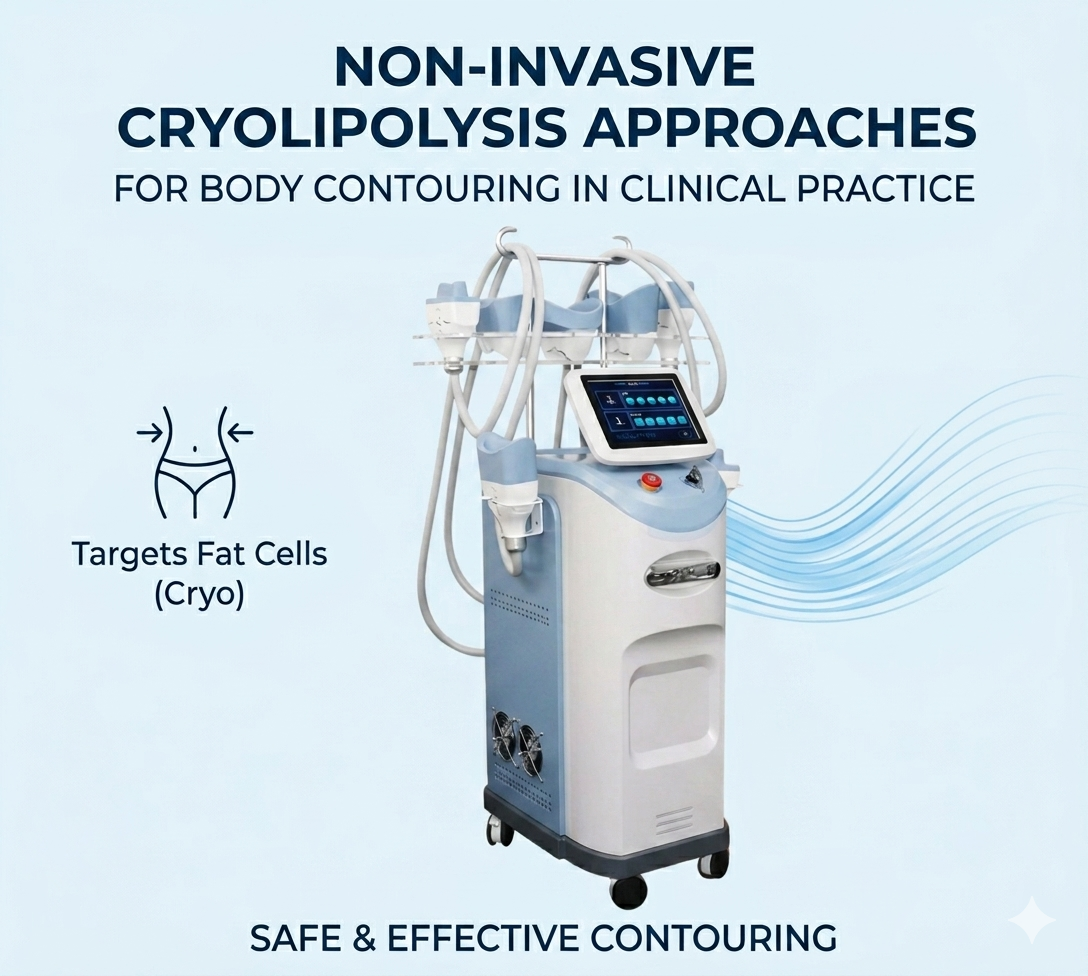
Cryolipolyse Cette technique est devenue une approche non invasive largement utilisée dans les programmes de remodelage corporel, notamment pour les patients souhaitant une réduction localisée de la graisse sans chirurgie ni convalescence. En médecine esthétique moderne, elle est généralement appliquée comme une procédure de refroidissement contrôlé ciblant la graisse sous-cutanée tout en préservant les tissus environnants. Au fil du temps, cette approche a été perfectionnée grâce à des améliorations apportées à la conception des applicateurs, au contrôle de la température et à l'uniformité du traitement, ce qui en fait une option pratique pour les cliniques spécialisées dans le remodelage corporel.
1. Rôle clinique de la cryolipolyse dans le remodelage corporel
1.1 Stratégie ciblée de réduction de la masse grasse
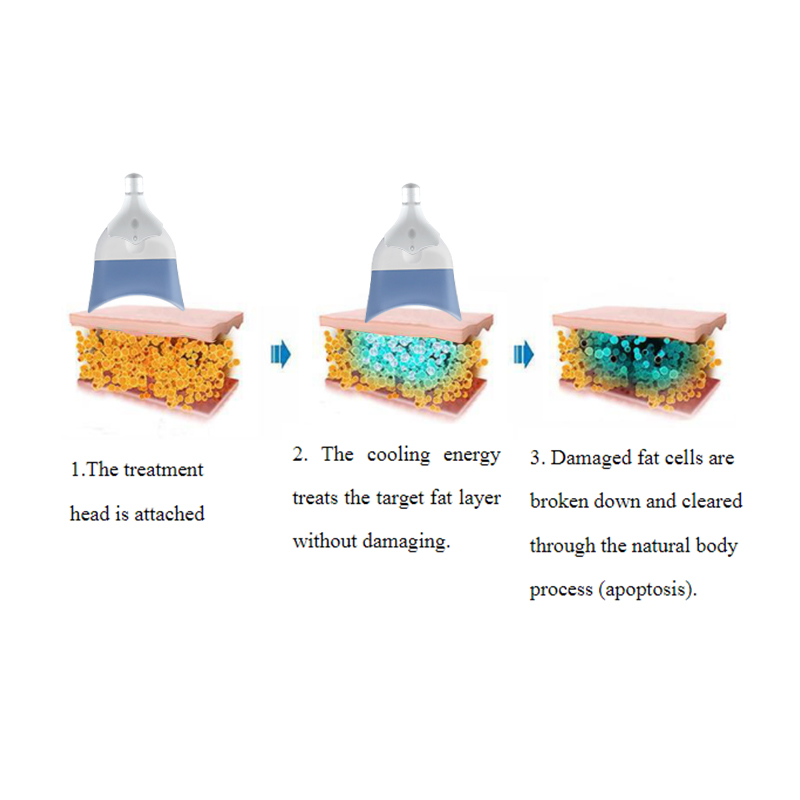
En milieu clinique, la cryolipolyse est principalement utilisée pour les amas graisseux localisés résistants aux régimes et à l'exercice physique. Les zones fréquemment traitées sont l'abdomen, les flancs, les cuisses, le haut des bras et la région sous-mentonnière. Cette méthode repose sur le principe que les cellules graisseuses sont plus sensibles au froid que les autres types de tissus.
L'application d'un refroidissement contrôlé provoque des dommages structurels progressifs aux cellules graisseuses, qui sont ensuite éliminées naturellement par les processus métaboliques de l'organisme.
1.2 Alternatives non chirurgicales en médecine esthétique
La cryolipolyse se présente comme une alternative non chirurgicale aux interventions invasives de réduction de la graisse. Elle ne nécessite ni anesthésie, ni incisions, ni convalescence. Pour les cliniques, il s'agit donc d'une procédure à faible risque pouvant être intégrée aux services de médecine esthétique ambulatoire.
1.3 Processus de remodelage tissulaire progressif
Contrairement à la lipolyse chirurgicale, les résultats de la cryolipolyse sont progressifs. Le système lymphatique élimine les cellules graisseuses traitées sur plusieurs semaines. Cette évolution graduelle est souvent privilégiée en pratique clinique car elle permet d'obtenir des modifications subtiles et naturelles du contour du corps.
2. Technologie de refroidissement et mécanisme de traitement
2.1 Exposition thermique contrôlée
L'efficacité de la cryolipolyse repose sur un contrôle précis de la température. Les cellules graisseuses sont exposées à de basses températures, dans une plage définie, qui induisent l'apoptose sans endommager la peau ni les tissus musculaires environnants.
Une répartition homogène du refroidissement est essentielle pour garantir des résultats prévisibles dans les différentes zones de traitement.
2.2 Concepts de conception pour le refroidissement de toute la zone
Les méthodes de traitement modernes privilégient de plus en plus l'amélioration de la couverture de refroidissement. Les systèmes assurant un contact plus uniforme avec la zone à traiter contribuent à réduire les variations de température et à améliorer l'efficacité globale.
Cela contribue à une réduction plus équilibrée des graisses dans la zone traitée.
2.3 Réponse tissulaire et clairance métabolique
Après le traitement, l'organisme élimine progressivement les cellules graisseuses endommagées par les voies métaboliques naturelles. Ce processus est favorisé par le drainage lymphatique et l'activité circulatoire, qui contribuent à l'élimination des débris cellulaires de la zone traitée.
3. Applications cliniques en remodelage corporel et facial
3.1 Applications de remodelage corporel
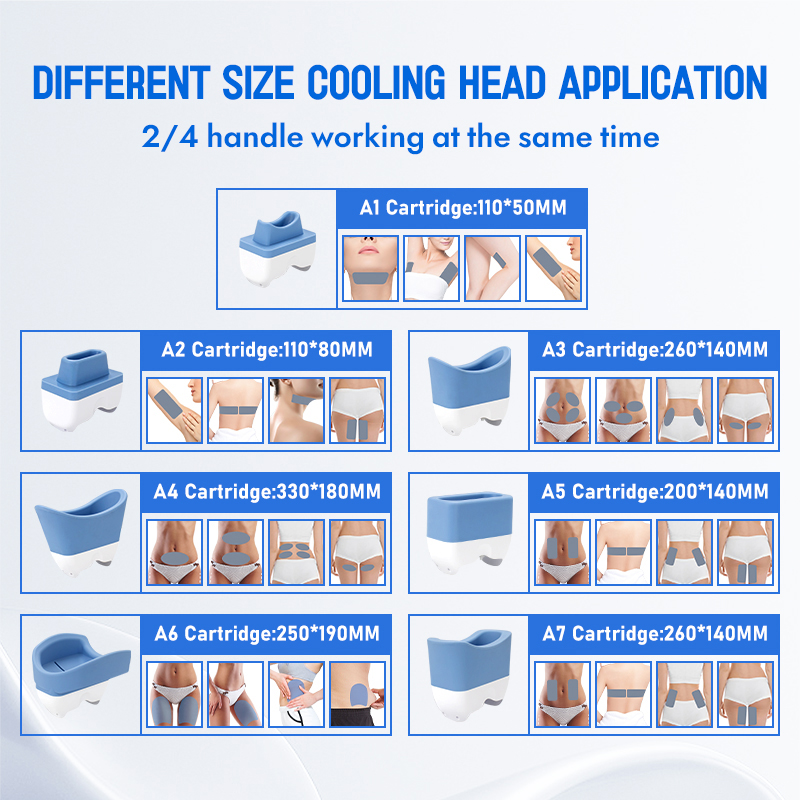
La cryolipolyse est couramment utilisée dans les protocoles cliniques de remodelage corporel, notamment :
- Réduction de la graisse abdominale
- contouring des flancs et de la taille
- modelage des cuisses
- Amélioration du haut du bras
- Réduction de la graisse du dos
Ces zones sont généralement difficiles à traiter par le seul exercice physique, ce qui rend les traitements non invasifs particulièrement pertinents.
3.2 Zones de traitement du visage et du menton
Grâce à des applicateurs adaptés, la cryolipolyse peut également être appliquée à des zones anatomiques plus petites, comme la région sous-mentonnière (double menton). Ces traitements visent à améliorer la définition du visage et le contour de la mâchoire.
3.3 Association avec des stratégies de raffermissement cutané
Dans certains protocoles cliniques, la cryolipolyse est associée à d'autres traitements énergétiques pour améliorer la fermeté de la peau. Cette approche combinée permet de traiter à la fois la réduction de la graisse et le relâchement cutané léger au sein d'un même plan de traitement.
4. Expérience de traitement et flux de travail clinique
4.1 Caractéristiques de la procédure
Les traitements de cryolipolyse sont généralement bien tolérés par les patients. Les sensations ressenties pendant la procédure peuvent inclure une sensation de froid et une légère pression au niveau de la zone traitée, qui disparaissent généralement après la phase initiale d'exposition.
Aucune anesthésie ni immobilisation post-traitement n'est requise.
4.2 Durée et efficacité des séances
La durée du traitement varie en fonction de la taille et du nombre de zones traitées. Dans la plupart des protocoles cliniques, les séances sont structurées de manière à optimiser le flux de patients tout en maintenant des paramètres de traitement constants.
4.3 Rétablissement et suivi
L'un des principaux avantages de la cryolipolyse est l'absence de convalescence significative. Les patients peuvent généralement reprendre leurs activités quotidiennes normales immédiatement après le traitement. Les recommandations post-traitement peuvent inclure le maintien d'une bonne hydratation et le soutien de la circulation lymphatique.
5. Sélection des patients et considérations cliniques
5.1 Profils de patients appropriés
La cryolipolyse est généralement recommandée aux personnes proches de leur poids idéal mais présentant des amas graisseux localisés. Elle ne constitue pas une méthode principale de perte de poids, mais plutôt une technique de remodelage corporel.
5.2 Considérations relatives à l'exclusion
Les patients souffrant de troubles de sensibilité au froid ou de certaines affections métaboliques peuvent nécessiter des approches thérapeutiques alternatives. Une évaluation approfondie du patient est essentielle avant d'initier un traitement.
5.3 Gestion des attentes
Les praticiens privilégient généralement une amélioration progressive plutôt qu'une transformation immédiate. Plusieurs séances peuvent être recommandées en fonction des objectifs du traitement et des considérations anatomiques.
6. Place de la cryolipolyse dans la pratique esthétique moderne
6.1 Intégration dans les portefeuilles de traitements non invasifs
La cryolipolyse est souvent intégrée à une offre plus large de remodelage corporel non invasif, aux côtés de la radiofréquence, des ultrasons et d'autres modalités énergétiques.
6.2 Demande sur les marchés cliniques et esthétiques
La demande en matière de remodelage corporel non chirurgical continue de croître sur les marchés médical et esthétique. Les patients privilégient de plus en plus les traitements offrant une amélioration visible sans période de convalescence.
6.3 Évolution des protocoles de traitement
Les améliorations constantes apportées à la conception des dispositifs et au contrôle de la température permettent d'affiner les protocoles de traitement, ce qui conduit à une meilleure cohérence et à une application clinique plus large.
Conclusion
Cryolipolyse La cryolipolyse représente une approche non invasive bien établie en chirurgie esthétique. Grâce à un refroidissement contrôlé ciblant sélectivement les cellules graisseuses, elle offre une méthode prévisible pour la réduction localisée des graisses et le remodelage corporel. Son caractère non chirurgical, le temps de récupération minimal et la réponse progressive au traitement en font une option pratique pour les cliniques esthétiques modernes. Malgré l'évolution constante de la technologie, la cryolipolyse demeure un élément important des stratégies globales de remodelage corporel en milieu clinique.