









Adding hair removal to an established beauty salon is a business expansion project, not simply another machine purchase. The salon already has clients, rooms, staff, booking habits, and a public identity. The new service must fit that operating system while meeting the additional requirements associated with professional light- or laser-based equipment.
The decision starts with three questions: Is there enough relevant client demand? Can the salon legally and professionally offer the intended service in its market? Can it create a controlled room, trained-team workflow, consultation process, and support plan for the selected device?
This guide explains how to answer those questions, compare SHEFMON professional hair removal devices, build a clear service menu, and introduce hair reduction without disrupting the salon’s existing facial or body business.
Résumé exécutif
- Confirm local business, facility, device, operator, supervision, and registration requirements before selecting equipment.
- Measure demand through client enquiries, consultations, target areas, and booking capacity rather than social-media interest alone.
- Build hair removal as a separate service category with its own consultation, room controls, records, eyewear, cleaning, maintenance, and follow-up.
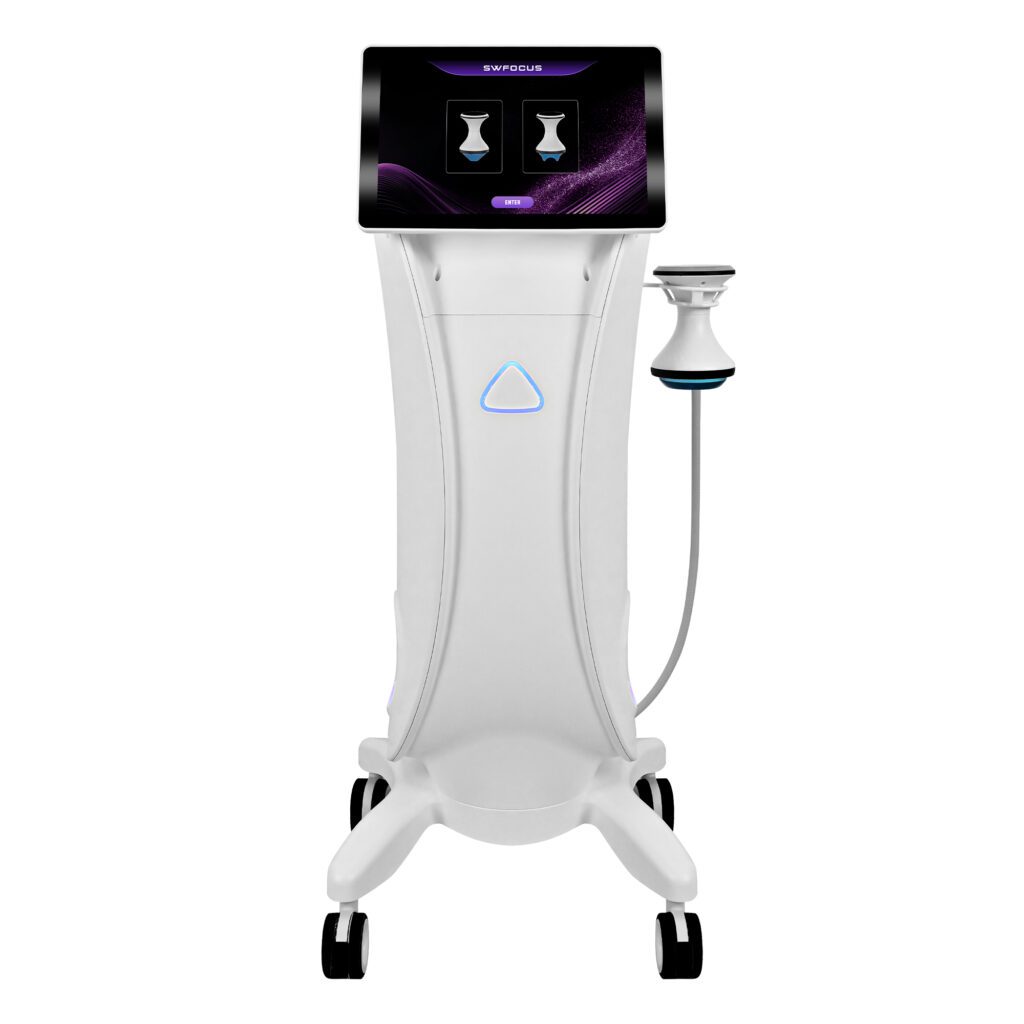
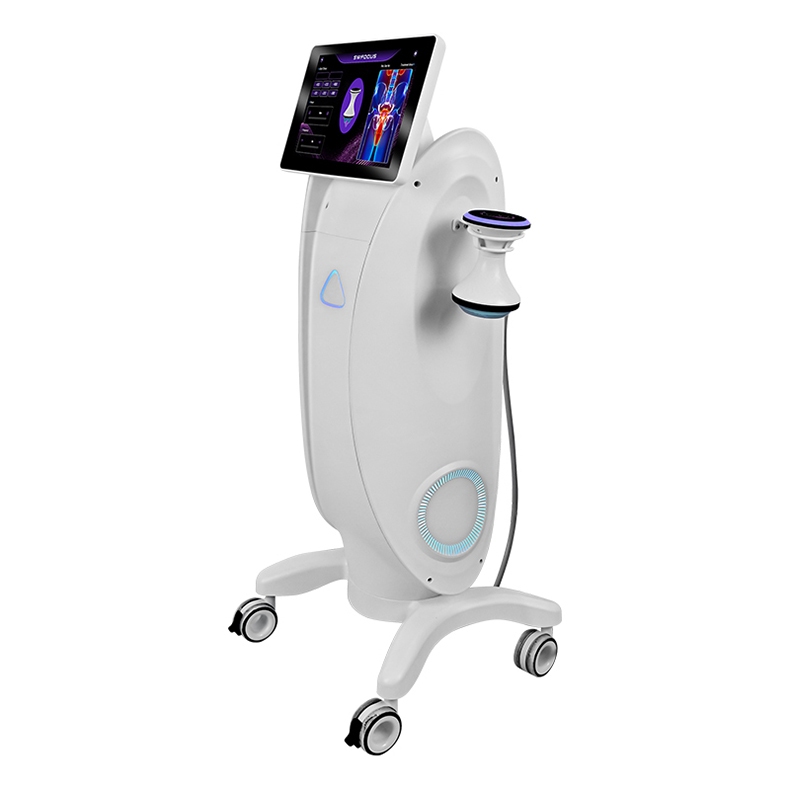
- Compare A0423 and A0426 by exact ordered configuration, installed footprint, movement, room presentation, service volume, and support requirements.
- Consider A0423 when the salon prioritizes a smaller-format professional diode platform and flexible room planning.
- Consider A0426 when the salon has a dedicated room and prefers a taller vertical format.
- Launch with consultation, small-area, medium-area, large-area, multi-area, and maintenance-review categories instead of a confusing list of wavelengths.
- Keep hair removal distinct from facial and body appointments. Cross-referral does not establish same-day treatment compatibility.
- Train reception on routing and claims boundaries; reserve assessment, parameters, and treatment decisions for appropriately prepared personnel.
- Expand only after the salon can show safe operation, reliable room turnover, consistent documentation, and sufficient utilization.
1. Decide Whether Hair Removal Fits the Existing Salon
An established salon should add a category because it solves a real client and business need. Review the fit before discussing a model.
| Fit question | Evidence to collect | Weak signal |
|---|---|---|
| Do existing clients ask for professional hair reduction? | Logged enquiries by area and client profile | General comments that laser is popular |
| Does the service match the salon’s identity? | Clear link to current facial, waxing, grooming, or body-care audience | Adding it only because competitors advertise it |
| Is room capacity available? | Measured room, free booking blocks, reset allowance, privacy, and access plan | An unused corner with no controlled workflow |
| Can the salon meet local requirements? | Written review of business, facility, device, operator, and supervision rules | Assuming beauty-service permission covers laser |
| Can named staff own the service? | Identified operators, training path, consultation duties, and cover plan | Expecting every current therapist to learn it immediately |
| Can the business support the category after purchase? | Supplies, maintenance, fault response, records, marketing, and follow-up budget | Comparing purchase price only |
Hair removal can complement an established salon well because it creates a separate booking reason and can serve several body areas. It is a poor addition when demand is untested, the room cannot be controlled, or no one has responsibility for the complete service pathway.
2. Pass the Compliance and Professional-Scope Gate First
Rules for laser and intense pulsed light services differ by country, region, device classification, and professional role. Before ordering, obtain market-specific answers to the following:
- whether the business needs a separate license, registration, or inspection;
- which professionals may assess and operate the device;
- whether medical direction or supervision is required;
- what room controls, warning systems, protective equipment, or safety appointments apply;
- whether the device and supplied configuration need local registration or market authorization;
- which consultation, consent, incident, and treatment records must be kept;
- what insurance coverage is required; and
- whether advertising terms such as “permanent hair removal” are restricted.
Treat any unresolved mandatory condition as a stop point. Do not buy first and hope the salon can adapt later.
Le U.S. Food and Drug Administration’s medical laser overview illustrates why laser equipment requires attention to both benefits and risks, but buyers outside the United States must use the rules that apply in their own market.
3. Measure Demand Before Building the Menu
Review at least a representative period of existing salon activity. Record demand in a form that can guide device and room planning.
Track enquiry details
- requested treatment area;
- whether the client asks for laser, IPL, or simply longer-lasting hair reduction;
- existing method, such as shaving, waxing, threading, or home light-based devices;
- whether the enquiry comes from an existing or new client;
- preferred appointment times;
- willingness to attend a consultation; and
- reason the enquiry did not become a booking.
Convert interest into a capacity estimate
Do not forecast only the number of sessions. Calculate consultation time, preparation, device checks, room use, treatment time according to area, cleaning, documentation, cooling-system checks, and reset. A salon with high interest but no room availability may need scheduling changes before it needs a machine.
Identify the first three area groups
The launch menu should reflect actual demand. If most enquiries concern underarms and small facial areas, the booking model will differ from a salon expecting legs, back, chest, or multiple large areas. Area mix affects session allocation, handpiece and spot-size selection, operator workload, and daily capacity.
4. Choose a Dedicated Hair Removal Technology Direction
An existing beauty salon may encounter both diode laser and IPL during research. They should not be treated as interchangeable labels.
| Decision point | Diode laser direction | IPL direction |
|---|---|---|
| Énergie | Laser wavelengths selected for the device configuration | Broad-spectrum pulsed light with filters or settings defined by the system |
| Position du menu | Dedicated professional hair-reduction category | Can be offered by systems intended and authorized for the relevant hair-reduction use |
| Buying task | Confirm wavelengths, handpiece power, spot sizes, cooling, and operating framework | Confirm the exact intended use, filters, spectrum, pulse controls, cooling, and market status |
| Staff task | Laser-specific training, room controls, eyewear, consultation, and records | IPL-specific training, controls, eyewear, consultation, and records |
| Key mistake | Assuming multiple wavelengths make every client suitable | Assuming one IPL platform automatically covers every skin and hair profile |
SHEFMON’s current Catégorie Épilation centers on two professional diode systems, A0423 and A0426. Salons comparing broader light-based equipment can also review the Catégorie Laser IPL, but the exact intended use and configuration must be confirmed before it enters a hair removal plan.
5. Compare SHEFMON A0423 and A0426
Le A0423 et A0426 pages list closely related diode-laser choices. Both pages currently show 600W or 1200W handpiece options, 15 × 15mm, 15 × 20mm, and 15 × 30mm spot-size options, 1–10Hz repetition frequency, and cooling that combines semiconductor refrigeration, water, and TEC systems.
They also list 755nm, 810nm, and 1064nm positioning, with 940nm shown in the product naming and configuration information. The buyer should obtain one written configuration for the actual unit rather than assuming every displayed option is standard.
| Buying factor | A0423 | A0426 | What the salon should decide |
|---|---|---|---|
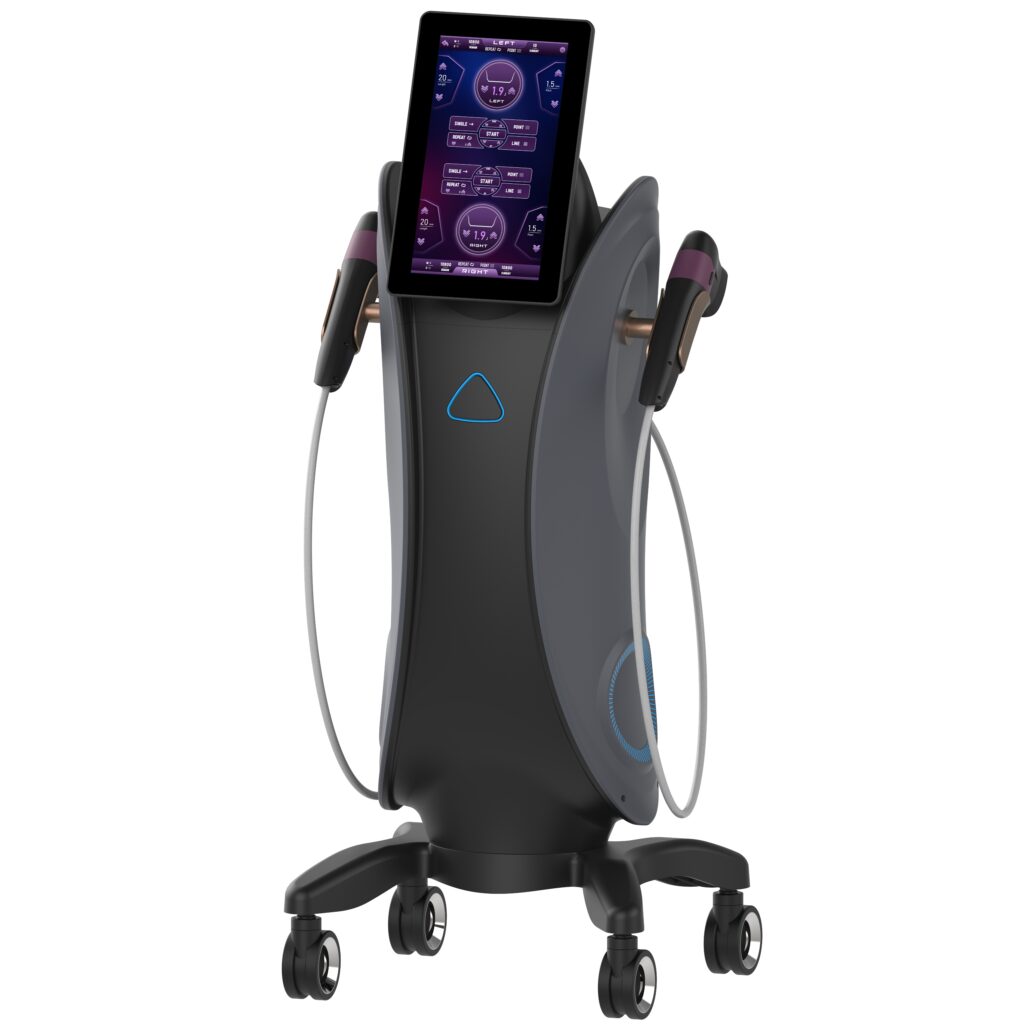
| Equipment format | Smaller-format professional unit | Taller vertical unit | Flexible placement or a dedicated room presence |
| Dimensions de l'emballage indiquées | 63 × 47 × 61 cm | 67 × 54 × 141 cm | Delivery route and storage planning; these are not installed footprints |
| Poids brut indiqué | 34,5 kg | 59,2 kg | Moving, acceptance, and placement responsibility |
| Handpiece choices shown | 600W ou 1200W | 600W ou 1200W | Exact version, workload, electrical and cooling implications |
| Spot-size choices shown | 15 × 15 mm, 15 × 20 mm, 15 × 30 mm | 15 × 15 mm, 15 × 20 mm, 15 × 30 mm | Areas planned for the launch menu and supplied tip or handpiece configuration |
| Best operational fit | Existing salon prioritizing a more flexible footprint | Salon building a dedicated laser room with a vertical presentation | Fit with the room and service plan rather than appearance alone |
Product-page dimensions labeled as package size describe transport packaging. Ask for operating dimensions, handpiece and holder position, screen movement, hose and cable reach, ventilation, service access, and the space required around the treatment bed.
6. When A0423 Is the Better Addition
A0423 is a logical shortlist option when the salon:
- is adding professional diode hair reduction for the first time;
- needs greater flexibility in positioning the equipment;
- wants to preserve space for existing salon functions;
- expects a controlled starter menu rather than an immediate high-volume department; and
- can create the same level of laser-room control required by its market despite the smaller equipment format.
Compact does not mean casual. The salon still needs a suitable treatment area, controlled access, wavelength-appropriate protective eyewear, documented checks, ventilation or plume controls where required, safe cable routes, cooling maintenance, and trained operation.
7. When A0426 Is the Better Addition
A0426 is a stronger format choice when the salon:
- has allocated a dedicated room to hair removal;
- prefers a vertical unit that remains in a fixed operating position;
- expects hair reduction to become a visible core department;
- can manage the larger delivery and movement requirements; and
- has enough demand and staffing to justify the room commitment.
The taller cabinet does not by itself mean better clinical results or higher service quality. The ordered wavelength, handpiece, spot size, cooling, operator competence, client selection, documentation, and maintenance plan remain more meaningful than visual presence.
8. Confirm the Exact Configuration on the Quotation
Ask SHEFMON to identify each selected option in writing.
| Configuration item | Confirmation needed |
|---|---|
| Model and version | A0423 or A0426, current revision, and identifying details |
| Wavelength arrangement | Exact supplied wavelength combination and how it is delivered |
| Pièce à main | Supplied power version, quantity, connector, holder, cable, and service terms |
| Spot sizes | Included spot size or sizes and whether alternatives require different parts |
| Refroidissement | System arrangement, fill or maintenance procedure, operating checks, and alarm response |
| Electrical | Voltage, frequency, plug, rated input, grounding, and circuit requirements |
| Accessoires | Eyewear specifications and quantities, footswitch if applicable, tools, filters, funnels, or other supplied items |
| Documentation | Manual, settings framework, cleaning guidance, maintenance information, and training materials |
| Soutien | Installation, acceptance, warranty, fault reporting, handpiece service, parts, and remote assistance |
“Same model” does not guarantee the same delivered package. Keep the selected configuration consistent across the quotation, invoice, packing list, acceptance record, operator training, and internal device register.
9. Convert a Salon Room into a Hair Removal Room
The room must support the service before the machine arrives.
Draw the installed layout
Show the device in its operating position, treatment bed, operator location, client changing area, handpiece movement, cables, hoses, door, storage, sink if present, outlets, ventilation, and maintenance access. Test movement with the bed at realistic working heights and positions.
Control access
Determine how the salon will prevent unintended entry while the device is in use. Plan warning notices, door procedures, key or enable controls, and staff communication according to the device documentation and local requirements.
Provide appropriate eyewear
Protective eyewear must match the relevant wavelengths and exposure conditions, not merely look like laser glasses. Define who checks, cleans, inspects, stores, and replaces it. The American Academy of Dermatology’s laser hair removal FAQ notes that everyone in the laser room wears protective eyewear during the procedure.
Separate clean, active, and used items
Create labeled positions for prepared equipment, active treatment materials, used or contaminated items, cleaning products, linens, razors where permitted, disposables, and waste. Keep liquids and cleaning activities away from electrical connections as required.
Check the utilities
Verify the circuit, outlet, grounding, voltage, frequency, ambient conditions, ventilation, cooling-system needs, and any water-quality or maintenance instructions for the delivered machine. Do not solve insufficient electrical planning with an unapproved extension lead or adapter.
10. Build a Hair Removal Consultation Pathway
Hair removal needs a distinct intake and assessment process even when the client already visits the salon for facials or body care.
The consultation framework should address, as relevant to professional scope and current instructions:
- treatment goals and requested areas;
- hair color, thickness, density, and current removal method;
- skin characteristics and recent tanning or sun exposure;
- previous laser, IPL, or home-device use;
- relevant health history, skin conditions, medicines, and prior reactions;
- tattoos, permanent makeup, pigmented areas, wounds, or other features near the proposed area;
- realistic limits, number of visits, variable response, and maintenance possibility;
- préparation et suivi ;
- photography and privacy consent where used;
- circumstances requiring postponement, referral, or further review; and
- whether a test area is required by current instructions, professional policy, insurance, or local rules.
The form should support professional judgment rather than becoming an automatic pass/fail checklist completed by reception. Escalation criteria must identify who makes the final suitability decision.
11. Create a Small, Area-Based Launch Menu
Clients understand body areas more easily than handpiece power or wavelength lists. A simple launch menu can use five categories.
| Catégorie de menu | Possible examples | Booking purpose |
|---|---|---|
| Consultation | New-client or new-area assessment | Establish suitability and plan the appropriate route |
| petite zone | Upper lip, chin, underarm, or another locally permitted small zone | Short, clearly bounded booking |
| Zone moyenne | Forearms, lower legs, or a comparable defined area | Allocate time and setup by area rather than one generic session |
| Grande surface | Full legs, back, chest, or another large zone | Longer appointment with capacity and comfort planning |
| Multi-area plan | A documented selection of separate areas | Simplify booking while retaining area-specific records |
| Maintenance review | Reassessment following an earlier course | Decide whether further treatment is appropriate without promising identical timing |
The exact area grouping and appointment duration belong in the salon’s operating documents. They should reflect the delivered configuration, operator experience, consultation requirements, preparation, and room reset.
Avoid claims of painless treatment, complete removal, guaranteed permanent results, universal skin-tone suitability, or a fixed number of sessions for everyone. The AAD explains that multiple treatments are commonly needed and that outcomes vary.
12. Position Hair Removal Beside Existing Salon Services
The new department should connect to the salon without being folded into unrelated procedures.
| Existing department | Appropriate connection | Boundary to maintain |
|---|---|---|
| Facial care | Reception can identify unwanted facial-hair enquiries and offer a separate consultation | A facial appointment does not automatically establish laser suitability or timing |
| Fartage | Explain the difference between temporary hair removal and a professional hair-reduction course | Do not continue root-removal methods within the preparation period when current guidance says otherwise |
| Soins du corps | Clients may discover the hair-removal category through a body consultation | Body contouring and laser decisions remain separate |
| Memberships | Include consultation access, defined discounts, or eligible appointment credits | Membership does not override suitability or guarantee treatment |
| Soins de la peau en vente au détail | Provide only products and advice compatible with the salon’s approved preparation and aftercare process | Do not let general retail scripts replace individualized guidance |
Cross-referral should create the correct consultation, not an automatic add-on. If a client asks to combine services on the same day, the appropriately qualified person must review device instructions, area, skin condition, timing, and individual suitability.
13. Separate Staff Roles
An existing salon can use its current team, but each role needs a clear boundary.
Reception
Reception explains service categories, books the correct consultation, sends approved preparation information, checks that required forms are available, and routes clinical or parameter questions to the operator.
Hair removal operator
The designated operator completes the required assessment, confirms the area and service plan, performs documented checks, selects parameters within the approved framework, delivers treatment, records the session, and provides aftercare.
Service lead or safety role
Where the operating model or local rules require it, a named person maintains training records, room controls, eyewear checks, device logs, incidents, maintenance, policy updates, and escalation routes.
Salon manager
The manager owns capacity, stock, insurance, maintenance scheduling, claims review, and the relationship between the new department and existing services.
One person may hold several roles in a small salon, but the responsibilities should still be written down.
14. Build Training Around Real Salon Tasks
Training should cover more than how to select a screen option. The competency plan should include:
- device principle and exact delivered configuration;
- local professional and safety requirements;
- client assessment and escalation;
- room preparation and controlled-access procedures;
- wavelength-appropriate eyewear selection and inspection;
- handpiece, spot-size, cooling, and parameter framework;
- treatment-area preparation and positioning;
- recognizing expected responses and signs requiring cessation or escalation;
- cleaning, shutdown, water or cooling care, and routine checks;
- records, photography, privacy, consent, and aftercare;
- fault, incident, and emergency procedures; and
- observed practice plus documented competency before independent work.
Record who was trained, on which model and configuration, by whom, on what date, and what the assessment covered. Retraining should follow significant equipment, software, guidance, staffing, or policy changes.
15. Prepare a Service Record That Supports Follow-Up
The salon’s hair-removal record should connect consultation, treatment, and review. Depending on local requirements and professional policy, it may include:
- client and operator identification;
- date, area, skin and hair assessment, and relevant updates;
- device model, serial number, handpiece, wavelength arrangement, and spot size;
- settings and mode actually used;
- preparation, test-area information where applicable, and protective equipment;
- observations during and after treatment;
- products or cooling measures used;
- aftercare provided;
- any event, action, referral, or follow-up; and
- next-review basis rather than an automatic treatment promise.
Link records to the correct device and operator. Generic notes such as “laser done” do not provide enough information for continuity or incident review.
16. Plan Supplies, Maintenance, and Downtime
The department needs an operating plan for items beyond the main console.
| Zone | Examples to plan |
|---|---|
| Protective equipment | Correct eyewear, storage cases, inspection, cleaning, and replacements |
| Treatment supplies | Approved preparation and contact items, disposables, linens, and waste materials |
| Device care | Cooling-system items, filters or water-care supplies where applicable, cleaning materials, and scheduled checks |
| Documentation | Consultation, consent, treatment, incident, maintenance, and aftercare records |
| Spare and service route | Handpiece service, cables, eyewear replacement, parts, fault response, and shipping procedure |
| Downtime response | Client communication, rebooking rules, safe shutdown, fault isolation, and service escalation |
Do not book the machine to full theoretical capacity before the team understands actual preparation, area time, cooling behavior, documentation, cleaning, and reset. Early schedules should leave room for learning and review.
17. Build Pricing and Packages Without Overpromising
The salon can structure pricing by area and service commitment without guaranteeing a biological outcome.
Area-based pricing
Group services by the room and operator time required. Publish exactly which areas belong in each group and how the salon handles custom or multiple areas.
Course bundles
A multi-visit commercial bundle can simplify booking and payment, but the agreement should explain suitability review, expiry or rescheduling terms, maintenance, changes in treatment plan, and what happens if treatment must be paused.
Existing-client introduction
Offer consultation access or a clearly described launch benefit. Avoid deep discounting that pressures staff to shorten assessment or encourages clients to buy before suitability is established.
Membership integration
Hair removal may sit beside facial or body benefits in a membership. Define each benefit separately and make all device services subject to current eligibility. A membership is a commercial framework, not permission to perform treatment.
18. Launch the Service in Controlled Stages
Stage 1: Readiness review
Complete the legal, professional, insurance, room, electrical, device, and staffing checks. Select A0423 or A0426 only after the operating environment is known.
Stage 2: Installation and acceptance
Check the delivered model, configuration, accessories, electrical version, transport condition, documentation, controls, cooling system, handpiece, eyewear, and support contacts. Record any discrepancy before clinical use.
Stage 3: Staff preparation
Complete training, supervised practice, competency assessment, room drills, cleaning routines, record testing, front-desk scripts, and escalation procedures.
Stage 4: Limited menu launch
Open consultations and a small number of area groups. Use longer appointment allocations until reliable treatment and reset data are available.
Stage 5: Operating review
Review enquiries, consultation conversion, suitability deferrals, room time, rebooking, utilization, records, consumables, maintenance, client feedback, and any incidents.
Stage 6: Controlled expansion
Add more area groups, booking blocks, operators, or multi-area plans only after the initial service remains consistent. Do not add another laser or skin procedure merely because the first launch attracted interest.
19. Market the New Category Responsibly
Marketing should help the right client reach a consultation.
Use messages such as:
- professional diode-laser hair reduction consultations;
- small-, medium-, and large-area service options;
- personalized planning based on the treatment area and assessment;
- contact cooling and configuration-specific technology;
- trained operation and a documented client pathway; and
- review and maintenance appointments where appropriate.
Éviter:
- “permanent for everyone”;
- “painless and risk free”;
- “all hair colors and all skin types guaranteed”;
- “one session is enough”;
- before-and-after images without proper consent and accurate context; and
- countdown offers that encourage payment before consultation.
The strongest launch content explains who the consultation is for, what information the salon reviews, how area categories work, and why results and visit numbers vary.
20. Measure Whether the New Service Is Working
Use operational and client-experience measures, not revenue alone.
| Mesure | What it reveals |
|---|---|
| Qualified enquiries by area | Whether demand matches the planned menu |
| Consultation attendance | Whether the booking and preparation process is clear |
| Appropriate conversion | Whether suitable clients understand and choose the service |
| Deferrals and referrals | Whether screening boundaries are functioning |
| Room time by area | Whether pricing and capacity assumptions are realistic |
| Record completion | Whether the service can be audited and followed up |
| Rebooking and maintenance reviews | Whether clients understand the longer-term pathway |
| Downtime and fault response | Whether support and maintenance are adequate |
| Client questions and complaints | Where communication or delivery needs improvement |
| Existing-service disruption | Whether the new department is crowding facial or body operations |
Review the measures by operator and area group without using targets that encourage unsafe treatment or weak screening.
21. Final Salon Readiness Checklist
Before opening bookings, confirm that:
- current local requirements have been reviewed in writing;
- insurance and professional scope cover the exact service;
- the selected A0423 or A0426 configuration is documented;
- installed dimensions and the delivery path have been checked;
- electrical, environmental, cooling, and maintenance needs are ready;
- controlled access and warning procedures are established;
- correct protective eyewear is available, inspected, and stored;
- consultation, consent, record, aftercare, and incident documents are approved;
- operators have completed configuration-specific competency assessment;
- reception can book and describe the service without giving treatment advice;
- the launch menu uses clear area groups and realistic language;
- cleaning, stock, maintenance, and downtime responsibilities are assigned; and
- the salon has defined when to postpone, refer, stop, or escalate.
Questions fréquemment posées
1. What is the first step when adding hair removal to an existing salon?
Confirm that the salon can legally and professionally offer the intended service, then measure real client demand and room capacity. Equipment comparison should begin only after those conditions are understood.
2. Should an existing salon choose A0423 or A0426?
A0423 may suit a salon prioritizing a smaller-format professional unit and more flexible placement. A0426 may suit a dedicated laser room that can accommodate a taller vertical device. Confirm the exact wavelengths, handpiece power, spot sizes, cooling, electrical version, and included accessories for either model.
3. Are the listed package dimensions the space needed in the treatment room?
No. Package dimensions describe shipping volume. The salon needs installed dimensions plus space for the handpiece, holder, cables, hoses, screen movement, ventilation, servicing, treatment bed, operator, client changing, storage, and controlled access.
4. Can a salon use its existing facial consultation form?
The salon can share client identity and general history fields, but hair removal needs a dedicated assessment module covering the intended area, hair and skin factors, recent exposure and removal methods, relevant history, previous reactions, expectations, preparation, aftercare, and escalation.
5. How should hair removal services appear on the menu?
Use consultation plus clear small-, medium-, large-, and multi-area categories. Add a maintenance review for returning clients. Keep wavelengths and technical options in the professional assessment rather than forcing clients to select them.
6. Can laser hair removal be combined with a facial or body treatment?
Do not assume that commercial availability makes same-day use appropriate. A qualified person should review the area, timing, skin condition, device instructions, recent procedures, and individual suitability before any combined schedule is offered.
7. Does every person in the laser room need protective eyewear?
Professional guidance states that people in the laser treatment room require suitable protective eyewear during the procedure. The eyewear must be appropriate for the relevant wavelengths and exposure conditions, and the salon needs an inspection, cleaning, storage, and replacement process.
8. How many laser hair removal sessions should the salon promise?
Do not promise one universal number. Multiple visits are commonly required, and response can vary with hair pigment and thickness, skin characteristics, body area, growth cycle, settings, operator technique, and individual factors. Build reassessment into the plan.
9. Can every existing therapist operate the new hair removal device?
Only staff who meet applicable professional requirements and have completed model- and configuration-specific preparation should operate it. The salon should document training, supervised practice, competency, permitted duties, and retraining.
10. What should the salon send SHEFMON when requesting a recommendation?
Send the target country, business type, planned area groups, expected booking volume, room dimensions, delivery constraints, electrical information, preferred device format, operator background, and desired handpiece or wavelength options. This allows the team to discuss a more relevant configuration.
Conclusion
A successful hair removal launch connects demand, compliance, room control, trained staff, equipment configuration, consultation, service-menu design, maintenance, and follow-up. The machine is one part of that system.
For many existing salons, A0423 provides a useful smaller-format diode-laser direction. A0426 suits businesses that can dedicate more space to a vertical unit. The final choice should reflect the exact ordered configuration and the salon’s real operating plan.
Browse SHEFMON’s appareils de beauté d'épilation ou contacter SHEFMON with your market, room, target areas, staffing, and preferred service volume to compare a suitable professional hair removal setup.