






La technologie laser est devenue un élément incontournable de l'industrie esthétique moderne. De l'épilation au resurfaçage cutané, en passant par la correction des taches pigmentaires et le détatouage, les traitements laser permettent aux instituts de beauté, aux spas médicaux et aux centres esthétiques d'offrir une gamme de services plus étendue, répondant ainsi à une forte demande. Cependant, constituer un parc de traitements laser performant ne se résume pas à l'acquisition de plusieurs appareils. Les cliniques doivent maîtriser les différentes technologies laser, leurs applications, les besoins de leurs clients et les opportunités commerciales. Un parc d'équipements laser complet doit inclure des systèmes complémentaires permettant de traiter les problèmes esthétiques les plus courants, tout en assurant un potentiel de revenus à long terme. Cet article explique comment les cliniques professionnelles peuvent constituer un parc d'équipements laser équilibré en combinant différentes longueurs d'onde et technologies.
1. Comprendre les principales catégories de la technologie laser esthétique
1.1 Différents lasers résolvent différents problèmes de peau
Une erreur fréquente lors du choix d'un équipement laser est de se concentrer uniquement sur les spécifications de la machine au lieu des applications de traitement. Différents lasers sont conçus pour différentes cibles dans la peau.
Les systèmes laser esthétiques professionnels comprennent principalement :
- lasers d'épilation
- Lasers de resurfaçage fractionné
- Lasers pour l'élimination des pigments et des tatouages
- Lasers de rajeunissement cutané
Chaque technologie utilise des longueurs d'onde et des méthodes de diffusion d'énergie spécifiques pour obtenir des effets thérapeutiques différents.
1.2 Pourquoi les cliniques ont besoin de plusieurs technologies laser
Les clients ont généralement plusieurs préoccupations esthétiques. Une personne intéressée par l'épilation peut par la suite avoir besoin d'un rajeunissement cutané, d'un traitement de la pigmentation ou d'une amélioration des cicatrices.
En proposant plusieurs services laser, les cliniques peuvent :
- Attirer davantage de groupes de clients
- Augmenter les options de traitement
- Améliorer la fidélisation client
- Créer des sources de revenus supplémentaires
Une gamme complète de technologies laser permet aux cliniques de devenir une destination esthétique plus complète.
2. Commencez par un système d'épilation laser diode professionnel
2.1 L'épilation est une catégorie de soins très demandée
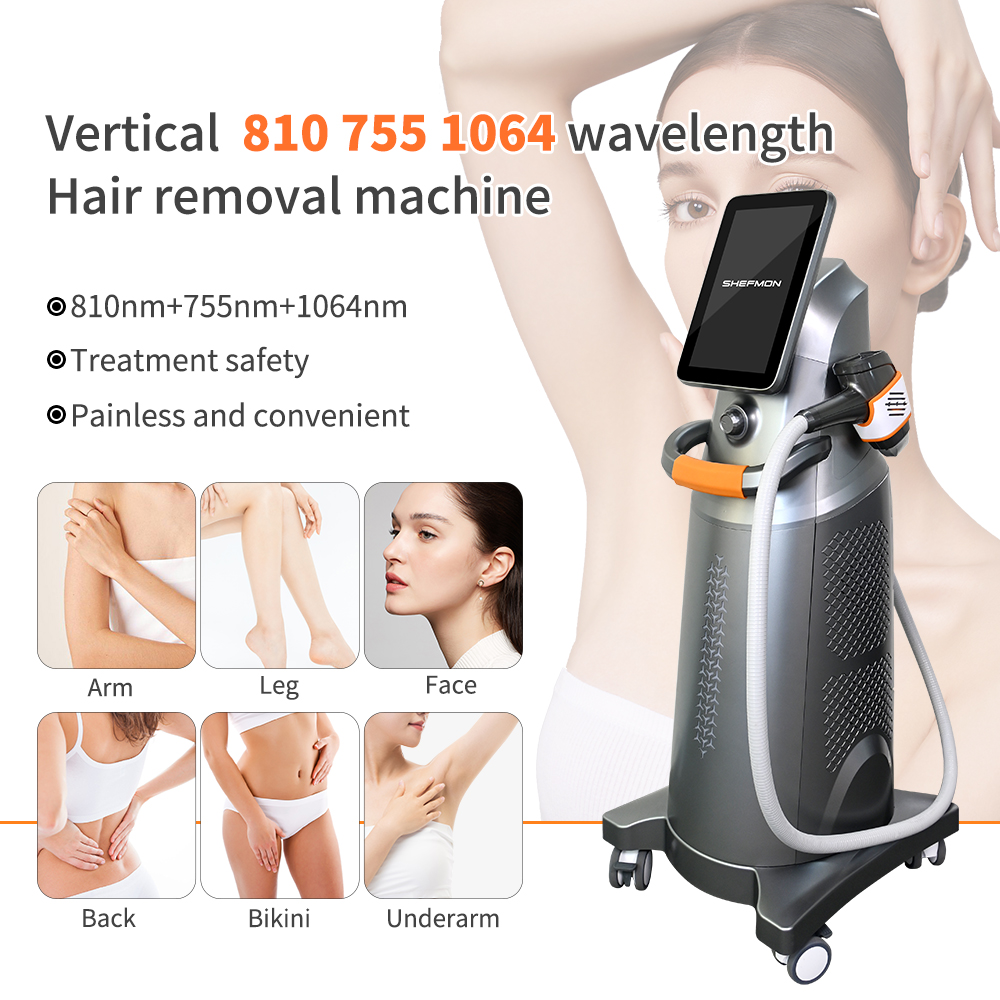
L’épilation au laser demeure l’une des interventions esthétiques non invasives les plus populaires au monde. système laser à diode professionnel Il s'agit souvent du premier investissement laser pour de nombreuses cliniques car il offre des possibilités de traitement répété.
Les machines laser à diodes modernes peuvent combiner plusieurs longueurs d'onde, telles que :
- 755 nm
- 810 nm
- 940 nm
- 1064 nm
Cette combinaison permet aux praticiens de traiter différents types de peau et de cheveux.
2.2 Avantages de la technologie laser à diodes multi-longueurs d'onde
Les différentes longueurs d'onde offrent des profondeurs de pénétration et des caractéristiques d'absorption différentes :
longueur d'onde de 755 nm
- Convient aux peaux claires et aux cheveux fins
- Forte absorption de mélanine
- Idéal pour les zones d'épilation délicates
Longueur d'onde de 810 nm
- Une option polyvalente pour les traitements d'épilation courants
- Convient à de nombreuses parties du corps
Longueur d'onde de 940 nm
- Offre une flexibilité accrue en termes de longueur d'onde pour des traitements personnalisés
Longueur d'onde de 1064 nm
- Pénétration plus profonde
- Convient aux peaux plus foncées et aux cheveux plus épais
Un appareil laser à diodes multi-longueurs d'onde aide les cliniques à proposer des traitements plus sûrs et plus personnalisés à une clientèle plus large.
3. Ajouter un laser CO2 fractionné aux traitements de resurfaçage cutané
3.1 Pourquoi le laser CO2 est important dans un portefeuille laser
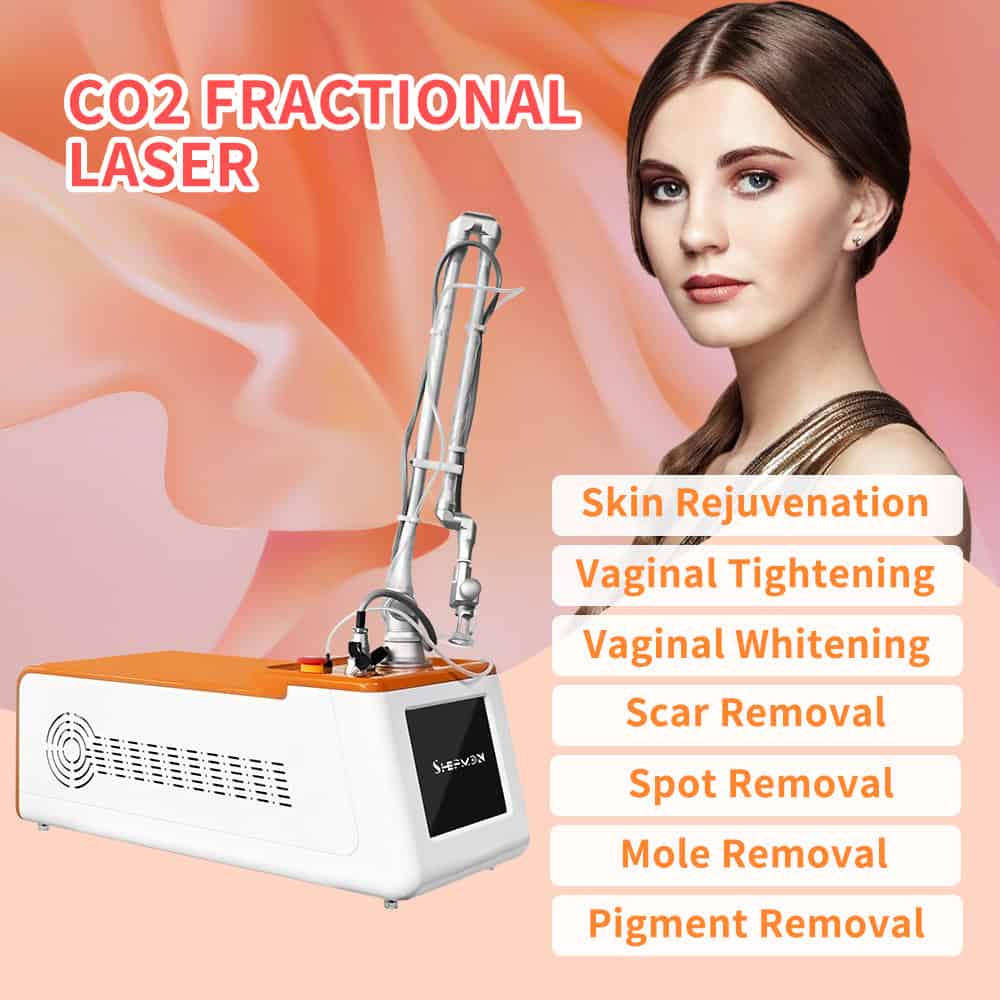
Après l'épilation, le rajeunissement cutané représente un autre domaine de demande important. La technologie laser CO2 fractionné est largement utilisée pour le resurfaçage cutané avancé car elle cible le processus de renouvellement cutané par micro-ablation contrôlée.
UN équipement laser CO2 fractionné de 10600 nm Elle crée des zones de traitement microscopiques dans la peau, stimulant les réponses de guérison naturelles et le remodelage du collagène.
3.2 Applications courantes du laser CO2 fractionné
Un laser fractionné CO2 professionnel peut permettre de réaliser des traitements pour :
- Cicatrices d'acné
- Cicatrices chirurgicales
- cicatrices de brûlures
- ridules
- Amélioration de la texture de la peau
- dommages causés par le soleil
- Rajeunissement de la peau
Comparée au resurfaçage laser traditionnel de toute la surface, la technologie fractionnée crée des zones de traitement contrôlées, ce qui peut réduire le temps de récupération tout en maintenant un renouvellement cutané efficace.
3.3 Pourquoi le laser CO2 élargit les services des cliniques
L'ajout d'équipements laser CO2 fractionnés permet aux cliniques d'aller au-delà des traitements de beauté de base et d'offrir des services de correction cutanée plus avancés.
Cela peut attirer des clients recherchant :
- Solutions anti-âge
- Amélioration des cicatrices
- renouvellement cutané
- raffinement de la texture
4. Inclure le laser Q-switched ou Pico pour le traitement des taches pigmentaires et le détatouage.
4.1 La demande croissante de traitements pigmentaires
Les problèmes de pigmentation et les tatouages indésirables sont des préoccupations fréquentes chez les clients en médecine esthétique. Un arsenal complet de traitements laser devrait inclure une technologie spécifiquement conçue pour cibler les problèmes de pigmentation.
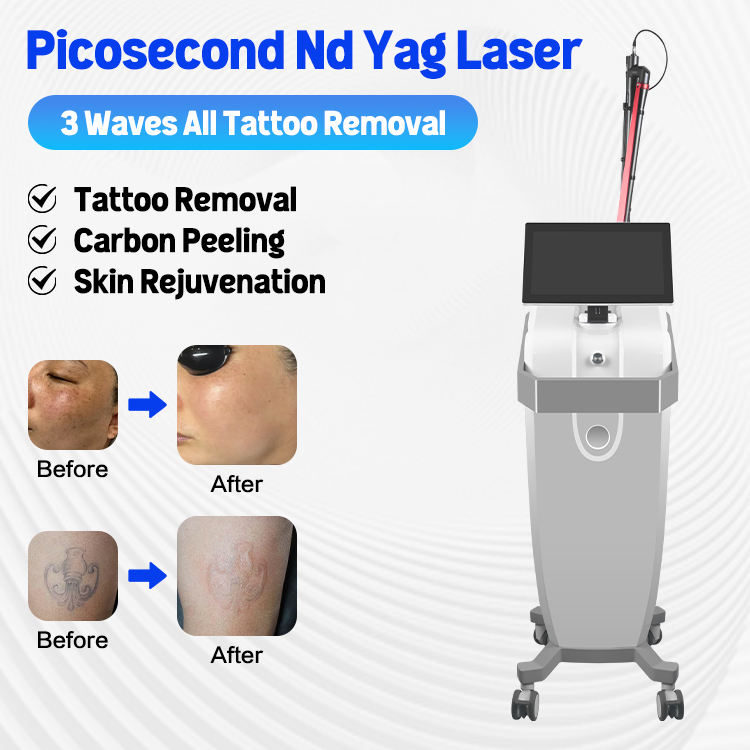
Systèmes laser Nd:YAG à commutation Q et lasers picosecondes sont largement utilisées car elles délivrent des impulsions énergétiques extrêmement courtes pour décomposer les particules de pigment.
4.2 Applications des systèmes laser pico et à commutation Q
Un système laser de 1064 nm et 532 nm peut être utilisé pour :
- détatouage noir et foncé
- traitement de tatouage coloré
- Taches de rousseur
- taches de vieillesse
- Taches solaires
- pigmentation irrégulière
Les deux longueurs d'onde présentent des caractéristiques d'absorption différentes :
longueur d'onde de 532 nm
- Cible les pigments superficiels
- Couramment utilisé pour les problèmes de pigments rouges, oranges et certains pigments plus clairs
Longueur d'onde de 1064 nm
- Pénétration plus profonde
- Convient aux peaux plus foncées et aux problèmes de peau plus profonds.
4.3 Pourquoi la technologie picoseconde apporte une valeur ajoutée
La technologie laser picoseconde utilise des impulsions ultracourtes pour délivrer l'énergie efficacement tout en minimisant l'accumulation de chaleur inutile.
Pour les cliniques, l'ajout de cette technologie ouvre la voie à des traitements haut de gamme et à une valeur ajoutée supérieure.
5. Envisager les options avancées de laser fractionné
5.1 Différentes technologies CO2 répondent à différents besoins du marché
Outre les systèmes CO2 fractionnés traditionnels, les nouvelles technologies laser ultra-fractionnées offrent une plus grande flexibilité de traitement.
UN Machine laser CO2 fractionnaire à fibre de 2910 nm représente une autre approche du rajeunissement cutané en combinant une délivrance précise d'énergie avec des concepts de traitement fractionné avancés.
5.2 Développement des services anti-âge et de réparation cutanée
Les systèmes laser fractionnés avancés peuvent prendre en charge :
- Raffermissement de la peau
- Amélioration de la texture
- Réduction des ridules
- régénération cutanée
Proposer plusieurs options de resurfaçage permet aux cliniques de concevoir des plans de traitement adaptés aux différentes affections cutanées et aux attentes des clients.

6. Comment créer une stratégie de portefeuille laser équilibrée
6.1 Couvrir en priorité les besoins les plus courants des clients
Lors de la constitution d'un parc d'équipements laser, les cliniques devraient privilégier les technologies bénéficiant d'une forte demande sur le marché :
- Épilation
- Rajeunissement de la peau
- Correction de la pigmentation
- Traitement des cicatrices
- détatouage
Ces catégories couvrent un pourcentage important des demandes de traitements esthétiques.
6.2 Choisir des technologies complémentaires
Un portefeuille performant ne se résume pas à une simple collection de machines. Chaque appareil doit compléter les autres.
Par exemple:
- Le laser diode attire une clientèle régulière pour l'épilation.
- Le laser fractionné CO2 permet un renouvellement cutané avancé.
- Le laser Pico/Q-switched traite les problèmes de pigmentation et de tatouage.
- Le laser fractionné ultra-rapide élargit la gamme des services de rajeunissement haut de gamme.
Ensemble, ces systèmes créent une solution esthétique complète.
7. Facteurs importants à prendre en compte avant l'achat d'un équipement laser
7.1 Évaluation de la technologie et des spécifications
Les cliniques devraient prendre en considération :
- options de longueur d'onde laser
- stabilité énergétique
- performances du système de refroidissement
- Modes de traitement
- qualité de la pièce à main
- Durée de vie prévue
Des spécifications fiables influencent directement la constance du traitement.
7.2 Envisager le soutien du fournisseur
La qualité du matériel ne représente qu'un aspect d'un investissement réussi. Les cliniques doivent également évaluer :
- Soutien à la formation
- Assistance technique
- Service de garantie
- Disponibilité des pièces de rechange
- Matériel marketing
Un soutien à long terme des fournisseurs permet aux cliniques de fonctionner efficacement après l'achat.
Conclusion
Constituer un parc complet d'équipements laser exige une planification stratégique plutôt que le simple achat de machines individuelles. Une clinique esthétique performante doit combiner différentes technologies laser pour couvrir les principales catégories de traitements, notamment l'épilation, le resurfaçage cutané, la correction des taches pigmentaires et le détatouage. Un laser diode multi-longueurs d'onde constitue la base des services d'épilation les plus demandés. Les lasers CO2 fractionnés élargissent les possibilités de rajeunissement cutané avancé, tandis que les lasers Q-switched et picosecondes traitent les problèmes de pigmentation et de détatouage. D'autres technologies laser fractionnées peuvent optimiser les services anti-âge haut de gamme. En sélectionnant des systèmes laser complémentaires, les cliniques professionnelles peuvent créer une carte de traitements complète, attirer davantage de clients et assurer une croissance durable sur le marché concurrentiel de l'esthétique.