









Les traitements non invasifs de raffermissement cutané connaissent une popularité croissante, car de nombreuses personnes recherchent des alternatives efficaces au lifting chirurgical. Parmi les technologies les plus discutées figurent les ultrasons focalisés de haute intensité (HIFU) et l'Ultherapy. Ces deux traitements utilisent l'énergie ultrasonore pour stimuler la production de collagène et lifter la peau relâchée, mais ils diffèrent considérablement en termes de technologie, de précision, de résultats et de sécurité. Comprendre ces différences est essentiel pour choisir le traitement le plus adapté. Cet article explore ces différences. HIFU vs Ultherapy : Principales différences en matière de technologie, de résultats et de sécurité pour vous aider à prendre une décision éclairée.
1. Qu'est-ce que le traitement HIFU ?
Les ultrasons focalisés de haute intensité (HIFU) constituent une procédure esthétique non invasive qui utilise l'énergie des ultrasons focalisés pour chauffer des couches ciblées de la peau. Cet effet thermique stimule la production de collagène et raffermit les tissus au fil du temps.
1.1 Comment fonctionne la HIFU
La technique HIFU délivre des ondes ultrasonores concentrées dans la peau à des profondeurs spécifiques, généralement entre 1,5 mm et 4,5 mm. Ces points d'énergie créent des zones de coagulation thermique contrôlées qui déclenchent la réponse de guérison naturelle du corps et la régénération du collagène.
Comme la technologie HIFU n'endommage pas la surface de la peau, elle permet un lifting et un raffermissement progressifs sans convalescence. Cependant, la plupart des systèmes HIFU traditionnels fonctionnent sans imagerie en temps réel, ce qui signifie que les praticiens ne peuvent pas visualiser directement les couches traitées pendant la procédure.
1.2 Appareils HIFU modernes
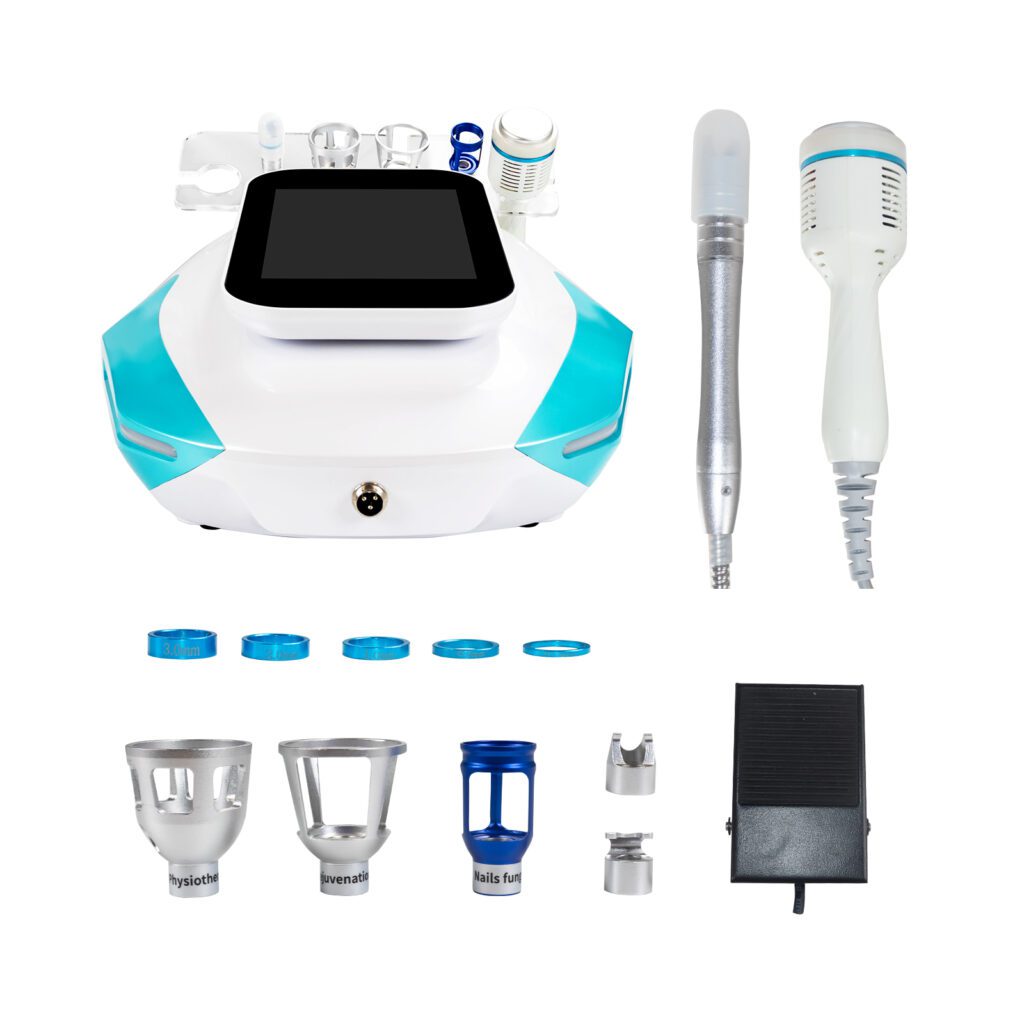
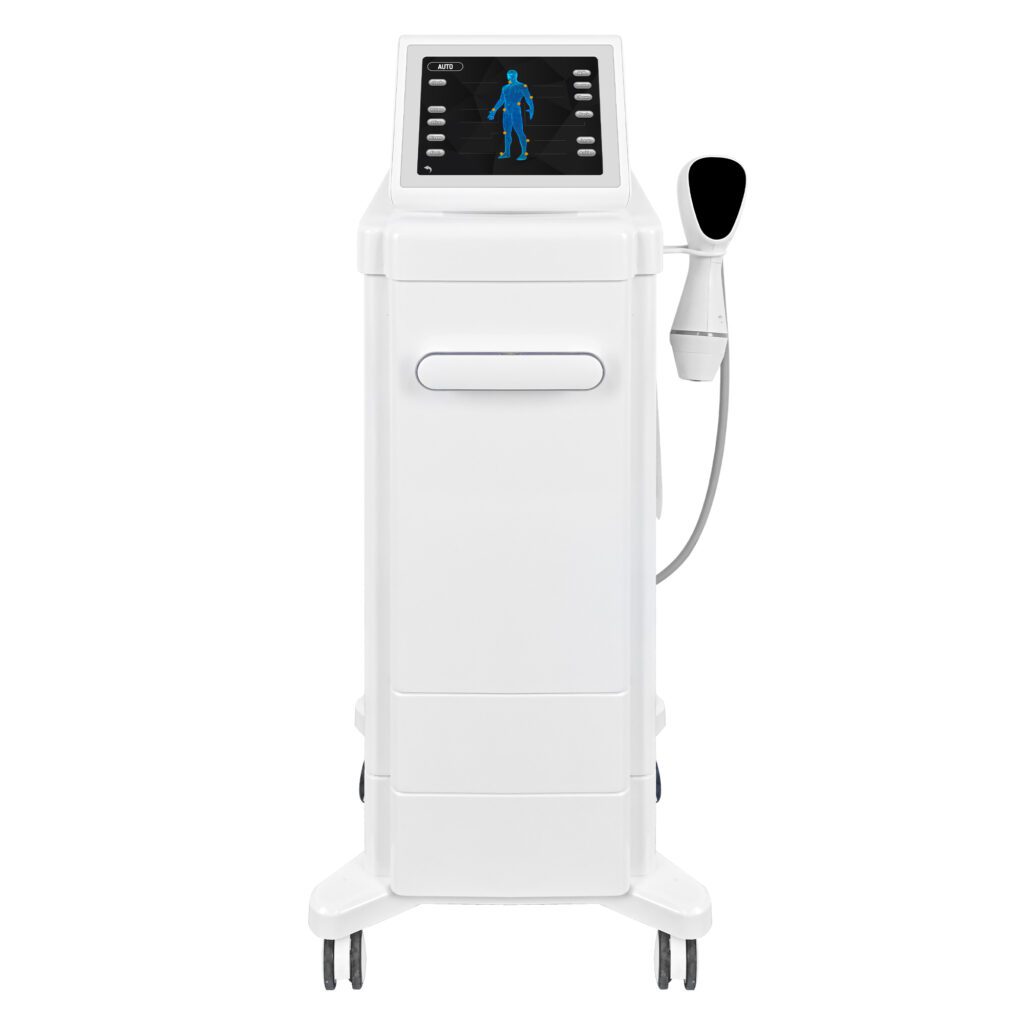
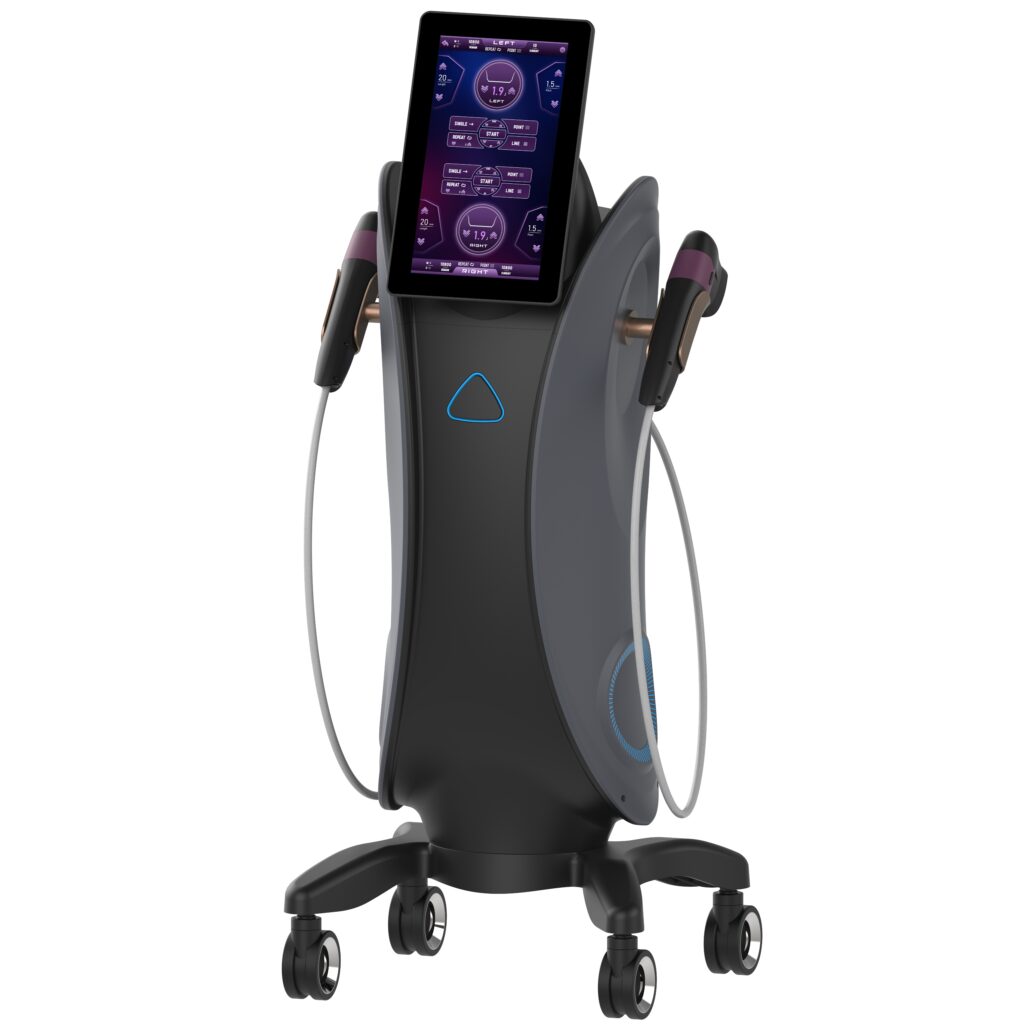
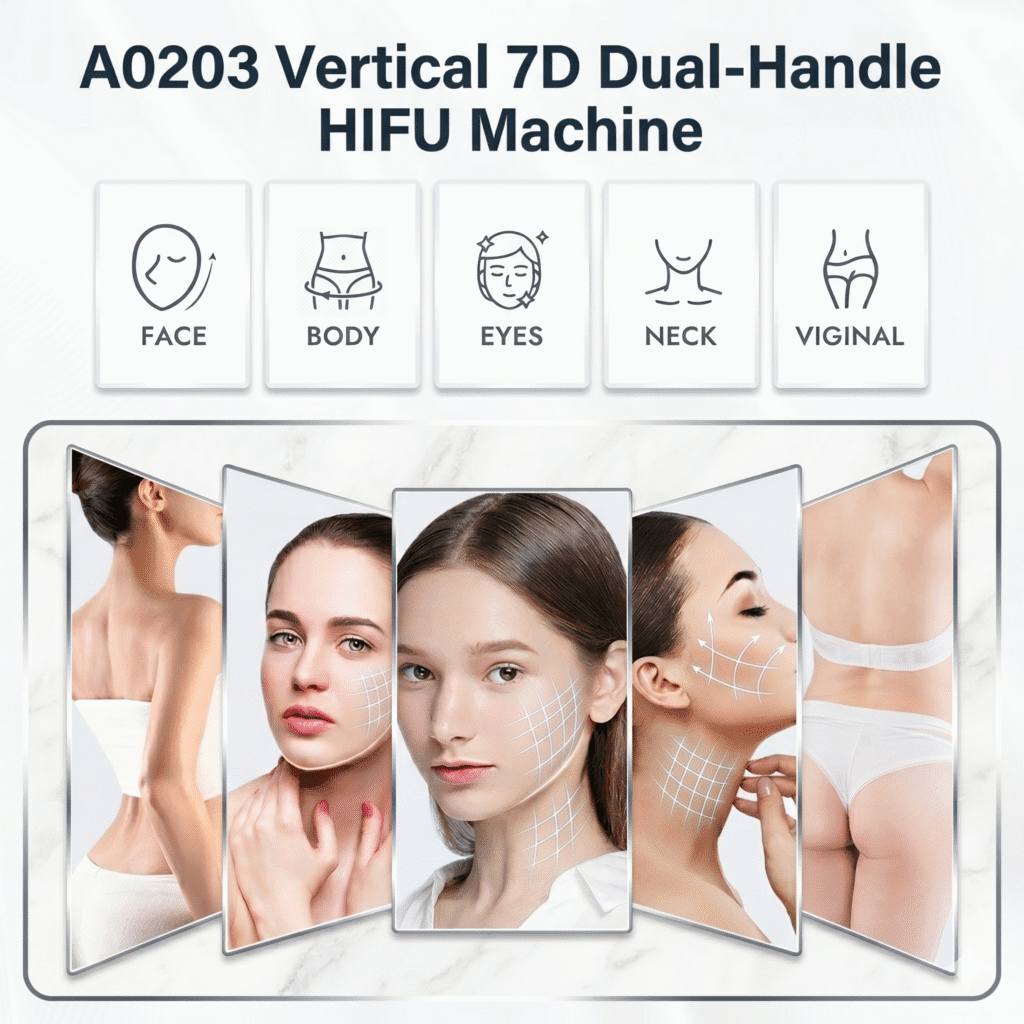
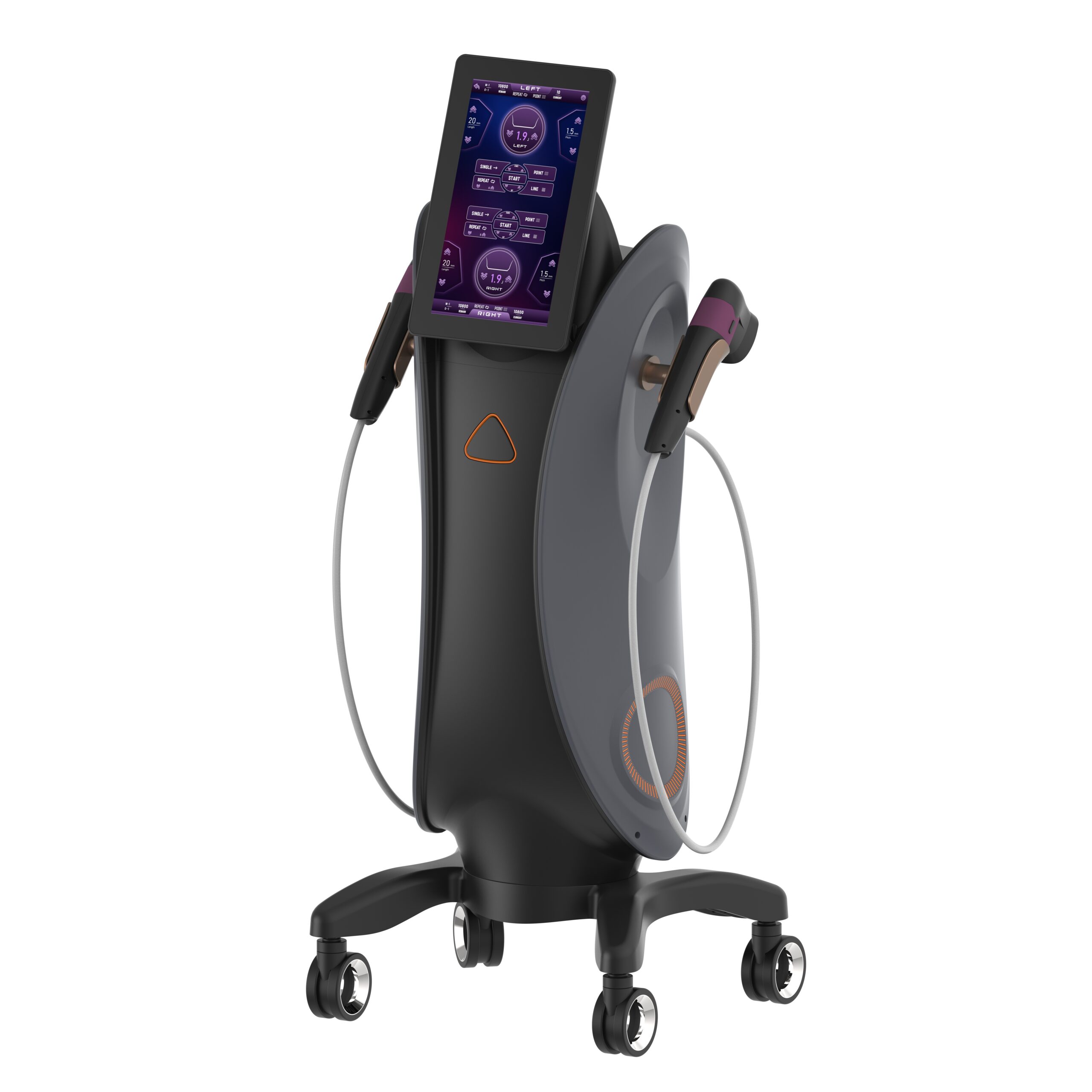
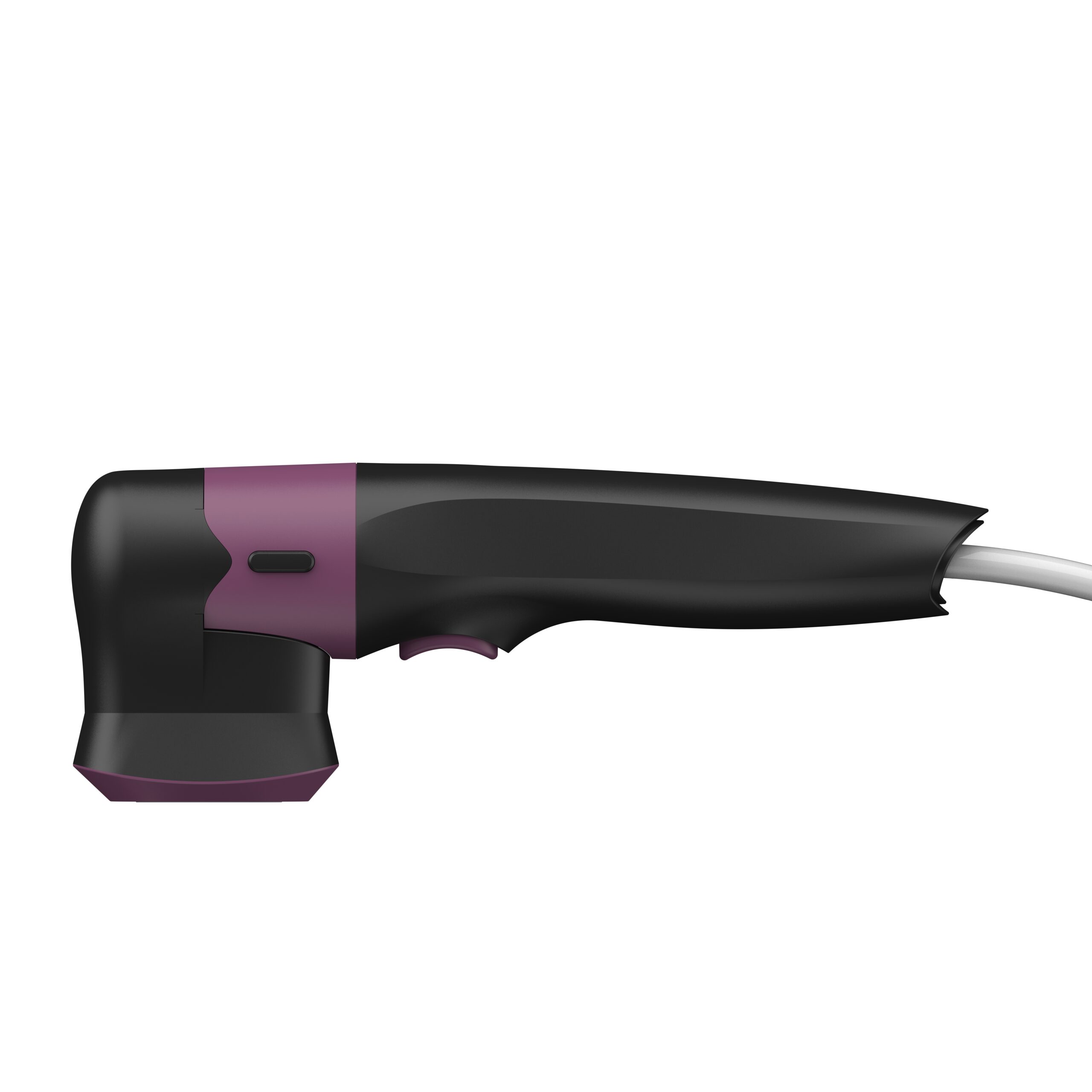
Les systèmes avancés tels que les Machine HIFU verticale à double poignée 7D A0203 L'utilisation de plusieurs cartouches et de profondeurs ajustables améliore l'efficacité du traitement. Ces caractéristiques permettent aux praticiens de cibler différentes couches de la peau avec plus de précision, rendant ainsi la HIFU adaptée aussi bien au lifting du visage qu'au remodelage corporel.
2. Qu'est-ce que l'Ultherapy ?
Ultherapy est un traitement de marque, approuvé par la FDA, qui utilise également l'énergie ultrasonore mais intègre des ultrasons microfocalisés avec imagerie en temps réel.
2.1 Comment fonctionne l'Ultherapy
Ultherapy délivre de l'énergie ultrasonore à des profondeurs précises sous la peau, notamment au niveau du système musculo-aponévrotique superficiel (SMAS), la même couche ciblée lors des liftings chirurgicaux. La particularité d'Ultherapy réside dans sa capacité d'imagerie, qui permet aux praticiens de visualiser les différentes couches de la peau pendant le traitement.
Cette visualisation permet de garantir que l'énergie est distribuée exactement là où elle est nécessaire, améliorant ainsi la sécurité et l'efficacité.
2.2 Principales caractéristiques d'Ultherapy
Imagerie ultrasonore en temps réel pour une précision accrue
Autorisation de la FDA pour des applications de levage spécifiques
Traitement ciblé des couches structurelles profondes
Des résultats cohérents et prévisibles
Grâce à ces caractéristiques, l'Ultherapy est souvent considérée comme la référence en matière de lifting cutané non invasif.
3. Différences technologiques entre HIFU et Ultherapy
Lors de la comparaison HIFU vs UltherapyLa principale différence réside dans leur technologie.
3.1 Systèmes d'imagerie vs systèmes sans imagerie
HIFU : Il s'agit généralement d'une intervention sans imagerie, souvent qualifiée de traitement « à l'aveugle ».
Ulthérapie : Utilise l'imagerie ultrasonore en temps réel pour un ciblage précis
Sans imagerie, les traitements HIFU reposent largement sur l'expérience du praticien, ce qui peut entraîner une variabilité des résultats. En revanche, l'Ultherapy permet une visualisation directe des couches tissulaires, améliorant ainsi la précision.
3.2 Fourniture d'énergie et précision
Ultherapy délivre une énergie ultrasonore microfocalisée avec une profondeur et un positionnement contrôlés, tandis que les systèmes HIFU peuvent varier selon l'appareil et ses réglages. Cette différence influe sur la constance et la prévisibilité du traitement.
3.3 Normalisation des dispositifs
Ultherapy est un système monomarque aux normes strictes, tandis que HIFU regroupe une large gamme d'appareils de qualité variable. Cette variation peut influencer à la fois les résultats et la sécurité.
4. Différences dans les résultats et l'efficacité
L'HIFU et l'Ultherapy visent toutes deux à stimuler la production de collagène, mais leurs résultats peuvent différer en termes de constance et de durée.
4.1 Chronologie des résultats
Les deux traitements produisent des améliorations progressives grâce à la régénération du collagène. Les effets liftants visibles apparaissent généralement en 2 à 3 mois et continuent de s'améliorer avec le temps.
4.2 Séances de traitement
HIFU : Plusieurs séances sont souvent nécessaires pour obtenir des résultats optimaux.
Ulthérapie : Souvent pratiqué en traitement unique avec des séances d'entretien
Cela rend l'Ultherapy plus pratique pour certains patients.
4.3 Pérennité des résultats
Les résultats des deux traitements peuvent durer de 12 à 18 mois, selon l'état de la peau. Cependant, l'Ultherapy tend à offrir des résultats plus constants et durables grâce à la précision de son application d'énergie.
4.4 Zones de traitement
La technique HIFU est couramment utilisée pour les traitements du visage et du corps, tandis que l'Ultherapy est principalement axée sur le visage, le cou et le décolleté.
5. Comparaison des mesures de sécurité
La sécurité est l'un des facteurs les plus importants lorsqu'il s'agit de choisir entre HIFU et Ultherapy.
5.1 Précision et contrôle des risques
L'imagerie en temps réel d'Ultherapy réduit considérablement le risque d'endommager des tissus non ciblés tels que les nerfs, les vaisseaux sanguins ou les couches de graisse.
En revanche, les traitements HIFU sans imagerie peuvent présenter un risque plus élevé de :
Distribution inégale de l'énergie
Surtraitement ou sous-traitement
Dommages accidentels aux tissus environnants
5.2 Effets secondaires
Les deux traitements entraînent un temps de récupération minimal et des effets secondaires similaires, notamment :
Légère rougeur
gonflement temporaire
Légère tendresse
Ces effets disparaissent généralement en quelques heures à quelques jours.
5.3 Dépendance de l'opérateur
Les résultats des ultrasons focalisés de haute intensité (HIFU) dépendent fortement de l'habileté de l'opérateur et de la qualité de l'appareil. Ultherapy, grâce à son système standardisé et à son guidage par imagerie, offre une expérience de traitement plus contrôlée et prévisible.
6. Coût et accessibilité
Le coût est un autre facteur clé dans le HIFU vs Ultherapy comparaison.
6.1 Coût du traitement
HIFU : Généralement plus abordable
Ulthérapie : Coût plus élevé dû à la technologie de pointe et à l'autorisation de la FDA
6.2 Disponibilité
Les appareils HIFU sont largement disponibles dans les cliniques et les centres esthétiques, tandis que l'Ultherapy est généralement proposée dans des cliniques spécialisées avec des praticiens certifiés.
7. Quel traitement choisir ?
Le choix entre HIFU et Ultherapy dépend des besoins individuels, du budget et des objectifs du traitement.
7.1 Choisissez le HIFU si vous :
Vous souhaitez une option plus abordable
Besoin de traitement pour des zones corporelles plus étendues
Sont à l'aise avec plusieurs séances
7.2 Choisissez Ultherapy si vous :
Privilégier la précision et la sécurité
Vous souhaitez des résultats plus cohérents et prévisibles
Je préfère moins de séances de traitement.
Conclusion
HIFU L'Ultherapy et les ultrasons focalisés de haute intensité (HIFU) sont deux traitements non invasifs efficaces pour le raffermissement et le lifting cutané, chacun présentant ses propres avantages. Le HIFU offre flexibilité, accessibilité et un champ d'application plus vaste, notamment grâce aux appareils modernes multi-profondeurs permettant de traiter aussi bien le visage que le corps. L'Ultherapy, quant à elle, se distingue par sa précision et sa constance, grâce à l'imagerie en temps réel qui assure une diffusion d'énergie plus précise et une sécurité accrue. Pour celles et ceux qui privilégient une précision optimale et des résultats prévisibles, l'Ultherapy peut être l'option idéale, tandis que le HIFU demeure une alternative performante et économique pour de nombreux besoins esthétiques.