Beauty device teams often use “verification,” “validation,” “pilot build,” and “production test” as if they describe the same work. They do not. A laboratory test can show that a cooling system meets a requirement without proving that normal operators can assemble it consistently. A successful pilot unit can demonstrate that one machine was completed without proving that every design input was verified. A final inspection can detect selected defects without establishing that the manufacturing process is stable.
Two evidence systems are especially important before release. Design verification determines whether the design outputs meet the approved design inputs. Production validation determines whether the intended manufacturing process can repeatedly produce, configure, inspect, test, trace, and package the approved device under defined conditions.
This guide explains how those systems differ, where they connect, which records each one needs, and how beauty device factories can avoid gaps between an engineering-approved design and a production-ready model. Because terminology differs across companies and applicable quality systems, the article defines “production validation” explicitly rather than assuming one universal document format.
Resumen ejecutivo
Beauty device teams should manage design verification and production validation as connected but separate decisions:
- Design verification asks whether the design meets its inputs. Requirements, interfaces, limits, safety controls, functions, performance, software, and physical characteristics need objective evidence.
- Production validation asks whether the factory process can reproduce the approved design. Materials, suppliers, equipment, tools, people, instructions, software loading, inspections, testing, traceability, and packaging need controlled evidence.
- Both require an exact baseline. Model, hardware, software, handles, accessories, documents, methods, deviations, and configuration must be identifiable.
- A prototype is not a production process. Engineering-built units can support design evidence but may hide assembly, training, fixture, supplier, and configuration weaknesses.
- A pilot run is not automatically process validation. Its plan, conditions, sample coverage, criteria, data, deviations, and approvals must support the production-validation conclusion.
- Final testing cannot replace every upstream control. Some process results cannot be fully established by inspecting the finished machine alone.
- Failures need separate ownership. A design failure, material defect, process weakness, measurement problem, and operator execution error require different corrections.
- Changes can affect both evidence systems. A new supplier, handle, board, software build, work instruction, fixture, label, or package may trigger reverification, production revalidation, or both.
- Release decisions must be bounded. Approval should name the exact product, configuration, process, site, equipment, supplier, documents, and conditions supported by the evidence.
- Routine monitoring follows validation. Production records, yields, defects, rework, test data, complaints, and service information show whether the validated state remains effective.
The objective is a continuous evidence chain: approved inputs lead to verified design outputs, verified outputs lead to controlled manufacturing processes, and production records confirm that released devices remain within the authorized baseline.
1. Define the Terms before Planning Evidence
“Production validation” can refer to different activities in different organizations. It may mean manufacturing-process validation, production-line qualification, pilot-production approval, process-performance confirmation, or a broader manufacturing-readiness package.
For this article:
- Design verification means demonstrating that specified design outputs satisfy approved design inputs.
- Production validation means demonstrating that a defined manufacturing process, using authorized resources and controls, can repeatedly produce the approved product within established requirements.
- Product validation means confirming that the completed product supports intended users and intended application under representative conditions.
- Production testing means routine inspection or testing applied to manufactured units or lots according to a released control plan.
Factories should place these definitions in project plans so departments and buyers do not interpret the same status differently.
2. The Difference in One Comparison
| Dimensión | Design verification | Production validation |
|---|---|---|
| Primary question | Does the design meet approved design inputs? | Can the defined factory process repeatedly reproduce the approved design? |
| Object being evaluated | Product design and its outputs | Manufacturing process and supporting production system |
| Typical baseline | Drawings, specifications, software, interfaces, requirements | BOM, suppliers, equipment, fixtures, instructions, operators, tests, software loading, packaging |
| Typical samples | Controlled design-representative units and components | Units produced through intended production conditions |
| Main owners | Engineering, systems, software, quality, validation | Manufacturing engineering, production, quality, supplier quality, configuration control |
| Common evidence | Test, inspection, analysis, calculation, review, comparison | Process runs, equipment records, process parameters, yields, inspection data, traceability, rework and defect evidence |
| Decisión | Design requirement verified, failed, limited, or requiring more evidence | Process validated, conditionally approved, limited, repeated, or not validated |
| Ongoing control | Engineering change and regression review | Process monitoring, maintenance, training, material control and revalidation review |
The two systems meet at the released product baseline. Production should not validate a moving design, and engineering should not assume that a verified design can be manufactured without process evidence.
3. Place Both Activities in the Development Lifecycle
| Development stage | Main evidence question | Typical decision |
|---|---|---|
| Requirements | What must the product and process achieve? | Inputs approved |
| Design development | How will the requirements be implemented? | Design direction selected |
| Design verification | Do outputs meet inputs? | Design evidence accepted or corrected |
| Product validation | Does the complete device support intended users and application? | Intended-use conclusion accepted or limited |
| Manufacturing transfer | Are BOMs, instructions, fixtures, tests, suppliers, software, and records ready? | Production package authorized for evaluation |
| Production validation | Can the intended process repeatedly create conforming units? | Process approved, limited, repeated, or rejected |
| Production release | Are product, process, documentation, packaging, service, and commercial configuration aligned? | Defined release baseline authorized |
| Routine production | Does the process remain within the validated state? | Continue, contain, correct, change, or revalidate |
Calendar overlap is possible. The decisions and records should still remain distinguishable.
4. Start with Approved Design Inputs
Design verification cannot be stronger than the requirements it evaluates. Inputs may cover:
- intended functions and modes;
- measurable performance and limits;
- electrical, mechanical, thermal, optical, RF, ultrasound, vacuum, fluid, motion, or cooling characteristics as relevant;
- software behavior and parameter boundaries;
- interfaces between console, handles, applicators, accessories, and consumables;
- dimensions, mass, stability, and physical arrangement;
- environmental and storage conditions;
- cleaning and maintenance requirements;
- labels, indicators, warnings, and user information;
- packaging and transport requirements;
- production, inspection, test, and service needs; and
- market-specific technical or regulatory requirements identified by qualified specialists.
Words such as reliable, powerful, premium, easy, safe, or durable need measurable meaning before they can be verified.
5. Map Every Input to a Verification Method
| Verification method | Uso adecuado | Example evidence |
|---|---|---|
| Inspection | Dimensions, identity, construction, labels, connections, visual attributes | Inspection record against drawing or specification |
| Test | Functional behavior or performance under defined conditions | Protocol, raw data, result, and conclusion |
| Analysis | Calculated, simulated, or logically derived compliance | Approved calculation, model, assumptions, and review |
| Demostración | Observable function with controlled acceptance criteria | Recorded demonstration and result |
| Comparación | Conformance to an approved reference or equivalent design | Defined comparison basis and gap assessment |
| Revisar | Structured evaluation of documents, code, or design outputs | Review record, participants, findings, and approval |
The selected method should be capable of resolving the requirement. A visual inspection cannot prove a thermal limit, and a functional demonstration cannot establish repeated-use durability.
6. Build Requirement-to-Evidence Traceability
Each design input should link to:
- requirement identifier and revision;
- rationale and source;
- acceptance criterion;
- verification method;
- protocol or procedure;
- sample and configuration;
- test equipment or analysis tool;
- actual result;
- deviation or anomaly;
- conclusion; and
- reviewer and approval.
Traceability exposes untested requirements, duplicated tests, unsupported conclusions, and evidence collected on the wrong configuration.
7. Create a Design Verification Plan
The plan should define:
- objective and scope;
- product and configuration baseline;
- requirement coverage;
- methods and protocols;
- sample rationale;
- test conditions and boundaries;
- test equipment and data systems;
- sequence and dependencies;
- responsibilities;
- acceptance criteria;
- failure, deviation, and retest rules;
- report structure; and
- approval authority.
The plan should be approved before formal execution. Exploratory engineering data can inform the plan but should not be relabeled as controlled verification without assessing method, sample, conditions, and traceability.
8. Identify the Verification Article Precisely
A verification article is more than a unit serial number. Record:
- model and commercial configuration;
- hardware, board, and assembly revisions;
- software, firmware, interface, language, and parameter versions;
- handles, applicators, tips, cartridges, and accessories;
- component or supplier revisions relevant to the test;
- calibration or setup state;
- deviations, repairs, or rework;
- prior test exposure; and
- relationship to the proposed production baseline.
If several tests use the same unit, the team should understand whether earlier testing changed its condition.
9. Select Representative and Challenging Samples
Sample selection should match the requirement and product variation. Consider:
- nominal and boundary configurations;
- tolerances that influence the result;
- multiple suppliers or material variants;
- different handles or applicators;
- software and hardware combinations;
- voltage or regional versions;
- new and reused components where relevant;
- expected environmental extremes;
- previous test exposure; and
- destructive versus nondestructive methods.
There is no universal sample count for every verification. The plan should explain how the chosen samples represent the design question and applicable requirements.
10. Control Verification Conditions
The protocol should define relevant conditions such as:
- power input and utilities;
- temperature, humidity, ventilation, and lighting;
- warm-up and stabilization;
- load, duty cycle, repetition, and recovery time;
- fluid, vacuum, coolant, consumable, or accessory state;
- software setup and parameter boundaries;
- test sequence;
- measurement points and sampling rate;
- preconditioning; and
- stopping or safety rules.
Missing conditions make results difficult to interpret or reproduce.
11. Control Measurement and Test Resources
Verification depends on the ability to trust the measurement. Define:
- equipment identity;
- calibration or verification status as applicable;
- measurement range and resolution;
- method uncertainty or limitations where relevant;
- fixture and sensor placement;
- software or data-acquisition version;
- setup check;
- operator qualification;
- raw-data storage; and
- response to equipment failure or out-of-status discovery.
Passing data from an unsuitable measurement system does not demonstrate that the design requirement was met.
12. Challenge Interfaces, Not Only Subsystems
Beauty device failures often occur where subsystems meet. Verification may need to cover:
- mains input to power distribution;
- controller to power or energy module;
- console to handle communication;
- handle identity to software mode;
- parameter selection to output behavior;
- cooling capacity to duty cycle;
- vacuum, pressure, or flow to tubing and seals;
- cartridge or tip identity to lifecycle controls;
- warnings to fault response;
- physical connector to electrical pin assignment; and
- software version to regional language and labeling.
Subsystem evidence should not be assumed to prove complete-system integration.
13. Separate Verification Failure from Test-System Failure
A failed result can have several causes:
| Cause class | Example response |
|---|---|
| Design does not meet input | Open design issue, assess risk, change design, repeat affected evidence |
| Sample not representative | Quarantine conclusion, determine sample status, select correct article |
| Test method is inadequate | Revise and approve protocol, assess prior data, repeat as needed |
| Measurement equipment problem | Contain affected results, investigate status, restore valid measurement |
| Setup or execution error | Document deviation, assess validity, retrain or clarify method |
| Acceptance criterion is ambiguous | Return to requirement owner; do not invent a passing interpretation after testing |
The investigation should preserve the original result. Deleting an inconvenient failure destroys the evidence trail.
14. Complete the Design Verification Report
The report should state:
- approved objective and requirement coverage;
- actual samples and configurations;
- method and conditions;
- equipment and setup;
- raw data and analysis;
- results against acceptance criteria;
- anomalies, deviations, failures, and retests;
- limitations;
- requirement-level conclusions;
- open actions; and
- reviews and approvals.
A summary such as “all tests passed” is insufficient when the reader cannot reconstruct which design, methods, or exceptions produced the conclusion.
15. Define What Production Validation Must Prove
Production validation evaluates a manufacturing system rather than only the product design. The defined system may include:
- factory site and production area;
- approved suppliers and materials;
- receiving and storage controls;
- workstations and material flow;
- equipment, tools, fixtures, gauges, and utilities;
- operators, inspectors, programmers, and packers;
- work instructions and process parameters;
- software loading and configuration control;
- in-process inspection and testing;
- aging or extended operation where defined;
- labels, manuals, accessories, and packaging;
- nonconformance, rework, and deviation controls; and
- unit or lot traceability.
The conclusion should apply only to the defined combination of these elements.
16. Decide Which Processes Require Formal Validation
Some manufacturing outputs can be fully checked through suitable inspection or testing. Other process results may not be completely verified afterward, or defects may become visible only after use, aging, transport, or integration.
The factory should assess:
- whether the finished output can be fully and reliably inspected;
- whether the test itself can detect the relevant defect;
- whether inspection would damage the product;
- whether every unit can reasonably be tested;
- whether hidden process variables influence later performance;
- whether applicable quality or regulatory requirements prescribe validation; and
- whether risk justifies additional process evidence.
Qualified quality and regulatory specialists should determine the applicable approach. This article does not prescribe one universal validation framework for every beauty device or market.
17. Create a Production Process Map
Map the actual manufacturing flow from material receipt to released package. A beauty device process may include:
- material receiving and identification;
- incoming inspection;
- storage and kitting;
- subassembly preparation;
- PCB programming or configured-part preparation;
- mechanical, electrical, fluid, cooling, or module assembly;
- in-process checks;
- software loading and parameter setup;
- functional test;
- aging or extended operation where defined;
- final inspection;
- label, manual, handle, and accessory reconciliation;
- packaging; and
- final release and traceability review.
The map should show rework loops, hold points, quarantine, and interfaces between departments.
18. Identify Critical Process Outputs and Inputs
| Process output | Influencing inputs |
|---|---|
| Correct configured model | BOM, order code, hardware, software, handles, labels, manual, pack list |
| Reliable electrical assembly | components, soldering or connection method, torque, routing, inspection, test |
| Controlled cooling path | pump, fan, tubing, coolant, seals, filling, air removal, leak check, flow test |
| Consistent vacuum or fluid behavior | bottles, filters, tubing, valves, connections, setup, cleaning, final test |
| Correct handle or applicator relationship | part identity, connector, software mapping, calibration or pairing, pack audit |
| Traceable final device | serial number, critical component records, software version, test results, deviations, disposition |
Production validation should connect measurable process inputs to the outputs they influence.
19. Establish Production-Validation Entry Criteria
Entry criteria may include:
- design baseline approved for the planned evaluation;
- required design verification sufficiently complete;
- product-validation status understood;
- BOM, drawings, specifications, and software controlled;
- suppliers and materials identified;
- equipment, tools, fixtures, and utilities ready;
- measurement and test resources controlled;
- work instructions and acceptance criteria approved;
- operators and inspectors trained;
- traceability, deviation, and nonconformance systems available;
- validation protocol approved; and
- open items assessed for impact.
Validating an unstable design or incomplete production package produces evidence that expires before release.
20. Define the Production Baseline
Record the exact state being validated:
- product model and configuration;
- BOM and drawing revisions;
- approved suppliers and material revisions;
- equipment and fixture identity;
- workstation or line;
- process parameters and limits;
- software-loading package;
- production-test version;
- inspection plan;
- work-instruction revisions;
- operator qualification state;
- labels, manuals, accessories, and packaging; and
- authorized deviations.
This baseline becomes the reference for routine production and later change review.
21. Qualify Equipment, Tools, Fixtures, and Utilities
Production resources should be suitable for their intended function. Depending on the process and applicable quality system, factories may organize evidence into installation, operational, and performance qualification stages or use another controlled structure.
Evidence can address:
- correct installation and utilities;
- asset identity and revision;
- operating range and controls;
- alarms, interlocks, and fault behavior;
- setup and changeover;
- maintenance and calibration;
- software or program version;
- fixture repeatability and wear;
- permitted users; and
- backup and recovery.
The chosen terminology matters less than proving that the resource performs as required in the defined process.
22. Confirm Materials and Supplier Conditions
Production validation should use intended materials from approved sources as far as practical. Record:
- supplier and manufacturing source;
- part number and revision;
- lot or serial identity where relevant;
- incoming-inspection status;
- material or cosmetic standard;
- programmed component state;
- storage and shelf-life condition where applicable;
- supplier deviations;
- substitutions; and
- transport or handling condition.
Hand-selected engineering samples may not represent normal supplier output.
23. Validate Software Loading and Configuration Control
A production process must create the ordered device rather than merely a functioning device. Evaluate:
- approved firmware, application, interface, and parameter packages;
- relationship between hardware and software;
- language and regional selection;
- handle or module enablement;
- loading permissions;
- version or checksum confirmation;
- recovery after interrupted loading;
- record linked to the device serial number;
- prevention of unauthorized builds; and
- final user-visible identity check.
Configuration errors can escape a generic function test when the device powers on but contains the wrong feature set.
24. Include Intended Operators and Inspectors
Engineers can demonstrate that a process is possible while hiding its dependence on expert judgment. Production validation should use the intended roles and approved training as far as practical.
Registro:
- role and qualification;
- training revision;
- supervised-practice status;
- workstation authorization;
- questions or ambiguous instructions;
- unplanned engineering assistance; and
- variation between operators or shifts where relevant.
If success requires continuous engineering interpretation, the process is not ready for normal execution.
25. Approve Production Acceptance Criteria
Criteria should support the production-validation decision. They may address:
- process parameters remaining within approved limits;
- completion of required units or lots;
- first-pass results;
- defect and nonconformance patterns;
- rework and retest;
- equipment or fixture interruption;
- cycle-time or capacity evidence where relevant;
- configuration accuracy;
- inspection and record completeness;
- traceability;
- packaging accuracy; and
- absence of unresolved findings that undermine process control.
There is no universal yield percentage, capability value, or batch quantity suitable for every beauty device process. Criteria need technical and quality justification.
26. Select Representative Production Runs
The protocol should explain how the planned runs represent expected variation. Consider:
- material lots;
- suppliers;
- operators and shifts;
- equipment or fixture sets;
- product configurations;
- software and language versions;
- handles and accessories;
- startup, steady-state, and changeover conditions;
- normal environmental variation; and
- process boundaries.
One carefully supervised unit can uncover problems but rarely demonstrates a repeatable process by itself.
27. Record Actual Process Data
Useful production-validation data can include:
- unit and configuration identity;
- material lots or critical-component serials;
- equipment, fixture, and program version;
- operator and date;
- process parameters;
- in-process inspection results;
- functional and aging-test records;
- first-pass, retest, and rework status;
- cycle and waiting times;
- deviations and nonconformities;
- final disposition; and
- package and release status.
Summaries should retain links to the unit-level or lot-level evidence from which they were derived.
28. Evaluate the Measurement System in Production
Routine inspection and test systems must produce meaningful decisions. Review:
- repeatability across repeated checks;
- reproducibility across operators or stations where relevant;
- resolution relative to the acceptance limit;
- fixture and connection influence;
- setup verification;
- false pass and false fail risk;
- software and data integrity;
- result retention; and
- response to an invalid or out-of-status instrument.
A stable process can appear unstable when the measurement system is poor, while an unstable process can appear acceptable when the test lacks sensitivity.
29. Separate Process Validation from Routine Production Testing
| Production validation | Routine production testing |
|---|---|
| Establishes evidence that the defined process can repeatedly produce conforming output | Applies released checks to units or lots during normal production |
| Challenges variation, boundaries, resources, and process controls | Confirms selected characteristics for ongoing acceptance |
| Uses an approved validation protocol and report | Uses controlled work instructions, test procedures, and records |
| Leads to process approval, limitation, correction, or repetition | Leads to accept, reject, hold, rework, or investigate decisions |
| May be repeated after significant changes | Continues according to the production control plan |
Testing every finished unit can be an important control. It does not automatically validate every upstream assembly or configuration process.
30. Control Nonconformance, Rework, and Retest
Production validation should make problems more visible, not repair them out of the record. Each exception should identify:
- affected unit, lot, and configuration;
- requirement or process limit;
- discovery point;
- immediate containment;
- cause investigation;
- disposition authority;
- rework or repair method;
- retest rule;
- impact on other units; and
- effect on the validation conclusion.
Final-pass yield after repeated repair is different evidence from first-pass conformance.
31. Validate Packaging, Documentation, and Pack-Out
The production process extends beyond the assembled console. Confirm that normal personnel can consistently create the complete released package with:
- correct machine and configuration;
- mangos y aplicadores;
- tips, cartridges, accessories, and consumables;
- cables and region-specific items;
- labels and serial-number relationship;
- manual and language version;
- protective caps, films, restraints, and cushioning;
- carton and insert revision; and
- final pack-list reconciliation.
Packaging errors can create a nonconforming commercial product even when the machine passes functional testing.
32. Complete the Production-Validation Report
The report should include:
- objective, process scope, and exclusions;
- product and manufacturing baseline;
- protocol and approved changes;
- equipment, materials, suppliers, operators, and conditions;
- runs, units, and configurations completed;
- actual process and inspection data;
- results against acceptance criteria;
- nonconformities, deviations, rework, retest, and scrap;
- investigations and corrective actions;
- limitations and residual risks;
- validated scope and operating boundaries;
- ongoing monitoring requirements; and
- reviewers and approval.
The report should not claim that the entire factory is validated when only one model, line, supplier set, and process configuration were evaluated.
33. Connect Verification and Production Evidence
| Design evidence | Production implementation |
|---|---|
| Dimension and tolerance verified | Supplier specification, incoming check, fixture, assembly control |
| Cooling requirement verified | Pump, tubing, fill, air removal, flow check, functional test |
| Software function verified | Controlled build, loading station, permissions, version record, final check |
| Handle compatibility verified | Part identity, kitting rule, connector check, software mapping, pack audit |
| Label and warning verified | Controlled artwork, printing source, placement instruction, final inspection |
| Packaging requirement verified | Released materials, packing sequence, pack audit, shipping control |
This connection converts a verified design characteristic into a reproducible manufacturing control.
34. Use Clear Release Statuses
Possible decisions include:
- design verified and production validated for the defined scope;
- design verification complete while production validation remains open;
- production evidence acceptable for one configuration but not another;
- conditional or limited production under explicit temporary controls;
- targeted repetition after a process correction;
- reverification required after a design change;
- broader revalidation required after a material process change; or
- release blocked.
The status should name the baseline, conditions, exclusions, open actions, authority, and next review point.
35. Control Changes and Revalidation
Review both evidence systems when changing:
- product requirement or intended application;
- hardware, board, component, material, or supplier;
- handle, applicator, tip, cartridge, or accessory;
- software, firmware, parameter, or language;
- connector, tube, cooling, vacuum, or fluid path;
- manufacturing site, line, equipment, fixture, or tool;
- process sequence or parameter;
- test method or acceptance criterion;
- operator training;
- label, manual, pack list, or packaging; or
- rework and repair method.
The impact assessment should state whether to reverify the design, revalidate the product, repeat production validation, update routine controls, or use a justified bridge to existing evidence.
36. Monitor the Validated State after Release
Ongoing evidence can include:
- process-parameter trends;
- first-pass and final-pass results;
- defects by station and cause;
- rework, repair, retest, and scrap;
- supplier nonconformance;
- equipment downtime and maintenance;
- calibration or fixture status;
- configuration errors;
- traceability completeness;
- complaints and service failures; and
- recurring support questions.
Define alert and action thresholds. A validation report is not a permanent guarantee when materials, equipment, people, software, or performance change.
37. A0648 Example: From Fluid Design Verification to Production Control
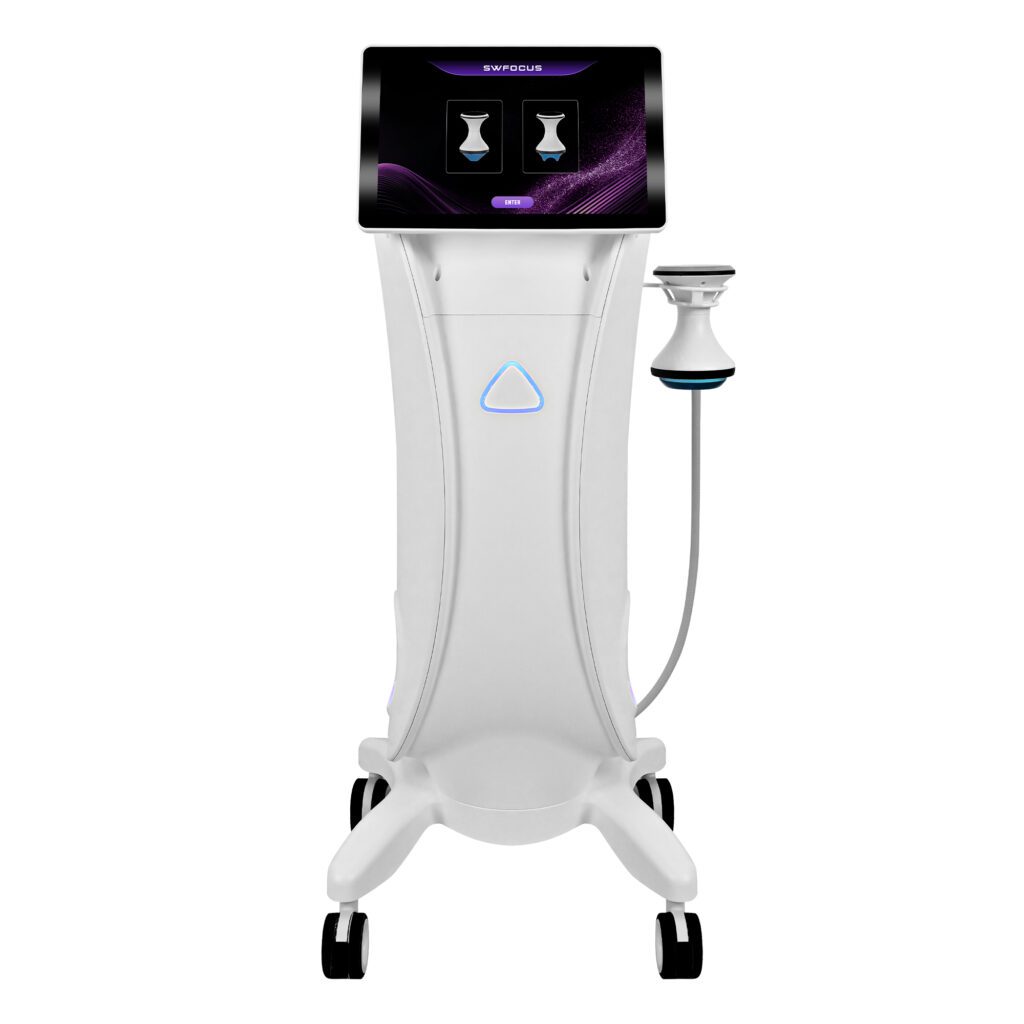
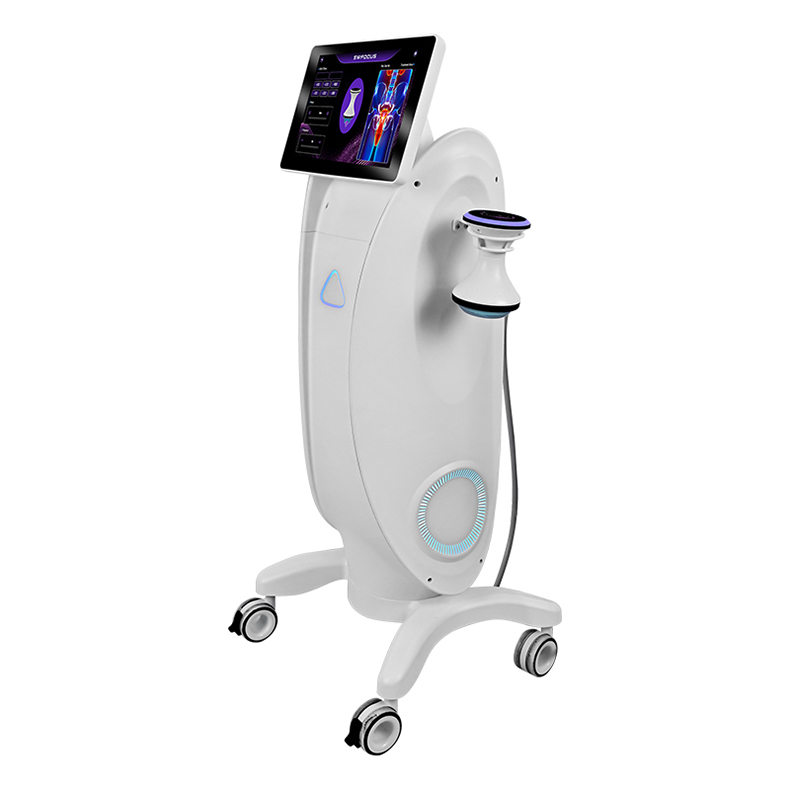
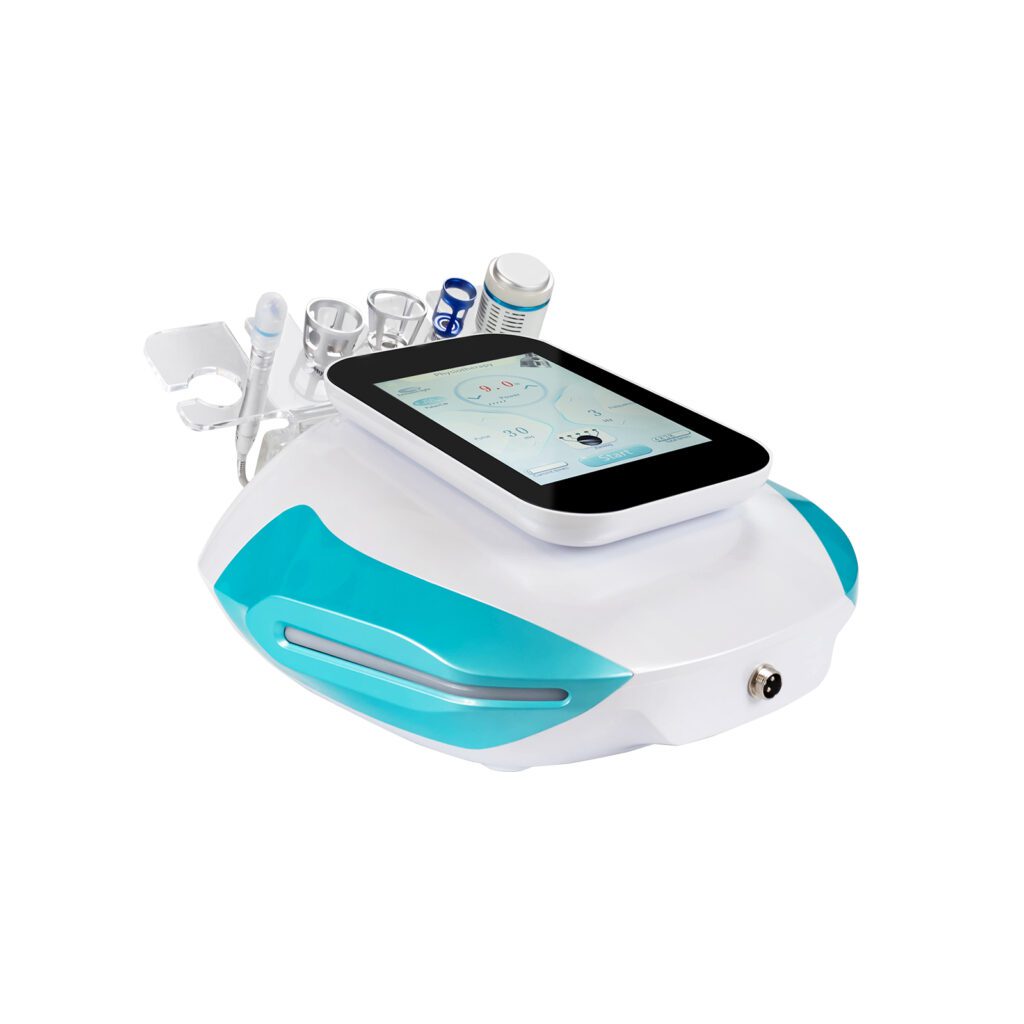
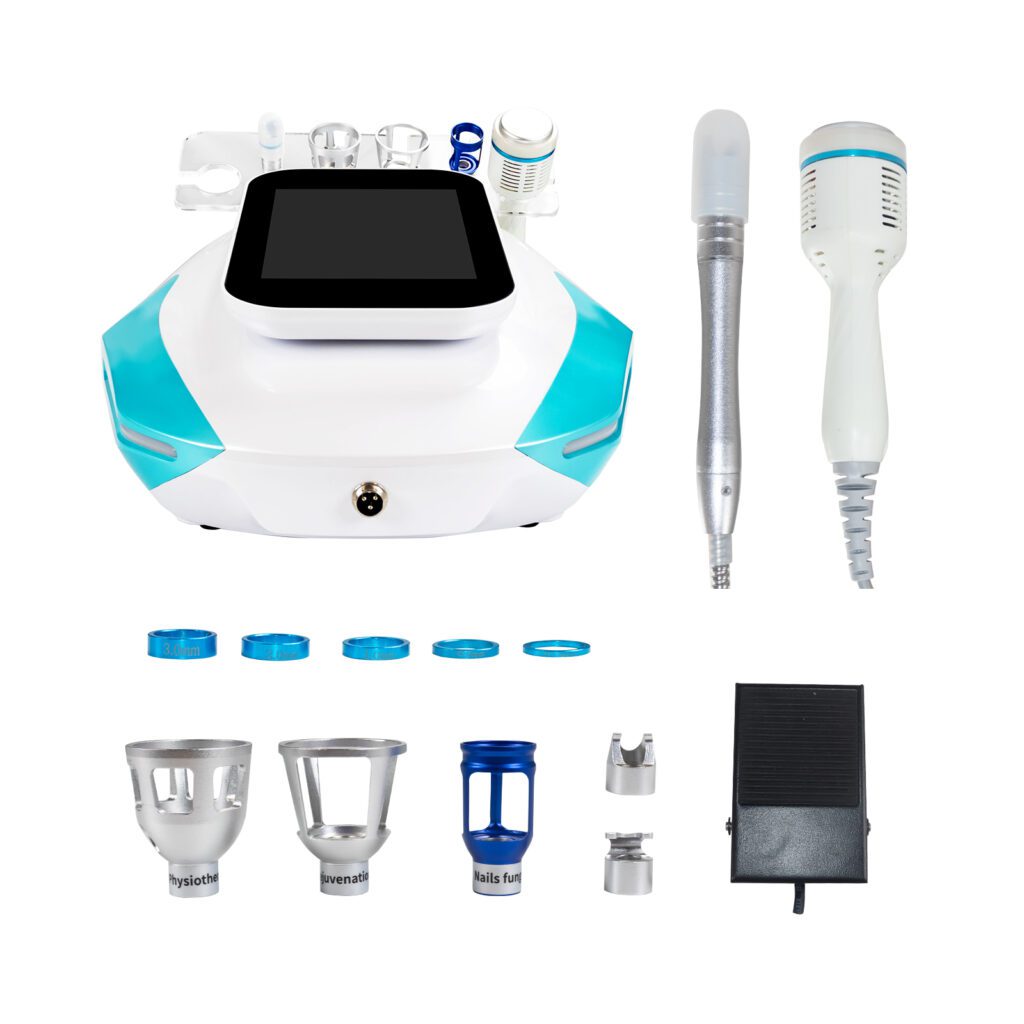
El SHEFMON A0648 hydro microdermabrasion system page presents a nine-function facial platform associated with cleansing, extraction, hydration, vacuum, and related functions.
For a comparable multifunction facial system, design verification could evaluate defined vacuum and fluid behavior, tubing and bottle interfaces, handle connections, software-function mapping, cleaning information, and accessory requirements.
Production validation could then examine whether intended suppliers, parts, assembly sequence, tube routing, seals, filling, leak checks, handle kitting, software loading, final testing, cleaning state, and pack-out repeatedly reproduce the verified configuration. These examples illustrate the evidence chain and do not describe confidential SHEFMON methods or results.
38. A0426 Example: Verifying Configuration and Validating Its Manufacture
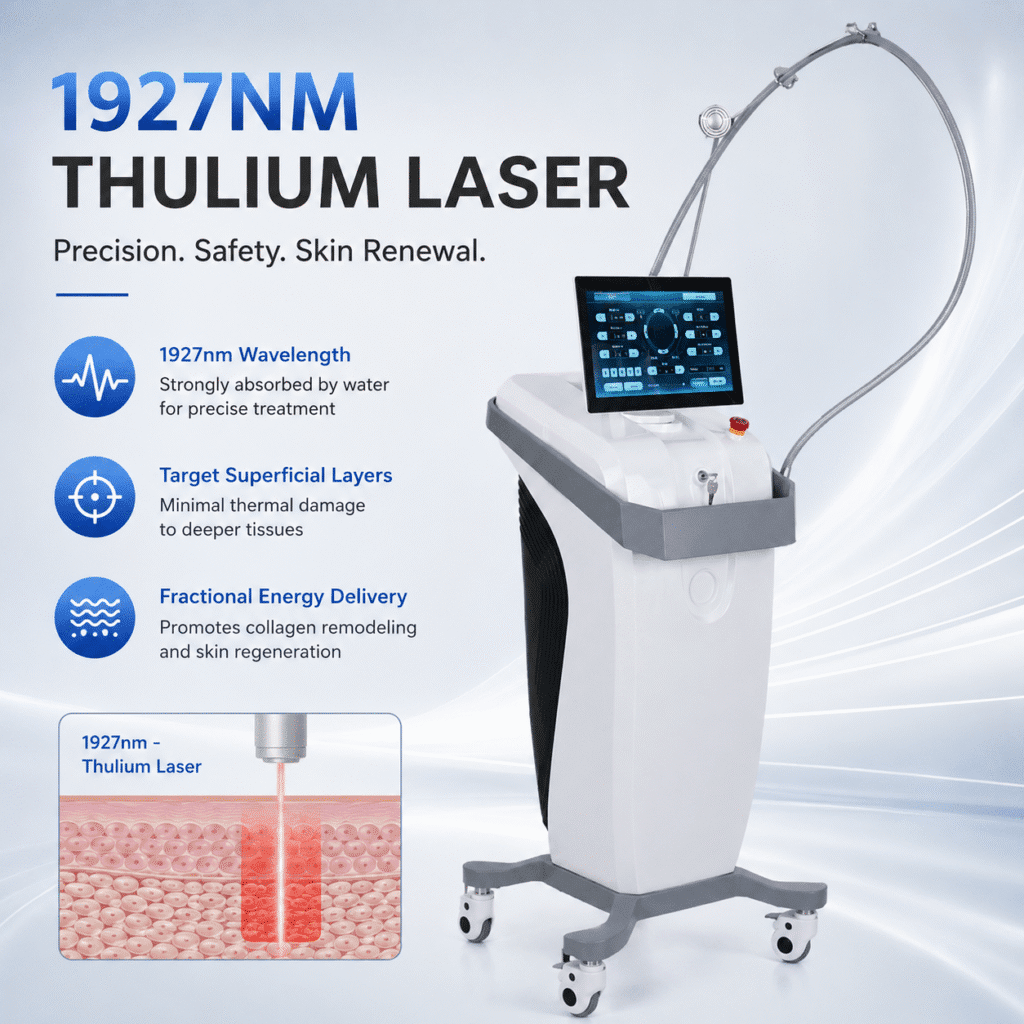
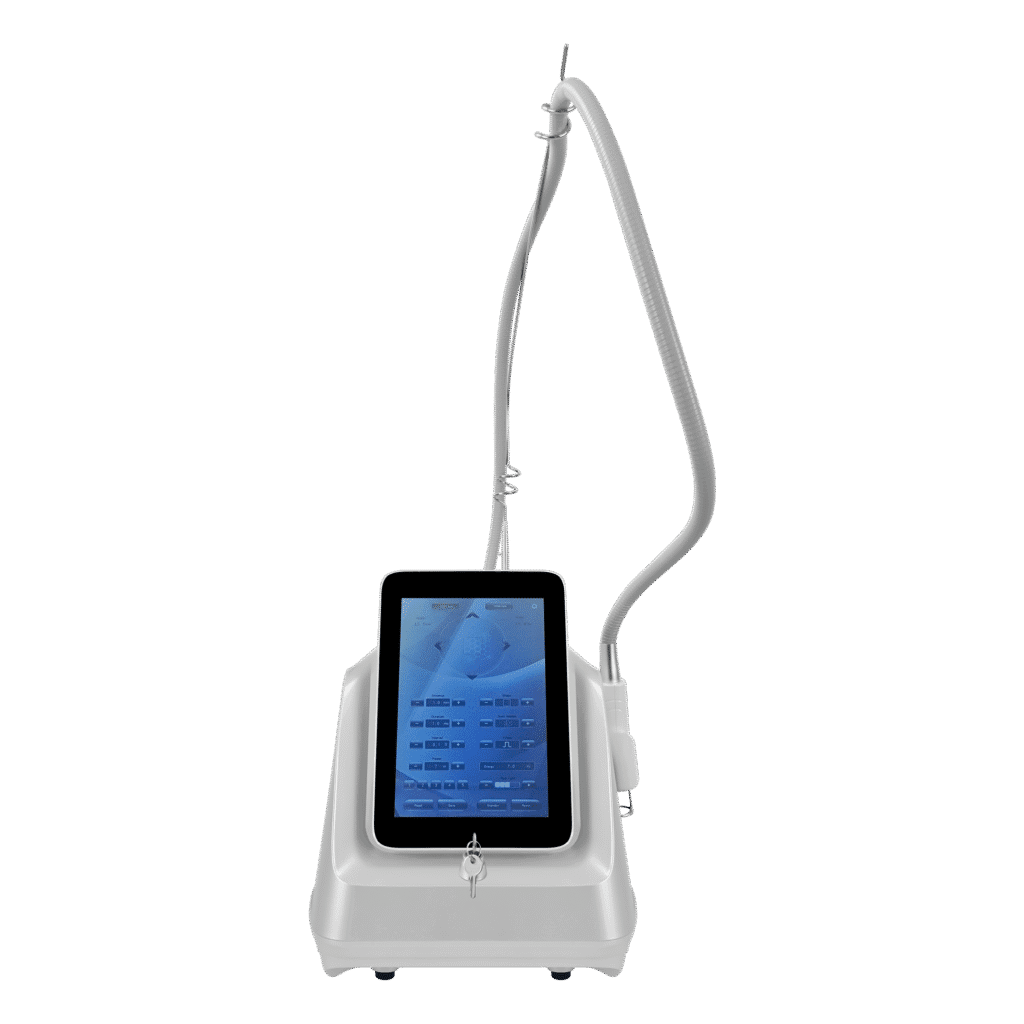
El oficial SHEFMON A0426 diode laser hair-removal system page lists wavelength and spot-size choices together with cooling, touchscreen, and language information.
For a product category with these options, design verification could address requirements for the approved wavelength configuration, handpiece, spot size, cooling, software, interface, and language behavior.
Production validation would focus on whether order codes, BOMs, handpiece identity, suppliers, assembly, cooling setup, software loading, parameter packages, labels, manuals, functional tests, and final configuration checks create the ordered version consistently. One validated configuration should not automatically authorize every possible combination.
39. B0155 Example: Multi-Module Evidence Boundaries
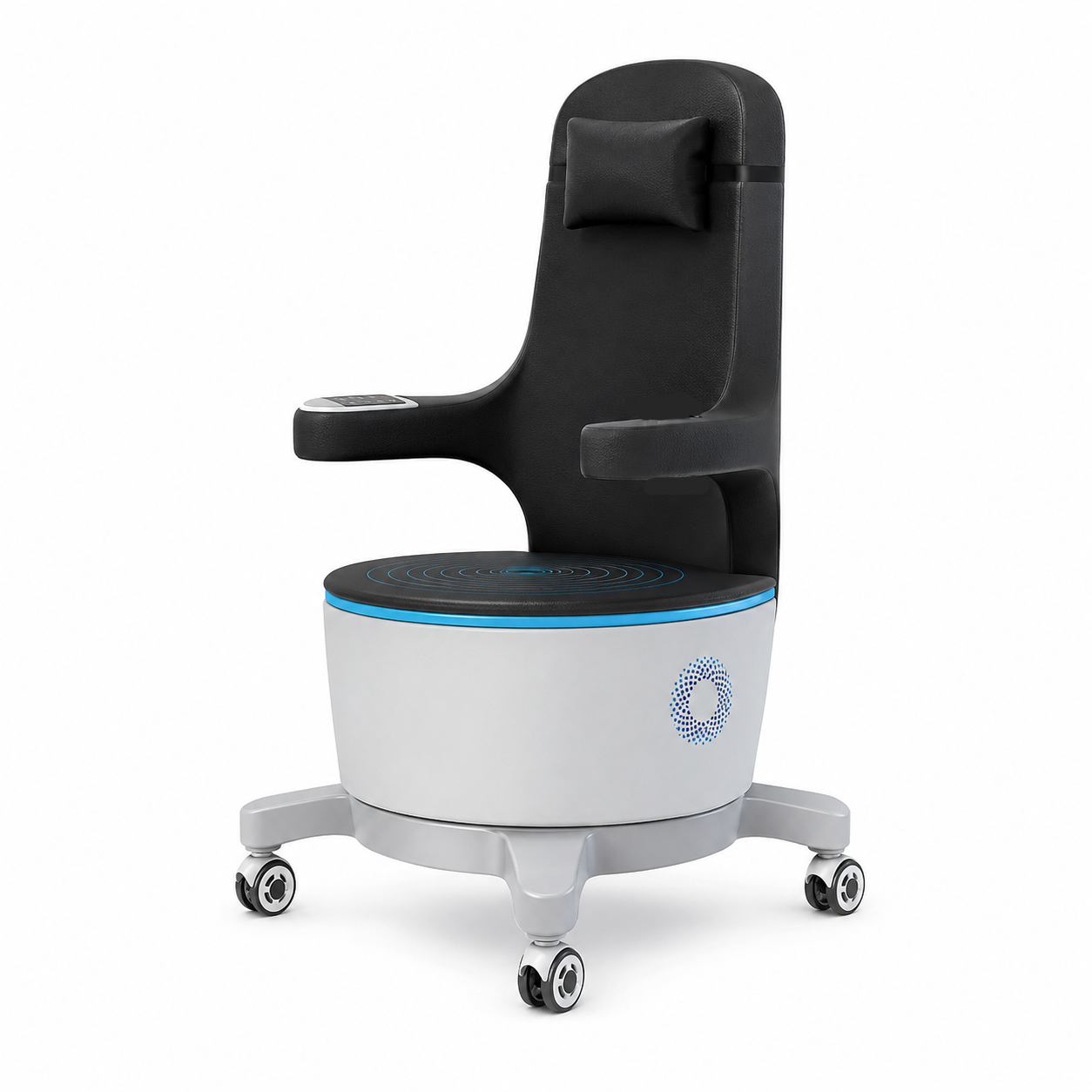
On the B0155 Endoscopia de escritorio Velapro page, SHEFMON identifies a desktop system that combines vacuum roller, RF, rotating massage, and 80K cavitation functions.
For a comparable multi-module body system, design verification can address each module’s defined requirements and the interfaces shared across power, software, connectors, cables, vacuum, motion, RF, or ultrasound functions.
Production validation can then evaluate module identity, assembly, cable and connector routing, software enablement, applicator matching, function-specific testing, complete package reconciliation, and traceability. Passing one function does not establish that every module or combined configuration was manufactured correctly.
40. OEM/ODM Verification and Production-Validation Boundaries
De SHEFMON Capacidades OEM/ODM include customization areas such as exterior and mechanical design, internal layout, handpiece connections, function, interface, language, branding, packaging, manuals, and prototypes.
For an OEM/ODM project, the factory and buyer should agree:
- which requirements are factory-controlled and buyer-supplied;
- which customization changes the verified design;
- who approves samples, interface text, labels, manuals, and packaging;
- which standard-model evidence remains applicable;
- which variant needs new verification;
- whether the production process, materials, tools, or suppliers change;
- which evidence is required before commercial orders; and
- how later buyer requests enter change control.
Approval of an appearance sample does not approve unresolved technical verification or production validation.
41. Combined Verification and Production-Validation Checklist
- Project definitions distinguish design verification, product validation, production validation, pilot production, and routine testing.
- Design inputs are approved, measurable, traceable, and configuration-specific.
- Every applicable design input has a suitable method and acceptance criterion.
- Verification articles identify hardware, software, handles, accessories, materials, deviations, and prior exposure.
- Sample and boundary-condition rationales are documented.
- Test methods, equipment, conditions, raw data, failures, and deviations are controlled.
- Verification conclusions remain linked to individual requirements.
- The production process map covers receiving through final packaged release.
- Critical process inputs and outputs are identified.
- Production-validation entry criteria and baseline are approved.
- Intended suppliers, materials, equipment, fixtures, utilities, operators, and instructions are used as far as practical.
- Software loading and final configuration identity are controlled.
- Production acceptance criteria have technical and quality justification.
- Planned runs represent relevant material, operator, equipment, configuration, and process variation.
- Measurement systems can reliably support production decisions.
- First-pass results, rework, retest, nonconformance, deviations, and scrap remain visible.
- Labels, manuals, accessories, packaging, and pack-out are included.
- Unit or lot records connect materials, process, software, tests, exceptions, and disposition.
- Design evidence is translated into supplier, assembly, inspection, test, and configuration controls.
- Reports identify exact approved scope, limitations, open issues, and ongoing monitoring.
- Release status distinguishes verified design from validated production process.
- Product and process changes trigger documented reverification and revalidation review.
- Post-release trends confirm whether the validated state remains effective.
Preguntas frecuentes
1. What is the main difference between design verification and production validation?
Design verification determines whether the product design meets approved design inputs. Production validation determines whether the defined manufacturing process can repeatedly produce the approved design using controlled materials, people, equipment, instructions, tests, and records.
2. Is production validation the same as product validation?
No. Product validation examines whether the completed device supports intended users and intended application under representative conditions. Production validation examines whether the factory process can consistently reproduce the approved product.
3. Can design verification use engineering prototypes?
Controlled prototypes can support verification when they represent the requirement being evaluated and their differences are assessed. Final conclusions should identify which evidence remains applicable to the proposed release design.
4. Does a successful pilot build prove production validation?
Not automatically. The pilot must use an approved baseline, intended process conditions, representative variation, acceptance criteria, controlled data, visible deviations, and an authorized conclusion appropriate to the production-validation scope.
5. Does final testing every beauty device eliminate the need for process validation?
Not necessarily. Final testing may not detect every upstream material, assembly, configuration, durability, packaging, or hidden-process problem. Qualified teams should determine which outputs can be fully verified and which processes require additional validation evidence.
6. Who owns design verification and production validation?
Design verification is usually led by engineering and quality with relevant specialists. Production validation is normally led by manufacturing engineering, production, quality, supplier quality, and configuration teams. Approval should follow defined authority rather than one department acting alone.
7. What happens when design verification fails?
The team should preserve the result, determine whether the cause is design, sample, method, measurement, setup, or criterion related, assess risk and affected evidence, correct the appropriate source, and repeat the necessary work under control.
8. When should production validation be repeated?
A repeat or targeted revalidation may be required after changes to materials, suppliers, equipment, fixtures, site, process parameters, software loading, work sequence, inspection, packaging, or other factors that can affect the validated output.
9. Can evidence from one beauty device configuration cover another?
Only with a documented comparison showing that the changed hardware, software, handles, accessories, materials, process, test, and risk do not invalidate the existing conclusion. Physical similarity alone is insufficient.
10. How can a buyer ask SHEFMON about verification and manufacturing evidence?
Define the model, configuration, handles, voltage, language, branding, packaging, target market, and required evidence. Then Contacta con SHEFMON to discuss available standard product information or the evidence plan for a controlled OEM/ODM project.
Conclusión
Design verification and production validation protect different links in the same beauty device release chain. Verification establishes that the design meets its approved inputs. Production validation establishes that the defined factory process can reproduce that approved design consistently. Neither conclusion should be inferred from a polished prototype, one successful unit, or a final test result without the supporting baseline and records.
The connection between them matters most. Verified dimensions become supplier specifications and inspections. Verified cooling behavior becomes assembly, filling, leak-check, and functional-test controls. Verified software becomes a controlled loading package and serial-number record. Verified handles and accessories become configuration, kitting, testing, labeling, and pack-out rules.
Explora el Catálogo de dispositivos de belleza de SHEFMON, review its quality-control overview y Capacidades OEM/ODM, o Contacta con SHEFMON to discuss the product configuration and manufacturing evidence relevant to your project.