









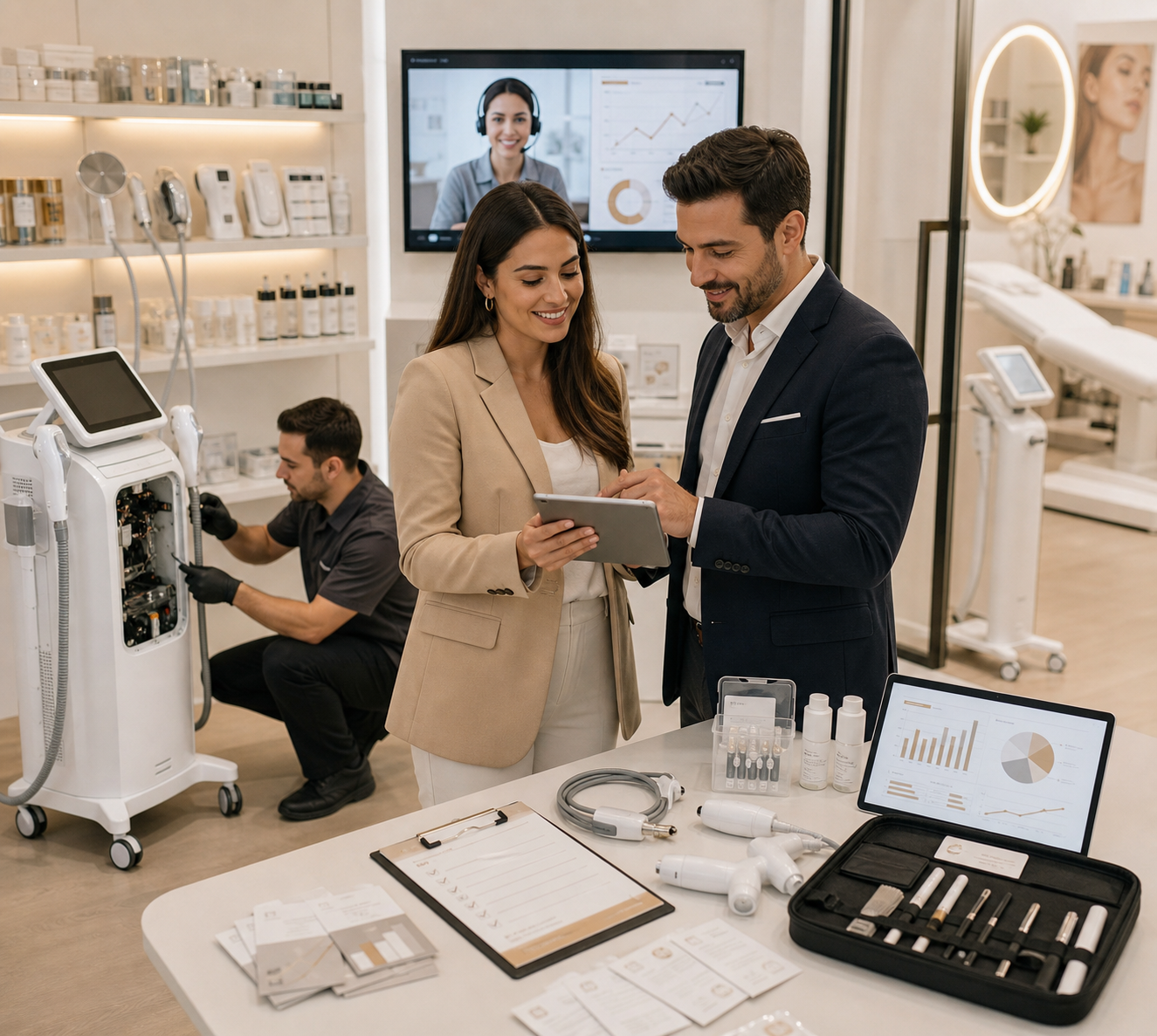
El servicio posventa se ha convertido en uno de los factores más importantes que influyen en la recompra en el mercado de distribución de equipos de belleza. Anteriormente, muchos distribuidores se centraban principalmente en el precio del producto, las funciones de la máquina y las ventas del primer pedido. Hoy en día, los salones de belleza son más exigentes. Preguntan si el distribuidor puede ofrecer capacitación, asistencia técnica, repuestos, consumibles, respuesta a la garantía, asesoramiento para proyectos y servicio técnico después de la entrega de la máquina.
Para los distribuidores de equipos de belleza, el servicio posventa ya no es solo un centro de costos, sino un motor de recompra. Un buen servicio puede convertir a un comprador ocasional en un cliente a largo plazo que adquiere consumibles, actualiza equipos, compra otras categorías, abre nuevas sucursales y recomienda el servicio a otros salones. Un mal servicio puede generar quejas, reembolsos, disputas de garantía, reseñas negativas y pérdida de clientes, incluso cuando la calidad del dispositivo original es aceptable.
Este informe analiza cómo el servicio posventa afecta a la recompra de los distribuidores de equipos de belleza y cómo estos pueden crear un sistema de servicio que mejore el valor del cliente a lo largo de su vida útil.
Resumen ejecutivo
Los mercados de equipos profesionales de belleza y estética continúan expandiéndose. Grand View Research estima que el mercado global de dispositivos estéticos basados en energía alcanzará los 7.500 millones de dólares en 2025 y proyecta que crecerá de 8.100 millones de dólares en 2026 a 15.700 millones de dólares en 2033. Grand View Research también estima que el mercado global de servicios profesionales de belleza alcanzará los 247.240 millones de dólares en 2023 y proyecta que llegará a los 395.690 millones de dólares en 2030. Intel Market Research estima que el mercado global de equipos para salones de belleza alcanzará los 3.450 millones de dólares en 2025 y proyecta que crecerá de 3.720 millones de dólares en 2026 a 5.890 millones de dólares en 2034.
El crecimiento del mercado crea oportunidades, pero también aumenta la competencia. A medida que más distribuidores venden máquinas similares, el servicio posventa se convierte en un factor clave. Los salones de belleza no solo compran equipos; compran confianza operativa. Quieren saber si la máquina seguirá funcionando, si el personal podrá seguir utilizándola, si se suministrarán los consumibles y si el distribuidor podrá resolver los problemas con rapidez.
Principales conclusiones:
- El servicio posventa influye directamente en si los salones vuelven a comprar al mismo distribuidor.
- La recompra incluye más que un simple pedido de otra máquina. También incluye consumibles, repuestos, piezas de mano, accesorios, capacitación, contratos de servicio, renovación de software, actualización de dispositivos y referencias.
- Los factores más importantes que impulsan la recompra después de la venta son la rapidez de respuesta, el tiempo de reparación, la disponibilidad de repuestos, la calidad de la capacitación, la claridad de la garantía, la profesionalidad técnica y el soporte continuo del proyecto.
- Un servicio posventa deficiente aumenta la rotación de clientes, la presión para ofrecer descuentos, las quejas del público, el riesgo de impago y el coste de la garantía.
- Un sólido servicio posventa permite a los distribuidores defender sus precios, reducir la homogeneización de los productos, generar confianza local y vender equipos de mayor valor.
- Los distribuidores deben medir el rendimiento posventa teniendo en cuenta el tiempo de respuesta del servicio, el tiempo de finalización de las reparaciones, la resolución en el primer contacto, la tasa de suministro de repuestos, la tasa de recompra, la tasa de reordenamiento de consumibles, la satisfacción del cliente, la tasa de recomendación y el valor de vida del cliente.
1. Por qué el servicio posventa es más importante en la distribución de equipos de belleza.
Los equipos de belleza no son un simple producto. Son una herramienta de negocio para los salones de belleza. Si la máquina deja de funcionar, el salón puede perder citas, tener que reembolsar a los clientes, interrumpir tratamientos, dañar la confianza de sus socios y perder ingresos.
Esto hace que el servicio posventa sea especialmente importante.
Los salones de belleza se preocupan por:
- Si el dispositivo puede funcionar de forma consistente.
- Si el personal puede usarlo correctamente.
- Si hay repuestos disponibles.
- Si los consumibles son estables.
- Si el soporte técnico responde rápidamente.
- Si el proceso de reparación es claro.
- Si se respetan los términos de la garantía.
- Si el distribuidor ayuda a resolver las quejas de los clientes.
- Si el distribuidor puede ofrecer soporte para futuras actualizaciones.
Cuando un salón compra a un distribuidor, también está poniendo a prueba su fiabilidad ante posibles problemas. La primera venta inicia la relación. El servicio posventa determina si esta continúa.
2. Qué significa la recompra para los distribuidores de equipos de belleza
En la distribución de equipos de belleza, la recompra va más allá de simplemente comprar la misma máquina de nuevo.
La recompra puede incluir:
- Comprar otra unidad del mismo dispositivo.
- Comprar un dispositivo de una categoría diferente.
- Comprar equipos de gama alta.
- Comprar piezas de mano de repuesto.
- Comprar repuestos.
- Compra de consumibles.
- Adquisición de productos de tratamiento para usar con el dispositivo.
- Comprar actualizaciones de software o suscripciones.
- Pago de servicios de mantenimiento.
- Financiamiento para la capacitación del personal.
- Compra de equipamiento para un segundo salón de belleza.
- Recomendar a otros salones de belleza que contacten con el distribuidor.
- Firma de acuerdos de cooperación regionales o a largo plazo.
Por eso, el servicio posventa tiene un gran impacto comercial. Un salón que confía en el distribuidor puede seguir comprando durante años. Un salón que se siente abandonado tras la compra puede que nunca vuelva.
3. El vínculo entre el servicio posventa y el valor de vida del cliente.
El valor de vida del cliente es el total de ingresos y beneficios que un distribuidor puede obtener de un cliente de salón a lo largo de toda la relación comercial.
Un salón de belleza puede comenzar con un pequeño dispositivo y luego comprar:
- Equipo de hidromasaje facial.
- Terapia de luz LED.
- Equipos de radiofrecuencia.
- Dispositivos de microcorriente.
- Análisis de piel mediante IA.
- Equipo para el contorno corporal.
- Sistemas de depilación.
- Consumibles y accesorios.
- Piezas de mano de repuesto.
- Servicios de capacitación.
El primer pedido puede ser pequeño, pero el valor a largo plazo puede ser alto si el distribuidor ofrece un buen soporte.
El servicio posventa aumenta el valor a lo largo del tiempo al:
- Reduciendo la pérdida de clientes.
- Aumentar la confianza.
- Mejorar la utilización de los equipos.
- Ayudando a los salones de belleza a ganar dinero.
- Creación de pedidos repetibles de productos consumibles.
- Apoyo a la actualización de equipos.
- Generar referencias.
- Reducción de la comparación basada únicamente en el precio.
Los distribuidores deberían considerar el servicio como parte de su estrategia de ventas, no solo como una función de reparación.
4. Cómo el servicio posventa genera confianza
La confianza es la base de la recompra. Los salones de belleza pueden comparar precios de productos antes de comprar, pero a menudo eligen proveedores a largo plazo basándose en la confianza que depositan en ellos después de la primera compra.
La confianza aumenta cuando los distribuidores:
- Responde rápidamente.
- Proporcione explicaciones técnicas claras.
- Proporcionar formación real.
- Cumpla con lo prometido en cuanto a la garantía.
- Suministrar las piezas a tiempo.
- No evites la responsabilidad.
- Realizar un seguimiento después de la instalación.
- Ayudamos a los salones de belleza a resolver problemas operativos.
- Comunica con honestidad las limitaciones del dispositivo.
La confianza disminuye cuando los distribuidores:
- Desaparecen tras el pago.
- Culpa al salón de belleza de todos los problemas.
- Retrasar las reparaciones.
- Ocultar exclusiones de la garantía.
- No podemos proporcionar las piezas.
- Prometer resultados que no se cumplen.
- Enviar manuales poco claros.
- Impulsa la adquisición de nuevas máquinas antes de solucionar los problemas antiguos.
En la distribución de equipos de belleza, la confianza a menudo se construye después de la venta, no antes.
5. La instalación y el soporte para el primer uso influyen en la satisfacción inicial.
Los primeros 7 a 30 días después de la entrega son cruciales. Es entonces cuando el salón decide si la compra ha resultado exitosa o estresante.
Un buen soporte para el primer uso incluye:
- Confirmación de entrega.
- Instrucciones de instalación.
- Comprobación de funcionamiento.
- Entrenamiento básico de operación.
- Formación en seguridad y contraindicaciones.
- Explicación sobre limpieza y mantenimiento.
- Lista de verificación para la resolución de problemas.
- Configuración del protocolo de tratamiento.
- Soporte para la fijación de precios del proyecto.
- Llamada de seguimiento tras los primeros tratamientos.
Si la máquina llega y el salón no sabe cómo usarla, el distribuidor puede perder la confianza rápidamente. Incluso un buen aparato puede resultar una mala compra si la experiencia de uso es deficiente.
La asistencia temprana puede prevenir devoluciones, quejas, baja utilización y malas primeras impresiones.
6. La calidad de la formación influye notablemente en la recompra.
La capacitación es uno de los servicios posventa más importantes, ya que muchos problemas en los salones de belleza no son de hardware, sino de funcionamiento, asesoramiento o diseño del proyecto.
La formación debe incluir:
- Funcionamiento del dispositivo.
- Protocolos de tratamiento.
- Selección de parámetros.
- Contraindicaciones.
- Limpieza y mantenimiento.
- Consulta al cliente.
- Precios por paquete.
- Preguntas y objeciones comunes.
- Instrucciones de cuidados posteriores.
- Guiones de ventas para el personal.
- Proceso de seguimiento y reprogramación.
Si el personal no sabe usar ni vender el dispositivo, el salón podría pensar que la máquina está defectuosa. En realidad, el proyecto podría estar fracasando debido a una capacitación deficiente.
Una buena formación ayuda a los salones de belleza:
- Utilice el dispositivo con más frecuencia.
- Vender paquetes.
- Reducir el mal uso.
- Mejorar la experiencia del cliente.
- Reducir las llamadas de servicio.
- Aumentar la confianza en el distribuidor.
La capacitación aumenta directamente la probabilidad de que el cliente vuelva a comprar el producto, ya que ayuda al salón a obtener ingresos desde el primer dispositivo.
7. La rapidez en las reparaciones protege los ingresos del salón.
La rapidez de las reparaciones influye directamente en la recompra. Cuando un equipo no funciona, el salón pierde ingresos.
El tiempo de inactividad puede causar:
- Citas canceladas.
- Insatisfacción del cliente.
- Solicitudes de reembolso.
- Interrupción de los tratamientos.
- Frustración del personal.
- Reseñas negativas.
- Pérdida de confianza en el distribuidor.
Los distribuidores deben realizar un seguimiento de:
- Tiempo de respuesta promedio.
- Es hora de diagnosticar el problema.
- Es hora de enviar las piezas.
- Es hora de completar la reparación.
- Número de fallos repetidos.
- Porcentaje de incidencias resueltas de forma remota.
Una reparación rápida no solo arregla la máquina, sino que también protege el negocio del salón. Un distribuidor que entienda esto tendrá más probabilidades de recibir pedidos recurrentes.
8. La disponibilidad de repuestos es un factor determinante para la recompra.
Los repuestos son una de las muestras más evidentes de la profesionalidad del distribuidor. Los salones se frustran cuando una pequeña pieza paraliza toda la máquina y el distribuidor no puede suministrarla.
Entre las piezas de repuesto importantes se incluyen:
- Piezas de mano.
- Cabezales de tratamiento.
- Filtros.
- Tubos.
- Zapatillas.
- Cables.
- Pantallas.
- Botones.
- Lámparas.
- Cartuchos.
- Fuentes de alimentación.
- Tableros.
- Sondas.
- Piezas de refrigeración.
Los distribuidores deben clasificar las piezas de repuesto en:
- Piezas de alta rotación.
- Piezas críticas para la garantía.
- Piezas consumibles.
- Piezas de repuesto de alto costo.
- Piezas de emergencia de baja rotación.
Almacenar localmente las piezas comunes puede reducir el tiempo de inactividad y aumentar la confianza. Además, la disponibilidad de repuestos puede convertirse en una fuente de ingresos recurrente si se gestiona de forma justa.
9. El suministro de bienes de consumo genera ingresos recurrentes.
Los consumibles son una de las formas más importantes de recompra para los distribuidores de equipos de belleza.
Los consumibles comunes incluyen:
- Consejos para tratamientos faciales con agua.
- Filtros.
- Accesorios para infusión de oxígeno.
- Geles.
- Sueros.
- Mascarillas.
- Compresas desechables.
- Cartuchos.
- Lámparas o piezas de mano de luz pulsada intensa (IPL).
- Soluciones de limpieza.
- Cabezales de repuesto.
Un suministro estable de consumibles ayuda a los salones a continuar con los tratamientos sin problemas. Además, mantiene al distribuidor conectado con el cliente después de la venta de la máquina.
Los distribuidores pueden mejorar la recompra de consumibles mediante:
- Ofrecemos kits de iniciación.
- Cálculo del coste por tratamiento.
- Recordatorio para los salones de belleza antes de que se agoten las existencias.
- Creación de precios combinados.
- Ofrecemos planes de suscripción o de suministro mensual.
- Mantener una calidad constante.
- Evitar precios excesivos en los consumibles que perjudiquen los márgenes de los salones de belleza.
Los ingresos por consumibles son mayores cuando el salón utiliza activamente el dispositivo. Por lo tanto, las ventas de consumibles dependen de la capacitación, el diseño del proyecto y la utilización del equipo.
10. La claridad en la garantía reduce las disputas.
La confusión en la garantía perjudica la recompra. Si el salón desconoce qué está cubierto, cuánto dura la cobertura, quién paga el envío o cómo se gestionan las reparaciones, es probable que surjan disputas.
Una garantía clara debe explicar:
- Periodo de garantía.
- Partes cubiertas.
- Piezas excluidas.
- Exclusiones de consumibles.
- Cobertura laboral.
- Responsabilidad de envío.
- Proceso de reparación.
- Política de reemplazo.
- Normas sobre mal uso o reparaciones no autorizadas.
- Mantenimiento requerido.
- Cómo presentar una reclamación.
Las directrices de la FTC sobre garantías enfatizan la importancia de una información clara sobre la garantía y de comprender qué está cubierto y qué no. Para los distribuidores de equipos de belleza B2B, se aplica el mismo principio práctico: los términos claros de la garantía reducen los malentendidos y protegen la relación comercial.
La garantía no debe utilizarse únicamente como una promesa de venta. Debe ser un compromiso operativo que el distribuidor pueda cumplir realmente.
11. El profesionalismo técnico influye en las compras de actualizaciones.
Es más probable que los salones de belleza compren dispositivos de gama alta a distribuidores que demuestren profesionalismo técnico.
La profesionalidad técnica incluye:
- Conocer la estructura del producto.
- Explicar los parámetros con claridad.
- Comprender los errores comunes.
- Brindar el asesoramiento de mantenimiento adecuado.
- Garantizar un funcionamiento seguro.
- Proporcionar una orientación de tratamiento realista.
- Coordinación con el fabricante cuando sea necesario.
- Documentación de casos de servicio.
Si el distribuidor no puede responder a las preguntas técnicas después de la venta, el salón puede dudar en comprar equipos más complejos, como radiofrecuencia, depilación, remodelación corporal, análisis de piel con IA o dispositivos antienvejecimiento avanzados.
La confianza técnica genera confianza en las actualizaciones.
12. El soporte al proyecto convierte el servicio en recompra.
El servicio posventa no debe limitarse a la reparación. Los distribuidores más sólidos ayudan a los salones a convertir sus equipos en proyectos rentables.
El apoyo al proyecto puede incluir:
- Diseño del menú de tratamientos.
- Precios por paquete.
- Guiones de consulta con el cliente.
- Plan de campaña de prueba.
- Estrategia de mejora de membresía.
- Plantillas de seguimiento antes y después, cuando corresponda.
- Cálculo del ROI.
- Capacitación en ventas para el personal.
- Ideas para promociones de temporada.
- Flujo de trabajo de re-reserva.
Este tipo de servicio mejora la recompra porque ayuda al salón a generar ingresos. Un salón que obtiene ganancias con el primer dispositivo está más dispuesto a comprar el segundo.
Para los distribuidores de equipos de belleza, el soporte de proyectos suele ser el vínculo entre el servicio posventa y las ventas recurrentes.
13. El servicio posventa reduce la sensibilidad al precio.
Cuando los productos son similares, los salones de belleza suelen comparar precios. Un buen servicio posventa puede reducir la sensibilidad al precio, ya que el comprador entiende que una máquina más barata sin servicio puede resultar más cara a largo plazo.
El servicio puede justificar precios más altos cuando el distribuidor proporciona:
- Formación local.
- Respuesta rápida.
- Piezas de repuesto.
- Garantía clara.
- Soporte de reparación.
- Suministro de consumibles.
- Embalaje del proyecto.
- Soporte de ROI.
- Comunicación fiable.
Esto permite a los distribuidores evitar competir únicamente por precio bajo. El comprador ya no compara solo el costo de la máquina, sino el valor total de la propiedad.
14. Un servicio posventa deficiente aumenta la rotación de clientes.
La pérdida de clientes se refiere a que los salones dejan de comprarle al distribuidor. Un mal servicio posventa es una de las causas más rápidas de esta pérdida.
Entre los factores que suelen provocar la deserción de clientes se incluyen:
- Respuesta lenta.
- Responsabilidad de la reparación poco clara.
- No hay repuestos.
- Entrenamiento débil.
- Alto costo de consumibles.
- Disputas de garantía.
- Fallo repetido de la máquina.
- Respuestas técnicas que resultan poco profesionales.
- El equipo de ventas ignora a los clientes antiguos.
- El proveedor está impulsando nuevos productos antes de solucionar los problemas antiguos.
Una vez que se rompe la confianza, es difícil recuperarla. El salón puede seguir usando la máquina, pero dejar de comprar consumibles al distribuidor, elegir otro proveedor para el próximo dispositivo o advertir a otros salones que no la compren.
15. El servicio posventa genera recomendaciones.
Los propietarios de salones de belleza suelen comunicarse entre sí a través de redes locales, grupos de formación, ferias comerciales y comunidades de proveedores. Un buen servicio posventa puede generar recomendaciones.
Las recomendaciones se producen cuando:
- Un distribuidor resuelve los problemas rápidamente.
- Un salón de belleza triunfa con un proyecto.
- La capacitación ayuda al personal a vender paquetes.
- Las piezas de repuesto llegan a tiempo.
- El distribuidor es honesto en cuanto a las limitaciones del dispositivo.
- La experiencia de servicio es mejor que la de la competencia.
El valor de las recomendaciones puede ser alto porque la compra de equipos de belleza se basa en la confianza entre empresas. Una recomendación de otro propietario de salón puede ser más persuasiva que la publicidad.
Los distribuidores deberían hacer un seguimiento de las fuentes de referencia y recompensar a los equipos de servicio, no solo a los equipos de ventas, por el impacto de las referencias.
16. Impacto del servicio por categoría de dispositivo
El impacto del servicio posventa varía según la categoría del producto.
Dispositivos de hidromasaje facial y de burbujas pequeñas:
- Áreas de especialización del servicio: bombas, tubos, puntas, filtros, soluciones, desatascos, limpieza.
- Factor de recompra: consumibles y accesorios.
Dispositivos de terapia de luz LED:
- Enfoque del servicio: Paneles LED, alimentación eléctrica, instrucciones de seguridad, protocolos de tratamiento.
- Recompra de controlador: soporte de paquete y actualización del dispositivo.
Equipos de radiofrecuencia:
- Áreas de especialización del servicio: piezas de mano, control de temperatura, estabilidad de la salida, formación del operador, seguridad.
- Factor que impulsa la recompra: mejoras de equipos antienvejecimiento de alta gama y repuestos.
Equipo de microcorriente EMS:
- Enfoque del servicio: sondas, almohadillas, cables, guía de parámetros, contraindicaciones.
- Motivo de recompra: soporte para proyectos de contorno facial y mantenimiento.
Dispositivos de depilación:
- Áreas de especialización del servicio: refrigeración, lámparas, piezas de mano, seguridad, formación de operadores, mantenimiento.
- Factores que impulsan la recompra: lámparas, piezas de mano, actualizaciones y contratos de servicio.
Equipos para el contorno corporal:
- Enfoque del servicio: piezas de mano, vacío, almohadillas, guía de medición, sesiones más largas.
- Motivo de recompra: ampliación del paquete y accesorios.
Análisis de la piel mediante IA:
- Enfoque del servicio: software, captura de imágenes, almacenamiento en la nube, privacidad, explicación de informes.
- Factores que impulsan la recompra: renovación de software, actualizaciones y venta cruzada de otros equipos.
Cuanto más complejo sea el dispositivo, mayor será la influencia del servicio posventa en la decisión de recompra.
17. Impacto del servicio según el tipo de salón.
Cada salón de belleza valora el servicio de manera diferente.
Los nuevos salones de belleza necesitan:
- Instrucciones de instalación.
- Entrenamiento básico de operación.
- Soporte para el menú de tratamientos.
- Plantillas de precios.
- Ayuda para lanzar la campaña.
Los salones comunitarios necesitan:
- Respuesta rápida.
- Suministro de consumibles.
- Fácil mantenimiento.
- Tiempo de inactividad mínimo.
- Ideas para paquetes de servicios recurrentes.
Los centros de cuidado de la piel de alta gama necesitan:
- Soporte técnico profesional.
- Formación avanzada.
- Actualizaciones de protocolo.
- Embalaje de proyecto de primera calidad.
- Sólida garantía y fiabilidad en las reparaciones.
Las cadenas de salones de belleza necesitan:
- Formación estandarizada.
- Proceso de servicio en múltiples ubicaciones.
- Suministro constante de repuestos.
- Registros de servicio.
- Canales de escalamiento claros.
Los distribuidores deberían diseñar diferentes niveles de servicio para diferentes tipos de clientes.
18. Métricas clave para medir el impacto del servicio posventa en la recompra
Los distribuidores deberían medir el servicio posventa con indicadores de negocio, no solo con el número de reparaciones.
Las métricas importantes incluyen:
- Tiempo de primera respuesta.
- Tiempo medio de reparación.
- Tasa de resolución en el primer contacto.
- Tasa de disponibilidad de repuestos.
- Tasa de reclamaciones de garantía.
- Tasa de fallos repetidos.
- Puntuación de satisfacción del cliente.
- Puntuación neta de promotores.
- Frecuencia de reordenamiento de consumibles.
- Tasa de recompra de máquinas.
- Actualizar la tasa de conversión.
- Tasa de referencias.
- Tasa de abandono de clientes.
- Valor del cliente a lo largo de su vida útil.
- Coste del servicio como porcentaje del margen bruto.
Estas métricas muestran si el servicio posventa está mejorando la recompra o reduciendo silenciosamente las ganancias.
19. Cómo calcular el impacto de la recompra
Un distribuidor puede estimar el impacto de la posventa comparando grupos de clientes.
Ejemplo de comparación:
- El Grupo A recibió capacitación para la instalación, llamadas de seguimiento, suministro rápido de piezas y apoyo para el proyecto.
- El grupo B solo recibió la entrega y la garantía básica.
Comparación después de 12 meses:
- Tasa de reordenamiento de consumibles.
- Número de máquinas adicionales compradas.
- Índice de quejas sobre el servicio.
- Número de referencias.
- Tasa de abandono de clientes.
- Beneficio bruto por cliente.
Si el Grupo A genera más compras repetidas y menos disputas, el distribuidor puede demostrar que el servicio posventa tiene valor financiero.
Otra fórmula sencilla:
Ingresos por recompra influenciados por el servicio = ventas repetidas de máquinas + ventas de consumibles + ventas de repuestos + ingresos por capacitación + ingresos por contratos de servicio + ingresos por clientes referidos
El distribuidor también debe restar el costo del servicio para calcular la rentabilidad del mismo.
20. Diseño del sistema de servicio posventa
Un distribuidor debería crear un sistema de servicio antes de aumentar sus ventas.
Los componentes principales incluyen:
- Proceso de incorporación de clientes.
- Lista de verificación de instalación.
- Materiales de capacitación.
- Registro de garantía.
- Sistema de tickets de servicio.
- Biblioteca de solución de problemas remotos.
- Inventario de repuestos.
- Reparar el flujo de trabajo.
- Estándar de respuesta del servicio.
- Sistema de recordatorio de mantenimiento.
- Recordatorio para realizar un nuevo pedido de consumibles.
- Seguimiento del éxito del cliente.
- Base de datos de comentarios sobre productos.
Sin un sistema, el servicio depende de la memoria de cada empleado. Esto se complica a medida que aumenta el número de clientes.
21. Niveles de servicio básico, estándar y premium
Los distribuidores pueden crear niveles de servicio que se adapten a las diferentes necesidades de los clientes.
Servicio básico:
- Garantía.
- Manual de usuario.
- Vídeo de funcionamiento básico.
- Soporte remoto.
Servicio estándar:
- Instrucciones de instalación.
- Entrenamiento en vivo.
- Protocolos de tratamiento.
- Prioridad en repuestos.
- Soporte para la reposición de consumibles.
- Seguimiento a los 30 y 90 días.
Servicio premium:
- Formación presencial, cuando esté disponible.
- Capacitación en ventas para el personal.
- Diseño del paquete del proyecto.
- Seguimiento del retorno de la inversión.
- Mantenimiento regular.
- Reparación prioritaria.
- Gestor de cuentas dedicado.
- Apoyo a la campaña de lanzamiento.
Los niveles de servicio permiten a los distribuidores controlar los costes al tiempo que ofrecen un mayor valor a los salones que necesitan más apoyo.
22. Seguimiento del éxito del cliente
Muchos distribuidores dejan de comunicarse después de la entrega. Esto es un error. El seguimiento es una de las maneras más fáciles de lograr que el cliente vuelva a comprar.
Calendario de seguimiento útil:
- Día 1: comprobación de la entrega e instalación.
- Día 7: Operación y primeras impresiones del tratamiento.
- Día 30: Revisión de la utilización y la respuesta de los clientes.
- Día 60: debate sobre la conversión de paquetes.
- Día 90: reposición de consumibles y optimización del proyecto.
- Mes 6: Oportunidad de actualización y revisión del mantenimiento.
- Mes 12: renovación, segundo dispositivo o conversación sobre el contrato de servicio.
Este cronograma ayuda al distribuidor a detectar problemas con anticipación e identificar oportunidades de recompra de forma natural.
23. Coordinación entre el equipo de servicio y el equipo de ventas
El servicio posventa influye en las ventas, pero muchos distribuidores gestionan las ventas y el servicio por separado. Esto puede generar oportunidades perdidas.
Los equipos de ventas saben:
- Presupuesto del cliente.
- Interés en el producto.
- Historial de compras.
- Preocupaciones de la competencia.
- Próximos planes de expansión.
Los equipos de servicio saben:
- Utilización del dispositivo.
- Nivel de habilidad del personal.
- Uso consumible.
- Satisfacción del cliente.
- Problemas técnicos.
- Lagunas en la formación.
- Necesidades de actualización.
Cuando los departamentos de ventas y servicio comparten información, el distribuidor puede recomendar el producto adecuado en el momento oportuno. Si no comparten información, los clientes pueden sentir que al distribuidor solo le interesa vender.
24. Contratos de garantía y servicio como herramientas de generación de ingresos
El servicio posventa puede generar ingresos directos a través de contratos de servicio y garantías extendidas.
Entre los posibles productos de servicio de pago se incluyen:
- Garantía extendida.
- Contrato de mantenimiento anual.
- Paquete de reparación prioritaria.
- Paquete de repuestos.
- Paquete de recapacitación para el personal.
- Paquete de soporte de software.
- Suscripción de consumibles.
- Paquete de soporte de lanzamiento.
Estos productos deben ser justos y transparentes. Si los clientes se ven obligados a pagar tarifas de servicio porque la máquina original no es confiable, la confianza disminuirá. El servicio de pago funciona mejor cuando aporta un valor real.
25. Las herramientas digitales mejoran la eficiencia del servicio.
Las herramientas digitales pueden mejorar la calidad del servicio de los distribuidores.
Entre las herramientas útiles se incluyen:
- Registro de garantía en línea.
- Manuales con código QR.
- Biblioteca de vídeos de formación.
- Sistema de tickets de servicio.
- Formularios de diagnóstico remoto.
- Recordatorios de mantenimiento.
- Recordatorios para reordenar productos consumibles.
- Gestión de relaciones con el cliente (CRM).
- Base de conocimientos técnicos.
- Seguimiento del uso cuando esté disponible.
- Certificación de formación en línea.
El servicio digital ayuda a los distribuidores a ampliar su soporte sin perder coherencia. Además, genera datos que pueden mejorar la selección de productos y la negociación con los proveedores.
26. La cooperación de los proveedores afecta al servicio del distribuidor.
Los distribuidores no pueden ofrecer un buen servicio posventa si los fabricantes no les brindan su apoyo.
Antes de elegir un proveedor, los distribuidores deben comprobar lo siguiente:
- Suministro de repuestos.
- Documentación técnica.
- Vídeos de formación.
- Manuales de reparación.
- Responsabilidad de la garantía.
- Política de reemplazo.
- Soporte de ingeniería.
- Comunicación sobre actualizaciones de productos.
- Registros de control de calidad.
- Respuesta a fallas comunes.
La capacidad de servicio posventa del proveedor debe ser un factor clave en la selección de productos del distribuidor. Una fábrica con precios bajos pero un soporte técnico deficiente puede dañar la reputación del distribuidor.
27. Riesgo de servicio y cumplimiento
El servicio posventa también incluye ayudar a los salones a utilizar los equipos de forma responsable.
Para dispositivos que involucren RF, LED, IPL, láser, ultrasonido, contorno corporal, depilación, análisis de la piel u otras afirmaciones contundentes, los distribuidores deben proporcionar:
- Información sobre el uso previsto.
- Manuales de usuario.
- Guía de contraindicaciones.
- Advertencias de seguridad.
- Capacitación de operadores.
- Instrucciones de mantenimiento.
- Guía de reclamaciones.
- Soporte de documentación.
La FDA señala que los dispositivos estéticos pueden estar sujetos a regulación según su uso previsto y si afectan la estructura o la función del cuerpo. La FTC indica que las afirmaciones publicitarias relacionadas con la salud deben ser veraces, no engañosas y estar respaldadas por evidencia. El servicio posventa debe ayudar a los salones a evitar el mal uso y el marketing exagerado.
28. Errores comunes que cometen los distribuidores en el servicio posventa.
Los errores más comunes incluyen:
- Considerar el servicio únicamente como un costo.
- Vender máquinas sin formación.
- No tener existencias de repuestos.
- Hacer promesas de garantía poco claras.
- Lenta respuesta a las solicitudes de servicio.
- Permitir que el personal de ventas prometa resultados que no puede cumplir.
- Ignorar las oportunidades de reordenamiento de consumibles.
- No se realiza seguimiento después de la instalación.
- No documentar los casos de servicio.
- Culpar a los salones de belleza antes de diagnosticar los problemas.
- No capacitar al nuevo personal del salón.
- No se realiza un seguimiento de las métricas del servicio.
Estos errores reducen la recompra incluso cuando los productos son razonablemente buenos.
29. Señales de alerta de que el servicio está perjudicando la recompra
Los distribuidores deben estar atentos a las señales de advertencia:
- Los clientes dejan de comprar productos de consumo.
- Los clientes solicitan descuentos antes de cada pedido.
- Aumentan las disputas relacionadas con las garantías.
- Las reparaciones tardan más cada mes.
- Las ventas de dispositivos de segunda mano son bajas.
- Los clientes compran piezas a otros proveedores.
- Las reseñas negativas mencionan el soporte.
- Los tickets de servicio se repiten para el mismo modelo.
- Los salones de belleza dejan de responder después de que surgen problemas con las reparaciones.
- Las derivaciones disminuyen.
Estas señales indican que el sistema de servicio está perjudicando la confianza y los ingresos futuros.
30. Cómo mejorar la recompra a través del servicio posventa
Los distribuidores pueden mejorar la recompra tomando medidas prácticas.
Las acciones incluyen:
1. Crea un proceso de incorporación claro para cada nuevo dispositivo.
2. Proporcionar formación estructurada antes de que el salón ponga en marcha el proyecto.
3. Mantenga repuestos comunes a nivel local.
4. Definir los estándares de tiempo de respuesta del servicio.
5. Utilice un sistema de tickets para hacer un seguimiento de los problemas.
6. Ofrecer recordatorios para volver a pedir productos consumibles.
7. Realizar un seguimiento a los 7, 30, 60 y 90 días.
8. Brindar apoyo a los salones de belleza en el diseño de sus proyectos de empaque.
9. Capacitar al personal sobre reclamaciones realistas y atención al cliente.
10. Establecer niveles de servicio para diferentes tipos de clientes.
11. Realizar un seguimiento de las compras repetidas según la experiencia de servicio.
12. Utilice los datos de servicio para mejorar la selección de productos.
El objetivo es hacer que el servicio posventa sea visible, medible y esté vinculado a los ingresos.
31. Tendencias futuras a 3-5 años
El servicio posventa adquirirá mayor importancia en la distribución de equipos de belleza durante los próximos 3 a 5 años.
Posibles tendencias:
- Cada vez más salones de belleza elegirán a sus proveedores en función del servicio, no solo del precio.
- La disponibilidad de repuestos y la rapidez de las reparaciones se convertirán en factores clave de competitividad.
- Los distribuidores crearán equipos de éxito del cliente.
- La formación será cada vez más digital y estandarizada.
- Los modelos de suscripción basados en productos consumibles serán cada vez más comunes.
- Los contratos de servicio y las garantías extendidas aumentarán.
- El cumplimiento normativo y la orientación en materia de reclamaciones pasarán a formar parte del servicio posventa.
- El análisis de la piel mediante IA y los dispositivos de software aumentarán las necesidades de soporte de software.
- Los dispositivos profesionales de radiofrecuencia, luz pulsada intensa (IPL), depilación y aparatos corporales requerirán un servicio técnico más especializado.
- La reputación del distribuidor dependerá en gran medida de las reseñas de servicio y las recomendaciones.
A medida que aumenta la competencia entre productos, la capacidad de servicio se convertirá en una de las barreras más importantes contra las guerras de precios.
32. Recomendaciones estratégicas para distribuidores
Los distribuidores de equipos de belleza deberían:
1. Considere el servicio posventa como una estrategia de recompra.
2. Calcula el valor de vida del cliente, no solo la ganancia del primer pedido.
3. Construir sistemas de suministro de repuestos y consumibles.
4. Capacitar conjuntamente al personal de servicio y al personal de ventas.
5. Proporcione términos de garantía claros antes del pago.
6. Utilice los tickets de servicio y los registros de CRM.
7. Ofrecer un proceso de incorporación estructurado para los nuevos dispositivos.
8. Ayudar a los salones a mejorar la utilización de sus equipos.
9. Crea paquetes de servicios para diferentes niveles de salón.
10. Medir la tasa de recompra según la calidad del servicio.
11. Utilice los datos de posventa para elegir mejores proveedores.
12. Convierta a los clientes satisfechos con el servicio en clientes que recomienden sus servicios.
El distribuidor que apoye al salón después de la compra será el propietario de la siguiente compra.
33. Recomendaciones estratégicas para fabricantes
Los fabricantes deben brindar apoyo a los distribuidores con:
- Manuales claros.
- Guías de reparación.
- Vídeos de formación.
- Listas de repuestos.
- Normas de garantía.
- Equipos de respuesta técnica.
- Datos de calidad del producto.
- Soluciones a fallos comunes.
- Soporte para actualizaciones de software.
- Envases para diferentes mercados.
- Documentación relativa al uso previsto y a la seguridad.
El servicio de asistencia del fabricante influye directamente en la decisión de recompra del distribuidor. Si los distribuidores no pueden obtener repuestos ni asistencia técnica, no podrán brindar un buen servicio a sus clientes de salones de belleza.
Conclusión
El servicio posventa tiene un impacto directo y cuantificable en la recompra para los distribuidores de equipos de belleza. Influye en la confianza del cliente, la utilización de las máquinas, la reposición de consumibles, la compra de segundos dispositivos, las actualizaciones de equipos, los ingresos por contratos de servicio, las recomendaciones y el valor del cliente a lo largo del tiempo.
En un mercado donde muchos dispositivos de belleza son similares, el servicio posventa se convierte en una importante ventaja competitiva. Los salones pueden comprar una vez por el precio o las funciones del producto, pero vuelven a comprar porque el distribuidor les ayudó a operar, reparar, capacitar al personal, empaquetar y obtener ganancias con el equipo.
Para los distribuidores, la clave está en pasar de una mentalidad centrada en la transacción a una centrada en el éxito del cliente. Los distribuidores más exitosos no solo venderán máquinas, sino que también mantendrán los salones en funcionamiento, les ayudarán a generar ingresos y utilizarán la calidad del servicio para fomentar la fidelización de clientes.
Preguntas frecuentes
¿Cómo afecta el servicio posventa a la decisión de los distribuidores de equipos de belleza de volver a comprar?
El servicio posventa influye en la recompra al aumentar la confianza del salón, reducir el tiempo de inactividad, mejorar la utilización del equipo, respaldar las ventas de consumibles, resolver problemas técnicos y ayudar a los salones a obtener ingresos del equipo.
¿Qué servicios postventa son los más importantes para los salones de belleza?
Los servicios más importantes incluyen asistencia para la instalación, capacitación de operadores, respuesta rápida, servicio de reparación, repuestos, consumibles, términos de garantía claros, orientación sobre mantenimiento y asistencia para el empaquetado del proyecto.
¿Qué tipos de fidelización puede generar el servicio posventa?
Puede generar compras recurrentes de maquinaria, actualizaciones de equipos, pedidos de consumibles, ventas de repuestos, contratos de servicio, renovaciones de software, capacitación del personal, compras en nuevas ubicaciones y recomendaciones.
¿Por qué es importante el suministro de repuestos para la recompra?
El suministro de repuestos reduce el tiempo de inactividad de las máquinas. Si un distribuidor puede reparar los dispositivos rápidamente y mantener los salones en funcionamiento, es más probable que estos confíen en ese distribuidor para futuras compras.
¿Cómo pueden los distribuidores medir el impacto del servicio posventa?
Los distribuidores pueden realizar un seguimiento del tiempo de respuesta, el tiempo de reparación, la resolución en el primer contacto, la tasa de suministro de repuestos, la satisfacción del cliente, la frecuencia de reordenamiento de consumibles, la tasa de recompra de máquinas, la conversión de actualizaciones, la tasa de referencias, la tasa de abandono y el valor de vida del cliente.