








Introducción
Many distributors, salon owners and new buyers are asking the same question:
Does the beauty equipment industry still have growth opportunities in the next few years, or is the market already too crowded?
The short answer is yes, there is still growth space.
But the next stage of growth will not be the same as the previous stage.
In the past, some distributors could grow quickly by selling a popular machine, copying competitor marketing, using low prices, or following a short social-media trend. That approach is becoming harder. Buyers are more careful, regulations are stricter in many markets, salons care more about after-sales support, and end clients are more sensitive to exaggerated treatment promises.
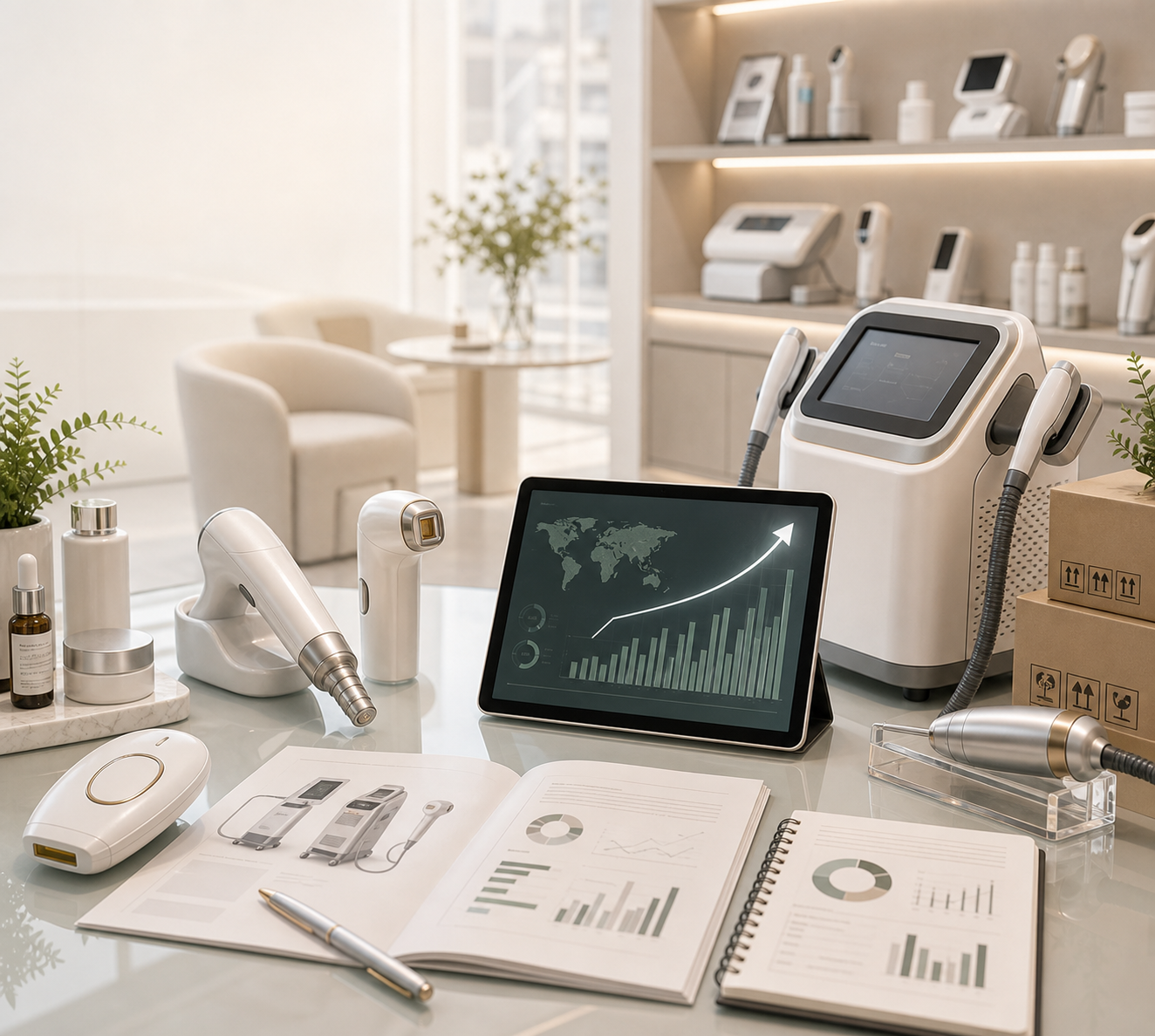
The beauty equipment industry is still growing because the basic demand has not disappeared. Consumers still want hair removal, facial care, skin rejuvenation, body contouring, anti-aging support, recovery services and more convenient beauty solutions. Salons and clinics still need equipment to create service menus and improve revenue.
However, growth is becoming more selective.
The opportunity is stronger for suppliers and distributors that can provide stable machines, realistic treatment positioning, technical training, spare parts, compliance documents and a clear business model for local buyers.
The opportunity is weaker for low-quality white-label products, unclear claims, unsupported machines and categories that depend only on short-term online attention.
For distributors, the question is not only:
Will the beauty equipment market grow?
La pregunta más pertinente es:
Which part of the market will grow, and can my product and support system match that demand?
The Market Is Not Finished, But It Is More Mature
Beauty equipment is no longer a completely new industry.
Many categories are already familiar to buyers:
- depilación láser de diodo
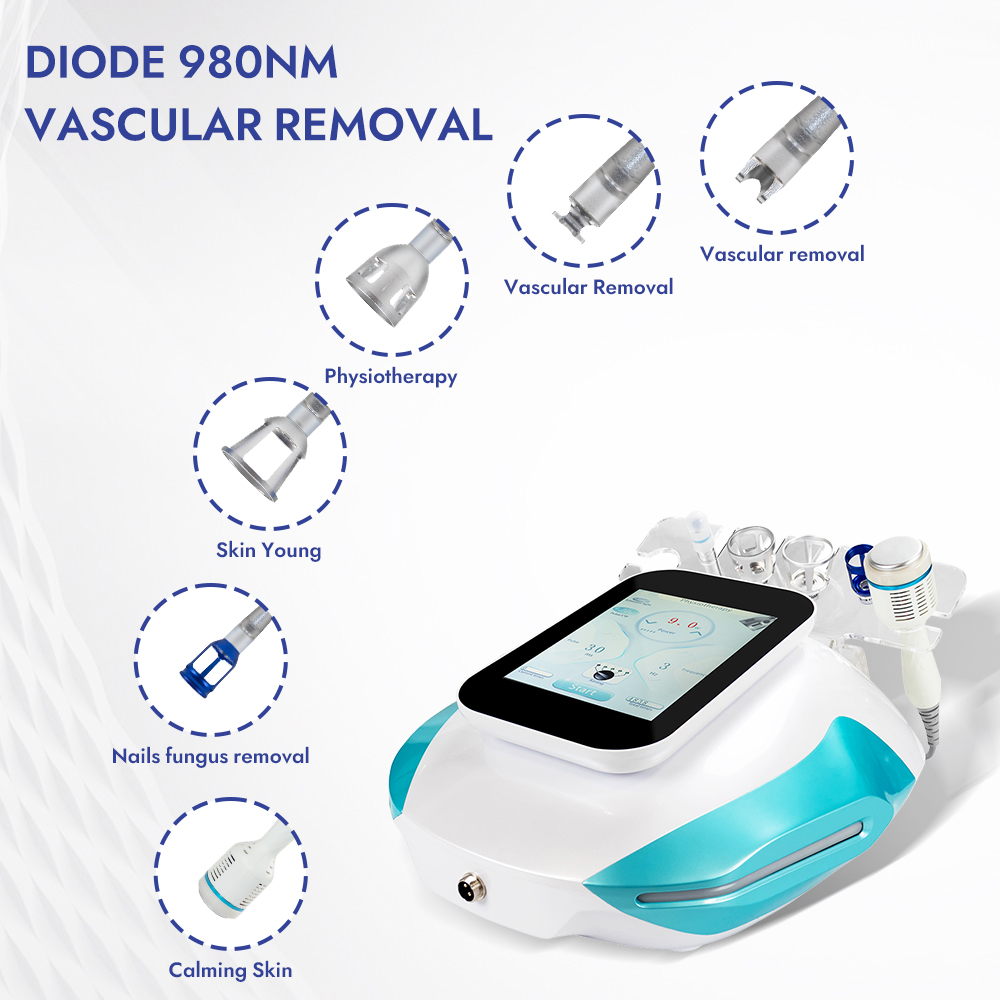
- IPL and SHR devices
- Hydra-style facial machines
- RF skin-care and body devices
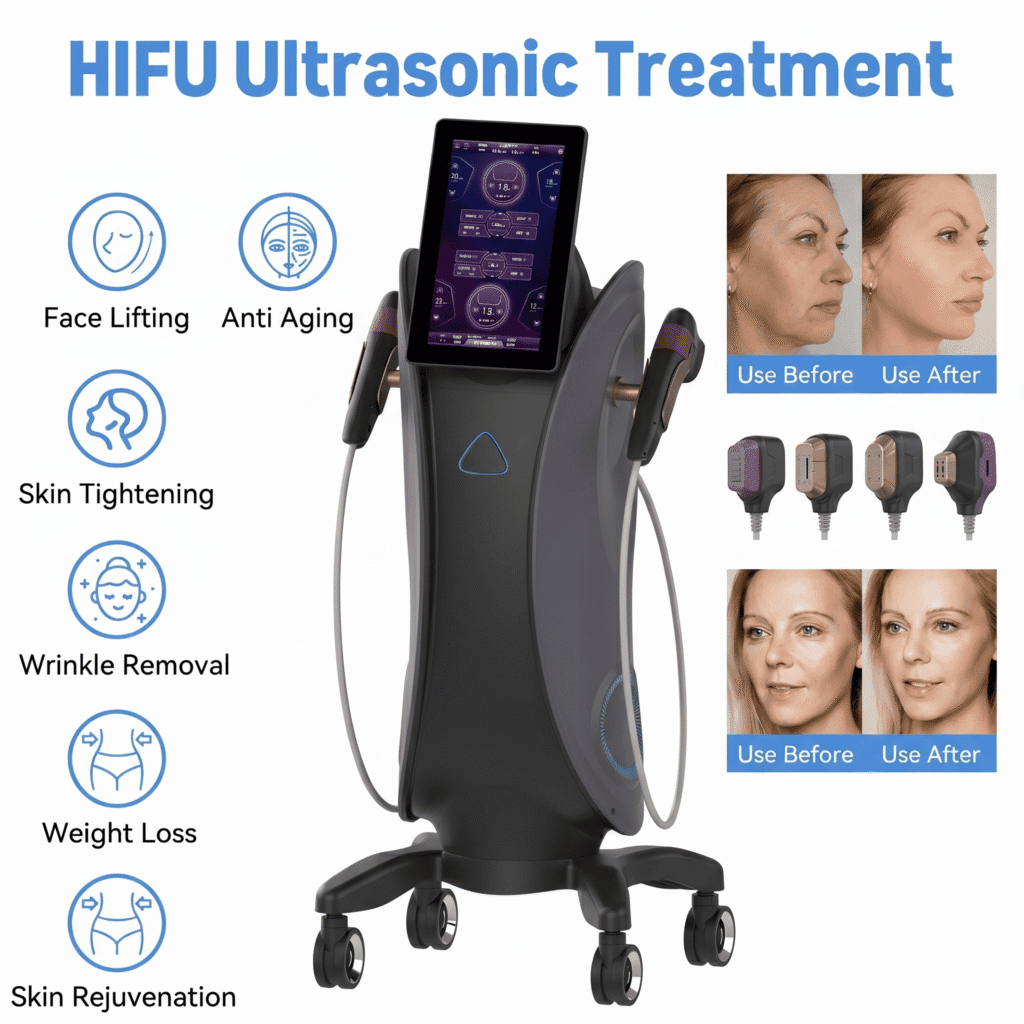
- HIFU lifting platforms
- cryolipolysis body-contouring machines
- Dispositivos de estimulación muscular EMS
- Sistemas de microagujas por radiofrecuencia
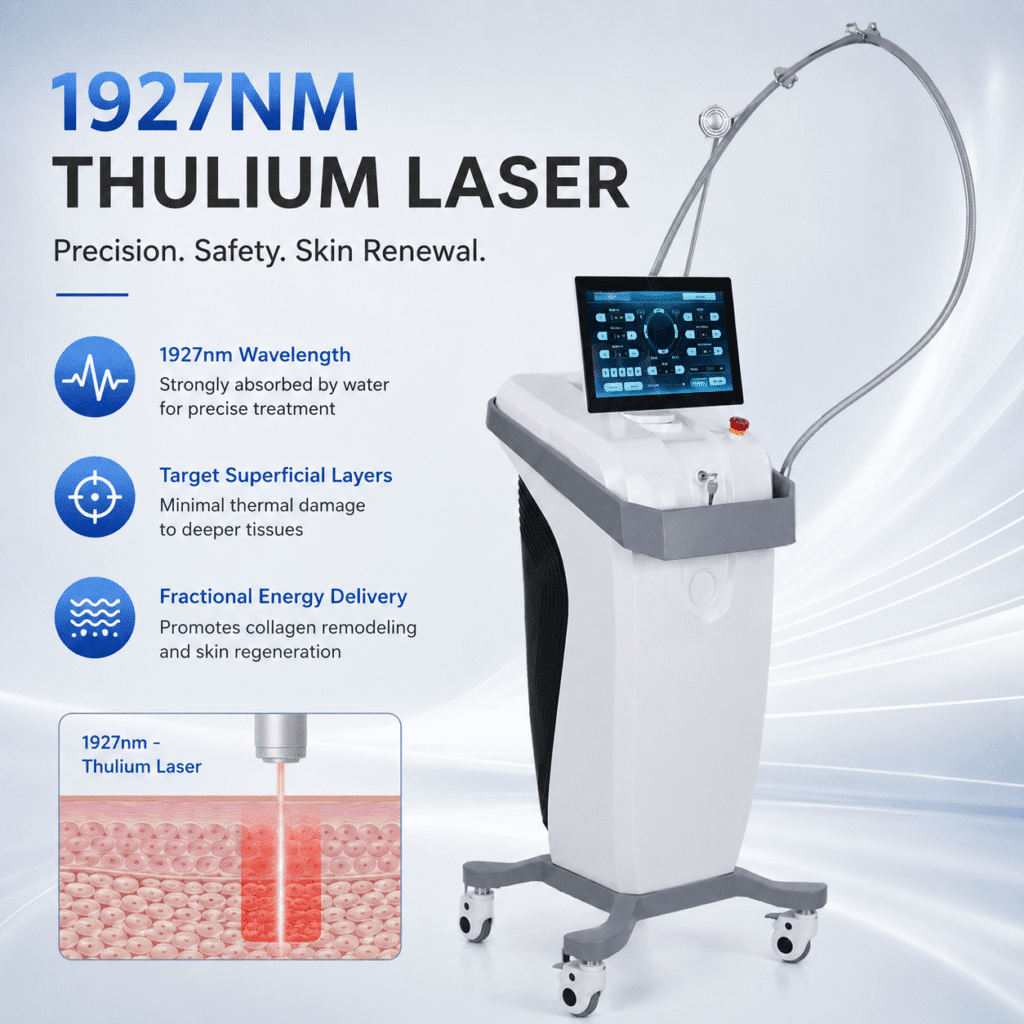
- láser fraccional de CO2
- picosecond and Q-switched laser
- Terapia de luz LED
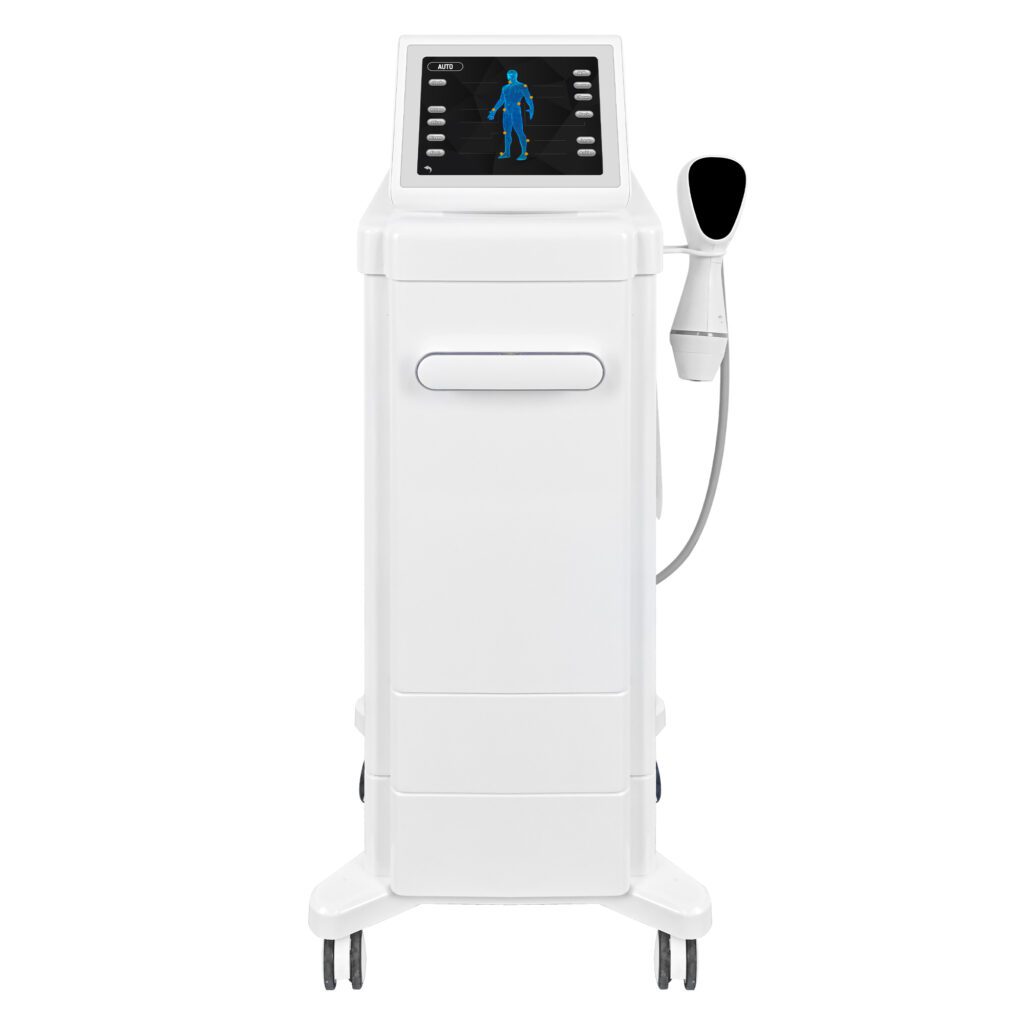
- Shockwave and physiotherapy-related equipment
This maturity can create a false impression that the market has no room left.
But a mature market is not always a dead market.
Hair removal, facial care and body management are repeat-service categories. A salon may continue selling these services for years if the equipment is reliable and the service menu is well designed. Existing salons may also replace old machines, add new functions, upgrade cooling systems, improve customer experience or open new branches.
The beauty equipment market is moving from early expansion to professional selection.
That means buyers are asking more practical questions:
- Can this machine really support profitable services?
- Is the treatment easy to explain to clients?
- Does the supplier provide training?
- ¿Hay repuestos disponibles?
- Can the machine operate under local requirements?
- ¿Cuánto dura la garantía?
- What happens if the handpiece fails?
- Can the distributor help with service packages and sales language?
These questions make selling harder, but they also create opportunities for professional distributors.
When a market becomes more mature, weak suppliers are filtered out. Strong suppliers can win because they offer more than a machine.
Growth Driver 1: Long-term Consumer Demand for Appearance and Wellness
The strongest reason the beauty equipment industry still has room to grow is simple:
People continue to spend money on appearance, self-care and wellness.
The exact service preference changes by country, age group and income level, but the demand direction remains stable.
Common long-term needs include:
- smoother-looking skin
- regular facial cleansing and hydration
- reduced unwanted hair
- body contouring and inch-loss support
- piel con aspecto más firme
- acne scar and texture management
- pigmentation and tattoo removal services
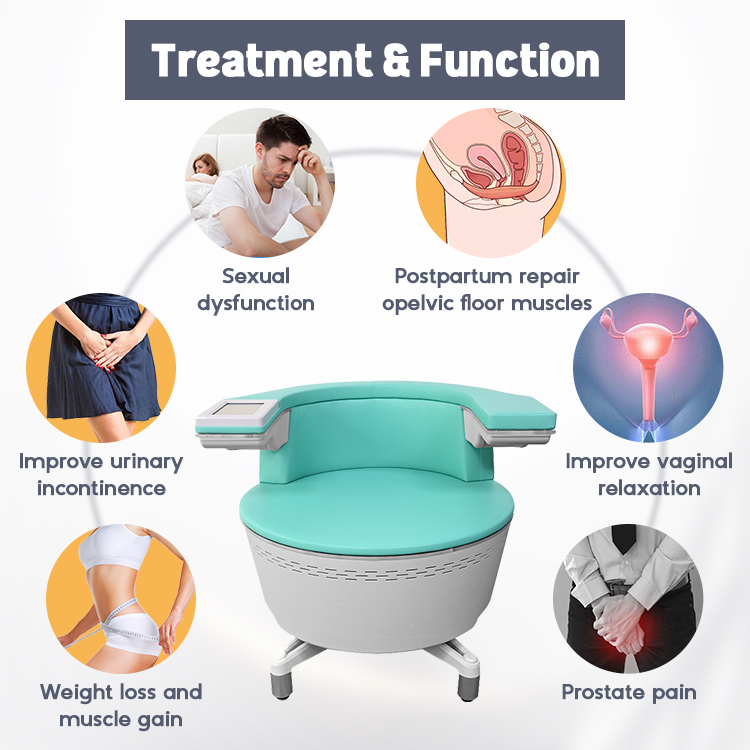
- postpartum body-care and pelvic-floor-related wellness services
- sports recovery and pain-management support in suitable channels
- non-surgical beauty services with shorter downtime
These are not one-week trends.
They are recurring needs that salons, med spas, skin centers, body-contouring studios and wellness clinics can build service menus around.
For distributors, recurring demand is important because it supports:
- repeat salon purchases
- consumables and accessories
- handpiece replacement
- servicios de formación
- upgrade sales
- package-based treatment models
- customer referrals
A machine that supports a repeat service has better long-term value than a machine that only creates one-time curiosity.
Growth Driver 2: Professional Services Are Becoming More Accessible
In many markets, professional beauty equipment first appeared in premium clinics, large cities or high-end med spas.
Future growth can come from wider access.
More buyers may enter the market, including:
- small and mid-size beauty salons
- independent laser hair removal studios
- skin-management centers
- body-contouring studios
- centros de recuperación posparto
- physiotherapy and sports recovery centers
- hotel spas and wellness resorts
- academias de formación en belleza
- local franchise chains
These buyers do not always need the most expensive device.
They need a machine that fits their budget, staff ability, service menu and local customer base.
This creates an opportunity for factory-direct suppliers and distributors that can offer practical equipment packages.
For example, a small salon may not be ready to buy several high-end systems at once. But it may be ready to start with a Hydra facial machine, diode laser platform or entry-level body-contouring device if the distributor provides training and a realistic payback plan.
The growth opportunity is not only in luxury clinics.
It is also in making professional beauty services easier for smaller businesses to adopt responsibly.
Growth Driver 3: Replacement and Upgrade Demand
Not all market growth comes from first-time buyers.
Many salons already own beauty equipment, but their machines may be old, slow, unstable or difficult to repair.
Replacement demand can come from:
- enfriamiento débil
- velocidad de tratamiento lenta
- aging handpieces
- piezas de repuesto no disponibles
- outdated software
- poor screen interface
- producción de energía inestable
- high repair cost
- discontinued models
- lack of supplier response
- customer complaints about comfort
- need for additional wavelengths or handles
This is an important opportunity for distributors because replacement buyers already understand the service.
They do not need to be convinced that hair removal, facial care or body contouring can be sold. They need to see why a newer or better-supported platform can improve their operation.
Useful upgrade selling points include:
- menor tiempo de tratamiento
- better cooling comfort
- more stable performance
- clearer operation interface
- improved handpiece ergonomics
- stronger warranty terms
- available spare parts
- asistencia técnica remota
- better training materials
- easier service-package planning
The best replacement message is not simply “this is a newer model.”
El mejor mensaje es:
This machine can reduce downtime, improve customer experience and support a more stable service menu.
Growth Driver 4: Combination Services and Package Revenue
Beauty equipment growth is also supported by the way salons sell services.
Many machines are not sold as single treatments only. They can be part of treatment courses, membership plans or combination packages.
Los ejemplos incluyen:
- diode laser hair removal packages by body area
- Hydra facial monthly maintenance plans
- HIFU and RF anti-aging service menus
- cryolipolysis plus RF body-shaping packages
- EMS muscle stimulation plus body-contouring plans
- RF microneedling plus skin repair programs
- LED light therapy as an add-on service
- Shockwave or recovery services for wellness and sports clients
This matters because a salon does not only buy a machine. It buys the ability to create revenue.
For distributors, a good product presentation should include:
- suitable buyer channels
- recommended service menu
- package examples
- conservative ROI calculation
- client consultation points
- operation workflow
- aftercare suggestions where appropriate
- maintenance and spare-parts plan
When a distributor helps the buyer understand how to sell the service, the machine becomes easier to purchase.
The future growth of beauty equipment is closely connected to service design.
Suppliers that only provide a price list may lose to suppliers that provide a complete business solution.
Growth Driver 5: Technology Is Still Improving
Most mature beauty equipment categories are not disappearing, but they are improving.
Future upgrades are likely to focus on practical performance rather than completely new treatment principles.
Important improvement areas include:
- better cooling systems
- more comfortable handpieces
- tamaños de punto más grandes
- mayor velocidad de tratamiento
- suministro de energía más estable
- smarter safety monitoring
- easier software interface
- protocolos de tratamiento preestablecidos
- modular handles
- easier maintenance
- diagnóstico remoto
- better language localization
- more professional training content
These upgrades can create new purchase demand.
For example, diode laser hair removal is already mature, but salons may still upgrade for better cooling, faster operation or more reliable handpieces. Hydra facial machines are familiar, but buyers may still want better bottle management, more handles or improved design. Body-contouring devices are competitive, but combination systems can help salons create more complete service menus.
Technology development does not always mean every old machine becomes useless.
But it does create reasons for buyers to compare, replace and upgrade.
Growth Driver 6: Emerging Channels Beyond Traditional Beauty Salons
The beauty equipment industry is also expanding because the definition of the buyer is changing.
Traditional beauty salons are still important, but they are not the only customers.
New or growing channels may include:
- spas médicos
- dermatology-related aesthetic centers
- laser hair removal studios
- slimming and body-contouring centers
- centros de recuperación posparto
- women’s wellness clinics
- centros de rehabilitación
- sports recovery studios
- gyms with recovery rooms
- hotel spa and resort wellness departments
- mobile beauty service providers in some markets
- private-label distributors
Each channel has different needs.
A laser studio may care most about speed, cooling and treatment volume.
A skin-management center may care about facial service frequency and visible customer experience.
A postpartum recovery center may need body-care, pelvic-floor-related wellness and skin-management combinations.
A rehabilitation or sports recovery channel may be more interested in Shockwave, Tecar, PMST or related physiotherapy equipment, depending on local rules.
For distributors, this means one product catalog can be segmented into different business stories.
The same machine should not be promoted with the same message to every buyer.
Market growth often comes from matching the right equipment to the right channel.
But Growth Does Not Mean Easy Sales
Although the industry still has room to grow, distributors should not treat every product as a safe opportunity.
The market has several real challenges.
Challenge 1: Price Competition Is Strong
Many beauty equipment categories have many suppliers.
When products look similar from the outside, buyers may compare only price. This can create a race to the bottom.
Low price can help open a conversation, but it cannot replace:
- product stability
- rendimiento de refrigeración
- handle quality
- warranty response
- piezas de repuesto
- capacitación
- documentación
- embalaje
- shipping support
- servicio posventa
If a distributor competes only on low price, profit margins become thin and after-sales pressure becomes high.
The better strategy is to show why the machine is easier to operate, easier to maintain and safer to sell over time.
Challenge 2: Regulations and Claims Are Becoming More Important
Beauty equipment often sits between cosmetic services, wellness services and medical-aesthetic services.
Different countries may classify the same type of device differently.
Rules may affect:
- documentación de importación
- seguridad eléctrica
- EMC testing
- medical device classification
- cualificación del operador
- afirmaciones publicitarias
- treatment indications
- before-and-after photo use
- post-market responsibility
- complaint handling
For example, in China, certain radiofrequency beauty devices have moved toward stricter medical-device management. From April 1, 2026, specific RF therapy and RF skin-treatment devices without required medical-device registration cannot be produced, imported or sold in China.
This type of regulatory change shows a wider trend:
Markets are paying more attention to safety, evidence and claim control.
For international distributors, this does not mean every product is restricted in the same way. But it does mean buyers should not ignore local requirements.
Un distribuidor sólido debe prepararse:
- product certificates
- manuales de usuario
- testing reports where available
- realistic claim language
- advertencias de seguridad
- materiales de capacitación
- local compliance checks
- clear distinction between cosmetic and medical positioning
Compliance can reduce some low-quality competition and create more trust for professional suppliers.
Challenge 3: Consumers Are More Careful About Results
End clients are more informed than before.
They read reviews, compare clinics, watch videos and ask more detailed questions. They may also be skeptical when claims sound too strong.
Entre las afirmaciones arriesgadas se incluyen:
- permanent fat loss guarantee
- one-session transformation
- no pain for everyone
- ningún riesgo
- works for all skin types without assessment
- reemplaza la cirugía
- elimina todas las arrugas
- guaranteed collagen production
- medical results without professional responsibility
These claims may create short-term attention, but they can damage the salon and distributor later.
The better sales approach is to explain:
- what the device is designed to support
- who may be suitable
- what contraindications should be checked
- how many sessions may be planned
- por qué varían los resultados
- what training is needed
- how the service can be combined with other treatments
Realistic sales language is not weak.
It helps salons build trust and reduce complaints.
Challenge 4: After-sales Service Can Decide the Winner
In beauty equipment, the sale does not end when the machine is delivered.
A buyer may need:
- Guía de instalación
- capacitación operativa
- parameter explanation
- troubleshooting
- piezas de repuesto
- handpiece replacement
- soporte de software
- shipping support
- comunicación de garantía
- marketing material
- service-menu advice
If the distributor cannot support these needs, the buyer may not reorder.
In the next few years, after-sales service will become a bigger competitive advantage.
This is especially true for distributors selling to salons that are new to energy-based equipment.
The salon may like the product, but if staff are afraid to operate it, the machine may sit unused. If a handle breaks and there is no replacement plan, the salon loses money. If the distributor does not answer technical questions, the customer may move to another supplier.
Reliable support turns one machine sale into a long-term customer relationship.
Which Beauty Equipment Categories May Have Better Growth Potential?
No category grows equally in every market.
But several directions are likely to remain important.
1. Hair Removal Equipment
Diode laser and IPL/SHR hair removal equipment can still have demand because hair removal is easy for consumers to understand and can be sold as multi-session packages.
Growth may come from:
- smaller salons entering professional hair removal
- dedicated laser studios
- male grooming demand
- replacement of older systems
- improved cooling and speed
- diverse skin-type service needs
The key is training, cooling performance, handpiece support and realistic service claims.
2. Facial Skin-management Equipment
Hydra facial, oxygen facial, LED, RF facial care and other skin-management devices can fit many salon channels because facial maintenance is repeatable.
Growth may come from:
- monthly facial plans
- combination services
- add-on treatments
- skin-management centers
- cadenas de belleza
- entry-level equipment buyers
This category often works well when the distributor helps salons design service packages rather than selling only machine functions.
3. Body-contouring and Body-care Equipment
Cryolipolysis, RF cavitation, vacuum body shaping, roller massage, EMS muscle stimulation and related devices can still have opportunities.
But this category needs careful claim control.
Distributors should avoid promising guaranteed weight loss or permanent transformation. Better positioning focuses on body-contouring service menus, inch-management support, customer lifestyle context and package-based plans.
Growth may come from:
- centros de adelgazamiento
- body-care salons
- estudios de bienestar
- post-holiday or seasonal campaigns
- combination packages
- replacement of older machines
4. Anti-aging and Skin-tightening Devices
HIFU, RF, RF microneedling and related anti-aging equipment can remain attractive because anti-aging demand is long-term.
However, these products may require stronger operator training and more careful compliance positioning.
Growth may come from:
- higher-value skin centers
- spas médicos
- professional salons
- combination anti-aging programs
- replacement demand
- demand for non-surgical service options
Distributors should avoid surgery-comparison claims and guaranteed result language.
5. Laser and Skin-repair Equipment
CO2 fractional laser, picosecond laser, Q-switched laser and other professional skin-treatment devices can create high-value opportunities in suitable channels.
These categories are not ideal for every buyer.
They often require stronger training, stricter local compliance and more careful customer screening.
The opportunity is strongest when the distributor serves professional clinics, trained operators or advanced skin centers.
6. Recovery, Physiotherapy and Wellness Devices
Shockwave, Tecar, PMST, magnetotherapy and related recovery equipment may grow as beauty, wellness, sports recovery and rehabilitation channels overlap in some markets.
These devices can serve different buyer groups depending on local regulation and positioning:
- centros de rehabilitación
- clínicas de fisioterapia
- salas de recuperación deportiva
- gimnasios
- wellness centers
- body-care salons
Distributors should be careful to separate beauty positioning from medical treatment claims where required.
How Distributors Should Choose Products for the Next Few Years
The best product choice is not always the newest machine.
A distributor should evaluate whether the product can create a stable local business.
Before importing or promoting a new beauty device, ask:
- Is there real local consumer demand?
- Which buyer channel is most suitable?
- Can the buyer sell this service as a package?
- Is the operation difficulty acceptable?
- Does the supplier provide training?
- Are spare parts and handles available?
- Can the product meet local import and compliance requirements?
- Are the marketing claims realistic?
- Is there room for distributor margin after shipping, tax and service cost?
- Can this machine support repeat orders or only one-time sales?
A product with moderate market attention but strong support may be better than a trendy product with high risk and no after-sales plan.
What Kind of Supplier Will Have More Advantage?
As the beauty equipment industry matures, buyers will expect more from suppliers.
Un proveedor sólido debe ofrecer:
- stable production quality
- clear product specifications
- real product photos and videos
- English manuals and training materials
- guía de operaciones
- Soporte de repuestos
- proceso de garantía
- export documents
- OEM/ODM support where needed
- fast communication
- realistic sales language
- product-line planning for different buyer levels
For overseas distributors, supplier support is part of the product.
If two machines look similar, the supplier with better training, faster parts and clearer communication may create more long-term value.
Is the Industry Still Worth Entering?
Yes, but the entry strategy should be more careful than before.
The beauty equipment industry is still worth entering when the distributor has:
- a clear target channel
- realistic product positioning
- a supplier with after-sales capability
- basic technical understanding
- local market research
- compliance awareness
- service-package examples for customers
- patience to build trust
It is risky when the distributor:
- buys only because a product is popular online
- compares only factory prices
- ignores local requirements
- uses exaggerated claims
- has no spare-parts plan
- cannot train buyers
- sells too many unrelated products without focus
- promises guaranteed payback
The next few years may reward professional distributors more than opportunistic sellers.
Practical Distributor Strategy
For distributors planning the next stage, a balanced approach may work better than chasing every new trend.
A practical product portfolio can include:
- one or two stable entry categories, such as facial care or hair removal
- one higher-value category, such as HIFU, RF microneedling or professional laser, if the channel can support it
- one body-care or wellness category, if local demand exists
- repuestos y accesorios
- training and service packages
- OEM/ODM options for local brand building
This type of portfolio gives buyers different entry points without making the distributor’s support system too complex.
The goal is not to sell every machine.
The goal is to become the supplier that local salons trust when they want to add profitable and serviceable equipment.
Conclusión
The beauty equipment industry still has growth opportunities in the next few years.
Demand for hair removal, facial care, anti-aging support, body contouring, skin management and wellness services remains strong in many markets. Growth can come from new buyers, smaller cities, replacement demand, service packages, technology upgrades and emerging wellness channels.
But the market is no longer easy in a simple way.
Low-quality products, exaggerated claims, poor support and unclear compliance will face more pressure.
For distributors and salon buyers, the best opportunity is not just finding a popular machine. It is choosing equipment that fits local demand, can be operated responsibly, can be supported after sale and can help salons build repeatable services.
The industry is still growing.
But the winners will be more professional.
Preguntas frecuentes
1. Does the beauty equipment industry still have growth potential?
Yes. Growth still exists, especially in hair removal, facial care, body contouring, anti-aging, skin management and wellness-related equipment. However, growth is more selective than before.
2. Is the beauty equipment market already saturated?
Some categories and price segments are crowded, but saturation is not the same in every country or buyer channel. Replacement demand, service upgrades and new local channels can still create opportunities.
3. Which beauty machines are easier for new salons to start with?
Many new salons start with facial care equipment, Hydra-style machines, diode laser hair removal or selected body-care devices because these services are easier for clients to understand. The best choice depends on local demand and operator ability.
4. Are high-end aesthetic devices still worth selling?
They can be worth selling if the distributor serves trained clinics, med spas or professional skin centers. High-end devices usually require stronger training, compliance checks and after-sales support.
5. Will home-use beauty devices reduce demand for professional equipment?
Home-use devices may educate consumers and increase interest in beauty technology, but they do not replace all professional services. Salons can still compete through stronger equipment, consultation, service packages and professional operation.
6. What is the biggest risk for beauty equipment distributors?
Common risks include weak product quality, no spare-parts support, unrealistic claims, unclear local compliance, low-price competition and poor after-sales service.
7. How can distributors avoid choosing the wrong product?
Distributors should research local buyer channels, competitor service menus, consumer demand, treatment pricing, operator skill level, regulations and supplier support before placing large orders.
8. What will make a beauty equipment supplier more competitive?
Stable quality, training, documents, spare parts, warranty support, fast communication and realistic marketing guidance can make a supplier more competitive than factories that only offer low prices.
9. Should distributors focus on one category or many categories?
A focused portfolio is usually easier to support. Distributors can start with several strong categories that match their local market, then expand after they build training and after-sales capability.
10. What is the main opportunity in the next few years?
The main opportunity is not simply selling more machines. It is helping salons and clinics build profitable, repeatable and responsibly promoted services around reliable equipment.