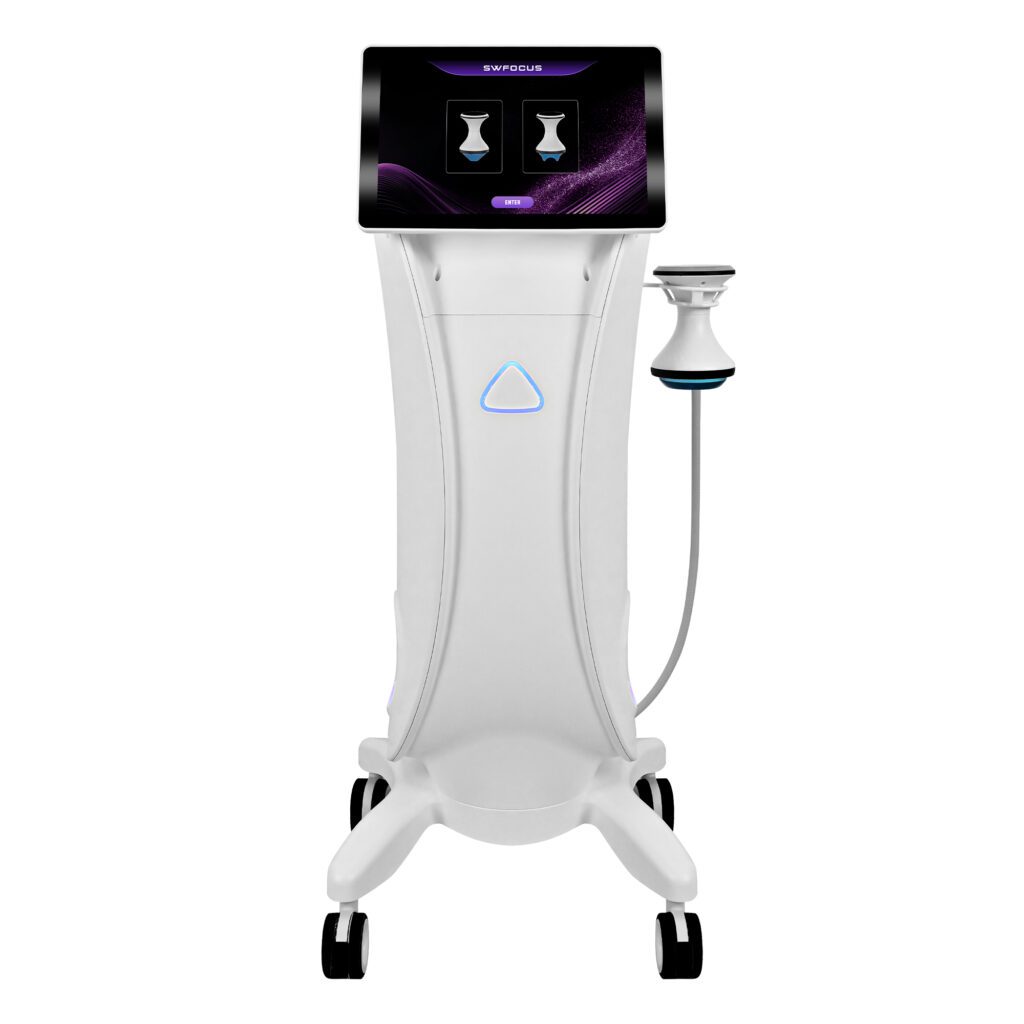
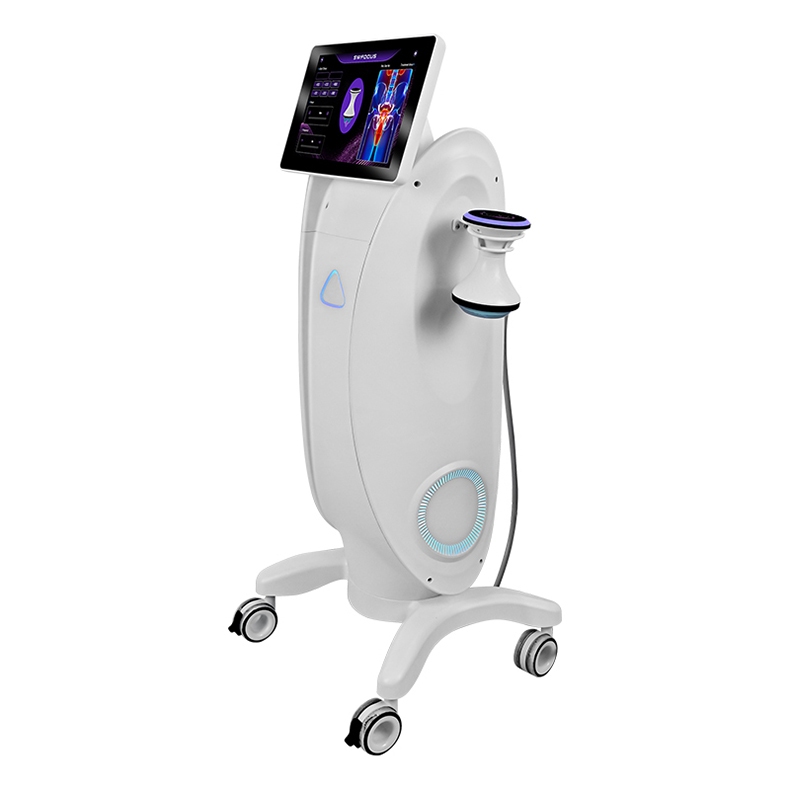
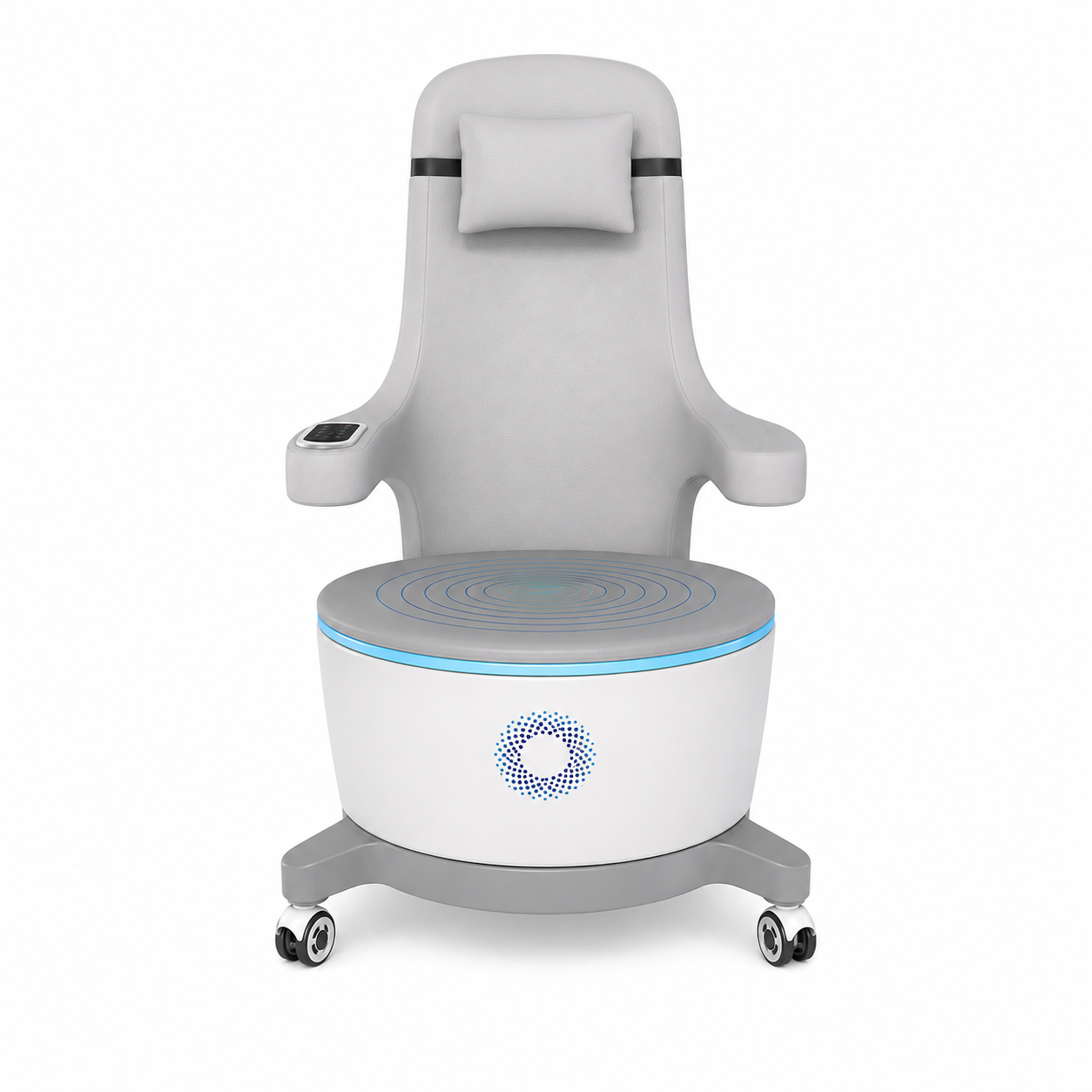
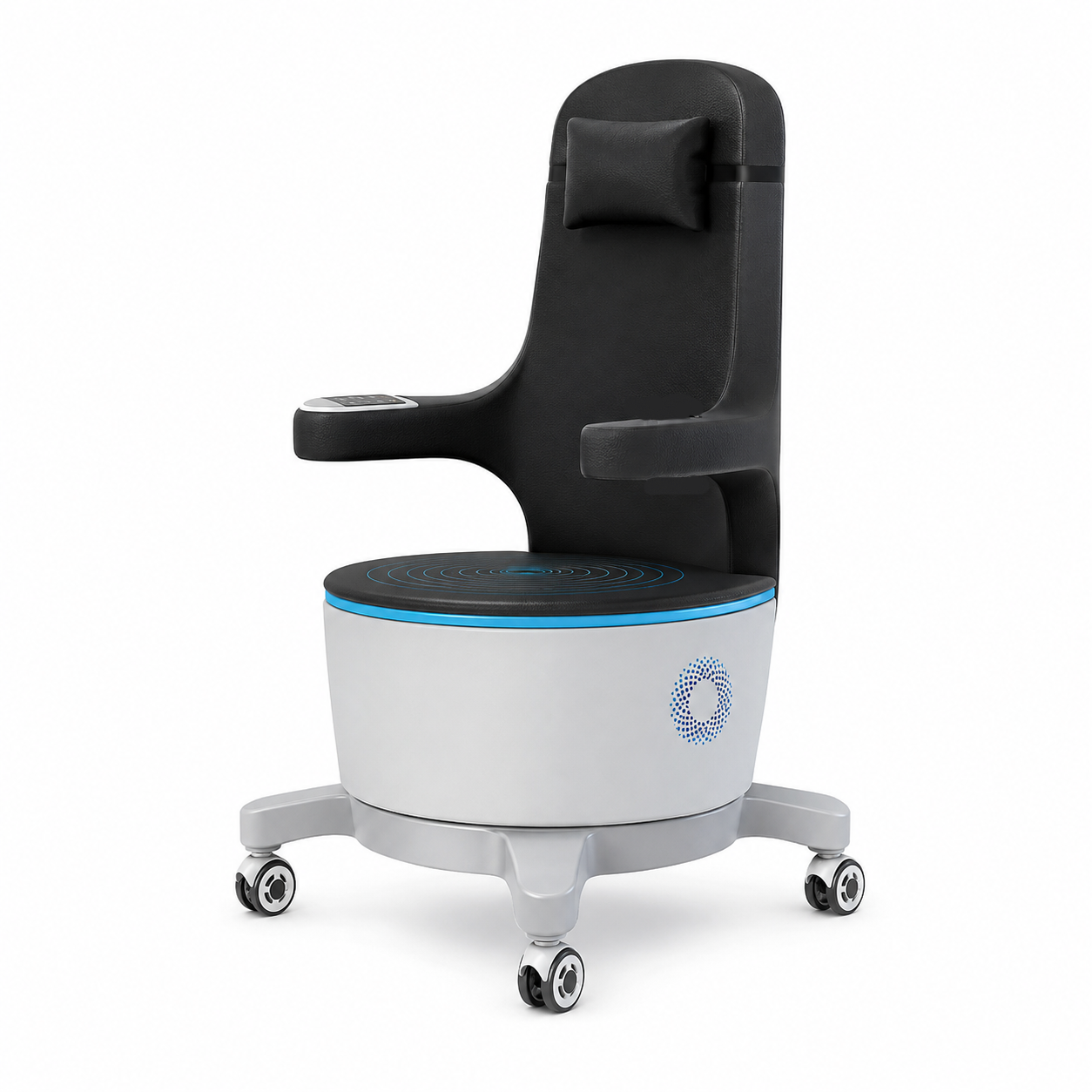
Para un pequeño salón de belleza, entrar en el mercado del contorno corporal puede parecer atractivo, pero también conlleva riesgos financieros. La criolipólisis, los sistemas electromagnéticos de alta intensidad y las plataformas médico-estéticas de alta gama pueden requerir una mayor inversión inicial, más espacio de tratamiento y un período de recuperación de la inversión más prolongado. Por ello, muchos propietarios de salones consideran primero la cavitación por radiofrecuencia o una máquina multifuncional para adelgazar.
La respuesta corta es: Sí, un dispositivo de radiofrecuencia multifuncional para el contorno corporal puede ser un producto práctico de entrada para un salón con presupuesto ajustado, pero solo si el salón lo considera una plataforma para fidelizar clientes en lugar de un atajo de bajo precio para garantizar la pérdida de grasa.
Los distribuidores deben evaluar cuatro aspectos antes de recomendar el equipo: la configuración tecnológica exacta, la demanda de los clientes locales, precios de servicio realistas y la capacidad del salón para ofrecer tratamientos seguros y uniformes.
Páginas relevantes de SHEFMON sobre este tema:
- Categoría de productos de cavitación por radiofrecuencia de SHEFMON
- A0928 Super Lipo Láser, RF y Estimulador Muscular 3 en 1
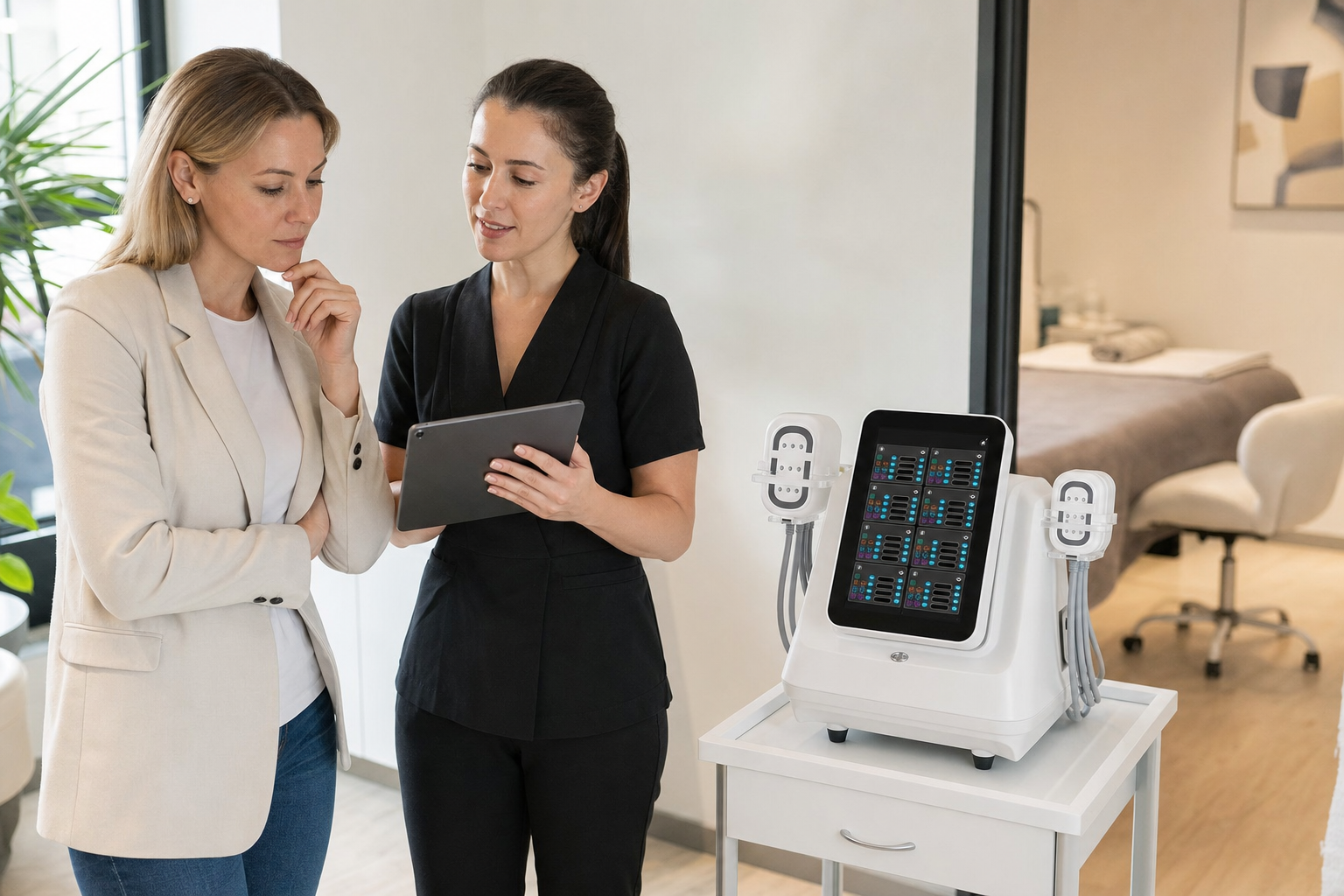
1. ¿Por qué los salones de belleza de bajo presupuesto consideran los equipos de radiofrecuencia para el contorno corporal?
Los salones pequeños generalmente no quieren que su primera compra de un equipo de remodelación corporal suponga una gran inversión en una sola máquina. Necesitan un dispositivo que se adapte a una sala de tratamiento ya existente, que permita el uso del mismo personal capacitado y que facilite la atención a más de un cliente.
Una plataforma RF multifuncional puede resultar atractiva porque puede brindar soporte para el posicionamiento de servicios en torno a:
- Remodelación y firmeza corporal
- Paquetes de servicios para abdomen, cintura, brazos y muslos
- Calentamiento por radiofrecuencia y soporte reafirmante de la piel
- Servicios de cuidado corporal de luz roja
- estimulación muscular asistida por EMS
- Programas de adelgazamiento y bienestar de varias sesiones
Esta gama ofrece al salón diversas opciones para ofrecer un servicio sin necesidad de adquirir máquinas específicas para cada función. Para el distribuidor, también facilita la primera conversación con el cliente: no se le pide que monte un centro de adelgazamiento completo desde el primer día.
Sin embargo, un precio de compra bajo por sí solo no garantiza la viabilidad comercial de una máquina. El salón aún necesita una clientela suficiente y recurrente, protocolos claros y una comercialización responsable.
2. Primero, confirme qué hace realmente la máquina.
El término “cavitación por radiofrecuencia” se usa ampliamente en el mercado de equipos de belleza, pero puede referirse a diferentes combinaciones tecnológicas. Un distribuidor nunca debe asumir que todas las máquinas de esta categoría incluyen la misma fuente de energía.
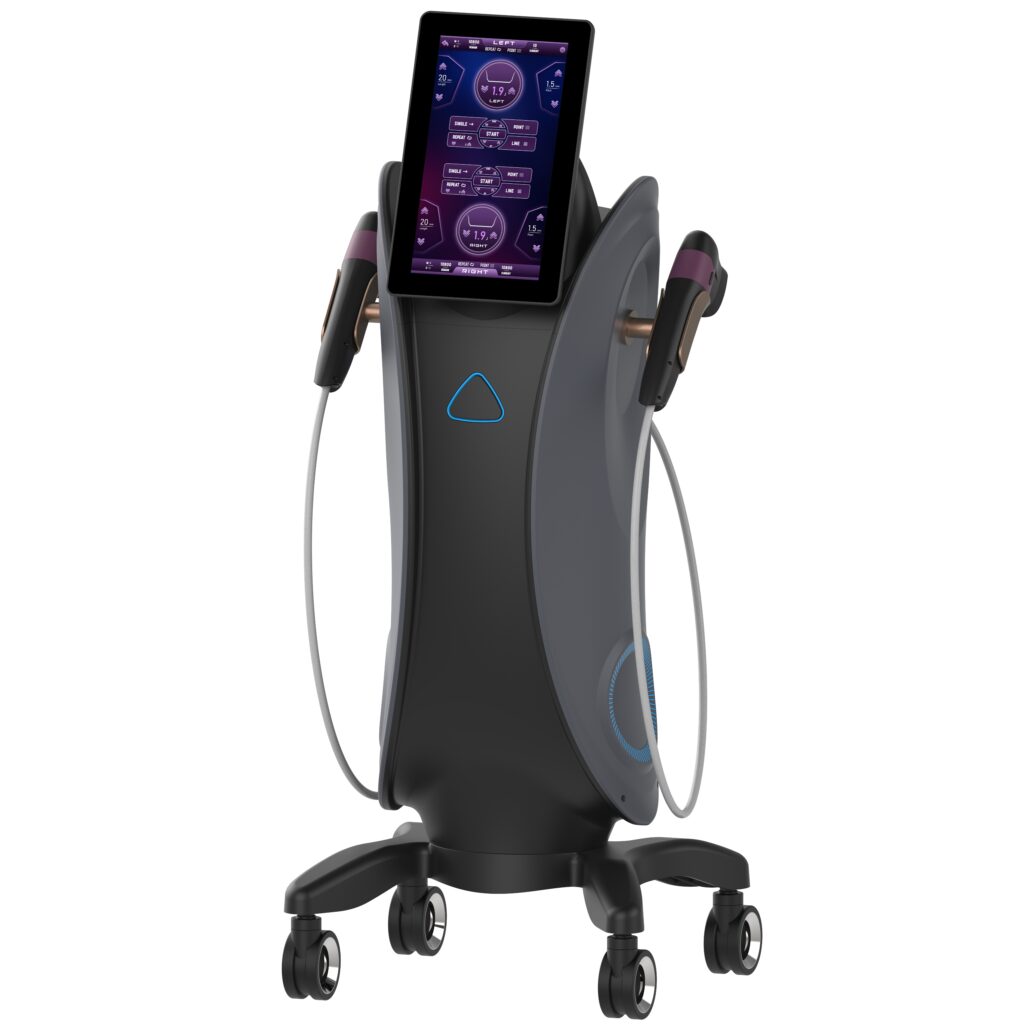
Por ejemplo, el SHEFMON A0928 se presenta como un sistema 3 en 1 que combina funciones de radiofrecuencia (RF), electroestimulación muscular (EMS) y láser de liposoma de luz roja. Según la página del producto actual, el sistema utiliza:
- Frecuencia de radio de 1 MHz
- Estimulación de frecuencia intermedia modulada en amplitud
- Placas de luz roja de 650-658 nm
- Ocho mangos de tratamiento controlados independientemente: cuatro grandes y cuatro pequeños
Esta configuración no es la misma que la de una pieza de mano de cavitación ultrasónica tradicional de 40 kHz. Por lo tanto, los distribuidores deberían vender el A0928 de acuerdo con sus funciones publicadas de RF, EMS y luz roja, en lugar de utilizar afirmaciones genéricas sobre cavitación ultrasónica.
Antes de realizar el pedido, confirme la hoja de datos actual, los tiradores incluidos, el voltaje, el tipo de enchufe, el idioma del software y la documentación de conformidad local. Las configuraciones del producto pueden actualizarse, por lo que el contrato de compra debe especificar la versión exacta que se suministrará.
3. Por qué un sistema multifunción puede ser adecuado para un salón pequeño.
La principal ventaja es la flexibilidad del servicio por unidad de inversión.
El modelo A0928 utiliza múltiples placas de tratamiento en lugar de requerir que el operador sostenga una sola pieza de mano durante toda la sesión. Esto puede ayudar a un salón a establecer un flujo de trabajo estructurado para el cuidado corporal, mientras el operador supervisa la comodidad del cliente y los ajustes.
Sus placas, tanto grandes como pequeñas, permiten realizar tratamientos en diferentes zonas. Un salón puede diseñar paquetes para áreas más extensas, como el abdomen o los muslos, y utilizar placas más pequeñas para zonas más reducidas, siempre que se cuente con la formación adecuada y se siga el protocolo aprobado.
Para un salón de belleza con presupuesto limitado, esto puede generar tres beneficios comerciales:
- Menor barrera de entrada para el lanzamiento de una nueva categoría. El salón puede tantear la demanda local antes de invertir en una cartera más amplia de tratamientos de remodelación corporal.
- Más opciones de paquetes. La radiofrecuencia, la electroestimulación muscular y el posicionamiento con luz roja pueden servir de base para diversas conversaciones sobre el cuidado corporal, en lugar de centrarse en un único tratamiento específico.
- Potencial de visitas repetidas. Estos servicios suelen venderse como un curso planificado en lugar de una cita individual, lo que puede mejorar la fidelización de los clientes si se gestionan correctamente las expectativas.
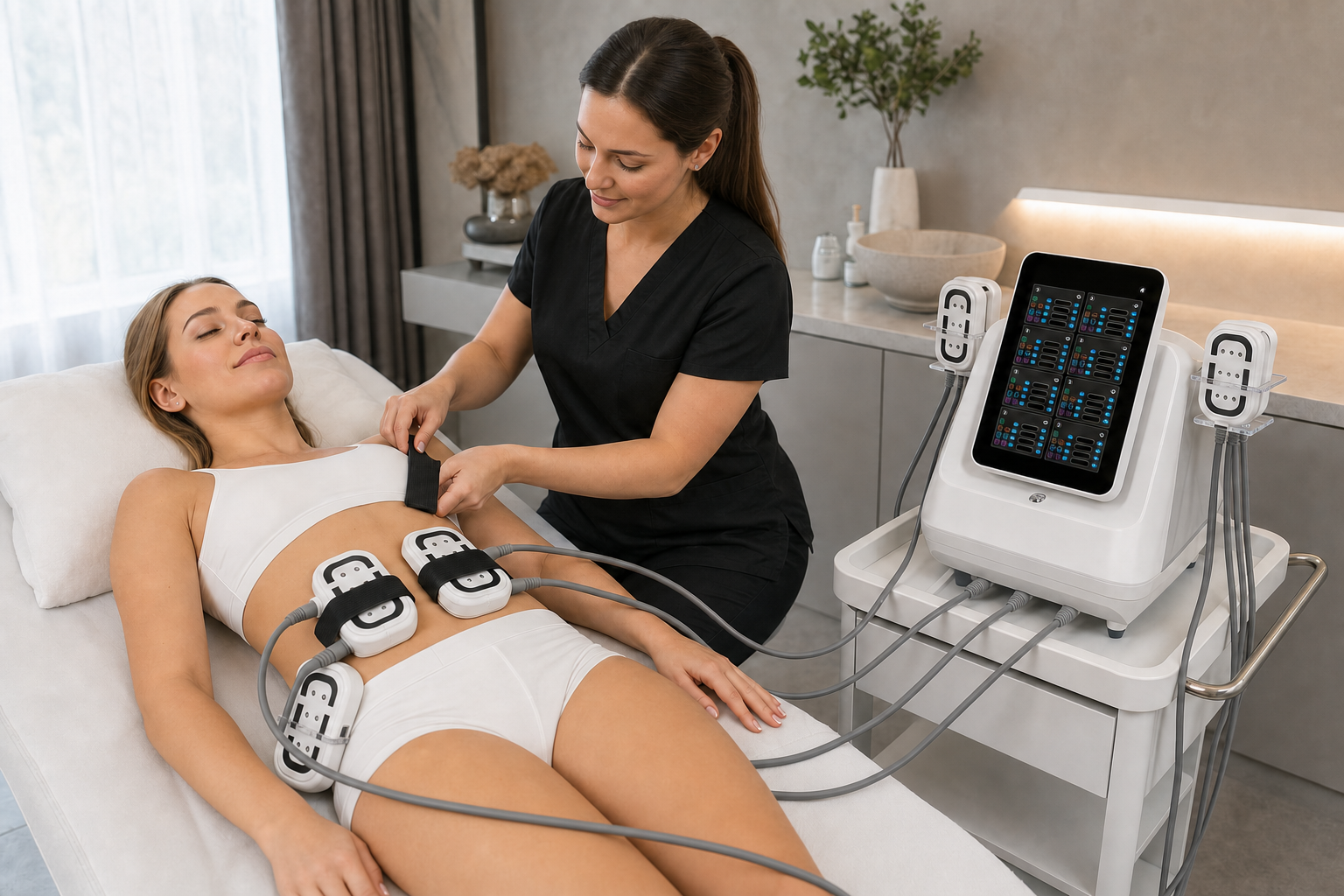
4. La verdadera cuestión no es el precio de la máquina, sino el retorno de la inversión.
Un salón de belleza debe calcular el coste total del lanzamiento, no solo el presupuesto del proveedor.
La inversión inicial real puede incluir:
- Precio de la máquina
- Transporte internacional y seguro
- Aranceles de importación e impuestos locales
- Gastos de aduana o de agente aduanal
- Capacitación del personal
- Preparación de la camilla de tratamiento, el carrito y la habitación.
- Correas, materiales de protección y productos de limpieza.
- Marketing y promociones de lanzamiento
- Reserva de garantía y repuestos futuros
- Costes de registro o cumplimiento locales, cuando corresponda.
El distribuidor puede ayudar al comprador a utilizar una fórmula sencilla para calcular el punto de equilibrio:
Sesiones pagadas de equilibrio = Costo total de lanzamiento / Margen de contribución por sesión pagada
El margen de contribución por sesión se refiere al precio de venta después de deducir los costos directos de la prestación de dicho servicio. El comprador debe utilizar una estimación de utilización conservadora, en lugar de asumir que se reservarán todas las horas disponibles.
Por ejemplo, si un salón solo puede vender diez sesiones de pago al mes, su cálculo de rentabilidad debería basarse en diez sesiones, no en la capacidad máxima teórica de la máquina. Una previsión más lenta pero creíble resulta más útil que una promesa de ventas agresiva.
5. ¿Qué tipo de salón de belleza es el más adecuado?
Es más probable que un sistema de contorno corporal por radiofrecuencia funcione en un salón que ya tiene clientes que preguntan sobre la firmeza corporal, la apariencia de la cintura, el cuidado corporal después de un cambio de peso o los servicios de modelado corporal no invasivos.
Entre los posibles compradores suelen figurar:
- Pequeños salones de belleza añaden su primer servicio corporal.
- Los centros de cuidado de la piel se expanden más allá de los tratamientos faciales.
- Estudios de masaje o bienestar que ofrecen paquetes de cuidado corporal de pago.
- Salones con servicios existentes de adelgazamiento, cuidado linfático o postratamiento.
- Nuevos estudios de remodelación corporal están evaluando la demanda antes de adquirir plataformas premium.
El salón ya debería contar con una sala de tratamiento limpia, personal que pueda seguir los protocolos y suficiente capacidad para atender a clientes habituales.
6. Cuando no es la primera compra correcta
Es posible que el dispositivo no sea el mejor producto inicial si el salón no tiene una clientela fija de productos para el cuidado corporal, no cuenta con un operador capacitado o no tiene una forma clara de vender paquetes de varias sesiones.
También resulta inadecuado cuando el propietario espera que la máquina:
- Producir pérdida de peso médica
- Reemplazar la dieta, el ejercicio o la atención médica.
- Garantizamos la eliminación permanente de grasa.
- Ofrecer el mismo resultado a todos los clientes.
- Operar sin control de clientes ni monitorización de temperatura.
- Recupera su coste únicamente mediante sesiones únicas con descuento.
En algunos mercados, un salón puede generar una mayor rotación de clientes con servicios como la depilación, el cuidado facial u otros servicios que los clientes ya conocen. Un distribuidor debería comparar la demanda local en lugar de recomendar automáticamente tratamientos de remodelación corporal solo porque el precio del equipo sea menor.
7. La seguridad y la capacitación siguen siendo importantes en un dispositivo económico.
Una menor inversión no elimina la necesidad de una gestión profesional.
La radiofrecuencia produce calentamiento tisular, mientras que la electroestimulación muscular produce estimulación eléctrica y contracciones musculares. Las placas de luz roja también requieren una colocación y contacto correctos. El personal debe comprender la configuración del tratamiento, la colocación, la comodidad del paciente, la duración de la sesión y los procedimientos de parada de emergencia.
La formación debe abarcar al menos:
- Consulta con el cliente y evaluación de contraindicaciones
- Selección y colocación correctas de la placa
- Uso de correas sin presión excesiva
- Controles continuos de la piel y del confort.
- Progresión energética conservadora
- Limpieza y desinfección entre clientes.
- Inspección de cables, conectores y placas de tratamiento
- Documentación de la configuración y la respuesta del cliente
- Pasos claros a seguir si se produce alguna molestia o reacción cutánea inesperada.
Las normativas locales y el manual de usuario proporcionado siempre deben tener prioridad sobre los protocolos genéricos en línea.
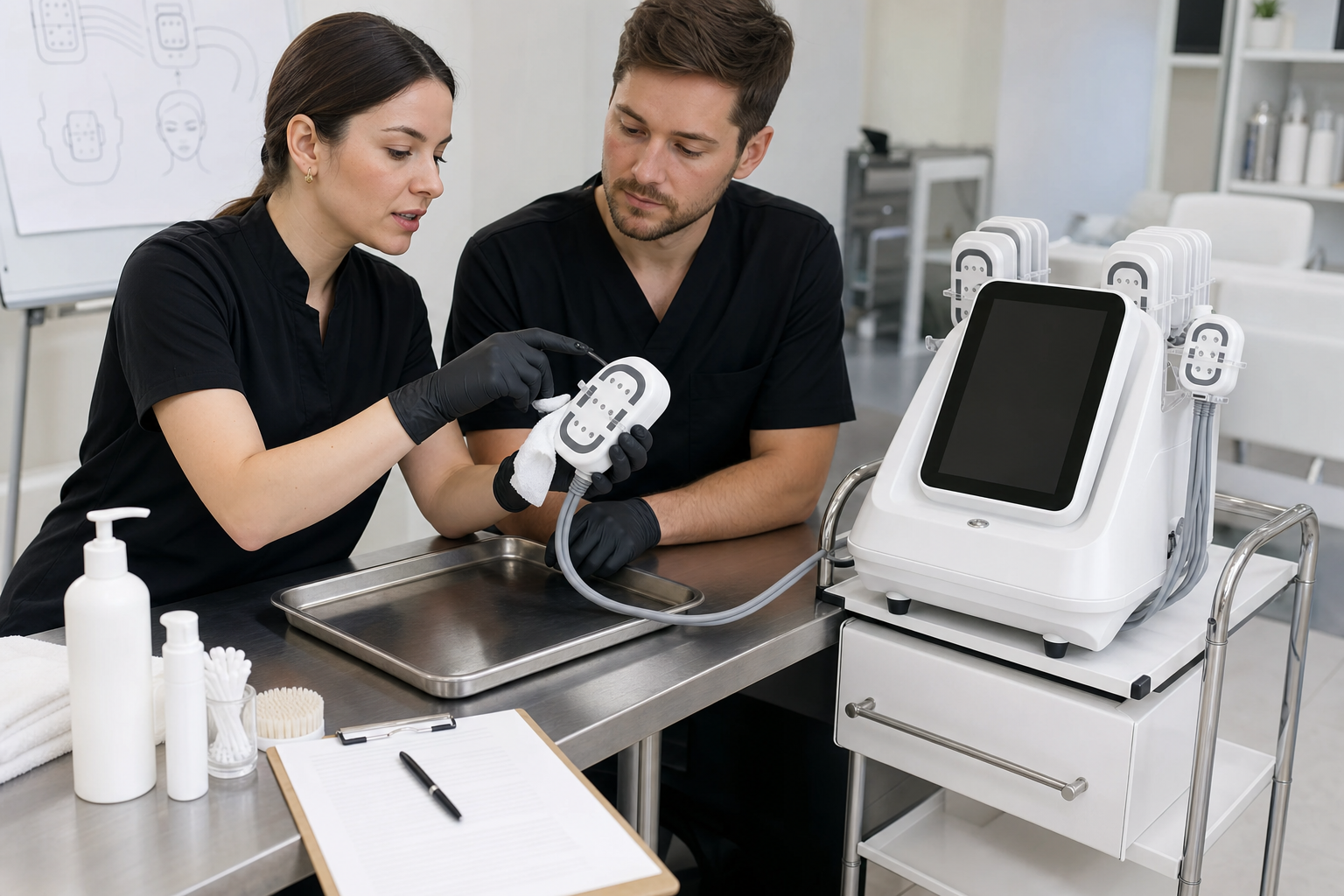
8. Cómo deben posicionar los salones el servicio
El mejor mensaje no es "eliminación de grasa barata". Esa frase genera expectativas poco realistas y aumenta el riesgo de quejas.
Una explicación más creíble por parte del cliente es:
“Este es un servicio no invasivo de remodelación y reafirmación corporal que combina calentamiento por radiofrecuencia, estimulación muscular y terapia de luz roja. Primero evaluamos sus objetivos y si es adecuado para usted, y luego le recomendamos un plan de tratamiento. Los resultados y el número de sesiones varían según cada cliente.”
El salón puede adaptar el servicio a objetivos prácticos del cliente, tales como:
- Programa de cuidado corporal para el abdomen y la cintura
- Soporte firme para brazos o muslos
- Contorno corporal después de un cambio de peso
- Paquete de bienestar y confianza corporal
- Complemento de membresía para el cuidado corporal
El nombre del servicio y las afirmaciones deben cumplir con las normas locales de publicidad y práctica profesional. Evite términos como “liposucción instantánea”, “pérdida de grasa garantizada” o “eliminación permanente de grasa”.”
9. Cómo los distribuidores pueden facilitar la venta del producto
Para un comprador que tiene un presupuesto ajustado, el soporte del distribuidor puede ser tan importante como la propia máquina.
Un paquete de ventas más sólido puede incluir:
- Hoja de configuración del producto
- Lista de verificación de asas incluidas
- Capacitación en instalación y operación
- Formulario de consulta del cliente
- Estructura sugerida del menú de servicio
- Guía de fotografía de antes y después
- Lista de verificación de limpieza y mantenimiento
- Flujo de resolución de problemas
- Condiciones de garantía y lista de repuestos
- Disponibilidad de repuestos para cables, placas, correas y conectores.
Esto convierte la oferta de "una máquina económica" en una nueva categoría de negocio manejable.
Los distribuidores también deberían ayudar a los salones a planificar una estrategia de actualización. Si el servicio inicial funciona bien, el salón podría añadir posteriormente criolipólisis, EMSlim, masaje con rodillos de vacío u otras categorías de remodelación corporal. La primera máquina debe generar confianza y flujo de caja, no ser una compra aislada.
10. Una lista de verificación práctica para la toma de decisiones.
Antes de recomendar un dispositivo de radiofrecuencia para remodelar el cuerpo, pregunte al dueño del salón:
- ¿Cuántas clientas actuales preguntan sobre el modelado o la firmeza corporal?
- ¿Qué precio de tratamiento es realista en el mercado local?
- ¿Cuántas sesiones de pago puede ofrecer el salón al mes, de forma conservadora?
- ¿El salón cuenta con una cabina de tratamiento privada y un profesional capacitado?
- ¿Puede el salón vender un curso o una membresía en lugar de depender de sesiones individuales?
- ¿Están permitidas localmente las reivindicaciones previstas?
- ¿Existen placas, cables y conectores de repuesto disponibles a largo plazo?
- ¿Existe una ruta de actualización clara si aumenta la demanda?
Si las respuestas son claras, un sistema multifuncional puede ser un buen punto de partida. Si el comprador no puede responderlas, el distribuidor debería definir el modelo de negocio antes de hablar del precio más bajo.
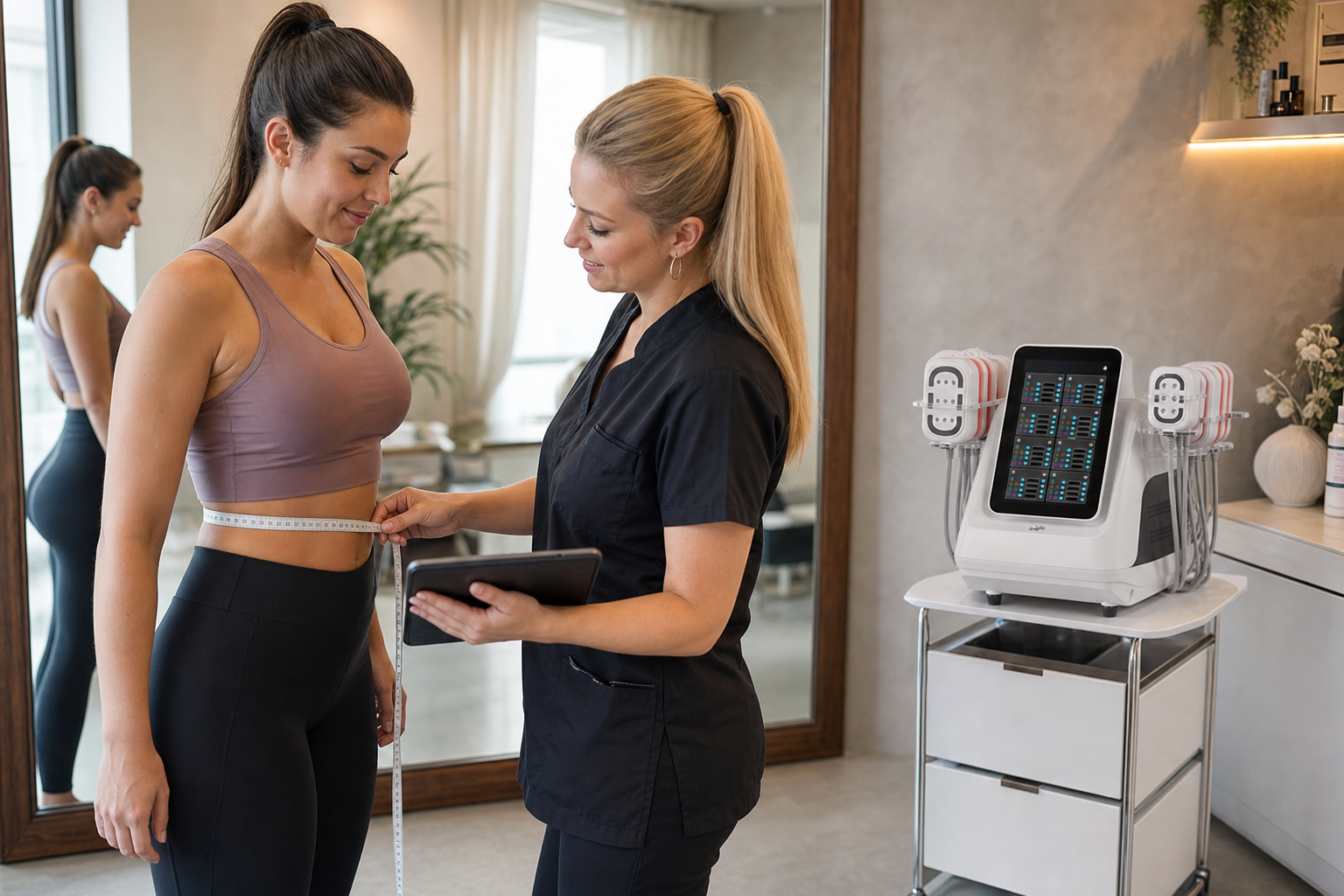
Respuesta final
Un dispositivo de cavitación por radiofrecuencia puede ayudar a un salón de belleza con presupuesto limitado a incursionar en el mercado del contorno corporal, especialmente si combina varias funciones comercializables en una plataforma compacta. El SHEFMON A0928 es relevante para esta estrategia, ya que combina placas de tratamiento de radiofrecuencia, electroestimulación muscular y luz roja con mangos grandes y pequeños de control independiente.
Pero la ventaja comercial no reside únicamente en el precio del equipo. El salón necesita una demanda existente de productos para el cuidado corporal, protocolos operativos seguros, afirmaciones realistas, paquetes de servicios recurrentes y un cálculo de rentabilidad conservador.
Para los distribuidores, el mejor posicionamiento es: una plataforma accesible de modelado corporal inicial con opción de actualización., No es un sustituto barato para la reducción médica de grasa.
Preguntas frecuentes
¿Es la A0928 una máquina de cavitación ultrasónica tradicional de 40 kHz?
La página de producto actual de SHEFMON describe el A0928 como una combinación de funciones de radiofrecuencia (RF), electromagnéticas (EMS) y luz roja de 650-658 nm. No debe comercializarse como un sistema de cavitación ultrasónica de 40 kHz a menos que la especificación técnica suministrada confirme explícitamente dicha configuración.
¿Puede un pequeño salón de belleza obtener beneficios con un dispositivo de radiofrecuencia para remodelar el cuerpo?
Sí, si el salón cuenta con una clientela adecuada, precios locales realistas y suficientes citas recurrentes. El comprador debe calcular el retorno de la inversión utilizando el margen de contribución y una utilización mensual conservadora.
¿Cuántos mangos de tratamiento incluye el A0928?
La página del producto indica que incluye ocho manijas de control independiente: cuatro grandes y cuatro pequeñas. Confirme la configuración final en el presupuesto y el contrato de compra.
¿El servicio es adecuado para todos los clientes?
No. La idoneidad del paciente depende de su historial médico, la zona de tratamiento, sus expectativas y la normativa profesional local. El personal debe seguir el protocolo y las indicaciones sobre contraindicaciones proporcionados.
¿Pueden los salones de belleza anunciar la pérdida de grasa garantizada?
No deberían. Un posicionamiento más seguro incluye el contorno corporal, el soporte firme y los servicios de cuidado corporal no invasivos. Los resultados varían y este servicio no debe presentarse como un sustituto del control médico del peso.
¿Qué costes recurrentes debe explicar un distribuidor?
El comprador debe prever los gastos de limpieza, correas o materiales de protección, cables y placas de repuesto, tiempo del personal, marketing, mantenimiento y posibles costes de envío de piezas de repuesto.
¿Qué debe comprobar un salón de belleza antes de importar la máquina?
Confirme el voltaje, el tipo de enchufe, el idioma del software, las asas incluidas, la garantía, la capacitación, el suministro de repuestos, las condiciones de envío y los documentos necesarios para la importación o el registro local.
¿Cuándo debería un salón de belleza actualizarse a otra tecnología de remodelación corporal?
Una mejora tiene sentido cuando el primer servicio tiene reservas estables y los clientes comienzan a solicitar un objetivo de tratamiento diferente, como la criolipólisis localizada, un posicionamiento más preciso para esculpir los músculos o un paquete de contorno corporal de mayor calidad.