¿Qué es la fisioterapia con ondas de choque?
Definición y antecedentes médicos
La fisioterapia por ondas de choque, también conocida como Terapia de ondas de choque extracorpóreas (ESWT)Es un método de tratamiento moderno y no invasivo que utiliza ondas acústicas de alta energía para estimular la curación en tejidos lesionados o dolorosos. Introducida originalmente a principios de la década de 1980 para disolver cálculos renales, esta tecnología ha evolucionado hasta convertirse en una herramienta poderosa en ortopedia y medicina de rehabilitación.
Hoy en día, la terapia de ondas de choque extracorpóreas (ESWT) se utiliza ampliamente en clínicas, centros de rehabilitación deportiva y consultorios de fisioterapia porque ofrece una combinación única de alivio del dolor, regeneración de tejidos y mejora de la movilidad.—sin necesidad de cirugía ni medicamentos.
Lo que distingue a la terapia de ondas de choque es su capacidad para alcanzar capas profundas de tejido a las que las terapias tradicionales a menudo no llegan. Imagínelo como enviar "microterremotos" controlados al tejido dañado: estas ondas estimulan los procesos de reparación a nivel celular, algo que el masaje o el ultrasonido simplemente no pueden igualar.
Evolución de la tecnología ESWT
En las últimas décadas, la terapia de ondas de choque ha experimentado un rápido avance tecnológico. Inicialmente limitada a voluminosas máquinas de uso hospitalario, los sistemas modernos son ahora compactos, precisos y personalizables para diferentes aplicaciones clínicas.
La investigación ha ampliado su uso más allá de la urología a áreas como:
- lesiones de tendones
- afecciones de dolor crónico
- Rehabilitación deportiva
- Trastornos ortopédicos
Esta evolución ha transformado la ESWT en una de las Las tecnologías de fisioterapia más demandadas a nivel mundial., especialmente ahora que los pacientes buscan cada vez más alternativas no invasivas a la cirugía.
Cómo funciona la terapia de ondas de choque
Principios científicos detrás de las ondas de choque
Las ondas de choque son ondas sonoras de alta energía que se caracterizan por un rápido aumento de la presión seguido de una fase negativa. Estas ondas viajan a través de los tejidos y transmiten energía mecánica directamente a las zonas afectadas.
A diferencia del ultrasonido regular, las ondas de choque tienen hasta 1000 veces mayor presión máxima, lo que las hace mucho más eficaces para estimular la reparación de los tejidos profundos.
Cuando estas ondas impactan la zona afectada, crean:
- Esfuerzo mecánico
- Microtraumatismos (controlados y beneficiosos)
- Cavitación (formación y colapso de burbujas)
Este proceso activa la respuesta curativa natural del cuerpo.
Efectos biológicos en el tejido humano
Aquí es donde las cosas se ponen interesantes. La terapia de ondas de choque no solo enmascara el dolor, sino que realmente... soluciona el problema subyacente.
Los estudios científicos demuestran que la terapia de ondas de choque extracorpóreas (ESWT) puede:
- Estimular la formación de nuevos vasos sanguíneos (neovascularización)
- Aumentar la producción de colágeno
- Promover la regeneración celular
- Descomponer los depósitos calcificados
Imagínalo como reiniciar el sistema de reparación de tu cuerpo, especialmente en áreas donde la curación se ha estancado debido a la inflamación crónica o al uso excesivo.
Tipos de máquinas de terapia de ondas de choque
Tecnología de ondas de choque focalizadas
La terapia de ondas de choque focalizadas administra energía a una profundidad precisa dentro del cuerpo. Se usa comúnmente para afecciones más profundas como:
- Dolor de cadera
- Lesiones profundas de los tendones
- Problemas de hombro calcificados
Este método permite a los médicos tratar tejidos específicos sin afectar las zonas circundantes.
Tecnología de ondas de choque radiales
La terapia de ondas de choque radiales propaga la energía hacia afuera, lo que la hace ideal para:
- Condiciones a nivel de superficie
- tensión muscular
- Amplias áreas de tratamiento
La mayoría de las clínicas modernas utilizan una combinación de ambas tecnologías para maximizar la eficacia del tratamiento.
Beneficios clave de la fisioterapia con ondas de choque
Mecanismos de reducción del dolor
Una de las principales razones por las que los pacientes eligen la terapia de ondas de choque es Alivio del dolor rápido y eficazLos estudios clínicos muestran una reducción significativa del dolor a las pocas semanas de tratamiento.
Las ondas de choque funcionan de la siguiente manera:
- Interrumpir las señales de dolor
- Reducir la inflamación
- Estimulación de la liberación de endorfinas
Los pacientes suelen describir el efecto como "por fin obtener alivio después de meses o años de malestar".
Regeneración y curación de tejidos
Además de aliviar el dolor, la terapia de ondas de choque extracorpóreas (ESWT) acelera la curación al activar los mecanismos de reparación del cuerpo. Esto resulta especialmente útil para afecciones crónicas en las que la curación se ha ralentizado.
En afecciones como la fascitis plantar o las lesiones de tendones, los estudios han demostrado Mejoras de moderadas a significativas en la función y el dolor con el tiempo..
Este doble beneficio —alivio del dolor + curación— es lo que hace que la terapia de ondas de choque sea tan poderosa.
Aplicaciones clínicas y áreas de tratamiento
Trastornos musculoesqueléticos
La terapia de ondas de choque se utiliza comúnmente para tratar:
- Fascitis plantar
- codo de tenista
- tendinitis del hombro
- Dolor de rodilla
- tendinopatía de Aquiles
Estas afecciones suelen ser resistentes a los tratamientos tradicionales, lo que convierte a la terapia de ondas de choque extracorpóreas (ESWT) en una alternativa preferida.
Lesiones deportivas y rehabilitación
A los atletas les encanta la terapia de ondas de choque, y con razón.
Ayuda:
- Acelerar la recuperación
- Reduzca el tiempo de inactividad
- Mejorar el rendimiento
Desde atletas profesionales hasta corredores de fin de semana, la terapia de ondas de choque extracorpóreas se está convirtiendo en una práctica común. Solución de referencia para la gestión de lesiones.
Terapia de ondas de choque frente a tratamientos tradicionales
Tabla comparativa de métodos de tratamiento
| Método de tratamiento | Invasividad | Tiempo de recuperación | Eficacia | Nivel de riesgo |
|---|---|---|---|---|
| Terapia de ondas de choque | No invasivo | Mínimo | Alto | Bajo |
| Cirugía | Altamente invasivo | Largo | Alto | Alto |
| Medicamento | No invasivo | Alivio a corto plazo | Moderado | Medio |
| Fisioterapia | No invasivo | Moderado | Moderado | Bajo |
Por qué las clínicas prefieren la terapia de ondas de choque extracorpóreas (ESWT)
Las clínicas prefieren cada vez más la terapia de ondas de choque porque ofrece:
- Resultados más rápidos
- Mayor satisfacción del paciente
- Menor riesgo en comparación con la cirugía.
Es una situación beneficiosa para ambas partes: profesionales y pacientes.
Explicación del procedimiento de tratamiento
¿Qué sucede durante una sesión?
Una sesión típica dura entre 15 y 30 minutos. Durante el tratamiento:
- Se aplica un gel sobre la piel.
- El dispositivo emite ondas de choque controladas.
- El profesional ajusta la intensidad en función de la comodidad del paciente.
La mayoría de los pacientes describen la sensación como ligeramente incómoda, pero tolerable.
¿Cuántas sesiones son necesarias?
Los planes de tratamiento varían, pero la mayoría de los pacientes requieren:
- 3–6 sesiones
- Intervalos semanales
Las mejoras suelen ser perceptibles tras tan solo unos pocos tratamientos.
Seguridad, riesgos y efectos secundarios
¿Quién debe evitar el tratamiento?
Si bien la terapia de ondas de choque es generalmente segura, no es adecuada para todo el mundo.
Evite la terapia ESWT si tiene:
- Embarazo
- trastornos de la coagulación sanguínea
- Infecciones activas
- Tumores en la zona de tratamiento
Los efectos secundarios comunes incluyen dolor leve, enrojecimiento o hematomas, que generalmente desaparecen en pocos días.
Cómo elegir la máquina de ondas de choque adecuada
Características a tener en cuenta en los dispositivos profesionales
Al seleccionar una máquina de ondas de choque, tenga en cuenta lo siguiente:
- Niveles de energía y adaptabilidad
- Tipos de aplicadores
- Interfaz de usuario
- Durabilidad y diseño
Las máquinas de alta calidad proporcionan mejores resultados y una fiabilidad a largo plazo.
¿Por qué invertir en equipos de ondas de choque? (Para clínicas y distribuidores)
Retorno de la inversión y demanda del mercado
La demanda de tratamientos no invasivos se está disparando, y la terapia de ondas de choque se sitúa justo en el centro de esta tendencia.
Las clínicas que invierten en ESWT se benefician de:
- Márgenes de tratamiento elevados
- Visitas repetidas del paciente
- Creciente demanda mundial
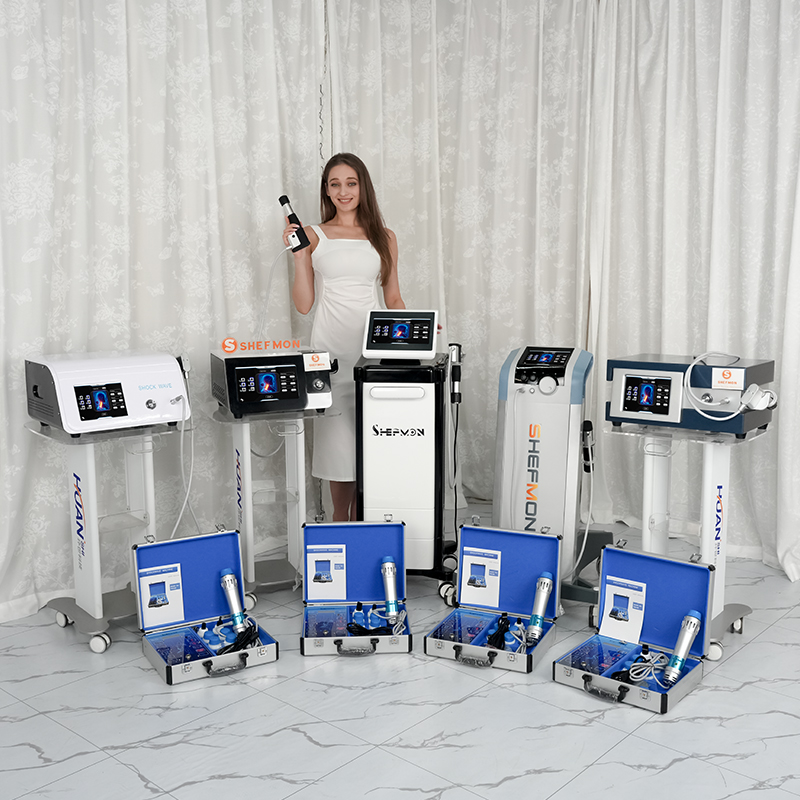
Para distribuidores y socios OEM/ODM como BELLEZA DE SHEFMONEsto representa una enorme oportunidad para crecer en el floreciente mercado de la medicina estética y la rehabilitación.
Conclusión
Fisioterapia por ondas de choque es más que un simple tratamiento, es un tecnología revolucionaria Redefine la forma en que abordamos el manejo del dolor y la rehabilitación. Al combinar ciencia, innovación y eficacia en la práctica, ofrece una alternativa poderosa a los procedimientos invasivos y al uso prolongado de medicamentos.
A medida que la demanda de los pacientes continúa cambiando hacia soluciones seguras, no invasivas y eficacesLa terapia de ondas de choque está llamada a convertirse en una piedra angular de las clínicas de fisioterapia modernas en todo el mundo.
Preguntas frecuentes
1. ¿Es dolorosa la terapia de ondas de choque?
Puede causar molestias leves durante el tratamiento, pero la mayoría de los pacientes lo toleran bien y consideran que los resultados merecen la pena.
2. ¿Con qué rapidez actúa la terapia de ondas de choque?
Muchos pacientes notan mejoría después de 1 a 3 sesiones, y el progreso continúa durante varias semanas.
3. ¿Está aprobada la terapia de ondas de choque por la FDA?
Sí, la terapia de ondas de choque está aprobada por la FDA para diversas afecciones médicas, especialmente trastornos musculoesqueléticos.
4. ¿Puede la terapia de ondas de choque sustituir a la cirugía?
En muchos casos, sí. A menudo se utiliza como una alternativa no invasiva antes de considerar opciones quirúrgicas.
5. ¿Cuánto duran los resultados?
Los resultados pueden ser duraderos, especialmente cuando se combinan con una rehabilitación adecuada y ajustes en el estilo de vida.