Teilen Sie optimierte Lösungen, professionelles Ventilwissen und Branchenneuigkeiten
Geben Sie die relevanten Begriffe oder Schlüsselwörter ein, die Sie benötigen. Die entsprechenden Artikel werden in den Suchergebnissen angezeigt. Sollten Sie die gewünschte Antwort nicht finden, kontaktieren Sie uns gerne. Wir helfen Ihnen gerne weiter. Oder senden Sie direkt eine E-Mail an beauty@shefmon.com
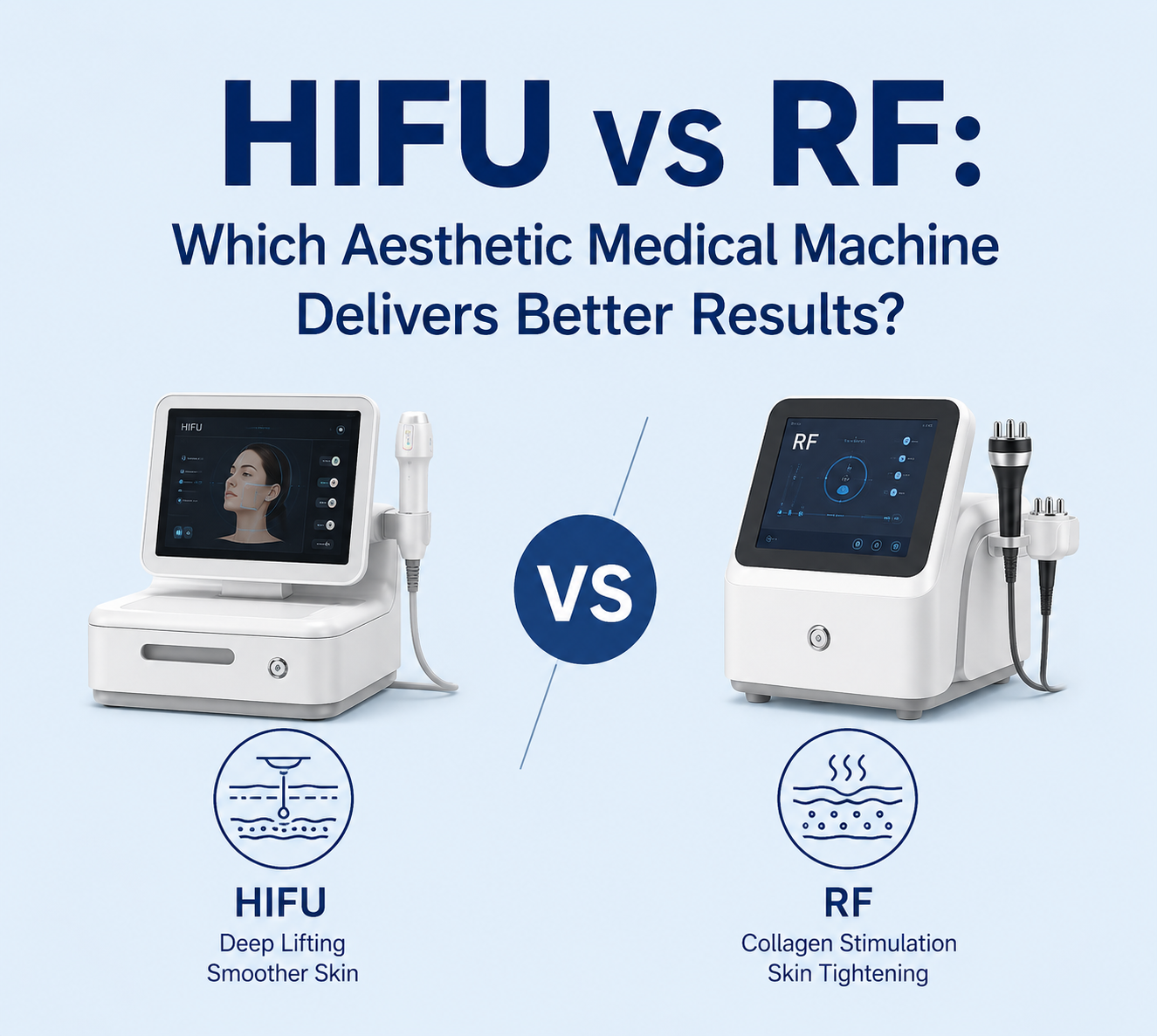
HIFU vs. RF: Welches ästhetische Medizingerät liefert bessere Ergebnisse?
- shefmon
Da die Nachfrage nach nicht-invasiven ästhetischen Behandlungen stetig wächst, investieren Kliniken und medizinische Spas vermehrt in fortschrittliche Technologien, die Hautstraffung, Lifting und Anti-Aging-Ergebnisse ohne Operation verbessern. Zu den beliebtesten Optionen zählen hochintensiver fokussierter Ultraschall (HIFU) und Radiofrequenzsysteme (RF). Beide Technologien sind in der ästhetischen Medizin weit verbreitet, wirken jedoch unterschiedlich und bieten jeweils spezifische Vorteile. Für Klinikbetreiber, Kosmetiker und Investoren ist es daher unerlässlich, die Unterschiede zwischen HIFU und RF zu verstehen, um das richtige ästhetische Medizingerät auszuwählen. Dieser Artikel vergleicht die beiden Technologien hinsichtlich Behandlungsmechanismen, Ergebnissen, Patientenerfahrung und wirtschaftlichem Nutzen, um die Entscheidung für die optimale Option zu erleichtern.
1. Funktionsweise von HIFU und RF verstehen
1.1 Was ist HIFU-Technologie?
HIFU oder Hochintensiver fokussierter Ultraschall, HIFU nutzt konzentrierte Ultraschallenergie, um tiefer liegende Gewebeschichten unter der Haut gezielt zu behandeln. Im Gegensatz zu vielen oberflächlichen Behandlungen kann HIFU das oberflächliche muskuläre Aponeurosensystem (SMAS) erreichen, dieselbe Gewebeschicht, die typischerweise bei chirurgischen Facelifts behandelt wird.
Die fokussierte Ultraschallenergie erzeugt kontrollierte thermische Koagulationspunkte im Gewebe, stimuliert die Kollagenproduktion und löst mit der Zeit eine natürliche Straffungsreaktion aus.
Aufgrund seiner Fähigkeit, tiefer liegende Strukturen zu erreichen, gilt HIFU oft als eine der effektivsten nicht-chirurgischen Lifting-Technologien, die heute verfügbar sind.
1.2 Was ist HF-Technologie?
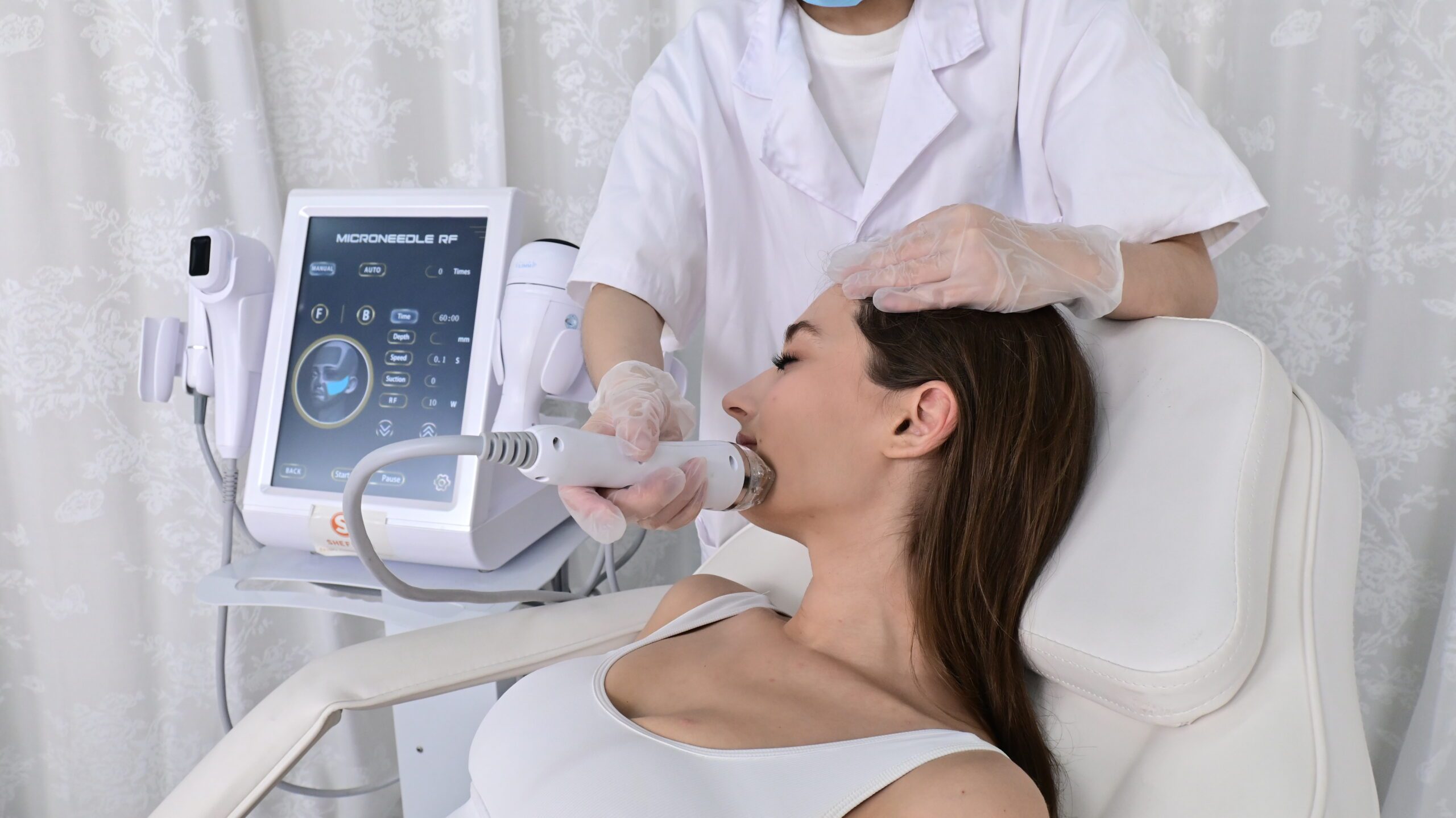
Die Radiofrequenztechnologie (RF) nutzt elektromagnetische Energie, um kontrollierte Wärme in der Haut und im Unterhautgewebe zu erzeugen. Die Wärme regt die Kollagenneubildung an, verbessert die Durchblutung und fördert die Hautstraffung.
Im Gegensatz zu HIFU wirkt Radiofrequenz (RF) in der Regel in der Dermis und den oberen Gewebeschichten, anstatt die SMAS-Schicht zu erreichen. Je nach Gerätetyp kann RF mittels monopolarer, bipolarer, multipolarer oder mikronadelgestützter Systeme abgegeben werden.
RF-Behandlungen werden häufig zur Hautstraffung, Faltenreduzierung, Verbesserung der Hautstruktur und Gesichtsverjüngung eingesetzt.
2. Vergleich der Behandlungstiefe und der Technologie
2.1 HIFU zielt auf tiefer liegende Gewebeschichten ab
Einer der größten Unterschiede zwischen HIFU und RF ist die Behandlungstiefe.
HIFU-Kartuschen können mehrere Tiefen anvisieren, darunter:
- 1,5 mm für oberflächliche Hautschichten
- 3,0 mm für tieferes dermales Gewebe
- 4,5 mm für die SMAS-Schicht
Durch die Fähigkeit, tieferliegende Strukturen zu erreichen, ist HIFU besonders effektiv bei der Straffung erschlaffter Haut und der Verbesserung der Gesichtskonturen.
2.2 RF konzentriert sich auf die dermale Erneuerung
Radiofrequenztherapie erwärmt primär die Dermis und das obere subkutane Gewebe. Die erzeugte Wärme regt die Kollagenkontraktion und -regeneration an, was zu einer strafferen und glatteren Haut führt.
Während RF im Allgemeinen nicht die gleiche Tiefe wie HIFU erreichen kann, sorgt es oft für eine gleichmäßigere Erwärmung im Behandlungsbereich und ist daher sehr effektiv für die allgemeine Verbesserung der Hautqualität.
3. Vergleich der Behandlungsergebnisse
3.1 Welche Technologie bietet eine bessere Lifting-Wirkung?
Wenn das Hauptziel eine Gesichtsstraffung ist, hat HIFU in der Regel einen Vorteil.
Da HIFU auf die SMAS-Schicht abzielt, kann es in Bereichen wie den folgenden sichtbare Lifting-Effekte erzielen:
- Kieferlinie
- Wangen
- Nacken
- Augenbrauenbereich
Patienten entscheiden sich häufig für HIFU, wenn sie eine nicht-operative Alternative zu einem Facelifting wünschen.
3.2 Welche Technologie verbessert die Hautstruktur besser?
Zur Verbesserung der Hautstruktur, der Elastizität und feiner Linien erzielt die Radiofrequenztherapie oft überlegene Ergebnisse.
Der gleichmäßige Erwärmungseffekt fördert die flächendeckende Kollagenproduktion in der Dermis und trägt so dazu bei:
- Reduziert feine Fältchen
- Verbesserung der Hautglätte
- Verbesserung der Hautfestigkeit
- Verfeinertes Porenbild
Für Patienten, die Wert auf Hautqualität und weniger auf ein Lifting legen, ist die Radiofrequenztherapie möglicherweise die bevorzugte Option.
4. Behandlungserfahrung und Genesung
4.1 Komfort während der Behandlung
Der Patientenkomfort ist ein wichtiger Faktor bei der Auswahl eines ästhetischen Medizingeräts.
HIFU-Behandlungen können ein tieferes Wärme- und Kribbelgefühl hervorrufen, da die Energie in bestimmten Gewebetiefen konzentriert wird. Manche Patienten verspüren während der Behandlung leichte Beschwerden, insbesondere in Bereichen mit dünnerer Haut.
Radiofrequenzbehandlungen werden im Allgemeinen als angenehmer empfunden, da die Wärme gleichmäßiger auf der Haut verteilt wird. Viele Patienten beschreiben Radiofrequenzbehandlungen als ein wohliges und entspannendes Erlebnis.
4.2 Ausfallzeiten und Wiederherstellung
Sowohl HIFU als auch RF gelten als nicht-invasive Verfahren mit minimaler Ausfallzeit.
Nach einer HIFU-Behandlung können Patienten vorübergehend Rötungen, leichte Schwellungen oder Druckempfindlichkeit für kurze Zeit verspüren.
Bei einer Radiofrequenzbehandlung ist in der Regel keine oder nur eine sehr kurze Erholungszeit erforderlich, sodass die Patienten unmittelbar nach dem Eingriff zu ihren täglichen Aktivitäten zurückkehren können.
5. Langzeitergebnisse und Behandlungshäufigkeit
5.1 HIFU benötigt in der Regel weniger Sitzungen.
Ein Grund für die anhaltende Beliebtheit von HIFU ist die Fähigkeit, mit relativ wenigen Behandlungen lang anhaltende Ergebnisse zu erzielen.
Viele Patienten erzielen bereits nach einer einzigen Sitzung sichtbare Verbesserungen, wobei die Kollagenproduktion in den darauffolgenden zwei bis drei Monaten anhält.
Je nach Alter und Hautzustand sind Erhaltungsbehandlungen unter Umständen nur alle 12 bis 18 Monate erforderlich.
5.2 RF profitiert oft von mehreren Sitzungen
RF-Behandlungen Im Allgemeinen sind mehrere Sitzungen erforderlich, um optimale Ergebnisse zu erzielen.
Viele Kliniken empfehlen:
- 4–8 Behandlungssitzungen
- Wöchentliche oder zweiwöchentliche Zeitpläne
- Regelmäßige Wartungsarbeiten
Obwohl die Radiofrequenztherapie mehr Behandlungen erfordert, kann der schrittweise Verbesserungsprozess zu einem natürlich aussehenden Ergebnis führen, das viele Kunden schätzen.

6. Welche Maschine bietet den besseren Geschäftswert?
6.1 HIFU spricht Premium-Anti-Aging-Kunden an
HIFU-Behandlungen werden häufig als hochwertige Anti-Aging-Behandlungen positioniert. Kunden, die sich Lifting- und Konturierungsergebnisse wünschen, sind in der Regel bereit, dafür höhere Behandlungspreise zu zahlen.
Für Kliniken, die sich auf Gesichtsverjüngung und nicht-chirurgisches Lifting spezialisiert haben, kann HIFU zu einer profitablen Vorzeigeleistung werden.
6.2 RF bietet größere Behandlungsflexibilität
HF-Systeme bieten oft ein breiteres Anwendungsspektrum in der Behandlung, darunter:
- Gesichtsverjüngung
- Hautstraffung
- Faltenreduzierung
- Körperformung
- Verbesserung von Akne-Narben (mit RF-Mikronadelung)
Diese Vielseitigkeit ermöglicht es den Kliniken, ein breiteres Spektrum an Beschwerden zu behandeln und einen größeren Kundenstamm zu gewinnen.
Abschluss
Beim Vergleich von HIFU und RF gibt es keinen eindeutigen Sieger, da beide Technologien unterschiedliche Behandlungsziele verfolgen. HIFU ist im Allgemeinen die bessere Wahl für Tiefengewebslifting, Gesichtsmodellierung und langanhaltende Anti-Aging-Ergebnisse. Durch die gezielte Behandlung der SMAS-Schicht zählt es zu den effektivsten nicht-chirurgischen Lifting-Technologien. RF hingegen zeichnet sich durch die Verbesserung von Hautstruktur, Elastizität und allgemeiner Hautqualität aus. Es bietet eine angenehme Behandlung, breite klinische Anwendungsmöglichkeiten und ist sowohl für Gesichts- als auch für Körperbehandlungen äußerst vielseitig. Indem ästhetische Fachkräfte die Stärken beider Systeme kennen, können sie das passende Gerät auswählen, um die Erwartungen ihrer Kunden zu erfüllen und ihren Geschäftserfolg zu maximieren.