









A new beauty-equipment market and an established market should not receive the same assortment. A new market needs a focused range that can test buyer demand, support clear demonstrations, and avoid excessive inventory. An established market needs broader category coverage, better configuration choices, specialist devices, and a disciplined process for removing overlap.
The difference is market readiness rather than geography alone. This guide explains how distributors can plan SHEFMON beauty-device assortments for new and established markets, choose appropriate facial, hair, body, and advanced categories, and decide which models should be stocked, demonstrated, supplied to order, expanded, or reviewed.
Zusammenfassung
- Define market maturity through demand history, buyer diversity, installed base, category knowledge, demonstration access, technical support, and repeat sales.
- Give a new market one beachhead category, one adjacent option, and a controlled specialist watchlist.
- Give an established market wider category coverage while limiting unnecessary configuration and product overlap.
- Verwenden A0648 Hydro-Mikrodermabrasion as a potential facial foundation where salon and skin-care demand is broad.
- Hinzufügen A0272-F Gesichts-EMS/RF after the market demonstrates demand for a separate facial tone-and-contour category.
- Angebot A0423 Diodenlaser oder A0426 multi-wavelength diode laser when the market has qualified hair-reduction buyers and laser-specific sales, training, room, and support capability.
- Verwenden B0155 multifunction body care for broad body coverage; add A0241 muscle-focused equipment Und S9 localized cooling contouring only when distinct specialist demand appears.
- Halten A0204 focused HIFU Und A0152 RF-Mikronadelung in a qualified advanced assortment for appropriate clinical buyers.
- Separate catalog presence, demonstration access, local stock, limited stock, and supply-to-order status.
- Promote categories from test to core status only after demand, configuration, support, and repeatability are proven.
- Assortment packages describe product-line coverage and do not establish treatment combinations.
1. Define New and Established Markets Operationally
A market is not new simply because a distributor entered it recently, and it is not established merely because it has a large population.
New market indicators
- limited history of qualified enquiries and orders;
- few verified buyer segments;
- low familiarity with device categories;
- small installed base;
- incomplete demonstration or technical coverage;
- uncertain configuration preferences;
- limited consumable and replacement-part history;
- marketing data affected by launch campaigns.
Established market indicators
- repeat enquiries and sales across review periods;
- known salon, med-spa, clinic, hair, or body buyer segments;
- stable demand for several categories;
- an installed base that generates consumable and service activity;
- trained sales, application, and technical staff;
- clearer configuration preferences;
- reliable demonstration and quotation pathways;
- enough data to identify slow, overlapping, and missing products.
Market status can differ by category. Facial equipment may be established while hair reduction or RF microneedling remains a new category in the same territory.
2. Separate Assortment Width from Assortment Depth
Assortment width is the number of distinct categories offered. Assortment depth is the number of models, configurations, or supply options within a category.
| Assortment decision | New market approach | Established market approach |
|---|---|---|
| Category width | One beachhead plus one adjacent option | Several verified facial, hair, body, and qualified advanced categories |
| Model depth | One clearly positioned model per launch category | Alternative models only where buyer needs differ |
| Configuration depth | One controlled standard configuration where possible | Selected variants supported by actual demand |
| Demonstration | A compact cross-category set | Category hubs and specialist demonstrations |
| Inventory | Conservative core stock | Tiered stock based on category and configuration data |
| Specialist products | Watchlist or supply to order | Targeted demonstration, limited stock, or order-led supply |
More products do not automatically create a better assortment. Depth should answer a real buyer difference, such as form factor, configuration, workload, or professional setting.
3. Use Six Assortment Roles
Assign every model a role for each market.
1. Beachhead: the category used to open and test the market. 2. Core: a repeatable product with established demand and support. 3. Adjacent: the next category for a known buyer base. 4. Specialist: a narrower device for a distinct buyer or service goal. 5. Qualified advanced: a product requiring professional, clinical, or regulatory gates. 6. Review or exit: an overlapping, unsupported, or persistently weak role.
The same SHEFMON model may be core in one market and supply to order in another. The role reflects local evidence, not device quality.
4. Build a Market Assortment Scorecard
| Kriterium | Empfohlenes Gewicht | Evidence to use |
|---|---|---|
| Qualified demand | 20% | Relevant enquiries, consultations, quotations, and lost opportunities |
| Buyer coverage | 15% | Number and type of businesses the category can serve |
| Category clarity | 10% | Buyer and sales-team understanding of the service role |
| Configuration stability | 10% | Repeated demand for a controllable model specification |
| Demonstration readiness | 10% | Demo access and trained presenters |
| Technische Unterstützung | 15% | Installation, maintenance, faults, parts, and escalation |
| Consumable continuity | 5% | Reorder pathway and installed-base demand |
| Professional fit | 10% | Suitable operators, settings, and local requirements |
| Inventory suitability | 5% | Lead-time, stock exposure, and transfer options |
Require minimum professional and technical-support scores before promoting laser, cooling, HIFU, or RF-microneedling categories.
5. Choose One Beachhead for a New Market
A beachhead category should be easy to explain, relevant to a recognizable buyer group, and supportable with the distributor’s current staff and facilities.
Choose among three routes:
- Facial first: broad salon and skin-care demand supports an accessible facial foundation.
- Hair first: specialist buyers and laser-service demand are already visible.
- Body first: body studios and aesthetic centers have defined non-invasive body-service demand.
Avoid launching facial, hair, broad body, multiple specialist body systems, and advanced clinical equipment together. A focused range generates cleaner demand data and more useful sales feedback.
6. Facial-First New Market: Start with A0648
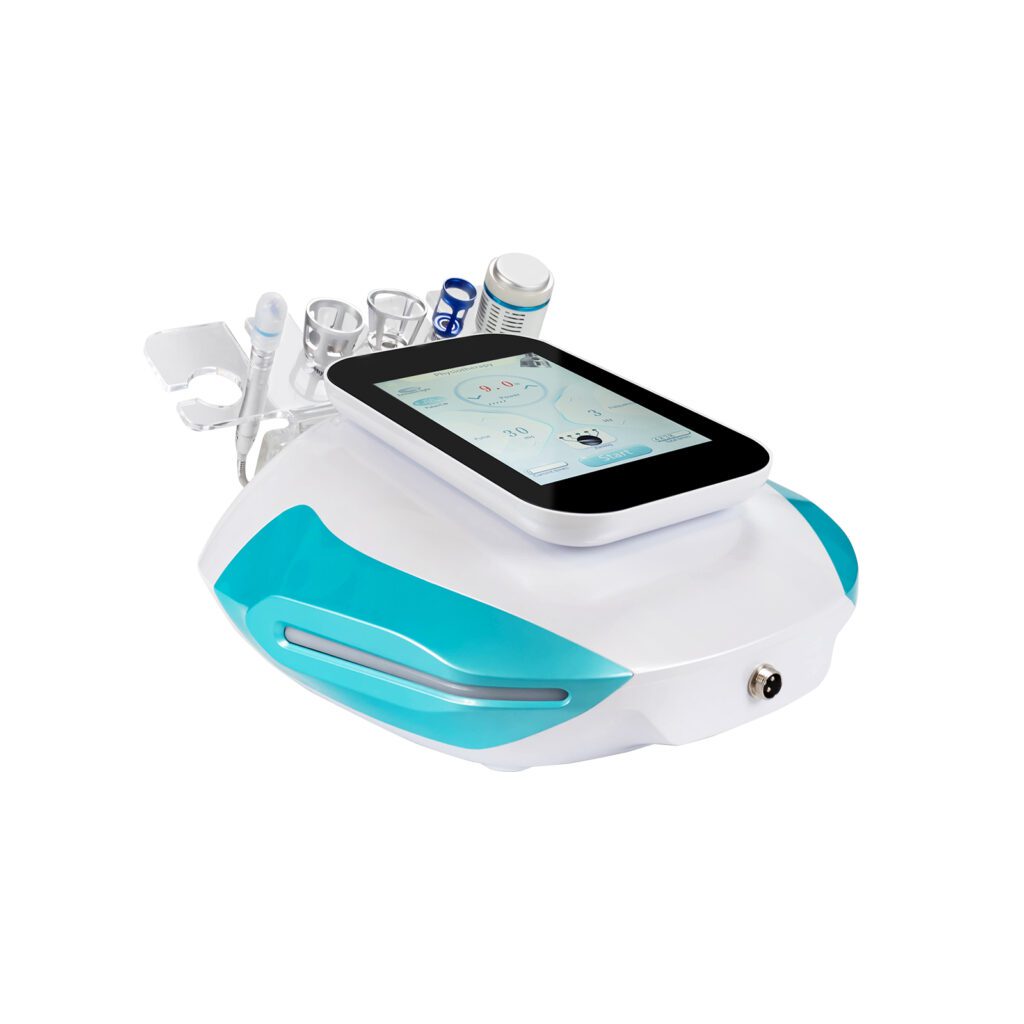
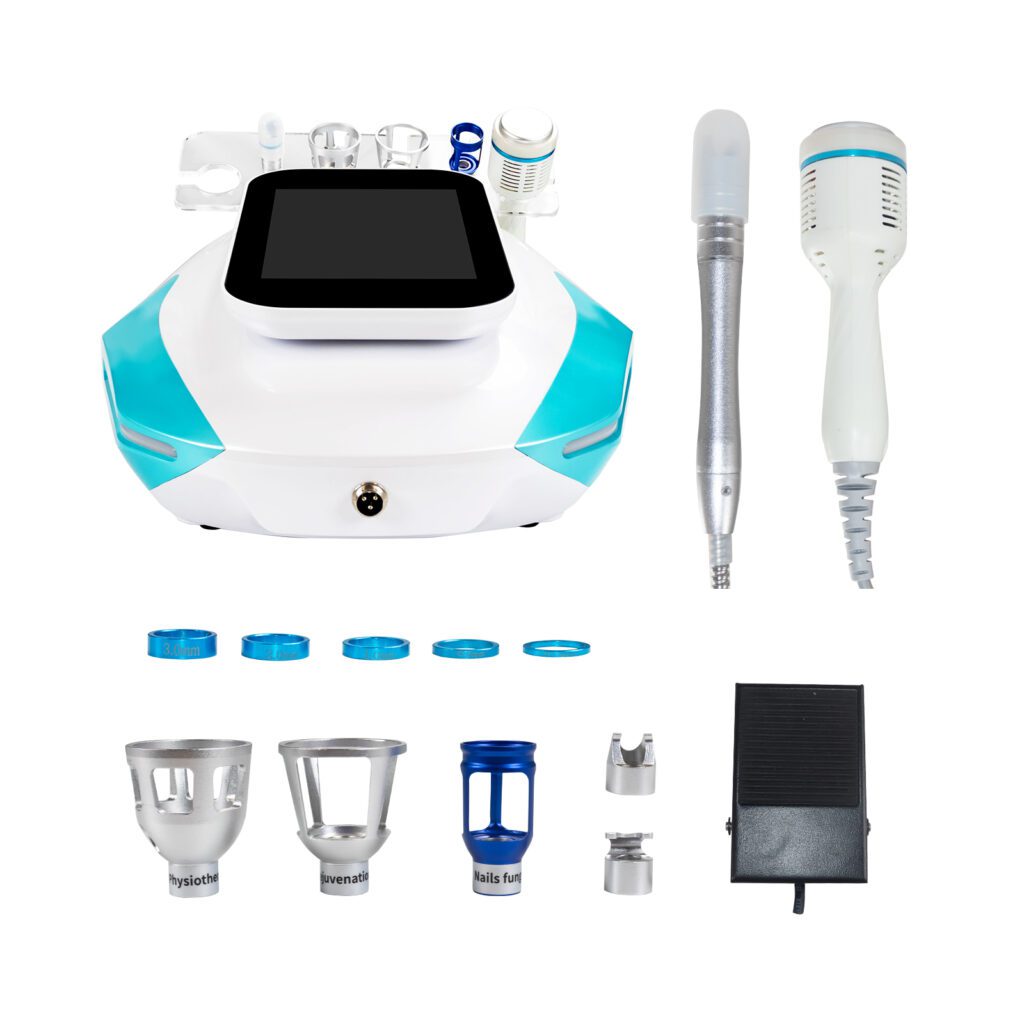
The official page presents SHEFMON A0648 as a vertical hydro microdermabrasion platform with nine functions. In the assortment, it can anchor cleansing, exfoliation, extraction, and hydration-oriented facial care.
It is a practical beachhead when the market contains:
- facial salons and beauty studios;
- businesses moving beyond basic facial services;
- clinics seeking an accessible non-invasive facial lane;
- distributors that can support tips, solutions, cleaning, and training information.
The initial assortment can use one confirmed A0648 configuration, a clear consumable list, a demonstration process, and one quotation template. Additional facial models should wait until buyer differences are documented.
7. Expand Facial Depth with A0272-F
SHEFMON A0272-F combines high-intensity facial electrical stimulation with RF-related positioning. Its assortment role is facial tone and contour, separate from the cleansing and hydration role of A0648.
Promote A0272-F from watchlist to adjacent category when:
- A0648 or another facial foundation has a stable buyer base;
- buyers repeatedly request a different facial goal;
- sales teams can explain the category distinction;
- demonstrations and application guidance are available;
- the market can support two facial device roles without confusing quotations.
In an established facial market, A0648 and A0272-F can form a two-lane facial range rather than an entry-versus-premium hierarchy.
8. Hair-First Markets: Choose A0423 or A0426
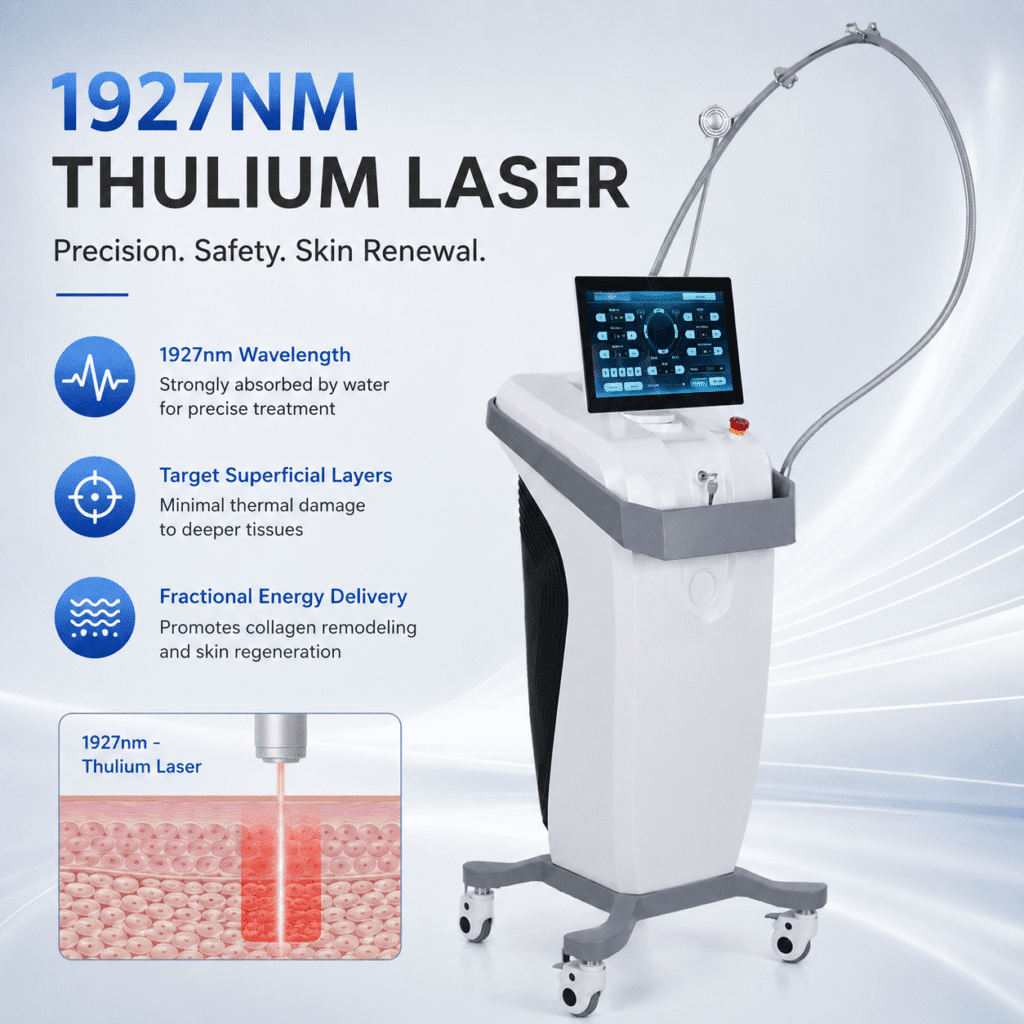
SHEFMON A0423 Und SHEFMON A0426 are diode-laser options. The A0426 page lists multi-wavelength positioning, 600 W or 1200 W choices, several spot-size choices, and semiconductor, water, and TEC cooling. Confirm the exact supplied configuration of either model before publication, stock, or quotation.
A hair-first assortment requires:
- verified specialist or salon demand;
- laser-specific buyer qualification;
- trained and appropriately authorized operators in the market;
- room and protective-process guidance;
- demonstration and technical capability;
- handpiece, cooling-system, maintenance, and fault support;
- local professional, licensing, insurance, and facility checks.
Der American Academy of Dermatology laser hair removal FAQ explains why provider experience and consultation about suitability and risks matter.
A new market should normally lead with one confirmed laser configuration. An established market may support A0423 and A0426 as alternatives when their verified differences answer separate buyer needs.
9. Body-First Markets: Start Broad or Specialist
Body demand must be segmented before models are selected.
Broad body care with B0155
SHEFMON B0155 combines larger and smaller vacuum-roller functions, rotating handles, RF-related functions, light, and 80K cavitation. It can serve as the beachhead when buyers need flexible body-category coverage.
Muscle-focused services with A0241
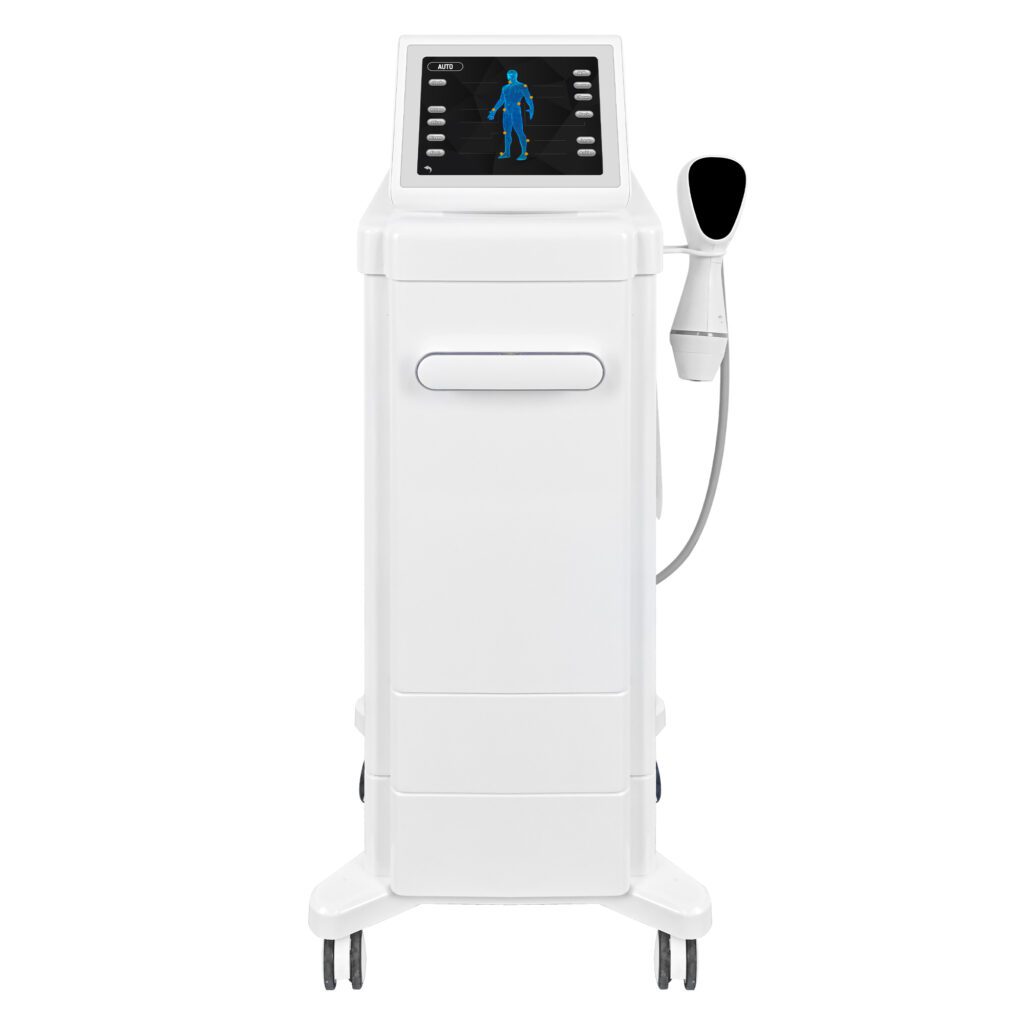
SHEFMON A0241 is positioned around electromagnetic muscle stimulation with RF-related functions. It fits a market where muscle-focused demand is already specific and supportable.
Localized cooling with S9
SHEFMON S9 is a vacuum-assisted cooling-contouring platform. It fits a market with qualified localized cooling demand and applicator, monitoring, aftercare, and technical-support readiness.
For an uncertain new market, B0155 may provide broader category learning. A0241 or S9 can be the beachhead only when the corresponding specialist demand is already proven.
10. Keep Body Categories Separate
Do not group B0155, A0241, and S9 under one generic “body shaping” assortment role.
| Modell | Primary assortment role | Main confirmation need |
|---|---|---|
| B0155 | Broad multifunction body care | Handles, workflow, cleaning, and category positioning |
| A0241 | Muskelorientierte Körperbehandlungen | Exact applicator configuration, positioning, and support |
| Staffel 9 | Lokalisierte Kühlungskonturierung | Applicators, consumables, assessment, monitoring, and follow-up |
Der FDA overview of non-invasive body contouring states that these technologies are not intended to treat obesity or improve health and describes risks that vary by technology. Market content should maintain this distinction.
11. Add Advanced Categories Only After Qualification
Advanced equipment can be visible in a catalog without becoming general stock.
A0204 focused HIFU
SHEFMON A0204 uses a modular focused-HIFU format. The official page distinguishes standard and optional handles and lists cartridges for different depths.
The assortment needs configuration control, professional-setting checks, device-specific training information, cartridge planning, records, maintenance, aftercare, and escalation.
A0152 RF-Mikronadelung
The official SHEFMON A0152 page shows multiple needle configurations and lists adjustable depth from 0.5 to 7 mm.
The category needs appropriate clinical oversight, infection-control information, single-use needle traceability, sharps handling, consent, detailed records, aftercare, follow-up, and complication response.
Der FDA safety notice on RF microneedling reports serious complications received by the agency and advises consumers to choose a licensed health-care provider with appropriate training.
In new markets, these models should usually remain qualified, demonstration-controlled, or supply to order. Established clinic-led markets may support deeper sales and service coverage when professional and technical systems are proven.
12. Build a Minimum Assortment for a New Market
A minimum assortment is small but complete.
Facial-led minimum assortment
Core candidate: A0648 Adjacent option: A0272-F Watchlist: one hair or body category based on enquiries
Hair-led minimum assortment
Core candidate: either A0423 or A0426 Adjacent option: A0648 Watchlist: B0155 or another verified category
Body-led minimum assortment
Core candidate: B0155, A0241, or S9 according to the dominant goal Adjacent option: A0648 Watchlist: a second, clearly different body role
The minimum assortment also needs product pages, current configuration sheets, a demonstration route, quotation fields, training information, consumable plans, maintenance contacts, and buyer qualification questions.
13. Build a Balanced Assortment for an Established Market
An established market can support wider coverage when each category has a clear role.
A balanced structure may include:
- Facial foundation: A0648;
- Facial depth: A0272-F;
- Hair reduction: A0423 and/or A0426 where verified differences matter;
- Broad body care: B0155;
- Muscle-focused body specialization: A0241;
- Localized cooling specialization: S9;
- Qualified focused-HIFU category: A0204;
- Qualified RF-microneedling category: A0152.
Established does not mean every model should be stocked. Portfolio width, demonstration access, inventory depth, and supply status remain separate decisions.
14. Decide When to Add Model Depth
Add another model or configuration within a category only when buyers consistently need a different:
- form factor;
- wavelength or power configuration;
- spot size or handpiece;
- workload capability;
- number or type of applicators;
- cartridge or needle system;
- room footprint;
- professional-use setting;
- price and support structure that reflects a real operating difference.
Do not add depth merely because another model exists. Each additional SKU creates content, training, inventory, parts, quotation, and service obligations.
15. Assign Supply Status by Market Maturity
| Lieferstatus | New market use | Established market use |
|---|---|---|
| Core stock | One standard configuration after initial validation | Repeatable configurations with stable sales and support |
| Limited stock | Selected products with emerging demand | Secondary configurations or moderate-volume categories |
| Demonstration | Beachhead and one adjacent category | Category-specific demos and specialist hubs |
| Regional/shared stock | Reduces early local exposure | Balances demand across branches or territories |
| Supply to order | Specialist, advanced, or configuration-dependent products | Tailored systems and low-volume variants |
| Watchlist | Early enquiries without sufficient readiness | Emerging technology or changing buyer demand |
Availability should be attached to the exact configuration. A model name alone does not prove that the required version is in stock.
16. Build a Demonstration Assortment
New markets need a compact demonstration set that teaches category differences. Established markets need enough access to compare meaningful model and configuration choices.
A practical new-market demonstration portfolio may contain:
- A0648 for facial foundation;
- one locally relevant hair or body device;
- verified digital configuration sheets for order-led systems.
An established-market demonstration portfolio may add:
- A0272-F for facial depth;
- the locally relevant A0423/A0426 laser option;
- B0155 for broad body care;
- one specialist body system;
- controlled advanced-device demonstrations for qualified clinic buyers.
Track demo location, presenter authorization, configuration, maintenance status, consumables, booking rules, and whether the unit is saleable.
17. Plan the Installed Base, Not Only New Sales
Established markets require an installed-base assortment plan.
Schiene:
- exact model and configuration by buyer;
- installation date and location;
- training and authorization records where applicable;
- consumable and component demand;
- maintenance and fault history;
- warranty status;
- software or documentation version where relevant;
- replacement or upgrade enquiries;
- devices no longer actively supported or promoted.
The installed base determines local needs for tips, solutions, cartridges, needles, applicators, filters, handles, cables, and technical skills. A new-sale assortment that ignores these needs can weaken an otherwise established market.
18. Localize the Assortment Without Changing Product Facts
Localize:
- language;
- relevant buyer examples;
- approved service-category terminology;
- electrical options;
- professional and facility requirements;
- demonstration and stock location;
- training availability;
- warranty and service contacts.
Keep centrally controlled:
- official model name;
- product URL;
- primary category role;
- configuration codes;
- included and optional components;
- approved specifications;
- compatibility information;
- document version.
This allows market relevance without creating conflicting product records.
19. Use Assortment Packages by Market Stage
New facial market package
A0648, with A0272-F held as the adjacent option
Creates one understandable facial entry category and a clear future extension.
New hair market package
Either A0423 or A0426 + A0648
Leads with a qualified hair department and adds an accessible facial category.
New body market package
B0155, with either A0241 or S9 on the watchlist
Tests broad body demand before adding a specialist role.
Established salon-market package
A0648 + A0272-F + either A0423/A0426 or B0155
Covers facial foundation, facial depth, and one new department.
Established body-market package
B0155 + A0241 + S9, with separate category positioning
Provides broad body, muscle-focused, and localized cooling options for different buyers. It does not imply combined use.
Established clinic-market package
A0648 + A0272-F + either A0204 or A0152
Combines core and targeted facial categories with one qualified advanced pathway.
20. Promote a Product from Test to Core
Move a model toward core status when:
- qualified enquiries repeat across review periods;
- quotations use a stable configuration;
- orders are not dependent on one buyer or campaign;
- demonstrations produce relevant follow-up;
- trained sales and technical staff are available;
- installation and maintenance are repeatable;
- consumables and parts can be supported;
- buyer expectations and service positioning are clear;
- inventory exposure is justified.
Core status should be reversible if demand, support, or configuration stability changes.
21. Move Products to Review or Exit
An established assortment must remove as well as add.
Review a model when:
- it duplicates another product’s role;
- buyers consistently choose another configuration;
- quotation errors are common;
- training or technical support is weak;
- parts or consumables are difficult to maintain;
- the installed base is small and inactive;
- stock ages without qualified demand;
- product content is unclear or outdated;
- the category no longer matches local professional requirements.
Exit can mean ending stock, keeping supply to order, supporting the installed base without active promotion, or removing the product after obligations are resolved.
22. Measure New and Established Markets Differently
New-market measures
- qualified enquiries by category;
- buyer type and intended service;
- consultation and demonstration requests;
- configuration questions;
- reasons for referral, delay, or lost opportunity;
- content and training gaps;
- installation and first-support experience.
Established-market measures
- repeat orders and category mix;
- model and configuration conversion;
- stock movement and age;
- demonstration utilization;
- installed-base consumable demand;
- faults, maintenance, and technical response;
- cross-category buyer expansion;
- product overlap and quotation correction;
- review or exit candidates.
Use the same definitions across periods so the market can move between stages based on evidence.
23. Common Assortment-Planning Mistakes
Giving new and established markets the same range
New markets need focused learning; established markets need managed coverage and lifecycle control.
Treating the whole market as one maturity level
Facial, hair, body, and clinical categories may mature at different speeds.
Adding model depth before category demand is clear
Begin with one controlled configuration and expand only for documented buyer differences.
Stocking every catalog product
Separate portfolio presence from physical inventory.
Combining all body equipment into one category
B0155, A0241, and S9 answer different business and operating needs.
Adding advanced products for prestige
A0204 and A0152 require appropriate professional settings and support systems.
Ignoring the installed base
Established markets need consumables, parts, maintenance, documents, and replacement planning.
Treating assortment packages as treatment protocols
Product-line coverage does not establish client suitability or combined-device use.
24. Assortment Planning Checklist
Before approving a market assortment, confirm that:
1. maturity is defined by evidence rather than geography or population; 2. each category has its own maturity status; 3. assortment width and depth are planned separately; 4. one beachhead category is identified for a new market; 5. every model has a market-specific assortment role; 6. exact configurations and included components are controlled; 7. stock, demonstration, shared stock, and supply-to-order statuses are separate; 8. sales, training, and technical support match the promoted categories; 9. consumables and parts reflect the installed base; 10. professional and facility requirements are checked; 11. advanced systems use qualified sales routes; 12. test-to-core promotion criteria are documented; 13. review and exit rules exist for established ranges; 14. data definitions remain consistent across review periods; 15. assortment packages remain separate from treatment protocols.
Häufig gestellte Fragen
1. How many beauty-device categories should a new market launch?
Begin with one beachhead category and one adjacent option. Keep specialist and advanced products on a controlled watchlist or supply-to-order route until demand and support are proven.
2. Which SHEFMON device can anchor a new facial market?
A0648 can form a cleansing and hydration-oriented facial foundation when the distributor can support the confirmed configuration, demonstration, tips, solutions, cleaning, training information, maintenance, and buyer education.
3. When should A0272-F enter the assortment?
Add it when facial-foundation demand is stable and buyers repeatedly request a distinct facial tone-and-contour category. Keep its role separate from A0648.
4. Should a new market offer both A0423 and A0426?
Usually begin with one confirmed laser configuration. Add model depth when verified differences in buyer needs, workload, form factor, or configuration justify the extra sales and support burden.
5. Which body device should enter a new market first?
B0155 may suit broad body demand. A0241 fits a specific muscle-focused market, and S9 fits qualified localized cooling demand. Choose from documented buyer goals and operating readiness.
6. What changes in an established beauty-device market?
The assortment can add category width, supported model depth, specialist demonstrations, better inventory segmentation, installed-base supplies, and product review or exit processes.
7. Should A0204 and A0152 be stocked in established markets?
Market maturity alone is insufficient. Stock or supply status should reflect qualified clinic demand, professional scope, configuration stability, demonstration access, consumables, training, maintenance, and technical support.
8. What is the difference between catalog presence and stock?
Catalog presence means the product is approved for presentation. Stock means a defined saleable configuration is physically available. Demonstration, shared stock, and supply-to-order are separate statuses.
9. When should a product leave an established assortment?
Review it when demand is persistently weak, roles overlap, configuration errors continue, support is inadequate, stock ages, or market requirements change. Exit may involve ending promotion while continuing installed-base support.
10. What should a distributor confirm with SHEFMON when planning an assortment?
Confirm current models, exact configurations, included and optional components, electrical requirements, training information, consumables, replacement parts, maintenance, warranty, technical documents, service process, availability, and destination-market requirements.
Abschluss
New markets need a focused beauty-device assortment that produces reliable demand and support data. Established markets need broader but disciplined coverage, supported model depth, installed-base planning, and clear review rules. A0648 can anchor facial care, A0272-F can add facial depth, A0423 or A0426 can serve qualified hair markets, and B0155 can provide broad body coverage. A0241 and S9 belong in separate specialist roles, while A0204 and A0152 require qualified advanced pathways.
Erkunden SHEFMON beauty-device categories Und Kontaktieren Sie SHEFMON with your market stage, buyer segments, current assortment, demonstration access, support capability, and shortlisted models. This information will help confirm an appropriate category mix and current configurations.