
An overlapping beauty device service often looks easy to remove. Two facial appointments use nearly the same workflow, two body-care names lead to the same device setup, or an old laser area remains beside a clearer replacement. Deleting one menu row may simplify the website, but it can also leave clients holding bookings, package credits, preparation messages, aftercare documents, or expectations tied to the old service.
A controlled retirement removes future confusion while preserving existing obligations and historical meaning. It confirms whether the remaining service is truly equivalent, identifies clients who need reassessment, gives reception precise language, and keeps old records searchable. This guide shows salons, skin clinics, med spas, hair-removal businesses, body studios, and multi-location aesthetic centers how to retire overlapping services across relevant SHEFMON device categories.
Zusammenfassung
- Prove that the services overlap by comparing their client objective, device workflow, area, operator, room, time, records, aftercare, and follow-up.
- Choose a survivor based on clarity and operational fit rather than keeping the newer, more expensive, or more fashionable name automatically.
- Classify the transition as equivalent, review required, or no direct replacement before contacting clients.
- Stop new sales and package commitments before removing the retiring service from every public channel.
- Separate future enquiries, existing bookings, unused package entitlements, completed-service follow-up, and open concerns into different work queues.
- Never transfer a client to another technology or service pathway solely because the marketing objective sounds similar.
- Preserve the retiring service ID, historical name, delivered device, records, and past financial activity.
- Give reception an approved explanation, comparison, transfer boundary, and escalation contact.
- Use a dated channel plan covering the website, booking system, confirmations, price lists, packages, records, aftercare, campaigns, and reports.
- Audit the first weeks after retirement for wrong bookings, obsolete links, client questions, manual workarounds, and unresolved balances.
1. Confirm That the Services Actually Overlap
Two names do not prove that two services are duplicates. They may differ in technology, area, consultation requirements, staff eligibility, or records even when both are marketed around a similar goal.
Vergleichen:
- client-facing objective;
- technology and device category;
- installed model and configuration;
- function, handle, applicator, cartridge, tip, or head;
- defined area;
- consultation and suitability pathway;
- autorisierte Betreibergruppe;
- room and supporting resources;
- duration and turnover;
- consumables;
- treatment record;
- approved aftercare and follow-up;
- price and package role;
- client expectation created by the name.
Retirement is appropriate when one service has no useful distinction or when the business deliberately consolidates two equivalent pathways. Repositioning may be better when both services remain valid but their roles are unclear.
2. Identify the Type of Overlap
| Overlap type | What is happening | Likely response |
|---|---|---|
| Duplicate name | Two labels point to the same workflow and resources | Keep one service identity and retire the duplicate label or code |
| Duplicate workflow | Names differ, but device, area, duration, records, and follow-up are materially the same | Consolidate after checking client and package obligations |
| Objective overlap | Different technologies are promoted for the same broad goal | Clarify the pathways; do not assume interchangeability |
| Tier overlap | Core, deluxe, and premium services have no defined inclusion difference | Merge tiers or rebuild their real operational distinctions |
| Area overlap | Two area names reserve the same scope and time | Adopt one area dictionary and map former names |
| Package overlap | Different offers redeem against the same component appointment | Preserve package terms while standardizing the component service |
| Location overlap | Branches created separate codes for one shared service | Consolidate identity only if the delivered scope truly matches |
The retirement record should state which overlap was found and why retirement is the chosen response.
3. Choose the Service That Will Remain
The surviving service should have the clearest and most supportable definition. Score each candidate against:
- client comprehension;
- accurate technology description;
- distinct area and appointment stage;
- verified device configuration;
- operator and room readiness;
- vollständige Dokumentation und Nachsorge;
- clean booking rules;
- current staff familiarity;
- package and reporting compatibility;
- restrained claims;
- performance as a useful service category;
- consistency across locations.
Do not select the survivor only because its price is higher, its name is newer, or its page receives more traffic. A confusing service can be popular precisely because clients cannot distinguish it from another option.
4. Decide Whether There Is a Replacement
Every retiring service needs a transition classification.
| Classification | Bedeutung | Client handling |
|---|---|---|
| Equivalent replacement | The surviving service has the same approved scope, resources, records, and client obligation | Offer a transparent name or code transition and preserve original terms where applicable |
| Replacement with differences | The alternative changes inclusions, duration, area definition, price, preparation, or follow-up | Explain the differences and obtain the client’s decision before changing the booking |
| Review required | Suitability or service selection must be reconsidered before another appointment | Move the client to an authorized review rather than booking automatically |
| No direct replacement | The business will no longer offer an equivalent pathway | Resolve bookings and financial obligations through the approved closure process |
| External or alternative route | Another internal department or external provider may be relevant | Use an approved referral or information process without promising acceptance or equivalence |
Similar marketing language does not establish equivalence. The comparison must use the actual service definitions.
5. Freeze New Commitments First
Before announcing retirement, prevent the business from creating additional obligations.
Actions may include:
- stop new package and membership sales containing the service;
- remove the service from new promotions;
- disable new online bookings beyond the transition rules;
- block staff-created manual bookings;
- stop issuing vouchers tied only to the retiring service;
- prevent automatic rebooking;
- identify pending quotations or consultations;
- pause future campaign messages;
- notify sites and channel owners of the cut-off time.
Keep a controlled exception route for clients whose existing entitlement is being completed under the retirement plan. Do not leave the service fully open while teams attempt to reduce its use informally.
6. Set Four Transition Dates
One retirement date is rarely enough. Define:
- Sales cut-off: no new packages, vouchers, or commitments.
- New-booking cut-off: the service disappears from ordinary future booking.
- Existing-obligation end point: the final date or decision rule for approved outstanding bookings and entitlements.
- Archive date: the service becomes read-only for historical use after open work closes.
The dates may differ by location or client group. Record every exception and its owner rather than hiding it in a diary note.
7. Build the Affected-Client Register
Use the service ID, not only the display name, to find affected clients. Search:
- future appointments;
- waitlists;
- consultation approvals;
- deposits;
- prepaid packages;
- memberships;
- vouchers;
- incomplete programs;
- aftercare or follow-up tasks;
- open complaints or concerns;
- reassessment requirements;
- failed-payment or refund cases;
- clients who received an automated invitation to rebook.
Include former names and aliases in the search. A client may hold an obligation under an older label even though the current menu uses another name.
8. Segment Clients by Required Action
| Client group | Main question | Required action owner |
|---|---|---|
| Website visitor or new enquiry | What can the business offer now? | Reception or consultation team uses the current menu |
| Future booking without prepayment | Is the booked service still available, and is the alternative equivalent? | Booking owner confirms, changes with agreement, or routes for review |
| Client with deposit or prepaid entitlement | How will the existing financial and service promise be fulfilled? | Service and finance owners apply the approved options |
| Client in an active service pathway | Will continuity, review, or follow-up change? | Authorized service or professional owner decides |
| Completed-service client awaiting follow-up | Which aftercare and review object still applies? | Follow-up owner keeps the historical service context |
| Client with an open concern | Can the transition proceed without disrupting the concern process? | Concern or incident owner controls communication and closure |
| Client whose service has no replacement | What options, refund, credit, completion, or referral process applies? | Named commercial and service owners respond individually |
Do not send one generic announcement to all groups. The information and decision needed are different.
9. Write One Clear Client Explanation
The core message should answer:
- which service is changing;
- when the change takes effect;
- whether only the name is changing or the service is ending;
- whether an alternative exists;
- what differences matter;
- what happens to the client’s booking or balance;
- whether reassessment is required;
- who will contact the client;
- how the client can ask questions or decline a proposed change.
Avoid blaming clients, staff, low demand, or a device. Explain the operational decision directly. Do not say “nothing changes” if the area, duration, technology, inclusions, operator, records, price, or follow-up will change.
10. Give Reception a Decision Script
Reception needs a routing tool rather than a sales script. It should show:
- retiring name and service ID;
- former names clients may mention;
- final booking status;
- surviving service and its ID where relevant;
- verified similarities;
- material differences;
- which clients can be moved with confirmation;
- which clients need review;
- which clients require a finance or service-owner response;
- prohibited statements;
- escalation contacts;
- response commitment.
Reception should not promise that a different device or procedure will produce the same result. Its role is to identify the client’s record, explain the approved transition, and connect the client to the right decision-maker.
11. Handle Existing Appointments Individually
For every future appointment, record one outcome:
- complete as originally booked within the approved transition window;
- convert to the equivalent service with the client’s agreement;
- offer a revised service after explaining differences;
- send for reassessment;
- move to another site with verified capacity and permission;
- cancel under the approved terms;
- refund, credit, or resolve according to the applicable agreement and requirements;
- await client response;
- escalate because the client reports a concern.
Update confirmations after the decision. The calendar, client message, room resources, device reservation, forms, and operator assignment should all reflect the same outcome.
12. Protect Packages, Memberships, and Vouchers
An overlapping service may appear in several commercial products. Build an entitlement map containing:
- package or membership ID;
- public name and terms version;
- retiring component service ID;
- unused quantity or value;
- expiry rule;
- approved equivalent, if any;
- difference requiring client agreement;
- refund, credit, or transfer route;
- decision owner;
- client communication status;
- final resolution.
Do not silently replace an entitlement with a different technology or narrower service. A package name does not remove the need to identify the component service promised.
13. Keep Follow-Up Separate from Future Sales
Retiring a service from the menu does not retire the business’s responsibility for completed appointments. Maintain:
- active aftercare content linked to the version delivered;
- scheduled follow-up;
- client contact route;
- concern and escalation handling;
- incident records;
- device and component traceability where applicable;
- reassessment decisions;
- record access for authorized staff.
Block automated messages that invite a client to rebook a retired service. A follow-up message can explain the next decision without turning into an automatic migration.
14. Preserve the Historical Service Identity
Change the service status to Retired or Replaced; do not delete its master record.
Retain:
- permanent service ID;
- public names and date ranges;
- service versions;
- device and configuration mappings;
- areas and inclusions;
- operator authorization history;
- booking and record templates;
- aftercare versions;
- delivered appointments;
- packages and financial mappings;
- complaints, incidents, and corrections;
- successor relationship;
- retirement reason and approvals.
Historical records should display the service name used at the time while allowing authorized users to see its current retired status.
15. Remove the Service from Every New-Sale Channel
Use a channel shutdown table.
| Kanal | Retirement action | Verification |
|---|---|---|
| Website and landing pages | Remove booking CTA, revise comparisons, and route old URLs appropriately | Search the site and test links |
| Online booking | Block new selection and preserve staff-only historical lookup | Try client and staff booking paths |
| Reception view | Show Retired, replacement class, and escalation route | Search old and new names |
| Price lists and printed menus | Withdraw obsolete versions and record disposal or replacement | Inspect reception and treatment rooms |
| Automated messages | Stop promotions and rebooking prompts | Test triggers using a sample record |
| Packages and memberships | Block new sale and preserve entitlement processing | Reconcile every affected offer |
| Behandlungsdokumentation | Keep historical templates read-only; load current forms for new services | Test old-record access and new booking flow |
| Aftercare library | Preserve delivered versions and remove them from unrelated new services | Check client and staff access routes |
| Reports | Keep retired code in historical reporting and exclude it from active menus | Compare before-and-after totals |
| Multi-location systems | Record each site’s completion and exceptions | Review the site-service matrix |
A website change is only one part of retirement.
16. Redirect Old Pages Carefully
An old service page may still receive search traffic, bookmarks, campaign clicks, or links from client messages. Choose among:
- keep a short transition notice;
- redirect to a current service only when the relationship is clear;
- route to a comparison or consultation page when review is required;
- provide a contact route when no direct replacement exists;
- keep a restricted historical resource for clients who previously received the service.
Do not redirect every retired page to the most expensive or newest service. The destination should match the approved transition classification.
17. Retire Overlapping A0648 Facial Tiers
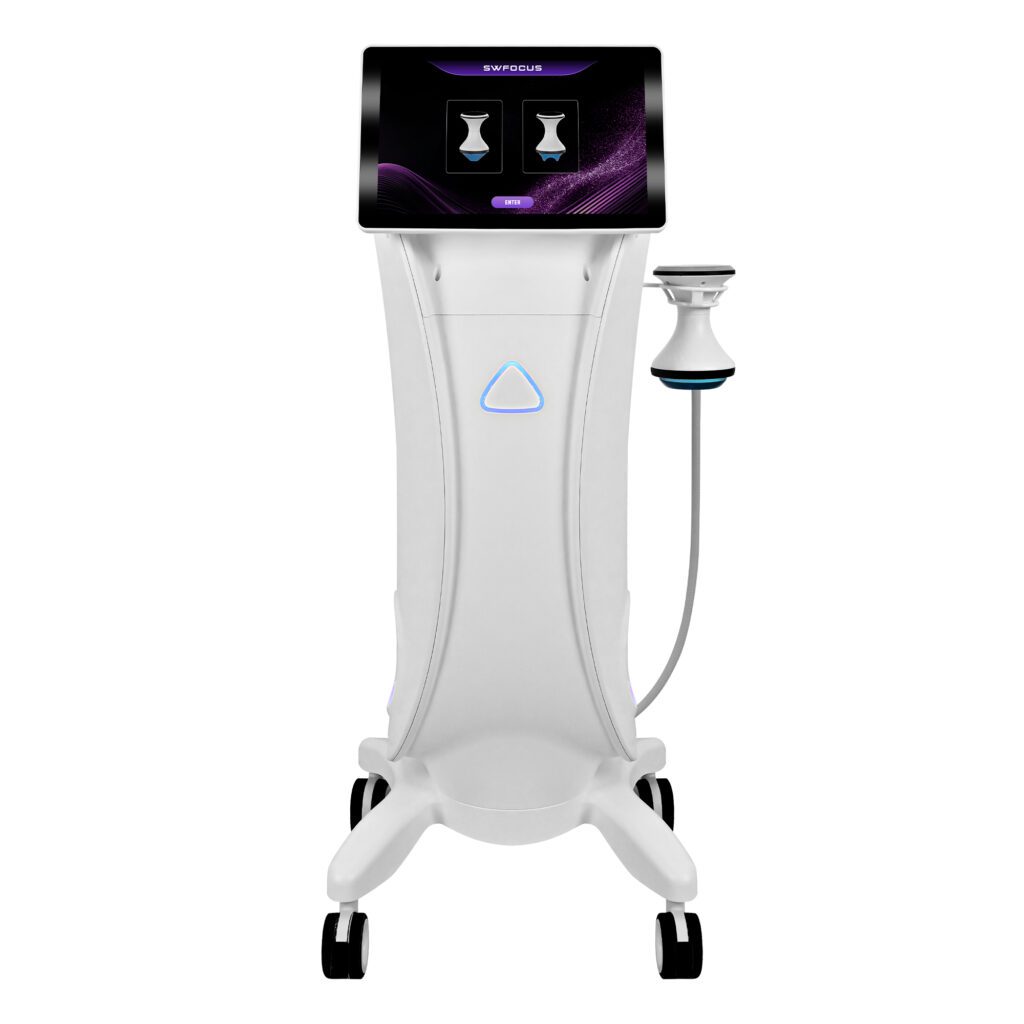
Der SHEFMON A0648 hydrodermabrasion platform is presented as a multifunction facial system. A salon may create Essential, Deep, Deluxe, Complete, and Signature facial names that later prove to use nearly the same workflow.
Before retiring a tier, compare:
- selected functions;
- tools and solutions;
- appointment duration;
- consultation depth;
- included steps;
- room turnover;
- records and aftercare;
- package use;
- price logic.
If two tiers are equivalent, one can become the surviving service while the former name remains a search alias. If the retiring tier contained meaningful extra steps, the transition message must identify what will and will not continue.
18. Consolidate B0155 Body-Care Services
Der SHEFMON B0155 body-care platform lists body and smaller-area handles. A studio may discover that several names lead to the same applicator, area, duration, and review process.
Consolidate only after comparing the exact workflow. Preserve separate services when area, handle, appointment stage, room time, records, or operator authorization differs. Avoid promising an identical outcome when transferring a client from one body-care workflow to another.
The surviving menu should use a defined area and a clear service role rather than several broad labels that compete for the same appointment.
19. Simplify A0426 Area-Based Services
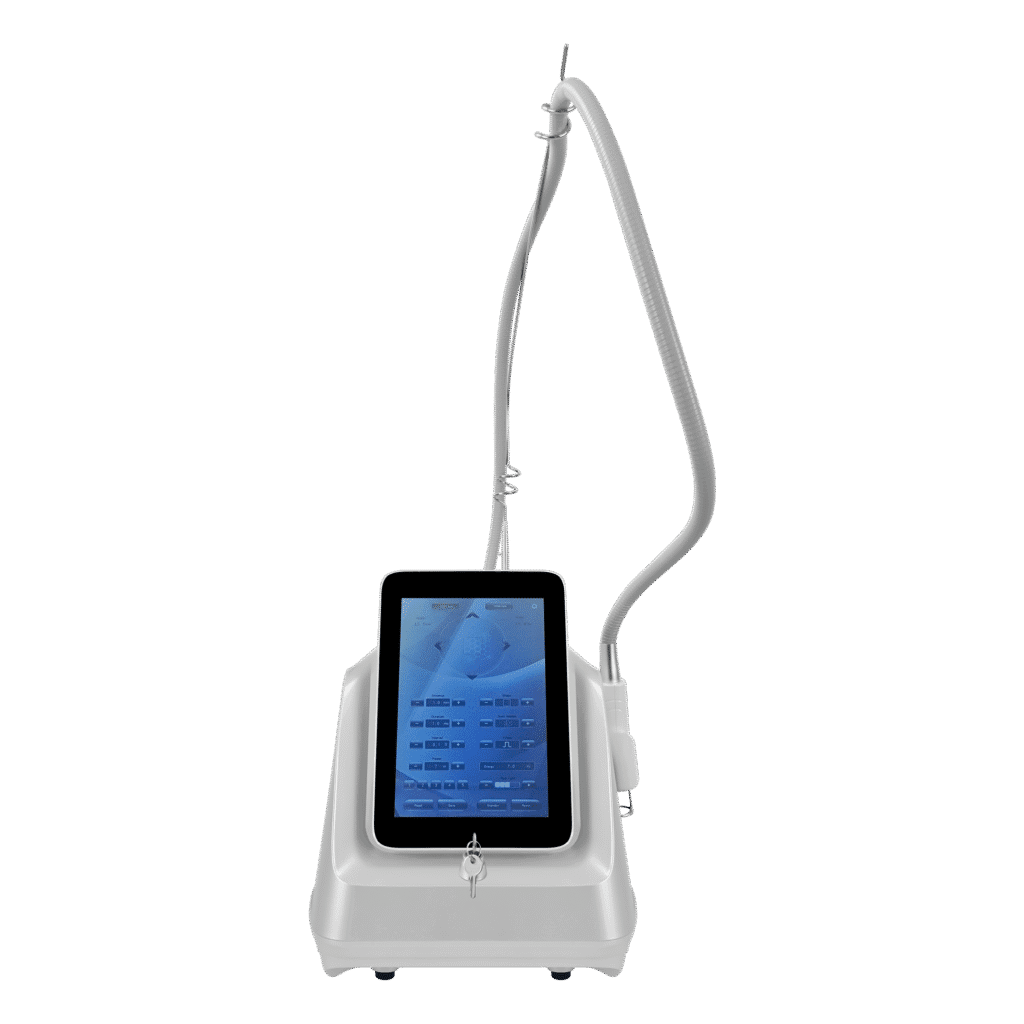
Der SHEFMON A0426 diode-laser platform can sit behind an area-based hair-reduction menu. Overlap often appears when locations or staff use different labels for the same area boundary.
Create one controlled area dictionary. Map each former name to:
- the approved current area;
- appointment stage;
- room time;
- operator group;
- device resource;
- preparation and record objects;
- package entitlement;
- reassessment trigger.
Do not merge areas merely because their booked duration is similar. The actual boundaries, client agreement, and operating workflow must match.
20. Do Not Merge A0204 and A0152 Because Goals Sound Similar
Der SHEFMON A0204 focused HIFU system Und SHEFMON A0152 RF-microneedling system can both appear within advanced skin-service menus. Similar goal words do not make their service pathways interchangeable.
They differ in technology, configurations, components, professional decisions, records, and follow-up. If the business removes a vague “Advanced Rejuvenation” item that previously pointed to either device, route clients into technology-specific assessment rather than assigning one surviving procedure automatically.
Retire the ambiguous umbrella service while keeping properly governed HIFU and RF-microneedling pathways distinct.
21. Decide What Happens to the Device
Service retirement and device retirement are separate decisions. The underlying equipment may:
- support the surviving service;
- move to another defined service family;
- remain available for existing obligations during transition;
- transfer to another site;
- enter training-only or demonstration status;
- be held pending review;
- remain as backup under a controlled plan;
- enter a separate repair, replacement, sale, or end-of-life process.
Update booking access and operator permissions to match the device’s remaining role. Do not keep an unofficial service alive solely to justify owning the equipment.
22. Retrain Staff Before the Public Switch
Short training should cover:
- why the overlap is being removed;
- exact retirement dates;
- the surviving menu structure;
- replacement classifications;
- client segments;
- approved wording;
- booking and package actions;
- professional and commercial escalation;
- historical-name search;
- prohibited workarounds;
- how to report an unexpected case.
Test realistic scenarios: a client with an old screenshot, a prepaid package, a future appointment, an open concern, and a request for the former service at another branch.
23. Prevent Manual Workarounds
After retirement, staff may try to recreate the service with free-text bookings, renamed add-ons, generic calendar blocks, or package notes. These workarounds weaken resource checks and reporting.
Control them by:
- blocking obsolete codes;
- limiting manual service creation;
- retaining searchable retired aliases;
- giving staff a clear exception route;
- reviewing free-text appointments;
- reconciling package redemptions;
- monitoring use of generic service codes;
- correcting scripts that still invite the old service.
If many workarounds appear, investigate whether the retirement plan missed a real client or operating need.
24. Track Retirement Decisions
The retirement register should include:
- change ID;
- retiring service and version;
- overlap evidence;
- surviving service, if any;
- transition classification;
- approval and owners;
- four transition dates;
- affected-client counts by segment;
- open bookings and entitlements;
- channel completion status;
- client communication versions;
- exceptions;
- unresolved concerns;
- final verification;
- archive date.
This record lets the business distinguish a deliberate retirement from an accidental disappearance.
25. Measure Whether the Transition Worked
Monitor:
- clients who ask for the retired service;
- wrong bookings linked to former names;
- future appointments still using the old code;
- balances without a resolution;
- automatic messages promoting the retired service;
- obsolete web pages or printed materials;
- clients moved without documented agreement;
- reassessments completed where required;
- support questions by location;
- manual workaround bookings;
- record or report mapping errors;
- open transition cases past their due point.
Low complaint volume alone does not prove success. Some clients may simply abandon the booking when the explanation is unclear.
26. Run a Post-Retirement Review
Review the transition after the first operating cycle and again when most existing obligations should be resolved.
Fragen:
- Did the menu become easier to understand?
- Can reception explain the survivor in one sentence?
- Did clients accept the transition options?
- Were any clients transferred incorrectly?
- Are packages and balances reconciled?
- Do old links still create enquiries?
- Are follow-up and concern records intact?
- Did manual duplicates reappear?
- Is the surviving service absorbing demand appropriately?
- Does another overlapping item now need review?
Assign corrective actions instead of reopening the retired code informally.
27. Common Retirement Errors
- Deleting the booking item before identifying existing clients.
- Calling two different technologies equivalent because they share an outcome word.
- Moving prepaid clients without explaining meaningful differences.
- Removing the website page while promotions and messages remain active.
- Letting reception decide professional equivalence.
- Treating follow-up as finished because future sales stopped.
- Converting package balances without a controlled decision.
- Erasing old names from historical records.
- Redirecting every old URL to the newest service.
- Leaving the former code available for manual booking.
- Retiring the device automatically with the service.
- Announcing the change before staff can answer questions.
28. Overlapping Service Retirement Checklist
Before closing the transition, confirm:
- overlap evidence has been documented;
- the surviving service has a clear role;
- the transition is classified as equivalent, different, review required, or no replacement;
- new sales, packages, promotions, and ordinary bookings are blocked;
- sales, booking, obligation, and archive dates are recorded;
- future appointments and waitlists have an owner;
- deposits, packages, memberships, vouchers, and balances are reconciled;
- active follow-up and open concerns keep their historical context;
- reception has an approved script and escalation route;
- every client receives the information relevant to their segment;
- website, booking, messages, print, records, aftercare, and reports are updated;
- old URLs and search aliases lead to the correct transition path;
- historical service IDs, names, versions, and records remain accessible;
- device status and remaining service roles are defined;
- staff have passed transition scenarios;
- manual workarounds are monitored;
- post-retirement review dates and owners are assigned.
Häufig gestellte Fragen
1. Should two overlapping beauty device services always be merged?
No. First compare technology, area, client pathway, operator, room, time, components, records, aftercare, and follow-up. Reposition both services when they are genuinely different but poorly explained.
2. How should a business choose which service name survives?
Choose the name and service identity that most accurately represent the supported workflow and are easiest for clients and staff to distinguish. Popularity, price, or newness alone should not decide.
3. Can existing bookings be changed automatically?
Only when the approved transition establishes true equivalence and the booking terms permit the change. If the service differs or reassessment is required, explain the options and record the client’s decision.
4. What should happen to prepaid treatments?
Map each entitlement to the retiring service, then apply the approved completion, equivalent transfer, reviewed alternative, credit, refund, or other applicable route. Do not replace it silently with another technology.
5. Should the old service page be deleted immediately?
Often a transition notice, careful redirect, consultation route, or historical client resource is more useful. The correct choice depends on whether an equivalent replacement exists and what current clients still need.
6. Can reception recommend the surviving service?
Reception can explain an approved equivalent transition and arrange the defined next step. Questions involving suitability, changed technology, individualized advice, or professional judgment should go to the authorized reviewer.
7. What happens to aftercare when a service retires?
Keep the version issued to clients and complete all required follow-up. Remove it from unrelated future services, but preserve access for past appointments, questions, and concerns.
8. Should the retired service code be deleted from the system?
No. Block new use while retaining the code, name history, versions, bookings, records, packages, financial mappings, and replacement relationship for authorized historical access.
9. Does retiring a service mean the beauty device should also be retired?
Not necessarily. The device may support a clearer surviving service or another approved role. Make device repair, relocation, backup, replacement, or end-of-life decisions through a separate process.
10. How long should the transition remain under review?
Review it until future bookings, entitlements, follow-up, open concerns, channel updates, and exceptions are resolved. Continue monitoring old-name searches and wrong bookings after formal closure.
Abschluss
Retiring an overlapping beauty device service should simplify the menu without breaking promises or hiding history. The business must prove the overlap, choose a clear survivor, classify the replacement relationship, protect every existing client group, and remove the old service from new-sale channels in a controlled sequence.
Use the retirement to strengthen the remaining service families instead of moving clients automatically toward a convenient alternative. Businesses reviewing the device and configuration relationships behind overlapping services can explore the SHEFMON Beauty-Geräte-Sortiment Und Kontaktieren Sie SHEFMON for current model, component, and product-document information.