









Bei der Bewertung eines Lieferanten für Kosmetikgeräte vergleichen Händler häufig vier Aspekte des Kundendienstes:
- Gerätegarantie
- Ersatzteilversorgung
- Technische Fernunterstützung
- Schulungsunterstützung
Alle vier sind wichtig.
Aber wenn ein Vertriebshändler fragt, “Welche dieser Optionen ist für mein Unternehmen am wichtigsten?” Die Antwort hängt vom Stadium der Kundenbeziehung ab.
Um neue Käufer zu gewinnen, schafft eine Garantie grundlegendes Vertrauen.
Für einen reibungslosen Start der Services ist Schulungsunterstützung unerlässlich.
Für die tägliche Fehlersuche ist die Fernunterstützung das schnellste Mittel.
Für den Schutz des langfristigen Rufs ist die Ersatzteilversorgung oft am wichtigsten.
Einfach ausgedrückt:
Garantien schaffen Vertrauen bei den Kunden. Schulungen reduzieren Fehler. Fernwartung löst Probleme schnell. Ersatzteile gewährleisten die Wiederherstellung des Maschinenbetriebs, wenn ein Austausch wirklich notwendig ist.
Für Händler besteht die stärkste After-Sales-Strategie nicht darin, sich für einen Bereich zu entscheiden und die anderen zu ignorieren. Vielmehr geht es darum, ein Service-System aufzubauen, in dem diese vier Elemente zusammenwirken.
Die kurze Antwort: Ersatzteile und Fernsteuerung sind im realen Einsatz am wichtigsten.
Wenn ein Händler den wichtigsten Kundendienstfaktor für ein langfristiges Geschäft auswählen muss, lautet die praktische Antwort:
Ersatzteilversorgung, unterstützt durch schnelle technische Fernberatung.
Warum?
Denn wenn ein Salon oder eine Klinik ein Geräteproblem hat, fragt der Käufer nicht nur, ob das Gerät eine Garantie hat. Der Käufer fragt:
- Können Sie mir sagen, was falsch ist?
- Können Sie mir helfen, das Problem schnell zu beheben?
- Haben Sie das benötigte Ersatzteil?
- Wie schnell kann meine Maschine wieder funktionieren?
Eine schriftliche Garantie ist zwar nützlich, aber eine Garantie allein repariert keine Maschine.
Schulungen reduzieren vermeidbare Probleme, können aber nicht jedes Hardwareproblem verhindern.
Die Fernunterstützung hilft bei der Diagnose des Problems, aber wenn ein Ersatzgriff, ein Kabel, eine Platine, ein Filter, ein Applikator oder ein Verbrauchsmaterial benötigt wird, ist die Ersatzteilversorgung die eigentliche Lösung.
Aus diesem Grund legen etablierte Distributoren in der Regel größten Wert auf die Verfügbarkeit von Ersatzteilen und die Geschwindigkeit der technischen Reaktion.
Rangfolge der vier Unterstützungsartikel nach Händlerwert
| Unterstützungsartikel | Hauptvorteil für Vertriebspartner | Wenn es am wichtigsten ist | Risiko bei Schwäche |
|---|---|---|---|
| Schulungsunterstützung | Reduziert Bedienungsfehler und hilft Kunden bei der Einführung von Diensten | Vor und unmittelbar nach der Lieferung | Kunden missbrauchen das Gerät oder versäumen es, Behandlungen zu starten. |
| Fernsteuerung | Ermöglicht schnelle Diagnose und technische Kommunikation | Täglicher Betrieb und Fehlerbehebung der ersten Ebene | Kleine Probleme werden zu großen Beschwerden. |
| Ersatzteilversorgung | Stellt die Gerätenutzung wieder her und schützt die langfristige Funktionsfähigkeit. | Wenn eine Komponente ausfällt oder ersetzt werden muss | Lange Ausfallzeiten und beschädigter lokaler Ruf |
| Garantie | Definiert Verantwortlichkeiten und reduziert das Käuferrisiko | Vor dem Kauf und während der Schadensregulierung | Käufer haben wenig Vertrauen oder Streitigkeiten nehmen zu |
Die Rangfolge ändert sich mit jedem Level.
Für einen Neukäufer mögen Garantie und Schulung am wichtigsten erscheinen.
Für einen Vertriebshändler, der viele installierte Maschinen betreut, gewinnen Fernwartung und Ersatzteilversorgung in der Regel an Bedeutung.
Garantie: Wichtig, aber allein nicht ausreichend
Die Garantie ist das Erste, wonach viele Käufer fragen.
Es hilft dabei, grundlegende Vertrauensfragen zu beantworten:
- Wie lange ist die Maschine abgedeckt?
- Was passiert, wenn etwas fehlschlägt?
- Übernimmt der Lieferant die Verantwortung?
- Sind Zubehörteile mitversichert?
- Was passiert nach Ablauf der Garantiezeit?
Für Händler von Kosmetikgeräten ist eine Garantie sinnvoll, da sie den Erstverkauf erleichtert.
Die Garantie sollte jedoch nicht als das gesamte Kundendienstsystem betrachtet werden.
Eine Garantie hat nur begrenzten Wert, wenn der Lieferant dies nicht erklären kann:
- Welche Teile werden abgedeckt?
- Welches Zubehör ist ausgeschlossen?
- ob Verbrauchsmaterialien abgedeckt sind
- Welche Beweise sind für eine Behauptung erforderlich?
- ob die Versandkosten enthalten sind
- wer diagnostiziert das Problem
- wie Ersatzteile versendet werden
- Welche Unterstützung wird nach Ablauf der Garantiezeit fortgesetzt?
Laut den von SHEFMON veröffentlichten Kundendienstinformationen gilt für die Maschinen eine einjährige Garantie auf die Hauptgeräte und eine dreimonatige Garantie auf das Zubehör. Während der Garantiezeit wird technischer Support in Form von Diagnose und Lösungsberatung angeboten.
Dies bietet Käufern eine klare Ausgangsbasis.
Händler sollten jedoch vor der Angebotserstellung an Kunden die Garantiebedingungen für das jeweilige Produktmodell, Zubehör, individuelle Anpassungen und den lokalen Markt bestätigen.
Ersatzteilversorgung: Der Kern einer langfristigen Händlerreputation
Die Ersatzteilversorgung ist oft der am meisten unterschätzte Aspekt der Unterstützung.
Für einen Händler kann dies wichtiger sein als die Schlagzeile zur Garantie.
Warum?
Weil die Kunden lokaler Salons und Kliniken den Vertriebspartner anhand seiner Ausfallzeiten beurteilen.
Wenn ein Handstück, Kabel, Sieb, Filter, Applikator, Platine, Kartusche, Pumpe, Stecker oder Behandlungskopf ausfällt, wünscht sich der Kunde eine schnelle Lösung.
Ein Vertriebshändler mit Ersatzteilversorgung kann professioneller reagieren:
- diagnostizieren Sie das Problem
- Bitte bestätigen Sie, welches Teil benötigt wird.
- Prüfen Sie, ob lokale Lagerbestände verfügbar sind.
- Senden Sie den Ersatz schnellstmöglich.
- Anleitung zur Installation oder Reparatur
- Informieren Sie den Kunden über einen klaren Zeitplan.
Ein Händler ohne Ersatzteilversorgung kann lediglich sagen:
“Wir warten auf die Fabrik.”
Dieser Satz schwächt das Vertrauen in der Bevölkerung.
Für Händler bietet die Ersatzteilversorgung folgende Unterstützung:
- schnellere Reparaturreaktion
- reduzierte Ausfallzeiten
- stärkerer Ruf im lokalen Dienstleistungssektor
- wiederholte Bestellungen von Zubehör und Verbrauchsmaterialien
- Umsatzerlöse nach Ablauf der Garantie
- bessere Kontrolle über Kundenbeziehungen
- geringere Abhängigkeit von Notfalllieferungen ab Werk
Aus diesem Grund sollten Händler vor der Bestellung bei den Lieferanten eine modellspezifische Teileliste anfordern.
Hilfreiche Fragen sind beispielsweise:
- Welche Teile sind Verbrauchsmaterialien?
- Welche Teile sind Zubehör?
- Welche Teile müssen üblicherweise ausgetauscht werden?
- Sind nach Ablauf der Garantiezeit Ersatzteile erhältlich?
- Wie lange ist die übliche Lieferzeit?
- Können die Händler lokale Lagerbestände vorhalten?
- Sind die Teile zwischen den Modellen kompatibel?
- Was passiert, wenn ein Modell eingestellt wird?
Kann der Lieferant diese Fragen nicht beantworten, könnte der Händler künftig mit Serviceproblemen konfrontiert werden.
Fernsteuerung: Der schnellste Weg zur Kontrolle der Servicekosten
Technische Fernberatung ist eines der praktischsten Unterstützungsinstrumente für internationale Vertriebspartner.
Viele Geräteprobleme können aus der Ferne diagnostiziert werden, bevor überhaupt ein Ersatzteil versendet wird.
Fernanleitung kann Folgendes umfassen:
- Unterstützung bei der Einrichtung von Videoanrufen
- Fotos von Verbindungen prüfen
- Überprüfung der Fehlermeldungen
- Bestätigung der Arbeitsschritte
- Wartungshistorie prüfen
- Hilfe beim Testen von Handstücken oder Zubehör
- Einstellungen der Leitparameter
- Beratung darüber, ob ein Ersatzteil benötigt wird
- Eskalation komplexer Fälle an Ingenieure
Dies ist wichtig, da nicht jedes Problem auf einen Hardwarefehler zurückzuführen ist.
Manche Probleme entstehen durch:
- fehlerhafte Installation
- lose Kabelverbindung
- falsche Zubehörkonfiguration
- Mangelnde Sauberkeit
- Wasser- oder Filterwartung
- Parametermissverständnis
- instabile Stromversorgung
- Bedienungsfehler
Wenn der Fernsupport diese Probleme schnell lösen kann, spart der Distributor Zeit und Geld.
Fernunterstützung hilft Distributoren auch dabei, ihr lokales technisches Team zu schulen. Mit der Zeit wird allgemeines Wissen zur Fehlerbehebung Teil der eigenen Servicekompetenz des Distributors.
Die von SHEFMON veröffentlichten Supportinformationen umfassen Ferndiagnose, Reparaturanleitungen, Empfehlungen für Ersatzteile, videobasierte Schulungen und Live-Fernsupport für Einrichtung und Fehlerbehebung.
Für ausländische Vertriebspartner ist diese Art von Unterstützung wichtig, da sie lokale Kunden mit der technischen Expertise des Herstellers verbindet, ohne dass jedes Mal ein Vor-Ort-Service benötigt wird.
Schulungsunterstützung: Der beste Weg, Probleme nach dem Kauf zu reduzieren
Schulungsunterstützung ist nicht nur ein Bonus, sondern ein präventives Instrument im Kundendienst.
Viele Beschwerden entstehen, weil die Mitarbeiter die Zusammenhänge nicht vollständig verstehen:
- Maschineneinrichtung
- Behandlungsablauf
- Verbindung handhaben
- tägliche Wartung
- Kundenberatung
- Hinweise zu Kontraindikationen
- Parameterauswahl
- Reinigungsverfahren
- Verbrauchsmaterialersatz
- Was tun, wenn ein Fehler auftritt?
Eine gute Ausbildung hilft, diese Probleme zu reduzieren, bevor sie zu Supportfällen werden.
Für Vertriebspartner ergeben sich durch Schulungsunterstützung mehrere geschäftliche Vorteile:
- einfacheres Kunden-Onboarding
- weniger wiederholte Fragen
- reibungsloserer Servicestart
- selbstbewussteres Salonpersonal
- besseres Kundenerlebnis
- stärkere Premium-Positionierung
- höhere Wahrscheinlichkeit von Folgebestellungen
- einfachere Händlererweiterung
Schulungen helfen Vertriebspartnern auch dabei, professioneller zu verkaufen.
Statt zu sagen:
“Diese Maschine ist einfach zu bedienen.”
Der Vertriebshändler kann sagen:
“Wir stellen Betriebsanleitungen, Video-Schulungen und Fernunterstützung zur Verfügung, damit Ihr Team Einrichtung, tägliche Nutzung und Wartung vor dem Start des Dienstes erlernen kann.”
Das ist eine stärkere Verkaufsbotschaft.
Schulungen sind besonders wichtig für Geräte mit höheren Betriebsschwellen, wie z. B. Laser, HIFU, RF-Mikroneedling, Kryolipolyse, EMS und Plattformen zur Körperformung.
Warum sich Händler nicht allein auf die Garantie verlassen sollten
Viele neue Vertriebspartner nutzen die Garantie als wichtigstes Verkaufsversprechen.
Zum Beispiel:
“Keine Sorge, es hat ein Jahr Garantie.”
Das hilft, aber es reicht nicht aus.
Ein Kunde, dessen Griff defekt ist oder der eine Fehlermeldung erhält, will nicht nur ein Garantieversprechen. Er will eine funktionierende Reparatur.
Der Vertriebshändler muss folgende Fragen beantworten können:
- Wie diagnostizieren wir das Problem?
- An wen sollte sich der Kunde wenden?
- Welche Fotos oder Videos werden benötigt?
- Kann der Kunde die Maschine weiterhin benutzen?
- Ist der Mangel durch die Garantie abgedeckt?
- Ist ein Ersatzteil erhältlich?
- Wie lange dauert der Versand?
- Kann das Teil vor Ort ersetzt werden?
- Was passiert, wenn die Garantie abgelaufen ist?
Deshalb sollte ein starkes Kundendienstsystem Garantieleistungen mit Fernunterstützung, Ersatzteilen und Schulungen kombinieren.
Die Garantie definiert die Verantwortlichkeit.
Die anderen drei Punkte sorgen dafür, dass der Service überhaupt funktioniert.
Welcher Artikel ist je nach Vertriebspartnertyp am wichtigsten?
Verschiedene Distributoren können unterschiedliche Supportleistungen priorisieren.
| Verteilertyp | Wichtigste Unterstützung | Grund |
|---|---|---|
| Neuer Vertriebspartner | Schulung + Fernanleitung | Benötigt Hilfe beim Erlernen der Produkte und bei der Betreuung der ersten Kunden. |
| Wachsender lokaler Händler | Ersatzteile + Fernanleitung | Schnellere Reaktionszeiten sind erforderlich, da die Anzahl der installierten Maschinen zunimmt. |
| Etablierter Importeur | Ersatzteilversorgung | Erfordert Bestandskontrolle und reduzierte Ausfallzeiten |
| Mehrmarkenvertrieb | Ausbildungssystem | Erfordert standardisiertes Wissen über viele Produktlinien hinweg. |
| Private-Label-Vertrieb | Garantie + Ersatzteile + Schulung | Muss den eigenen Markenruf schützen |
| serviceintensiver Distributor | Fernanleitung + Reparaturablauf | Erfordert strukturierte Fehlersuche und technische Eskalation. |
| Käufer einer Salonkette | Schulung + Garantie | Erfordert Einarbeitung der Mitarbeiter und Vertrauen beim Kauf. |
Diese Tabelle zeigt, warum die Antwort nicht für jedes Unternehmen gleich ist.
Doch für die meisten Händler werden Ersatzteile und Fernwartung mit steigendem Absatzvolumen zur täglichen Grundlage des Kundenvertrauens.
Ein praktisches Prioritätenmodell für Vertriebspartner
Distributoren können die Unterstützung in vier Ebenen unterteilen.
Ebene 1: Schulung beugt Problemen vor
Schulungen helfen den Kunden, die Maschine richtig einzurichten, zu bedienen und zu warten.
Dadurch werden vermeidbare Beschwerden reduziert.
Schicht 2: Fernsteuerung zur Problemdiagnose
Die Fernunterstützung hilft dabei, festzustellen, ob das Problem mit dem Betrieb, der Wartung, der Verbindung, dem Zubehör oder einer Komponente zusammenhängt.
Dadurch wird Zeit gespart, bevor die Teile versendet werden.
Ebene 3: Ersatzteile lösen Hardwareprobleme
Wenn ein Bauteil wirklich ausgetauscht werden muss, wird die Ersatzteilversorgung zum Schlüssel.
Dies bestimmt, wie lange der Kunde warten muss.
Ebene 4: Garantie definiert Verantwortung
Die Garantiebedingungen legen fest, wer die Kosten trägt, was abgedeckt ist und wie der Schadensfall bearbeitet wird.
Es ist wichtig, sollte aber den Serviceprozess unterstützen, anstatt ihn zu ersetzen.
Das Kundendienstsystem des Vertriebspartners sollte alle vier Ebenen miteinander verbinden.
Wie Vertriebshändler diese vier Unterstützungsmaßnahmen in einen Verkaufsvorteil verwandeln können
Statt den Kundendienst nur als kleinen Satz am Ende eines Angebots aufzulisten, sollten Händler ihn als Geschäftspaket präsentieren.
Beispielhafter Verkaufstext:
“Unsere Unterstützung endet nicht mit der Lieferung. Wir bieten Schulungsmaterialien zur Reduzierung von Bedienungsfehlern, technische Fernunterstützung für eine schnelle Diagnose, Ersatzteilversorgung für den langfristigen Einsatz und klare Garantiebedingungen zum Schutz Ihres Kaufs.”
Diese Formulierung ist überzeugender als:
“Ein Jahr Garantie inklusive.”
Vertriebspartner können auch ein einfaches Supportversprechen erstellen:
| Kundenanliegen | Antwort des Vertriebshändlers |
|---|---|
| Ich weiß nicht, wie man die Maschine bedient. | Schulungsmaterialien und Anleitungen zur Fernsteuerung sind verfügbar. |
| Was passiert, wenn ein Fehler auftritt? | Wir sammeln Fotos, Videos und Fehlermeldungen zur Ferndiagnose. |
| Was passiert, wenn ein Teil ausfällt? | Wir prüfen die Verfügbarkeit von Ersatzteilen und beraten Sie bei Austausch oder Reparatur. |
| Was ist abgedeckt? | Die Garantiebedingungen werden für jedes Modell und Zubehörteil schriftlich bestätigt. |
| Was passiert nach Ablauf der Garantiezeit? | Kostenpflichtige Ersatzteile, Reparaturanleitungen und Upgrade-Vorschläge sind möglicherweise verfügbar. |
Dadurch wird der Kundendienst bereits vor dem Kauf sichtbar.
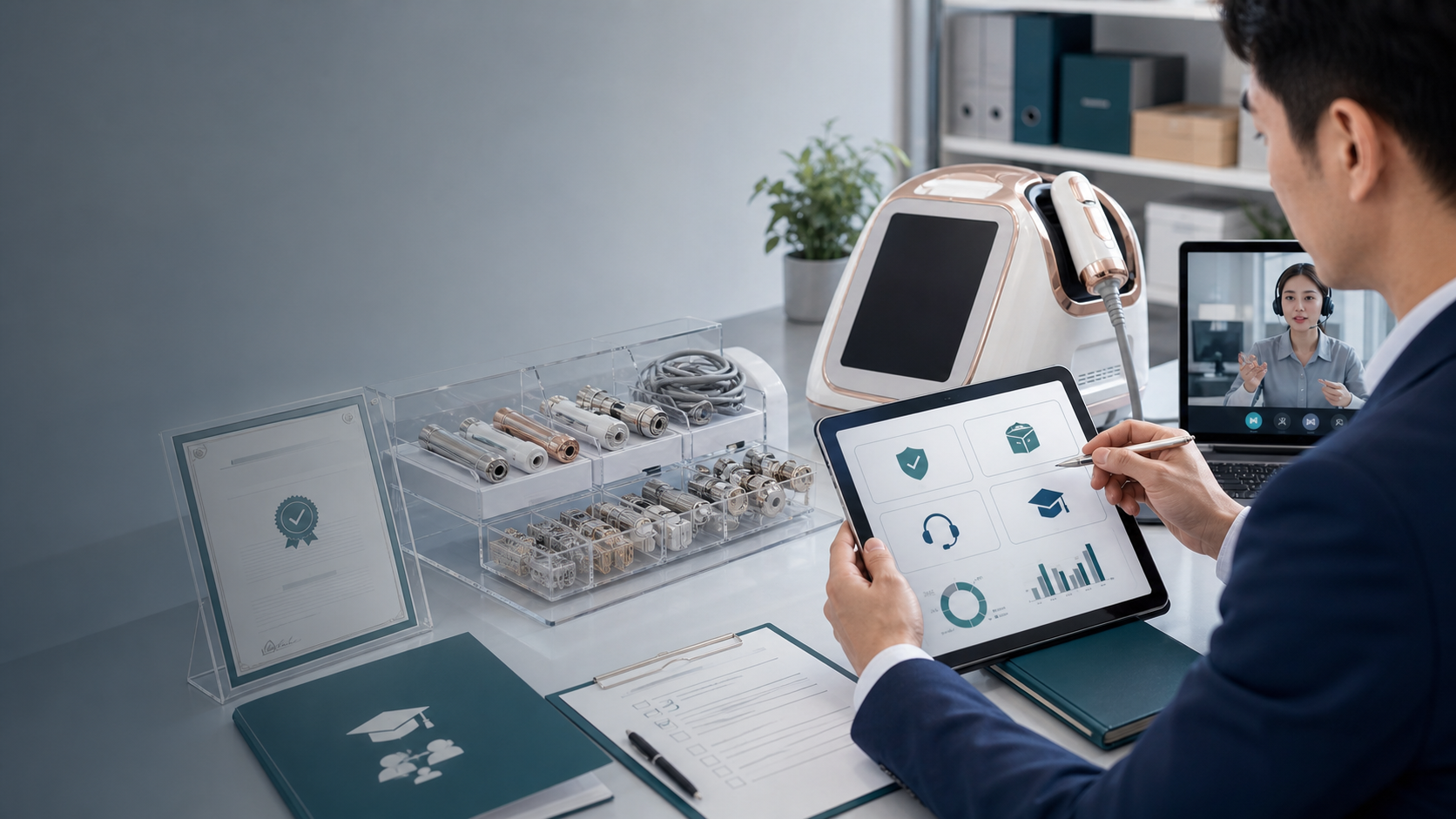
Anleitung zum Bau eines Händler-Support-Kits
Ein Vertriebshändler sollte vor der Einführung einer Produktlinie beim Lieferanten unterstützendes Material anfordern.
Ein praktisches Unterstützungspaket kann Folgendes beinhalten:
- Produkthandbuch
- Schnellstartanleitung
- Schulungsvideos
- Wartungscheckliste
- Garantiebedingungen
- Zubehör- und Verbrauchsmaterialliste
- Ersatzteilliste
- Leitfaden für häufige Fehler
- Fehlerbehebung im Workflow
- Reparaturantragsformular
- Vorlage für einen Seriennummerndatensatz
- FAQ für Kunden in der jeweiligen Landessprache
- Eskalationskontakt mit dem Lieferanten
Dieses Set hilft dem Vertriebshändler dabei, seine Kunden zuverlässig zu betreuen.
Es hilft auch bei der Schulung neuer Vertriebs- und Servicekräfte.
Ohne dieses Kit ist der Kundendienst zu sehr von Erinnerungen und dem persönlichen Chatverlauf abhängig.
Was Händler Lieferanten vor einer Zusammenarbeit fragen sollten
Vor der Auswahl eines Lieferanten für Kosmetikgeräte sollten Händler folgende Fragen stellen:
- Welche Garantie gilt für das Hauptgerät?
- Welche Garantie gilt für Zubehör?
- Welche Teile sind Verbrauchsmaterialien?
- Welche Ersatzteile sind für dieses Modell erhältlich?
- Welche Teile sollte ein Händler vor Ort auf Lager halten?
- Wie lange ist die übliche Lieferzeit für Ersatzteile?
- Können Ihre Techniker Ferndiagnosen durchführen?
- Welche Informationen werden zur Fehlerbehebung benötigt?
- Bieten Sie Schulungen zu Betrieb und Wartung an?
- Können Schulungsmaterialien auch für Kunden von lokalen Salons verwendet werden?
- Welche Unterstützung wird nach Ablauf der Garantiezeit angeboten?
- Was passiert, wenn das Modell aktualisiert oder eingestellt wird?
Diese Fragen helfen Vertriebshändlern, schwache Unterstützungssysteme zu vermeiden.
Sie helfen Händlern auch dabei, Lieferanten nicht nur nach dem Produktpreis zu vergleichen.
Wie SHEFMON Vertriebspartner unterstützt
Die öffentlichen Kundendienstinformationen von SHEFMON beschreiben ein Unterstützungssystem für Kliniken, Vertriebspartner und Agenten, das technische Schulungen, Garantieleistungen, Wartungshinweise, Marketingunterstützung und weltweiten Servicezugang umfasst.
Laut den von SHEFMON veröffentlichten Informationen kann die Unterstützung Folgendes umfassen:
- Aktualisierungen zu Produktion und Versand
- Betriebshandbücher
- Hinweise zur grundlegenden Verwendung
- Schulungsmaterialien vor der Auslieferung
- videobasiertes Training
- Live-Fernschulung
- Installations- und Einrichtungsanleitung
- 1 Jahr Garantie auf das Hauptgerät
- 3 Monate Garantie auf Zubehör
- Ferndiagnose
- Reparaturanleitung
- Empfehlungen zum Austausch
- Überseelager und Servicestellen in ausgewählten Regionen
- Lieferung von Verbrauchsmaterialien und Ersatzteilen
- Marketing- und Agentenunterstützung
Für Händler bedeutet dies, dass der Kundendienst als Teil des Gesamtproduktwerts dargestellt werden kann.
Die wichtigste Botschaft lautet:
“Wir helfen Ihnen beim Verkauf der Maschine, schulen Ihre Kunden, diagnostizieren Probleme, liefern Ersatzteile und pflegen eine langfristige Zusammenarbeit.”
Das ist viel aussagekräftiger als der bloße Verkauf eines Geräts.
Endgültige Antwort
Für Händler von Kosmetikgeräten sind Gerätegarantie, Ersatzteilversorgung, Fernwartung und Schulungsunterstützung zwar wichtig, haben aber nicht dieselbe Bedeutung.
Garantien schaffen Vertrauen beim Käufer und definieren Verantwortlichkeiten.
Schulungen reduzieren Fehler und helfen Kunden, Dienstleistungen korrekt einzuführen.
Fernwartung ermöglicht eine schnelle Diagnose und senkt die Servicekosten.
Die Ersatzteilversorgung schützt den langfristigen Ruf, da sie sich direkt auf Maschinenstillstandszeiten und Reparaturgeschwindigkeit auswirkt.
Wenn ein Händler den wichtigsten Faktor für ein langfristiges Geschäft auswählen muss, ist die Ersatzteilversorgung oft der entscheidende Faktor, insbesondere in Kombination mit einer schnellen technischen Fernunterstützung.
Die beste Vertriebsstrategie besteht jedoch nicht darin, sich nur für einen einzigen zu entscheiden. Die beste Strategie ist der Aufbau eines umfassenden Unterstützungssystems:
Schulungen zur Vorbeugung von Problemen, Fernunterstützung zur Diagnose von Problemen, Ersatzteile zur Behebung von Hardwareproblemen und Garantie zur Festlegung der Verantwortlichkeit.
Häufig gestellte Fragen
Ist die Garantie der wichtigste Kundendienst?
Garantieleistungen sind wichtig für das Vertrauen, reichen aber allein nicht aus. Ein Händler benötigt außerdem Schulungen, Fernunterstützung und Ersatzteilversorgung, um tatsächliche Serviceprobleme zu lösen.
Warum sind Ersatzteile für Händler so wichtig?
Ersatzteile beeinflussen die Reparaturgeschwindigkeit und Maschinenstillstandszeiten unmittelbar. Kann ein Händler keine Ersatzteile liefern, kann das Kundenvertrauen schwinden, selbst wenn die Maschine noch Garantie hat.
Ist Fernberatung für internationale Vertriebspartner sinnvoll?
Ja. Fernwartung hilft bei der Diagnose von Einrichtungsproblemen, Fehlermeldungen, Bedienungsfehlern und Komponentenproblemen, ohne auf einen Vor-Ort-Service warten zu müssen.
Warum reduziert eine Schulung den Kundendienstdruck?
Schulungen helfen Kunden, Maschinen korrekt zu installieren, zu bedienen, zu reinigen und zu warten. Dadurch werden vermeidbare Supportfälle und Kundenbeschwerden reduziert.
Welche Unterstützung ist für neue Vertriebspartner am wichtigsten?
Neue Vertriebspartner benötigen in der Regel zunächst Schulungen und Fernunterstützung, da sie ihre Produktkenntnisse und ihre Fähigkeiten im lokalen Service erst noch aufbauen müssen.
Welche Unterstützung ist für etablierte Vertriebspartner am wichtigsten?
Etablierte Distributoren legen in der Regel mehr Wert auf die Ersatzteilversorgung, die lokale Lagerplanung und den Reparaturablauf, da sie eine größere Anzahl installierter Maschinen betreuen.
Sollten Händler Ersatzteile vor Ort lagern?
Bei gängigen Modellen ja. Ein lokaler Lagerbestand an wichtigen Ersatzteilen kann Ausfallzeiten reduzieren und den Ruf des Kundendienstes verbessern.
Kann die Garantie die Ersatzteilversorgung ersetzen?
Nein. Die Garantie regelt die Verantwortlichkeiten, aber die Ersatzteilversorgung hilft dabei, den Maschinenbetrieb wiederherzustellen, wenn ein Austausch erforderlich ist.
Wie sollten Händler ihren Kunden den Kundendienst erklären?
Sie sollten es als ein komplettes System erklären: Schulung vor der Benutzung, Fernunterstützung während des Betriebs, Ersatzteilversorgung für Reparaturen und schriftliche Garantiebedingungen für die Haftung.
Wie kann SHEFMON Vertriebspartnern im Bereich After-Sales-Support helfen?
Die öffentlichen Supportinformationen von SHEFMON umfassen Handbücher, Schulungsmaterialien, Live-Fernschulungen, Garantieunterstützung, Ferndiagnose, Reparaturanleitungen, Empfehlungen zum Austausch, Unterstützung bei Ersatzteilen und Verbrauchsmaterialien sowie ausgewählten Zugang zu Serviceleistungen im Ausland.
Verwendete Quellen
- Komplettes Kundendienstsystem von SHEFMON: https://shefmon.com/complete-after-sales-support-system-for-aesthetic-equipment-training-warranty-and-global-service-network/
- SHEFMON-Kategorie Support & Logistik: https://shefmon.com/category/business-center/support-logistics/
- SHEFMON Über uns: https://shefmon.com/about/