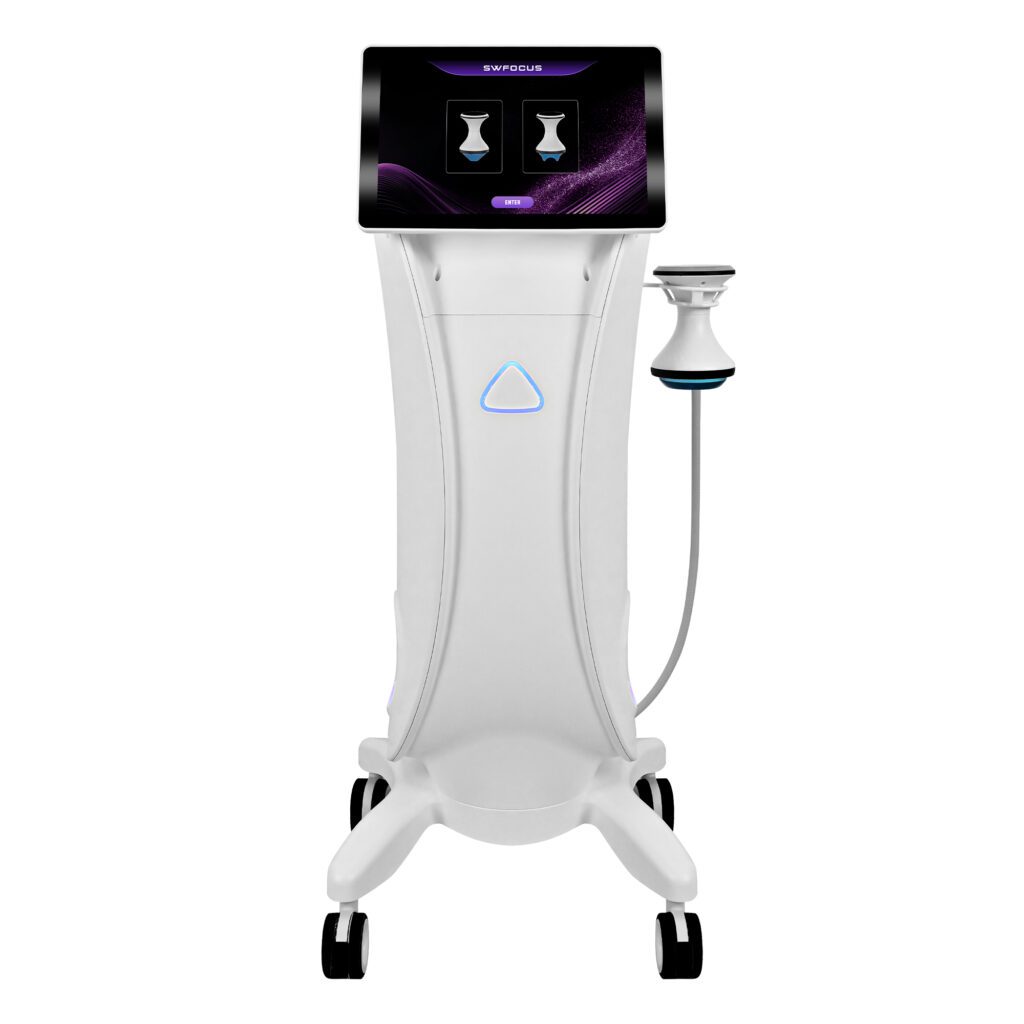
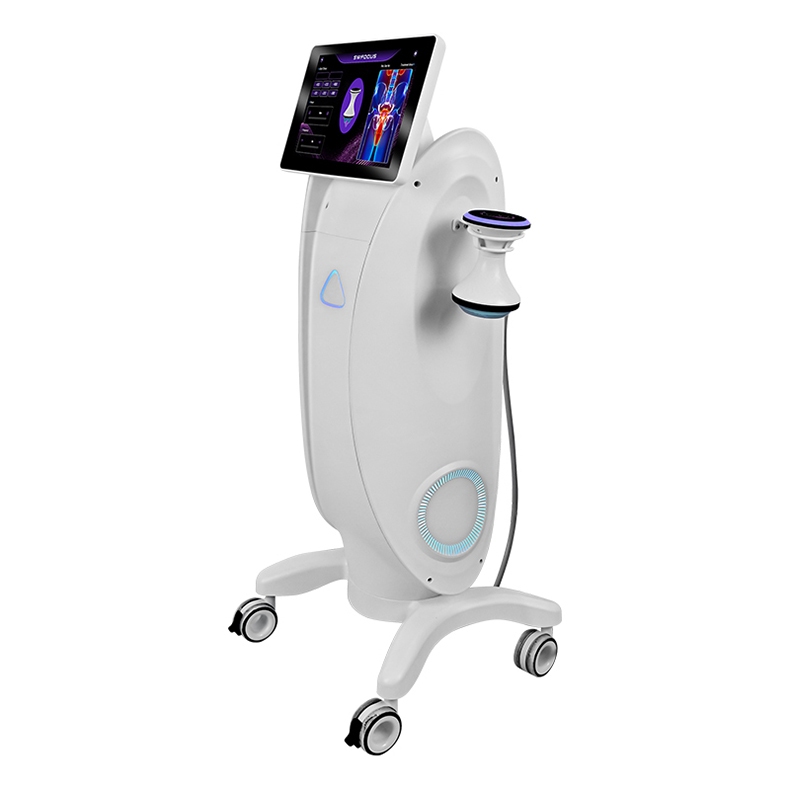
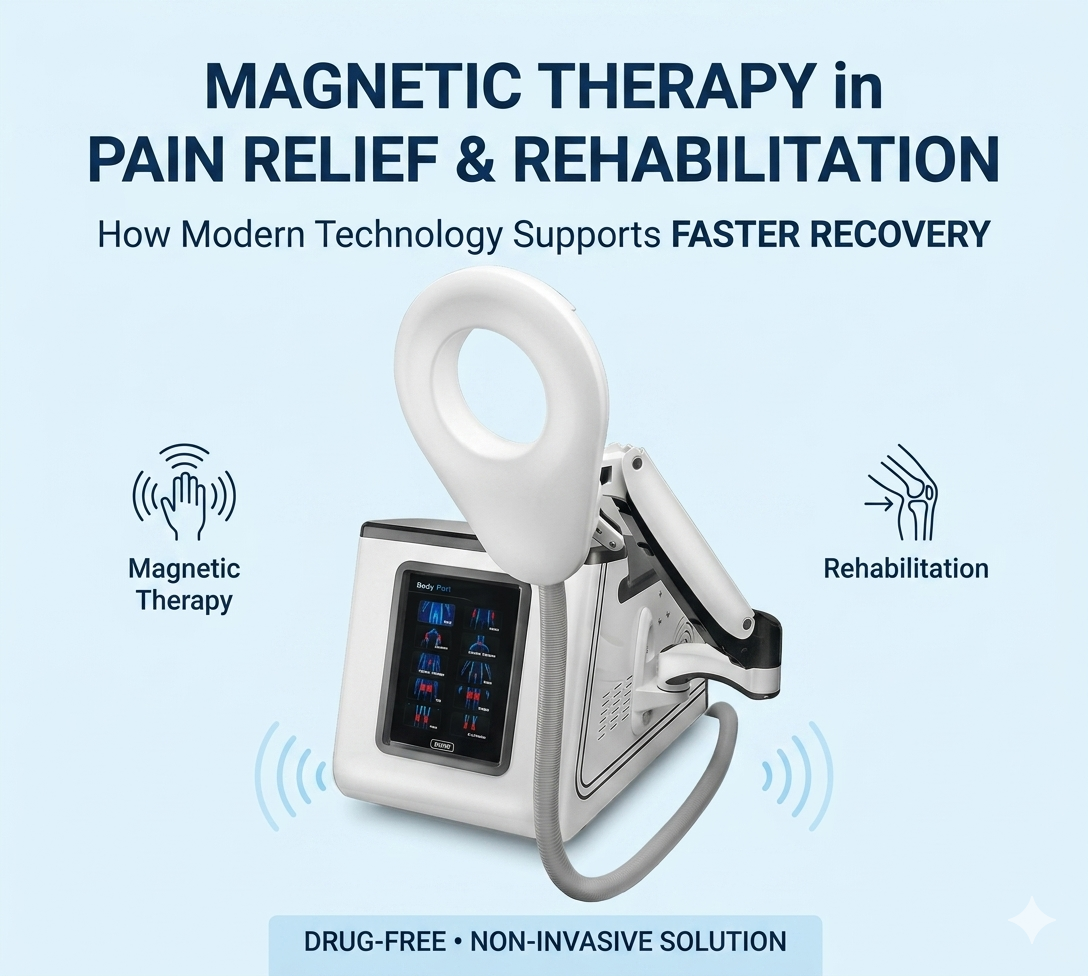
Die Magnetfeldtherapie hat sich zu einem immer wichtigeren Instrument in der modernen Schmerztherapie und Rehabilitation entwickelt. Da Gesundheitsdienstleister und Physiotherapiepraxen weiterhin nach nicht-invasiven, medikamentenfreien Lösungen für Erkrankungen des Bewegungsapparates suchen, hat die gepulste Magnetfeldtherapie aufgrund ihrer Fähigkeit, die Geweberegeneration zu unterstützen, Schmerzen zu lindern und die allgemeine Beweglichkeit zu verbessern, große Beachtung gefunden. Fortschrittliche Systeme wie die Hochintensitäts-Magnetfeldtherapie (HIMT) bieten hierfür vielversprechende Möglichkeiten. Magnetfeldtherapiegeräte werden heute aufgrund ihrer Fähigkeit, tiefgreifende biologische Prozesse ohne Operation oder Beschwerden anzuregen, in der Sportmedizin, in Rehabilitationszentren und in Wellnesskliniken häufig eingesetzt.
1. Grundlagen der Magnetfeldtherapie
1.1 Was ist pulsierende Magnetfeldtherapie?
Die pulsierende Magnetfeldtherapie (PMST) nutzt elektromagnetische Felder, um biologisches Gewebe auf zellulärer Ebene zu stimulieren. Diese Magnetimpulse dringen tief in Muskeln, Gelenke und Bindegewebe ein und beeinflussen die elektrische Aktivität innerhalb der Zellen.
Bei Einwirkung eines Magnetfelds verbessern sich der Ionenaustausch und das Membranpotenzial der Zellen. Dieser Prozess fördert den Zellstoffwechsel und unterstützt die natürlichen Reparaturmechanismen des Körpers.
1.2 Wie es mit dem Körper interagiert
Anders als oberflächliche Behandlungen wie Cremes oder Wärmetherapie wirkt die Magnetfeldtherapie auf einer tieferen physiologischen Ebene. Sie kommt ohne physischen Kontakt oder Medikamente aus. Stattdessen beeinflusst sie das bioelektrische Milieu des Körpers, das eine Schlüsselrolle bei der Geweberegeneration, der Entzündungshemmung und der Schmerzweiterleitung spielt.
2. Wie Magnetfeldtherapie die Schmerzlinderung unterstützt
2.1 Reduzierung der Nervenempfindlichkeit und der Schmerzsignale
Einer der Hauptvorteile der Magnetfeldtherapie ist ihre Fähigkeit, das Schmerzempfinden zu reduzieren. Die elektromagnetischen Impulse tragen zur Regulierung der Nervenaktivität bei und verringern so die Weiterleitung von Schmerzsignalen an das Gehirn. Dies führt zu einer natürlichen Linderung der Beschwerden ohne den Einsatz von Schmerzmitteln.
2.2 Muskelentspannung und Spannungsabbau
Muskelverspannungen sind eine häufige Schmerzursache bei Beschwerden wie Rückenschmerzen, Nackensteife und Sportverletzungen. Magnetfeldtherapie trägt zur Entspannung tieferliegender Muskelfasern bei, reduziert Krämpfe und verbessert das allgemeine Wohlbefinden.
2.3 Verringerung der Entzündung
Entzündungen tragen maßgeblich zu akuten und chronischen Schmerzen bei. Die Anwendung von Magnetfeldern verbessert die Mikrozirkulation und unterstützt die körpereigenen entzündungshemmenden Prozesse, wodurch Schwellungen in den betroffenen Bereichen reduziert werden.
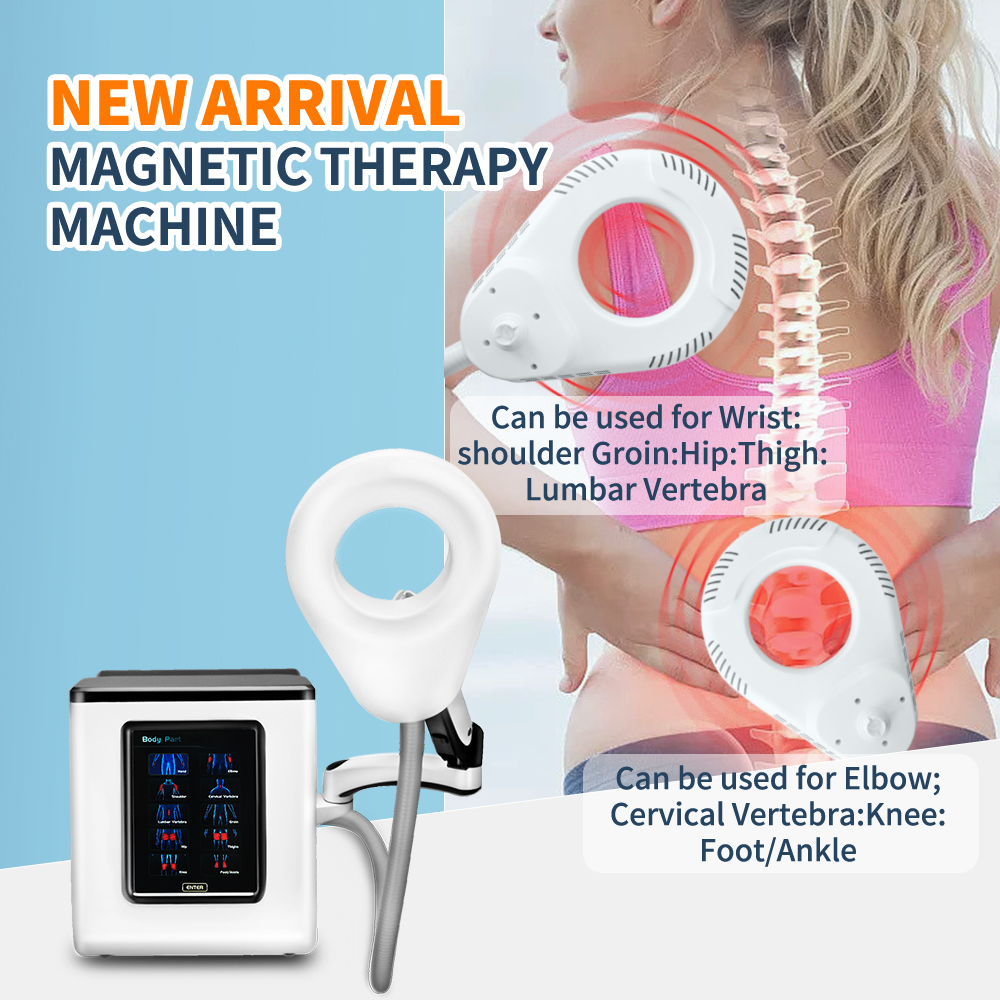
3. Rolle bei Rehabilitation und Genesung
3.1 Verbesserung der Durchblutung
Eine verbesserte Durchblutung ist für die Geweberegeneration unerlässlich. Die Magnetfeldtherapie stimuliert sowohl die oberflächliche als auch die tiefe Durchblutung und sorgt so dafür, dass Sauerstoff und Nährstoffe geschädigtes Gewebe effizienter erreichen. Gleichzeitig werden Stoffwechselprodukte besser abtransportiert.
3.2 Beschleunigung der Geweberegeneration
Auf zellulärer Ebene steigert die Magnetstimulation die Stoffwechselaktivität, was eine schnellere Zellreparatur und -regeneration unterstützt. Dies ist besonders vorteilhaft bei Weichteilverletzungen, Bänderschäden und in der postoperativen Phase.
3.3 Unterstützung der Gelenk- und Mobilitätswiederherstellung
Patienten, die sich von Gelenkverletzungen oder degenerativen Erkrankungen erholen, leiden häufig unter Steifheit und eingeschränkter Beweglichkeit. Magnetfeldtherapie trägt zur Verbesserung der Flexibilität bei, indem sie die Gewebespannung reduziert und die Gelenkfunktion langfristig steigert.
4. Anwendungen im klinischen und sportlichen Bereich
4.1 Rehabilitation nach Sportverletzungen
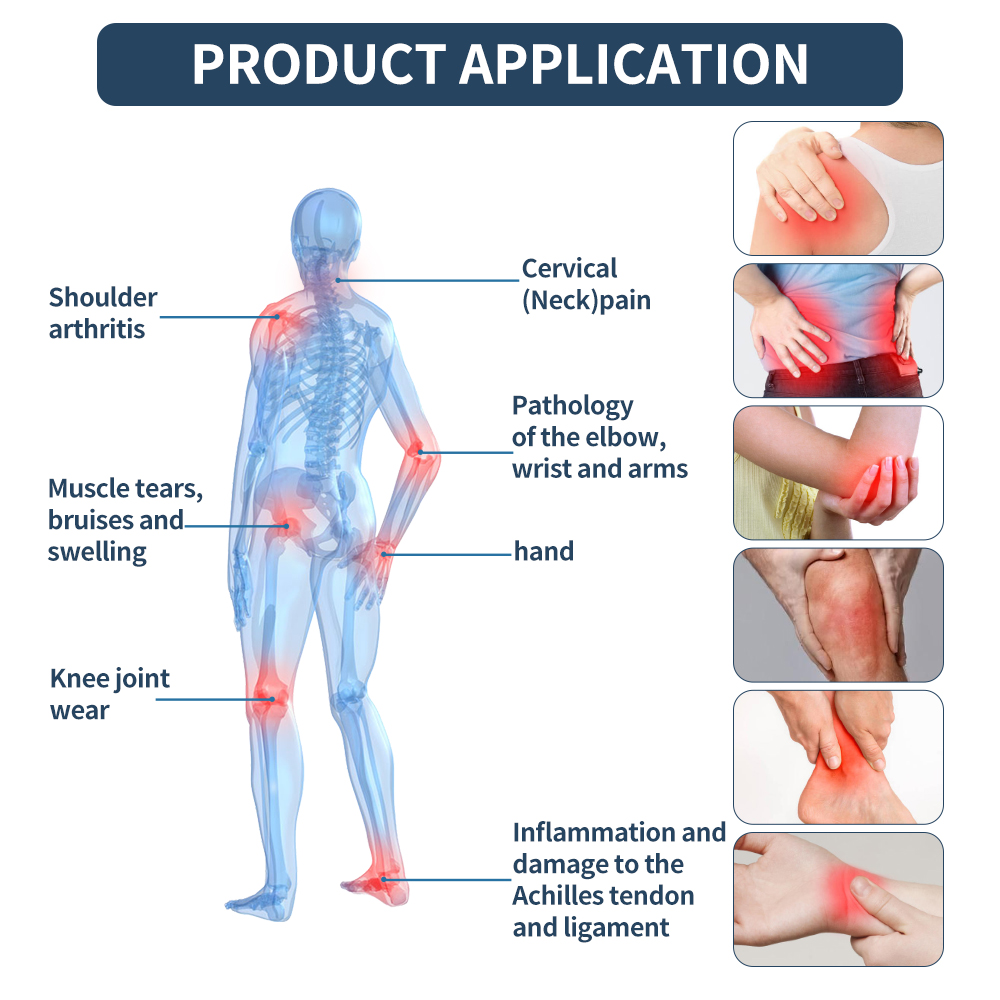
Magnetfeldtherapie wird von Sportlern häufig im Rahmen ihrer Regeneration eingesetzt. Sie ist wirksam bei der Behandlung von Muskelzerrungen, Bänderverletzungen, Sehnenentzündungen und Überlastungsverletzungen. Dank ihrer nicht-invasiven Natur ermöglicht die Behandlung Sportlern eine Erholung ohne zusätzliche Belastung des Körpers.
4.2 Management chronischer Schmerzen
Für Menschen mit chronischen Schmerzzuständen wie Rückenschmerzen, Arthritis oder Nackenschmerzen bietet die Magnetfeldtherapie eine langfristige, unterstützende Behandlungsmöglichkeit. Sie kann zur nachhaltigen Linderung in umfassendere Rehabilitationsprogramme integriert werden.
4.3 Postoperative Erholung
Nach einer Operation benötigt der Körper eine verbesserte Durchblutung und eine kontrollierte Entzündungsreaktion, um optimal zu heilen. Die Magnetfeldtherapie unterstützt diese Prozesse, fördert eine schnellere Genesung und lindert postoperative Beschwerden.
4.4 Neuromuskuläre Erkrankungen
Die Magnetstimulation wird auch zur Unterstützung von Patienten mit neuromuskulären Erkrankungen eingesetzt, indem sie die Nervenkommunikation und die Muskelreaktion verbessert und so zu einer besseren funktionellen Bewegung beiträgt.
5. Behandlungserfahrung und Sicherheit
5.1 Nicht-invasives und komfortables Verfahren
Die Magnetfeldtherapie ist ein völlig nicht-invasives Verfahren, bei dem weder Nadeln noch Medikamente verwendet werden und die Haut nicht direkt durchdrungen wird. Patienten verspüren während der Behandlung typischerweise ein sanftes Pulsieren oder leichte Muskelreaktionen.
5.2 Keine Ausfallzeiten erforderlich
Einer der Hauptvorteile dieser Therapie ist, dass Patienten unmittelbar nach der Behandlung ihre normalen Aktivitäten wieder aufnehmen können. Es gibt keine Erholungsphase, wodurch sie sich sowohl für klinische als auch für Wellness-Anwendungen eignet.
5.3 Geeignet für wiederholte Trainingseinheiten
Die Magnetfeldtherapie wird häufig in mehreren Sitzungen über einen längeren Zeitraum durchgeführt. Da sie nicht-invasiv und gut verträglich ist, kann sie sicher in langfristige Rehabilitationsprogramme integriert werden.
6. Warum die Magnetfeldtherapie immer beliebter wird
6.1 Nachfrage nach medikamentenfreien Schmerzlösungen
Patienten und Kliniken suchen zunehmend nach Alternativen zur medikamentösen Schmerztherapie. Die Magnetfeldtherapie bietet einen natürlichen Ansatz, der die Abhängigkeit von Medikamenten vermeidet.
6.2 Vielseitigkeit in verschiedenen medizinischen Bereichen
Von der Sportmedizin über die Physiotherapie bis hin zur postoperativen Versorgung – die Magnetfeldtherapie findet bei einer Vielzahl von Erkrankungen Anwendung. Diese Vielseitigkeit macht sie zu einem wertvollen Instrument im modernen Gesundheitswesen.
6.3 Ergänzung zu anderen Behandlungen
Magnetfeldtherapie kann mit anderen Rehabilitationsmethoden wie Physiotherapie, Massage oder Bewegungstherapie kombiniert werden. Dieser integrative Ansatz verbessert die gesamten Behandlungsergebnisse.
Abschluss
Magnetfeldtherapie Die Magnetfeldtherapie hat sich als wirksame, nicht-invasive Lösung zur Schmerzlinderung und Rehabilitation etabliert. Durch ihre Wirkung auf Zellebene trägt sie zur Verbesserung der Durchblutung, zur Reduzierung von Entzündungen und zur Beschleunigung der Gewebereparatur bei. Ihre Fähigkeit, die Genesung ohne Medikamente oder Operationen zu unterstützen, macht sie zu einer attraktiven Option für Patienten und medizinisches Fachpersonal. Mit dem technologischen Fortschritt wird die Magnetfeldtherapie zu einem unverzichtbaren Bestandteil moderner Rehabilitationsstrategien und bietet eine sichere, effektive und nachhaltige Unterstützung bei einer Vielzahl von Erkrankungen des Bewegungsapparates.