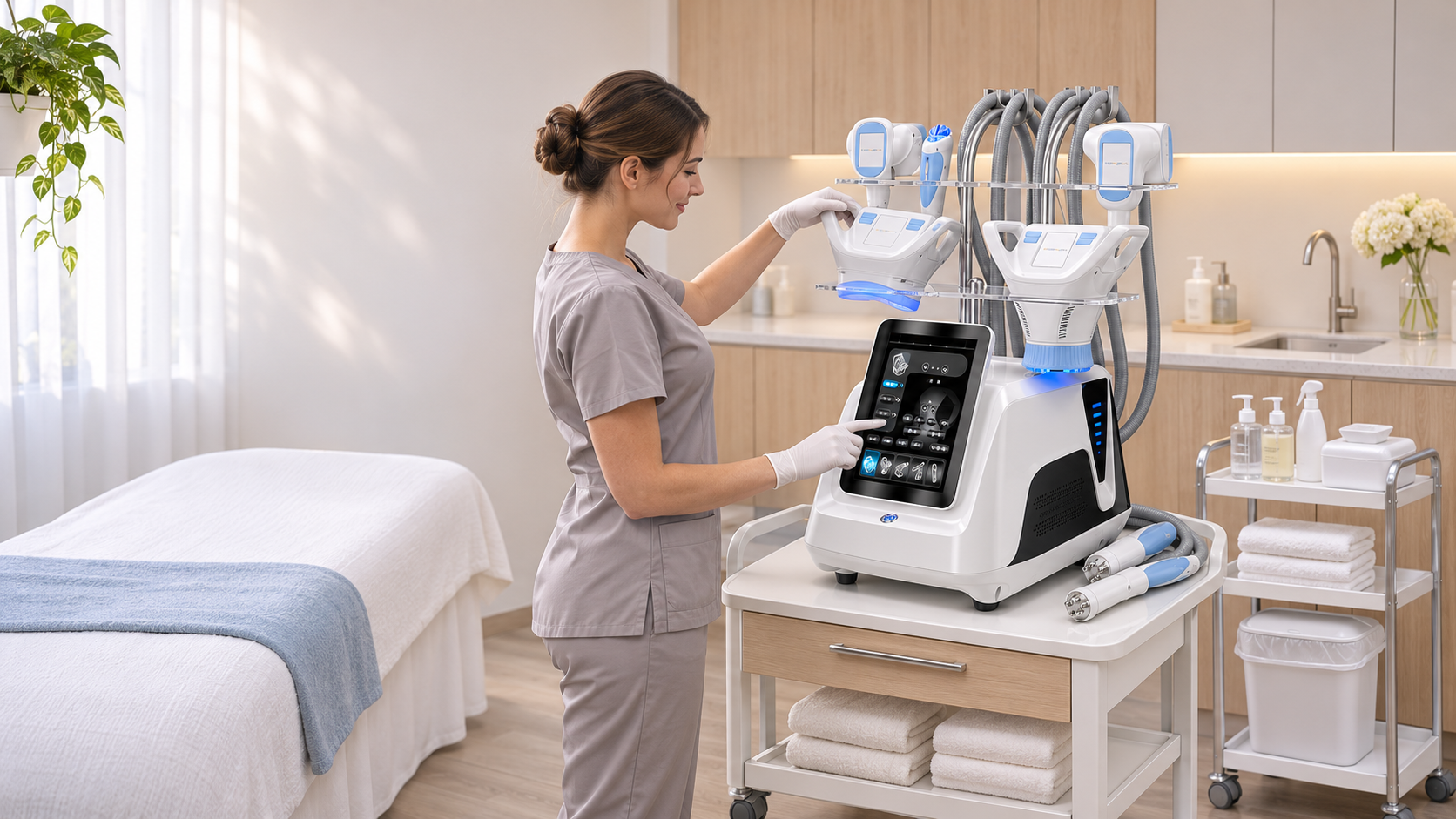
A one-room body studio has to make every square meter work twice. The same room may be used for consultation, photography, body treatments, smaller-area services, equipment storage, client changing, and between-appointment cleaning. A multifunction desktop machine can fit this model, but only when the studio controls its service menu, handpiece flow, and booking schedule.
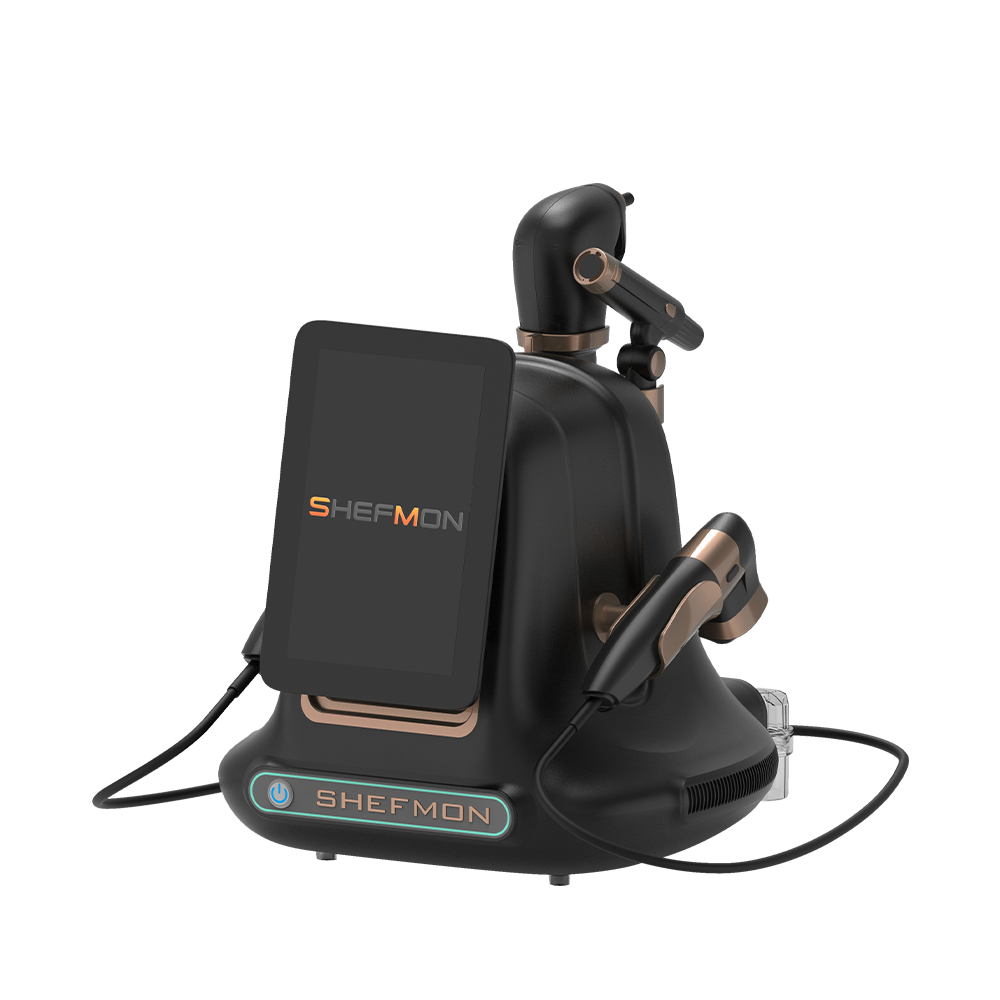
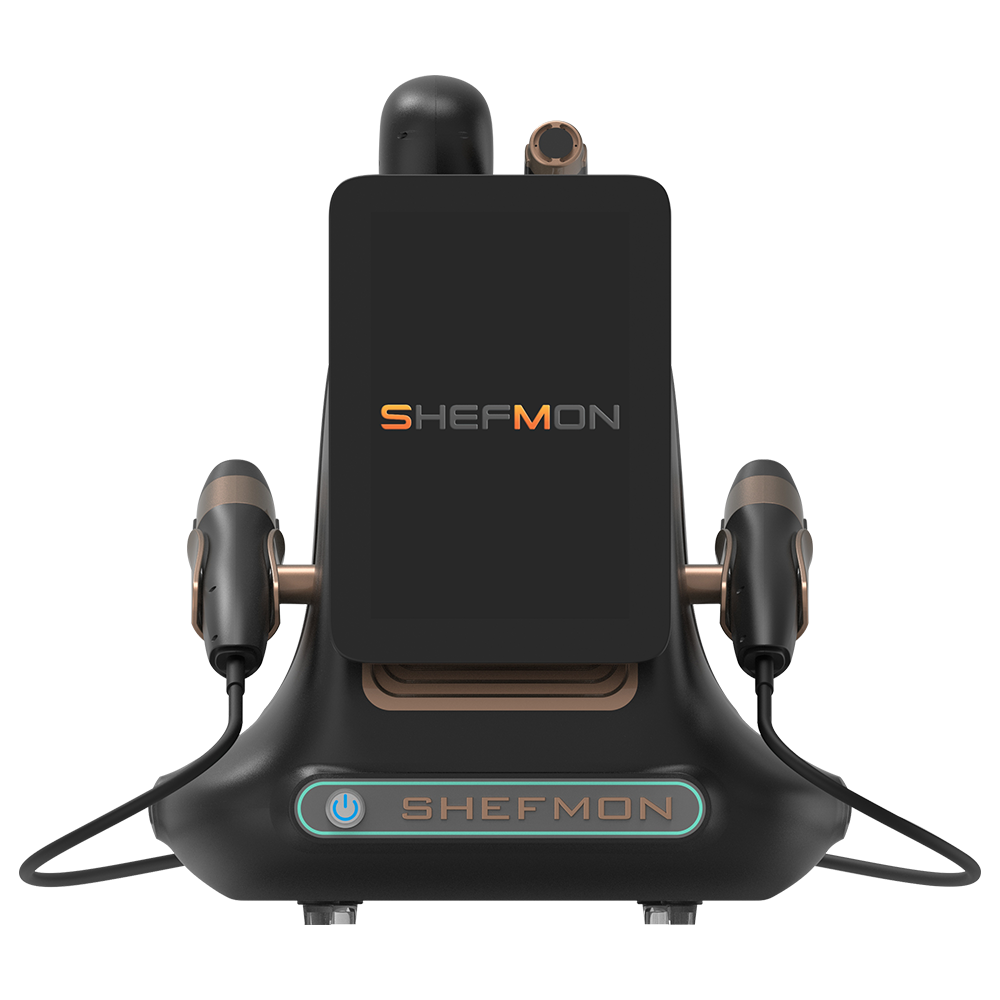
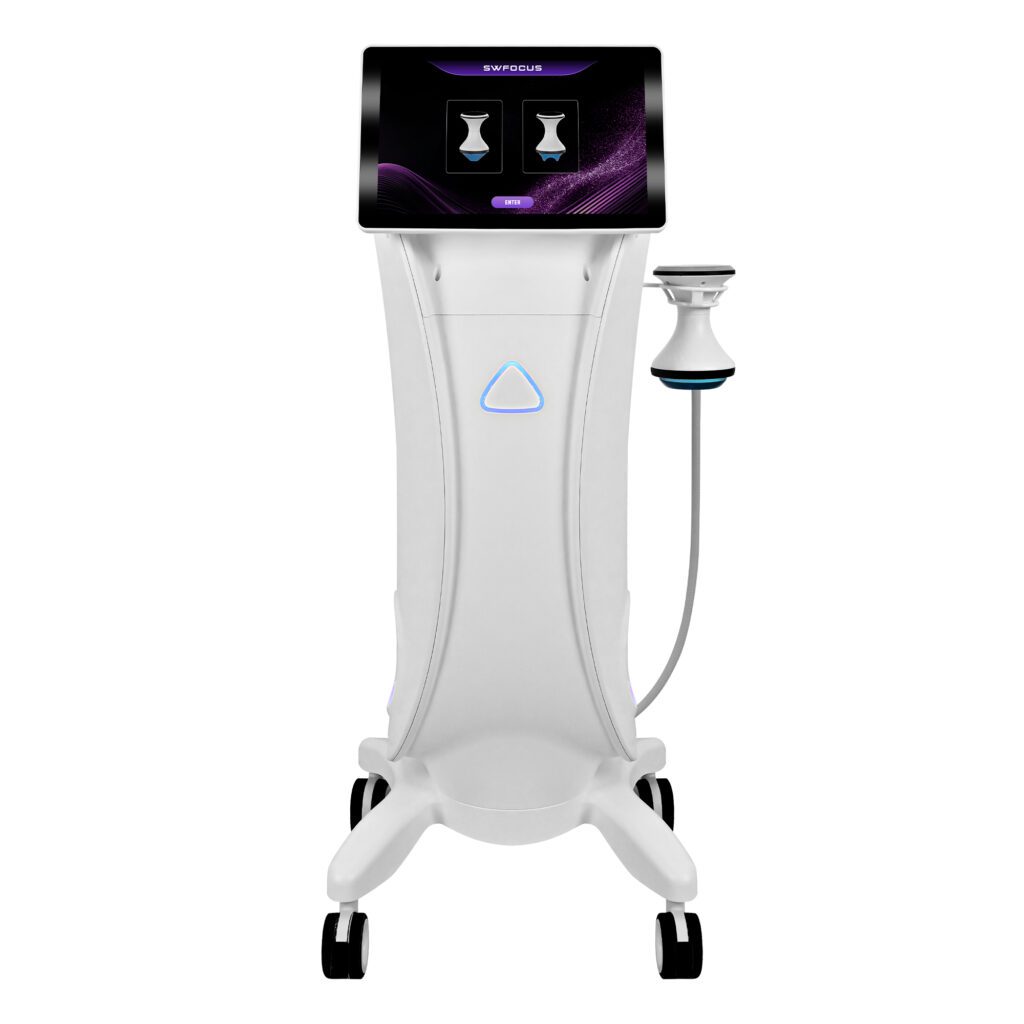
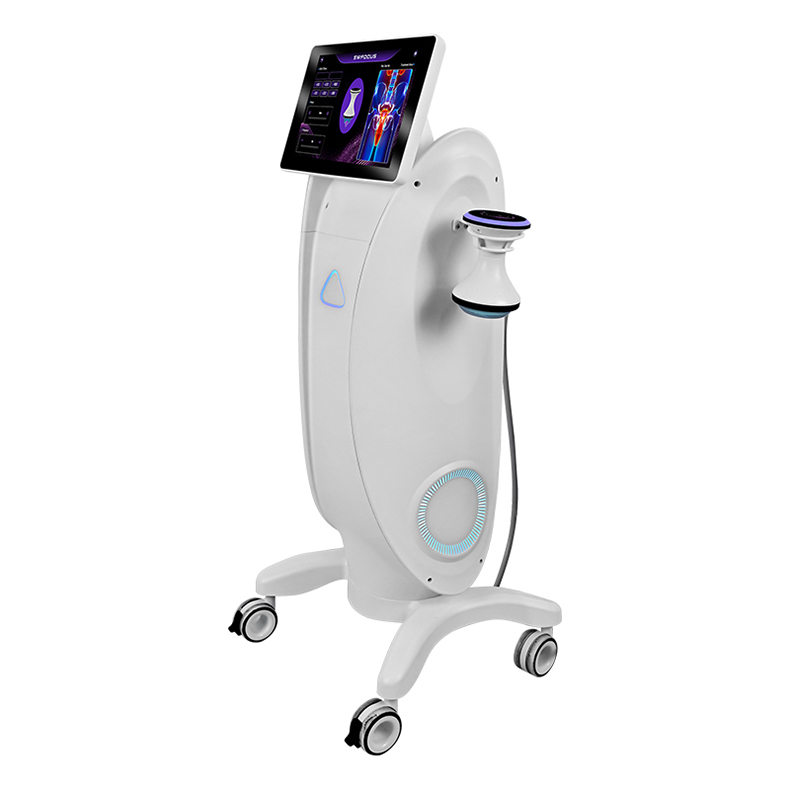
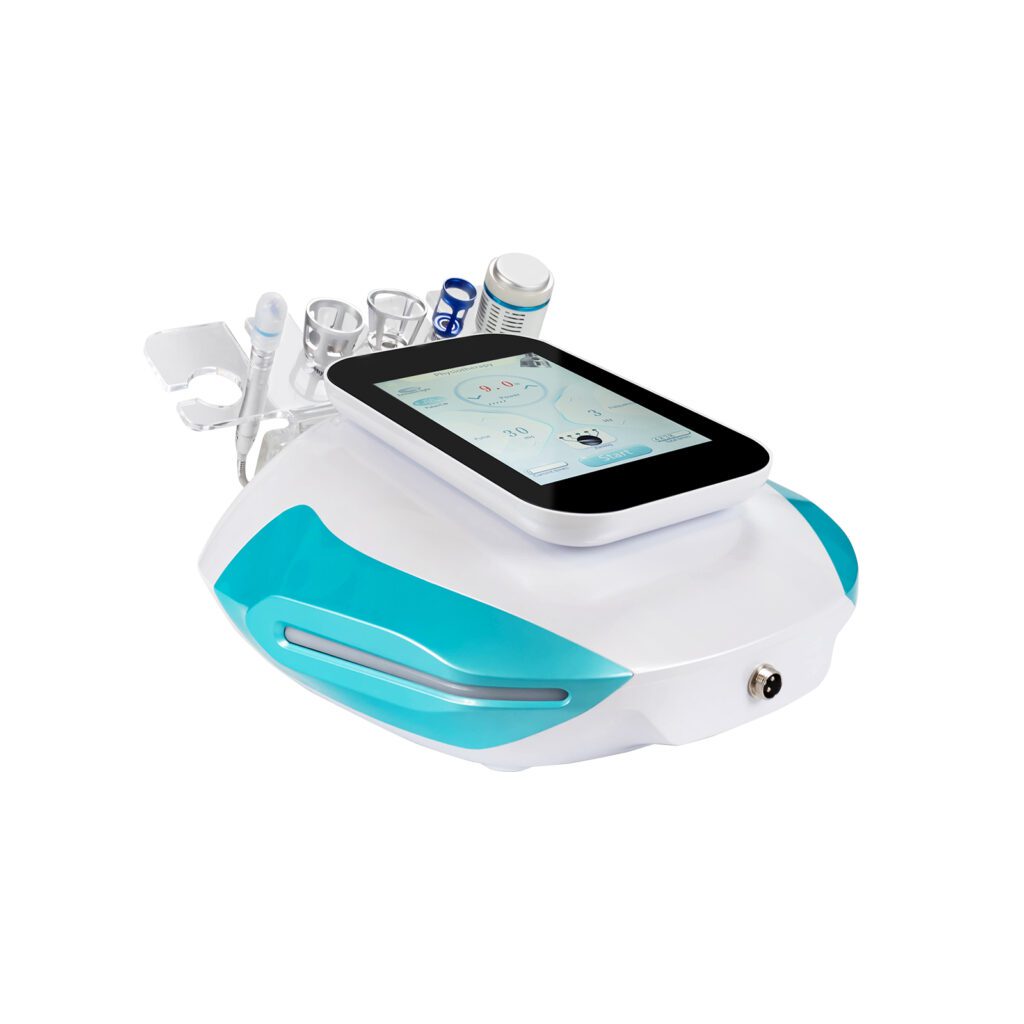
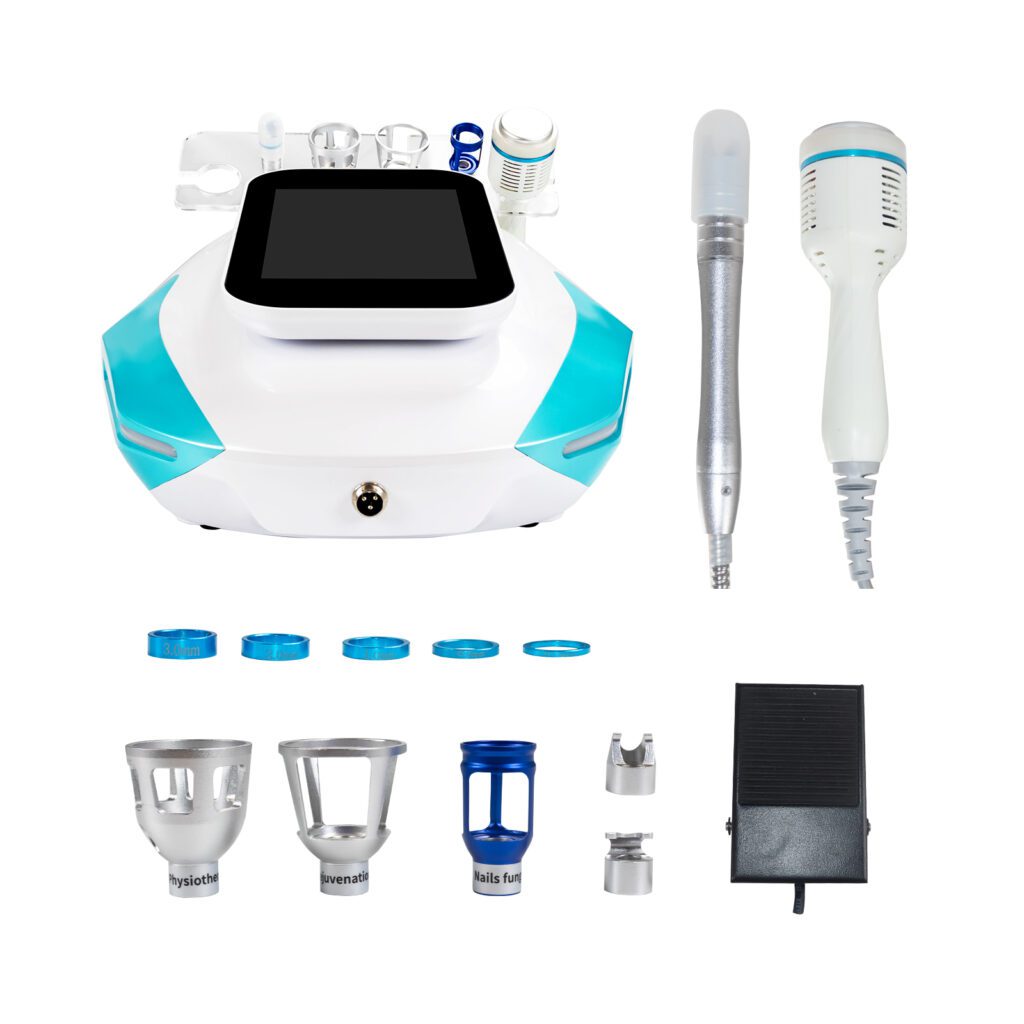
The SHEFMON B0155 Desktop Endos Velapro is positioned as a compact 5-in-1 platform combining vacuum roller, RF, mechanical rolling, 80K cavitation, rotating handpieces, and light-based support across body and selected smaller-area service directions. This guide explains how a one-room studio can organize B0155 consultations, room zones, handpiece selection, client flow, turnover, records, and daily checks without trying to use every function in every appointment.
The workflow is an operational framework. Final service areas, settings, movement patterns, cleaning methods, contraindications, and combinations must follow the purchased configuration, supplied manual, professional training, local rules, and individual client assessment.
Executive Summary
- Build the room around one active client and one controlled workflow, not maximum simultaneous activity.
- Separate consultation, clean storage, active treatment, used-item processing, and fault quarantine even when they share one room.
- Create service modules for vacuum roller, RF-supported roller care, cavitation, rotating handpieces, and smaller-area care; do not automatically combine all five functions.
- Store each handpiece in a labeled, supported location with its cable or hose protected from sharp bends and floor contact.
- Use opening, client, turnover, and closing checklists to keep the room repeatable across staff.
- Price appointments around consultation, chosen module, room time, cleaning, records, and review rather than a “full machine” promise.
- Keep marketing focused on cosmetic body management, smoother-looking texture, firming support, and client experience—not guaranteed weight loss or permanent cellulite removal.
1. Understand What the B0155 Configuration Changes
The current B0155 page lists several handpiece and function directions. These affect both the menu and the room.
| Public B0155 direction | Listed information | Workflow implication |
|---|---|---|
| Body vacuum roller | 40 × 60 mm treatment size; RF up to 50W; vacuum, RF, three-color light, and roller wording | Requires body-area access, stable handpiece movement, line management, and temperature/comfort monitoring under protocol |
| Face/arm/neck vacuum roller | 30 × 50 mm treatment size; RF up to 50W; vacuum, RF, red light, and roller wording | Requires a separate smaller-area service pathway and training; do not treat it as a miniature body protocol |
| Body rotating handpiece | Multipolar RF, vacuum, and photon wording | Needs clear identification so it is not confused with the face handpiece |
| Face rotating handpiece | Multipolar RF, vacuum, and photon wording | Should have its own storage position, screening, preparation, and record fields |
| Focus dual cavitation 80K | Cavitation function with a 3.5-inch touchscreen listed | Adds contact-media, cleaning, and ultrasound-specific workflow requirements according to the manual |
| Desktop format | B0155 desktop positioning; package dimensions are listed on the page | The console needs a stable dedicated work surface; shipping package size is not the installed footprint |
The product page supports an initial layout plan, but it does not publish every installed dimension, cable length, handpiece weight, electrical detail, approved cleaning agent, or service interval. Confirm the exact quotation and delivered accessories before ordering furniture or publishing the final menu.
Studios still comparing product directions can browse the SHEFMON Endos Velapro category. The room plan should be specific to B0155 rather than copied from a large floor-standing roller system.
2. Use the One-Room Operating Principle
One room does not have to mean one undivided space. It needs visible status control.
The simplest operating principle is:
- One client is active in the room.
- Only the handpieces and consumables needed for that service are exposed.
- Clean equipment stays protected from the treatment and used-item path.
- Used items move to processing before another service is prepared.
- The next client enters only after records and turnover are complete.
This approach prevents a common small-studio problem: the console looks compact, so the booking schedule is compressed until there is no time to change handpieces, clean surfaces, check cables, or reset the room.
The active setting time on the machine is only one part of room occupancy. Consultation, changing, photography, preparation, handpiece selection, treatment, aftercare, cleaning, drying, and documentation all need time.
3. Divide the Studio Into Five Functional Zones
Zone A: consultation and photography
Use a consistent standing or seated point for goal discussion, screening, measurement, and photographs. Keep the background, camera position, lighting, and client posture repeatable. Privacy and consent should be built into the process.
In a very small room, the treatment bed may also serve as the consultation seat. Complete the conversation and documentation before opening clean treatment supplies.
Zone B: clean handpiece and consumable storage
Use protected, labeled storage for processed and fully dry handpieces, approved contact media, clean linens, barriers, forms, and small tools. Clean storage should not sit under an open sink, beside used linen, or on the floor.
Each B0155 handpiece should have a dedicated position. The staff member should be able to identify body roller, smaller-area roller, body rotating handpiece, face rotating handpiece, and cavitation applicator without reading a loose note during the appointment.
Zone C: active treatment
This zone includes the treatment bed, B0155 console, current handpiece, current consumables, and operator path. Keep only the chosen service module at the bedside. Unused handpieces stay in clean storage rather than on the machine or trolley.
Zone D: used-item processing
Create a stable, cleanable surface or labeled container for handpieces awaiting processing. Used items must not pass over open clean supplies. If wet processing occurs in the room, keep liquids away from the console, connectors, outlets, and clean storage.
Zone E: fault quarantine
Reserve a clearly labeled location for a damaged handpiece, abnormal cable, loose connector, unresolved alarm, or item with uncertain cleaning status. “Do not use” status should be visible to every staff member.
4. Position the Desktop Console Correctly
B0155 needs a dedicated, stable surface rated for the delivered equipment. A temporary stool, narrow decorative shelf, or treatment bed corner is not a professional console position.
The work surface should allow:
- the console to sit flat without vibration or edge overhang;
- ventilation openings to maintain the clearance stated in the manual;
- the operator to see and reach the screen without leaning across the client;
- handpiece lines to leave the console without sharp bends or tension;
- power and connectors to remain accessible for inspection;
- cleaning of the work surface without liquid entering the unit;
- the console to remain protected while the client changes or stores belongings.
Do not use shipping package dimensions as the installed machine dimensions. Ask SHEFMON for the exact console size, weight, ventilation needs, delivered voltage, plug, and compatible cart or surface requirements.
If the console sits on a mobile cart, lock the wheels during operation and verify the arrangement follows the manual. Do not move the cart while a handpiece is connected to the client or while cables are extended across the room.
5. Plan the Bed and Operator Path
The treatment bed should support body and smaller-area positions without forcing the operator to twist the wrist, drag a handpiece line, or reach across the client. Leave access on the side needed for the selected area.
A clear operator path should connect:
- client entry and changing point;
- consultation or photography mark;
- clean storage;
- console and screen;
- treatment side of the bed;
- used-item processing surface;
- exit and emergency route.
Client clothing, bags, and phones need their own basket, hook, or cabinet. They should not be placed on the B0155 cart, clean trolley, power cable, or handpiece holder.
For smaller face, arm, or neck services, adjust the bed and operator position before preparing the handpiece. Do not improvise with unsupported pillows or unstable seating merely to fit an add-on into a body-room layout.
6. Label and Store Every Handpiece
B0155’s value comes from multiple handpiece directions, but that also creates selection and storage risk. Build a model-specific handpiece map when the system arrives.
For each handpiece, record:
- clinic asset ID;
- manufacturer name or supplied designation;
- intended service area from the manual;
- compatible port or connector;
- cable or hose type;
- cleaning and disinfection status;
- date placed into service;
- inspection, fault, repair, and replacement history.
Storage should follow the supplied instructions. General principles include:
- return only processed, inspected, and fully dry handpieces to clean storage;
- give each handpiece a stable, padded, or supported position appropriate to its design;
- protect rollers, treatment faces, seals, windows, and connectors from impact;
- do not stack heavy handpieces or put supplies on top of them;
- support cables and hoses without tight coils, crushing, sharp bends, or floor contact;
- do not hang the full handpiece weight from a cable unless the holder is designed for it;
- keep connectors clean, dry, and protected from lint or chemical spray;
- use supplied caps or holders when the manual requires them.
If a handpiece cannot be identified or its processing status is uncertain, it belongs in the used-item or quarantine zone, not in clean storage.
7. Create a Service-Module Menu
A one-room studio should not sell “all five technologies” as one automatic appointment. Build modules that staff can explain, prepare, document, and turn over consistently.
| Service module | Possible client-facing direction | Operational focus |
|---|---|---|
| Body Vacuum Roller Care | Mechanical roller body management and smoother-looking texture support | Body roller, vacuum/RF workflow where appropriate, movement path, comfort monitoring, full handpiece processing |
| Targeted Arm or Neck Care | Smaller-area roller care within the product’s supplied scope | Smaller handpiece selection, precise positioning, separate settings and records |
| Rotating Body Care | Rotating vacuum/RF/light-supported body-care module where permitted | Correct body handpiece, stable contact, cable control, thermal and comfort monitoring |
| Face or Contour Add-On | Separate face rotating or smaller-area module where permitted | Face-specific screening, products, positioning, hygiene, and conservative professional protocol |
| Cavitation Body Module | 80K cavitation body-contouring support within the supplied indications | Approved contact media, complete contact, movement, cleaning, and ultrasound-specific screening |
| Consultation and Progress Review | Goal clarification, photos, measurements, suitability, and next-step plan | No automatic treatment; protects room capacity and improves documentation |
A service module can be sold alone or placed inside a staged program. A commercial package does not prove that two modules should occur in the same appointment or on the same area. Sequencing must follow the manuals, training, client assessment, and local professional guidance.
8. Match Screening to the Selected Technology
B0155 combines several technology types, so one generic “body treatment” checkbox is not enough. The provider should first choose the proposed module, then apply the relevant screening and consent pathway.
The FDA’s non-invasive body contouring overview explains that these procedures have benefits, limits, and risks; they do not treat obesity or produce the health benefits of weight loss. It also describes technology-specific concerns for RF, ultrasound, light, and mechanical massage.
| Proposed module | Screening and workflow questions to include |
|---|---|
| Vacuum or mechanical roller | Skin integrity, bruising or bleeding tendency, altered sensation, pressure sensitivity, recent procedures, implants or surgery in the area, and any condition worsened by pressure or vibration |
| RF-supported service | Implanted electronic devices, metal or implants in the area, sensation, skin condition, medications or history relevant to heat response, and the manual’s authorized areas |
| Cavitation or ultrasound | Intact skin, implants or metal, sensation, correct contact medium, authorized body area, and the device-specific exclusion list |
| Light-based support | Photosensitivity, relevant medications, eye-protection instructions if applicable, skin condition, and the exact light source named in the manual |
| Face or neck service | Product-specific area authorization, delicate structures, implants, prior procedures, skin condition, and operator qualification |
This table is not a complete contraindication list. It shows why the studio needs module-specific forms based on the B0155 manual and local requirements. When the client’s history falls outside the operator’s scope, postpone and refer appropriately.
9. Opening Workflow Before the First Client
Assign a trained staff member to complete and sign the opening check.
Room check
- The floor, bed, cart, and work surfaces are clean, dry, and unobstructed.
- Consultation, clean storage, active treatment, used-item, and quarantine zones are ready.
- The client-belongings area is empty and separate from equipment.
- Photography and privacy arrangements are ready.
- Hand hygiene, waste, linen, and cleaning supplies are available.
Console check
- The console is stable and ventilation is unobstructed.
- Power cable, plug, housing, screen, and connectors show no damage.
- Startup behavior and any self-check follow the manual without an unexplained alarm.
- The unit’s date, software, or settings have not been changed unexpectedly.
Handpiece check
- Booked handpieces are present, identified, processed, dry, and inspected.
- Rollers, treatment surfaces, seals, windows, cables, and hoses show no damage or residue.
- Connectors fit normally without force.
- No fault-tagged item has returned to clean storage.
- Approved contact media and other consumables are in date and sufficient for the schedule.
Opening confirms equipment readiness. It does not replace the client’s consultation, skin check, or service-specific assessment.
10. Pre-Appointment Workflow
Review the booking before the client enters. The record should state the planned goal and provisional module rather than only “B0155 session.”
Prepare the room in this order:
- Confirm the bed position and operator side for the planned area.
- Confirm the relevant screening and consent form is ready.
- Prepare photography and measurement tools if the appointment includes a review.
- Select the expected handpiece but keep it protected until the provider confirms suitability.
- Place only the compatible products, contact media, barriers, and consumables required by that module on the clean trolley.
- Route the handpiece cable or hose so it cannot be trapped by the bed, cart, door, or operator.
- Keep all other handpieces in clean storage.
Do not preload a multi-function sequence simply because the client bought a premium package. The provider should confirm the actual module after consultation.
11. Client Consultation and Service Selection
Clarify the goal
Ask whether the client is seeking a massage-style body-care experience, smoother-looking texture, firming support, a targeted contour service, or regular maintenance. Correct weight-loss or medical expectations before recommending an appointment.
Review current condition and history
Use the appropriate screening form for the proposed module. Document skin condition, sensation, recent procedures, medications and relevant health history, implants or metal, and prior reactions according to the manual and local scope.
Inspect and map the service area
Confirm intact skin, the appropriate body or smaller-area direction, operator access, and handpiece fit. Record scars, tattoos, sensitive areas, or other features that may affect the plan.
Explain the selected module
Tell the client which handpiece and technology direction is proposed, what they may feel, how feedback will be used, what temporary responses may occur, and what would make the provider stop.
Confirm one of four outcomes
- proceed with the planned module;
- select a different B0155 module;
- postpone pending recovery, clarification, or professional review;
- decline or refer because the service is not appropriate.
12. Body Vacuum Roller Appointment Workflow
The body vacuum roller is a central B0155 service direction. A repeatable appointment can follow these stages without publishing treatment settings.
Prepare
Confirm the body area, client position, handpiece ID, cable path, compatible products, and clean status. Take baseline photos or measurements when included in the plan.
Begin according to trained protocol
Use the manual and client assessment to select functions and settings. Start within the trained approach, verify contact and client comfort, and observe the skin response. Stronger vacuum, higher RF output, or more passes are not automatically better.
Maintain a controlled movement path
Follow the manufacturer-taught direction, speed, overlap, and time. Avoid parking an active handpiece on one location or pulling the cable against the connector.
Monitor
Ask for client feedback and check the service area regularly. Stop or adjust according to the professional protocol when discomfort, heat, bruising, skin change, equipment behavior, or another response falls outside expectations.
Finish and record
Document the handpiece, area, functions used, settings selected by the trained provider, duration, observed response, client feedback, and aftercare. Move the handpiece directly to the used-item zone.
13. Cavitation and Rotating-Handpiece Workflow
These modules need separate preparation rather than being added automatically after roller care.
For the cavitation module:
- confirm the exact applicator and authorized body area;
- use only approved contact medium;
- maintain the contact and movement required by training;
- keep medium away from the console and connectors;
- monitor skin, comfort, and equipment behavior;
- clean the applicator with the approved method before dry storage.
For rotating body or face handpieces:
- confirm that the body or face version is selected;
- use the relevant module-specific screening and consent;
- plan line routing for repeated movement;
- monitor vacuum, heat, light, pressure, and comfort as applicable;
- keep product and cleaning fluids away from the connector;
- record the actual combination of functions used.
If the purchased configuration differs from the public page, the delivered manual controls the workflow.
14. Smaller-Area and Face-Service Workflow
The product page lists face/arm/neck and face rotating-handpiece directions, but a one-room studio should not treat those as simple add-ons to every body appointment.
Create a separate pathway with:
- a dedicated consent and screening form;
- confirmed operator qualification and local authorization;
- smaller-area photography and privacy standards;
- a face or smaller-area handpiece that is clearly separated and identified;
- products compatible with the area and device;
- careful positioning around delicate structures;
- a conservative, manual-based protocol;
- specific aftercare and escalation instructions.
Do not use body claims, body settings, or body movement patterns on the face or neck. When the area or client history falls outside the manual or local scope, do not proceed.
15. Between-Client Turnover
A one-room schedule is only as reliable as its turnover process.
- Finish the previous client’s record and aftercare before preparing the next service.
- Dispose of single-use items according to their instructions and local rules.
- Move reusable handpieces directly to the processing zone.
- Follow the manual for compatible cleaning agents, application method, contact time, and drying.
- Do not immerse or spray connectors unless the instructions explicitly allow it.
- Inspect rollers, treatment faces, seals, windows, cables, hoses, and connectors after processing.
- Allow complete required drying before returning an item to clean storage.
- Clean the bed, trolley, photography aids, client touchpoints, and approved console surfaces.
- Replace clean linen and restock only what the next service needs.
- Log any abnormal sound, heat, vacuum, rotation, display behavior, residue, damage, or client response.
The public product page does not specify one universal disinfectant or contact time. The studio should create a B0155-specific processing SOP from the supplied manual, training, product labels, and local infection-control requirements.
16. Closing Workflow
At the end of the day:
- Complete all client, cleaning, and incident records.
- Process, dry, inspect, and store every reusable handpiece.
- Check the full visible length of cables and hoses for strain or damage.
- Move questionable items to fault quarantine with a date and issue description.
- Count contact media, barriers, linens, and other consumables against the next schedule.
- Clean the bed, cart, worktop, storage handles, approved console surfaces, and room touchpoints.
- Remove waste and used linen without crossing clean storage.
- Shut down and secure the console according to the manual.
- Leave cables supported and connectors protected.
- Leave the room dry and uncluttered for the next opening check.
Do not close clean storage on a damp handpiece. Drying and clear processing status are part of the current day’s work.
17. Weekly, Monthly, and Preventive Workflow
Build the maintenance calendar from the supplied B0155 instructions and SHEFMON support information.
Scheduled tasks may include:
- deeper inspection of rollers, handpiece shells, windows, seals, strain relief, cables, and hoses;
- testing only the operator-level checks authorized by the manual;
- reconciling handpiece and consumable inventory;
- cleaning storage compartments and checking clean/used separation;
- reviewing fault, alarm, and incident logs;
- auditing records for area, handpiece, functions, settings, and response;
- confirming staff can locate manuals and technical-support contacts;
- checking that booking templates still allow enough turnover time;
- reviewing spare-part needs and replacement lead times;
- completing manufacturer-specified service or calibration through qualified support.
Staff should not open the console, improvise an internal repair, or swap a handpiece between models without confirmed compatibility.
18. Handle Faults and Incidents Consistently
Stop or do not begin a service when there is:
- damage to the console, power lead, handpiece, roller, window, cable, hose, connector, or seal;
- liquid in an unauthorized location;
- an unexplained alarm or failed startup check;
- abnormal rotation, vacuum, heat, sound, smell, vibration, or display behavior;
- a handpiece that does not identify, connect, or operate normally;
- uncertain cleaning or drying status;
- a client response outside the trained protocol;
- an unresolved previous incident.
Record the equipment ID, handpiece, time, service, observed issue, action taken, and person notified. Isolate the item until technical support or another qualified person approves its return.
An extra handpiece is not permission to bypass a fault review. A studio needs traceable resolution, not an undocumented swap.
19. Build the Appointment Book Around Room Occupancy
Use separate booking types rather than one generic B0155 appointment:
- B0155 Consultation and Body Mapping;
- Body Vacuum Roller Care;
- Targeted Arm or Neck Care;
- Rotating Body-Care Module;
- Cavitation Body Module;
- Face or Contour Add-On where permitted;
- Progress Review and Maintenance Plan.
Each booking template should include preparation, active service, removal, aftercare, processing, drying, record completion, and room reset. If a package includes several modules, schedule them only in the sequence and timing supported by the manuals and assessment.
For additional program ideas, studios can review SHEFMON’s guide on how Endos Velapro roller equipment supports body-management programs. Use it for menu planning, not as a universal treatment protocol.
20. Records for a One-Room B0155 Studio
A reusable record should include:
- consultation and screening outcome;
- client goal and selected service module;
- body or smaller-area map;
- baseline and progress photographs with consent;
- console and handpiece asset ID;
- functions and settings selected by the trained provider;
- compatible products or contact media used where traceability is needed;
- movement or protocol reference used by staff;
- client feedback and observed response;
- interruption, adjustment, or incident details;
- aftercare supplied;
- cleaning status and next-step decision.
Consistent records allow the studio to compare operator workflow and room capacity without claiming that every client should receive the same protocol.
21. Responsible Marketing for B0155
Recommended wording includes:
- “desktop 5-in-1 body-management platform for professional studios”;
- “vacuum roller and mechanical massage for selected body-care programs”;
- “supports smoother-looking texture and firmer-looking contour services”;
- “module-based body and smaller-area appointments after consultation”;
- “results and experience vary by client, area, selected function, and course plan.”
Avoid:
- guaranteed weight loss;
- permanent fat removal;
- permanent cellulite elimination;
- treatment of lymphatic or vascular disease;
- painless for every client;
- identical settings for all areas;
- all five technologies are required in every session;
- one appointment creates final results;
- any salon can provide every face or body service without local authorization.
Clear language makes the workflow easier because staff do not have to defend exaggerated promises during consultation.
22. Buyer Checklist Before Finalizing the Room
Ask SHEFMON to confirm:
- exact console dimensions, weight, and ventilation clearances;
- delivered voltage, plug, power, and electrical requirements;
- the full handpiece list and which items are standard or optional;
- treatment-surface dimensions and intended areas for each handpiece;
- cable and hose lengths and any supplied holders;
- approved contact media, barriers, and other consumables;
- cleaning, disinfection, drying, and storage instructions;
- handpiece inspection and preventive-maintenance schedule;
- operator manual and training for each technology module;
- alarm, shutdown, fault, and incident procedures;
- warranty terms for console and individual handpieces;
- spare-part prices, lead times, and technical-support route;
- documents and labeling available for the destination market.
The B0155 product page is a useful starting point. Final room furniture, SOPs, booking times, and service modules should be based on the actual delivered system.
FAQ
1. Why does B0155 fit a one-room body studio?
Its desktop positioning can reduce floor-space pressure, while its multiple handpieces support several service modules. The studio still needs dedicated console space, protected handpiece storage, an operator path, and enough turnover time.
2. Should every B0155 appointment use all five functions?
No. Select functions according to the service goal, client assessment, manual, training, and local scope. A module-based menu is easier to operate and explain than an automatic five-function sequence.
3. Where should the B0155 console be placed?
Use a stable surface or compatible locked cart that supports the delivered weight and ventilation requirements. The operator should see the client and screen without stretching power or handpiece lines.
4. How should B0155 handpieces be stored?
Follow the supplied manual. Store only processed, dry, inspected handpieces in labeled, protected positions that prevent impact, stacking, sharp cable bends, connector contamination, and floor contact.
5. Can the same roller protocol be used on the body and face?
No. The product page lists separate body and face/arm/neck directions. Area authorization, handpiece choice, settings, movement, screening, and operator qualification must follow the relevant protocol.
6. Which B0155 service should a studio launch first?
A consultation plus one clearly defined body vacuum roller service is a practical starting point. Add cavitation, rotating, or smaller-area modules only after staff can screen, prepare, operate, clean, and document them consistently.
7. How long should the studio leave between clients?
There is no universal buffer. Allow the complete approved cleaning, disinfection, contact, drying, inspection, linen, record, and room-reset process for the chosen handpiece and service.
8. Can B0155 be marketed for weight loss?
No. Non-invasive body contouring does not treat obesity or deliver the health benefits of weight loss. Position services around cosmetic body management, texture appearance, firming support, and realistic expectations.
9. What should staff do with a damaged handpiece?
Stop using it, label and isolate it, document the issue, and follow the manual or SHEFMON technical-support process. Do not return it based only on a quick visual check or replace it with an unverified compatible part.
10. What should be confirmed before purchasing B0155?
Confirm the exact handpiece list, console dimensions, electrical needs, cable lengths, consumables, cleaning methods, training, warranty, spare parts, service route, and destination-market documents.
Conclusion
B0155 can make sense in a one-room body studio because one desktop console supports several potential service directions. Its business value, however, comes from disciplined selection rather than using every function at once.
The strongest workflow separates consultation, clean storage, active treatment, processing, and fault quarantine; exposes only the chosen handpiece; allows full turnover; and records the actual module used. That structure helps a small studio deliver repeatable body roller, rotating, cavitation, and selected smaller-area services without turning one room into an uncontrolled equipment store.
Review the current SHEFMON B0155 Desktop Endos Velapro or contact SHEFMON to confirm the delivered handpieces, room requirements, cleaning instructions, training, and technical support for a one-room studio.