











Acne scars are one of the most challenging skin concerns faced by aesthetic clinics and dermatology practices. Unlike active acne, scars represent permanent structural changes in the skin caused by inflammation, collagen loss, and improper healing. Among modern aesthetic technologies, fractional CO₂ lasers are widely recognized as one of the most effective solutions for repairing acne-damaged skin. This article explains how fractional CO₂ lasers work, why they are so effective for tratamento para cicatrizes de acne, and what clinics and patients can realistically expect from this advanced technology.
1. Understanding Acne Scars and Skin Damage
1.1 How Acne Leads to Permanent Scarring
Acne scars form when severe inflammation damages the dermis, the deeper layer of the skin. During the healing process, the body may produce too little collagen, resulting in depressed scars, or too much collagen, leading to raised scars. The most common acne scars treated in clinics are atrophic scars, including rolling scars, boxcar scars, and ice-pick scars.
1.2 Why Traditional Treatments Are Often Limited
Topical creams, chemical peels, and basic skincare routines can improve skin texture and tone, but they rarely reach the depth needed to repair structural collagen damage. Effective acne scars treatment must stimulate collagen regeneration deep within the skin, which is where fractional CO₂ laser technology excels.
2. What Is Fractional CO₂ Laser Technology?
2.1 The Science Behind Fractional CO₂ Lasers
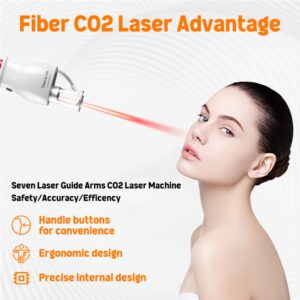
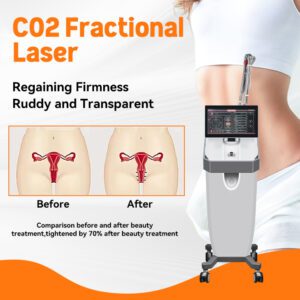
Fractional CO₂ lasers use carbon dioxide wavelengths to deliver controlled thermal energy into the skin. Unlike traditional ablative lasers that treat the entire skin surface, fractional technology creates thousands of microscopic treatment zones while leaving surrounding tissue intact. This approach accelerates healing while maintaining powerful resurfacing effects.
2.2 Why Fractional Treatment Is Safer and More Effective
By treating only a fraction of the skin at a time, fractional CO₂ lasers reduce downtime and the risk of complications. Healthy tissue around each micro-channel supports rapid regeneration, making the treatment safer for repeated sessions and suitable for a wide range of acne scar severities.

3. How Fractional CO₂ Lasers Repair Acne-Damaged Skin
3.1 Microthermal Injury and Collagen Stimulation
During acne scars treatment, the laser creates precise microthermal columns that penetrate deep into the dermis. These controlled injuries trigger the body’s natural wound-healing response, stimulating fibroblasts to produce new collagen and elastin. Over time, this process fills in depressed scars and smooths uneven skin texture.
3.2 Skin Resurfacing and Texture Improvement
In addition to collagen remodeling, fractional CO₂ lasers remove damaged surface skin cells. This resurfacing effect improves rough texture, enlarged pores, and post-acne irregularities, resulting in smoother and more even-looking skin.
4. Treatment Process and Results Timeline
4.1 What Happens During a Fractional CO₂ Laser Session
A typical acne scars treatment session lasts 30 to 60 minutes, depending on the treated area. A topical anesthetic is usually applied to improve comfort. Patients may feel warmth or mild discomfort as the laser energy is delivered, but the procedure is generally well tolerated.
4.2 Recovery and Visible Improvements
After treatment, redness and mild swelling are common and usually subside within 5 to 10 days. Initial improvements in skin texture can often be seen once the skin heals, but the most significant results appear gradually over several weeks as new collagen forms.
Advanced systems such as the Shefmon 2910nm Fiber Fractional CO₂ Ultra Laser are designed to deliver stable energy output and adjustable penetration depth, allowing clinicians to tailor treatments for different scar types and skin conditions.
https://shefmon.com/product/shefmon-2910nm-fiber-fractional-co2-ultra-laser/
5. How Many Sessions Are Needed for Acne Scars Treatment?
5.1 Mild to Moderate Acne Scars
Patients with mild to moderate rolling or boxcar scars often see noticeable improvement after 1 to 2 sessions. However, most treatment plans recommend 2 to 4 sessions spaced 4 to 6 weeks apart to achieve optimal and long-lasting results.
5.2 Severe and Deep Acne Scars
For deeper scars, additional sessions may be required. Each treatment builds upon the previous one, progressively improving skin structure as collagen continues to regenerate over time.

6. Advantages of Fractional CO₂ Lasers for Clinics
6.1 High Patient Satisfaction and Long-Term Results
Fractional CO₂ lasers deliver visible, long-lasting improvements, making them a valuable investment for aesthetic clinics. Patients appreciate the noticeable changes in scar depth, texture, and overall skin quality.
6.2 Versatility Beyond Acne Scars
In addition to acne scars treatment, fractional CO₂ lasers are widely used for skin rejuvenation, wrinkle reduction, pore refinement, and pigmentation improvement. This versatility allows clinics to expand service offerings using a single advanced device.
7. Safety Considerations and Patient Selection
7.1 Who Is an Ideal Candidate?
Fractional CO₂ laser treatments are suitable for most patients with acne scars, especially those seeking significant improvement rather than superficial changes. Proper consultation is essential for patients with darker skin tones or a history of keloid scarring to adjust settings and reduce risks.
7.2 Post-Treatment Care and Sun Protection
After treatment, patients must follow proper aftercare instructions, including sun avoidance and the use of gentle skincare products. Good post-treatment care plays a critical role in achieving the best possible acne scars treatment results.
Conclusão
Fractional CO₂ lasers have transformed acne scars treatment by addressing the root cause of scarring at the dermal level. Through controlled microthermal injury, these lasers stimulate collagen regeneration, resurface damaged skin, and gradually restore smoother, healthier skin texture. With the right technology, professional expertise, and patient commitment, fractional CO₂ laser treatments offer one of the most effective and reliable solutions for repairing acne-damaged skin and achieving long-term aesthetic improvement.