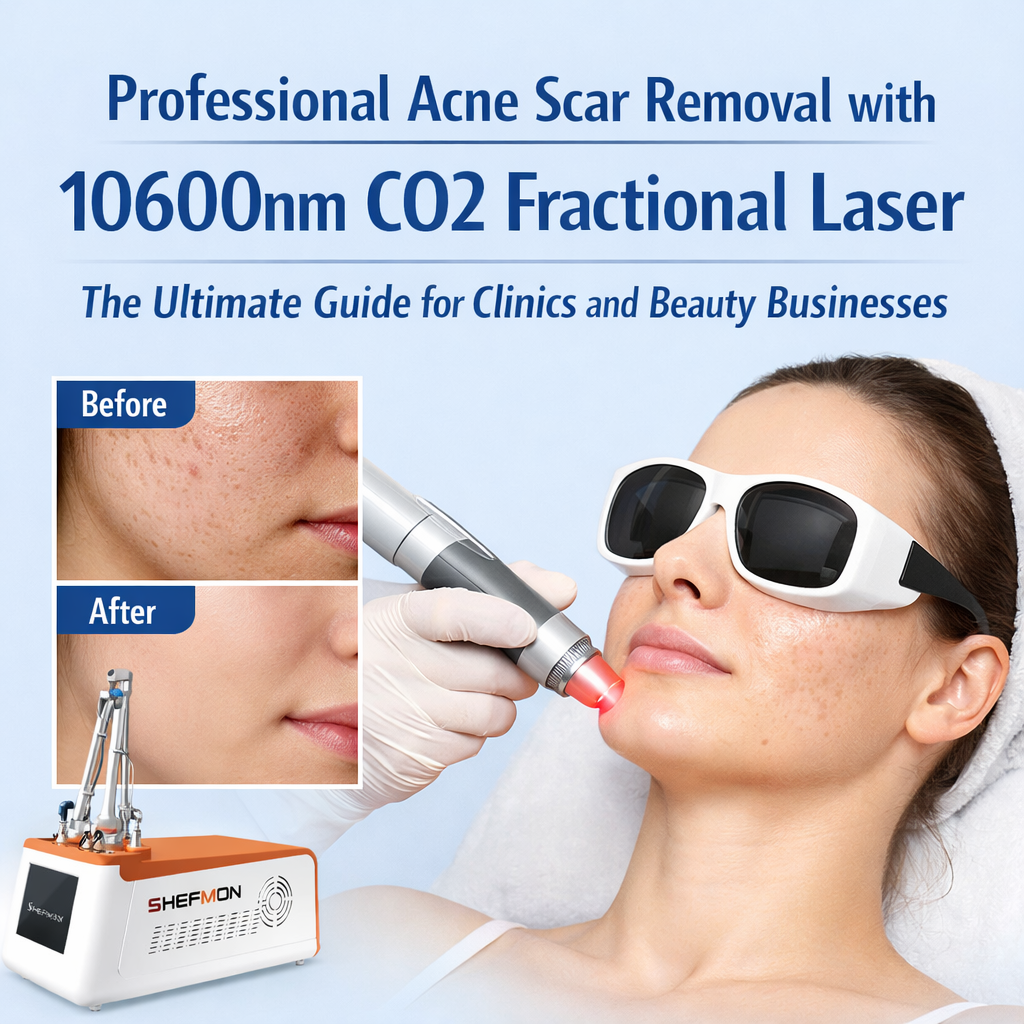
What Causes Acne Scars?
Acne scars aren’t just surface-level imperfections—they’re structural changes deep within the skin. When inflammation from acne penetrates the dermis, it damages collagen fibers, the very framework that keeps your skin smooth and firm. As your body tries to heal itself, it may either produce too little collagen (leading to depressions) or too much (causing raised scars). That’s why acne scars can feel stubborn—they’re not just discoloration; they’re physical alterations in skin texture.
Think of your skin like a mattress. When springs are broken or uneven, no amount of surface smoothing will fix the underlying structure. That’s exactly why topical creams and serums often fail to deliver real results for acne scars. According to clinical research, acne scarring is a complex wound-healing issue, requiring treatments that stimulate deeper regeneration rather than surface-level repair.
This is where advanced technologies like CO2 fractional lasers step in—because they target the root cause, not just the visible symptoms.
Types of Acne Scars
Understanding scar types is crucial before choosing any treatment. Acne scars generally fall into two main categories: atrophic (depressed) and hypertrophic (raised) scars. Atrophic scars include ice-pick, boxcar, and rolling scars—each with unique shapes and depths that require tailored treatment approaches.
Hypertrophic scars, on the other hand, are caused by excessive collagen production, resulting in raised, thickened skin. While less common in acne cases, they still pose aesthetic concerns. The diversity of scar types explains why a one-size-fits-all treatment doesn’t work. Clinics often rely on versatile technologies like CO2 fractional lasers because they can adapt to multiple scar conditions.
What’s fascinating is that each scar tells a story of how the skin healed—or failed to heal—after inflammation. That’s why modern aesthetic treatments focus on retraining the skin’s healing process, rather than simply removing damaged tissue.
What is a 10600nm CO2 Fractional Laser?
Core Technology Explained
The 10600nm CO2 fractional laser is one of the most advanced tools in aesthetic dermatology. It uses carbon dioxide gas to generate a laser beam at a wavelength of 10,600 nanometers, which is highly absorbed by water in the skin. This makes it incredibly effective for controlled skin resurfacing.
Unlike traditional lasers that treat the entire surface, fractional technology divides the laser beam into thousands of microscopic columns. These columns penetrate the skin while leaving surrounding tissue intact, accelerating healing and reducing downtime.
Imagine aerating a lawn instead of digging it up completely—that’s the concept behind fractional laser technology. By creating tiny “micro-injuries,” the skin is stimulated to repair itself naturally, leading to smoother, healthier skin over time.
Why 10600nm Wavelength Matters
The 10600nm wavelength is specifically designed to target water molecules in the skin. Since human skin is largely composed of water, this wavelength ensures precise energy absorption with minimal damage to surrounding tissues.
This precision allows for deeper penetration—up to several millimeters into the dermis—where collagen remodeling occurs. That’s why CO2 lasers are particularly effective for moderate to severe acne scars, where superficial treatments simply don’t reach deep enough.
In simple terms, the wavelength acts like a smart missile—it knows exactly where to go and what to target, making treatments both effective and controlled.
How CO2 Fractional Laser Works
Fractional Photothermolysis Principle
At the heart of this technology lies a concept called fractional photothermolysis. It sounds complicated, but the idea is surprisingly simple: use heat energy to create tiny controlled injuries in the skin, triggering a natural healing response.
These microthermal zones act like signals, telling your body: “Hey, repair this area!” The surrounding untouched skin helps speed up recovery, making the process both efficient and safer.
Collagen Remodeling Process
Once the skin is stimulated, it begins producing new collagen and reorganizing existing fibers. This process doesn’t happen overnight—it unfolds over weeks and even months.
Scientific studies show that CO2 fractional lasers can lead to 50–80% improvement in acne scars by promoting collagen regeneration and tissue remodeling.
Even more interesting, recent research highlights that this technology regulates biological factors like growth factors and proteins involved in wound healing, enhancing both skin structure and function.
It’s like rebuilding a damaged wall—not just painting over cracks, but reconstructing the entire foundation.
Clinical Effectiveness and Results
Scientific Evidence and Statistics
CO2 fractional laser treatment has been widely studied, and the results are impressive. Clinical data shows consistent improvements in scar texture, depth, and overall skin appearance.
For example:
| Metric | Result |
|---|---|
| Scar improvement | 50–80% reduction |
| Average reduction (some cases) | ~20% per session |
| Treatment sessions | 3–6 recommended |
Research also indicates that its effectiveness is comparable to other advanced laser therapies, making it a reliable choice for clinics.
Realistic Expectations
While results are significant, it’s important to set realistic expectations. Acne scars don’t disappear overnight. Most patients require multiple sessions, spaced weeks apart, to achieve optimal outcomes.
Gradual improvement is actually a good sign—it means the skin is regenerating naturally. Over time, scars become less noticeable, and skin texture becomes smoother and more even.
Key Benefits of CO2 Fractional Laser
Precision Treatment
One of the biggest advantages of this technology is precision. The laser targets only damaged areas while preserving healthy tissue, reducing risks and downtime.
Long-Term Skin Renewal
Unlike temporary treatments, CO2 fractional laser stimulates long-term collagen production. This means results continue to improve even months after the final session.
It’s not just a treatment—it’s a transformation process.
Treatment Process Step-by-Step
Pre-Treatment Preparation
Before undergoing treatment, patients typically avoid sun exposure, retinoids, and certain medications. Proper consultation ensures safety and optimal results.
Procedure Workflow
During the procedure, the laser device delivers controlled energy to the skin. The session usually lasts 15–60 minutes, depending on the treatment area.
Post-Treatment Recovery
Recovery involves redness, mild swelling, and peeling for a few days. Proper aftercare—like hydration and sun protection—is essential for healing.
Comparison with Other Acne Scar Treatments
CO2 Laser vs Microneedling
Microneedling is less invasive but also less powerful. It works well for mild scars but struggles with deeper ones.
CO2 Laser vs Chemical Peels
Chemical peels target the surface, making them suitable for pigmentation issues rather than structural scars.
| Treatment | Depth | Effectiveness |
|---|---|---|
| CO2 Laser | Deep dermis | High |
| Microneedling | Moderate | Medium |
| Chemical Peels | سطحية | Low for scars |
Safety, Risks, and Side Effects
Common Side Effects
Temporary redness, swelling, and peeling are normal. In rare cases, hyperpigmentation may occur, especially in darker skin types.
Who Should Avoid Treatment
Patients with active infections, certain skin conditions, or recent isotretinoin use should avoid this treatment.
Why Clinics Choose CO2 Fractional Laser Equipment
ROI for Clinics
CO2 laser treatments are high-demand procedures with strong profit margins. Clinics can quickly recover their investment due to repeat sessions.
Growing Market Demand
The global demand for non-invasive aesthetic treatments continues to rise, making this technology a valuable addition to any clinic.
SHEFMON CO2 Fractional Laser Machine Overview
Key Features of A0529 Model
If you’re looking for a professional-grade solution, the SHEFMON A0529 CO2 Fractional Laser Machine offers:
- Advanced 10600nm laser technology
- Adjustable energy levels and treatment modes
- High precision scanning system
- Suitable for acne scars, wrinkles, and skin resurfacing
👉 Product link: https://shefmon.com/product/a0529-professional-acne-scar-removal-10600nm-co2-fractional-laser-equipment/
Why Choose SHEFMON for OEM/ODM
SHEFMON provides full OEM & ODM customization, including branding, system design, and functional upgrades. With over a decade of experience and global distribution, it’s a trusted partner for clinics and distributors worldwide.
Conclusion
The 10600nm CO2 fractional laser stands as one of the most effective solutions for acne scar treatment today. By targeting the deeper layers of the skin and stimulating natural collagen production, it delivers long-lasting, visible improvements. For clinics, it represents not just a treatment option but a powerful business opportunity in the growing aesthetic industry.
FAQs
1. How many sessions are needed for acne scar removal?
Most patients need 3–6 sessions for optimal results, depending on scar severity.
2. Is CO2 fractional laser painful?
Patients may feel discomfort, but topical anesthesia significantly reduces pain.
3. How long is the recovery time?
Typically 3–7 days for initial recovery, with continued improvement over weeks.
4. Is it suitable for all skin types?
It works best for lighter skin tones, but advanced settings can adapt to different types with caution.
5. Can results be permanent?
Results are long-lasting, especially with proper skincare and maintenance.