











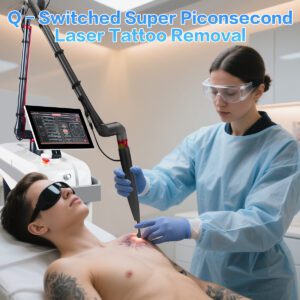




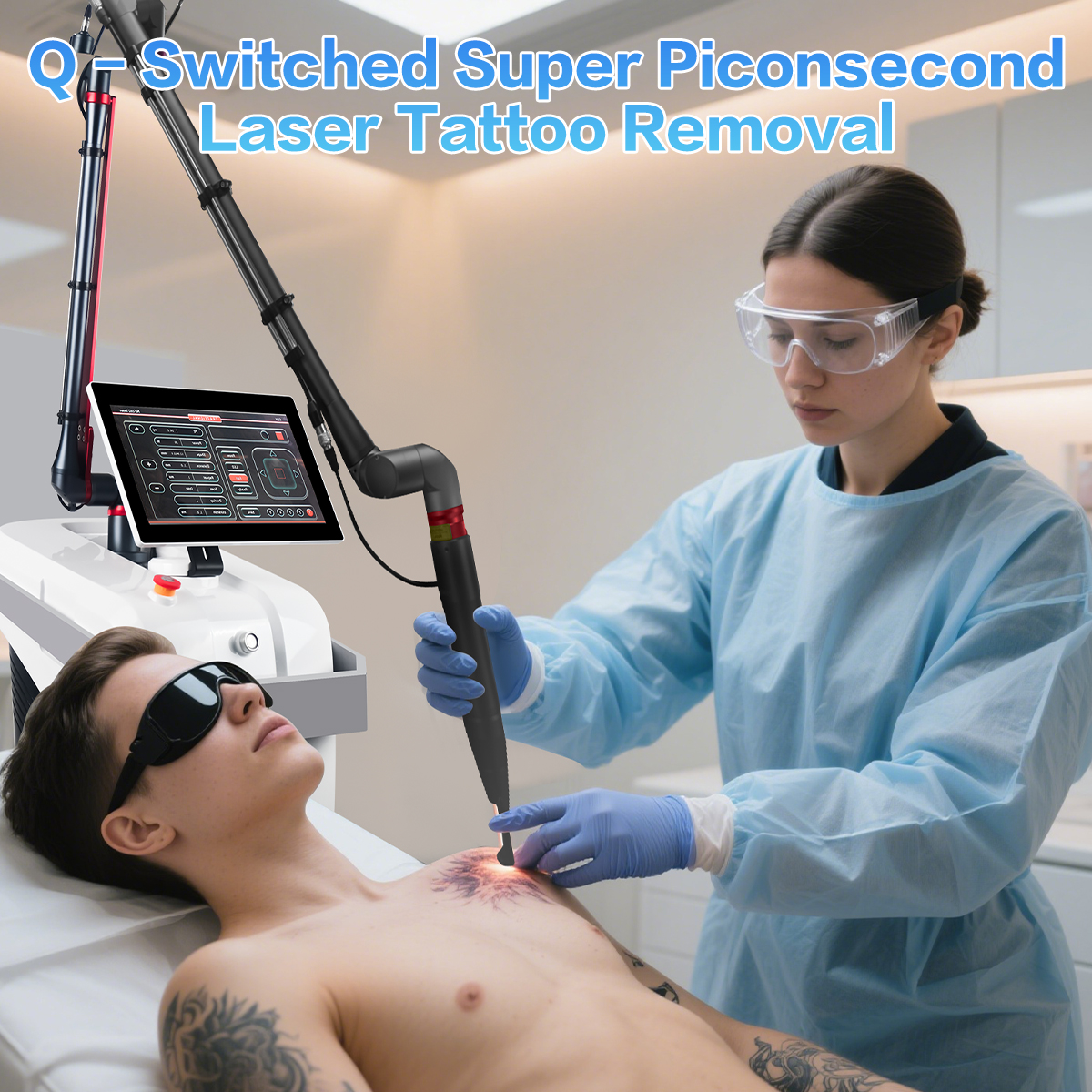
Tattoo removal has come a long way from crude methods like dermabrasion and excision to highly advanced laser treatments that can safely and effectively erase unwanted ink. Among the latest breakthroughs is picosecond laser technology, known for its ultra-rapid pulse delivery and improved pigment fragmentation. One of the leading devices in this category is the A0507 1064nm 532nm Q-Switched Super Picosecond Picosure YAG Laser Tattoo Removal system—a multifunctional solution designed to handle tattoo removal, pigmentation issues, and more. But when it comes to safety and suitability for 모든 피부 타입, especially darker tones, how well do picosecond lasers perform? Let’s explore.
1. What Makes Picosecond Lasers Different from Traditional Lasers?
1.1 Pulse Duration and Mechanism
Picosecond lasers emit pulses measured in trillionths of a second—much faster than traditional Q-switched lasers, which operate in nanoseconds. This ultra-short pulse duration creates a 광음향 효과, generating mechanical pressure waves that shatter tattoo pigment into extremely fine fragments. These smaller fragments are more easily cleared by the body’s lymphatic system. The faster, more precise action also reduces unwanted heat buildup in surrounding skin tissue.
1.2 Dual-Wavelength Versatility
다음과 같은 장치 A0507 picosecond laser combine dual wavelengths (1064 nm and 532 nm), allowing providers to target a broader spectrum of tattoo colors—from deep blacks to red and lighter hues—more effectively in fewer sessions compared to older laser systems.
2. How Tattoo Ink Responds to Picosecond vs Traditional Lasers
2.1 Breaking Up Pigment More Efficiently
Picosecond lasers deliver energy in such short bursts that pigment particles break into much smaller “dust-like” fragments rather than larger chunks. This accelerates the removal process and improves clearance of stubborn colors like green, blue, and yellow, which historically have been more challenging.
2.2 Implications for Treatment Sessions
Because more pigment is fragmented per pass, clinics often report fewer overall treatment sessions and faster fading of tattoos with picosecond technology compared to traditional methods. Some clinical reviews suggest that picosecond lasers can reduce the number of sessions needed while maintaining or improving results.
3. Safety Concerns: Heat, Pigment Changes, and Scarring
3.1 Reduced Thermal Damage
The ultra-short pulses of picosecond lasers mean less heat is transferred to surrounding skin. This lower thermal load is significant because excessive heat can lead to unwanted side effects such as hyperpigmentation, hypopigmentation, or even scarring—especially in darker skin tones. Clinical data indicates that picosecond lasers have a very low risk of scarring and pigment change when performed properly.
3.2 Pigmentary Risk in Darker Skin
Individuals with higher melanin levels are more prone to post-inflammatory hyperpigmentation (darkening) or hypopigmentation (lightening) after laser procedures. Because picosecond pulses minimize heat diffusion and focus energy directly on ink particles, they tend to cause less disruption to melanin in the surrounding tissue, improving safety for these skin types. However, careful adjustment of wavelength and energy settings by a trained clinician is essential.
4. Is Picosecond Laser Safe for All Skin Types?
4.1 Fitzpatrick Skin Types I–VI
Research and clinical experience suggest that picosecond technology offers better outcomes across all Fitzpatrick skin types (I through VI), including medium to dark skin tones where traditional lasers posed greater pigmentation risks. This broad suitability is largely due to the precision and limited collateral thermal effects of picosecond pulses.
4.2 Minimizing Side Effects with Proper Protocols
Even with advanced picosecond lasers, safety is not automatic. A thorough consultation, proper eye protection, calibrated wavelength selection, and cooling strategies remain critically important to avoid temporary side effects such as redness, swelling, or transient pigment changes.

5. Other Benefits Beyond Safety
5.1 Faster Healing and Less Downtime
Because picosecond lasers cause minimal thermal injury, healing tends to be faster and more comfortable than traditional approaches. Many patients experience only mild redness or slight swelling that resolves quickly, making picosecond treatments appealing for those with busy lifestyles or low tolerance for prolonged recovery.
5.2 Expanded Treatment Applications
Picosecond systems like the A0507 dual-wavelength device are not limited to tattoo removal. They can also address hyperpigmentation, melasma, acne scars, freckles, and other pigmentary concerns, increasing their utility in aesthetic clinics.
6. Choosing the Right Treatment: Picosecond or Alternative?
6.1 Tattoo Color and Complexity
While picosecond lasers are generally superior for multicolored and stubborn tattoos, traditional Q-switched lasers remain effective for simpler, single-color designs (especially black). The choice often depends on ink color, depth, and tattoo age.
6.2 Professional Expertise Matters
No matter the laser technology, treatment outcomes and safety heavily depend on the skill and experience of the provider. Clinics should conduct thorough skin assessments, including Fitzpatrick classification, tattoo analysis, and tailored protocols to optimize both results and safety.
결론
Picosecond laser tattoo removal has established itself as a highly effective and safe option for all skin types, particularly for darker skin tones and complex tattoos. Its ultra-fast pulses, dual-wavelength flexibility, and reduced thermal damage make it less likely to cause unwanted pigmentary changes or scarring while often requiring fewer sessions than traditional lasers. However, achieving optimal results still depends on professional assessment, proper settings, and careful aftercare. For those seeking comprehensive tattoo removal with improved safety and efficiency, picosecond laser technology represents a significant advancement in aesthetic laser treatments—with devices like the A0507 1064nm 532nm Q-Switched Super Picosecond Picosure YAG Laser leading the way.