









Pelvic floor health plays a critical role in bladder control, core stability, sexual wellness, and postpartum recovery. Traditionally, pelvic floor strengthening relied heavily on manual pelvic training methods such as Kegel exercises guided by physiotherapists. In recent years, however, EMS pelvic chairs have emerged as a technology-driven alternative, offering 전자기 자극 to activate pelvic floor muscles without active physical effort. As both approaches continue to be used in rehabilitation and wellness settings, understanding the differences between EMS pelvic chairs and manual pelvic training can help individuals and clinics determine which option best suits their needs.
1. Understanding Manual Pelvic Training
1.1 What Is Manual Pelvic Training?
Manual pelvic training typically involves voluntary pelvic floor muscle contractions performed through exercises such as Kegels. These exercises aim to strengthen the pelvic floor by repeatedly contracting and relaxing the muscles responsible for bladder and pelvic support. Training is often guided by physiotherapists, especially for postpartum patients or individuals experiencing pelvic floor dysfunction.
1.2 Advantages of Manual Pelvic Training
Manual pelvic training allows individuals to develop awareness and control of their pelvic muscles. It is low-cost, non-invasive, and can be performed almost anywhere. When done correctly and consistently, it can improve muscle strength and endurance over time.
1.3 Limitations of Manual Pelvic Training
One of the main challenges is correct muscle activation. Many individuals struggle to identify and engage the correct pelvic muscles, which can limit results. Progress is often slow and highly dependent on consistency, motivation, and professional guidance.
2. What Is an EMS Pelvic Chair?
2.1 How EMS Pelvic Chairs Work
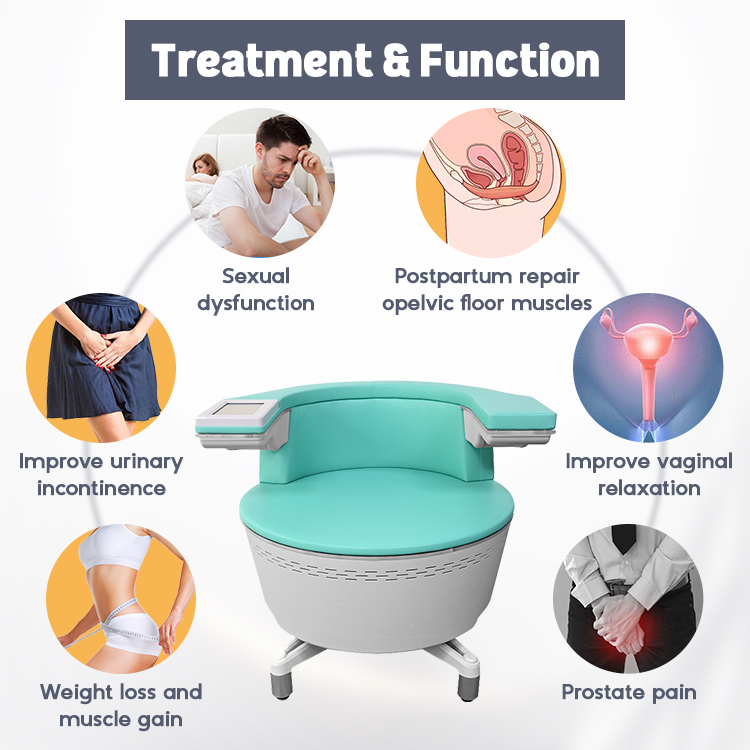
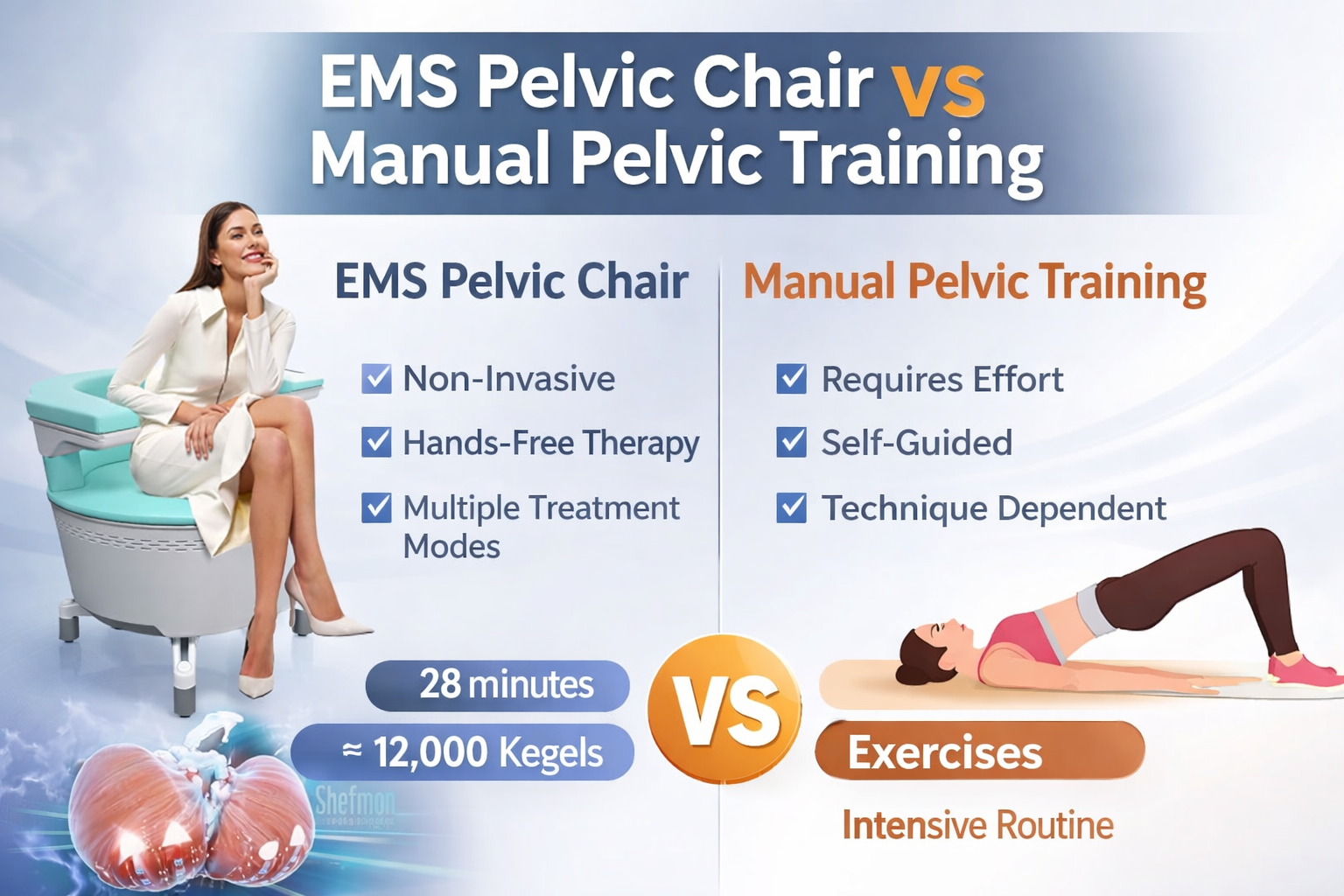
An EMS pelvic chair uses high-intensity electromagnetic stimulation to induce involuntary pelvic floor muscle contractions. While seated on the chair, electromagnetic pulses penetrate deep muscle layers, triggering thousands of contractions in a single session—far more than most people can achieve through manual exercises.
2.2 Non-Invasive Muscle Activation
Unlike manual training, EMS pelvic chair treatments do not require the user to actively contract muscles. The stimulation works automatically, making it suitable for individuals who have difficulty performing effective pelvic floor exercises on their own.

3. Comparing Effectiveness: EMS Pelvic Chair vs Manual Pelvic Training
3.1 Muscle Activation Intensity
EMS pelvic chairs can stimulate deep pelvic muscles at supramaximal levels, often reaching muscle fibers that are difficult to activate voluntarily. Manual pelvic training relies on conscious effort and may not consistently reach deeper muscle layers.
3.2 Time Commitment and Convenience
Manual pelvic training requires regular daily practice over extended periods. EMS pelvic chair sessions typically last 20–30 minutes and are performed one to two times per week in a clinical setting, making them appealing for individuals with limited time or low exercise adherence.
3.3 Learning Curve
Manual pelvic training often requires professional instruction to ensure correct technique. EMS pelvic chairs eliminate the learning curve, as the stimulation parameters are pre-set and guided by trained practitioners.
4. Postpartum Recovery Considerations
4.1 Manual Training After Childbirth
Postpartum pelvic floor weakness is common, and manual pelvic training has long been recommended for recovery. However, fatigue, pain, and lack of muscle awareness can make early-stage exercises difficult.
4.2 EMS Pelvic Chair for Postpartum Support
EMS pelvic chairs offer a passive alternative that may support postpartum recovery by activating muscles without physical strain. Devices such as the Women’s Postpartum Repair EMS Pelvic Floor Chair are designed specifically for this purpose.
https://shefmon.com/product/e0435-womens-postpartum-repair-new-ems-chair-pelvic-floor-chair-ems-seat-ems-pelvic-floor-muscle-stimulator/
5. Clinical and Rehabilitation Applications
5.1 Manual Pelvic Training in Therapy Settings
In rehabilitation clinics, manual pelvic training is often combined with biofeedback and therapist guidance. This approach works well for patients who can actively engage and benefit from ongoing supervision.
5.2 EMS Pelvic Chairs in Medical and Wellness Clinics
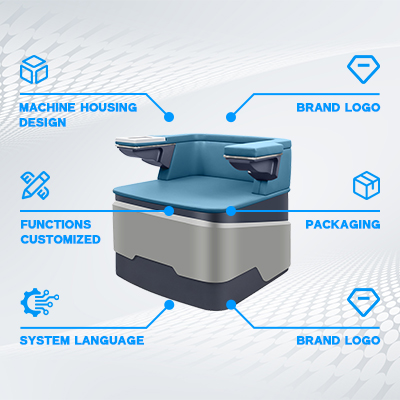
EMS pelvic chairs are increasingly used in rehabilitation centers, gynecology clinics, and wellness facilities. Advanced systems such as electromagnetic stimulation pelvic floor rehabilitation chairs are designed for clinical muscle rehabilitation and long-term therapy programs.
https://shefmon.com/product/e0436-electromagnetic-stimulation-pelvic-floor-muscle-rehabilitation-ems-chair/
6. Safety and Comfort
6.1 Safety of Manual Pelvic Training
Manual pelvic exercises are generally safe when performed correctly, but improper technique may lead to muscle fatigue or ineffective outcomes.
6.2 Safety of EMS Pelvic Chairs
EMS pelvic chair treatments are non-invasive and well tolerated when administered by trained professionals. Sensations may include muscle contractions or tingling, but treatments do not involve internal probes or direct skin contact.
7. Which Option Is Right for You?
7.1 Choosing Manual Pelvic Training
Manual pelvic training may be suitable for individuals who prefer self-managed exercises, have strong body awareness, and are willing to commit to consistent daily practice.
7.2 Choosing an EMS Pelvic Chair
EMS pelvic chairs may be better suited for individuals seeking faster muscle activation, postpartum support, rehabilitation assistance, or an option that requires minimal physical effort.
결론
Both EMS pelvic chairs and manual pelvic training play valuable roles in pelvic floor health. Manual training emphasizes muscle awareness and long-term self-management, while EMS pelvic chairs offer technology-driven, intensive muscle stimulation with minimal effort. The right choice depends on individual goals, physical condition, time availability, and access to professional care. In many cases, combining both approaches under professional guidance can provide balanced and effective pelvic floor rehabilitation results.