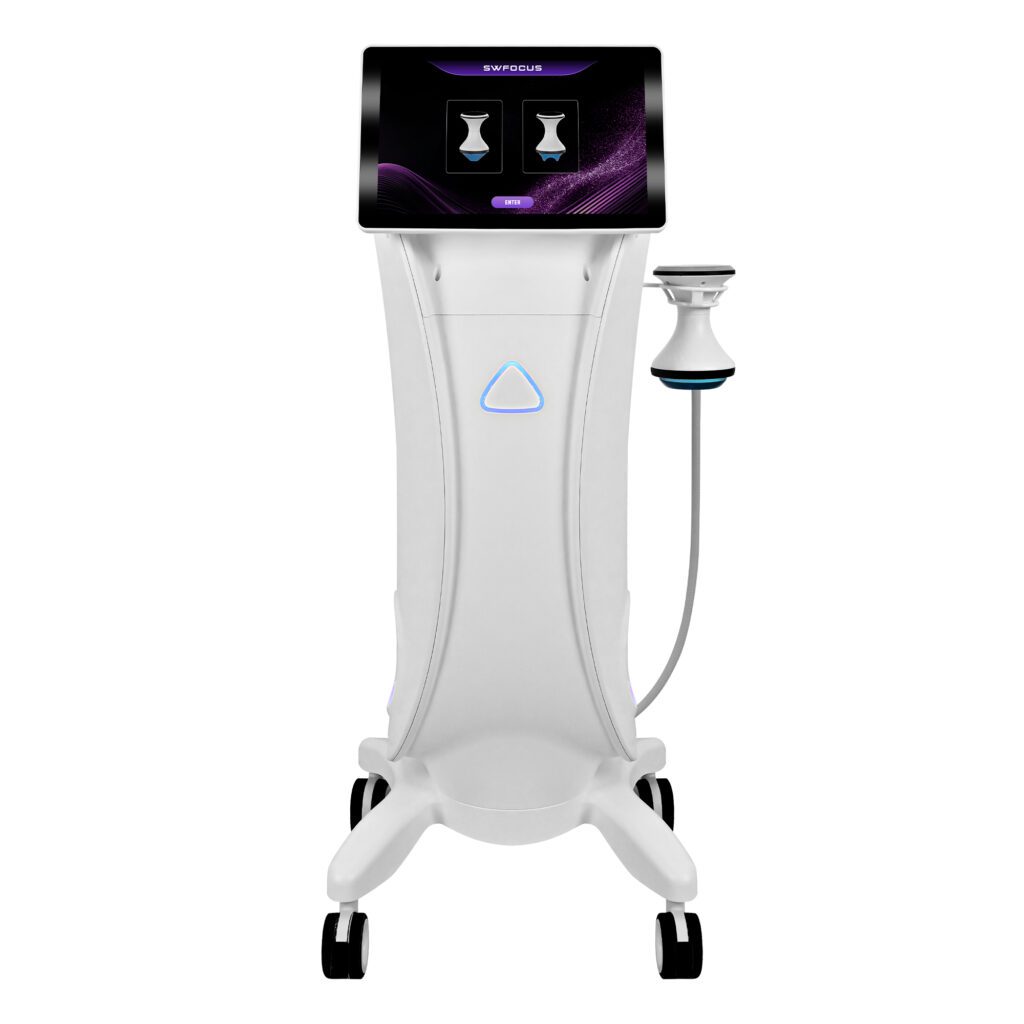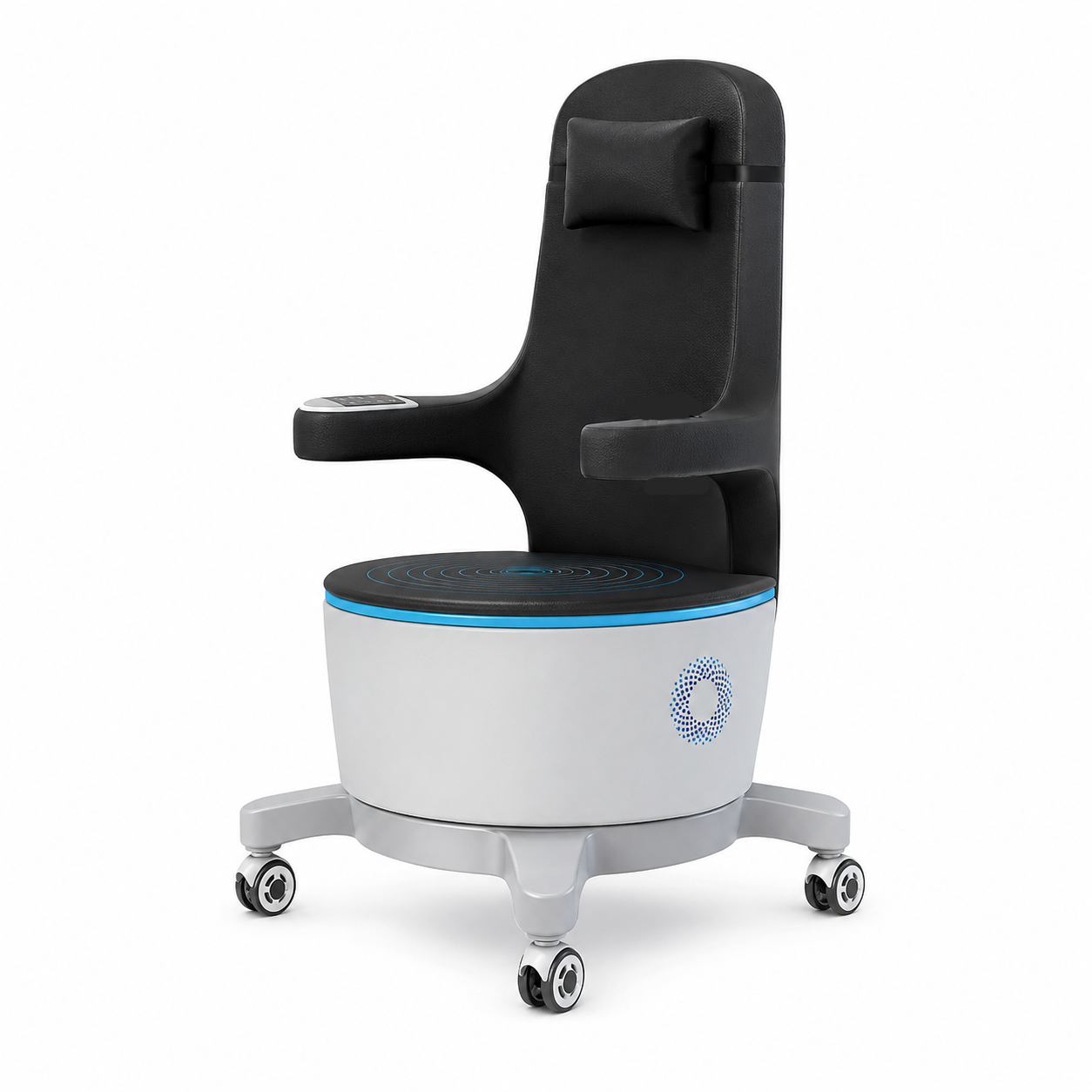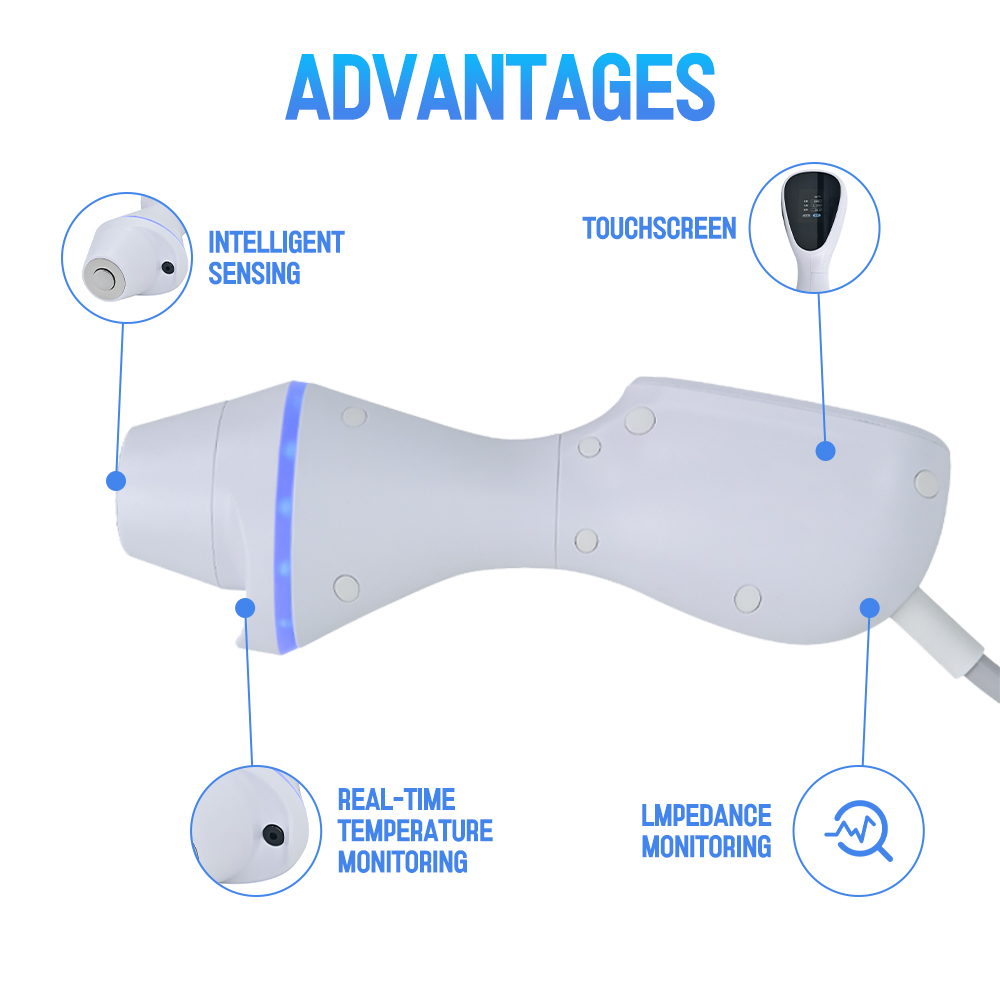
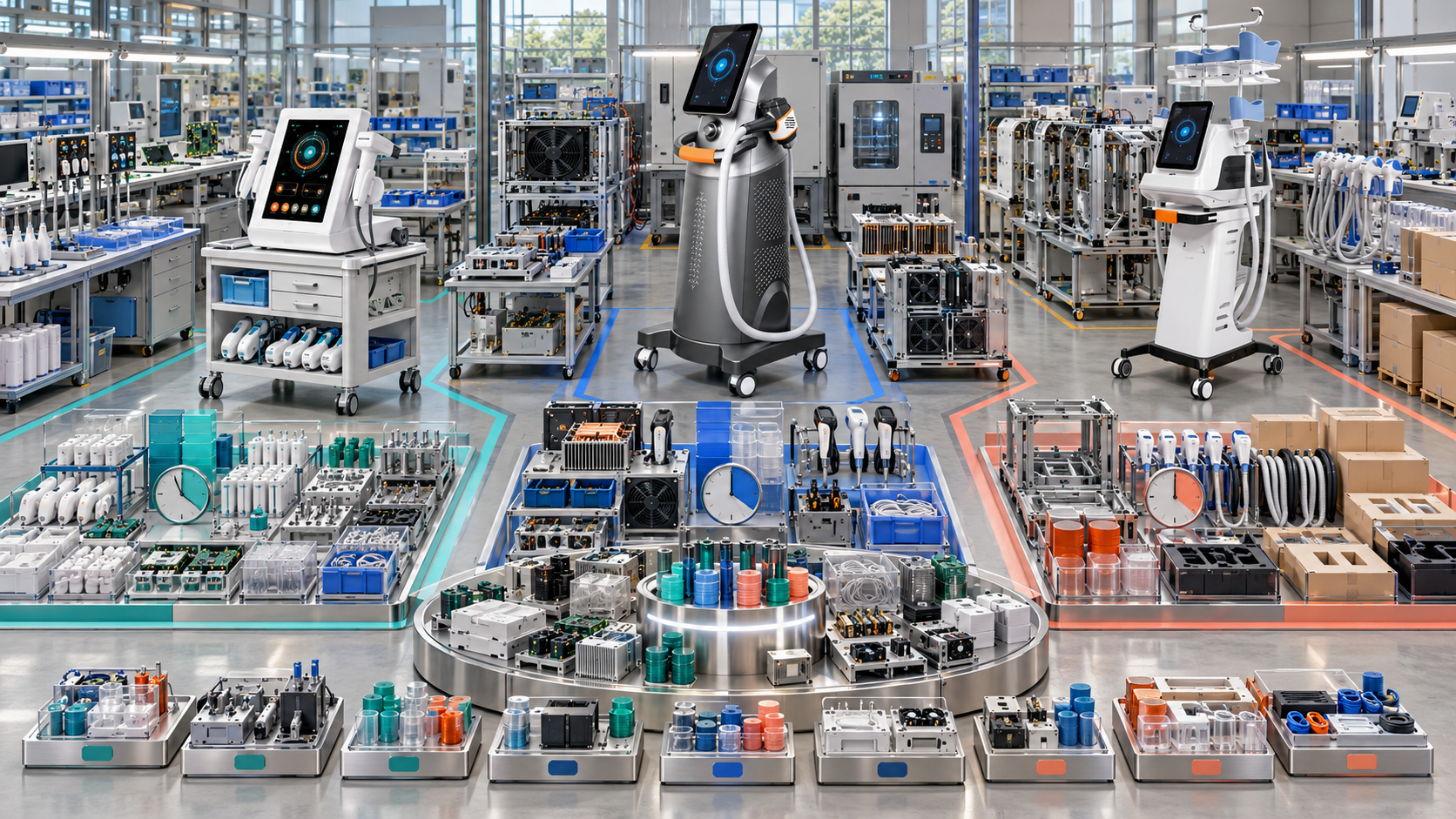
Beauty device factory capacity cannot be planned by counting finished machines alone. A hydro facial system, a diode laser hair-removal device, and a multifunction body platform may each produce one shipping unit, yet they consume different components, technician skills, assembly stations, test equipment, aging time, handling space, accessories, and packaging resources.
Category mix therefore matters as much as total order volume. A forecast of 300 units provides limited planning value if the factory does not know how many require fluid-path assembly, high-power cooling, multiple handpieces, software languages, large cartons, or category-specific final testing. The constraint may sit in incoming inspection, handpiece preparation, leak testing, burn-in, packing, or technical review rather than on the main assembly line.
This guide explains how factories can plan capacity across facial, hair-removal, and body-device categories. It uses SHEFMON product pages as public examples of category complexity, while the planning methods remain general recommendations rather than descriptions of SHEFMON’s confidential production capacity or internal schedules.
요약 보고서
Capacity planning across beauty device categories should follow eight principles:
- Plan by routing and resource demand, not only by finished units. Each product needs a defined sequence of material, labor, equipment, testing, aging, packaging, and release steps.
- Translate the sales forecast into an exact product mix. Model, configuration, language, voltage, handles, accessories, consumables, and delivery timing determine the real workload.
- Identify category-specific bottlenecks. Facial devices may depend on fluid and vacuum assembly; hair-removal systems may require power, cooling, handpiece, and thermal testing; body platforms may consume more handle preparation, mechanical space, and multi-function test time.
- Separate shared capacity from dedicated capacity. General assembly labor can sometimes move between products, while specialized fixtures, test programs, skills, and aging positions may not.
- Protect quality time. Inspection, functional testing, burn-in, correction, and release records are capacity requirements rather than optional delays.
- Include non-sales demand. Prototypes, pilot units, demonstrations, loan units, replacements, spares, consumables, repairs, and training equipment also use factory resources.
- Use postponement where possible. Keeping common assemblies uncommitted until language, plug, handle package, or market configuration is confirmed can reduce inventory fragmentation.
- Review constraints as the mix changes. The bottleneck can move from assembly to testing, handpieces, software loading, packaging, or supplier supply even when total unit demand stays constant.
The objective is reliable output for the promised category mix, not the highest theoretical number of machines under ideal conditions.
1. What Is Beauty Device Factory Capacity Planning?
Capacity planning matches expected product demand with the resources required to build, verify, package, and release it.
The scope includes:
- supplier and component availability;
- incoming inspection;
- subassembly preparation;
- mechanical and electrical assembly;
- software and language loading;
- handles, applicators, cartridges, tips, and accessory preparation;
- calibration or configuration where applicable;
- in-process inspection;
- functional testing and aging;
- correction and retesting;
- final inspection;
- documentation and traceability;
- packaging and staging; and
- technical and quality approval.
Capacity is the capability of the entire system. Increasing assembly labor will not increase output when cooling tests or a critical handpiece supplier remains the constraint.
2. Why Finished-Unit Forecasts Are Insufficient
Two orders with the same unit count can require very different work.
| Forecast detail | Why it affects capacity |
|---|---|
| 제품 카테고리 | Changes components, skills, stations, test methods, and packaging |
| Model and revision | Determines bill of materials, work instructions, software, and fixtures |
| 구성 | Changes handles, options, consumables, assembly, and final test |
| Market version | Affects voltage, plug, language, labels, manuals, and packaging |
| Order timing | Determines material release, batching, queues, and shipping peaks |
| Quality history | Influences inspection, expected rework, retest, and contingency |
| Delivery form | Standard order, private label, demo, replacement, or pilot may follow different controls |
The forecast should be converted into workload by resource group rather than carried forward as one total number.
3. Build a Product-Mix Forecast
The capacity plan should identify:
- 범주;
- model and version;
- standard or custom status;
- configuration and handles;
- 언어;
- voltage and plug;
- branding and packaging;
- order confidence;
- requested delivery window;
- component lead times;
- special inspection or testing; and
- service, spare, or demonstration demand.
Distributors should update the mix as quotations convert. Forecasting 100 hair-removal units without wavelength, handpiece, spot-size, electrical, and language information can shift uncertainty into purchasing and production.
4. Define the Manufacturing Routing for Each Product
A routing states which resources the product uses and in what sequence. Typical steps may include:
- Material receipt and inspection.
- Board, cable, pump, cooling, or handle subassembly preparation.
- Mechanical assembly.
- Electrical wiring and connection.
- Software loading and configuration.
- In-process checks.
- Product-specific functional tests.
- Aging or burn-in.
- Correction and retest when needed.
- Final configuration and accessory verification.
- Labeling, documentation, and serial recording.
- Packaging and release.
Record setup time, run time, queue assumptions, skill level, equipment, fixture, space, and expected yield at each step.
5. Separate Theoretical, Available, and Effective Capacity
- Theoretical capacity assumes continuous operation with no setup, maintenance, shortages, training, rework, or downtime.
- Available capacity reflects scheduled shifts, staffing, maintenance, holidays, and planned downtime.
- Effective capacity accounts for actual product mix, changeovers, inspection, rework, learning, material availability, and normal variation.
Customer commitments should use realistic effective capacity. Theoretical capacity is useful for understanding physical limits but should not be presented as routine output.
6. Identify Capacity by Resource Type
| Resource type | 예시 | Planning unit |
|---|---|---|
| 노동 | Assemblers, software technicians, quality inspectors, packers | Qualified hours by skill |
| 장비 | Burn-in racks, power tests, leak testers, cooling loops, functional fixtures | Station-hours or test slots |
| 공간 | Assembly benches, aging area, large-product staging, finished goods | Positions or square-area time |
| 재료 | Boards, displays, pumps, lasers, handles, housings, cartons | Qualified supply by part and lead time |
| 엔지니어링 지원 | Configuration review, deviations, pilot support, failure analysis | Specialist hours |
| 선적 서류 비치 | Labels, manuals, software images, serial and release records | Approved package readiness |
Each category draws on these resources differently. A flexible labor pool cannot compensate for missing specialized equipment or material.
7. Distinguish Shared and Dedicated Capacity
Shared resources may include:
- general assembly benches;
- standard hand tools;
- receiving and warehousing;
- common packaging areas;
- shared display or board loading;
- general quality inspection; and
- common documentation systems.
Dedicated or constrained resources may include:
- category-specific functional fixtures;
- laser handpiece preparation;
- fluid-path or leak tests;
- cooling-system tests;
- high-power electrical tests;
- specialized software programs;
- large-unit aging positions;
- category-specific calibration; and
- qualified technicians.
The plan should state which resources can switch categories, how long changeover takes, and what training or approval is required.
8. Plan Incoming Inspection as Capacity
Purchased components do not become usable simply because they arrive. Incoming capacity may be needed for:
- identity and documentation checks;
- dimensions and appearance;
- electrical characteristics;
- pumps, fans, valves, sensors, or boards;
- handles and connectors;
- displays and housings;
- packaging materials;
- sampling or full inspection according to the control plan;
- quarantine and nonconformance; and
- supplier-lot traceability.
셰프몬의 quality-control page describes raw-material testing before storage. In capacity planning, inspection workload must be scheduled early enough that approved material reaches production when required.
9. Plan Subassembly Capacity
Many constraints sit before final assembly. Examples include:
- cable and wiring preparation;
- board aging or programming;
- pump and tubing assemblies;
- cooling modules;
- handpiece preparation;
- connectors and seals;
- bottle or filter assemblies;
- housing preparation;
- labeling; and
- accessory kits.
Subassembly demand should be linked to the exact model and configuration. Building generic kits without configuration control can create shortages of one version and excess of another.
10. Facial Device Capacity Profile
Facial devices range from simple single-function units to multifunction systems with vacuum, liquids, tips, bottles, handles, and accessories. Capacity drivers can include:
- pump and valve preparation;
- tubing length, routing, and connection;
- seals and bottle assemblies;
- vacuum and pressure checks;
- liquid-path inspection;
- leakage testing;
- handle and accessory count;
- cleaning before packaging;
- software mode and language loading;
- consumable starter kits; and
- detailed packing verification.
The number of small components can create picking and packing complexity even when the main console is compact.
11. A0648 as a Facial-System Example
그만큼 A0648 9-in-1 하이드로 마이크로더마브레이션 시스템 is positioned as a multifunction facial system covering hydro-based cleansing, exfoliation, extraction, hydration, and related roles.
A routing for this type of product may need to plan:
- main console assembly;
- vacuum and fluid modules;
- bottles, tubing, seals, and connectors;
- multiple handles and tips;
- user-interface and function checks;
- leak and flow-related inspections;
- accessory-kit completeness;
- cleaning and presentation; and
- protective packaging for many separate items.
The public product page illustrates the category’s configuration complexity; it does not disclose SHEFMON’s actual cycle times or factory routing.
12. Facial-Device Bottlenecks
Common potential bottlenecks include:
- tubing and seal assembly;
- leak investigation and retest;
- pump or vacuum component supply;
- handle and tip kit preparation;
- bottle cleaning and inspection;
- configuration picking;
- manual accessory counting; and
- compact packaging with many parts.
Factories can improve flow by standardizing fluid modules, using controlled kits, testing subassemblies earlier, mistake-proofing connections, and delaying market-specific accessory packing until the order is confirmed.
13. Hair-Removal Device Capacity Profile
Diode laser hair-removal systems can place greater demand on:
- high-value laser and optical components;
- handpiece assembly and identification;
- power supplies and electrical components;
- cooling circuits, pumps, fans, radiators, and coolant paths;
- thermal and continuous-operation checks;
- electrical and functional test equipment;
- software and parameter configuration;
- spot-size and handpiece variants;
- protective packing; and
- trained technical inspectors.
Output can be limited by cooling tests, handpiece supply, or power-test stations even when general assembly has spare labor.
14. A0426 as a Hair-Removal Example
그만큼 A0426 diode laser hair-removal system page lists 755, 810, 940, and 1064 nm choices, several spot sizes, cooling, and multiple interface languages.
Those selectable elements influence capacity through:
- exact handpiece and wavelength demand;
- spot-size configuration;
- cooling and power components;
- software parameters and language;
- product and handpiece pairing;
- test program and limits;
- replacement-handpiece inventory;
- labels and manuals; and
- quotation-to-production configuration accuracy.
A forecast that does not identify the exact configuration can leave expensive handpieces or cooling components unmatched to confirmed orders.
15. Hair-Removal Bottlenecks
Potential constraints include:
- long-lead handpiece components;
- laser or optical module supply;
- cooling-module assembly;
- electrical-load tests;
- thermal stabilization and aging time;
- limited specialized test stations;
- software and parameter verification;
- technical failure analysis; and
- protective packaging for handpieces.
Capacity expansion may require more than assemblers. The factory may need duplicate fixtures, qualified technicians, cooling-test capacity, supplier development, and additional aging positions.
16. Body Device Capacity Profile
Body devices can range from compact multifunction systems to larger platforms with several applicators. Capacity drivers may include:
- larger housings and frames;
- higher mechanical handling demand;
- multiple cables and connectors;
- several handpieces or applicators;
- vacuum, RF, cavitation, massage, cooling, or muscle-stimulation modules;
- accessory storage and carts;
- multi-function software tests;
- longer final inspection;
- larger aging and staging footprint; and
- stronger packaging and logistics requirements.
One body device may occupy more physical production and warehouse space than several compact facial units.
17. B0155 as a Body-Platform Example
그만큼 B0155 데스크탑 엔도스 벨라프로 product page combines listed roles for vacuum rolling, radio frequency, rotating massage, and 80K cavitation.
For a multi-handle body product of this type, capacity planning may include:
- console and display assembly;
- power and control distribution;
- preparation of several handle types;
- connector and cable verification;
- separate functional checks by mode;
- software and handle recognition;
- accessory and storage setup;
- cleaning and presentation; and
- package completeness.
The limiting resource can shift as the ordered handle mix changes.
18. Body-Device Bottlenecks
Potential constraints include:
- large-housing supply;
- frame and enclosure assembly;
- multi-handle kit completion;
- cable and connector preparation;
- functional test time across several modes;
- larger aging positions;
- heavy or oversized packaging;
- warehouse space; and
- material movement.
Factories should measure space-hours and handling effort as well as labor-hours. A physically large product can reduce practical output even when its assembly time appears reasonable.
19. Compare Category Capacity Drivers
| Capacity dimension | Facial systems | Hair-removal systems | Body systems |
|---|---|---|---|
| Typical material complexity | Many small fluid, tip, bottle, and accessory parts | High-value handpiece, power, cooling, and optical components | Multiple handles, cables, larger housings, mixed technology modules |
| Assembly sensitivity | Tubing, seals, vacuum, fluid routing | Power, cooling, handpiece and electrical integration | Mechanical handling, connectors, multiple modules |
| Specialized tests | Leak, flow, vacuum, handle and mode checks | Electrical, cooling, thermal, handpiece and parameter checks | Multi-function, handle, vacuum, RF, cavitation or other mode checks |
| Aging constraint | Number of functions and fluid/vacuum stability | Thermal and cooling operation, power and handpiece availability | Space, simultaneous handle functions, large-unit positions |
| Packing complexity | Many small accessories and liquids or bottles where applicable | Expensive handpiece protection and configuration confirmation | Large carton, many handles, stronger protection and staging |
| Common planning risk | Missing accessories or leak retest | Long-lead critical components and test-station limits | Space, handle completeness and long final-test sequence |
These are category tendencies. The exact routing must come from the released model and configuration.
20. Plan Handles and Applicators as Their Own Capacity Stream
Handpieces may require separate suppliers, subassembly, software pairing, inspection, testing, labeling, packing, and service inventory.
The plan should show:
- handle identifier;
- models and versions using it;
- order quantity by configuration;
- supplier lead time;
- incoming checks;
- preparation and test time;
- pairing or calibration requirement;
- replacement demand;
- service reserve; and
- packaging position.
A finished console without its approved handpiece package is not releasable capacity.
21. Plan Software and Language Loading
Software capacity includes more than installation time. Control:
- approved build;
- compatible hardware;
- model and function configuration;
- language package;
- parameter set;
- loading station;
- technician authorization;
- version confirmation;
- functional checks; and
- release record.
Too many builds can create queues and errors. A common software framework with controlled configurations may reduce setup, but every final product still needs the correct version verified.
22. Treat Aging and Functional Testing as Scheduled Capacity
The factory should calculate:
- number of available positions;
- test or aging duration;
- setup and removal time;
- electrical and environmental limits;
- product mix that can run together;
- monitoring labor;
- failure and retest demand;
- maintenance and calibration downtime; and
- peak-period utilization.
SHEFMON describes circuit-board aging and power tests plus functional aging on its quality-control page. When these steps are part of the release process, sales volume cannot exceed test capacity without adding shifts, positions, equipment, or time.
23. Include Rework and Retest in Effective Capacity
A plan based only on first-pass success will overstate output. Track:
- first-pass completion;
- defect type and station;
- time to investigate;
- parts and technician required;
- rework authorization;
- repeated tests;
- queue after correction; and
- recurring cause.
The long-term response is to reduce failure and variation. The short-term capacity plan still needs realistic allowance for normal rework and retest.
24. Plan Packaging and Logistics by Category
Packaging capacity can be constrained by:
- carton and protective-material supply;
- accessory count;
- model-specific inserts;
- private-label artwork;
- language manuals;
- plug and cable;
- large-product lifting and movement;
- pallet or shipment configuration;
- final weight and dimensional checks; and
- finished-goods staging.
Body platforms may consume more space, while facial systems may require more detailed accessory verification. Hair-removal handpieces may need higher-value protection and exact pairing records.
25. Choose Make-to-Stock, Assemble-to-Order, or Make-to-Order Carefully
| 전략 | 가장 적합한 | Capacity implication |
|---|---|---|
| Make-to-stock | Stable, standard, repeatable models and configurations | Faster shipment but greater finished-goods risk |
| Assemble-to-order | Common subassemblies with configurable language, plug, handles, or packages | Requires modular design and fast final configuration |
| Make-to-order | Custom, low-volume, advanced, or highly variable products | Longer lead time and stronger order-specific control |
| Engineer-to-order | New OEM/ODM or significant technical changes | Uses engineering, prototypes, verification, and pilot capacity |
A factory can use different strategies across categories and models. The policy should match demand stability and configuration complexity.
26. Use Postponement to Reduce Fragmentation
Postponement keeps the product common until the latest controlled point. Possible late-stage choices include:
- language file;
- plug or cable;
- labels and manuals;
- approved handle package;
- 액세서리 및 소모품;
- branding inserts; and
- distributor bundle.
The factory must define which choices can safely occur late. Power architecture, cooling, fluid systems, or major hardware cannot be treated as simple packing choices when they require assembly and verification.
27. Plan Supplier Capacity alongside Factory Capacity
Internal capacity has little value when critical parts are unavailable. Review:
- supplier output and committed allocation;
- lead time;
- quality and yield;
- minimum orders;
- single-source exposure;
- component lifecycle;
- shared demand across models;
- approved alternatives;
- incoming inspection load; and
- recovery time after disruption.
Category forecasts should be translated into critical-component demand early, especially for high-value handpieces, cooling parts, pumps, displays, control boards, and large housings.
28. Include Prototypes and Pilot Builds
New products and upgrades use engineering and production resources before normal orders begin. Reserve capacity for:
- prototype assembly;
- engineering debugging;
- design verification units;
- pilot production;
- special inspection;
- temporary fixtures;
- training builds;
- sample and demonstration units; and
- corrective rework.
Mixing uncontrolled prototypes into routine production can disrupt schedules and create traceability problems. Pilot slots should have owners and defined release conditions.
29. Include Demonstration, Loan, Replacement, and Service Demand
Commercial forecasts often omit non-sales units. Capacity may also be needed for:
- distributor demonstrations;
- trade shows;
- local showroom units;
- training machines;
- temporary loan devices;
- warranty replacements;
- service exchange modules;
- spare handles;
- consumables; and
- end-of-life support stock.
These requirements should be visible so they do not appear as urgent unplanned orders.
30. Protect a Capacity Cushion
A capacity cushion helps absorb:
- demand variation;
- supplier delays;
- higher rework;
- urgent replacements;
- equipment maintenance;
- training;
- pilot builds; and
- product-mix shifts.
The cushion should be defined by constrained resource. Ten percent spare assembly labor does not help if the aging racks are fully occupied. The appropriate level depends on demand uncertainty, lead-time promises, supply risk, and the cost of missed delivery.
31. Use Cross-Training with Skill Controls
Cross-training can move labor between categories, but qualification should be visible. Maintain a skill matrix for:
- mechanical assembly;
- wiring and boards;
- tubing, seals, and fluid systems;
- laser or cooling modules;
- handpiece testing;
- software loading;
- functional test equipment;
- final inspection;
- packaging; and
- rework authorization.
The schedule should use qualified available hours rather than total headcount.
32. Manage Changeovers and Batch Size
Changing category or configuration may require:
- material clearance;
- fixture change;
- test-program selection;
- software image change;
- label and document change;
- operator briefing;
- first-unit verification; and
- line clearance.
Larger batches reduce changeovers but increase inventory and delay other orders. Smaller batches improve responsiveness but consume more setup time. The best batch size depends on the constrained resource, demand confidence, and material risk.
33. Prevent Expedites from Consuming the Plan
Urgent orders can disrupt material allocation, tests, packaging, and other customer commitments. Establish rules for:
- who may request an expedite;
- why it is required;
- which orders will move;
- material and configuration readiness;
- technical and quality review;
- overtime or cost impact;
- distributor communication; and
- post-event cause review.
Frequent expediting often signals weak forecasting, configuration control, supplier planning, or order prioritization.
34. Build a Category Capacity Dashboard
유용한 지표는 다음과 같습니다.
- confirmed and forecast units by category and configuration;
- qualified labor-hours;
- critical-component coverage;
- subassembly readiness;
- station and fixture utilization;
- aging-position utilization;
- first-pass completion;
- rework and retest hours;
- queue time;
- schedule adherence;
- changeover time;
- finished-goods and unique-part inventory;
- expedite frequency; and
- on-time release.
Separate shared resources from category-specific constraints so the dashboard shows where additional capacity would actually improve output.
35. Run a Cross-Functional Capacity Review
The review should include:
- sales and regional forecasts;
- product and configuration changes;
- sourcing and supplier readiness;
- incoming inspection;
- production and skill capacity;
- quality and test stations;
- engineering and pilot demand;
- packaging and logistics;
- service and replacement demand; and
- risks requiring management decisions.
The output should be a feasible category-mix plan, constraints, actions, owners, and customer-commitment rules.
36. Decide When to Add Capacity
Adding equipment, shifts, labor, or space may be justified when:
- the same constraint persists across reliable demand scenarios;
- utilization remains high after setup, downtime, and quality losses are understood;
- process improvement cannot close the gap;
- supplier supply can support additional output;
- trained staff can operate and maintain the resource;
- product roadmaps will continue to use it; and
- the investment improves service without shifting the bottleneck immediately elsewhere.
Temporary demand may be better handled through scheduling, cross-training, limited overtime, or controlled outsourcing rather than permanent expansion.
37. Evaluate Outsourcing without Losing Control
If a supplier or partner performs a subassembly or process, the factory should define:
- technical specification;
- approved materials;
- supplier qualification;
- inspection and test responsibility;
- traceability;
- change notification;
- capacity commitment;
- nonconformance handling;
- continuity plan; and
- incoming verification.
Outsourcing moves work but does not remove the manufacturer’s responsibility for controlling the delivered product baseline.
38. Common Category Capacity Planning Errors
- Planning only total machines without model and configuration mix.
- Treating every category as one standard labor-hour.
- Adding assembly staff while specialized tests remain constrained.
- Ignoring handles, accessories, software, manuals, and packaging.
- Counting theoretical capacity as customer-ready output.
- Excluding inspection, aging, rework, and retest.
- Forgetting prototype, demonstration, loan, replacement, and service demand.
- Forecasting the console but not the matching handpiece or consumable.
- Building market-specific finished goods before demand is confirmed.
- Using total headcount instead of qualified skill capacity.
- Expediting orders without showing the effect on other commitments.
- Expanding one station without checking where the bottleneck will move.
39. Facial, Hair, and Body Capacity Planning Checklist
- Forecasts identify category, model, version, configuration, market, language, voltage, handles, packaging, timing, and confidence.
- Every released product has a controlled routing and resource assumptions.
- The plan distinguishes theoretical, available, and effective capacity.
- Shared resources and category-specific constraints are mapped.
- Incoming inspection and subassembly preparation are scheduled.
- Facial plans include fluid, vacuum, leak, accessory, and packaging complexity where applicable.
- Hair-removal plans include handpiece, power, cooling, thermal, software, and specialized testing.
- Body-device plans include multiple handles, mechanical handling, space, multi-function tests, and large packaging.
- Aging, failure analysis, rework, and retest consume planned capacity.
- Supplier capacity and critical-component lead times match the production plan.
- Prototypes, pilots, demos, replacements, spares, consumables, and service needs are included.
- Capacity cushions are defined for the actual constrained resources.
- Changes in product mix trigger a new constraint review.
- Customer delivery commitments use a feasible category-mix plan.
자주 묻는 질문
1. Why can two beauty device categories with the same unit volume need different capacity?
They can require different components, assembly skills, test equipment, aging time, handpieces, space, packaging, and rework. Capacity must be calculated from the routing and product mix rather than units alone.
2. What commonly constrains multifunction facial-device production?
Potential constraints include pumps, valves, tubing and seals, vacuum or leak tests, multiple handles, small accessory kits, cleaning, and detailed packaging. The exact constraint depends on the released model.
3. Why can diode laser hair-removal devices require more specialized capacity?
They may depend on high-value handpieces, power and cooling systems, thermal and electrical testing, software parameters, and trained technical staff. Long-lead components and limited test stations can become bottlenecks.
4. How do body devices affect factory space planning?
Larger housings, more handles, carts, packaging, aging positions, and finished-goods staging can consume more space-hours and handling resources than compact devices.
5. Should a factory plan capacity using standard labor hours?
Standard hours are useful when they reflect the exact routing, configuration, normal setup, quality losses, and skill level. One universal labor standard across facial, hair, and body categories is usually too broad.
6. What is the difference between assembly capacity and release capacity?
Assembly capacity shows how many units can be built. Release capacity also includes inspection, software confirmation, functional tests, aging, correction, documentation, packaging, and approval. The lower of the constrained stages limits customer-ready output.
7. How can factories reduce capacity lost to regional configurations?
Use common modules, controlled software and language packages, approved accessory kits, accurate forecasts, and late-stage postponement where technically appropriate. Market-specific elements must still remain traceable.
8. Why should demo and replacement units appear in the capacity plan?
They use the same components, skilled labor, tests, packaging, and records as commercial orders. Excluding them creates last-minute demand that can delay confirmed customer production.
9. When should a factory invest in another test station or aging rack?
Investment is stronger when reliable demand keeps the resource constrained after process losses are understood, supplier capacity supports more output, qualified staff are available, and the equipment fits future product plans.
10. What information should distributors provide for accurate production planning?
They should provide the model, exact configuration, handles, wavelength or functional options where relevant, language, voltage, plug, branding, packaging, quantity, delivery window, order confidence, and expected repeat demand. Buyers can 셰프몬에게 연락하세요 to confirm current product configurations and order requirements.
결론
Factory capacity planning changes significantly across facial, hair-removal, and body-device categories because each product mix uses a different combination of materials, skills, test equipment, aging positions, space, packaging, and technical support. Counting finished units hides these differences and can produce delivery promises that the real factory system cannot support.
A reliable plan begins with exact configurations and controlled routings. It includes suppliers, incoming inspection, subassemblies, software, handles, tests, rework, packaging, demonstrations, replacements, and service demand. As the category mix changes, the factory should recalculate constraints and invest only where additional capacity improves complete released output.
탐색해 보세요 셰프몬 뷰티 디바이스 포트폴리오, 검토해 보세요 SHEFMON quality-control process, 또는 셰프몬에게 연락하세요 to discuss product categories, configurations, and order planning.