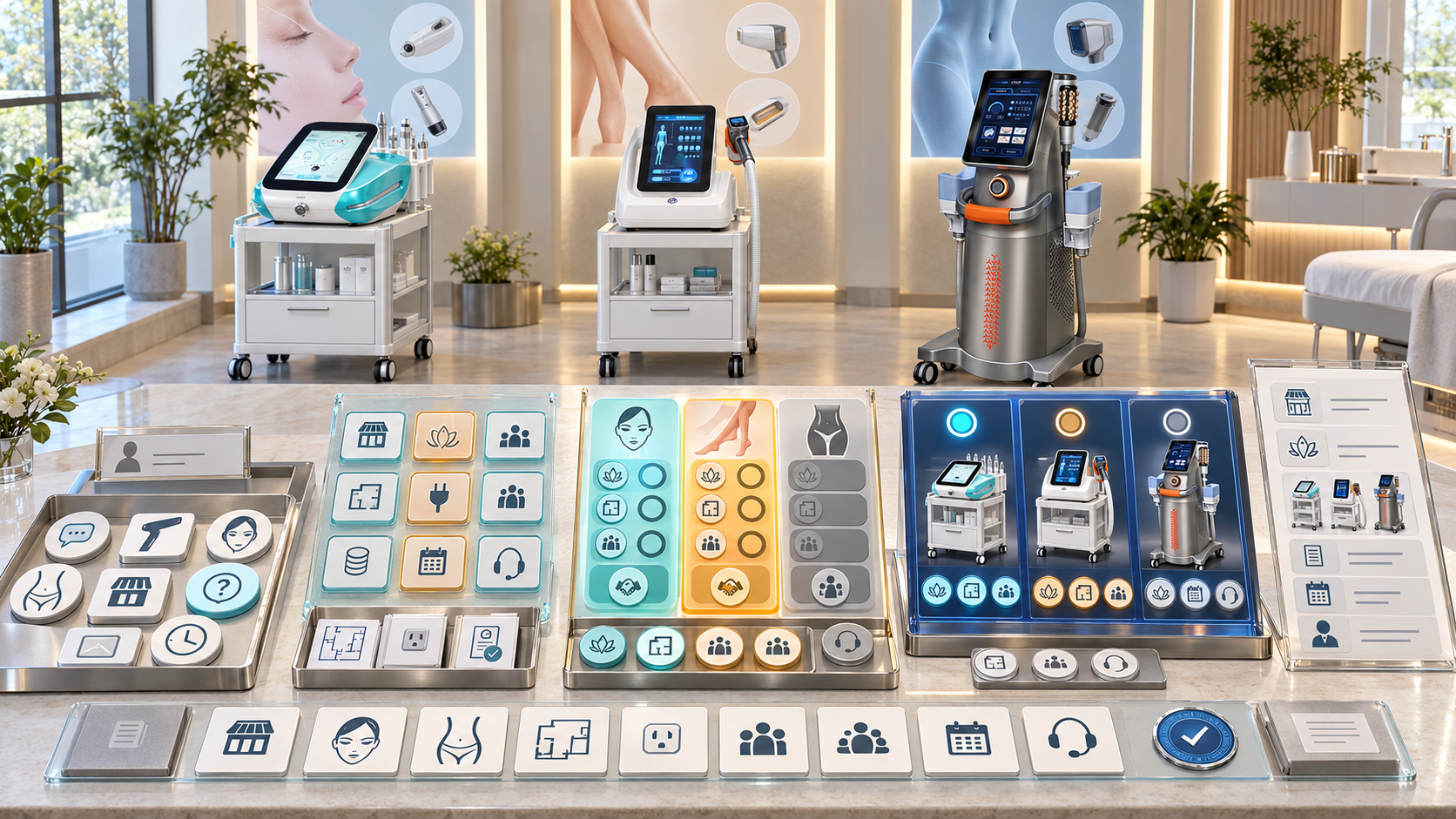
Beauty device inquiries often begin with very little usable information: “What is your best machine?”, “I need a multifunction device,” “Send laser prices,” or “I want equipment for a new salon.” These messages show interest, but they do not yet define the buyer’s service goal, business setting, device category, operating conditions, configuration, or purchasing stage.
The sales team’s task is to turn that uncertainty into a small, relevant product shortlist without forcing the buyer through an exhausting questionnaire or sending an unfiltered catalog. The process should preserve the original request, identify the missing decisions, clarify the intended service, apply hard constraints, and show which candidates remain suitable, conditional, or outside the current phase. This guide presents a repeatable workflow for salons, clinics, med spas, body studios, multi-location buyers, and equipment distributors.
요약 보고서
- Save the buyer’s original wording before interpreting it.
- Identify the type of ambiguity: business, service goal, category, terminology, site, operator, configuration, market, quantity, timing, or authority.
- Ask a small first set of high-information questions rather than sending a full technical form immediately.
- Convert product words into a business and service brief.
- Select the device category before comparing models.
- Use mandatory gates to remove candidates that conflict with the buyer’s setting or requirements.
- Define every shortlist item at model-and-configuration level, not only by product name.
- Limit the active shortlist to options the buyer can meaningfully compare.
- Mark candidates as Qualified, Conditional, Future Phase, or Eliminated with clear reasons.
- Use the shortlist to plan a demonstration, recommendation rationale, or quotation brief; do not treat shortlist creation as final purchasing approval.
1. Why Vague Inquiries Need Structure
A vague inquiry can hide several different projects. “Facial machine” might mean a core cleansing and hydration platform, an advanced rejuvenation category, or a distributor catalog request. “Laser” might refer to professional hair removal, another laser application, or a buyer using a familiar word for equipment it has not yet defined.
Responding with every available model creates three problems:
- the buyer must perform the distributor’s category work;
- noncomparable devices appear to be alternatives;
- later quotations are built on assumptions rather than requirements.
The objective is not to eliminate uncertainty in one message. It is to reduce uncertainty in the right order until a useful shortlist becomes possible.
2. Preserve the Original Inquiry
Create an inquiry record before translating the request. Capture:
- exact message and language;
- date, channel, and campaign source;
- contact and organization details provided;
- country or region;
- named product, technology, function, or application;
- any price, quantity, delivery, or timing request;
- links, images, or references supplied by the buyer;
- salesperson’s initial interpretation, clearly labeled as interpretation;
- first unanswered questions.
Keeping the original wording allows another team member to see where the structured brief came from. It also prevents a salesperson’s early assumption from becoming an invisible buyer requirement.
3. Classify the Ambiguity
Use an ambiguity checklist to decide which questions have the highest value.
| Ambiguity type | What is unclear | Example follow-up |
|---|---|---|
| Buyer identity | Business type and operating status | Are you opening, expanding, replacing equipment, or reselling? |
| Service objective | What the buyer wants to offer | Which client concern or service category do you want to add? |
| 범주 | Which technology family belongs in scope | Are you comparing facial care, hair removal, advanced skin, or body equipment? |
| Terminology | Meaning of the buyer’s product words | What functions do you expect from “multifunction”? |
| Site | Room, utilities, access, or storage | Is the treatment room prepared, and is space limited? |
| 연산자 | Who will use the device | Which team member will operate the equipment? |
| 구성 | Handles, tips, cartridges, or applicators | Which service areas and functions must the package support? |
| Market | Destination and local context | Where will the device be installed or resold? |
| 수량 | One site, several rooms, or resale stock | How many locations or units are in the current phase? |
| Timing | Exploration versus active purchase | When do you plan to launch the service? |
| Decision path | Stakeholders and next step | Who will evaluate the shortlist and approve the purchase? |
Do not ask every possible question at once. Select the few answers that will change the category or eliminate the largest number of unsuitable options.
4. Use a Three-Pass Discovery Process
Pass 1: Establish the business and service goal
묻다:
- What type of business is this?
- Is the project a new opening, service expansion, replacement, capacity addition, or resale line?
- Which services are offered now?
- Which client or buyer need should the new device address?
- What should the new category add that current equipment cannot?
Pass 2: Test operating fit
묻다:
- 누가 이 기기를 작동할 건가요?
- Which room and utilities are available?
- Are there space, storage, cleaning, privacy, or workflow limits?
- Can the business manage required tips, solutions, cartridges, needles, or other supplies?
- Which consultation, record, and aftercare processes are available for advanced categories?
Pass 3: Define the purchasing path
묻다:
- Which country or region is the destination?
- How many sites or units are in scope?
- What launch date or purchasing phase applies?
- Who evaluates and approves the choice?
- Does the buyer need education, a shortlist, a demonstration, a configuration review, or a quotation next?
Each pass should end with a short confirmation in the buyer’s language. This gives the buyer a chance to correct the sales team’s interpretation.
5. Ask High-Information Questions First
A high-information question changes the decision path. “Which color do you prefer?” has little value before the category is clear. “Is the main goal core facial cleansing or an advanced rejuvenation service?” can change the entire shortlist.
Prioritize questions that reveal:
- category boundary;
- professional setting;
- hard room or electrical limit;
- intended operator;
- existing-device overlap;
- required service areas;
- multi-location or resale scope;
- destination market;
- immediate versus future phase.
Use branching questions. If the buyer chooses professional hair removal, open the laser module. If the buyer chooses core facial cleansing and hydration, open the multifunction facial module. This keeps discovery relevant.
6. Translate Product Words into a Business Brief
Vague product language should be converted into structured intent.
| Buyer says | Possible underlying need | Clarification required |
|---|---|---|
| “Best beauty machine” | Buyer has not selected a service category | Business type, current menu, target service, operator, room |
| “9-in-1” | Buyer may want multiple core facial functions | Required functions, workflow, existing tools, supply plan |
| “Laser machine” | Hair-removal category may be intended | Application, setting, operator, room, market, configuration |
| “Anti-aging equipment” | Could span maintenance or advanced services | Service pathway, professional setting, intended operator |
| “Body slimming machine” | Buyer needs a body category but scope is unclear | Target areas, current equipment, handles, room, booking plan |
| “Full catalog” | Reseller may be exploring categories | Market, target buyers, catalog gaps, demo and stock strategy |
The resulting business brief should state the need without embedding an unverified product answer.
7. Build a Minimum Viable Buyer Brief
Before creating a model shortlist, record:
- buyer and organization;
- buyer type;
- project type;
- destination market;
- current service menu or product catalog;
- service or portfolio gap;
- target clients or downstream buyers;
- intended operator and setting;
- room and utility constraints;
- existing equipment and overlap;
- mandatory functions;
- negotiable preferences;
- supply and workflow capability;
- quantity and location scope;
- launch timing;
- decision-makers and next milestone;
- Unknown fields.
The brief can remain provisional. It must be complete enough to choose a category and apply the first mandatory gates.
8. Separate Requirements from Preferences
Classify each buyer statement.
| Class | 의미 | Shortlist effect |
|---|---|---|
| 필수적인 | Candidate cannot proceed without it | Elimination gate |
| High priority | Strongly influences fit | Main comparison criterion |
| 우선의 | Useful but negotiable | Secondary distinction |
| Future phase | Valid later need | Preserve outside current shortlist |
| 범위 외 | Not part of this project | Prevent unnecessary expansion |
| 알려지지 않은 | 증거가 부족합니다 | Conditional status or discovery action |
Ask why a requirement is mandatory. “Must be desktop” may reflect real room limits, or it may be an untested preference based on an image.
9. Map the Need to a Device Category
사용하세요 셰프몬 뷰티 디바이스 카테고리 to explore only the product families related to the confirmed service goal.
| Structured need | Category to explore | Initial boundary questions |
|---|---|---|
| Core cleansing, exfoliation, extraction, and hydration menu | Hydro and multifunction facial care | Tool set, room, cleaning, solutions, appointment design |
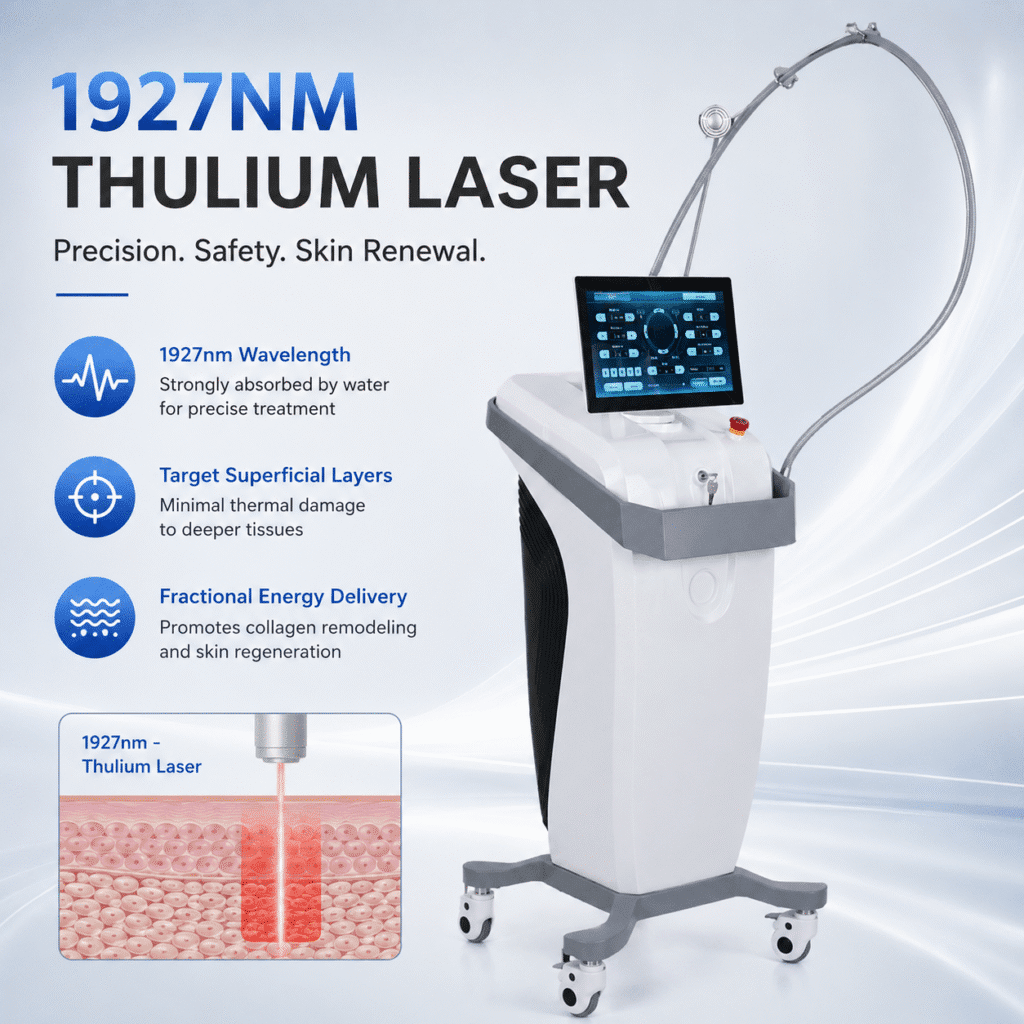
| Dedicated professional hair-removal service | 다이오드 레이저 | Setting, operator, room, electrical profile, handle and local review |
| Advanced lifting and tightening pathway | 하이푸 | Professional context, consultation, handles, cartridges, records |
| Advanced texture and rejuvenation pathway | RF 마이크로니들링 | Operator, hygiene, needle heads, consumables, aftercare |
| Body-care and shaping service expansion | Multifunction body equipment | Target areas, handles, room, storage, cleaning, booking |
If two categories remain plausible, create a category shortlist first. Do not compare model specifications across unrelated technologies as though the highest number identifies the winner.
10. Apply Hard Gates Before Adding Candidates
Possible gates include:
- category does not address the stated service need;
- professional setting or intended operator is unsuitable or unresolved;
- room or electrical conditions conflict with the device type;
- destination market is unknown;
- required function is unavailable;
- requested component combination is incompatible or unverified;
- consumable or cartridge workflow cannot be supported;
- candidate duplicates an installed device without a defined reason;
- project belongs to a later phase;
- buyer refuses to clarify information required for a responsible comparison.
A failed gate may lead to a different category, education, nurture, or removal. It should not be hidden by favorable preferences.
11. Define the Shortlist Object Precisely
The shortlist should compare sellable, understandable options.
For every candidate, capture:
- category;
- 정확한 모델;
- physical format;
- selected handles or handpieces;
- tips, cartridges, needle heads, or applicators;
- included items;
- optional items;
- 소모품 개봉;
- voltage and destination profile;
- quantity;
- 증거의 출처 및 날짜;
- current status;
- open questions.
“A0423” and “A0423 with the buyer’s required handle and spot-size configuration” are different levels of clarity. The second is appropriate when the shortlist is approaching demonstration or quotation.
12. Limit the Number of Active Candidates
A practical shortlist normally contains:
- one leading candidate;
- one meaningful alternative when a real tradeoff exists;
- one conditional or future option when it helps clarify the decision.
The number should follow the decision, not a fixed rule. One candidate can be valid when mandatory requirements leave no meaningful alternative. More candidates are justified only when the buyer can distinguish them using agreed criteria.
Move eliminated models into a decision history rather than leaving them in the active comparison.
13. Use Clear Candidate Statuses
| 상태 | 의미 | Next step |
|---|---|---|
| Qualified | Passes current gates and fits verified requirements | Compare, demonstrate, or configure |
| 주요한 | Best current fit with documented rationale | Resolve remaining conditions |
| 가정 어구 | Potential fit depends on named evidence or action | Assign question and owner |
| Future Phase | Relevant after the current project | Preserve for later review |
| Eliminated | Fails a gate or has weaker fit for a recorded reason | Remove from active shortlist |
| Withdrawn | Previously considered but no longer supported | Preserve history |
Do not label every catalog item “optional.” An option should remain active only when it helps answer the buyer’s decision.
14. Build the Shortlist Table
| Candidate and configuration | Requirements supported | Mandatory gates | Tradeoff | Open question | 상태 |
|---|---|---|---|---|---|
| Model A, defined package | Core need and high priorities | Pass | More functions to train | Confirm opening supplies | 주요한 |
| Model B, focused package | Core need with simpler scope | Pass | Less future range | Confirm buyer growth plan | Qualified |
| Advanced category C | Future premium pathway | Operator and records unresolved | Higher operating complexity | Define professional pathway | Future Phase |
Use buyer language in the “requirements supported” column. Use exact product language in the candidate field. This connects the business decision to the equipment being compared.
15. Record Elimination Reasons
Use controlled reasons such as:
- service-category mismatch;
- mandatory function missing;
- room or utility conflict;
- operator or setting unresolved;
- duplicate of installed equipment;
- configuration unavailable or unclear;
- market or electrical mismatch;
- consumable path unsuitable;
- outside current timing or budget context;
- buyer changed priority;
- replaced by a stronger candidate;
- insufficient evidence.
Add one sentence explaining which requirement produced the decision. This allows a future salesperson to reopen the candidate only when the relevant condition changes.
16. Create Buyer-Type Shortlists
Salon shortlist
Prioritize menu gap, operator capacity, room, appointment design, cleaning, supplies, and overlap with current facial or body equipment.
Clinic or med spa shortlist
Add professional setting, consultation, records, aftercare, authorization, consumable traceability, advanced-room controls, and local review.
Body studio shortlist
Focus on target areas, handle roles, treatment-room movement, storage, booking, cleaning, and package design.
Multi-location shortlist
Define a group baseline, approved site variants, readiness gaps, quantities, and rollout waves. Do not treat an unassessed branch as identical to headquarters.
Distributor or reseller shortlist
Focus on target markets, buyer profiles, catalog gaps, demonstration needs, stock strategy, product-data capability, training, supplies, support, and regional configuration.
17. Shortlist A0648 for Core Facial Inquiries
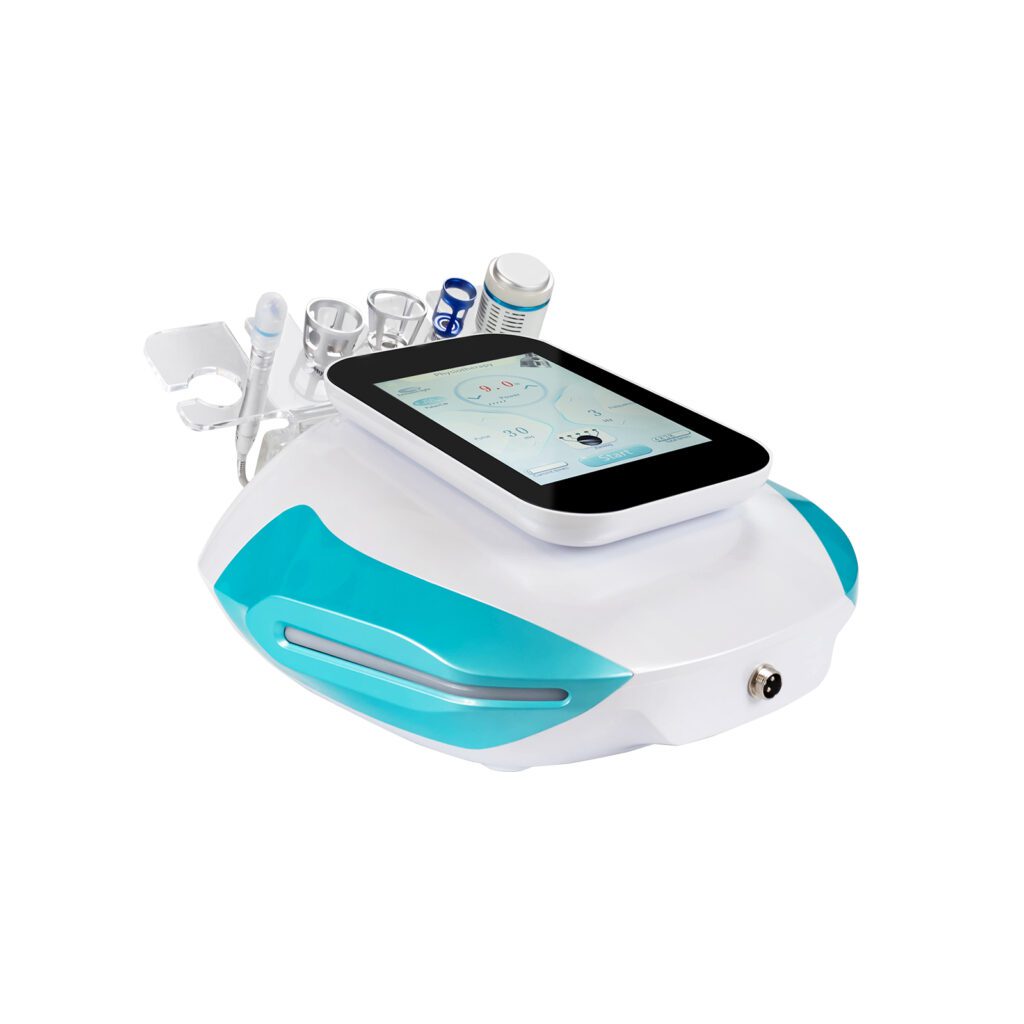
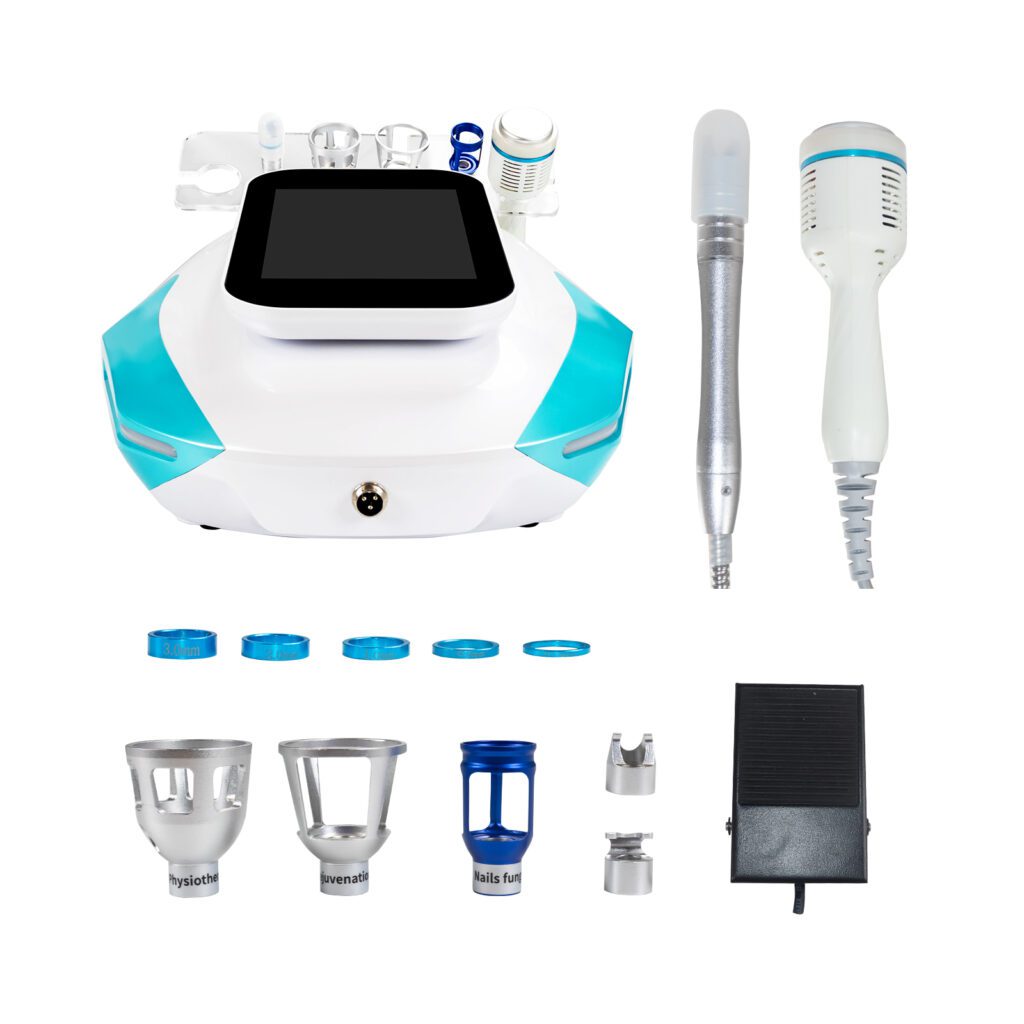
그만큼 셰프몬 A0648 9-in-1 하이드로 및 다이아몬드 마이크로더마브레이션 시스템 is relevant when discovery identifies a core multifunction facial need involving cleansing, exfoliation, extraction, and hydration functions described on the product page.
Before adding A0648, confirm:
- planned facial services;
- required functions;
- current tools and overlap;
- operator count;
- room, cleaning, solution, and storage workflow;
- 약속 설계;
- 개시 용품;
- whether the buyer needs one core platform or a later advanced category.
If the inquiry says only “9-in-1 machine,” keep the candidate Conditional until the buyer confirms which functions belong in the menu.
18. Shortlist A0423 and A0426 for Hair-Removal Inquiries
그만큼 셰프몬 A0423 그리고 셰프몬 A0426 pages list model-level information including wavelengths, handle power, spot sizes, cooling, voltage, and physical format.
Before comparing them, confirm:
- professional hair-removal service is the intended category;
- intended operator and setting;
- destination market;
- room, electrical, privacy, consultation, and record workflow;
- required wavelength and handle options;
- preferred spot size and physical format;
- 예상 예약 및 수용 능력 패턴;
- training, cleaning, and support plan;
- applicable local review.
The shortlist should show the actual configuration under consideration. A price request for “diode laser” is not yet enough to treat either model as quote-ready.
19. Shortlist A0204 for Advanced HIFU Inquiries
그만큼 SHEFMON A0204 다기능 HIFU 시스템 belongs in an advanced-service pathway.
Confirm the intended service role, professional setting, operator, consultation process, room, records, aftercare, handle and cartridge needs, supply plan, training sequence, and local review. If the buyer says only “lifting machine” or “anti-aging equipment,” compare the maintenance and advanced category paths before adding A0204 to a model shortlist.
20. Shortlist A0152 for RF-Microneedling Inquiries
그만큼 SHEFMON A0152 데스크탑 RF 마이크로니들링 시스템 page identifies multiple needle-head formats, computerized depth settings, handle options, and face/body target areas.
Before shortlisting, define:
- advanced skin-service objective;
- 의도된 운영자 및 전문적인 환경;
- consultation and records;
- hygienic workflow;
- 선택한 손잡이와 바늘 머리 요구 사항;
- opening consumables and reorder responsibility;
- 사후 관리 및 후속 조치;
- 교육 및 승인;
- relevant local requirements.
Do not treat a request for “microneedling” as a complete configuration brief.
21. Shortlist B0155 for Body-Care Inquiries
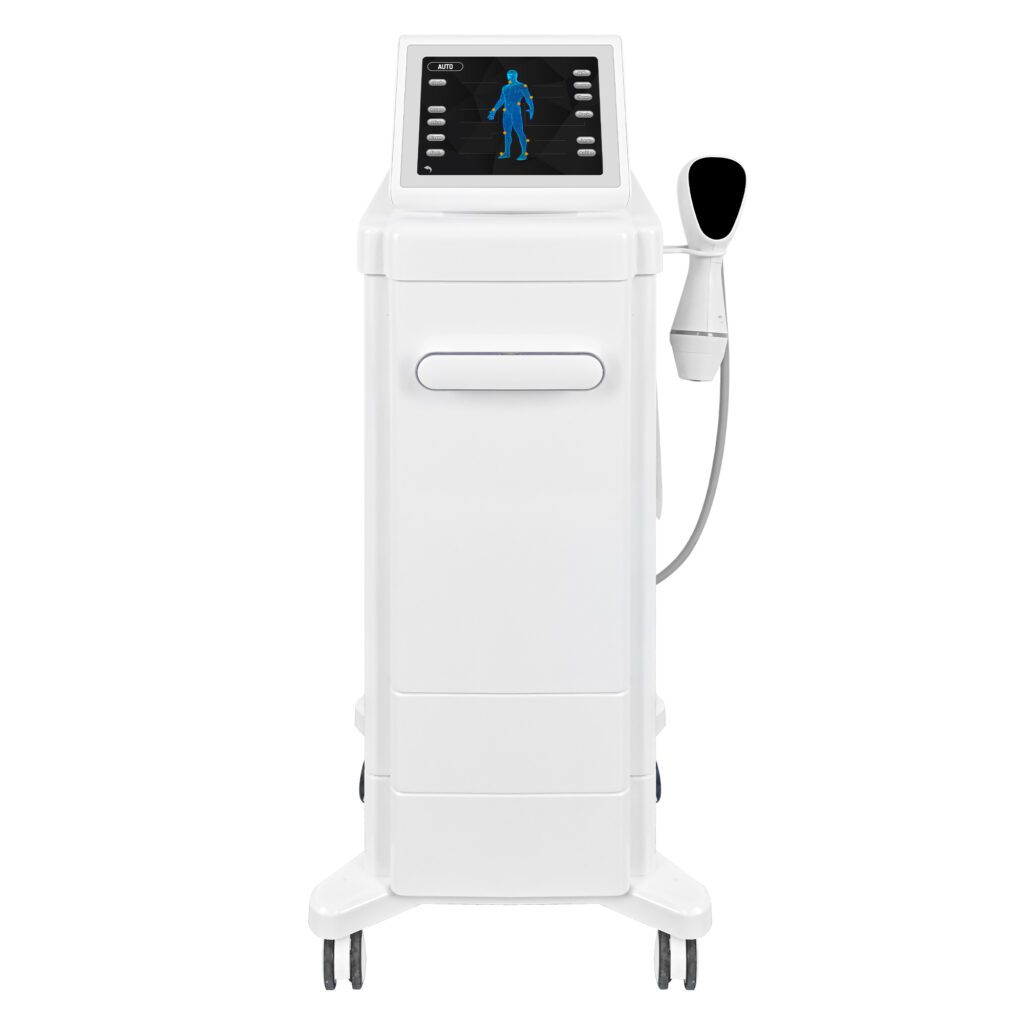
For body-care discovery, the SHEFMON B0155 desktop system provides a model reference with body and smaller-area handles that combine functions such as vacuum, rollers, RF, light, and cavitation.
확인하다:
- target body or smaller-area services;
- current body equipment and overlap;
- required handle roles;
- room and device-movement path;
- handle storage;
- 작업자 및 청소 작업 흐름;
- appointment and package design;
- 개시 용품;
- support responsibility.
A buyer asking for “body slimming equipment” may need category education before a broad handle package is justified.
22. Handle Multi-Device Inquiries by Service Role
When a buyer asks for “a complete salon package,” separate the inquiry into service roles.
| 서비스 역할 | Category question | Shortlist output |
|---|---|---|
| 코어 페이셜 | Which recurring cleansing, hydration, or maintenance need exists? | One focused facial shortlist |
| 제모 | Is there an eligible professional service, room, and operator? | Separate diode-laser shortlist |
| 고급 피부 | Which qualified pathway is planned? | HIFU or RF-microneedling shortlist after category review |
| 바디 케어 | Which areas, handles, room, and booking model apply? | Body-system shortlist |
Check overlap, room competition, staff training load, supplies, and launch timing. The result may be a phased portfolio rather than several immediate purchases.
23. Handle Multi-Location Inquiries with a Core and Site Overlays
Build:
- one group business brief;
- one common service-category decision;
- one baseline shortlist;
- site overlays for rooms, operators, installed equipment, markets, quantities, and timing;
- controlled variants;
- rollout waves;
- deferred or unassessed sites.
Do not create a universal package from one flagship-site interview. A candidate can be Qualified for the group concept and Conditional for specific locations.
24. Use the Shortlist to Plan the Demonstration
The demonstration should resolve the questions separating the remaining candidates.
정의하다:
- exact model and configuration to be shown;
- mandatory functions to evaluate;
- workflow or handling questions;
- components labeled included or optional;
- buyer stakeholders who should attend;
- comparison criteria;
- evidence to collect;
- decision expected after the session;
- differences between demo and proposed configurations.
Do not demonstrate every feature. Demonstrate what can move a candidate from Conditional or Qualified to Leading, or remove it.
25. Know When the Shortlist Is Ready for Recommendation
A shortlist is recommendation-ready when:
- the business problem is confirmed;
- category fit is established;
- mandatory requirements are verified;
- candidates are genuinely comparable;
- configurations are defined at the required stage;
- elimination reasons are recorded;
- tradeoffs are visible;
- material Unknowns have owners;
- one next evaluation action is agreed.
The recommendation rationale should then explain why the leading option best fits the buyer. It should not introduce a completely new model without reopening the shortlist.
26. Know When the Shortlist Is Ready for Quotation
Before quotation, confirm:
- legal buyer or purchasing entity;
- 정확한 모델 및 구성;
- 포함된 구성 요소 및 선택 구성 요소;
- 소모품 개봉;
- quantity;
- voltage and destination;
- site or rollout allocation;
- exclusions and assumptions;
- decision contact;
- commercial path;
- unresolved conditions that block release.
If the buyer is still comparing categories or undefined configurations, send a structured shortlist rather than premature prices for unrelated products.
27. Worked Example: “I Need a Multifunction Facial Machine”
Original inquiry
We are opening a facial salon and need a good multifunction machine. Please send price.
Structured discovery result
- new facial salon with two rooms;
- core services will focus on cleansing, exfoliation, extraction, and hydration;
- two intended operators;
- no installed facial platform;
- buyer wants one central device for the opening menu;
- advanced procedures are outside the first phase;
- room workflow and opening solutions still need confirmation;
- one unit required for the first location.
Shortlist result
| Candidate | Fit | Condition | 상태 |
|---|---|---|---|
| A0648, defined opening configuration | Matches the intended core facial functions | Confirm room workflow, intended tools, and supplies | 주요한 |
| Advanced HIFU or RF-microneedling category | Does not match the opening-phase service brief | Revisit after professional and operating pathway is developed | Future Phase |
| Broad body-care platform | Outside the stated facial scope | Separate future category discovery | Eliminated from current shortlist |
The next step is configuration discovery for A0648, not a catalog-wide quotation.
28. Worked Example: “Send Your Full Catalog for Distribution”
Original inquiry
We want to distribute beauty machines. Send all models and wholesale prices.
Structured discovery result
- reseller serves independent salons and small clinics in one region;
- current catalog lacks a core facial category and professional hair-removal category;
- demonstration capacity is limited to two devices;
- the team will supply advanced devices to order in a later phase;
- product-data, training, and support owners are identified;
- destination profile and first-order quantity still need confirmation.
Shortlist result
- A0648 as a candidate for the facial demonstration category;
- A0423 and A0426 as a like-for-like diode-laser shortlist after configuration and market questions are answered;
- A0204 and A0152 retained as Future Phase categories pending advanced-buyer and support planning;
- B0155 deferred until the distributor validates local body-service demand.
The result is a market-entry shortlist with open conditions, not an unrestricted price list.
29. Reopen the Shortlist When Inputs Change
Review the shortlist when:
- the business or service goal changes;
- a mandatory requirement changes;
- the intended operator or professional setting changes;
- a room or utility becomes available or unavailable;
- a new site or destination market enters scope;
- the model or component options change;
- quantity or timing changes materially;
- demonstration evidence changes the preference;
- product information or availability changes;
- 알 수 없는 항목이 검증되었습니다.;
- the buyer adds another category.
Preserve the previous version and record why candidates moved, entered, or left the shortlist.
30. Measure Shortlist Quality
유용한 조치에는 다음이 포함됩니다.
- inquiries converted into confirmed business briefs;
- time from first inquiry to category decision;
- average active candidates by opportunity;
- shortlists with verified mandatory requirements;
- candidates removed for controlled reasons;
- demonstrations linked to open shortlist questions;
- quotation revisions caused by missing configuration data;
- recommendations that introduce an unreviewed candidate;
- dormant opportunities with unresolved Unknown fields;
- category changes after demonstration or quotation.
A good shortlist does not maximize candidate count. It reduces uncertainty and makes the next decision easier.
31. Structured Product Shortlist Checklist
Before presenting the shortlist, confirm that:
- the original inquiry is preserved;
- the buyer and business type are identified;
- the service or portfolio problem is stated;
- product words have been translated into business intent;
- the device category is selected or the category options are explicit;
- mandatory requirements are separated from preferences;
- room, operator, workflow, supplies, market, and timing are considered;
- existing equipment and overlap are recorded;
- each active candidate passes the current gates;
- model and configuration scope are clear for the stage;
- included, optional, and excluded items are separated;
- candidates are few enough for meaningful evaluation;
- eliminated candidates have reasons;
- Unknown fields have owners and next actions;
- multi-location variants are visible;
- the next step is discovery, demonstration, recommendation, or quotation;
- shortlist version and review date are recorded.
자주 묻는 질문
1. What should a salesperson do first with a vague beauty device inquiry?
Preserve the original message, identify the main type of ambiguity, and ask a small set of questions that clarifies the business type, service goal, category, operator, site, and purchasing stage.
2. Should a distributor send the full catalog when a buyer asks for it?
A category overview can support education, but the active shortlist should contain only product families and models relevant to the buyer’s market, customers, catalog gaps, demonstration capacity, and support plan.
3. How many models should be on a beauty device shortlist?
Use only the candidates the buyer can meaningfully distinguish. One leading option and one real alternative are often enough; add a conditional or future option only when it clarifies the decision.
4. What if the buyer cannot identify a device category?
Create a category shortlist based on the intended service and business setting. Compare the roles and operating implications of the categories before discussing detailed model specifications.
5. When can price be discussed?
Commercial context can be discussed during discovery, but a controlled quotation needs an identified buyer, model, configuration, quantity, destination, and purchasing path. Avoid comparing prices for undefined packages.
6. How should Unknown information appear in the shortlist?
Label it as Unknown, explain its effect, assign an owner, and state whether it makes the candidate Conditional or blocks the next stage. Do not replace missing evidence with a guess.
7. Can a shortlist include different beauty device categories?
Yes, when category selection remains unresolved or the buyer wants several distinct service roles. Keep each category in its own module and avoid scoring unrelated technologies as direct equivalents.
8. What makes a shortlist ready for a demonstration?
The buyer should have a credible use case, a small candidate set, defined evaluation questions, suitable attendees, and an agreed decision expected after the demonstration.
9. What makes a shortlist ready for quotation?
The exact model, configuration, components, quantity, voltage, destination, buyer entity, exclusions, and decision path should be sufficiently complete for controlled commercial review.
10. When should a removed candidate return to the shortlist?
Only when the requirement or evidence that caused its removal has changed. Record the new information and issue an updated shortlist version rather than silently restoring it.
결론
A vague beauty device inquiry becomes useful when the sales team reduces uncertainty in the right sequence. Preserve the original request, define the business problem, choose the category, apply mandatory gates, specify configurations, and keep only candidates that help the buyer make the next decision.
This approach gives salons, clinics, med spas, body studios, multi-location businesses, and distributors a shortlist based on service fit and operating context rather than an unfiltered product list. Explore relevant categories in the 셰프몬 뷰티 디바이스 컬렉션. When the buyer brief identifies the business type, service objective, operator, site, market, required functions, configuration questions, quantity, and timing, 셰프몬에게 연락하세요 to refine the appropriate product shortlist.