









La demanda de tattoo removal treatments continues to grow worldwide as more people seek to modify or completely remove unwanted tattoos. For professional aesthetic clinics, investing in the right laser technology is essential to deliver effective results while maintaining safety and patient satisfaction. In 2026, advanced laser systems such as picosecond and fractional CO₂ lasers are among the most popular options for clinics offering tattoo removal and skin rejuvenation services. These devices combine powerful technology with improved treatment precision, helping clinics provide high-quality aesthetic procedures. This guide explores the best tattoo removal laser machines for professional clinics in 2026, their technologies, and the key factors clinics should consider when selecting equipment.
1. Understanding How Tattoo Removal Lasers Work
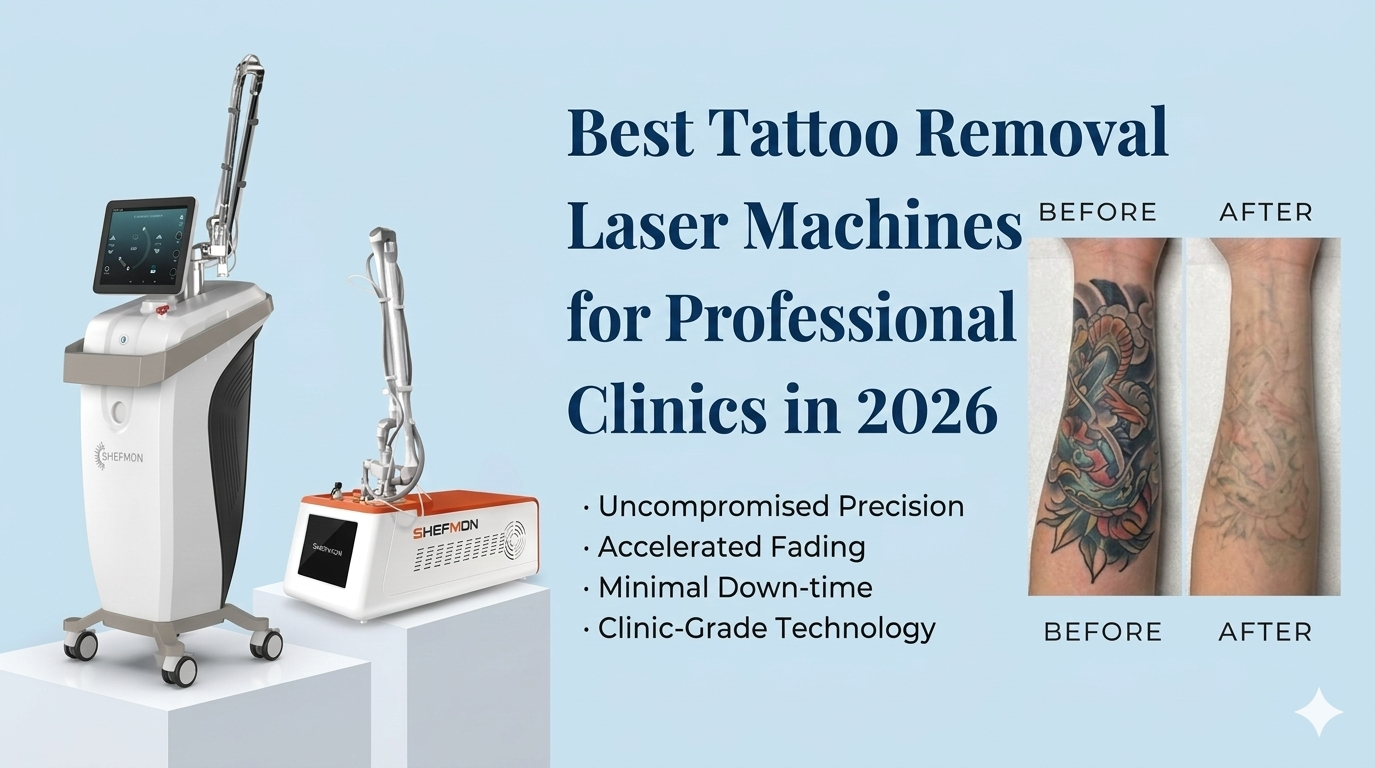
Laser tattoo removal works by delivering high-intensity light pulses into the skin to break down tattoo pigments. The laser energy shatters ink particles into smaller fragments, which are then gradually removed by the body’s immune system.
Different ink colors absorb specific wavelengths of light. For example, 1064 nm wavelengths are highly effective for black and dark blue pigments, while 532 nm wavelengths target red, orange, and some purple tones.
Because tattoos contain multiple pigment colors, professional clinics often choose laser systems that provide multiple wavelengths. This ensures effective treatment across a wide range of tattoo types and skin tones.
2. Key Technologies Used in Modern Tattoo Removal Machines
2.1 Picosecond Laser Technology
Picosecond lasers are widely considered one of the most advanced tattoo removal technologies. These devices deliver ultra-short pulses measured in picoseconds (one trillionth of a second). The extremely fast energy release breaks tattoo pigment into microscopic particles with minimal heat damage to surrounding tissue.
Because of this precision, picosecond lasers can often remove tattoos in fewer sessions compared with traditional nanosecond lasers. They are also effective for stubborn pigments and are generally safer for a wider range of skin types.
One example of this advanced technology is the super picosecond Nd:YAG tattoo removal laser, which combines 1064 nm and 532 nm wavelengths to target multiple pigment colors effectively. https://shefmon.com/product/a0507-1064nm-532nm-q-switched-super-picosecond-picosure-yag-laser-tattoo-removal/
Professional clinics prefer this type of system because it offers high treatment efficiency, adjustable energy levels, and the ability to treat tattoos, pigmentation, and permanent makeup.
2.2 Q-Switched Nd:YAG Laser Technology
Q-switched lasers have been a standard in tattoo removal for many years. They work by delivering short bursts of high-energy laser pulses that break apart tattoo pigments.
The most common wavelengths used in Q-switched lasers are:
1064 nm – effective for black, blue, and dark pigments
532 nm – effective for red, orange, and purple pigments
These wavelengths allow clinics to treat a wide variety of tattoo colors with relatively low risk of scarring or skin damage.
While picosecond lasers offer faster pigment fragmentation, Q-switched systems remain widely used because they are reliable, versatile, and cost-effective for clinics starting tattoo removal services.
3. Additional Laser Technologies Used in Skin Treatment
3.1 Fractional CO₂ Laser for Skin Resurfacing
Although fractional CO₂ lasers are not primarily used for tattoo removal, they are highly valuable for clinics offering comprehensive skin treatments.
A 10600 nm CO₂ fractional laser works by creating thousands of microscopic thermal columns in the skin. These micro-injuries stimulate collagen remodeling and skin regeneration while leaving surrounding tissue intact for faster healing.
This technology is particularly effective for treating:
cicatrices de acné
Líneas finas y arrugas
Poros dilatados
Irregularidades en la textura de la piel
Surgical or trauma scars
Sistemas profesionales como el CO₂ fractional laser equipment for acne scar removal and skin resurfacing allow clinics to expand their treatment portfolio beyond tattoo removal. https://shefmon.com/product/a0529-professional-acne-scar-removal-10600nm-co2-fractional-laser-equipment/
Offering both tattoo removal and skin rejuvenation treatments can significantly increase clinic revenue and attract a wider client base.

Funciones del láser fraccionado A0529: eliminación de arrugas
4. Features to Look for in a Professional Tattoo Removal Machine
4.1 Multiple Wavelength Options
A high-quality tattoo removal machine should support multiple wavelengths to effectively treat different tattoo pigments. Systems that combine 1064 nm and 532 nm wavelengths provide the versatility needed for most tattoo colors.
Clinics dealing with multicolored tattoos especially benefit from machines capable of switching wavelengths quickly during treatments.
4.2 Adjustable Energy and Pulse Duration
Different tattoos require different energy levels depending on their age, depth, and pigment density. Adjustable energy settings allow practitioners to customize treatments for each patient, improving safety and treatment outcomes.
Picosecond lasers with adjustable pulse durations are particularly useful for treating stubborn tattoos or layered pigments.
4.3 Advanced Cooling Systems
Laser treatments can generate significant heat, which may cause discomfort for patients. Professional machines often include air cooling or contact cooling systems to protect the epidermis and improve patient comfort during treatment.
Cooling systems also reduce the risk of burns and post-treatment inflammation.
4.4 User-Friendly Interface
Modern aesthetic devices typically feature touchscreen interfaces and pre-programmed treatment modes. These features simplify operation and reduce the learning curve for practitioners.
Clinics with high patient volumes benefit from intuitive systems that allow quick parameter adjustments and efficient workflow management.
5. Benefits of Investing in Advanced Tattoo Removal Equipment
5.1 High Market Demand
Tattoo removal has become one of the fastest-growing services in aesthetic clinics. As tattoos become more common, so does the demand for safe and effective removal solutions.
Clinics equipped with modern laser systems can attract clients seeking professional treatment rather than risky DIY or low-quality alternatives.
5.2 Expanded Treatment Services
Modern laser platforms are versatile and can treat a wide range of skin conditions. For example, picosecond lasers can also treat pigmentation, melasma, and skin rejuvenation concerns.
Similarly, fractional CO₂ lasers provide powerful skin resurfacing treatments for acne scars and wrinkles.
By offering multiple services, clinics can maximize the return on investment for their equipment.
5.3 Improved Treatment Results
Advanced technologies such as picosecond lasers produce smaller pigment particles, allowing the body to remove them more efficiently. This leads to faster results, fewer sessions, and higher patient satisfaction.
For clinics, better results translate into stronger reputations, repeat clients, and positive referrals.

6. Choosing the Right Tattoo Removal Laser for Your Clinic
When selecting a tattoo removal machine, clinics should evaluate several factors:
Treatment versatility
Technology type (picosecond vs Q-switched)
Wavelength options
Safety features and cooling systems
Ease of operation and maintenance
Clinics that combine picosecond tattoo removal systems with fractional CO₂ lasers can provide a full range of aesthetic services, including tattoo removal, pigmentation treatment, acne scar therapy, and skin rejuvenation.
Conclusión
In 2026, professional aesthetic clinics are increasingly adopting advanced laser technologies to meet the growing demand for tattoo removal and skin treatments. Picosecond and Q-switched Nd:YAG lasers remain the most effective solutions for breaking down tattoo pigments, while fractional CO₂ lasers provide powerful skin resurfacing and scar treatment options. By investing in high-quality laser systems with multiple wavelengths, adjustable energy settings, and advanced cooling technologies, clinics can deliver safe, effective, and profitable aesthetic treatments. As technology continues to evolve, clinics that adopt modern laser equipment will be better positioned to provide superior results and remain competitive in the rapidly expanding aesthetic industry.