









Tecnología láser Ha revolucionado el tratamiento de cicatrices, ofreciendo opciones específicas y efectivas para quienes buscan una piel más suave y saludable. Entre las diversas modalidades láser, los láseres de CO₂ (dióxido de carbono) son ampliamente considerados como una de las herramientas más potentes para la eliminación de cicatrices debido a su capacidad para regenerar con precisión el tejido cutáneo, estimular la regeneración de colágeno y reducir tanto las irregularidades de la textura como la pigmentación. Una pregunta frecuente para quienes consideran este tratamiento es: ¿Cuántas sesiones se necesitan normalmente para lograr una mejora notable? La respuesta depende de varios factores, como el tipo de cicatriz, su gravedad, las características de la piel y los objetivos del tratamiento. Comprender estos elementos puede ayudarle a planificar expectativas realistas y optimizar su tratamiento.

1. ¿Qué es la eliminación de cicatrices con láser de CO₂?
1.1 Comprensión de la tecnología láser de CO₂
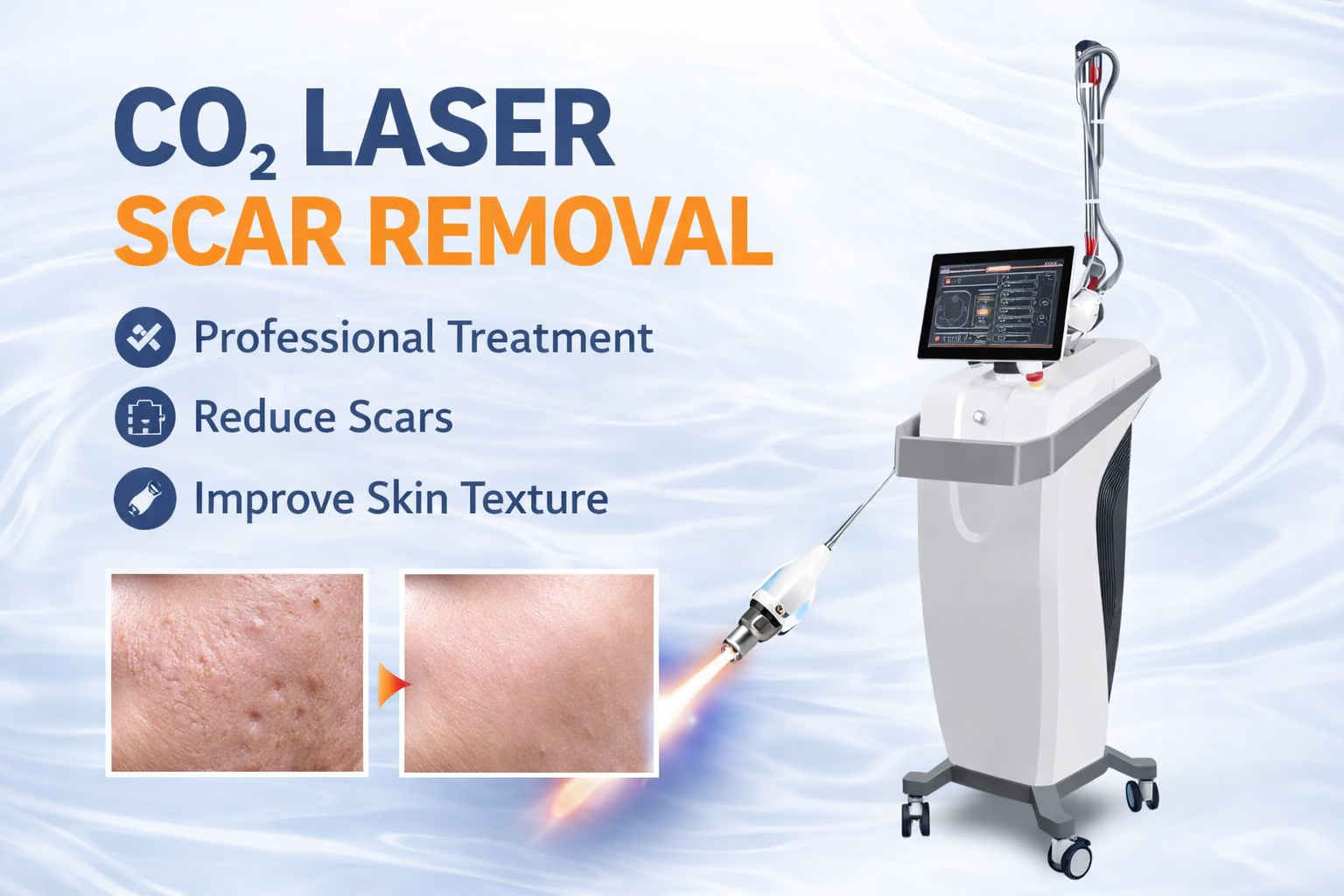
La eliminación de cicatrices con láser de CO₂ utiliza un haz de luz enfocado para eliminar la capa externa de la piel dañada y estimular la producción de colágeno en las capas dérmicas más profundas. El proceso estimula los mecanismos naturales de curación del cuerpo, lo que resulta en una piel más suave y uniforme con el tiempo. Dado que la longitud de onda se dirige específicamente al agua de las células cutáneas, los láseres de CO₂ pueden extirpar el tejido con precisión, minimizando el daño térmico en las zonas circundantes.
Existen diferentes tipos de láseres de CO₂, incluyendo sistemas fraccionados y ultrafraccionados. Los láseres de CO₂ fraccionados administran energía en microcolumnas, dejando intacto el tejido circundante para facilitar una cicatrización más rápida y una mayor comodidad durante la recuperación.
Un ejemplo de este equipo avanzado es el Láser ultra de CO₂ fraccional de fibra Shefmon de 2910 nm, diseñado para ofrecer un rejuvenecimiento controlado y efectivo para mejorar las cicatrices y la textura.
https://shefmon.com/product/shefmon-2910nm-fiber-fractional-co2-ultra-laser/
1.2 ¿Por qué el CO₂ fraccionado es popular para las cicatrices?
Los láseres fraccionados de CO₂ son especialmente populares para la corrección de cicatrices, ya que combinan una remodelación profunda de la piel con tiempos de recuperación más cortos en comparación con los sistemas ablativos más antiguos. Este equilibrio los convierte en una opción práctica tanto en entornos clínicos como en spas médicos para el tratamiento de cicatrices de acné, cicatrices quirúrgicas, estrías y otras irregularidades de la piel.
2. Factores que influyen en el número de sesiones
2.1 Tipo y gravedad de las cicatrices
Uno de los determinantes más importantes de la frecuencia del tratamiento es tipo de cicatrizAlgunos tipos de cicatrices comunes incluyen:
cicatrices atróficas, como las cicatrices del acné, que crean depresiones en la piel.
Cicatrices hipertróficas o queloides, que implican tejido cicatricial elevado
cicatrices quirúrgicas, que varían ampliamente según la profundidad y la ubicación
Las cicatrices atróficas del acné suelen requerir varias sesiones debido a su profundidad y patrón irregular. Las cicatrices elevadas también pueden requerir más sesiones, posiblemente combinadas con otras modalidades para obtener resultados óptimos.
2.2 Tipo de piel y capacidad de curación
Las características individuales de la piel, como el grosor, la pigmentación y la actividad del colágeno, influyen en la respuesta de la piel al tratamiento láser. Los pacientes con una recuperación firme pueden experimentar mejoras más rápidas, mientras que quienes tienen una recuperación más lenta o una piel más delicada pueden beneficiarse de un programa de tratamiento más gradual.
2.3 Intensidad y configuración del tratamiento
La configuración específica del láser utilizada en una sesión, incluyendo el nivel de energía, la densidad y el modo, afecta tanto a los resultados como a la recuperación. Las sesiones de mayor intensidad pueden lograr cambios más drásticos en menos visitas, pero también podrían requerir periodos de recuperación más largos entre sesiones.
3. Recomendaciones para sesiones típicas
3.1 Cicatrices leves (problemas de textura de la superficie)
Para personas con irregularidades superficiales leves o cicatrices menores, 2–3 sesiones espaciados aproximadamente 4 a 6 semanas de diferencia A menudo se recomiendan. Este programa permite que la inflamación disminuya y se forme nuevo colágeno antes del siguiente tratamiento.
3.2 Cicatrices moderadas (acné más profundo o cicatrices quirúrgicas)
Las cicatrices moderadas suelen requerir un tratamiento más intensivo. En muchos protocolos clínicos, los profesionales recomiendan 3–5 sesiones espaciados cada 6–8 semanasEste régimen le da tiempo a la piel para regenerarse mientras mejora gradualmente la profundidad y la textura de la cicatriz a lo largo de múltiples ciclos.
3.3 Cicatrices graves (cicatrices pronunciadas o patrones complejos)
Las cicatrices graves o extensas a menudo requieren una serie más larga de tratamientos, que a veces exceden 5 sesionesEn estos casos, la terapia láser puede complementarse con microagujas, radiofrecuencia con microagujas o subcisión para abordar problemas estructurales tanto superficiales como más profundos. La planificación personalizada del tratamiento con un profesional clínico cualificado es esencial para obtener resultados óptimos.
Otra opción de nivel profesional para la eliminación de cicatrices con CO₂ es el Equipo láser fraccional de CO₂ de 10600 nm para la eliminación profesional de cicatrices de acné, que se puede adaptar a diferentes grados de gravedad de cicatrices con parámetros de tratamiento ajustables.
https://shefmon.com/product/a0529-professional-acne-scar-removal-10600nm-co2-fractional-laser-equipment/

Funciones del láser fraccionado A0529: eliminación de arrugas
4. Tiempo de recuperación entre sesiones
4.1 Cronograma típico de curación
Tras una sesión de láser de CO₂, es común que aparezcan enrojecimiento e hinchazón iniciales, que suelen remitir en pocos días. Las microcolumnas tratadas cicatrizan gradualmente durante los siguientes 7 a 14 días, tiempo durante el cual emerge piel nueva, a menudo más lisa y con un tono más uniforme.
Por lo general, se aconseja a los pacientes que protejan las áreas tratadas de la exposición al sol y que sigan las recomendaciones de cuidados posteriores para favorecer la cicatrización de la barrera.
4.2 Importancia del intervalo adecuado
Espaciar las sesiones adecuadamente, a menudo 4 a 8 semanas de diferenciaPermite que la piel complete su ciclo de curación y produzca colágeno antes de la exposición a la nueva energía láser. Superponer los tratamientos demasiado pronto puede aumentar el riesgo de complicaciones o inflamación prolongada, mientras que los intervalos demasiado largos pueden ralentizar el progreso general.
5. Qué resultados esperar
5.1 Mejora gradual
A diferencia de algunos tratamientos cosméticos que producen resultados inmediatos, la eliminación de cicatrices con láser de CO₂ ofrece mejora gradual a lo largo de varias sesionesPueden aparecer cambios visibles después de la primera sesión, pero los resultados óptimos suelen obtenerse tras completar el tratamiento recomendado. Con el tiempo, las cicatrices tienden a ser menos visibles, la textura de la piel se vuelve más suave y el aspecto general mejora.
5.2 Beneficios a largo plazo
Los tratamientos con láser de CO₂ estimulan la producción de colágeno, que continúa durante varios meses después de cada sesión. Esta respuesta biológica favorece una mejora continua incluso después de finalizar la serie de tratamientos.
6. Consultar con un profesional
6.1 Planes de tratamiento personalizados
Dado que el número de sesiones necesarias varía considerablemente entre personas, es fundamental una consulta exhaustiva con un dermatólogo certificado o un especialista en láser. Una evaluación profesional de su tipo de cicatriz, las características de su piel y los objetivos del tratamiento determinará la frecuencia e intensidad ideales de las sesiones.
6.2 Discutiendo las expectativas
Es igualmente importante establecer expectativas realistas sobre los resultados, los posibles efectos secundarios y el tiempo de recuperación. La transparencia sobre lo que la tecnología láser puede y no puede hacer contribuye a garantizar la satisfacción del paciente y resultados más seguros.
Conclusión
No existe una solución universal para la cantidad de sesiones de láser de CO₂ necesarias para la eliminación de cicatrices. Las cicatrices leves suelen requerir de 2 a 3 sesiones, las moderadas pueden necesitar de 3 a 5, y las graves pueden extenderse más allá de las cinco sesiones, dependiendo de la respuesta individual y el enfoque clínico. Factores como el tipo de cicatriz, el tono de piel, la capacidad de cicatrización y la configuración del láser influyen. Al trabajar con un profesional experimentado y seguir un plan de tratamiento cuidadosamente espaciado, muchos pacientes logran una piel más suave y refinada, con una mejora duradera.