









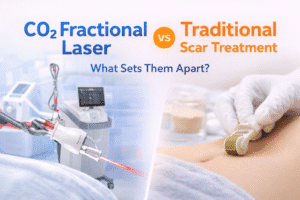

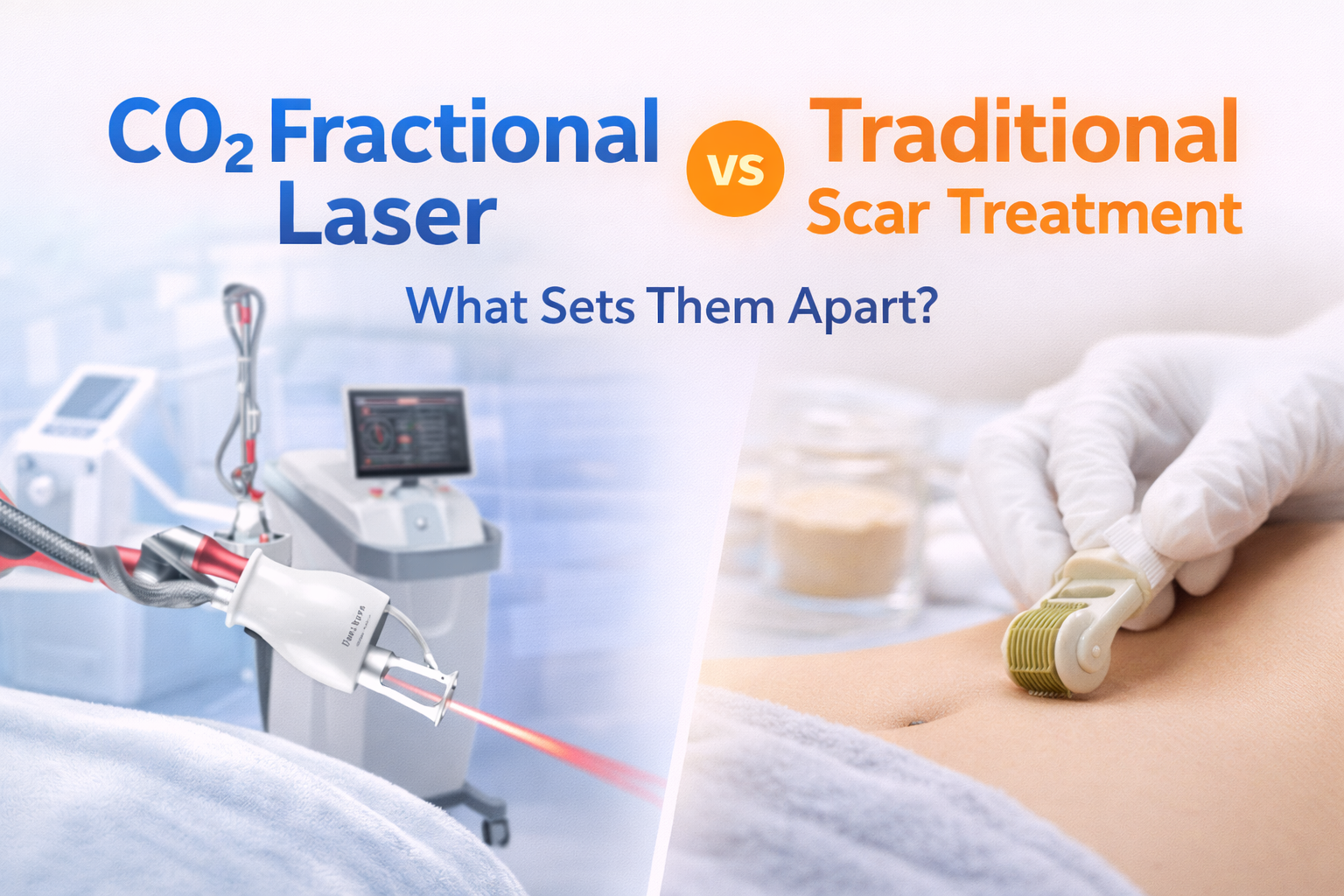
Scar treatment has long been a focus in dermatology and aesthetic medicine, as scars can significantly affect both skin appearance and patient confidence. Over time, various treatment approaches have been developed, ranging from topical solutions and manual procedures to advanced energy-based technologies. Among these options, CO₂ fractional laser treatments stand out as a modern, technology-driven solution. Understanding how CO₂ fractional laser therapy differs from traditional scar treatments helps clinics and patients make informed decisions based on effectiveness, recovery time, and long-term outcomes.
1. Understanding Scar Formation and Treatment Goals
1.1 How Scars Form in the Skin
Scars develop as part of the body’s natural healing process after injury, acne, surgery, or inflammation. When collagen fibers are produced unevenly or excessively, the skin surface may become raised, depressed, or discolored. Effective scar treatment aims to remodel collagen, improve skin texture, and restore a more uniform appearance.
1.2 Core Objectives of Scar Treatment
Both traditional methods and CO₂ fractional laser treatments share common goals: smoothing uneven skin, reducing discoloration, and improving overall skin texture. The key difference lies in how these goals are achieved and how deeply the treatment interacts with the skin structure.
2. What Are Traditional Scar Treatments?
2.1 Common Traditional Treatment Methods
Traditional scar treatments typically include topical creams, chemical peels, microneedling, steroid injections, and manual dermabrasion. These methods often focus on surface-level improvement or gradual skin renewal through repeated sessions.
While such treatments can be effective for mild scars, their impact is often limited when dealing with deeper or long-standing scar tissue.
2.2 Limitations of Traditional Approaches
Most traditional treatments primarily affect the epidermis or superficial dermal layers. Because they do not deliver controlled energy to deeper skin structures, results may be subtle and require extended treatment timelines. In addition, outcomes can vary depending on practitioner technique and patient skin response.
3. What Is CO₂ Fractional Laser Treatment?
3.1 How CO₂ Fractional Laser Technology Works
CO₂ fractional lasers use a focused beam of light at specific wavelengths to create microscopic thermal zones in the skin. These micro-injuries stimulate collagen remodeling while leaving surrounding tissue intact, promoting faster healing and more effective skin renewal.
Fortgeschrittene Systeme wie die 2910 nm Faserfraktionierter CO₂-Ultra-Laser are designed to deliver precise energy with controlled depth, allowing practitioners to target scar tissue more accurately.
https://shefmon.com/product/shefmon-2910nm-fiber-fractional-co2-ultra-laser/
3.2 Fractional Technology and Skin Regeneration
The “fractional” approach means only a portion of the skin is treated during each session. This stimulates the body’s natural repair mechanisms while minimizing downtime compared to fully ablative laser treatments.

4. Key Differences in Treatment Depth and Precision
4.1 Deeper Dermal Stimulation with CO₂ Lasers
Unlike traditional scar treatments, CO₂ fractional lasers can penetrate deeper dermal layers where scar tissue forms. This depth allows for more effective collagen restructuring, making the technology suitable for acne scars, surgical scars, and other textural irregularities.
4.2 Surface-Level Focus of Traditional Treatments
Traditional methods generally focus on exfoliation, hydration, or mild stimulation. While they may improve skin tone and texture over time, they often struggle to address deeply rooted scar structures.
5. Treatment Results and Effectiveness
5.1 Predictability and Consistency of CO₂ Laser Results
CO₂ fractional laser treatments offer more predictable outcomes due to standardized energy delivery and adjustable parameters. Professional devices such as the 10600nm CO₂ Fractional Laser Equipment for Acne Scar Removal allow clinicians to customize treatment intensity based on scar severity and skin condition.
https://shefmon.com/product/a0529-professional-acne-scar-removal-10600nm-co2-fractional-laser-equipment/
5.2 Gradual Improvement with Traditional Methods
Traditional scar treatments often require multiple sessions over a long period to achieve visible changes. Results can be inconsistent, especially for moderate to severe scarring, and may rely heavily on patient compliance with aftercare routines.
6. Recovery Time and Downtime Considerations
6.1 Recovery After CO₂ Fractional Laser Treatment
CO₂ fractional laser treatments may involve short-term redness, swelling, or skin flaking as part of the healing process. However, fractional technology significantly reduces downtime compared to older laser methods, allowing patients to resume normal activities sooner.
6.2 Downtime with Traditional Scar Treatments
Most traditional treatments have minimal downtime, but their lower intensity often means slower and less dramatic improvements. Patients may need frequent sessions to maintain results.
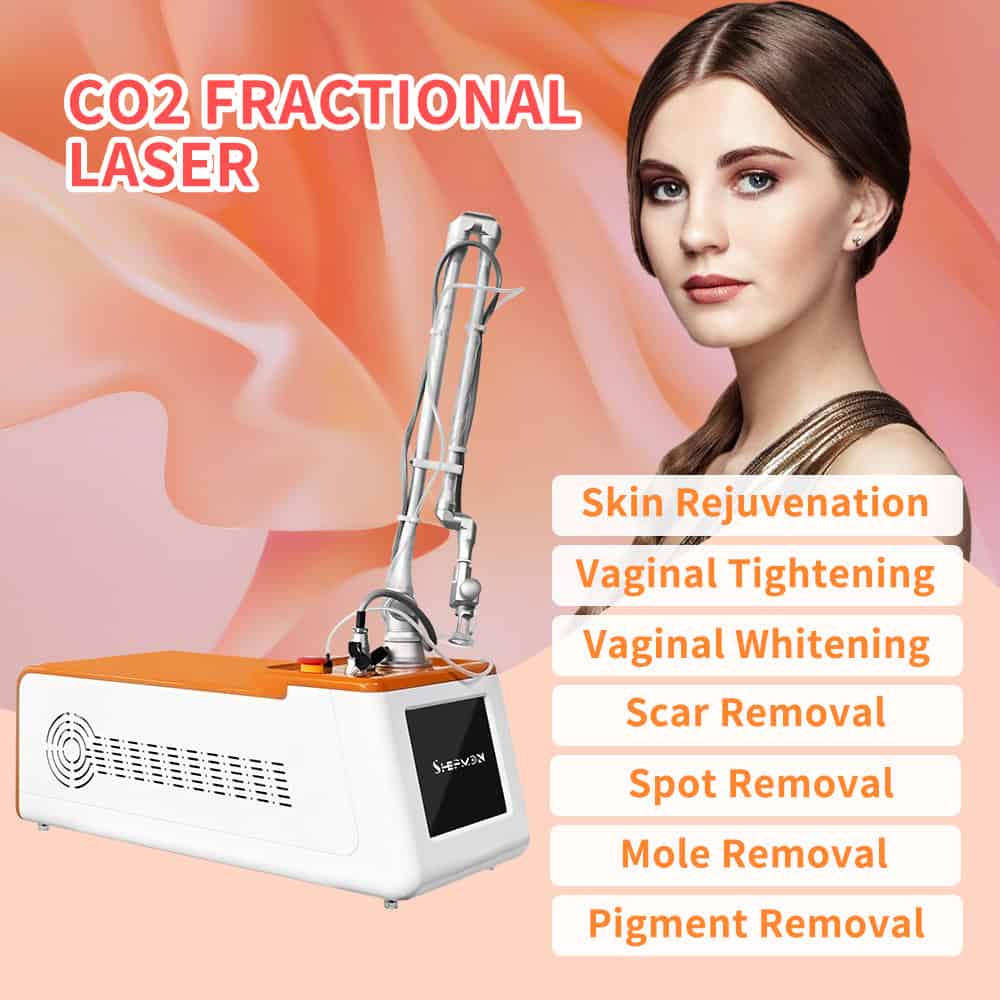
CO2-Fraktionslaser-Resurfacing zum Verkauf 2024 in China vor und nach der Genesung und Kosten der Laserbehandlung gegen Falten
7. Safety and Suitability
7.1 Professional Control and Safety in CO₂ Laser Use
When performed with professional-grade equipment and proper parameter settings, CO₂ fractional laser treatments are considered safe for a wide range of skin conditions. Proper assessment and post-treatment care are essential to minimize risks.
7.2 Suitability of Traditional Treatments
Traditional scar treatments are often suitable for sensitive skin or early-stage scarring. However, they may not provide sufficient improvement for patients seeking more visible and long-lasting results.
8. Choosing the Right Scar Treatment Approach
8.1 When CO₂ Fractional Laser Is More Appropriate
CO₂ fractional laser treatments are well-suited for patients with moderate to severe scars who desire noticeable skin texture improvement and are prepared for short recovery periods.
8.2 When Traditional Treatments May Be Preferred
For mild scarring, maintenance care, or patients unwilling to undergo energy-based treatments, traditional methods remain a practical option.
Abschluss
CO₂ fractional laser therapy and traditional scar treatments differ significantly in technology, depth of action, and overall effectiveness. While traditional methods can support gradual surface improvement, CO₂ fractional lasers provide deeper, more targeted collagen remodeling with more predictable results. By understanding these differences, clinics and patients can select the most appropriate treatment strategy based on scar severity, skin condition, and desired outcomes.