








Zusammenfassung
The competition between domestic beauty equipment and imported beauty equipment is entering a more complex stage. In the past, many buyers described the difference in a simple way: imported equipment represented higher technology and stronger brand trust, while domestic equipment represented lower price and faster supply. That view is now too basic.
Domestic manufacturers have improved quickly in design, production speed, cost control, customization, training support, and after-sales response. Imported brands still have advantages in premium positioning, clinical evidence, long-term brand reputation, high-end energy-based technology, global regulatory experience, and customer trust in advanced aesthetic settings. The result is not a simple replacement of one side by the other. It is a segmented competition.
In beauty salons, skin management stores, body contouring centers, and distributor channels, purchasing decisions are becoming more practical. Buyers ask whether the equipment can generate revenue, whether training is clear, whether service is fast, whether the claims are compliant, and whether customers will accept the project price. For many basic and mid-range salon projects, domestic equipment is becoming more competitive. For high-end medical aesthetic, advanced energy-based, laser, premium anti-aging, and brand-sensitive projects, imported equipment still has strong market space.
This report concludes that the future market will not be “domestic wins everything” or “imported remains dominant.” The future will be category-based, price-tier-based, and service-system-based competition. Domestic brands will continue to gain share in value-for-money, multifunction, fast-delivery, and localized service categories. Imported brands will defend or grow in high-end, clinically validated, premium customer, and compliance-sensitive categories. Distributors should not choose only by origin. They should judge product-market fit, project profitability, registration status, service capability, consumables model, training support, and local salon purchasing power.
1. Market Background
Beauty equipment demand is supported by several long-term trends: non-invasive aesthetics, skin management, anti-aging, body contouring, hair removal, acne-prone care, digital skin analysis, and home-use beauty device education. Market research firms continue to project growth across beauty devices, aesthetic devices, energy-based aesthetic devices, and beauty tools.
For example, P and S Intelligence estimates the global beauty device market at USD 115.0 billion in 2025 and projects it to reach USD 332.3 billion by 2032, with a CAGR of 16.4 percent. Grand View Research estimates the global energy-based aesthetic devices market at USD 7.5 billion in 2025 and projects growth from USD 8.1 billion in 2026 to USD 15.7 billion by 2033, at a CAGR of 9.8 percent. Mordor Intelligence estimates the China aesthetic devices market at USD 0.85 billion in 2025 and projects it to reach USD 1.65 billion by 2030, at a CAGR of 14.23 percent.
These numbers show that the market is not shrinking. But growth does not remove competition. It intensifies competition. More manufacturers, more distributors, more online marketing, more cross-border sourcing, and more informed salon buyers are making equipment comparison more direct.
2. Why Domestic And Imported Competition Is Becoming Sharper
Competition is sharpening for five reasons.
First, technology diffusion is faster. RF, EMS, LED, ultrasound, hydro dermabrasion, oxygen infusion, skin analysis, IPL, laser-related platforms, and body contouring technologies are more widely understood than before. This reduces the knowledge gap between many suppliers.
Second, manufacturing supply chains are more mature. Domestic factories can develop models quickly, update appearance design, adjust language interfaces, support OEM and ODM, and respond to distributor feedback faster.
Third, salon buyers are more ROI-focused. Many stores no longer buy equipment only for prestige. They compare payback period, project price, customer acceptance, warranty, spare parts, and training.
Fourth, imported equipment faces cost pressure. Import duties, logistics, registration cost, currency movement, maintenance difficulty, and spare parts delay can weaken competitiveness in price-sensitive markets.
Fifth, regulation and claim control are becoming more important. Whether domestic or imported, devices with medical or structure/function claims may face regulatory requirements. This pushes buyers to evaluate documentation and intended use more carefully.
3. Domestic Beauty Equipment Advantages
Domestic beauty equipment has become stronger because it fits many salon operating needs.
Zu den wichtigsten Vorteilen gehören:
- Lower purchase price.
- Schnellere Lieferung.
- Easier communication with the supplier.
- More flexible customization.
- Better local language support.
- Faster spare parts supply.
- Easier training arrangement.
- Lower maintenance cost.
- More flexible distributor margin structure.
- Faster product iteration.
For small and medium beauty salons, these advantages matter a lot. A store may prefer a device that is not the highest-end globally but can be delivered quickly, repaired locally, trained easily, and paid back within a realistic period.
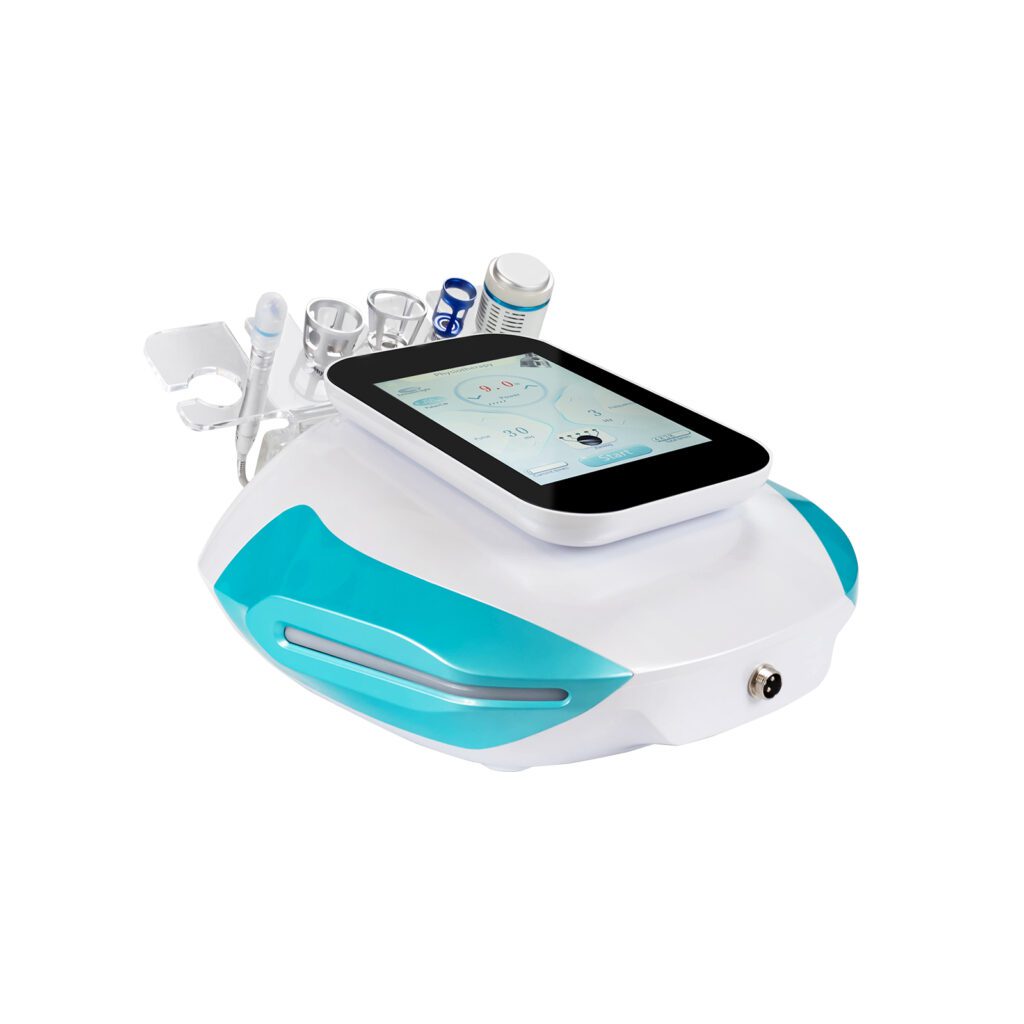
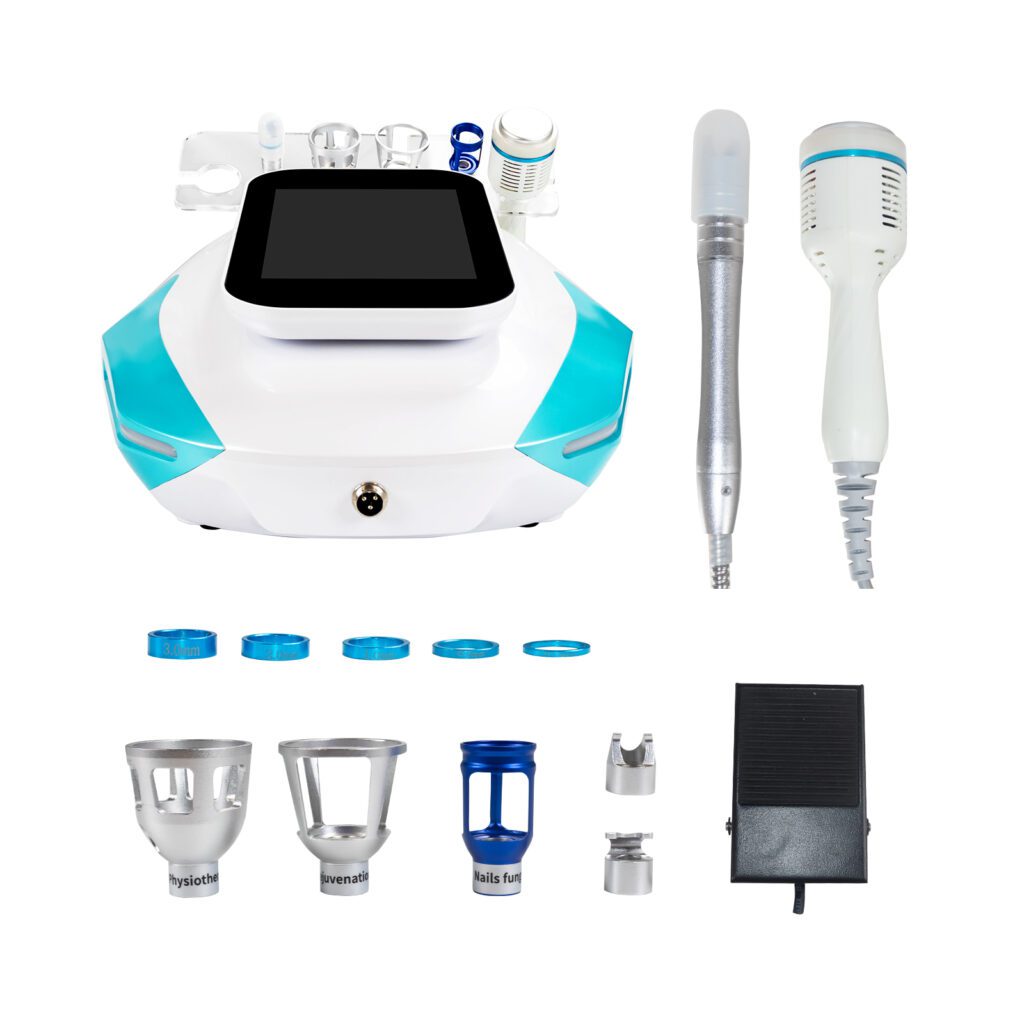
Domestic equipment is especially strong in basic facial devices, hydro cleansing systems, oxygen spray devices, LED therapy devices, entry RF devices, EMS microcurrent tools, multifunction beauty platforms, body slimming support devices, and salon-use add-on equipment.
4. Imported Beauty Equipment Advantages
Imported beauty equipment still has clear advantages in many high-value scenarios.
Zu den wichtigsten Vorteilen gehören:
- Stronger historical brand recognition.
- Higher perceived technology level.
- Better premium project positioning.
- More clinical or international market evidence in some categories.
- Stronger customer trust in high-end salons and clinics.
- Better fit for luxury service menus.
- More established global training systems in some brands.
- Stronger differentiation for premium buyers.
- More mature regulatory pathways in some export markets.
Imported equipment is often preferred when the buyer wants to create a premium image, charge higher treatment prices, serve high-income customers, or reduce customer doubt about advanced technology.
The imported advantage is strongest in higher-end laser, IPL, advanced RF, focused ultrasound, professional body contouring, skin rejuvenation, and clinical aesthetic equipment categories. It is also strong in markets where customers directly recognize the brand name.
5. The Main Competitive Shift: From Origin To Value
The market is moving away from a simple domestic-versus-imported debate. Buyers are increasingly asking a better question: what value does this device create for this store?
Der Wert umfasst:
- Treatment result positioning.
- Kundenvertrauen.
- Compliance status.
- Staff operation difficulty.
- Project pricing space.
- Amortisationszeitraum.
- Repair speed.
- Klarheit der Garantiebedingungen.
- Kosten für Verbrauchsmaterialien.
- Upgrade potential.
- Brand differentiation.
If a domestic device can support a profitable project with stable service, it may beat an imported device in a mid-range salon. If an imported device supports premium pricing and customer trust, it may beat a domestic device in a high-end skin clinic or medical aesthetic center.
Origin matters, but value matters more.
6. Price Competition: Domestic Equipment Has A Structural Advantage
Domestic beauty equipment usually has a structural price advantage. The reasons include local manufacturing, shorter supply chain, lower logistics cost, flexible component sourcing, and stronger price adaptability.
For salons, lower price can reduce investment pressure. For distributors, lower price can create wider wholesale tiers and easier starter packages. For manufacturers, lower price can support volume strategy.
However, price advantage has limits. If a product is too cheap, buyers may worry about:
- Weak energy stability.
- Poor materials.
- Short device life.
- Inaccurate output.
- Limited safety protection.
- No real warranty.
- Lack of operator training.
- Keine Ersatzteile.
- Unclear compliance.
Domestic brands that only compete by low price will enter a race to the bottom. The stronger path is cost-performance: reasonable price plus stable quality, training, warranty, and project support.
7. Premium Pricing: Imported Equipment Still Has Space
Imported beauty equipment can still support premium pricing when the brand and technology justify the price. Some salons and clinics buy imported equipment because customers associate it with advanced treatment, better safety, and stronger results.
This is especially true when:
- The store serves high-income customers.
- The project price is high.
- The equipment brand is visible in consultation.
- The technology category is complex.
- The store competes on professionalism rather than low price.
- Customers compare devices by name.
- The operator can explain evidence and safety protocols.
Imported equipment should not rely only on the word “imported.” It must show real value in results, documentation, training, service, and brand recognition. Otherwise, it may lose to a strong domestic product with better local support.
8. Technology Gap Is Narrowing, But Not Equal In Every Category
The technology gap between domestic and imported beauty equipment has narrowed in many categories. Domestic suppliers can now produce many facial, body, RF, EMS, LED, hydro cleansing, ultrasound, and multifunction systems that meet the practical needs of beauty salons.
But the gap is not equal in every category. Imported brands may still lead in:
- High-end laser platforms.
- Advanced energy delivery control.
- Proprietary treatment protocols.
- Long-term clinical data.
- Brand-specific software.
- Premium consumables systems.
- High-end cooling and safety design.
- International regulatory documentation.
Domestic suppliers may lead in:
- Fast product iteration.
- OEM and ODM flexibility.
- Cost control.
- Local market adaptation.
- Multi-function integration.
- Distributor-friendly pricing.
- Quick after-sales response.
The correct view is category-specific. A domestic device may be very competitive in one category and weaker in another. An imported device may be excellent in one category and overpriced in another.
9. Quality Perception Is Changing
Older buyers often assumed imported meant reliable and domestic meant unstable. That perception is changing, but not fully gone.
Domestic quality has improved, especially among manufacturers with better engineering, standardized production, quality control, and export experience. Many domestic suppliers now understand that appearance design is not enough. They need energy stability, safety protection, software reliability, packaging quality, manuals, spare parts, and after-sales process.
Still, the domestic market has uneven quality. Strong manufacturers and weak assemblers can exist in the same category. This creates buyer confusion.
Imported equipment also varies. A recognized international brand may be reliable, but not every imported machine is automatically superior. Some imported devices may have high repair cost, slow parts supply, outdated software, or limited local training.
The market is becoming more evidence-based. Buyers should test output, inspect components, check certificates, evaluate warranty terms, and speak with current users.
10. Brand Trust: Imported Equipment Still Benefits From Perception
Brand trust is one of the strongest advantages for imported beauty equipment. Many customers believe that a device from the United States, Europe, Japan, South Korea, or Israel is more advanced. Whether this perception is always technically correct is less important than the fact that it affects purchasing behavior.
High-end salons use imported brands to support premium storytelling. During consultation, staff can mention brand background, global use, patents, clinical evidence, and premium positioning. This helps justify a higher treatment price.
Domestic brands are improving brand trust, but they need time. Strong domestic manufacturers can build trust through:
- Transparent factory information.
- Stable device quality.
- Real user cases.
- Ausbildungszertifizierung.
- Clear warranty policy.
- Konformitätsdokumentation.
- Good industrial design.
- Export market references.
- Long-term service response.
Trust is no longer built only by country of origin. It is built by proof.
11. After-Sales Service: Domestic Equipment Has A Major Advantage
After-sales service is one of the biggest reasons salons choose domestic beauty equipment. A beauty salon cannot wait several weeks for repair when a device is tied to sold treatment packages. Equipment downtime can create refunds, customer complaints, schedule disruption, and staff pressure.
Domestic suppliers often provide:
- Faster repair communication.
- Local technicians.
- Schnellere Ersatzteilversorgung.
- Lower repair cost.
- Easier video training.
- More flexible warranty discussion.
- Easier replacement or loaner support.
Imported brands can reduce this disadvantage only if they have a strong local distributor, spare parts warehouse, trained technicians, and clear service-level agreement. Without this support, imported equipment may lose competitiveness even when the technology is strong.
For distributors, after-sales is not a cost center only. It is a competitive weapon.
12. Compliance And Registration: Both Sides Must Be Careful
Compliance is becoming a key point in domestic-versus-imported competition. Beauty equipment may be regulated depending on intended use, treatment claims, energy type, and market jurisdiction.
In China, NMPA rules distinguish between domestic and imported medical device filing or registration pathways by risk class. NMPA guidance states that class I domestic medical devices are filed with local authorities, class II domestic devices are reviewed by provincial drug regulatory departments, and class III domestic devices are reviewed by the NMPA. For imported devices, class I devices are filed with the NMPA, and imported class II and III devices are reviewed by the NMPA.
This matters because some beauty equipment may stay in cosmetic or general equipment categories, while others may be treated as medical devices depending on claims and functions. FDA guidance also states that aesthetic devices may be regulated depending on intended use and whether they affect the structure or function of the body. The European Union MDR also covers some devices without an intended medical purpose when they have similar risk profiles to medical devices.
The practical conclusion is simple: do not judge compliance by origin. A domestic device can be compliant or non-compliant. An imported device can be compliant or non-compliant. Buyers and distributors should check the device’s intended use, local registration, labeling, manuals, claims, and sales documents.
13. Supply Chain Speed: Domestic Brands Respond Faster
Domestic manufacturers usually respond faster to market demand. They can update screen language, interface design, shell color, software menu, handle configuration, packaging, voltage requirements, treatment protocols, and distributor branding more quickly.
This is a major advantage in fast-changing salon markets. If a category becomes popular on social media, domestic factories can develop and release models quickly. Imported brands often move more slowly because of global product planning, regulatory review, and centralized manufacturing.
Fast response is not always good. It can also create unstable products if development is rushed. But in categories with moderate technical barriers, speed gives domestic suppliers a clear edge.
14. Customization: Domestic Equipment Fits Distributor Needs Better
Distributors often need customization:
- Logoplatzierung.
- Sprachschnittstelle.
- Verpackung.
- Training manuals.
- Steckertyp.
- Voltage.
- Griffkombination.
- Treatment menu.
- Color and design.
- Sample and demo support.
Domestic manufacturers are usually more flexible in these areas. This makes them attractive to regional agents, export distributors, private-label sellers, and e-commerce operators.
Imported brands are usually less flexible because brand control is stricter. This can protect premium identity, but it limits distributor adaptation.
15. Category Comparison: Basic Facial Equipment
In basic facial equipment, domestic brands are highly competitive.
This category includes:
- Hydro dermabrasion.
- Reinigung mit kleinen Bläschen.
- Sauerstoffspray.
- Ultrasonic import/export.
- Cold and hot hammer.
- Basic LED.
- Simple multifunction facial platforms.
The main buyer is often a small or medium beauty salon, skin management store, facial studio, or starter business. These buyers care about price, ease of use, service speed, and practical package design. Domestic equipment usually fits well.
Imported equipment in this category may only be attractive if it has strong brand recognition or a premium service concept. Otherwise, the price difference may be hard to justify.
16. Category Comparison: Skin Analysis Devices
Skin analysis is a mixed competition category. Domestic AI skin analyzers are becoming stronger because they offer better cost-performance, local language support, salon-friendly interfaces, and faster software updates.
Imported or international brands may still win in high-end imaging, premium consultation rooms, chain stores, and clinics that need strong brand trust or advanced imaging standards.
The key selection factors are:
- Image clarity.
- Lighting consistency.
- Repeatability.
- AI analysis logic.
- Report design.
- Customer record management.
- Vorher-Nachher-Vergleich.
- Data privacy.
- Ease of explanation.
- Software update and support.
For most skin management stores, a high-cost imported analyzer is not always necessary. For premium centers, the brand and imaging quality may justify the investment.
17. Category Comparison: RF And EMS Devices
Domestic RF and EMS facial devices are competitive in entry and mid-range salon markets. They are affordable, easy to combine with packages, and suitable for early anti-aging, facial contour support, and membership upgrades.
Imported RF and microcurrent systems can be stronger when the store sells high-ticket anti-aging packages or needs brand differentiation. Imported systems may also offer better treatment protocols, energy control, safety design, and long-term market reputation in some cases.
The decision should be based on project pricing. If the salon charges modest prices, domestic equipment may provide better ROI. If the salon charges premium prices and customers care about device brand, imported equipment may perform better.
18. Category Comparison: LED Light Therapy
LED light therapy is a category where domestic suppliers have strong price and configuration advantages. Many salons use LED as a support step for calming, acne-prone care, recovery, and anti-aging positioning.
Imported LED equipment can be attractive when it has strong clinical positioning, precise wavelength control, better build quality, or recognized brand value. But in ordinary beauty salon settings, price-sensitive buyers often choose domestic devices.
The key issue is not only origin. Buyers should compare wavelength information, irradiance, treatment area, eye protection, heat management, safety instructions, and after-sales support.
19. Category Comparison: Laser And IPL Devices
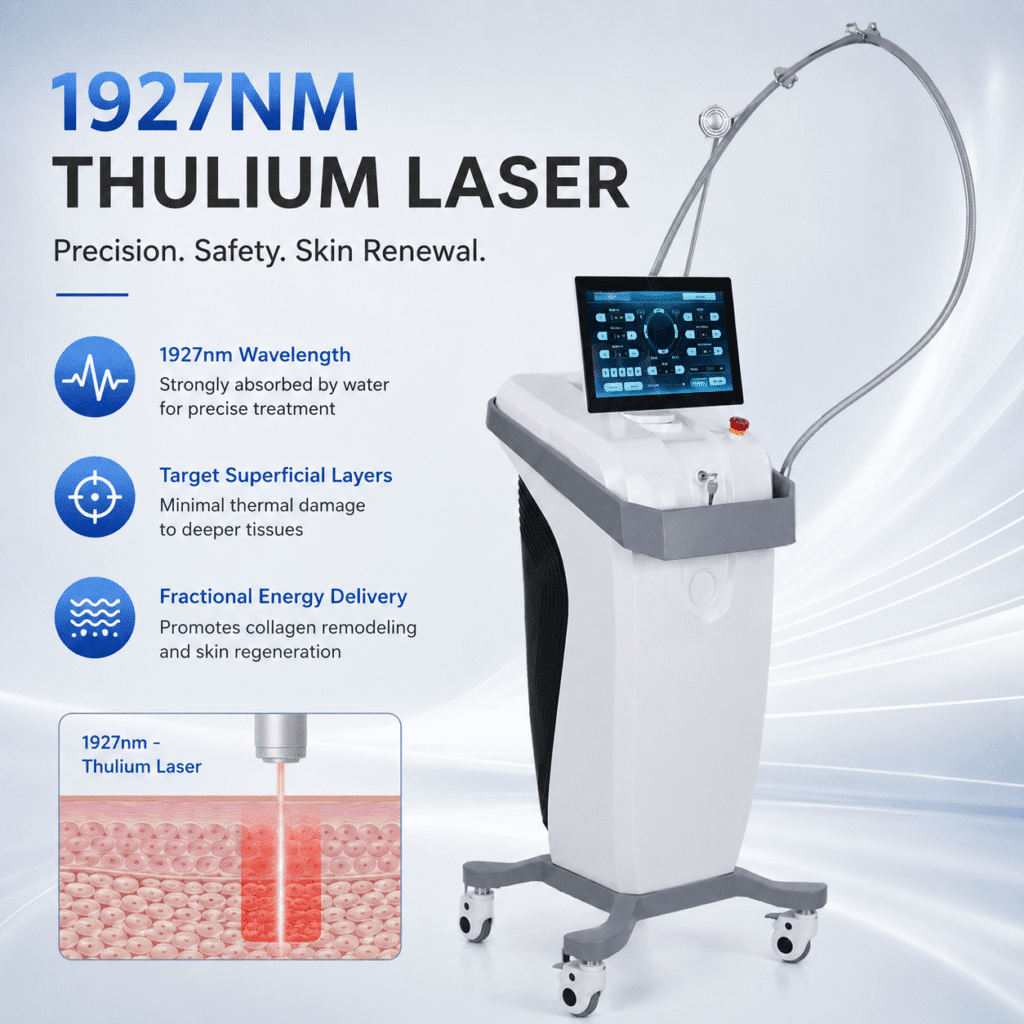
Laser and IPL devices are more compliance-sensitive and technology-sensitive than basic facial devices. Imported brands often remain strong in premium clinics, hair removal chains, dermatology-adjacent centers, and medical aesthetic settings.
Domestic brands are gaining competitiveness, especially in hair removal, skin rejuvenation, and mid-range IPL platforms. They often offer lower prices and faster service.
The buyer must be careful with:
- Local registration status.
- Bedienerqualifikation.
- Energy stability.
- Kühlsystem.
- Treatment indications.
- Kontraindikationen.
- Eye safety.
- Wartung.
- Ansprüche.
For this category, the cheapest device is rarely the best choice. Safety, compliance, and reliability are central.
20. Category Comparison: Body Contouring And Slimming Devices
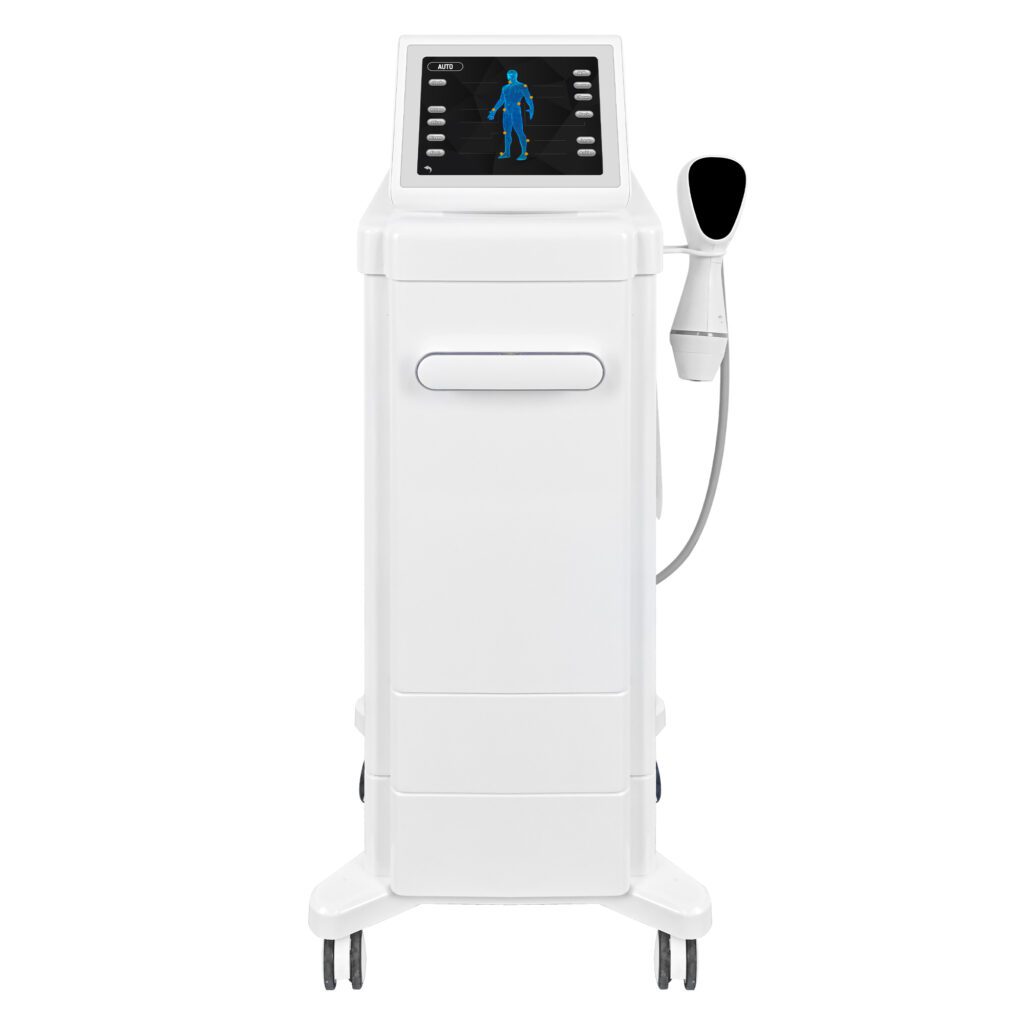
Domestic brands are very active in body contouring and slimming equipment. They offer RF body systems, cavitation, vacuum, EMS, muscle stimulation, cryolipolysis-style systems, and multifunction body platforms at competitive prices.
Imported equipment may be stronger in premium body contouring systems, clinical evidence, high-ticket positioning, and brand trust.
The main competition is between ROI and trust. Domestic devices can help salons launch body projects at lower investment. Imported devices can help higher-end centers charge more and reduce customer doubt.
For distributors, body equipment requires strong training and claim control. Exaggerated weight-loss claims can create customer complaints and regulatory risk.
21. Category Comparison: Home-Use Beauty Devices
In home-use beauty devices, domestic brands have strong manufacturing and e-commerce advantages. They can release RF, EMS, LED, cleansing, hair removal, and eye-care tools at competitive prices, with fast design cycles and influencer marketing.
Imported brands may win in premium consumer trust, patented design, retail channels, and international beauty positioning.
For salon equipment distributors, home-use devices are both a threat and an opportunity. They educate consumers about beauty technology, but they also raise questions: why should a customer pay for salon treatment if she already owns a home device?
The answer is professionalization. Salon equipment must provide stronger energy control, better protocols, skin analysis, staff operation, treatment environment, and visible service value.
22. Salon Purchasing Logic: What Buyers Actually Compare
Beauty salon owners usually compare more than the country of origin. Their real questions include:
- Can this device help sell packages?
- How long is the payback period?
- Will customers trust the project?
- Ist die Behandlung angenehm?
- Können die Mitarbeiter es schnell erlernen?
- Is there a clear contraindication list?
- Was passiert, wenn die Maschine kaputt geht?
- Sind Ersatzteile erhältlich?
- Are consumables expensive?
- Is the supplier still reachable after payment?
- Can the project be priced above local competitors?
- Are the advertising claims risky?
Domestic equipment often wins when the store is practical and budget-conscious. Imported equipment often wins when the store depends on premium image and high trust.
23. Distributor Selection Logic
Distributors should avoid choosing products only by origin. A better scoring model includes:
- Market demand.
- Price tier.
- Bruttomarge.
- Produktdifferenzierung.
- Technische Stabilität.
- Konformitätsdokumentation.
- Schulungsmaterialien.
- Garantiebestimmungen.
- Verfügbarkeit von Ersatzteilen.
- Reaktionsgeschwindigkeit des Lieferanten.
- Demo conversion rate.
- Kundenbeschwerdequote.
- Consumables and upgrade model.
- Local competitor intensity.
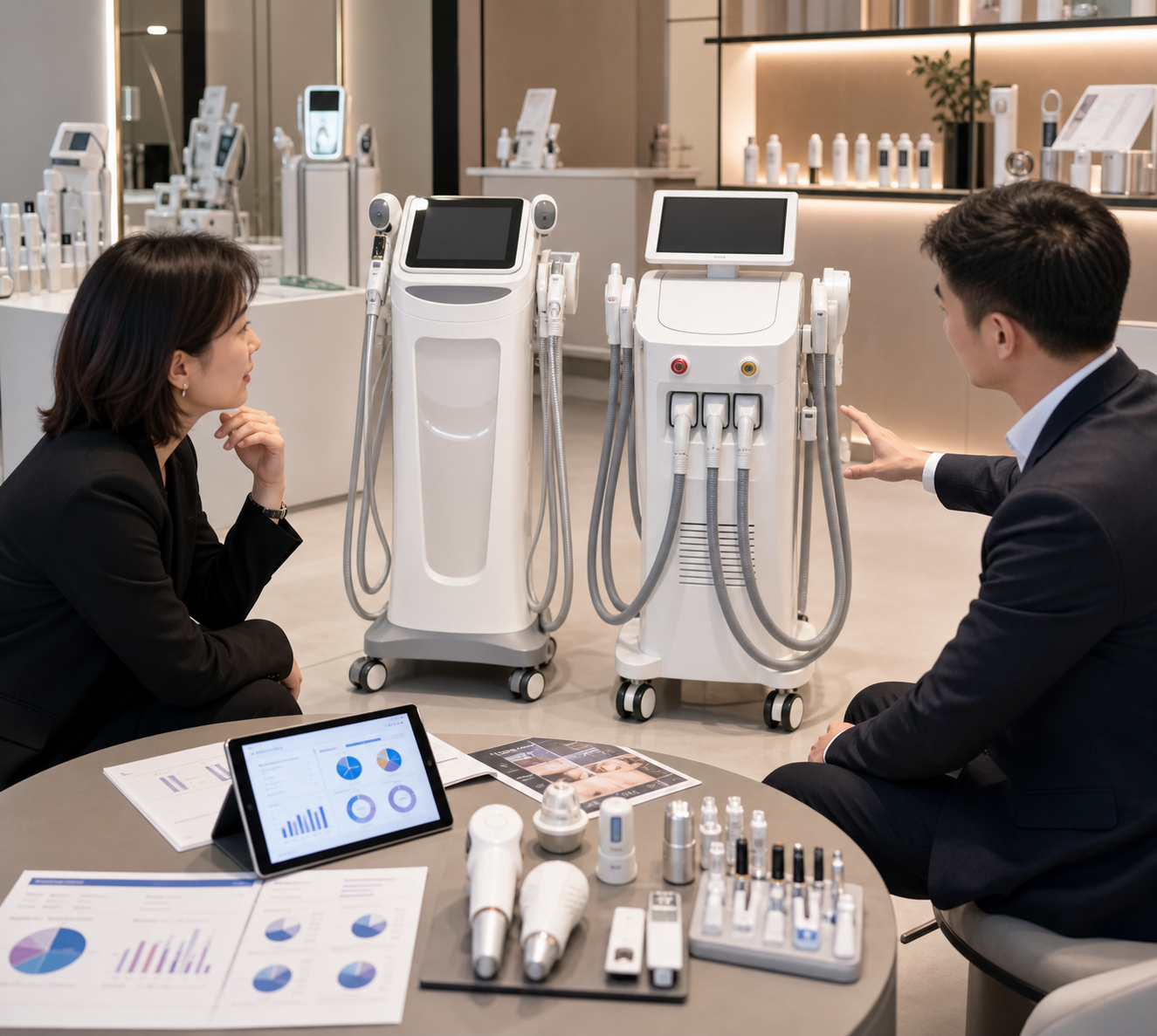
Domestic brands may be better for volume distribution, starter salons, and flexible dealer pricing. Imported brands may be better for premium agency rights, high-end accounts, and differentiated showrooms. A mature distributor can carry both, but should avoid channel conflict.
24. How To Position Domestic Equipment
Domestic beauty equipment should be positioned around practical value, not only low price.
Strong positioning points include:
- Fast ROI.
- Localized training.
- Quick after-sales.
- Flexible configuration.
- Stable daily-use projects.
- Distributor margin support.
- Cost-performance.
- Easy package design.
- Suitable for small and medium salons.
Domestic brands should avoid overclaiming that they are identical to top imported systems if evidence is weak. A more credible message is: “This device is designed for salon business efficiency, reliable service, and practical project profitability.”
25. How To Position Imported Equipment
Imported beauty equipment should be positioned around premium value, not only foreign origin.
Strong positioning points include:
- Markenvertrauen.
- Fortschrittliche Technologie.
- Clinical or international market evidence.
- Premium customer confidence.
- High-ticket package support.
- Professional training.
- Longer brand history.
- Differentiation from local competitors.
Imported brands should also address their weak points directly: service speed, spare parts, training localization, price justification, and local compliance. If they ignore these issues, domestic competitors will use them as sales arguments.
26. How Beauty Salons Should Choose
Beauty salons should choose based on store positioning.
Small community salons usually benefit from domestic equipment because budget, service speed, and practical use matter most. They should start with skin analysis, cleansing, hydration, LED, RF, EMS, and multifunction devices that support repeat visits.
Mid-range skin management stores can mix domestic and imported equipment. Domestic devices can support basic care and add-ons, while imported equipment can be used for signature projects or premium anti-aging.
High-end centers and med spa-style stores may need imported equipment for brand trust, premium differentiation, and high-ticket project pricing. But even they can use domestic equipment for support projects if quality and service are stable.
The best choice is often a portfolio, not a single origin.
27. How Manufacturers Should Compete
Domestic manufacturers should upgrade from low-price competition to system competition. They need:
- Better quality control.
- Stabilere Energieabgabe.
- Bessere Softwareoberfläche.
- Professional training content.
- Klare Garantiebedingungen.
- Stronger industrial design.
- Export-ready documentation.
- Compliance-aware marketing language.
- Real case studies.
- Distributor support packages.
Imported manufacturers should localize more deeply. They need:
- Faster service network.
- Ersatzteillager.
- Local-language training.
- Flexible financing options.
- Clear ROI support.
- Local regulatory documentation.
- Stronger distributor protection.
- Pricing models suitable for different buyer tiers.
The manufacturer that understands store operation will beat the manufacturer that only talks about specifications.
28. Import Substitution Does Not Mean Imported Brands Disappear
Import substitution is visible in many device markets because domestic manufacturers improve quality and cost control. In beauty equipment, this trend is especially strong in basic and mid-range categories.
But import substitution does not mean imported brands disappear. Imported equipment can remain strong in high-end, evidence-heavy, brand-sensitive, and compliance-sensitive segments.
The market structure is likely to become:
- Domestic dominance in basic salon equipment.
- Domestic strength in mid-range multifunction platforms.
- Mixed competition in RF, EMS, LED, skin analysis, and body contouring.
- Imported strength in premium laser, advanced energy-based systems, and high-end clinical settings.
- Hybrid portfolios in mature salons and distributors.
This is a layered market, not a winner-takes-all market.
29. Future 3 To 5 Year Competition Trends
Over the next 3 to 5 years, several trends are likely.
First, domestic brands will continue to move upward. Strong factories will invest in better design, stronger technology, improved safety, software, AI skin analysis, and export documentation.
Second, imported brands will become more selective. They may focus on high-end clinics, chain brands, premium skin centers, and advanced devices instead of competing in low-price categories.
Third, hybrid equipment portfolios will become common. Stores will use domestic devices for basic and high-frequency services, while using imported equipment for signature premium projects.
Fourth, after-sales service will become a decisive factor. A device with slow repair will lose competitiveness even if the brand is strong.
Fifth, claim compliance will become more important. Both domestic and imported suppliers must avoid exaggerated treatment promises.
Sixth, distributors will shift from product selling to solution selling. They will provide equipment configuration, treatment packages, training, ROI calculators, and maintenance support.
Seventh, customers will become more informed. Home-use beauty devices, social media, and online education will make customers ask more questions about technology and safety.
30. Strategic Recommendations For Beauty Salons
Beauty salons should use a practical selection process.
First, define the target customer group. A community salon, skin management store, luxury center, and med spa-style clinic do not need the same equipment.
Second, define the project menu. Equipment should serve actual projects such as hydration, acne-prone care, anti-aging, hair removal, body contouring, or repair.
Third, calculate ROI. A cheaper device is not always better, and an expensive imported device is not always profitable.
Fourth, check service support. Ask about warranty, spare parts, repair time, training, and technical response.
Fifth, review claims and compliance. Do not buy a device only because the sales pitch sounds powerful.
Sixth, test customer acceptance. A device is valuable only if customers accept the treatment price and return for packages.
31. Strategic Recommendations For Distributors
Distributors should build a balanced product portfolio.
For entry-level salons, offer domestic equipment packages with skin analysis, cleansing, hydration, LED, RF, and EMS support.
For growth-stage stores, offer mixed portfolios with stronger domestic devices plus selected imported signature equipment.
For premium centers, offer imported or high-end domestic systems with stronger evidence, brand story, training, and ROI support.
Distributors should also prepare comparison documents. These should compare price, function, service, warranty, consumables, payback period, and suitable buyer type. This helps customers decide rationally and reduces after-sales disputes.
32. Strategic Recommendations For Domestic Brands
Domestic beauty equipment brands should avoid being trapped in low-price competition. They should build stronger proof systems.
Zu den empfohlenen Maßnahmen gehören:
- Invest in product stability.
- Improve safety control.
- Standardize production.
- Provide clear technical data.
- Build real salon case studies.
- Bieten Sie Bedienerschulungen an.
- Develop treatment protocols.
- Strengthen brand design.
- Support distributors with marketing materials.
- Improve documentation for export markets.
Domestic brands can win not only because they are cheaper, but because they are faster, more practical, and easier for salons to operate profitably.
33. Strategic Recommendations For Imported Brands
Imported beauty equipment brands should protect premium value while improving local service.
Zu den empfohlenen Maßnahmen gehören:
- Strengthen local repair networks.
- Keep spare parts in target markets.
- Localize training content.
- Provide pricing and ROI tools.
- Support distributors with demonstration systems.
- Clarify regulatory documentation.
- Avoid relying only on foreign origin.
- Build local success cases.
- Offer financing or staged purchase options.
Imported brands that combine premium trust with local execution can remain strong even as domestic brands improve.
Abschluss
The competition between domestic and imported beauty equipment is no longer a simple fight between price and brand. It is a competition between business models, service systems, technology depth, compliance readiness, and project profitability.
Domestic equipment has strong opportunities in basic salon devices, mid-range multifunction systems, skin management equipment, local service, flexible customization, and cost-performance. Imported equipment still has strong value in premium positioning, advanced energy-based systems, high-end clinics, brand-sensitive customers, and evidence-driven projects.
For salons, the best purchasing decision should be based on customer demand, store positioning, treatment pricing, staff capability, after-sales support, and ROI. For distributors, the best strategy is to build a portfolio that includes both practical domestic devices and differentiated premium options. For manufacturers, the next stage of competition will be won by quality, training, service, documentation, and trust.
The market will not reward origin alone. It will reward equipment that helps beauty businesses sell better, serve better, stay compliant, and earn sustainable profit.
Häufig gestellte Fragen
Are domestic beauty devices replacing imported beauty devices?
Domestic beauty devices are gaining share in basic and mid-range salon equipment, but imported devices still have strong value in premium, advanced, and brand-sensitive categories. The market is becoming segmented rather than fully replaced.
Why do many salons choose domestic beauty equipment?
Salons often choose domestic equipment because it offers lower purchase cost, faster delivery, easier training, quicker repair, flexible configuration, and better ROI for high-frequency salon projects.
Why do high-end salons still buy imported beauty equipment?
High-end salons buy imported equipment for brand trust, premium customer perception, advanced technology, clinical or international evidence, and stronger high-ticket project positioning.
Which categories are most suitable for domestic beauty equipment?
Domestic equipment is especially suitable for hydro cleansing, oxygen spray, LED, entry RF, EMS, multifunction facial platforms, basic skin analysis, and many mid-range body contouring projects.
How should distributors choose between domestic and imported beauty equipment?
Distributors should compare market demand, price tier, margin, service support, compliance documentation, product stability, training, spare parts, and local buyer type instead of choosing only by country of origin.